Region:Global
Author(s):Dev
Product Code:KRAA9553
Pages:91
Published On:November 2025
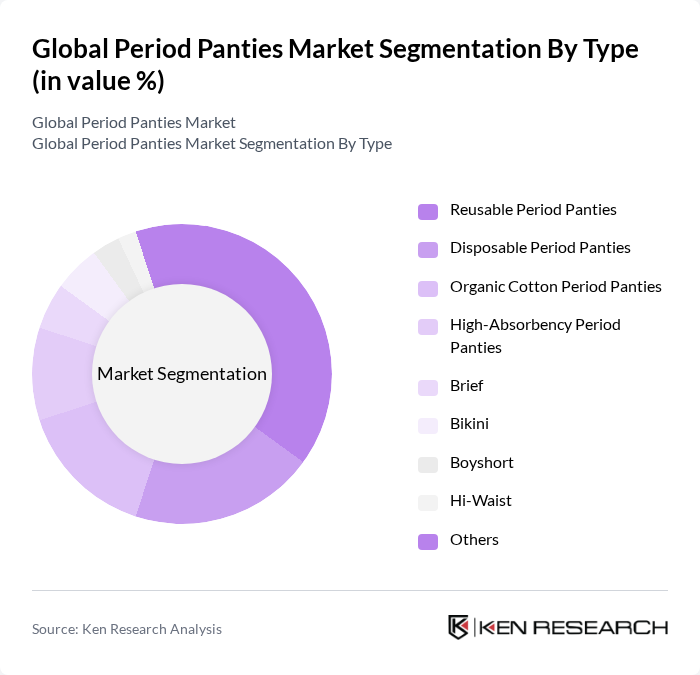
By Type:The market is segmented into various types of period panties, including reusable, disposable, organic cotton, high-absorbency, brief, bikini, boyshort, hi-waist, and others. Among these, reusable period panties are gaining significant traction due to their sustainability and cost-effectiveness over time. Consumers are increasingly opting for products that not only provide comfort but also align with their environmental values. The trend towards organic cotton and high-absorbency options is also notable, as they cater to specific consumer preferences for comfort and functionality. The expansion of product lines to include different fits and absorbency levels is a key trend, with brands focusing on both comfort and leak protection.
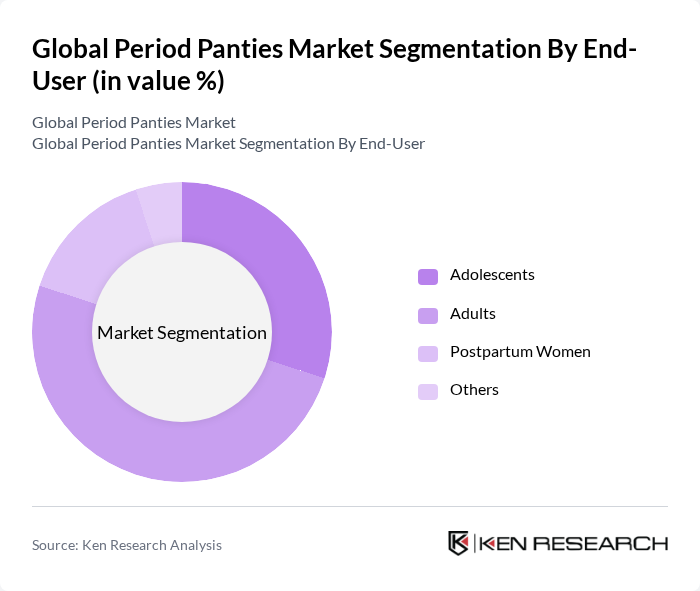
By End-User:The end-user segmentation includes adolescents, adults, postpartum women, and others. The adult segment dominates the market, driven by the increasing awareness of menstrual health and the growing preference for comfortable and sustainable menstrual products. Adolescents are also a significant segment, as they are becoming more informed about menstrual hygiene and are influenced by social media trends promoting eco-friendly products. The postpartum segment is emerging as a niche market, with specific needs for comfort and functionality during recovery. Brands are increasingly targeting these segments with tailored products and marketing strategies.
The Global Period Panties Market is characterized by a dynamic mix of regional and international players. Leading participants such as Thinx Inc., Knix Wear Inc., Modibodi Pty Ltd, Saalt, Ruby Love, Aisle (formerly Lunapads), Dear Kate, Bloom & Nora, PantyProp, Eco Femme, Neione, Rael Inc., WUKA, Victoria’s Secret & Co., FannyPants LLC, Fluxies, Anigan, Harebrained contribute to innovation, geographic expansion, and service delivery in this space.
The future of the period panties market appears promising, driven by evolving consumer preferences and increasing health awareness. As more women seek sustainable and comfortable menstrual solutions, brands are likely to innovate further in fabric technology and design. Additionally, the rise of direct-to-consumer sales models will enhance accessibility, allowing brands to build stronger relationships with their customers. This shift is expected to foster a more engaged consumer base, ultimately driving market growth.
| Segment | Sub-Segments |
|---|---|
| By Type | Reusable Period Panties Disposable Period Panties Organic Cotton Period Panties High-Absorbency Period Panties Brief Bikini Boyshort Hi-Waist Others |
| By End-User | Adolescents Adults Postpartum Women Others |
| By Distribution Channel | Online Retail Supermarkets/Hypermarkets Specialty Stores Pharmacies Mono Brand Stores Others |
| By Material | Cotton Bamboo Synthetic Fabrics Others |
| By Age Group | 18 Years 30 Years 45 Years Years and Above |
| By Price Range | Budget Mid-Range Premium Others |
| By Brand Loyalty | Brand Loyal Customers Brand Switchers New Customers Others |
| Scope Item/Segment | Sample Size | Target Respondent Profiles |
|---|---|---|
| Consumer Preferences for Period Panties | 120 | Women aged 18-45, Diverse Income Levels |
| Retail Insights on Period Panties | 60 | Store Managers, Merchandising Directors |
| Product Development Feedback | 50 | Designers, Product Managers in Apparel |
| Healthcare Professional Opinions | 40 | Gynecologists, Women's Health Advocates |
| Market Trends and Innovations | 45 | Industry Analysts, Market Researchers |
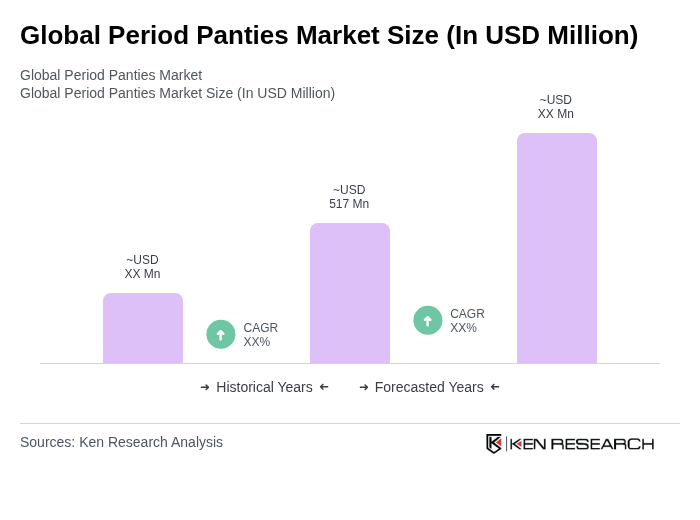
The Global Period Panties Market is valued at approximately USD 517 million, reflecting a significant growth trend driven by increased awareness of menstrual health and a rising demand for sustainable products.

What makes us stand out is that our consultants follow Robust, Refine and Result (RRR) methodology. Robust for clear definitions, approaches and sanity checking, Refine for differentiating respondents' facts and opinions, and Result for presenting data with story.

We have set a benchmark in the industry by offering our clients with syndicated and customized market research reports featuring coverage of entire market as well as meticulous research and analyst insights.

While we don't replace traditional research, we flip the method upside down. Our dual approach of Top Bottom & Bottom Top ensures quality deliverable by not just verifying company fundamentals but also looking at the sector and macroeconomic factors.

With one step in the future, our research team constantly tries to show you the bigger picture. We help with some of the tough questions you may encounter along the way: How is the industry positioned? Best marketing channel? KPI's of competitors? By aligning every element, we help maximize success.

Our report gives you instant access to the answers and sources that other companies might choose to hide. We elaborate each steps of research methodology we have used and showcase you the sample size to earn your trust.

If you need any support, we are here! We pride ourselves on universe strength, data quality, and quick, friendly, and professional service.













