About the Report
Base Year 2024Global Player Tracking Market Overview
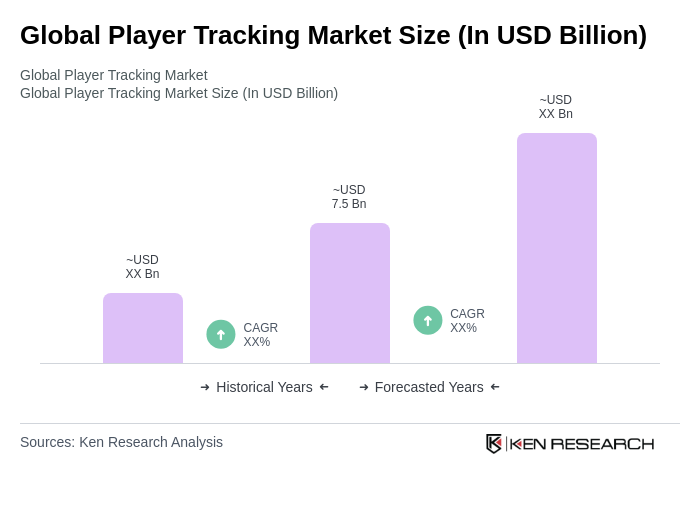
- The Global Player Tracking Market is valued at USD 7.5 billion, based on a five-year historical analysis. This growth is primarily driven by the increasing adoption of advanced tracking technologies in sports and fitness sectors, as well as the rising demand for performance analytics among athletes and teams. The integration of IoT and AI technologies has further enhanced the capabilities of tracking systems, making them indispensable for performance optimization. Key growth drivers include the rising popularity of wearable sensors, real-time data analytics, and the expansion of sports broadcasting platforms leveraging player tracking data for enhanced fan engagement. Additionally, the use of AI-powered predictive analytics and 5G-enabled real-time feedback is accelerating market adoption across professional and amateur sports domains.
- Key players in this market includethe United States, Germany, and the United Kingdom, which dominate due to their strong sports culture, significant investments in sports technology, and the presence of leading companies in the player tracking domain. North America holds the largest market share, driven by major league adoption, robust infrastructure, and high investment in sports analytics. Europe follows closely, supported by advanced sports tech adoption and regulatory initiatives.
- In 2023, the European Union implemented regulations aimed at enhancing data privacy and security in sports technology. TheGeneral Data Protection Regulation (GDPR), Regulation (EU) 2016/679, issued by the European Parliament and Council, mandates that all player tracking systems operating within the EU must comply with strict data protection standards, including explicit consent for data collection, secure storage, and transparent processing of athletes' personal data. These requirements ensure responsible handling of sensitive information and shape the future of player tracking technologies by emphasizing ethical data usage and compliance.
Global Player Tracking Market Segmentation
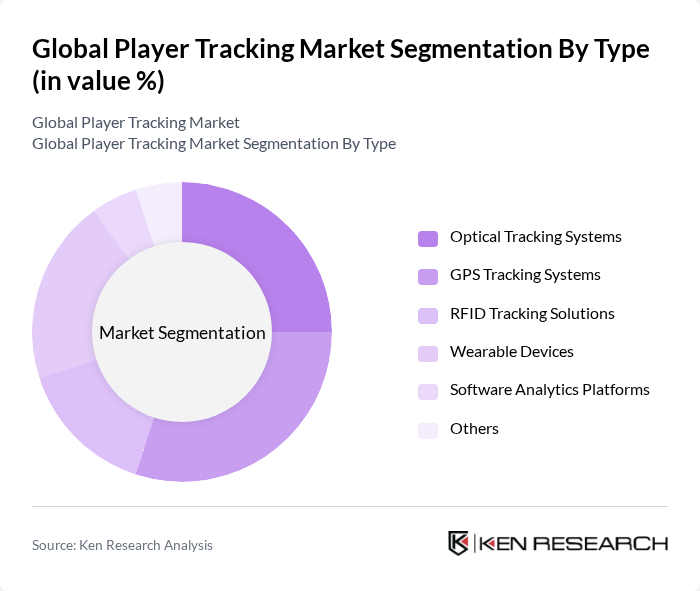
By Type:The market is segmented into various types of tracking systems, includingOptical Tracking Systems, GPS Tracking Systems, RFID Tracking Solutions, Wearable Devices, Software Analytics Platforms, and Others. Optical tracking systems utilize camera-based technology for precise movement analysis, while GPS tracking systems provide location and velocity data for outdoor sports. RFID solutions enable real-time identification and tracking, particularly in indoor environments. Wearable devices, such as smartwatches and fitness bands, are widely adopted for continuous monitoring of biometrics and performance metrics. Software analytics platforms aggregate and analyze data from multiple sources, offering actionable insights for coaches and athletes.
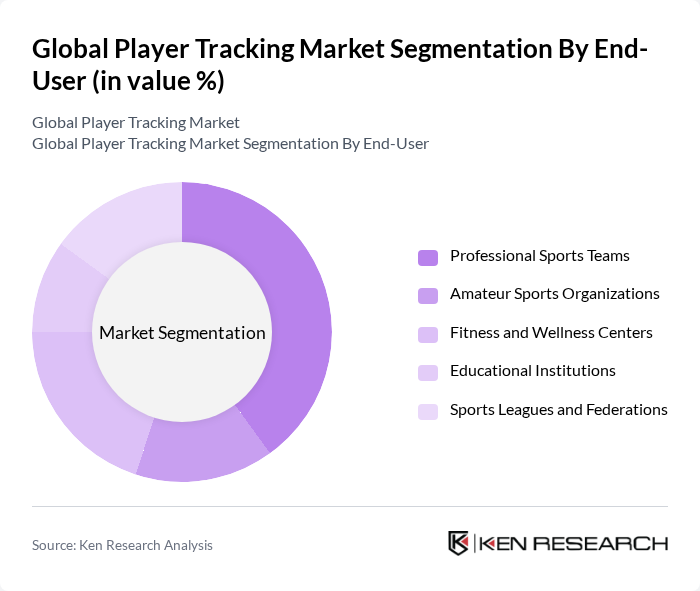
By End-User:The end-user segmentation includesProfessional Sports Teams, Amateur Sports Organizations, Fitness and Wellness Centers, Educational Institutions, and Sports Leagues and Federations. Professional sports teams are the largest adopters, leveraging tracking technologies for performance optimization, injury prevention, and tactical analysis. Amateur organizations and educational institutions use these systems to enhance training programs and monitor athlete development. Fitness and wellness centers integrate tracking devices for personalized health monitoring and activity tracking, while sports leagues and federations deploy these solutions to standardize performance metrics and improve competition management.
Global Player Tracking Market Competitive Landscape
The Global Player Tracking Market is characterized by a dynamic mix of regional and international players. Leading participants such as Catapult Sports, STATSports, Zebra Technologies, GPSports, Xsens Technologies, PlayerTek, Vicon Motion Systems, Kinexon, TrackMan, Hudl, NEX Team, MyCoach, Sports Performance Tracking, Athos, Whoop, ChyronHego, Sonda Sports, Stats Perform, Polar Electro, Wimu (RealTrack Systems) contribute to innovation, geographic expansion, and service delivery in this space.
Global Player Tracking Market Industry Analysis
Growth Drivers
- Increasing Demand for Real-Time Data:The global demand for real-time data in sports analytics is surging, with the market for sports analytics projected to reach $5.2 billion in future. This growth is driven by the need for immediate insights into player performance and game strategies, which can enhance decision-making processes. The increasing reliance on data-driven strategies in sports is evident, as organizations invest heavily in technologies that provide real-time tracking and analysis, ensuring competitive advantages.
- Advancements in GPS and IoT Technologies:The integration of advanced GPS and IoT technologies is revolutionizing player tracking systems. In future, the global IoT market is expected to surpass $1.5 trillion, with significant investments directed towards sports applications. These technologies enable precise tracking of player movements and biometrics, enhancing performance analysis. As sports organizations adopt these innovations, the demand for sophisticated tracking solutions is expected to rise, further propelling market growth.
- Enhanced Focus on Player Safety and Performance:The emphasis on player safety and performance optimization is driving the adoption of player tracking technologies. In future, the global sports safety market is projected to reach $1.5 billion, reflecting a growing awareness of injury prevention and performance enhancement. Organizations are increasingly utilizing tracking systems to monitor player health metrics, ensuring compliance with safety standards and improving overall team performance, thus fueling market expansion.
Market Challenges
- High Implementation Costs:The initial investment required for implementing advanced player tracking systems can be a significant barrier for many organizations. The average cost of deploying a comprehensive tracking solution can range from $60,000 to $250,000, depending on the technology and scale. This financial burden can deter smaller teams and organizations from adopting these systems, limiting market penetration and growth potential in the sector.
- Data Privacy Concerns:As player tracking systems collect vast amounts of personal data, concerns regarding data privacy and security are escalating. In future, it is estimated that data breaches could cost organizations up to $4.5 million per incident. This potential financial impact, coupled with stringent regulations like GDPR, poses a challenge for organizations looking to implement tracking technologies while ensuring compliance and protecting player information.
Global Player Tracking Market Future Outlook
The future of the player tracking market is poised for significant transformation, driven by technological advancements and evolving consumer expectations. As organizations increasingly prioritize data-driven decision-making, the integration of AI and machine learning will enhance predictive analytics capabilities. Furthermore, the growing trend of wearable technology will facilitate real-time monitoring, leading to improved player performance and safety. These developments will likely create a more competitive landscape, encouraging innovation and collaboration among industry players.
Market Opportunities
- Expansion into Emerging Markets:Emerging markets present a significant opportunity for player tracking technology adoption. With a growing interest in sports and increased investment in infrastructure, regions like Asia-Pacific are expected to see a rise in demand for advanced tracking solutions. This expansion can lead to new partnerships and revenue streams for technology providers, enhancing market growth.
- Development of Customized Solutions:The demand for tailored tracking solutions is on the rise, as organizations seek to address specific needs and challenges. By developing customized systems that cater to various sports and performance metrics, companies can differentiate themselves in a competitive market. This focus on personalization can drive customer loyalty and open new avenues for innovation and growth.
Scope of the Report
| Segment | Sub-Segments |
|---|---|
| By Type | Optical Tracking Systems GPS Tracking Systems RFID Tracking Solutions Wearable Devices Software Analytics Platforms Others |
| By End-User | Professional Sports Teams Amateur Sports Organizations Fitness and Wellness Centers Educational Institutions Sports Leagues and Federations |
| By Application | Performance Analysis Injury Prevention Training Optimization Fan Engagement Broadcast Enhancement |
| By Distribution Channel | Direct Sales Online Retail Distributors and Resellers |
| By Region | North America Europe Asia-Pacific Latin America Middle East and Africa |
| By Price Range | Low-End Solutions Mid-Range Solutions High-End Solutions |
| By Technology | Cloud-Based Solutions On-Premise Solutions Hybrid Solutions |
Key Target Audience
Investors and Venture Capitalist Firms
Government and Regulatory Bodies (e.g., Federal Communications Commission, National Telecommunications and Information Administration)
Sports Organizations and Leagues
Event Management Companies
Technology Providers and Software Developers
Data Analytics Firms
Telecommunications Companies
Advertising and Marketing Agencies
Players Mentioned in the Report:
Catapult Sports
STATSports
Zebra Technologies
GPSports
Xsens Technologies
PlayerTek
Vicon Motion Systems
Kinexon
TrackMan
Hudl
NEX Team
MyCoach
Sports Performance Tracking
Athos
Whoop
ChyronHego
Sonda Sports
Stats Perform
Polar Electro
Wimu (RealTrack Systems)
Table of Contents
Market Assessment Phase
1. Executive Summary and Approach
2. Global Player Tracking Market Overview
2.1 Key Insights and Strategic Recommendations
2.2 Global Player Tracking Market Overview
2.3 Definition and Scope
2.4 Evolution of Market Ecosystem
2.5 Timeline of Key Regulatory Milestones
2.6 Value Chain & Stakeholder Mapping
2.7 Business Cycle Analysis
2.8 Policy & Incentive Landscape
3. Global Player Tracking Market Analysis
3.1 Growth Drivers
3.1.1 Increasing Demand for Real-Time Data
3.1.2 Advancements in GPS and IoT Technologies
3.1.3 Rising Adoption in Sports Analytics
3.1.4 Enhanced Focus on Player Safety and Performance
3.2 Market Challenges
3.2.1 High Implementation Costs
3.2.2 Data Privacy Concerns
3.2.3 Integration with Existing Systems
3.2.4 Limited Awareness Among Smaller Organizations
3.3 Market Opportunities
3.3.1 Expansion into Emerging Markets
3.3.2 Development of Customized Solutions
3.3.3 Partnerships with Sports Organizations
3.3.4 Utilization of AI and Machine Learning
3.4 Market Trends
3.4.1 Growing Use of Wearable Technology
3.4.2 Increasing Investment in Sports Technology
3.4.3 Shift Towards Data-Driven Decision Making
3.4.4 Rise of Virtual and Augmented Reality in Training
3.5 Government Regulation
3.5.1 Data Protection Regulations
3.5.2 Sports Integrity Regulations
3.5.3 Health and Safety Standards
3.5.4 Compliance with International Sports Bodies
4. SWOT Analysis
5. Stakeholder Analysis
6. Porter's Five Forces Analysis
7. Global Player Tracking Market Market Size, 2019-2024
7.1 By Value
7.2 By Volume
7.3 By Average Selling Price
8. Global Player Tracking Market Segmentation
8.1 By Type
8.1.1 Optical Tracking Systems
8.1.2 GPS Tracking Systems
8.1.3 RFID Tracking Solutions
8.1.4 Wearable Devices
8.1.5 Software Analytics Platforms
8.1.6 Others
8.2 By End-User
8.2.1 Professional Sports Teams
8.2.2 Amateur Sports Organizations
8.2.3 Fitness and Wellness Centers
8.2.4 Educational Institutions
8.2.5 Sports Leagues and Federations
8.3 By Application
8.3.1 Performance Analysis
8.3.2 Injury Prevention
8.3.3 Training Optimization
8.3.4 Fan Engagement
8.3.5 Broadcast Enhancement
8.4 By Distribution Channel
8.4.1 Direct Sales
8.4.2 Online Retail
8.4.3 Distributors and Resellers
8.5 By Region
8.5.1 North America
8.5.2 Europe
8.5.3 Asia-Pacific
8.5.4 Latin America
8.5.5 Middle East and Africa
8.6 By Price Range
8.6.1 Low-End Solutions
8.6.2 Mid-Range Solutions
8.6.3 High-End Solutions
8.7 By Technology
8.7.1 Cloud-Based Solutions
8.7.2 On-Premise Solutions
8.7.3 Hybrid Solutions
9. Global Player Tracking Market Competitive Analysis
9.1 Market Share of Key Players
9.2 Cross Comparison of Key Players
9.2.1 Company Name
9.2.2 Company Size (Large, Medium, or Small as per industry convention)
9.2.3 Revenue Growth Rate
9.2.4 Market Share (%)
9.2.5 Number of Active Deployments
9.2.6 Customer Retention Rate
9.2.7 Average Deal Size
9.2.8 R&D Investment as % of Revenue
9.2.9 Product Portfolio Breadth
9.2.10 Global Presence (Number of Countries)
9.2.11 Key Partnerships (Sports Leagues/Teams)
9.2.12 Technology Differentiation Index
9.3 SWOT Analysis of Top Players
9.4 Pricing Analysis
9.5 Detailed Profile of Major Companies
9.5.1 Catapult Sports
9.5.2 STATSports
9.5.3 Zebra Technologies
9.5.4 GPSports
9.5.5 Xsens Technologies
9.5.6 PlayerTek
9.5.7 Vicon Motion Systems
9.5.8 Kinexon
9.5.9 TrackMan
9.5.10 Hudl
9.5.11 NEX Team
9.5.12 MyCoach
9.5.13 Sports Performance Tracking
9.5.14 Athos
9.5.15 Whoop
9.5.16 ChyronHego
9.5.17 Sonda Sports
9.5.18 Stats Perform
9.5.19 Polar Electro
9.5.20 Wimu (RealTrack Systems)
10. Global Player Tracking Market End-User Analysis
10.1 Procurement Behavior of Key Ministries
10.1.1 Budget Allocation Trends
10.1.2 Decision-Making Processes
10.1.3 Preferred Procurement Channels
10.2 Corporate Spend on Infrastructure & Energy
10.2.1 Investment in Technology Upgrades
10.2.2 Spending on Training Facilities
10.2.3 Budget for Player Development Programs
10.3 Pain Point Analysis by End-User Category
10.3.1 Data Integration Issues
10.3.2 Cost Constraints
10.3.3 Technology Adoption Barriers
10.4 User Readiness for Adoption
10.4.1 Training and Support Needs
10.4.2 Awareness of Benefits
10.4.3 Infrastructure Readiness
10.5 Post-Deployment ROI and Use Case Expansion
10.5.1 Measurement of Performance Improvements
10.5.2 Expansion into New Use Cases
10.5.3 Long-Term Value Realization
11. Global Player Tracking Market Future Size, 2025-2030
11.1 By Value
11.2 By Volume
11.3 By Average Selling Price
Go-To-Market Strategy Phase
1. Whitespace Analysis + Business Model Canvas
1.1 Market Gaps Identification
1.2 Value Proposition Development
1.3 Revenue Streams Analysis
1.4 Key Partnerships Exploration
1.5 Cost Structure Assessment
1.6 Customer Segmentation
1.7 Competitive Advantage Analysis
2. Marketing and Positioning Recommendations
2.1 Branding Strategies
2.2 Product USPs
2.3 Target Audience Identification
2.4 Communication Strategies
2.5 Digital Marketing Approaches
3. Distribution Plan
3.1 Urban Retail Strategies
3.2 Rural NGO Tie-Ups
3.3 Online Distribution Channels
3.4 Direct Sales Approaches
4. Channel & Pricing Gaps
4.1 Underserved Routes
4.2 Pricing Bands Analysis
4.3 Competitor Pricing Comparison
5. Unmet Demand & Latent Needs
5.1 Category Gaps Identification
5.2 Consumer Segments Analysis
5.3 Emerging Trends Exploration
6. Customer Relationship
6.1 Loyalty Programs Development
6.2 After-Sales Service Strategies
6.3 Customer Feedback Mechanisms
7. Value Proposition
7.1 Sustainability Initiatives
7.2 Integrated Supply Chains
7.3 Unique Selling Points
8. Key Activities
8.1 Regulatory Compliance
8.2 Branding Initiatives
8.3 Distribution Setup
9. Entry Strategy Evaluation
9.1 Domestic Market Entry Strategy
9.1.1 Product Mix Considerations
9.1.2 Pricing Band Strategy
9.1.3 Packaging Solutions
9.2 Export Entry Strategy
9.2.1 Target Countries Identification
9.2.2 Compliance Roadmap Development
10. Entry Mode Assessment
10.1 Joint Ventures
10.2 Greenfield Investments
10.3 Mergers & Acquisitions
10.4 Distributor Model Evaluation
11. Capital and Timeline Estimation
11.1 Capital Requirements Analysis
11.2 Timelines for Implementation
12. Control vs Risk Trade-Off
12.1 Ownership vs Partnerships
12.2 Risk Management Strategies
13. Profitability Outlook
13.1 Breakeven Analysis
13.2 Long-Term Sustainability Strategies
14. Potential Partner List
14.1 Distributors Identification
14.2 Joint Ventures Opportunities
14.3 Acquisition Targets
15. Execution Roadmap
15.1 Phased Plan for Market Entry
15.1.1 Market Setup
15.1.2 Market Entry
15.1.3 Growth Acceleration
15.1.4 Scale & Stabilize
15.2 Key Activities and Milestones
15.2.1 Milestone Planning
15.2.2 Activity Tracking
Research Methodology
Phase 1: Approach1
Desk Research
- Industry reports from market research firms focusing on player tracking technologies
- Published white papers and case studies from leading technology providers
- Government publications and regulations related to data privacy and tracking technologies
Primary Research
- Interviews with product managers at sports analytics firms
- Surveys with technology developers specializing in tracking solutions
- Field interviews with end-users in sports teams and event management companies
Validation & Triangulation
- Cross-validation of findings through multiple industry expert interviews
- Triangulation of data from market reports, user feedback, and technology trends
- Sanity checks through peer reviews and expert panels in the sports technology sector
Phase 2: Market Size Estimation1
Top-down Assessment
- Analysis of global sports market size and growth rates to estimate player tracking adoption
- Segmentation by sports type, including team sports and individual sports
- Incorporation of trends in wearable technology and data analytics in sports
Bottom-up Modeling
- Volume estimates based on the number of sports teams and events utilizing tracking technologies
- Revenue projections from leading player tracking solution providers
- Cost analysis of implementation and maintenance of tracking systems
Forecasting & Scenario Analysis
- Multi-factor regression analysis considering factors like sports participation rates and technology adoption
- Scenario modeling based on potential regulatory changes affecting data usage
- Baseline, optimistic, and pessimistic forecasts through 2030 based on market dynamics
Phase 3: CATI Sample Composition1
| Scope Item/Segment | Sample Size | Target Respondent Profiles |
|---|---|---|
| Professional Sports Teams | 100 | Coaches, Performance Analysts |
| Collegiate Athletic Programs | 60 | Athletic Directors, Sports Scientists |
| Event Management Companies | 50 | Event Coordinators, Technology Managers |
| Wearable Technology Developers | 40 | Product Developers, Marketing Managers |
| Sports Analytics Firms | 70 | Data Analysts, Business Development Managers |
Frequently Asked Questions
What is the current value of the Global Player Tracking Market?
The Global Player Tracking Market is valued at approximately USD 7.5 billion, driven by the increasing adoption of advanced tracking technologies in sports and fitness sectors, as well as the rising demand for performance analytics among athletes and teams.
What are the key drivers of growth in the Player Tracking Market?
Which regions dominate the Global Player Tracking Market?
What types of tracking systems are available in the market?
Other Regional/Country Reports
Indonesia Player Tracking Market
Malaysia Player Tracking Market
APAC Player Tracking Market
SEA Player Tracking Market
Why Buy From Us?

What makes us stand out is that our consultants follow Robust, Refine and Result (RRR) methodology. Robust for clear definitions, approaches and sanity checking, Refine for differentiating respondents' facts and opinions, and Result for presenting data with story.

We have set a benchmark in the industry by offering our clients with syndicated and customized market research reports featuring coverage of entire market as well as meticulous research and analyst insights.

While we don't replace traditional research, we flip the method upside down. Our dual approach of Top Bottom & Bottom Top ensures quality deliverable by not just verifying company fundamentals but also looking at the sector and macroeconomic factors.

With one step in the future, our research team constantly tries to show you the bigger picture. We help with some of the tough questions you may encounter along the way: How is the industry positioned? Best marketing channel? KPI's of competitors? By aligning every element, we help maximize success.

Our report gives you instant access to the answers and sources that other companies might choose to hide. We elaborate each steps of research methodology we have used and showcase you the sample size to earn your trust.

If you need any support, we are here! We pride ourselves on universe strength, data quality, and quick, friendly, and professional service.