Region:Global
Author(s):Dev
Product Code:KRAA1672
Pages:85
Published On:August 2025
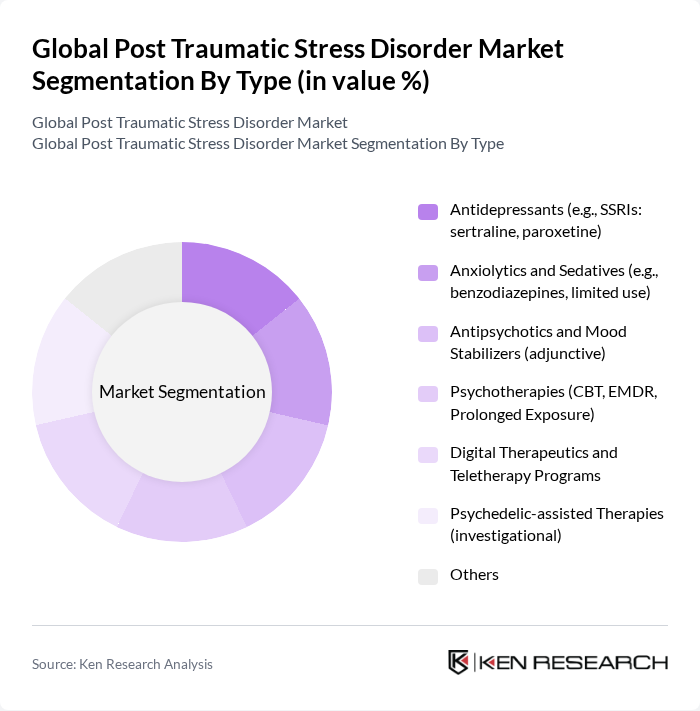
By Type:The market is segmented into various types of treatments for PTSD, including pharmacological and psychotherapeutic options. The subsegments include Antidepressants, Anxiolytics and Sedatives, Antipsychotics and Mood Stabilizers, Psychotherapies, Digital Therapeutics, Psychedelic-assisted Therapies, and Others. Among these, Antidepressants are the most widely used due to their established efficacy in managing PTSD symptoms; selective serotonin reuptake inhibitors (sertraline and paroxetine) are the only agents specifically approved for PTSD in major markets and continue to account for the largest share of pharmacotherapy use ; .
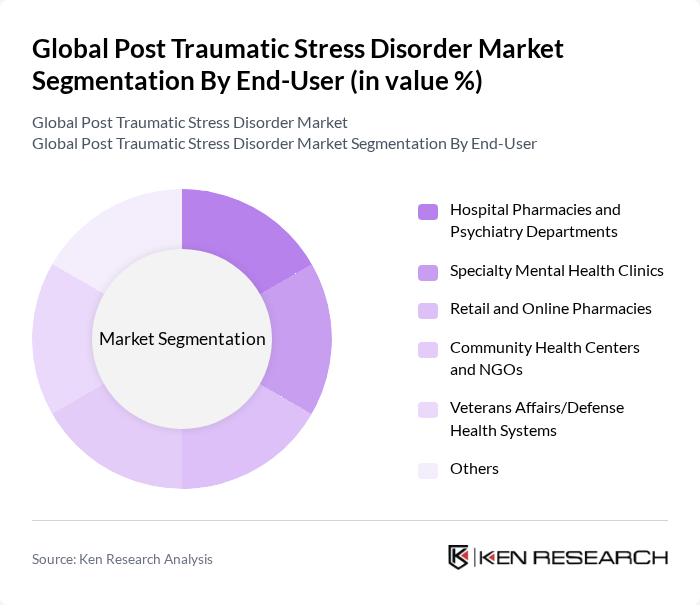
By End-User:The end-user segmentation includes various healthcare settings where PTSD treatments are administered. This includes Hospital Pharmacies and Psychiatry Departments, Specialty Mental Health Clinics, Retail and Online Pharmacies, Community Health Centers and NGOs, Veterans Affairs/Defense Health Systems, and Others. Hospital Pharmacies and Psychiatry Departments are the leading end-users due to comprehensive treatment capabilities and availability of guideline-supported pharmacotherapy and psychotherapies; North America’s integrated systems and VA networks further reinforce institutional channel dominance ; .
The Global Post Traumatic Stress Disorder Market is characterized by a dynamic mix of regional and international players. Leading participants such as GSK plc, Otsuka Pharmaceutical Co., Ltd., Jazz Pharmaceuticals plc, AstraZeneca PLC, H. Lundbeck A/S, Pfizer Inc., Johnson & Johnson (Janssen), Novartis AG, AbbVie Inc., Teva Pharmaceutical Industries Ltd., Eli Lilly and Company, Bionomics Limited, Aptinyx Inc., Alkermes plc, Acadia Pharmaceuticals Inc. contribute to innovation, geographic expansion, and service delivery in this space.
The future of the PTSD treatment market is poised for significant transformation, driven by technological advancements and increased funding for mental health initiatives. As telehealth services expand, more individuals will gain access to therapy, particularly in underserved areas. Additionally, the rise of personalized medicine approaches will enhance treatment efficacy, tailoring interventions to individual needs. These trends indicate a promising shift towards more accessible and effective PTSD care, fostering a more supportive environment for those affected by trauma.
| Segment | Sub-Segments |
|---|---|
| By Type | Antidepressants (e.g., SSRIs: sertraline, paroxetine) Anxiolytics and Sedatives (e.g., benzodiazepines, limited use) Antipsychotics and Mood Stabilizers (adjunctive) Psychotherapies (CBT, EMDR, Prolonged Exposure) Digital Therapeutics and Teletherapy Programs Psychedelic-assisted Therapies (investigational) Others |
| By End-User | Hospital Pharmacies and Psychiatry Departments Specialty Mental Health Clinics Retail and Online Pharmacies Community Health Centers and NGOs Veterans Affairs/Defense Health Systems Others |
| By Treatment Setting | Inpatient Care Outpatient Care Telepsychiatry/Teletherapy Community-Based Programs |
| By Age Group | Children and Adolescents Adults Geriatric |
| By Gender | Male Female |
| By Geographic Region | North America Europe Asia-Pacific Latin America Middle East & Africa |
| By Distribution Channel | Hospital Pharmacies Retail Pharmacies Online Pharmacies Others |
| Scope Item/Segment | Sample Size | Target Respondent Profiles |
|---|---|---|
| PTSD Treatment Facilities | 100 | Clinical Psychologists, Psychiatrists |
| Patient Experience Surveys | 120 | PTSD Patients, Caregivers |
| Insurance Providers | 80 | Health Insurance Analysts, Claims Managers |
| Support Groups and NGOs | 70 | Support Group Leaders, Mental Health Advocates |
| Government Health Agencies | 60 | Public Health Officials, Policy Makers |
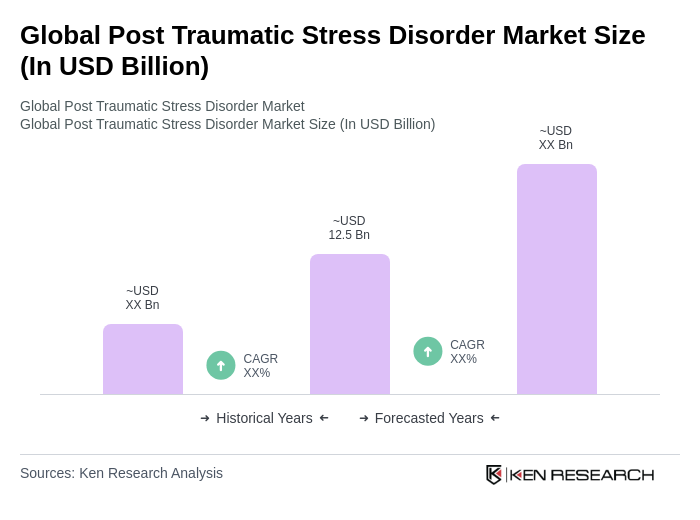
The Global Post Traumatic Stress Disorder Market is valued at approximately USD 12.5 billion, reflecting increased mental health awareness and a higher burden of PTSD due to conflicts and disasters, along with improved access to treatment options.

What makes us stand out is that our consultants follow Robust, Refine and Result (RRR) methodology. Robust for clear definitions, approaches and sanity checking, Refine for differentiating respondents' facts and opinions, and Result for presenting data with story.

We have set a benchmark in the industry by offering our clients with syndicated and customized market research reports featuring coverage of entire market as well as meticulous research and analyst insights.

While we don't replace traditional research, we flip the method upside down. Our dual approach of Top Bottom & Bottom Top ensures quality deliverable by not just verifying company fundamentals but also looking at the sector and macroeconomic factors.

With one step in the future, our research team constantly tries to show you the bigger picture. We help with some of the tough questions you may encounter along the way: How is the industry positioned? Best marketing channel? KPI's of competitors? By aligning every element, we help maximize success.

Our report gives you instant access to the answers and sources that other companies might choose to hide. We elaborate each steps of research methodology we have used and showcase you the sample size to earn your trust.

If you need any support, we are here! We pride ourselves on universe strength, data quality, and quick, friendly, and professional service.













