Region:Global
Author(s):Dev
Product Code:KRAD0358
Pages:85
Published On:August 2025
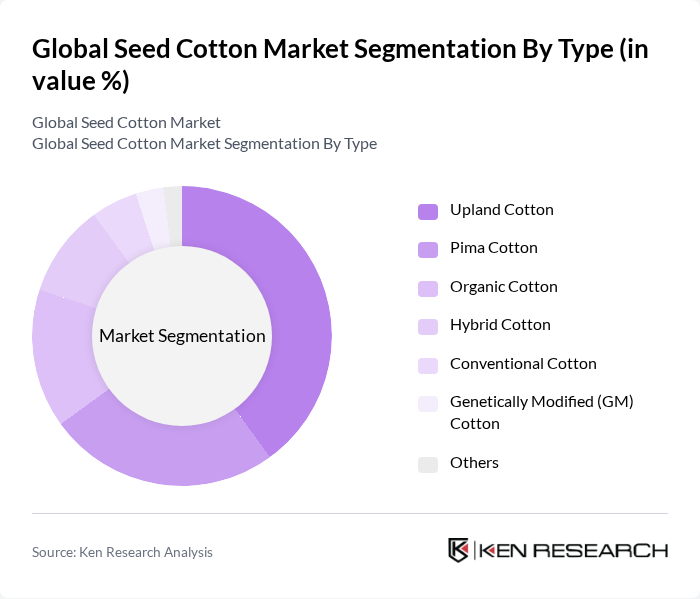
By Type:The seed cotton market is segmented into Upland Cotton, Pima Cotton, Organic Cotton, Hybrid Cotton, Conventional Cotton, Genetically Modified (GM) Cotton, and Others.Upland Cottonis the most widely produced type due to its adaptability and high yield, making it a preferred choice among farmers.Pima Cotton, known for its superior fiber quality, is gaining traction in premium and luxury textile segments.Organic Cottonis increasingly favored by environmentally conscious consumers, driving its market share. The adoption ofGM CottonandHybrid Cottonis also rising, especially in regions seeking pest resistance and higher productivity .
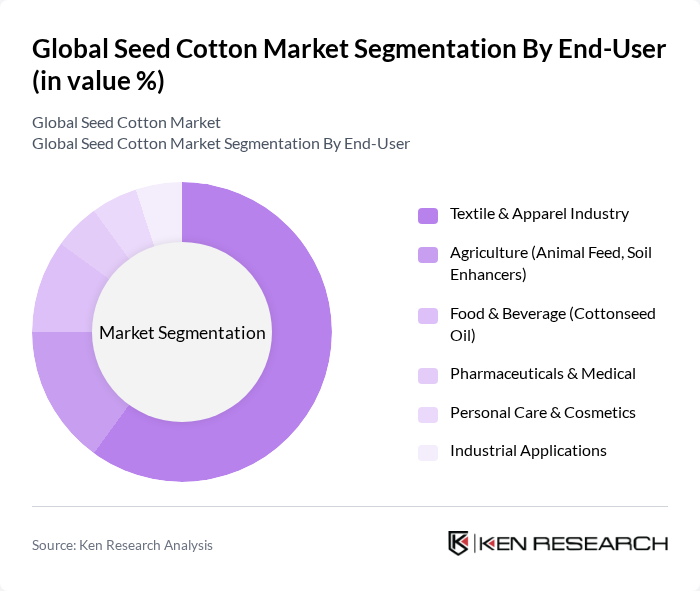
By End-User:The end-user segmentation includes the Textile & Apparel Industry, Agriculture (Animal Feed, Soil Enhancers), Food & Beverage (Cottonseed Oil), Pharmaceuticals & Medical, Personal Care & Cosmetics, and Industrial Applications. TheTextile & Apparel Industrydominates the market, driven by high demand for cotton fabrics in clothing and home textiles. The trend toward sustainable fashion is further boosting demand for organic and eco-friendly cotton. TheAgriculturesegment leverages cottonseed for animal feed and soil enhancers, whileFood & Beverageutilizes cottonseed oil. Other uses include pharmaceuticals, personal care, and industrial applications .
The Global Seed Cotton Market is characterized by a dynamic mix of regional and international players. Leading participants such as Bayer Crop Science, Corteva Agriscience, BASF SE, Syngenta AG, Cargill, Inc., Olam International, Louis Dreyfus Company, Nuziveedu Seeds Ltd., Kaveri Seed Company, Rasi Seeds (P) Ltd., Advanta Seeds, Mayur Ginning and Pressing Pvt. Ltd., Mahyco (Maharashtra Hybrid Seeds Company Ltd.), Cotton Incorporated, and American Cotton Growers contribute to innovation, geographic expansion, and service delivery in this space .
The future of the seed cotton market appears promising, driven by increasing consumer awareness of sustainability and technological innovations in agriculture. As the demand for organic and sustainably sourced cotton rises, producers are likely to invest in eco-friendly practices and advanced cultivation techniques. Additionally, the integration of digital technologies in supply chain management will enhance efficiency and transparency, further supporting market growth. The focus on sustainable practices will likely shape the industry's landscape, encouraging collaboration among stakeholders.
| Segment | Sub-Segments |
|---|---|
| By Type | Upland Cotton Pima Cotton Organic Cotton Hybrid Cotton Conventional Cotton Genetically Modified (GM) Cotton Others |
| By End-User | Textile & Apparel Industry Agriculture (Animal Feed, Soil Enhancers) Food & Beverage (Cottonseed Oil) Pharmaceuticals & Medical Personal Care & Cosmetics Industrial Applications |
| By Region | North America Europe Asia-Pacific Latin America Middle East & Africa |
| By Quality Grade | Extra Long Staple Long Staple Medium Staple Short Staple |
| By Processing Method | Ginning Spinning Weaving Oil Extraction Others |
| By Sales Channel | Direct Sales Distributors Online Retail Others |
| By Price Range | Low Price Mid Price High Price Others |
| Scope Item/Segment | Sample Size | Target Respondent Profiles |
|---|---|---|
| Seed Cotton Producers | 100 | Farm Owners, Agricultural Managers |
| Textile Manufacturers | 80 | Production Managers, Supply Chain Coordinators |
| Agricultural Policy Makers | 60 | Government Officials, Policy Analysts |
| Research Institutions | 40 | Agricultural Researchers, Economists |
| Exporters and Traders | 50 | Trade Managers, Market Analysts |
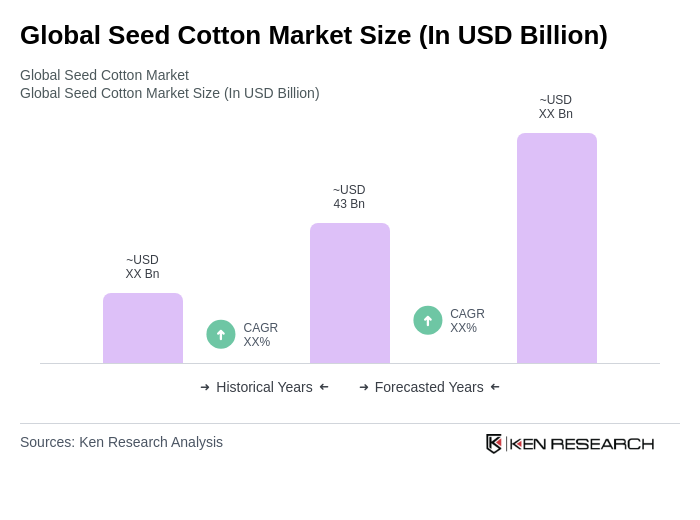
The Global Seed Cotton Market is valued at approximately USD 43 billion, based on a five-year historical analysis. This valuation reflects the increasing demand for cotton in various industries, particularly textiles and apparel.

What makes us stand out is that our consultants follow Robust, Refine and Result (RRR) methodology. Robust for clear definitions, approaches and sanity checking, Refine for differentiating respondents' facts and opinions, and Result for presenting data with story.

We have set a benchmark in the industry by offering our clients with syndicated and customized market research reports featuring coverage of entire market as well as meticulous research and analyst insights.

While we don't replace traditional research, we flip the method upside down. Our dual approach of Top Bottom & Bottom Top ensures quality deliverable by not just verifying company fundamentals but also looking at the sector and macroeconomic factors.

With one step in the future, our research team constantly tries to show you the bigger picture. We help with some of the tough questions you may encounter along the way: How is the industry positioned? Best marketing channel? KPI's of competitors? By aligning every element, we help maximize success.

Our report gives you instant access to the answers and sources that other companies might choose to hide. We elaborate each steps of research methodology we have used and showcase you the sample size to earn your trust.

If you need any support, we are here! We pride ourselves on universe strength, data quality, and quick, friendly, and professional service.













