Region:Global
Author(s):Rebecca
Product Code:KRAB0197
Pages:99
Published On:August 2025
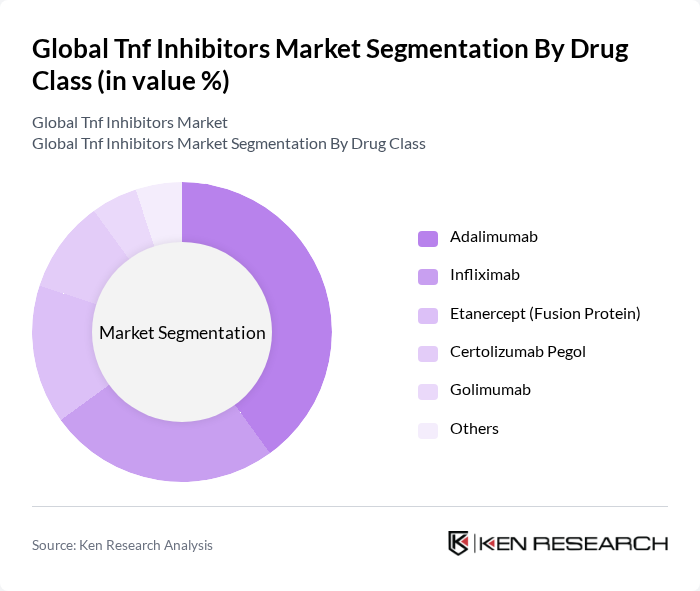
By Drug Class:The drug class segmentation includes various TNF inhibitors that are widely used in clinical practice. The leading sub-segment is Adalimumab, which has gained significant traction due to its effectiveness in treating multiple autoimmune conditions. Infliximab and Etanercept also hold substantial market shares, driven by their established efficacy and safety profiles. Other classes like Certolizumab Pegol and Golimumab are gaining popularity as they offer unique benefits, including targeted delivery mechanisms and suitability for specific patient populations.
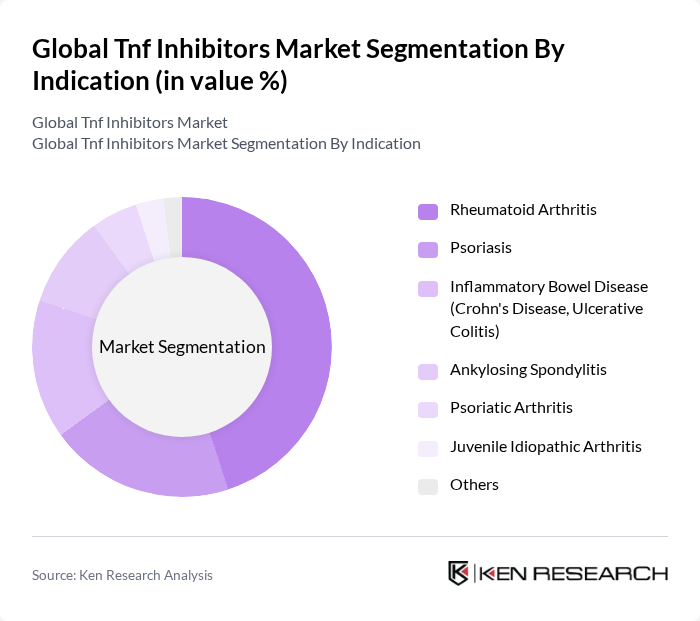
By Indication:The indication segmentation highlights the various autoimmune diseases treated with TNF inhibitors. Rheumatoid Arthritis is the leading indication, accounting for a significant portion of the market due to its high prevalence and chronic nature. Psoriasis and Inflammatory Bowel Disease also represent substantial segments, driven by increasing awareness and improved diagnostic rates. Other indications such as Ankylosing Spondylitis and Psoriatic Arthritis are experiencing growth as therapeutic options expand and clinical guidelines evolve to recommend biologic therapies earlier in the treatment pathway.
The Global Tnf Inhibitors Market is characterized by a dynamic mix of regional and international players. Leading participants such as AbbVie Inc., Amgen Inc., Johnson & Johnson (Janssen Biotech), Merck & Co., Inc., Pfizer Inc., Sanofi S.A., Bristol-Myers Squibb Company, GSK plc (GlaxoSmithKline), Takeda Pharmaceutical Company Limited, Novartis AG, Eli Lilly and Company, Biogen Inc., Regeneron Pharmaceuticals, Inc., UCB S.A., Astellas Pharma Inc. contribute to innovation, geographic expansion, and service delivery in this space.
The future of the TNF inhibitors market appears promising, driven by ongoing research and development efforts aimed at enhancing treatment efficacy. As personalized medicine gains traction, tailored therapies are expected to emerge, improving patient outcomes. Additionally, the integration of digital health technologies will facilitate better patient monitoring and adherence to treatment regimens. These trends indicate a shift towards more effective and patient-centered approaches in managing autoimmune diseases, positioning the market for sustained growth in the coming years.
| Segment | Sub-Segments |
|---|---|
| By Drug Class | Adalimumab Infliximab Etanercept (Fusion Protein) Certolizumab Pegol Golimumab Others |
| By Indication | Rheumatoid Arthritis Psoriasis Inflammatory Bowel Disease (Crohn's Disease, Ulcerative Colitis) Ankylosing Spondylitis Psoriatic Arthritis Juvenile Idiopathic Arthritis Others |
| By Route of Administration | Subcutaneous Intravenous |
| By Distribution Channel | Hospital Pharmacies Specialty Pharmacies Online Pharmacies |
| By Region | North America (U.S., Canada, Mexico) Europe (Germany, U.K., France, Italy, Spain, Rest of Europe) Asia-Pacific (China, Japan, India, Australia, South Korea, Rest of Asia-Pacific) Latin America (Brazil, Argentina, Rest of Latin America) Middle East & Africa (GCC, South Africa, Rest of MEA) |
| By Patient Demographics | Pediatric Adult Geriatric |
| By Treatment Duration | Short-term Long-term Maintenance Therapy |
| Scope Item/Segment | Sample Size | Target Respondent Profiles |
|---|---|---|
| Rheumatoid Arthritis Treatment | 60 | Rheumatologists, Nurse Practitioners |
| Psoriasis Management | 50 | Dermatologists, Clinical Pharmacists |
| Inflammatory Bowel Disease Care | 40 | Gastroenterologists, Patient Care Coordinators |
| Healthcare Provider Insights | 70 | General Practitioners, Specialty Care Providers |
| Patient Experience Feedback | 45 | Patients on TNF Inhibitors, Caregivers |
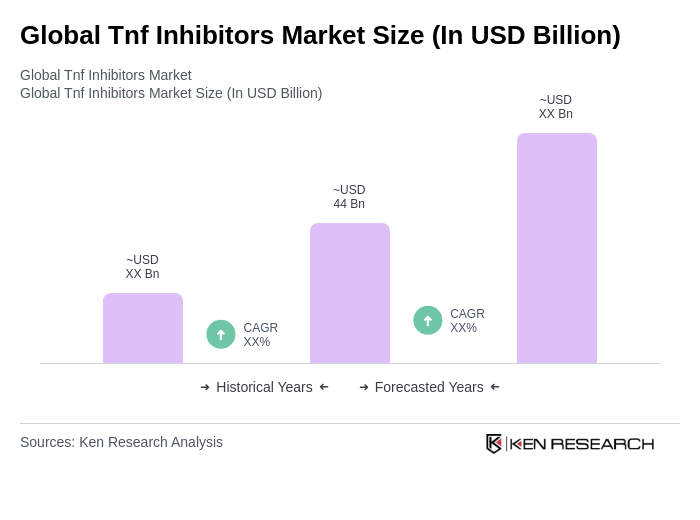
The Global TNF Inhibitors Market is valued at approximately USD 44 billion, driven by the rising prevalence of autoimmune diseases, increased healthcare expenditure, and advancements in biotechnology that enhance drug efficacy and safety profiles.

What makes us stand out is that our consultants follow Robust, Refine and Result (RRR) methodology. Robust for clear definitions, approaches and sanity checking, Refine for differentiating respondents' facts and opinions, and Result for presenting data with story.

We have set a benchmark in the industry by offering our clients with syndicated and customized market research reports featuring coverage of entire market as well as meticulous research and analyst insights.

While we don't replace traditional research, we flip the method upside down. Our dual approach of Top Bottom & Bottom Top ensures quality deliverable by not just verifying company fundamentals but also looking at the sector and macroeconomic factors.

With one step in the future, our research team constantly tries to show you the bigger picture. We help with some of the tough questions you may encounter along the way: How is the industry positioned? Best marketing channel? KPI's of competitors? By aligning every element, we help maximize success.

Our report gives you instant access to the answers and sources that other companies might choose to hide. We elaborate each steps of research methodology we have used and showcase you the sample size to earn your trust.

If you need any support, we are here! We pride ourselves on universe strength, data quality, and quick, friendly, and professional service.













