Region:Global
Author(s):Shubham
Product Code:KRAA2651
Pages:97
Published On:August 2025
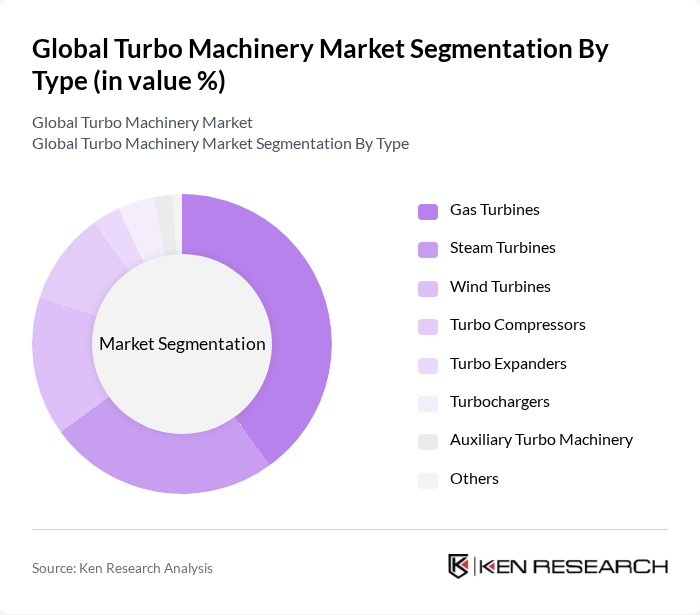
By Type:The turbo machinery market is segmented into various types, including gas turbines, steam turbines, wind turbines, turbo compressors, turbo expanders, turbochargers, auxiliary turbo machinery, and others. Among these, gas turbines lead the market due to their high efficiency and versatility in power generation applications. The increasing demand for cleaner energy sources, coupled with the need for reliable and flexible power supply in diverse industries, has reinforced the position of gas turbines as a preferred choice. Wind turbines are also experiencing rapid growth, driven by global investments in renewable energy and technological advancements that enhance their efficiency .
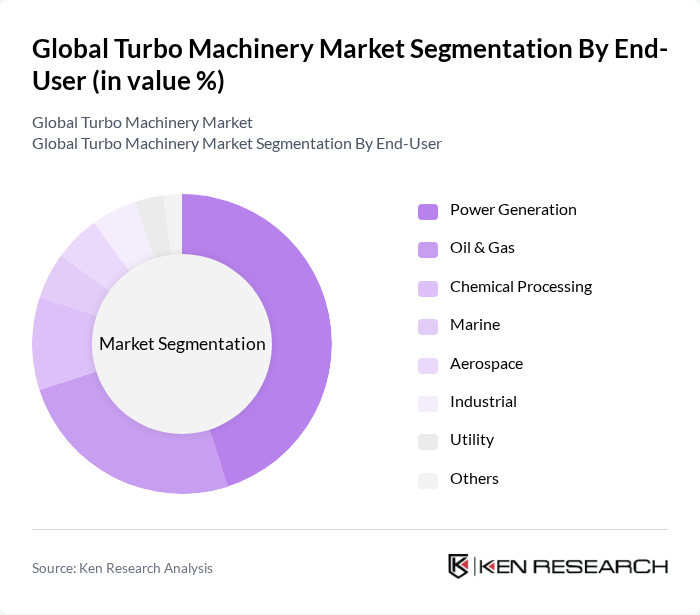
By End-User:The end-user segmentation of the turbo machinery market includes power generation, oil & gas, chemical processing, marine, aerospace, industrial, utility, and others. The power generation sector remains the dominant end-user, fueled by the global increase in electricity demand and the transition toward renewable energy sources. The oil & gas sector continues to be a significant consumer, leveraging turbo machinery for efficient extraction, processing, and transportation. The adoption of advanced control systems and digital solutions is further enhancing operational efficiency and reliability across all end-user segments .
The Global Turbo Machinery Market is characterized by a dynamic mix of regional and international players. Leading participants such as General Electric Company, Siemens AG, Mitsubishi Heavy Industries, Ltd., Rolls-Royce Holdings plc, MAN Energy Solutions SE, Baker Hughes Company, Alstom S.A., Honeywell International Inc., Cummins Inc., Wärtsilä Corporation, Ansaldo Energia S.p.A., Doosan Heavy Industries & Construction, Sulzer Ltd., Toshiba Energy Systems & Solutions Corporation, Schneider Electric SE, Kawasaki Heavy Industries, Ltd., Solar Turbines Incorporated (a Caterpillar company), Atlas Copco AB, Ingersoll Rand Inc., Bharat Heavy Electricals Limited (BHEL) contribute to innovation, geographic expansion, and service delivery in this space.
The future of the turbo machinery market appears promising, driven by technological advancements and a growing emphasis on sustainability. As industries increasingly adopt digitalization and IoT integration, turbo machinery will evolve to become more efficient and responsive. Furthermore, the shift towards decentralized energy systems will create new opportunities for innovative solutions, enabling companies to cater to diverse energy needs while enhancing operational efficiency and reducing environmental impact.
| Segment | Sub-Segments |
|---|---|
| By Type | Gas Turbines Steam Turbines Wind Turbines Turbo Compressors Turbo Expanders Turbochargers Auxiliary Turbo Machinery Others |
| By End-User | Power Generation Oil & Gas Chemical Processing Marine Aerospace Industrial Utility Others |
| By Application | Power Generation Mechanical Drive Process Industry HVAC Systems Oil & Gas Transmission Others |
| By Component | Turbine Blades Bearings Control Systems Casings Rotors Others |
| By Sales Channel | Direct Sales Distributors Online Sales Others |
| By Distribution Mode | Domestic Distribution International Distribution Direct Shipping Others |
| By Price Range | Low-End Mid-Range High-End Others |
| Scope Item/Segment | Sample Size | Target Respondent Profiles |
|---|---|---|
| Power Generation Sector | 120 | Plant Managers, Energy Analysts |
| Aerospace Applications | 60 | Design Engineers, Procurement Managers |
| Oil & Gas Industry | 80 | Operations Directors, Technical Specialists |
| Marine Propulsion Systems | 50 | Marine Engineers, Fleet Managers |
| Industrial Applications | 40 | Manufacturing Managers, Quality Control Officers |
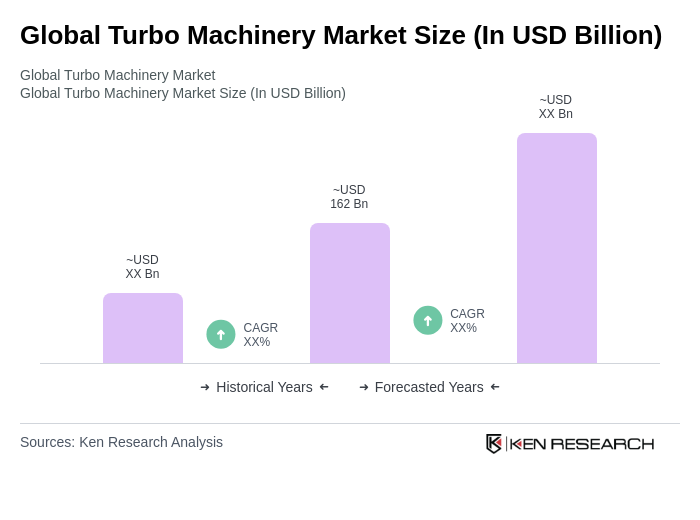
The Global Turbo Machinery Market is valued at approximately USD 162 billion, driven by the increasing demand for energy-efficient solutions and the expansion of the oil and gas sector, alongside the adoption of renewable energy sources.

What makes us stand out is that our consultants follow Robust, Refine and Result (RRR) methodology. Robust for clear definitions, approaches and sanity checking, Refine for differentiating respondents' facts and opinions, and Result for presenting data with story.

We have set a benchmark in the industry by offering our clients with syndicated and customized market research reports featuring coverage of entire market as well as meticulous research and analyst insights.

While we don't replace traditional research, we flip the method upside down. Our dual approach of Top Bottom & Bottom Top ensures quality deliverable by not just verifying company fundamentals but also looking at the sector and macroeconomic factors.

With one step in the future, our research team constantly tries to show you the bigger picture. We help with some of the tough questions you may encounter along the way: How is the industry positioned? Best marketing channel? KPI's of competitors? By aligning every element, we help maximize success.

Our report gives you instant access to the answers and sources that other companies might choose to hide. We elaborate each steps of research methodology we have used and showcase you the sample size to earn your trust.

If you need any support, we are here! We pride ourselves on universe strength, data quality, and quick, friendly, and professional service.













