Region:Global
Author(s):Dev
Product Code:KRAC0366
Pages:96
Published On:August 2025
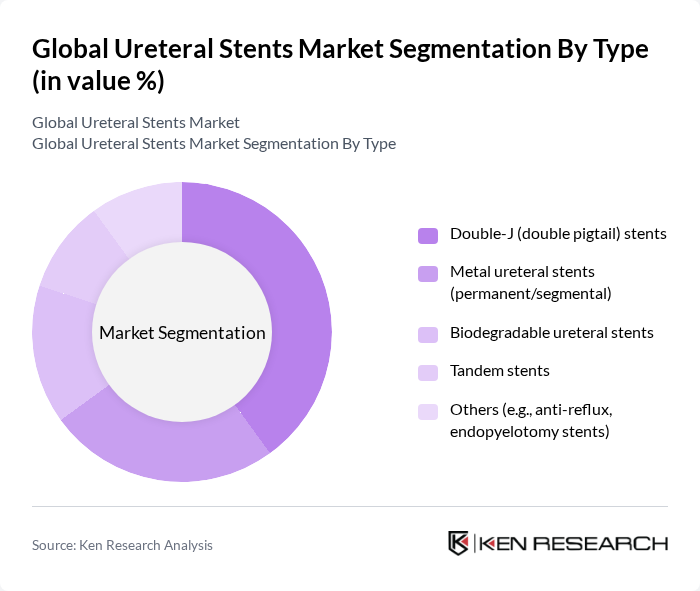
By Type:The ureteral stents market is segmented into various types, including Double-J (double pigtail) stents, Metal ureteral stents (permanent/segmental), Biodegradable ureteral stents, Tandem stents, and Others (e.g., anti-reflux, endopyelotomy stents). Among these, Double-J stents are the most widely used due to their effectiveness in managing ureteral obstructions and their ease of placement. The increasing preference for minimally invasive procedures and the development of stents with improved patient comfort and reduced encrustation have contributed to the growing demand for these stents .
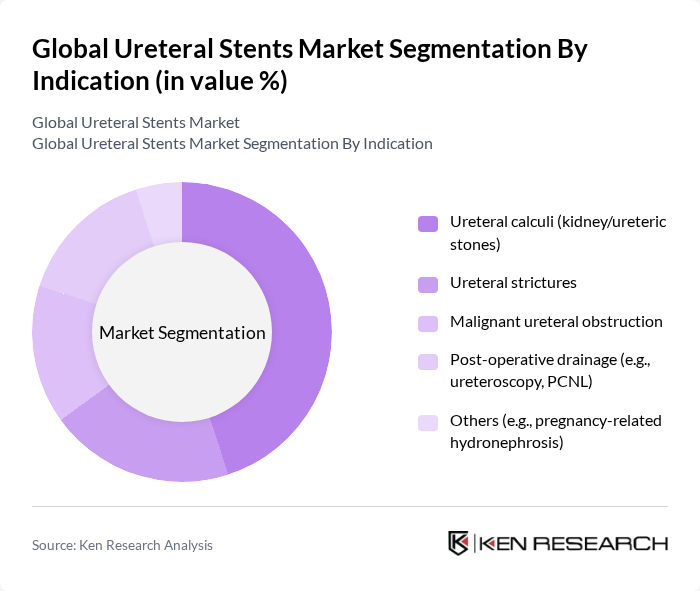
By Indication:The market is also segmented based on indications, including Ureteral calculi (kidney/ureteric stones), Ureteral strictures, Malignant ureteral obstruction, Post-operative drainage (e.g., ureteroscopy, PCNL), and Others (e.g., pregnancy-related hydronephrosis). The segment for Ureteral calculi leads due to the high incidence of kidney stones globally, which necessitates the use of ureteral stents for effective management and relief of obstruction. Other major indications include strictures and malignant obstructions, with growing utilization in post-operative management .
The Global Ureteral Stents Market is characterized by a dynamic mix of regional and international players. Leading participants such as Boston Scientific Corporation, Cook Medical LLC, Teleflex Incorporated, B. Braun Melsungen AG, Coloplast A/S, Olympus Corporation, Becton, Dickinson and Company (BD), Merit Medical Systems, Inc., PNN Medical A/S, Allium Medical Solutions Ltd., Taewoong Medical Co., Ltd., Applied Medical Resources Corporation, Coloplast Corp. (U.S.), Richard Wolf GmbH, Urotech GmbH (A Medi-Globe Group Company) contribute to innovation, geographic expansion, and service delivery in this space.
The ureteral stents market is poised for significant transformation, driven by technological advancements and demographic shifts. As the geriatric population expands and urinary disorders become more prevalent, the demand for innovative stent solutions will increase. Additionally, the integration of digital health technologies is expected to enhance patient monitoring and outcomes. Collaborations between manufacturers and healthcare providers will likely foster innovation, ensuring that the market adapts to evolving patient needs and regulatory landscapes.
| Segment | Sub-Segments |
|---|---|
| By Type | Double-J (double pigtail) stents Metal ureteral stents (permanent/segmental) Biodegradable ureteral stents Tandem stents Others (e.g., anti-reflux, endopyelotomy stents) |
| By Indication | Ureteral calculi (kidney/ureteric stones) Ureteral strictures Malignant ureteral obstruction Post-operative drainage (e.g., ureteroscopy, PCNL) Others (e.g., pregnancy-related hydronephrosis) |
| By End-User | Hospitals Ambulatory surgical centers Specialty urology clinics Others |
| By Material/Coating | Polyurethane Silicone Hydrophilic/hydrogel-coated Metal/alloy Others (e.g., antibiotic/anti-encrustation coated) |
| By Distribution Channel | Direct sales to providers Distributor/wholesaler sales Group purchasing organizations (GPOs) Online/ tender-based procurement |
| By Region | North America Europe Asia-Pacific Latin America Middle East & Africa |
| By Price Range | Low Mid High Premium (drug/novel coated, long-term metal) |
| Scope Item/Segment | Sample Size | Target Respondent Profiles |
|---|---|---|
| Urology Clinics | 60 | Urologists, Clinic Managers |
| Hospitals with Urology Departments | 50 | Procurement Officers, Department Heads |
| Medical Device Distributors | 40 | Sales Managers, Product Specialists |
| Healthcare Policy Makers | 40 | Health Economists, Policy Analysts |
| Patient Advocacy Groups | 40 | Patient Representatives, Healthcare Advocates |
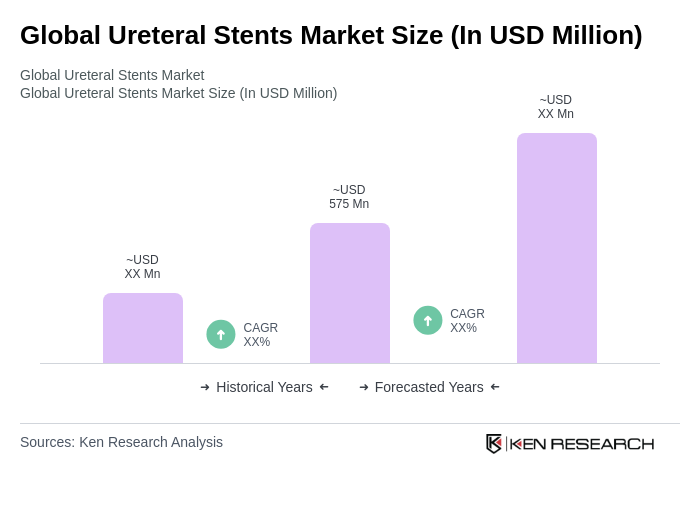
The Global Ureteral Stents Market is valued at approximately USD 575 million, driven by the rising prevalence of urological disorders, advancements in stent technology, and an increasing geriatric population requiring surgical interventions.

What makes us stand out is that our consultants follow Robust, Refine and Result (RRR) methodology. Robust for clear definitions, approaches and sanity checking, Refine for differentiating respondents' facts and opinions, and Result for presenting data with story.

We have set a benchmark in the industry by offering our clients with syndicated and customized market research reports featuring coverage of entire market as well as meticulous research and analyst insights.

While we don't replace traditional research, we flip the method upside down. Our dual approach of Top Bottom & Bottom Top ensures quality deliverable by not just verifying company fundamentals but also looking at the sector and macroeconomic factors.

With one step in the future, our research team constantly tries to show you the bigger picture. We help with some of the tough questions you may encounter along the way: How is the industry positioned? Best marketing channel? KPI's of competitors? By aligning every element, we help maximize success.

Our report gives you instant access to the answers and sources that other companies might choose to hide. We elaborate each steps of research methodology we have used and showcase you the sample size to earn your trust.

If you need any support, we are here! We pride ourselves on universe strength, data quality, and quick, friendly, and professional service.













