About the Report
Base Year 2024Global Virtual Fitness Market Overview
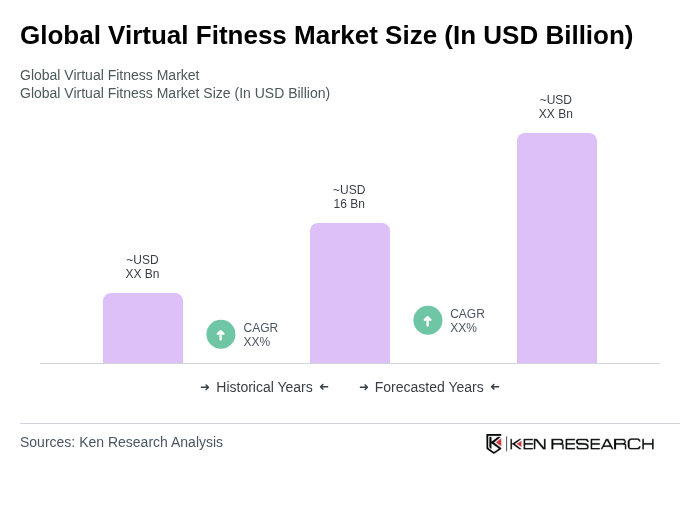
- The Global Virtual Fitness Market is valued at approximately USD 16 billion, based on a five-year historical analysis. This growth is primarily driven by the increasing adoption of digital fitness solutions, the rise of health-conscious consumers, and the convenience of accessing fitness programs from home. The pandemic significantly accelerated the shift towards virtual fitness, as many individuals sought alternatives to traditional gym settings.
- Key players in this market include the United States, Canada, the United Kingdom, Germany, and Australia. These countries dominate the market due to their advanced technological infrastructure, high internet penetration rates, and a strong culture of fitness and wellness. The presence of numerous fitness startups and established brands further enhances their market position, catering to diverse consumer preferences. North America holds the largest market share, with significant growth also observed in Asia-Pacific due to increasing internet penetration and mobile device adoption.
- The Health Information Technology for Economic and Clinical Health (HITECH) Act, as amended and enforced by the U.S. Department of Health and Human Services, establishes operational standards for digital health platforms, including requirements for privacy, security, and interoperability. The Act supports the adoption of digital health and fitness solutions by providing incentives for technology development and compliance, thereby encouraging innovation and broader use of virtual fitness platforms.
Global Virtual Fitness Market Segmentation
By Type:The virtual fitness market can be segmented into various types, including Live Streaming Classes, On-Demand Workouts, Virtual Personal Training, Fitness Challenges, Group Sessions, Solo Sessions, and Others. Each of these segments caters to different consumer preferences and fitness goals, contributing to the overall market dynamics. The on-demand segment currently holds the largest share, driven by consumer demand for flexibility and accessibility, while live streaming and group sessions continue to grow due to their interactive and community-driven formats.
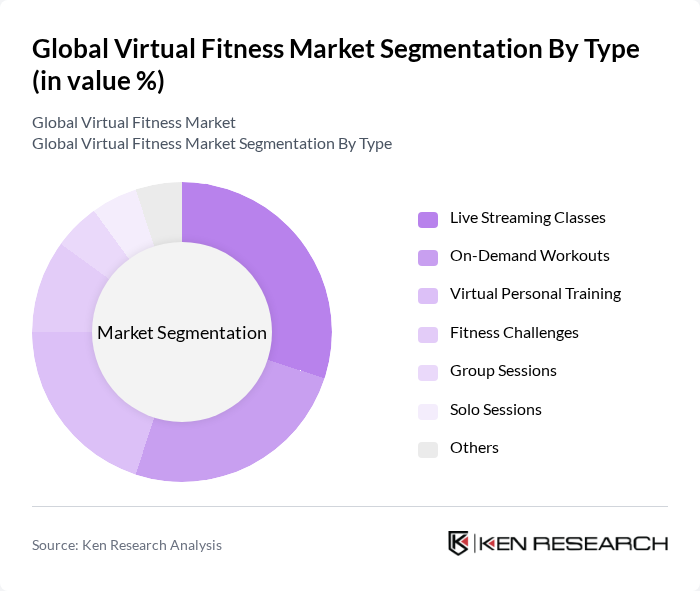
The Live Streaming Classes segment is currently dominating the market due to its interactive nature, allowing users to engage with instructors in real-time. This format fosters a sense of community and accountability among participants, which is crucial for maintaining motivation. On-Demand Workouts also hold significant appeal, providing flexibility for users to exercise at their convenience. The growing trend of personalized fitness experiences is driving the demand for Virtual Personal Training, making it a competitive segment as well.
By End-User:The market can also be segmented based on end-users, including Individual Users, Corporate Wellness Programs, Educational Institutions, Fitness Studios and Gyms, Sports Institutes, Defense Institutes, and Others. Each segment reflects the diverse applications of virtual fitness solutions across different demographics and organizational needs. The individual user segment remains the largest, driven by the widespread adoption of digital fitness platforms among consumers seeking convenience and personalized experiences. Corporate wellness programs and educational institutions are also expanding their adoption of virtual fitness to promote health and engagement.
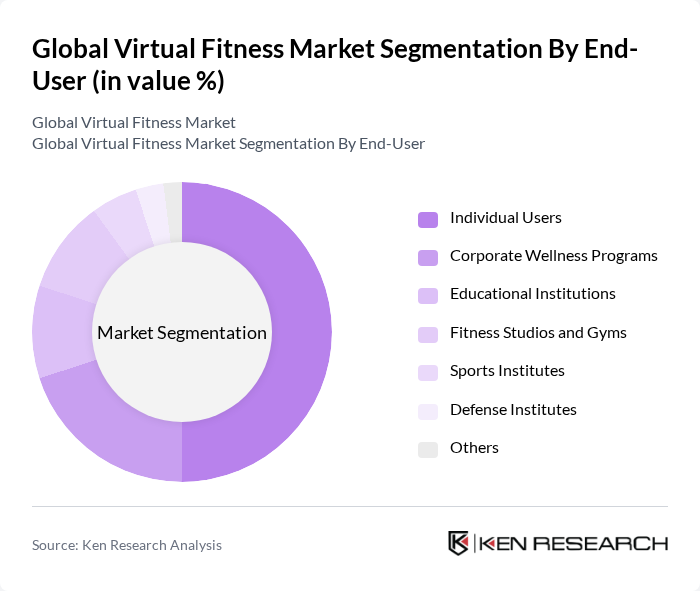
The Individual Users segment is the largest, driven by the increasing number of health-conscious consumers seeking convenient fitness solutions. Corporate Wellness Programs are gaining traction as companies recognize the importance of employee health and well-being, leading to increased investments in virtual fitness platforms. Educational Institutions are also adopting these solutions to promote physical activity among students, further diversifying the user base.
Global Virtual Fitness Market Competitive Landscape
The Global Virtual Fitness Market is characterized by a dynamic mix of regional and international players. Leading participants such as Peloton Interactive, Inc., Beachbody, LLC, Zwift, Inc., Fitbit, Inc. (now part of Google LLC), Les Mills International, Daily Burn, Inc., Nike Training Club (Nike, Inc.), Aaptiv Inc., MyFitnessPal (Under Armour, Inc.), ClassPass, Inc., TRX Training (Fitness Anywhere LLC), Tone It Up, LLC, FitOn Inc., Sworkit (Nexercise, Inc.), Centr (by Chris Hemsworth), Apple Fitness+ (Apple Inc.), Freeletics GmbH, Echelon Fitness Multimedia LLC, Openfit, LLC, Sweat (Kayla Itsines, now part of iFIT Health & Fitness Inc.) contribute to innovation, geographic expansion, and service delivery in this space.
Global Virtual Fitness Market Industry Analysis
Growth Drivers
- Increasing Demand for Home Workouts:The global home fitness equipment market was valued at approximately $2.5 billion in future, reflecting a significant shift towards home workouts. This trend is driven by the convenience of exercising at home, with 65% of consumers preferring home workouts over gym visits. The COVID-19 pandemic accelerated this demand, leading to a 35% increase in online fitness subscriptions, indicating a robust market for virtual fitness solutions in the None region.
- Rise of Health Consciousness:According to the World Health Organization, 40% of adults aged 18 and older were overweight in future, prompting a surge in health awareness. This has led to a 30% increase in fitness app downloads, as individuals seek to improve their health through virtual fitness platforms. The growing focus on preventive healthcare is expected to drive the demand for virtual fitness solutions, as consumers prioritize their well-being and fitness routines.
- Technological Advancements in Fitness Apps:The global fitness app market reached $5.0 billion in future, fueled by innovations such as AI-driven personalized training and real-time feedback features. With over 90 million fitness app users in the None region, the integration of advanced technologies enhances user experience and engagement. This technological evolution is pivotal in attracting new users and retaining existing ones, thereby propelling the growth of the virtual fitness market.
Market Challenges
- High Competition Among Providers:The virtual fitness market is saturated, with over 1,800 fitness apps available globally. This intense competition leads to price wars and challenges in differentiating services. As a result, many providers struggle to maintain market share, with 45% of new entrants failing within the first year. This competitive landscape necessitates innovative strategies to attract and retain users in the None region.
- User Retention Issues:Despite the initial surge in users, retention rates for fitness apps hover around 35% after three months. This challenge is exacerbated by the lack of personalized experiences and engagement strategies. In the None region, where user expectations are high, providers must focus on enhancing user experience to improve retention rates and ensure long-term success in the virtual fitness market.
Global Virtual Fitness Market Future Outlook
The future of the virtual fitness market in the None region appears promising, driven by the increasing integration of technology and a growing emphasis on holistic health. As consumers continue to prioritize fitness and wellness, the demand for innovative solutions will rise. Additionally, the trend towards hybrid fitness models, combining in-person and virtual experiences, is expected to gain traction, providing a unique opportunity for providers to cater to diverse consumer preferences and enhance engagement.
Market Opportunities
- Integration of AI and Machine Learning:The incorporation of AI in fitness apps can enhance user experience by providing personalized workout plans and real-time feedback. This technology is projected to increase user engagement by 60%, creating a significant opportunity for providers to differentiate their offerings and attract a broader audience in the None region.
- Expansion into Emerging Markets:Emerging markets in the None region present a lucrative opportunity, with a projected increase in smartphone penetration to 75% in future. This growth will facilitate access to virtual fitness solutions, allowing providers to tap into a new customer base and drive revenue growth through localized content and services tailored to regional preferences.
Scope of the Report
| Segment | Sub-Segments |
|---|---|
| By Type | Live Streaming Classes On-Demand Workouts Virtual Personal Training Fitness Challenges Group Sessions Solo Sessions Others |
| By End-User | Individual Users Corporate Wellness Programs Educational Institutions Fitness Studios and Gyms Sports Institutes Defense Institutes Others |
| By Subscription Model | Monthly Subscription Annual Subscription Pay-Per-Class Freemium Model Advertisement-Supported Hybrid Model Others |
| By Content Type | Yoga and Pilates High-Intensity Interval Training (HIIT) Dance Fitness Strength Training Cardio Workouts Meditation & Mindfulness Others |
| By Device Compatibility | Mobile Devices (Smartphones & Tablets) Smart TVs Wearable Fitness Trackers Desktop & Laptop Computers Virtual Reality (VR) Headsets Gaming Consoles Others |
| By Geographic Reach | North America Europe Asia Pacific Latin America Middle East & Africa Others |
| By User Demographics | Age Groups Gender Fitness Levels Lifestyle Preferences Others |
Key Target Audience
Investors and Venture Capitalist Firms
Government and Regulatory Bodies (e.g.,
Fitness Equipment Manufacturers
Virtual Fitness Platform Developers
Health and Wellness Organizations
Insurance Companies
Corporate Wellness Program Providers
Telehealth Service Providers
Players Mentioned in the Report:
Peloton Interactive, Inc.
Beachbody, LLC
Zwift, Inc.
Fitbit, Inc. (now part of Google LLC)
Les Mills International
Daily Burn, Inc.
Nike Training Club (Nike, Inc.)
Aaptiv Inc.
MyFitnessPal (Under Armour, Inc.)
ClassPass, Inc.
TRX Training (Fitness Anywhere LLC)
Tone It Up, LLC
FitOn Inc.
Sworkit (Nexercise, Inc.)
Centr (by Chris Hemsworth)
Apple Fitness+ (Apple Inc.)
Freeletics GmbH
Echelon Fitness Multimedia LLC
Openfit, LLC
Sweat (Kayla Itsines, now part of iFIT Health & Fitness Inc.)
Table of Contents
Market Assessment Phase
1. Executive Summary and Approach
2. Global Virtual Fitness Market Overview
2.1 Key Insights and Strategic Recommendations
2.2 Global Virtual Fitness Market Overview
2.3 Definition and Scope
2.4 Evolution of Market Ecosystem
2.5 Timeline of Key Regulatory Milestones
2.6 Value Chain & Stakeholder Mapping
2.7 Business Cycle Analysis
2.8 Policy & Incentive Landscape
3. Global Virtual Fitness Market Analysis
3.1 Growth Drivers
3.1.1 Increasing Demand for Home Workouts
3.1.2 Rise of Health Consciousness
3.1.3 Technological Advancements in Fitness Apps
3.1.4 Expansion of Social Media Influence on Fitness
3.2 Market Challenges
3.2.1 High Competition Among Providers
3.2.2 User Retention Issues
3.2.3 Data Privacy Concerns
3.2.4 Limited Accessibility in Certain Regions
3.3 Market Opportunities
3.3.1 Integration of AI and Machine Learning
3.3.2 Expansion into Emerging Markets
3.3.3 Development of Personalized Fitness Programs
3.3.4 Collaborations with Health Professionals
3.4 Market Trends
3.4.1 Growth of Hybrid Fitness Models
3.4.2 Increased Use of Wearable Technology
3.4.3 Focus on Mental Health and Wellness
3.4.4 Gamification of Fitness Experiences
3.5 Government Regulation
3.5.1 Guidelines for Online Fitness Programs
3.5.2 Health and Safety Standards for Virtual Classes
3.5.3 Data Protection Regulations
3.5.4 Tax Incentives for Health and Fitness Initiatives
4. SWOT Analysis
5. Stakeholder Analysis
6. Porter's Five Forces Analysis
7. Global Virtual Fitness Market Market Size, 2019-2024
7.1 By Value
7.2 By Volume
7.3 By Average Selling Price
8. Global Virtual Fitness Market Segmentation
8.1 By Type
8.1.1 Live Streaming Classes
8.1.2 On-Demand Workouts
8.1.3 Virtual Personal Training
8.1.4 Fitness Challenges
8.1.5 Group Sessions
8.1.6 Solo Sessions
8.1.7 Others
8.2 By End-User
8.2.1 Individual Users
8.2.2 Corporate Wellness Programs
8.2.3 Educational Institutions
8.2.4 Fitness Studios and Gyms
8.2.5 Sports Institutes
8.2.6 Defense Institutes
8.2.7 Others
8.3 By Subscription Model
8.3.1 Monthly Subscription
8.3.2 Annual Subscription
8.3.3 Pay-Per-Class
8.3.4 Freemium Model
8.3.5 Advertisement-Supported
8.3.6 Hybrid Model
8.3.7 Others
8.4 By Content Type
8.4.1 Yoga and Pilates
8.4.2 High-Intensity Interval Training (HIIT)
8.4.3 Dance Fitness
8.4.4 Strength Training
8.4.5 Cardio Workouts
8.4.6 Meditation & Mindfulness
8.4.7 Others
8.5 By Device Compatibility
8.5.1 Mobile Devices (Smartphones & Tablets)
8.5.2 Smart TVs
8.5.3 Wearable Fitness Trackers
8.5.4 Desktop & Laptop Computers
8.5.5 Virtual Reality (VR) Headsets
8.5.6 Gaming Consoles
8.5.7 Others
8.6 By Geographic Reach
8.6.1 North America
8.6.2 Europe
8.6.3 Asia Pacific
8.6.4 Latin America
8.6.5 Middle East & Africa
8.6.6 Others
8.7 By User Demographics
8.7.1 Age Groups
8.7.2 Gender
8.7.3 Fitness Levels
8.7.4 Lifestyle Preferences
8.7.5 Others
9. Global Virtual Fitness Market Competitive Analysis
9.1 Market Share of Key Players
9.2 Cross Comparison of Key Players
9.2.1 Company Name
9.2.2 Company Size (by revenue or user base)
9.2.3 Customer Acquisition Cost (CAC)
9.2.4 Monthly Active Users (MAU)
9.2.5 Churn Rate
9.2.6 Average Revenue Per User (ARPU)
9.2.7 User Engagement Rate (e.g., average sessions per user per week)
9.2.8 Pricing Strategy (subscription, freemium, pay-per-class, etc.)
9.2.9 Customer Lifetime Value (CLV)
9.2.10 Market Penetration Rate (by region or segment)
9.2.11 Content Library Size (number of classes/programs offered)
9.2.12 Technology Integration (AI, wearables, VR, etc.)
9.2.13 Retention Rate
9.2.14 International Presence (number of countries served)
9.3 SWOT Analysis of Top Players
9.4 Pricing Analysis
9.5 Detailed Profile of Major Companies
9.5.1 Peloton Interactive, Inc.
9.5.2 Beachbody, LLC
9.5.3 Zwift, Inc.
9.5.4 Fitbit, Inc. (now part of Google LLC)
9.5.5 Les Mills International
9.5.6 Daily Burn, Inc.
9.5.7 Nike Training Club (Nike, Inc.)
9.5.8 Aaptiv Inc.
9.5.9 MyFitnessPal (Under Armour, Inc.)
9.5.10 ClassPass, Inc.
9.5.11 TRX Training (Fitness Anywhere LLC)
9.5.12 Tone It Up, LLC
9.5.13 FitOn Inc.
9.5.14 Sworkit (Nexercise, Inc.)
9.5.15 Centr (by Chris Hemsworth)
9.5.16 Apple Fitness+ (Apple Inc.)
9.5.17 Freeletics GmbH
9.5.18 Echelon Fitness Multimedia LLC
9.5.19 Openfit, LLC
9.5.20 Sweat (Kayla Itsines, now part of iFIT Health & Fitness Inc.)
10. Global Virtual Fitness Market End-User Analysis
10.1 Procurement Behavior of Key Ministries
10.1.1 Government Initiatives for Health Promotion
10.1.2 Budget Allocations for Fitness Programs
10.1.3 Partnerships with Fitness Providers
10.1.4 Evaluation of Fitness Program Effectiveness
10.2 Corporate Spend on Infrastructure & Energy
10.2.1 Investment in Employee Wellness Programs
10.2.2 Budgeting for Virtual Fitness Solutions
10.2.3 Cost-Benefit Analysis of Fitness Investments
10.2.4 Trends in Corporate Fitness Spending
10.3 Pain Point Analysis by End-User Category
10.3.1 Accessibility Issues
10.3.2 User Experience Challenges
10.3.3 Content Variety and Quality
10.3.4 Technical Support and Assistance
10.4 User Readiness for Adoption
10.4.1 Awareness of Virtual Fitness Options
10.4.2 Technological Proficiency
10.4.3 Willingness to Pay for Services
10.4.4 Feedback on Current Offerings
10.5 Post-Deployment ROI and Use Case Expansion
10.5.1 Measurement of Fitness Outcomes
10.5.2 User Retention Rates
10.5.3 Expansion of Service Offerings
10.5.4 Long-term Engagement Strategies
11. Global Virtual Fitness Market Future Size, 2025-2030
11.1 By Value
11.2 By Volume
11.3 By Average Selling Price
Go-To-Market Strategy Phase
1. Whitespace Analysis + Business Model Canvas
1.1 Market Gaps Identification
1.2 Value Proposition Development
1.3 Revenue Streams Analysis
1.4 Customer Segmentation
1.5 Key Partnerships
1.6 Cost Structure
1.7 Channels of Distribution
2. Marketing and Positioning Recommendations
2.1 Branding Strategies
2.2 Product USPs
3. Distribution Plan
3.1 Urban Retail vs Rural NGO Tie-ups
4. Channel & Pricing Gaps
4.1 Underserved Routes
4.2 Pricing Bands
5. Unmet Demand & Latent Needs
5.1 Category Gaps
5.2 Consumer Segments
6. Customer Relationship
6.1 Loyalty Programs
6.2 After-sales Service
7. Value Proposition
7.1 Sustainability
7.2 Integrated Supply Chains
8. Key Activities
8.1 Regulatory Compliance
8.2 Branding
8.3 Distribution Setup
9. Entry Strategy Evaluation
9.1 Domestic Market Entry Strategy
9.1.1 Product Mix
9.1.2 Pricing Band
9.1.3 Packaging
9.2 Export Entry Strategy
9.2.1 Target Countries
9.2.2 Compliance Roadmap
10. Entry Mode Assessment
10.1 JV
10.2 Greenfield
10.3 M&A
10.4 Distributor Model
11. Capital and Timeline Estimation
11.1 Capital Requirements
11.2 Timelines
12. Control vs Risk Trade-Off
12.1 Ownership vs Partnerships
13. Profitability Outlook
13.1 Breakeven Analysis
13.2 Long-term Sustainability
14. Potential Partner List
14.1 Distributors
14.2 JVs
14.3 Acquisition Targets
15. Execution Roadmap
15.1 Phased Plan for Market Entry
15.1.1 Market Setup
15.1.2 Market Entry
15.1.3 Growth Acceleration
15.1.4 Scale & Stabilize
15.2 Key Activities and Milestones
Research Methodology
Phase 1: Approach1
Desk Research
- Analysis of industry reports from fitness technology associations and market research firms
- Review of published articles and white papers on virtual fitness trends and consumer behavior
- Examination of demographic data and fitness participation rates from government health agencies
Primary Research
- Interviews with fitness app developers and virtual training platform executives
- Surveys targeting fitness instructors and personal trainers utilizing virtual platforms
- Focus groups with end-users to gather insights on preferences and experiences with virtual fitness solutions
Validation & Triangulation
- Cross-validation of findings through multiple data sources, including user reviews and social media sentiment analysis
- Triangulation of market data with insights from industry experts and fitness professionals
- Sanity checks through expert panel discussions to ensure data accuracy and relevance
Phase 2: Market Size Estimation1
Top-down Assessment
- Estimation of market size based on global fitness industry revenue and growth rates
- Segmentation of the market by geographic regions and user demographics
- Incorporation of trends in digital fitness adoption and subscription models
Bottom-up Modeling
- Collection of user data from leading virtual fitness platforms to establish usage metrics
- Analysis of pricing models and revenue streams from subscription and pay-per-class services
- Volume estimates based on user engagement and retention rates across platforms
Forecasting & Scenario Analysis
- Multi-factor regression analysis incorporating factors such as technological advancements and health trends
- Scenario modeling based on potential impacts of economic conditions and consumer spending behavior
- Development of baseline, optimistic, and pessimistic forecasts through 2030
Phase 3: CATI Sample Composition1
| Scope Item/Segment | Sample Size | Target Respondent Profiles |
|---|---|---|
| Virtual Fitness App Users | 120 | Fitness Enthusiasts, Casual Users |
| Online Fitness Instructors | 90 | Personal Trainers, Group Class Leaders |
| Corporate Wellness Program Managers | 60 | HR Managers, Wellness Coordinators |
| Fitness Equipment Retailers | 50 | Store Managers, Product Buyers |
| Health and Fitness Influencers | 40 | Social Media Influencers, Content Creators |
Frequently Asked Questions
What is the current value of the Global Virtual Fitness Market?
The Global Virtual Fitness Market is valued at approximately USD 16 billion, driven by the increasing adoption of digital fitness solutions and the convenience of accessing fitness programs from home, especially accelerated by the COVID-19 pandemic.
Which regions dominate the Global Virtual Fitness Market?
What are the main segments of the Global Virtual Fitness Market?
How has the COVID-19 pandemic impacted the virtual fitness industry?
Other Regional/Country Reports
Indonesia Virtual Fitness Market
Malaysia Virtual Fitness Market
KSA Virtual Fitness Market
APAC Virtual Fitness Market
SEA Virtual Fitness Market
Vietnam Virtual Fitness Market
Other Adjacent Reports
Malaysia Wearable Fitness Technology Market
Indonesia Home Fitness Equipment Market
South Korea Fitness App Development Market
Qatar Online Nutrition Coaching Market
KSA Corporate Wellness Programs Market
Egypt Telehealth Services Market
UAE Sports Nutrition Supplements Market
Germany Augmented Reality Fitness Market
South Korea Mental Health and Wellness Apps Market
South Korea E-Sports Training Platforms Market
Why Buy From Us?

What makes us stand out is that our consultants follow Robust, Refine and Result (RRR) methodology. Robust for clear definitions, approaches and sanity checking, Refine for differentiating respondents' facts and opinions, and Result for presenting data with story.

We have set a benchmark in the industry by offering our clients with syndicated and customized market research reports featuring coverage of entire market as well as meticulous research and analyst insights.

While we don't replace traditional research, we flip the method upside down. Our dual approach of Top Bottom & Bottom Top ensures quality deliverable by not just verifying company fundamentals but also looking at the sector and macroeconomic factors.

With one step in the future, our research team constantly tries to show you the bigger picture. We help with some of the tough questions you may encounter along the way: How is the industry positioned? Best marketing channel? KPI's of competitors? By aligning every element, we help maximize success.

Our report gives you instant access to the answers and sources that other companies might choose to hide. We elaborate each steps of research methodology we have used and showcase you the sample size to earn your trust.

If you need any support, we are here! We pride ourselves on universe strength, data quality, and quick, friendly, and professional service.