Region:Global
Author(s):Shubham
Product Code:KRAA2949
Pages:93
Published On:August 2025
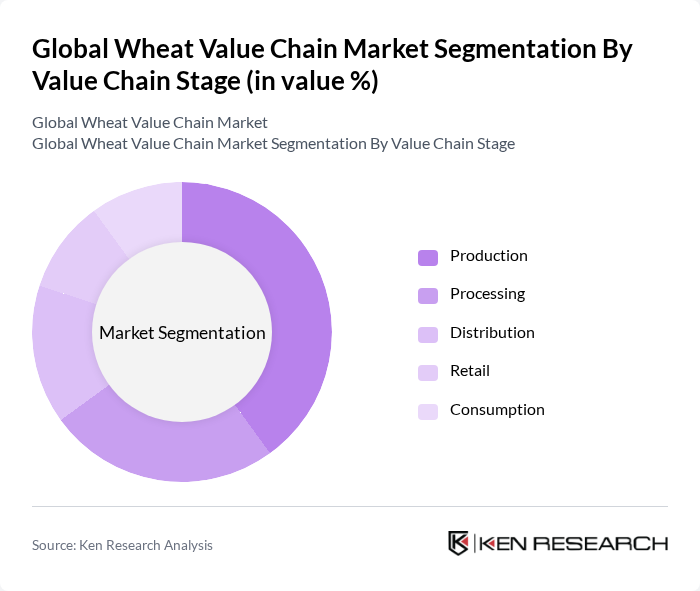
By Value Chain Stage:The value chain of wheat encompasses several stages, including production, processing, distribution, retail, and consumption. Each stage plays a crucial role in ensuring that wheat reaches consumers efficiently and sustainably. Production remains the largest segment, reflecting the capital and resource intensity of wheat cultivation, while processing and distribution are increasingly shaped by digitalization and supply chain resilience initiatives .
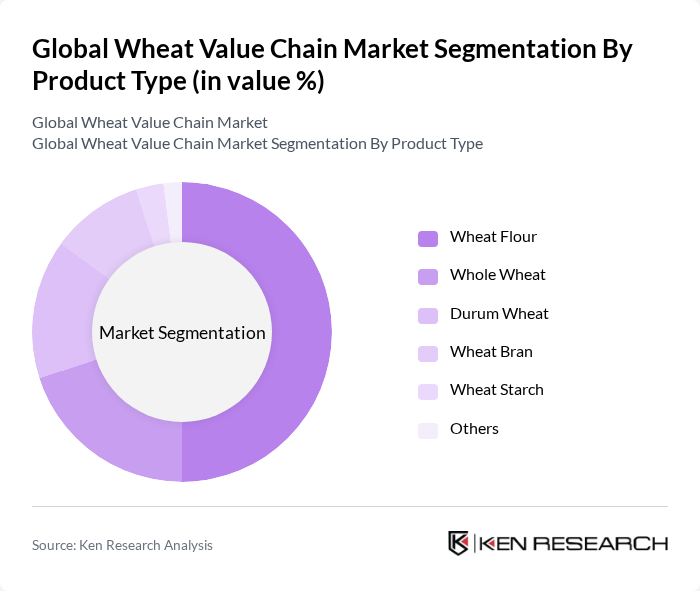
By Product Type:The wheat market is segmented into various product types, including wheat flour, whole wheat, durum wheat, wheat bran, wheat starch, and others. Each product type serves different consumer needs and applications in the food industry. Wheat flour dominates due to its widespread use in bakery and staple foods, while durum wheat is essential for pasta production. Wheat starch, though a smaller segment, is experiencing steady growth driven by demand in food processing and industrial applications .
The Global Wheat Value Chain Market is characterized by a dynamic mix of regional and international players. Leading participants such as Archer Daniels Midland Company, Cargill, Incorporated, Bunge Limited, Louis Dreyfus Company, Olam International, General Mills, Inc., Associated British Foods plc, Wilmar International Limited, GrainCorp Limited, COFCO Corporation, Viterra Limited, Richardson International Limited, BayWa AG, Glencore Agriculture Limited, Marubeni Corporation contribute to innovation, geographic expansion, and service delivery in this space.
The future of the wheat value chain is poised for transformation, driven by technological advancements and a growing emphasis on sustainability. As consumers increasingly demand organic and locally sourced products, the industry is likely to see a shift towards environmentally friendly practices. Additionally, the integration of digital tools in agriculture will enhance efficiency and yield. Strategic partnerships among stakeholders will be crucial in navigating challenges and capitalizing on emerging market opportunities, ensuring a resilient and adaptive wheat value chain.
| Segment | Sub-Segments |
|---|---|
| By Value Chain Stage | Production Processing Distribution Retail Consumption |
| By Product Type | Wheat Flour Whole Wheat Durum Wheat Wheat Bran Wheat Starch Others |
| By End User | Bakery Products Pasta and Noodles Cereals Animal Feed Food Processing |
| By Sales Channel | Online Supermarkets Convenience Stores Wholesale Direct Sales |
| By Region | North America Europe Asia-Pacific South America Middle East & Africa |
| Scope Item/Segment | Sample Size | Target Respondent Profiles |
|---|---|---|
| Wheat Farmers | 100 | Farm Owners, Agricultural Managers |
| Wheat Processors | 80 | Production Managers, Quality Control Supervisors |
| Exporters and Importers | 60 | Trade Managers, Logistics Coordinators |
| Retail Sector Buyers | 50 | Procurement Officers, Category Managers |
| Agricultural Economists | 40 | Research Analysts, Policy Advisors |
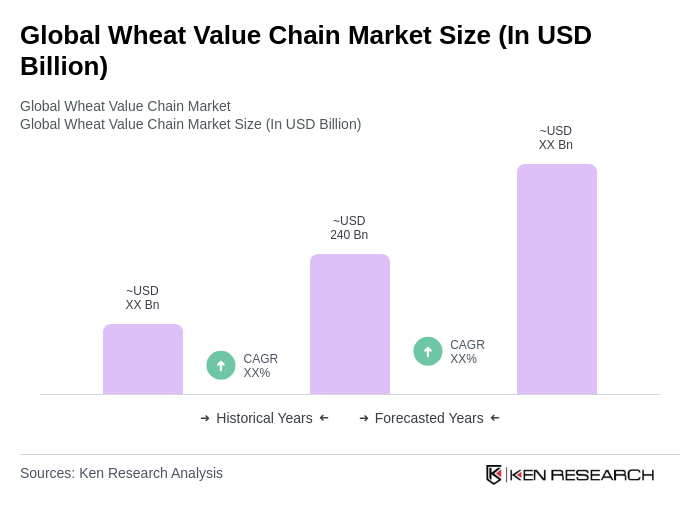
The Global Wheat Value Chain Market is valued at approximately USD 240 billion, reflecting a significant demand for wheat as a staple food, particularly in regions like Asia-Pacific, where consumption is notably high.

What makes us stand out is that our consultants follow Robust, Refine and Result (RRR) methodology. Robust for clear definitions, approaches and sanity checking, Refine for differentiating respondents' facts and opinions, and Result for presenting data with story.

We have set a benchmark in the industry by offering our clients with syndicated and customized market research reports featuring coverage of entire market as well as meticulous research and analyst insights.

While we don't replace traditional research, we flip the method upside down. Our dual approach of Top Bottom & Bottom Top ensures quality deliverable by not just verifying company fundamentals but also looking at the sector and macroeconomic factors.

With one step in the future, our research team constantly tries to show you the bigger picture. We help with some of the tough questions you may encounter along the way: How is the industry positioned? Best marketing channel? KPI's of competitors? By aligning every element, we help maximize success.

Our report gives you instant access to the answers and sources that other companies might choose to hide. We elaborate each steps of research methodology we have used and showcase you the sample size to earn your trust.

If you need any support, we are here! We pride ourselves on universe strength, data quality, and quick, friendly, and professional service.













