Region:Global
Author(s):Shubham
Product Code:KRAD0605
Pages:92
Published On:August 2025
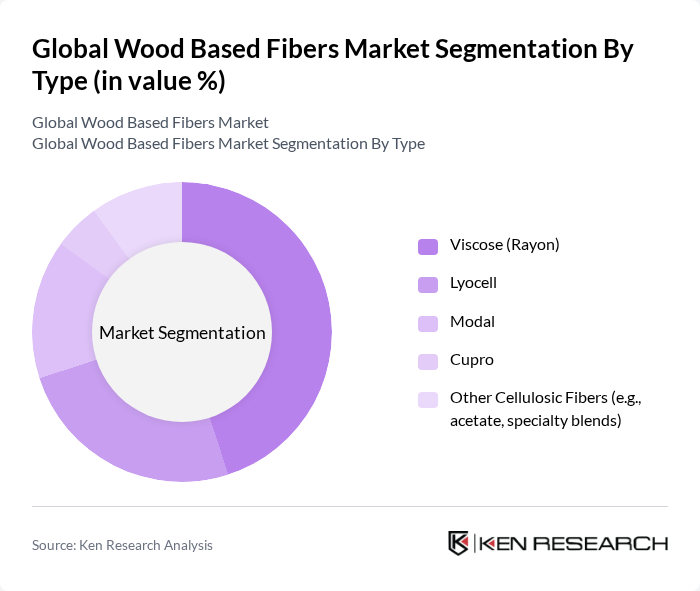
By Type:The market is segmented into various types of wood-based fibers, including Viscose (Rayon), Lyocell, Modal, Cupro, and Other Cellulosic Fibers (e.g., acetate, specialty blends). Among these, Viscose (Rayon) is the leading sub-segment due to its widespread use in the textile industry, offering a soft feel and excellent drape. The increasing demand for sustainable textiles has further propelled the growth of Lyocell, which is known for its eco-friendly production process. Modal and Cupro are also gaining traction, particularly in high-end fashion and home textiles.
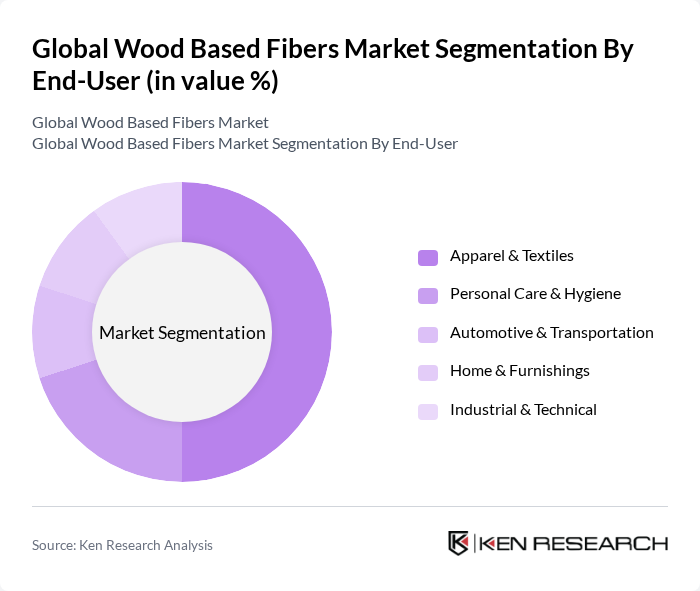
By End-User:The end-user segmentation includes Apparel & Textiles, Personal Care & Hygiene, Automotive & Transportation, Home & Furnishings, and Industrial & Technical. The Apparel & Textiles segment dominates the market, driven by the increasing consumer preference for sustainable fashion and the growing demand for comfortable, breathable fabrics. The Personal Care & Hygiene segment is also witnessing significant growth, particularly in the production of biodegradable wipes and hygiene products, which are increasingly favored by environmentally conscious consumers.
The Global Wood Based Fibers Market is characterized by a dynamic mix of regional and international players. Leading participants such as Lenzing AG, Birla Cellulose (Grasim Industries Ltd., Aditya Birla Group), Sappi Limited, Bracell (RGE Group), Aditya Birla Group – Pulp & Fiber Business, Tangshan Sanyou Chemical Fiber Co., Ltd., Xinxiang Chemical Fiber Co., Ltd. (Bailu Group), Nanjing Chemical Fiber Co., Ltd., Sateri (RGE Group), Kelheim Fibres GmbH, Enka de Colombia S.A., Eastman Chemical Company (Cellulosic fibers), Rayonier Advanced Materials Inc., UPM-Kymmene Oyj (Dissolving pulp), Stora Enso Oyj (Dissolving pulp) contribute to innovation, geographic expansion, and service delivery in this space.
The future of the wood-based fibers market appears promising, driven by increasing consumer demand for sustainable products and technological advancements in production processes. As environmental regulations tighten, companies are likely to invest more in eco-friendly practices. Additionally, the expansion into emerging markets, particularly in Asia-Pacific, is expected to create new growth avenues. Companies that adapt to these trends and invest in innovation will likely thrive in this evolving landscape, ensuring a competitive edge in the market.
| Segment | Sub-Segments |
|---|---|
| By Type | Viscose (Rayon) Lyocell Modal Cupro Other Cellulosic Fibers (e.g., acetate, specialty blends) |
| By End-User | Apparel & Textiles Personal Care & Hygiene Automotive & Transportation Home & Furnishings Industrial & Technical |
| By Application | Apparel, Sportswear & Fashion Nonwovens (wipes, hygiene, medical) Technical Textiles & Composites Paper, Pulp & Filtration Media Packaging & Specialty Applications |
| By Distribution Channel | Direct to OEMs/Brands Traders/Distributors E-commerce/Online B2B Industry Marketplaces Others |
| By Region | North America Europe Asia-Pacific Latin America Middle East & Africa |
| By Price Range | Commodity Grades Mid-Premium Grades Premium/Specialty Grades |
| By Sustainability & Certification | FSC/PEFC Certified Fibers EU Ecolabel/Bluesign/OEKO-TEX Certified Recycled Content (e.g., viscose with recycled pulp) Low-Impact/Closed-Loop (e.g., lyocell) |
| Scope Item/Segment | Sample Size | Target Respondent Profiles |
|---|---|---|
| Textile Industry Fiber Usage | 120 | Textile Manufacturers, Product Development Managers |
| Construction Material Applications | 90 | Architects, Construction Project Managers |
| Packaging Sector Innovations | 80 | Packaging Engineers, Supply Chain Managers |
| Composite Material Development | 70 | R&D Managers, Material Scientists |
| Environmental Impact Assessments | 60 | Sustainability Officers, Environmental Consultants |
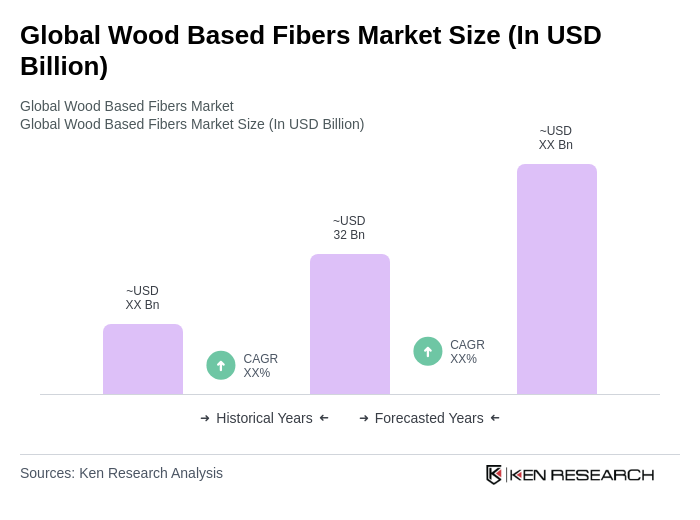
The Global Wood Based Fibers Market is valued at approximately USD 32 billion, based on a five-year historical analysis and recent industry estimates. This growth is driven by the increasing demand for sustainable and eco-friendly materials across various sectors.

What makes us stand out is that our consultants follow Robust, Refine and Result (RRR) methodology. Robust for clear definitions, approaches and sanity checking, Refine for differentiating respondents' facts and opinions, and Result for presenting data with story.

We have set a benchmark in the industry by offering our clients with syndicated and customized market research reports featuring coverage of entire market as well as meticulous research and analyst insights.

While we don't replace traditional research, we flip the method upside down. Our dual approach of Top Bottom & Bottom Top ensures quality deliverable by not just verifying company fundamentals but also looking at the sector and macroeconomic factors.

With one step in the future, our research team constantly tries to show you the bigger picture. We help with some of the tough questions you may encounter along the way: How is the industry positioned? Best marketing channel? KPI's of competitors? By aligning every element, we help maximize success.

Our report gives you instant access to the answers and sources that other companies might choose to hide. We elaborate each steps of research methodology we have used and showcase you the sample size to earn your trust.

If you need any support, we are here! We pride ourselves on universe strength, data quality, and quick, friendly, and professional service.













