Region:Asia
Author(s):Dev
Product Code:KRAA4468
Pages:96
Published On:January 2026
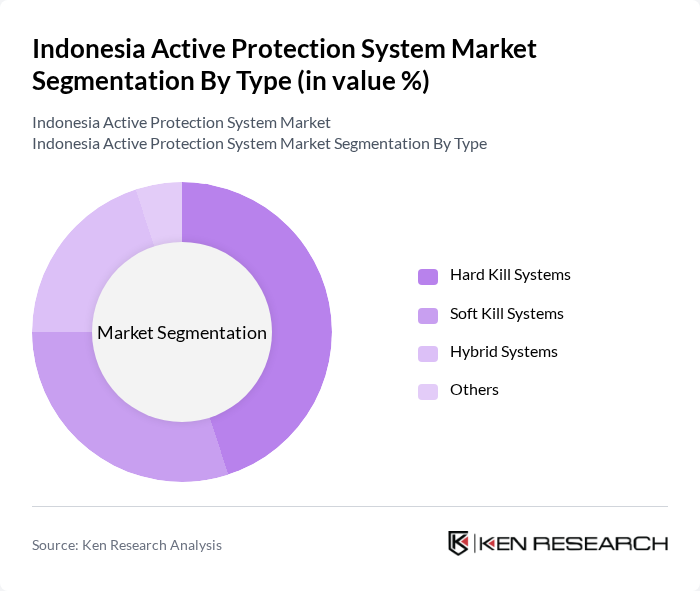
By Type:The segmentation by type includes Hard Kill Systems, Soft Kill Systems, Hybrid Systems, and Others. Hard Kill Systems are designed to physically destroy incoming threats, while Soft Kill Systems aim to confuse or mislead them. Hybrid Systems combine both approaches for enhanced effectiveness. The Others category encompasses various innovative solutions that do not fit neatly into the first three categories.
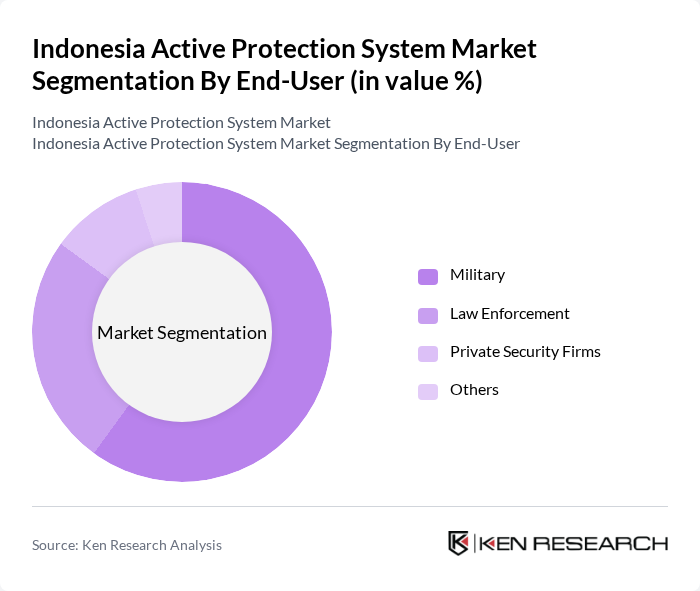
By End-User:The end-user segmentation includes Military, Law Enforcement, Private Security Firms, and Others. The Military segment is the largest consumer of active protection systems, driven by the need for enhanced defense capabilities. Law Enforcement agencies are increasingly adopting these systems for public safety, while Private Security Firms utilize them to protect assets and personnel. The Others category includes various sectors that require security solutions.
The Indonesia Active Protection System Market is characterized by a dynamic mix of regional and international players. Leading participants such as PT Pindad (Persero), PT Dirgantara Indonesia, Thales Indonesia, PT Len Industri (Persero), Rheinmetall Indonesia, BAE Systems Indonesia, Lockheed Martin Indonesia, Elbit Systems Indonesia, Northrop Grumman Indonesia, Saab Indonesia, MBDA Indonesia, General Dynamics Indonesia, Leonardo Indonesia, L3Harris Technologies Indonesia, Kongsberg Gruppen Indonesia contribute to innovation, geographic expansion, and service delivery in this space.
The future of the Indonesia active protection system market appears promising, driven by increasing defense budgets and the need for advanced military capabilities. As regional security threats escalate, the Indonesian government is likely to prioritize investments in modern defense technologies. Collaborations with international defense firms and the development of indigenous technologies will play a crucial role in enhancing local capabilities. Additionally, the integration of cybersecurity measures into defense systems will become increasingly important, ensuring comprehensive protection against evolving threats.
| Segment | Sub-Segments |
|---|---|
| By Type | Hard Kill Systems Soft Kill Systems Hybrid Systems Others |
| By End-User | Military Law Enforcement Private Security Firms Others |
| By Application | Land Vehicles Naval Vessels Aerial Platforms Others |
| By Technology | Radar Systems Electro-Optical Systems Countermeasure Systems Others |
| By Region | Java Sumatra Kalimantan Sulawesi |
| By Investment Source | Government Funding Private Investments Foreign Direct Investment Others |
| By Policy Support | Defense Subsidies Tax Incentives Research Grants Others |
| Scope Item/Segment | Sample Size | Target Respondent Profiles |
|---|---|---|
| Military Procurement Departments | 45 | Procurement Officers, Defense Analysts |
| Defense Technology Manufacturers | 40 | Product Managers, R&D Directors |
| Security Policy Experts | 30 | Policy Advisors, Military Strategists |
| Industry Analysts and Consultants | 25 | Market Researchers, Defense Consultants |
| End-Users in Military Operations | 20 | Field Commanders, Tactical Operations Officers |
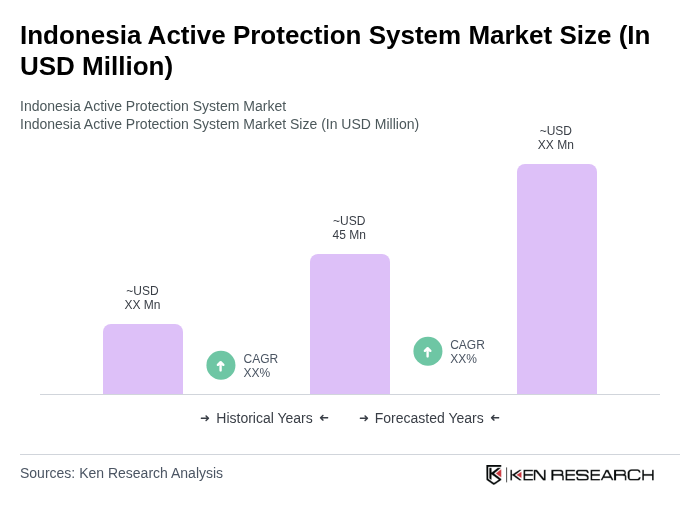
The Indonesia Active Protection System market is valued at approximately USD 45 million, reflecting a five-year historical analysis. This growth is driven by increased defense budgets, modernization efforts, and rising security concerns in the region.

What makes us stand out is that our consultants follow Robust, Refine and Result (RRR) methodology. Robust for clear definitions, approaches and sanity checking, Refine for differentiating respondents' facts and opinions, and Result for presenting data with story.

We have set a benchmark in the industry by offering our clients with syndicated and customized market research reports featuring coverage of entire market as well as meticulous research and analyst insights.

While we don't replace traditional research, we flip the method upside down. Our dual approach of Top Bottom & Bottom Top ensures quality deliverable by not just verifying company fundamentals but also looking at the sector and macroeconomic factors.

With one step in the future, our research team constantly tries to show you the bigger picture. We help with some of the tough questions you may encounter along the way: How is the industry positioned? Best marketing channel? KPI's of competitors? By aligning every element, we help maximize success.

Our report gives you instant access to the answers and sources that other companies might choose to hide. We elaborate each steps of research methodology we have used and showcase you the sample size to earn your trust.

If you need any support, we are here! We pride ourselves on universe strength, data quality, and quick, friendly, and professional service.













