Region:Asia
Author(s):Shubham
Product Code:KRAD3461
Pages:89
Published On:November 2025
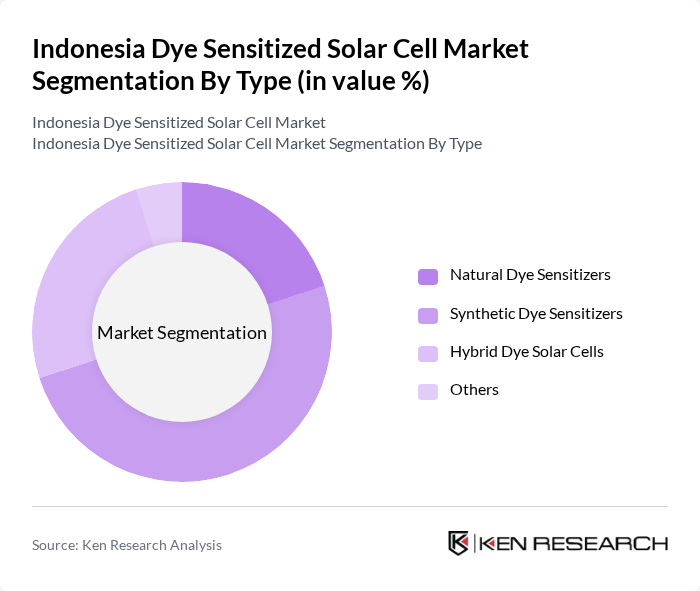
By Type:The market is segmented into various types of dye-sensitized solar cells, including Natural Dye Sensitizers, Synthetic Dye Sensitizers, Hybrid Dye Solar Cells, and Others. Among these, Synthetic Dye Sensitizers are leading due to their higher efficiency, photochemical stability, and broader light absorption spectrum compared to natural alternatives. The increasing focus on efficiency and performance in solar technologies drives the preference for synthetic options, making them the dominant choice in the market .
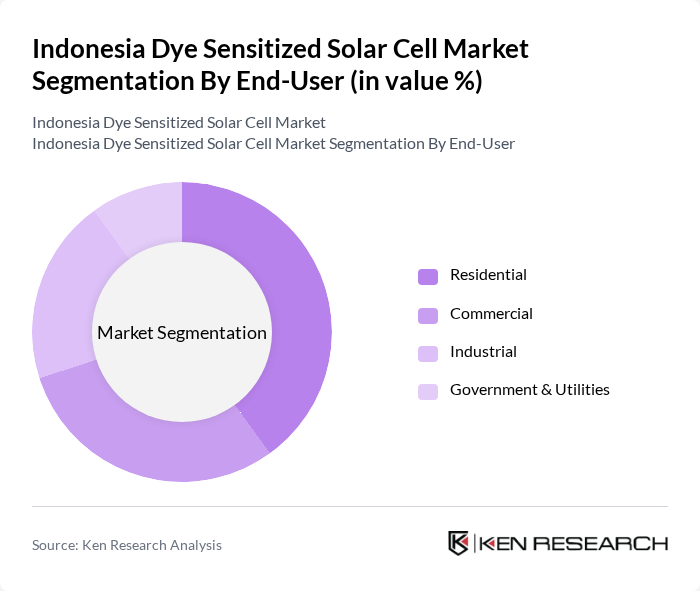
By End-User:The end-user segmentation includes Residential, Commercial, Industrial, and Government & Utilities. The Residential segment is currently the largest due to the growing trend of homeowners seeking sustainable energy solutions to reduce electricity costs. Increasing awareness of environmental issues, urbanization, and the availability of government incentives further bolster the adoption of dye-sensitized solar cells in residential applications. The commercial segment is also expanding, driven by the integration of solar technologies in buildings and infrastructure .
The Indonesia Dye Sensitized Solar Cell Market is characterized by a dynamic mix of regional and international players. Leading participants such as PT. Surya Utama Putra, PT. Sky Energy Indonesia Tbk, PT. Len Industri (Persero), PT. Energi Surya Indotama, Greatcell Solar Limited, G24 Power Limited, Solaronix SA, Fujikura Ltd., Exeger Operations AB, Dyesol (now Greatcell Solar), PT. Suryatech Energi, PT. Sumber Energi Surya Nusantara, PT. Indosolar Technology, PT. Solarens Ledindo, PT. Sumberdaya Sewatama contribute to innovation, geographic expansion, and service delivery in this space.
The future of the dye-sensitized solar cell market in Indonesia appears promising, driven by increasing investments in renewable energy and technological advancements. As the government continues to implement supportive policies, including tax incentives and subsidies, the market is expected to witness a gradual increase in adoption rates. Furthermore, the growing emphasis on environmental sustainability among consumers will likely enhance the demand for innovative solar solutions, positioning DSSCs as a viable alternative in the energy landscape.
| Segment | Sub-Segments |
|---|---|
| By Type | Natural Dye Sensitizers Synthetic Dye Sensitizers Hybrid Dye Solar Cells Others |
| By End-User | Residential Commercial Industrial Government & Utilities |
| By Region | Java Sumatra Bali Kalimantan Sulawesi |
| By Technology | Transparent Conductive Oxides Nanostructured Solar Cells Others |
| By Application | Portable Charging Building-Integrated Photovoltaics (BIPV) Building-Applied Photovoltaics (BAPV) Embedded Electronics Outdoor Advertising Automotive-Integrated Photovoltaics (AIPV) Others |
| By Investment Source | Domestic Foreign Direct Investment (FDI) Public-Private Partnerships (PPP) Government Schemes |
| By Policy Support | Subsidies Tax Exemptions Renewable Energy Certificates (RECs) Others |
| Scope Item/Segment | Sample Size | Target Respondent Profiles |
|---|---|---|
| Residential Solar Installations | 100 | Homeowners, Solar System Installers |
| Commercial Solar Applications | 80 | Facility Managers, Energy Procurement Officers |
| Industrial Solar Solutions | 60 | Operations Managers, Sustainability Coordinators |
| Research and Development in Solar Technology | 50 | R&D Managers, University Researchers |
| Government and Regulatory Bodies | 40 | Policy Makers, Energy Regulators |
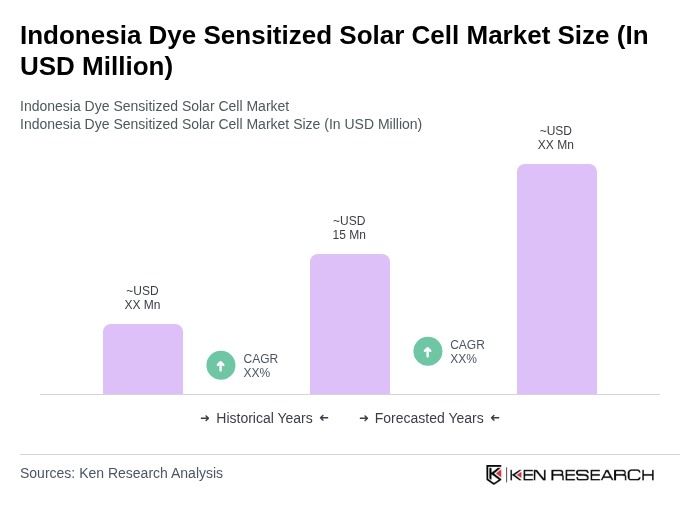
The Indonesia Dye Sensitized Solar Cell Market is valued at approximately USD 15 million, reflecting a growing interest in renewable energy sources and advancements in solar technology, particularly in urban areas like Java, Bali, and Sumatra.

What makes us stand out is that our consultants follow Robust, Refine and Result (RRR) methodology. Robust for clear definitions, approaches and sanity checking, Refine for differentiating respondents' facts and opinions, and Result for presenting data with story.

We have set a benchmark in the industry by offering our clients with syndicated and customized market research reports featuring coverage of entire market as well as meticulous research and analyst insights.

While we don't replace traditional research, we flip the method upside down. Our dual approach of Top Bottom & Bottom Top ensures quality deliverable by not just verifying company fundamentals but also looking at the sector and macroeconomic factors.

With one step in the future, our research team constantly tries to show you the bigger picture. We help with some of the tough questions you may encounter along the way: How is the industry positioned? Best marketing channel? KPI's of competitors? By aligning every element, we help maximize success.

Our report gives you instant access to the answers and sources that other companies might choose to hide. We elaborate each steps of research methodology we have used and showcase you the sample size to earn your trust.

If you need any support, we are here! We pride ourselves on universe strength, data quality, and quick, friendly, and professional service.













