Region:Asia
Author(s):Geetanshi
Product Code:KRAD1217
Pages:98
Published On:November 2025
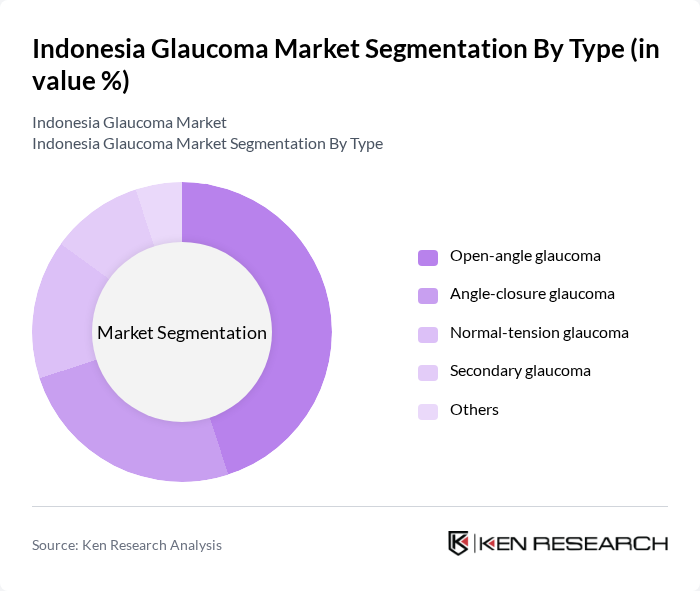
By Type:The market is segmented into various types of glaucoma, including open-angle glaucoma, angle-closure glaucoma, normal-tension glaucoma, secondary glaucoma, and others.Open-angle glaucomais the most prevalent type, accounting for the largest portion of the market due to its asymptomatic nature, which often leads to late diagnosis and necessitates long-term management.Angle-closure glaucoma, while less common, poses a higher risk of rapid vision loss, thus driving demand for urgent treatment options .
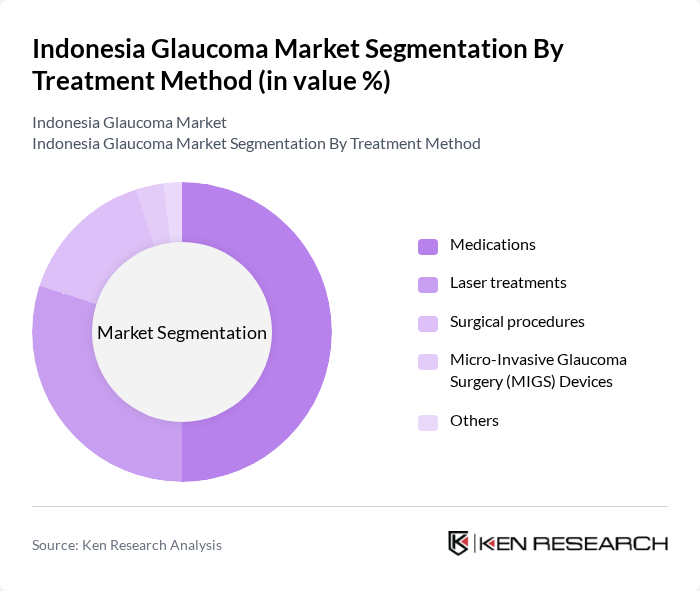
By Treatment Method:The treatment methods for glaucoma include medications, laser treatments, surgical procedures, Micro-Invasive Glaucoma Surgery (MIGS) devices, and others.Medications, particularly eye drops, dominate the market due to their accessibility and effectiveness in managing intraocular pressure.Laser treatmentsare gaining traction as they offer a minimally invasive option for patients, whilesurgical proceduresare reserved for more severe cases. The adoption ofMIGS devicesis increasing as awareness and availability grow in urban centers .
The Indonesia Glaucoma Market is characterized by a dynamic mix of regional and international players. Leading participants such as Novartis, Allergan (an AbbVie company), Santen Pharmaceutical, Merck & Co., Inc., Pfizer, Aerie Pharmaceuticals, Glaukos Corporation, Bausch + Lomb, Johnson & Johnson Vision, Ocular Therapeutix, Eyevance Pharmaceuticals, Sun Pharmaceutical Industries, Hoya Corporation, Carl Zeiss Meditec AG, Topcon Corporation, PT Kalbe Farma Tbk, PT Kimia Farma Tbk, PT Dexa Medica, PT Soho Global Health, and PT Phapros Tbk contribute to innovation, geographic expansion, and service delivery in this space.
The future of the Indonesia glaucoma market appears promising, driven by increasing healthcare investments and a focus on improving patient access to care. In future, the government aims to enhance healthcare infrastructure, particularly in underserved regions, which will facilitate better glaucoma management. Additionally, the integration of telemedicine is expected to revolutionize patient consultations, allowing for timely diagnosis and treatment. These trends indicate a shift towards more accessible and efficient glaucoma care in Indonesia.
| Segment | Sub-Segments |
|---|---|
| By Type | Open-angle glaucoma Angle-closure glaucoma Normal-tension glaucoma Secondary glaucoma Others |
| By Treatment Method | Medications Laser treatments Surgical procedures Micro-Invasive Glaucoma Surgery (MIGS) Devices Others |
| By Drug Class | Prostaglandin analogs Beta blockers Alpha adrenergic agonists Carbonic anhydrase inhibitors Combination drugs Others |
| By Distribution Channel | Hospitals Ophthalmic clinics Ambulatory surgical centers Online pharmacies Retail pharmacies Others |
| By Age Group | Children Adults Elderly |
| By Geographic Region | Java Sumatra Bali Kalimantan Sulawesi Others |
| By Patient Demographics | Gender Socioeconomic status Urban vs rural |
| By Awareness Level | High awareness Moderate awareness Low awareness Others |
| Scope Item/Segment | Sample Size | Target Respondent Profiles |
|---|---|---|
| Ophthalmology Clinics | 100 | Ophthalmologists, Clinic Managers |
| Hospitals with Glaucoma Departments | 80 | Healthcare Administrators, Department Heads |
| Pharmaceutical Distributors | 50 | Sales Managers, Product Managers |
| Patient Advocacy Groups | 40 | Patient Representatives, Community Health Workers |
| Medical Device Suppliers | 60 | Sales Representatives, Technical Support Staff |
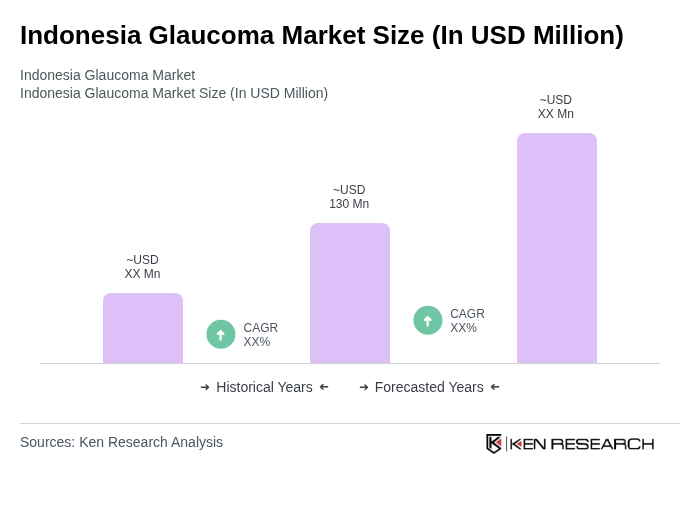
The Indonesia glaucoma market is valued at approximately USD 130 million, driven by factors such as an aging population, increased awareness of eye health, and advancements in treatment options like minimally invasive surgeries and sustained-release drug delivery systems.

What makes us stand out is that our consultants follow Robust, Refine and Result (RRR) methodology. Robust for clear definitions, approaches and sanity checking, Refine for differentiating respondents' facts and opinions, and Result for presenting data with story.

We have set a benchmark in the industry by offering our clients with syndicated and customized market research reports featuring coverage of entire market as well as meticulous research and analyst insights.

While we don't replace traditional research, we flip the method upside down. Our dual approach of Top Bottom & Bottom Top ensures quality deliverable by not just verifying company fundamentals but also looking at the sector and macroeconomic factors.

With one step in the future, our research team constantly tries to show you the bigger picture. We help with some of the tough questions you may encounter along the way: How is the industry positioned? Best marketing channel? KPI's of competitors? By aligning every element, we help maximize success.

Our report gives you instant access to the answers and sources that other companies might choose to hide. We elaborate each steps of research methodology we have used and showcase you the sample size to earn your trust.

If you need any support, we are here! We pride ourselves on universe strength, data quality, and quick, friendly, and professional service.













