About the Report
Base Year 2024Indonesia Mafaldine Pasta Market Overview
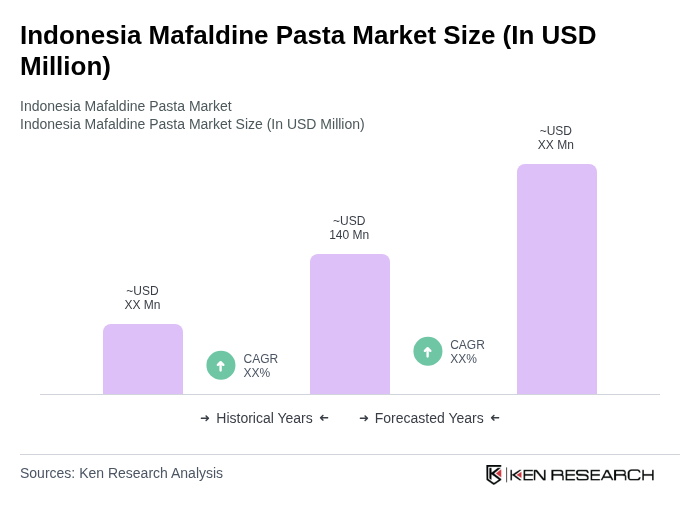
- The Indonesia Mafaldine Pasta Market is valued at USD 140 million, based on a five-year historical analysis and benchmarking against the broader pasta and noodles category in Indonesia, which reached about USD 2.7 billion in total value. This growth is primarily driven by the increasing popularity of Italian cuisine, rising disposable incomes, rapid urbanization, and a growing trend towards convenience foods among urban consumers. The demand for pasta, particularly in metropolitan areas, has surged as more people seek quick and easy meal solutions, supported by wider distribution in modern retail channels and the expansion of Western-style restaurant chains.
- Key cities such as Jakarta, Surabaya, and Bandung dominate the market due to their large populations, higher income levels, and vibrant culinary scenes. Jakarta, being the capital, has a diverse consumer base that embraces international cuisines and frequent dining-out occasions, while Surabaya and Bandung are known for their growing middle-class populations that are increasingly adopting pasta and other Western dishes as part of regular and occasion-based meals. The expansion of modern supermarkets, hypermarkets, and specialty food stores in these cities further supports the penetration of imported and premium pasta formats.
- In 2023, the Indonesian government continued strengthening regulations to promote food safety and quality standards in the pasta and processed foods industry through the implementation and enforcement of the Indonesian National Standard (Standar Nasional Indonesia/SNI) for pasta products and packaged foods under the authority of Badan Standardisasi Nasional (BSN) and the National Agency of Drug and Food Control (Badan Pengawas Obat dan Makanan/BPOM). This includes mandatory labeling requirements for nutritional information, allergen declaration, and ingredient listing in line with Labelling and Advertisement of Processed Food Regulation of BPOM (Peraturan Badan POM Nomor 31 Tahun 2022), aimed at ensuring consumer safety, traceability of ingredient sourcing, and enhancing the overall quality and compliance of food products available in the market.
Indonesia Mafaldine Pasta Market Segmentation
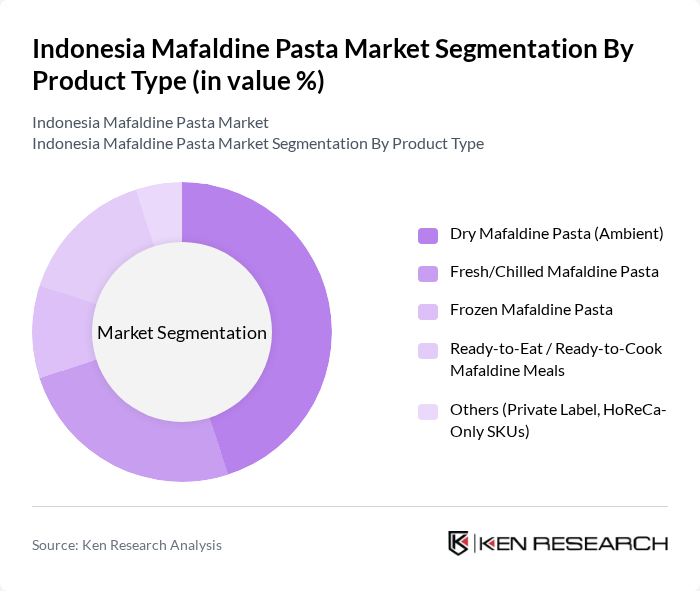
By Product Type:The product type segmentation of the Indonesia Mafaldine Pasta Market includes various forms of pasta that cater to different consumer preferences and usage occasions. The subsegments include Dry Mafaldine Pasta (Ambient), Fresh/Chilled Mafaldine Pasta, Frozen Mafaldine Pasta, Ready-to-Eat / Ready-to-Cook Mafaldine Meals, and Others (Private Label, HoReCa-Only SKUs). Among these, Dry Mafaldine Pasta is the most popular due to its long shelf life, ease of storage, and suitability for both home cooking and foodservice channels, in line with dried pasta’s dominance in the broader pasta market. Fresh and chilled options are gaining traction in modern retail and specialty stores as consumers seek perceived fresher and restaurant-style quality, while the ready-to-eat and ready-to-cook segment is expanding rapidly due to increasing demand for convenience foods, growth of single-person and young professional households, and the rise of online grocery and quick commerce platforms. The market is characterized by a growing trend towards premium and gourmet offerings, particularly in urban areas, with imported Italian brands and chef-inspired recipes increasingly featured in supermarkets and HoReCa menus.
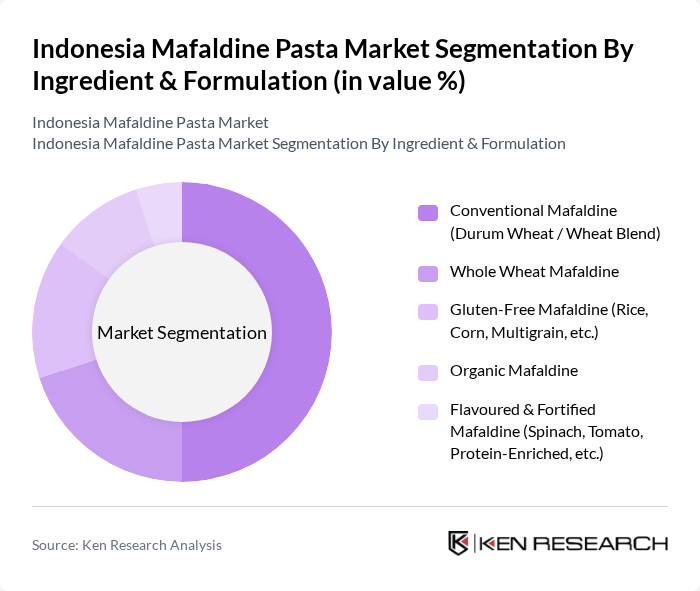
By Ingredient & Formulation:The ingredient and formulation segmentation of the Indonesia Mafaldine Pasta Market includes various types of pasta based on their ingredients and health attributes. The subsegments are Conventional Mafaldine (Durum Wheat / Wheat Blend), Whole Wheat Mafaldine, Gluten-Free Mafaldine (Rice, Corn, Multigrain, etc.), Organic Mafaldine, and Flavoured & Fortified Mafaldine (Spinach, Tomato, Protein-Enriched, etc.). Conventional Mafaldine remains the dominant choice due to its traditional appeal, competitive pricing, and widespread availability across modern trade and e-commerce channels. However, the demand for Whole Wheat and Gluten-Free options is on the rise as health-conscious consumers increasingly focus on higher-fibre, lower-GI, and allergen-sensitive diets, mirroring global pasta trends toward better-for-you products. Organic and fortified variants are also gaining popularity, particularly among affluent urban consumers who prioritize clean-label, premium ingredients, and added nutritional benefits such as vegetable-enriched or protein-enriched pasta.
Indonesia Mafaldine Pasta Market Competitive Landscape
The Indonesia Mafaldine Pasta Market is characterized by a dynamic mix of regional and international players. Leading participants such as PT Indofood Sukses Makmur Tbk (Indofood) – La Fonte, PT Pronas (Mayora Group) – San Remo (Licensing / Distribution), PT Sukanda Djaya (Diamond Cold Storage) – Barilla, De Cecco & Other Imported Pasta Brands, PT Sinar Mas Agro Resources and Technology Tbk (SMART) – Private Label & Foodservice Pasta Solutions, PT Hero Supermarket Tbk – Private Label Mafaldine & Pasta Ranges, PT Lion Super Indo – Private Label Mafaldine & Italian Pasta Lines, PT Trans Retail Indonesia (Carrefour / Transmart) – Imported & Private Label Mafaldine Portfolios, PT Supra Boga Lestari Tbk (Ranch Market, Farmers Market) – Premium & Gourmet Mafaldine Importers, PT Kem Chicks Indonesia – Specialty & Gourmet Imported Mafaldine Brands, PT Mitra Pangan Indonesia – HoReCa Pasta Distributor & Foodservice Specialist, PT Sukanda Djaya Foodservice Division – Distribution to Hotels, Restaurants & Catering, PT Indoguna Utama – Premium HoReCa Importer (Italian Mafaldine & Specialty Pasta), PT Mugi Rajawali Internusa – Distributor of European Pasta & Mafaldine in Indonesia, De Cecco di Filippo Fara San Martino S.p.A. – Export & Brand Presence in Indonesia, Barilla G. e R. Fratelli S.p.A. – Export & Brand Presence in Indonesia contribute to innovation, geographic expansion, and service delivery in this space.
Indonesia Mafaldine Pasta Market Industry Analysis
Growth Drivers
- Increasing Consumer Preference for Italian Cuisine:The Indonesian food landscape is increasingly embracing Italian cuisine, with a reported 35% rise in Italian restaurant openings in future. This trend is driven by urbanization and a growing middle class, with disposable incomes projected to reach IDR 6 million per month in future. As more consumers seek diverse dining experiences, the demand for Mafaldine pasta is expected to grow significantly, reflecting a shift towards international culinary preferences.
- Rising Disposable Incomes:Indonesia's economy is projected to grow at a rate of 5.3% in future, contributing to an increase in disposable incomes. The World Bank estimates that the middle-class population will expand to 145 million in future, leading to higher spending on premium food products. This economic growth is likely to enhance consumer purchasing power, making imported products like Mafaldine pasta more accessible and appealing to a broader audience, thus driving market growth.
- Growth of the Food Service Industry:The food service industry in Indonesia is expected to reach IDR 1,300 trillion in future, reflecting a robust growth trajectory. This expansion is fueled by the increasing number of cafes and restaurants, which are increasingly incorporating international dishes into their menus. As food service establishments seek to diversify offerings, the inclusion of Mafaldine pasta can cater to the rising demand for authentic Italian cuisine, further propelling market growth.
Market Challenges
- Competition from Local Pasta Varieties:The Indonesian market is characterized by a strong presence of local pasta varieties, which are often more affordable and familiar to consumers. With local pasta production estimated at 210,000 tons annually, the competition poses a significant challenge for Mafaldine pasta. This local preference can hinder market penetration, as consumers may opt for traditional options over imported varieties, impacting overall sales and market share.
- Fluctuating Raw Material Prices:The pasta industry is heavily reliant on wheat, with Indonesia importing approximately 11 million tons of wheat annually. Price volatility in global wheat markets, influenced by factors such as climate change and geopolitical tensions, can significantly affect production costs. In future, wheat prices are projected to fluctuate between IDR 6,500 to IDR 8,500 per kilogram, which could impact the pricing strategy for Mafaldine pasta and overall profitability.
Indonesia Mafaldine Pasta Market Future Outlook
The future of the Indonesia Mafaldine pasta market appears promising, driven by evolving consumer preferences and a growing food service sector. As disposable incomes rise, consumers are likely to seek premium and diverse culinary experiences, including Italian cuisine. Additionally, the increasing popularity of online food delivery services is expected to facilitate access to Mafaldine pasta, enhancing its visibility and availability. The market is poised for growth, with opportunities for innovation and collaboration with local chefs to create unique offerings.
Market Opportunities
- Growth in Online Food Delivery Services:The online food delivery market in Indonesia is projected to reach IDR 55 trillion in future, providing a significant opportunity for Mafaldine pasta. As more consumers turn to digital platforms for meal options, partnering with delivery services can enhance market reach and cater to the growing demand for convenient dining solutions, ultimately boosting sales.
- Introduction of Organic and Gluten-Free Options:With health-conscious eating habits on the rise, the demand for organic and gluten-free products is increasing. The organic food market in Indonesia is expected to grow by 16% annually, presenting an opportunity for Mafaldine pasta producers to introduce healthier variants. This diversification can attract a broader consumer base, enhancing brand loyalty and market presence.
Scope of the Report
| Segment | Sub-Segments |
|---|---|
| By Product Type | Dry Mafaldine Pasta (Ambient) Fresh/Chilled Mafaldine Pasta Frozen Mafaldine Pasta Ready-to-Eat / Ready-to-Cook Mafaldine Meals Others (Private Label, HoReCa-Only SKUs) |
| By Ingredient & Formulation | Conventional Mafaldine (Durum Wheat / Wheat Blend) Whole Wheat Mafaldine Gluten-Free Mafaldine (Rice, Corn, Multigrain, etc.) Organic Mafaldine Flavoured & Fortified Mafaldine (Spinach, Tomato, Protein-Enriched, etc.) |
| By End-User | Household / Retail Consumers HoReCa – Restaurants & Cafés Hotels & Resorts Catering & Institutional Foodservice Industrial / Food Processing Companies (Ready Meals, Meal Kits) |
| By Distribution Channel | Modern Grocery Retail (Supermarkets / Hypermarkets) Convenience Stores & Minimarkets (e.g., Alfamart, Indomaret) Specialty & Gourmet Stores (Imported & Premium) HoReCa Distributors / Foodservice Wholesalers Online Channels (E-commerce & Quick-Commerce) |
| By Packaging Type | Flexible Plastic Bags / Pouches Paperboard Boxes / Cartons Rigid Plastic Trays & Cups Bulk / Foodservice Packaging (Sacks, Catering Packs) Sustainable & Eco-Friendly Packaging Formats |
| By Price Tier | Economy (Mass-Market & Private Label) Mid-Range (Mainstream Branded) Premium (Imported & Gourmet) Super-Premium / Artisanal |
| By Region | Greater Jakarta (Jabodetabek) Rest of Java (West, Central, East Java, DI Yogyakarta) Sumatra Bali & Nusa Tenggara Kalimantan, Sulawesi & Eastern Indonesia |
| By Consumer Demographics | Age Group (18–24, 25–34, 35–49, 50+) Income Level (Mass, Aspirational Middle, Affluent) Lifestyle Segment (Health-Conscious, Gourmet/Experimenters, Convenience Seekers, Family-Oriented) Consumption Occasion (Everyday Meals, Weekend Dining, Special Occasions, Out-of-Home) |
Key Target Audience
Investors and Venture Capitalist Firms
Government and Regulatory Bodies (e.g., Ministry of Industry, National Food Agency)
Manufacturers and Producers
Distributors and Retailers
Food Service Providers
Importers and Exporters
Industry Associations (e.g., Indonesian Food and Beverage Association)
Financial Institutions
Players Mentioned in the Report:
PT Indofood Sukses Makmur Tbk (Indofood) La Fonte
PT Pronas (Mayora Group) San Remo (Licensing / Distribution)
PT Sukanda Djaya (Diamond Cold Storage) Barilla, De Cecco & Other Imported Pasta Brands
PT Sinar Mas Agro Resources and Technology Tbk (SMART) Private Label & Foodservice Pasta Solutions
PT Hero Supermarket Tbk Private Label Mafaldine & Pasta Ranges
PT Lion Super Indo Private Label Mafaldine & Italian Pasta Lines
PT Trans Retail Indonesia (Carrefour / Transmart) Imported & Private Label Mafaldine Portfolios
PT Supra Boga Lestari Tbk (Ranch Market, Farmers Market) Premium & Gourmet Mafaldine Importers
PT Kem Chicks Indonesia Specialty & Gourmet Imported Mafaldine Brands
PT Mitra Pangan Indonesia HoReCa Pasta Distributor & Foodservice Specialist
PT Sukanda Djaya Foodservice Division Distribution to Hotels, Restaurants & Catering
PT Indoguna Utama Premium HoReCa Importer (Italian Mafaldine & Specialty Pasta)
PT Mugi Rajawali Internusa Distributor of European Pasta & Mafaldine in Indonesia
De Cecco di Filippo Fara San Martino S.p.A. Export & Brand Presence in Indonesia
Barilla G. e R. Fratelli S.p.A. Export & Brand Presence in Indonesia
Table of Contents
Market Assessment Phase
1. Executive Summary and Approach
2. Indonesia Mafaldine Pasta Market Overview
2.1 Key Insights and Strategic Recommendations
2.2 Indonesia Mafaldine Pasta Market Overview
2.3 Definition and Scope
2.4 Evolution of Market Ecosystem
2.5 Timeline of Key Regulatory Milestones
2.6 Value Chain & Stakeholder Mapping
2.7 Business Cycle Analysis
2.8 Policy & Incentive Landscape
3. Indonesia Mafaldine Pasta Market Analysis
3.1 Growth Drivers
3.1.1 Increasing consumer preference for Italian cuisine
3.1.2 Rising disposable incomes
3.1.3 Growth of the food service industry
3.1.4 Expansion of retail distribution channels
3.2 Market Challenges
3.2.1 Competition from local pasta varieties
3.2.2 Fluctuating raw material prices
3.2.3 Supply chain disruptions
3.2.4 Limited consumer awareness of Mafaldine pasta
3.3 Market Opportunities
3.3.1 Growth in online food delivery services
3.3.2 Introduction of organic and gluten-free options
3.3.3 Collaborations with local chefs and restaurants
3.3.4 Export potential to neighboring countries
3.4 Market Trends
3.4.1 Increasing demand for premium pasta products
3.4.2 Rise in health-conscious eating habits
3.4.3 Popularity of ready-to-cook meal kits
3.4.4 Growth of social media marketing in food promotion
3.5 Government Regulation
3.5.1 Food safety standards and regulations
3.5.2 Import tariffs on pasta products
3.5.3 Labeling requirements for food products
3.5.4 Support for local food manufacturers
4. SWOT Analysis
5. Stakeholder Analysis
6. Porter's Five Forces Analysis
7. Indonesia Mafaldine Pasta Market Market Size, 2019-2024
7.1 By Value
7.2 By Volume
7.3 By Average Selling Price
8. Indonesia Mafaldine Pasta Market Segmentation
8.1 By Product Type
8.1.1 Dry Mafaldine Pasta (Ambient)
8.1.2 Fresh/Chilled Mafaldine Pasta
8.1.3 Frozen Mafaldine Pasta
8.1.4 Ready-to-Eat / Ready-to-Cook Mafaldine Meals
8.1.5 Others (Private Label, HoReCa-Only SKUs)
8.2 By Ingredient & Formulation
8.2.1 Conventional Mafaldine (Durum Wheat / Wheat Blend)
8.2.2 Whole Wheat Mafaldine
8.2.3 Gluten-Free Mafaldine (Rice, Corn, Multigrain, etc.)
8.2.4 Organic Mafaldine
8.2.5 Flavoured & Fortified Mafaldine (Spinach, Tomato, Protein-Enriched, etc.)
8.3 By End-User
8.3.1 Household / Retail Consumers
8.3.2 HoReCa – Restaurants & Cafés
8.3.3 Hotels & Resorts
8.3.4 Catering & Institutional Foodservice
8.3.5 Industrial / Food Processing Companies (Ready Meals, Meal Kits)
8.4 By Distribution Channel
8.4.1 Modern Grocery Retail (Supermarkets / Hypermarkets)
8.4.2 Convenience Stores & Minimarkets (e.g., Alfamart, Indomaret)
8.4.3 Specialty & Gourmet Stores (Imported & Premium)
8.4.4 HoReCa Distributors / Foodservice Wholesalers
8.4.5 Online Channels (E-commerce & Quick-Commerce)
8.5 By Packaging Type
8.5.1 Flexible Plastic Bags / Pouches
8.5.2 Paperboard Boxes / Cartons
8.5.3 Rigid Plastic Trays & Cups
8.5.4 Bulk / Foodservice Packaging (Sacks, Catering Packs)
8.5.5 Sustainable & Eco-Friendly Packaging Formats
8.6 By Price Tier
8.6.1 Economy (Mass-Market & Private Label)
8.6.2 Mid-Range (Mainstream Branded)
8.6.3 Premium (Imported & Gourmet)
8.6.4 Super-Premium / Artisanal
8.7 By Region
8.7.1 Greater Jakarta (Jabodetabek)
8.7.2 Rest of Java (West, Central, East Java, DI Yogyakarta)
8.7.3 Sumatra
8.7.4 Bali & Nusa Tenggara
8.7.5 Kalimantan, Sulawesi & Eastern Indonesia
8.8 By Consumer Demographics
8.8.1 Age Group (18–24, 25–34, 35–49, 50+)
8.8.2 Income Level (Mass, Aspirational Middle, Affluent)
8.8.3 Lifestyle Segment (Health-Conscious, Gourmet/Experimenters, Convenience Seekers, Family-Oriented)
8.8.4 Consumption Occasion (Everyday Meals, Weekend Dining, Special Occasions, Out-of-Home)
9. Indonesia Mafaldine Pasta Market Competitive Analysis
9.1 Market Share of Key Players
9.2 Cross Comparison of Key Players
9.2.1 Company Name
9.2.2 Group Size (Global, Regional, Local)
9.2.3 Indonesia Pasta Revenue (Latest Year, USD / IDR)
9.2.4 Mafaldine-Specific Revenue / Volume in Indonesia
9.2.5 3-Year CAGR in Indonesia Pasta Sales
9.2.6 Share of Premium & Imported Mafaldine in Portfolio
9.2.7 Average Selling Price per kg (Retail, Mafaldine)
9.2.8 Numeric & Weighted Distribution in Key Modern Trade Chains
9.2.9 HoReCa Coverage (Number of Foodservice Accounts / Cities Served)
9.2.10 SKUs Count for Mafaldine (Pack Sizes, Variants)
9.2.11 New Product Launches in Indonesia (Last 3 Years)
9.2.12 Marketing & Promotion Intensity (Share of Sales / Visibility Score)
9.2.13 Brand Awareness & Preference Scores (Indonesia, Mafaldine & Italian Pasta)
9.2.14 Local Sourcing vs Import Dependence (Share of Volume Imported)
9.3 SWOT Analysis of Top Players
9.4 Pricing Analysis
9.5 Detailed Profile of Major Companies
9.5.1 PT Indofood Sukses Makmur Tbk (Indofood) – La Fonte
9.5.2 PT Pronas (Mayora Group) – San Remo (Licensing / Distribution)
9.5.3 PT Sukanda Djaya (Diamond Cold Storage) – Barilla, De Cecco & Other Imported Pasta Brands
9.5.4 PT Sinar Mas Agro Resources and Technology Tbk (SMART) – Private Label & Foodservice Pasta Solutions
9.5.5 PT Hero Supermarket Tbk – Private Label Mafaldine & Pasta Ranges
9.5.6 PT Lion Super Indo – Private Label Mafaldine & Italian Pasta Lines
9.5.7 PT Trans Retail Indonesia (Carrefour / Transmart) – Imported & Private Label Mafaldine Portfolios
9.5.8 PT Supra Boga Lestari Tbk (Ranch Market, Farmers Market) – Premium & Gourmet Mafaldine Importers
9.5.9 PT Kem Chicks Indonesia – Specialty & Gourmet Imported Mafaldine Brands
9.5.10 PT Mitra Pangan Indonesia – HoReCa Pasta Distributor & Foodservice Specialist
9.5.11 PT Sukanda Djaya Foodservice Division – Distribution to Hotels, Restaurants & Catering
9.5.12 PT Indoguna Utama – Premium HoReCa Importer (Italian Mafaldine & Specialty Pasta)
9.5.13 PT Mugi Rajawali Internusa – Distributor of European Pasta & Mafaldine in Indonesia
9.5.14 De Cecco di Filippo Fara San Martino S.p.A. – Export & Brand Presence in Indonesia
9.5.15 Barilla G. e R. Fratelli S.p.A. – Export & Brand Presence in Indonesia
10. Indonesia Mafaldine Pasta Market End-User Analysis
10.1 Procurement Behavior of Key Ministries
10.1.1 Government procurement policies
10.1.2 Budget allocation for food products
10.1.3 Supplier selection criteria
10.1.4 Contract management practices
10.2 Corporate Spend on Infrastructure & Energy
10.2.1 Investment in food processing facilities
10.2.2 Expenditure on supply chain logistics
10.2.3 Budget for marketing and promotions
10.2.4 Others
10.3 Pain Point Analysis by End-User Category
10.3.1 Quality consistency issues
10.3.2 Supply chain reliability
10.3.3 Pricing volatility
10.3.4 Others
10.4 User Readiness for Adoption
10.4.1 Awareness of Mafaldine pasta benefits
10.4.2 Willingness to try new pasta types
10.4.3 Availability of Mafaldine pasta in local markets
10.4.4 Others
10.5 Post-Deployment ROI and Use Case Expansion
10.5.1 Measurement of sales growth
10.5.2 Customer feedback and satisfaction
10.5.3 Market share increase
10.5.4 Others
11. Indonesia Mafaldine Pasta Market Future Size, 2025-2030
11.1 By Value
11.2 By Volume
11.3 By Average Selling Price
Go-To-Market Strategy Phase
1. Whitespace Analysis + Business Model Canvas
1.1 Market gaps and opportunities
2. Marketing and Positioning Recommendations
2.1 Branding strategies
2.2 Product USPs
3. Distribution Plan
3.1 Urban retail vs rural NGO tie-ups
4. Channel & Pricing Gaps
4.1 Underserved routes
4.2 Pricing bands
5. Unmet Demand & Latent Needs
5.1 Category gaps
5.2 Consumer segments
6. Customer Relationship
6.1 Loyalty programs
6.2 After-sales service
7. Value Proposition
7.1 Sustainability
7.2 Integrated supply chains
8. Key Activities
8.1 Regulatory compliance
8.2 Branding
8.3 Distribution setup
9. Entry Strategy Evaluation
9.1 Domestic Market Entry Strategy
9.1.1 Product mix
9.1.2 Pricing band
9.1.3 Packaging
9.2 Export Entry Strategy
9.2.1 Target countries
9.2.2 Compliance roadmap
10. Entry Mode Assessment
10.1 JV
10.2 Greenfield
10.3 M&A
10.4 Distributor Model
11. Capital and Timeline Estimation
11.1 Capital requirements
11.2 Timelines
12. Control vs Risk Trade-Off
12.1 Ownership vs Partnerships
13. Profitability Outlook
13.1 Breakeven analysis
13.2 Long-term sustainability
14. Potential Partner List
14.1 Distributors
14.2 JVs
14.3 Acquisition targets
15. Execution Roadmap
15.1 Phased Plan for Market Entry
15.1.1 Market Setup
15.1.2 Market Entry
15.1.3 Growth Acceleration
15.1.4 Scale & Stabilize
15.2 Key Activities and Milestones
15.2.1 Milestone tracking
15.2.2 Activity scheduling
Research Methodology
Phase 1: Approach1
Desk Research
- Analysis of industry reports and market studies specific to the Indonesian pasta market
- Review of government publications and trade statistics related to food imports and exports
- Examination of consumer behavior studies and culinary trends in Indonesia
Primary Research
- Interviews with key stakeholders in the pasta supply chain, including manufacturers and distributors
- Surveys targeting consumers to understand preferences and purchasing habits regarding Mafaldine pasta
- Focus group discussions with culinary experts and chefs to gather insights on product usage and trends
Validation & Triangulation
- Cross-validation of findings through multiple data sources, including sales data and consumer feedback
- Triangulation of insights from primary interviews with secondary data trends
- Sanity checks conducted through expert panel reviews to ensure data reliability
Phase 2: Market Size Estimation1
Top-down Assessment
- Estimation of the overall pasta market size in Indonesia, with a focus on the Mafaldine segment
- Analysis of market share distribution among different pasta types and their growth rates
- Incorporation of demographic data to assess potential market expansion opportunities
Bottom-up Modeling
- Collection of sales volume data from leading pasta manufacturers in Indonesia
- Estimation of average retail prices for Mafaldine pasta across various distribution channels
- Calculation of market size based on production capacity and consumer demand metrics
Forecasting & Scenario Analysis
- Development of growth projections based on historical sales data and market trends
- Scenario analysis considering factors such as economic conditions, consumer preferences, and health trends
- Creation of baseline, optimistic, and pessimistic forecasts for the next five years
Phase 3: CATI Sample Composition1
| Scope Item/Segment | Sample Size | Target Respondent Profiles |
|---|---|---|
| Retail Market Insights | 120 | Store Managers, Retail Buyers |
| Consumer Preferences | 140 | Household Decision Makers, Food Enthusiasts |
| Food Service Sector | 100 | Restaurant Owners, Chefs |
| Distribution Channel Analysis | 80 | Logistics Managers, Supply Chain Coordinators |
| Market Trend Analysis | 110 | Food Industry Analysts, Market Researchers |
Frequently Asked Questions
What is the current value of the Indonesia Mafaldine Pasta Market?
The Indonesia Mafaldine Pasta Market is valued at approximately USD 140 million, reflecting a significant segment of the broader pasta and noodles category in Indonesia, which totals around USD 2.7 billion.
What factors are driving the growth of the Mafaldine Pasta Market in Indonesia?
Which cities are the main consumers of Mafaldine pasta in Indonesia?
What types of Mafaldine pasta are available in the Indonesian market?
Other Regional/Country Reports
Malaysia Mafaldine Pasta Market
KSA Mafaldine Pasta Market
APAC Mafaldine Pasta Market
SEA Mafaldine Pasta Market
Vietnam Mafaldine Pasta Market
Thailand Mafaldine Pasta Market
Other Adjacent Reports
Germany Pasta Sauces Market
UAE Instant Noodles Market BangladeshGCC rice noodles market size, share, growth drivers, trends, opportunities & forecast 2025–2030Brazil Wheat-Based Products Market
Malaysia Convenience Foods Market
Vietnam Italian Foods Market
Philippines Imported Foods Market
UAE Food Retail Market
Kuwait HoReCa Services Market
Organic Foods MarketWhy Buy From Us?

What makes us stand out is that our consultants follow Robust, Refine and Result (RRR) methodology. Robust for clear definitions, approaches and sanity checking, Refine for differentiating respondents' facts and opinions, and Result for presenting data with story.

We have set a benchmark in the industry by offering our clients with syndicated and customized market research reports featuring coverage of entire market as well as meticulous research and analyst insights.

While we don't replace traditional research, we flip the method upside down. Our dual approach of Top Bottom & Bottom Top ensures quality deliverable by not just verifying company fundamentals but also looking at the sector and macroeconomic factors.

With one step in the future, our research team constantly tries to show you the bigger picture. We help with some of the tough questions you may encounter along the way: How is the industry positioned? Best marketing channel? KPI's of competitors? By aligning every element, we help maximize success.

Our report gives you instant access to the answers and sources that other companies might choose to hide. We elaborate each steps of research methodology we have used and showcase you the sample size to earn your trust.

If you need any support, we are here! We pride ourselves on universe strength, data quality, and quick, friendly, and professional service.