
Indonesia Pea Protein Market Outlook 2030
Region:Global
Author(s):Shivani Mehra
Product Code:KROD11425
December 2024
90
About the Report
Indonesia Pea Protein Market Overview
- The Indonesia Pea Protein market is valued at USD 140 million, driven by the increasing consumer preference for plant-based protein sources, which are perceived as healthier alternatives to animal protein. The growing trend towards vegetarianism and veganism, coupled with a rise in health-conscious consumers, is propelling market growth. Additionally, the shift in consumer attitudes towards sustainable and environmentally friendly food choices further supports this expansion.
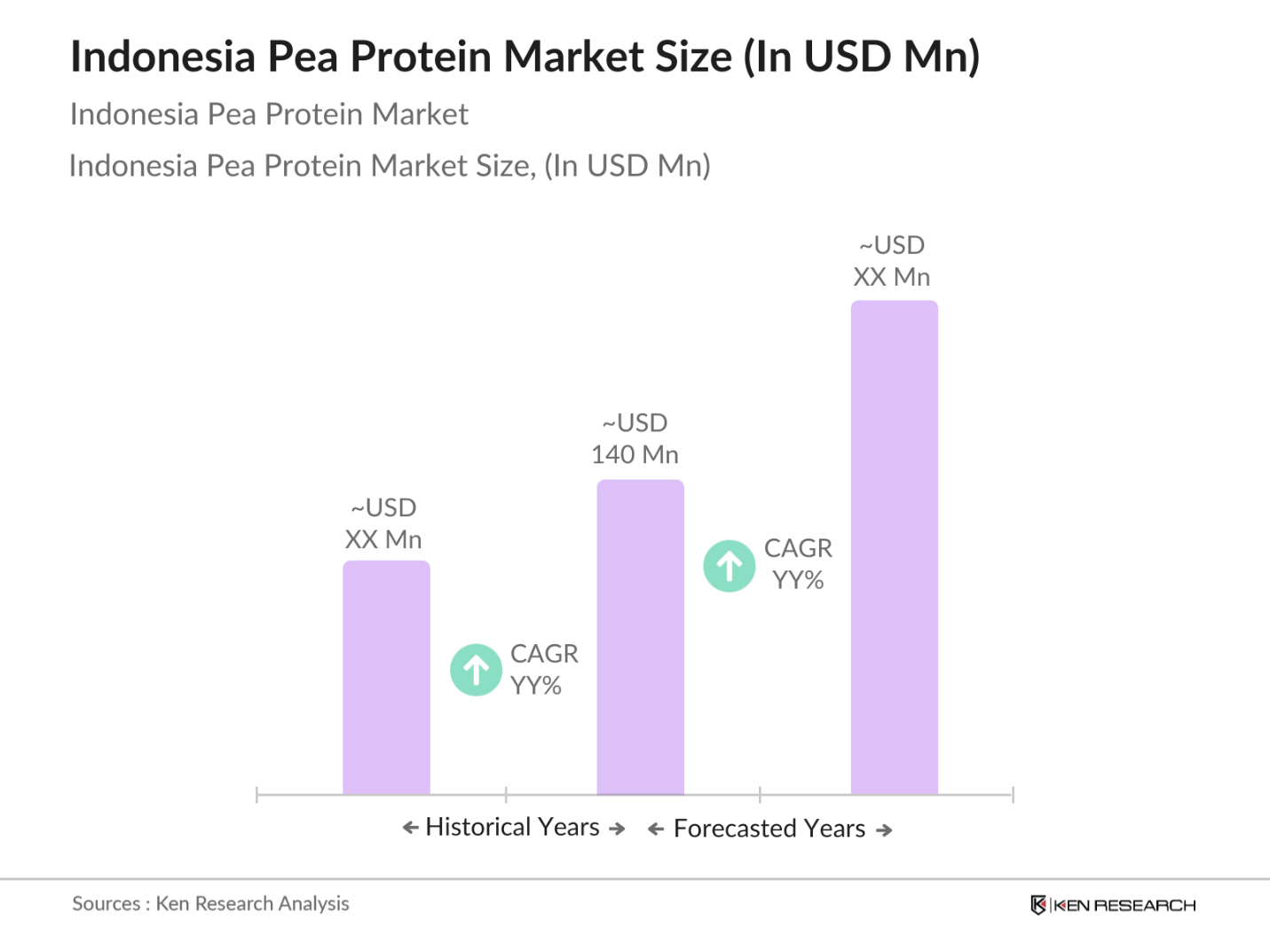
- Key cities such as Jakarta, Surabaya, and Bandung dominate the market due to their large urban populations and increasing health awareness among consumers. Jakarta, as the capital, leads with significant investments in the food and beverage industry, while Surabaya and Bandung showcase a growing trend of health-oriented products, bolstered by a burgeoning middle class interested in wellness and nutrition.
- Indonesias food safety standards require that plant-based protein products, including pea protein, meet stringent guidelines for quality and safety. BPOMs recent update to the standards mandates comprehensive labeling and product testing, ensuring consumers receive safe, high-quality products. Compliance with these standards is crucial for market players to avoid penalties and maintain consumer trust.
Indonesia Pea Protein Market Segmentation
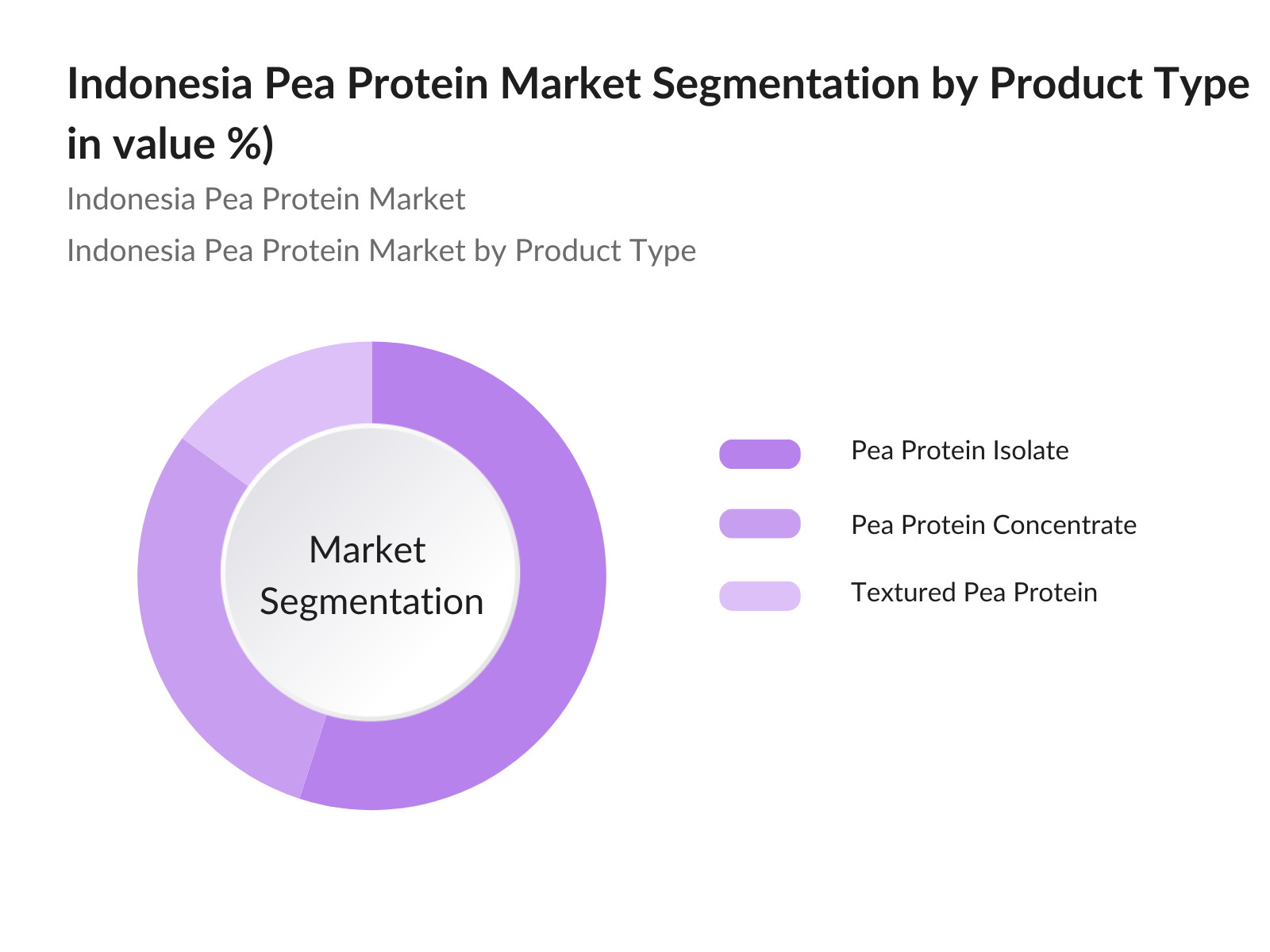
By Product Type: The Indonesia Pea Protein market is segmented by product type into pea protein isolate, pea protein concentrate, and textured pea protein. Among these, pea protein isolate commands a dominant market share, attributed to its high protein content and versatility in various applications, including dietary supplements, beverages, and baked goods. The increasing adoption of protein-rich diets among fitness enthusiasts and health-conscious consumers has accelerated the demand for isolates, as they offer a concentrated source of protein without significant carbohydrates or fats.
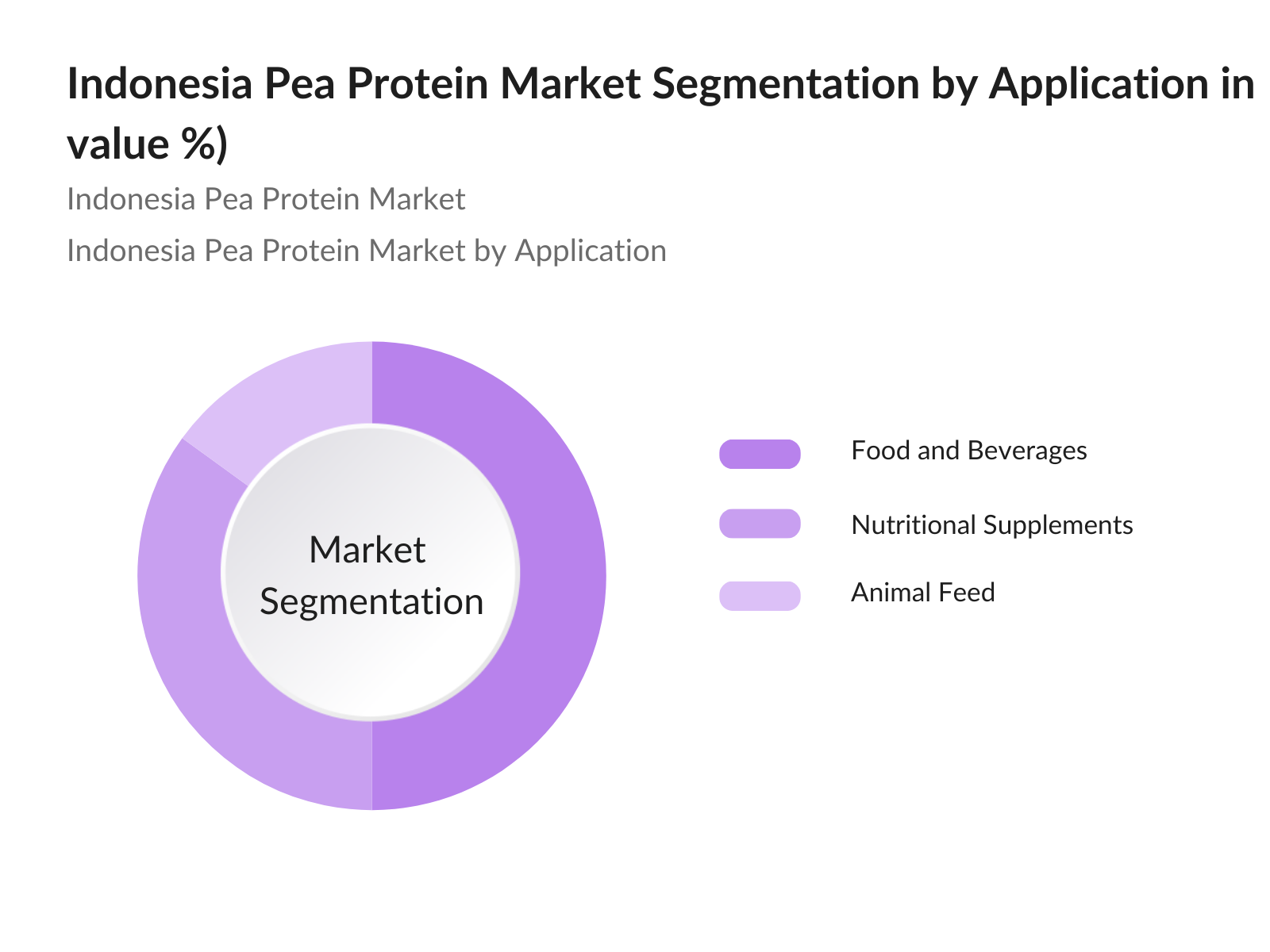
 By Application: The market is further segmented by application into food and beverages, nutritional supplements, and animal feed. The food and beverages segment holds a significant share, primarily driven by the rising incorporation of pea protein in plant-based food products such as meat alternatives, protein bars, and dairy substitutes. This segment's growth is fueled by a consumer shift towards healthier eating habits, along with innovations in food technology that enhance the taste and texture of pea protein-enriched products.
Indonesia Pea Protein Market Competitive Landscape
The Indonesia Pea Protein market is characterized by a competitive landscape with several major players, including both local and international companies. These firms are leveraging their research and development capabilities to innovate and capture a larger market share. The key players in this market include.
|
Company |
Establishment Year |
Headquarters |
Market Specific |
Market Specific |
Market Specific |
Market Specific |
Market Specific |
Market Specific |
|
Ingredion Incorporated |
1903 |
Westchester, NY |
Product Range |
|||||
|
Cargill, Incorporated |
1865 |
Wayzata, MN |
Supply Chain |
|||||
|
DuPont de Nemours, Inc. |
1802 |
Wilmington, DE |
Product Development |
|||||
|
AGT Food and Ingredients |
2001 |
Saskatoon, Canada |
Product Innovation |
|||||
|
Roquette Frres |
2004 |
Lestrem, France |
Customer Relationships |
Indonesia Pea Protein Market Analysis
Market Growth Drivers
- Increasing Demand for Plant-Based Proteins: The demand for plant-based proteins in Indonesia is expanding due to heightened consumer awareness of the environmental and health benefits. According to data from the World Bank, approximately 60 million Indonesians are increasingly shifting towards plant-based diets as a means to combat health issues like obesity and diabetes. With Indonesias growing middle class, demand for plant-based options, including pea protein, is rising as these products become more available across supermarkets and online. The Ministry of Agriculture highlights that this shift is being driven by consumer preferences for sustainable and health-conscious food options.
- Health and Wellness Trends: Indonesias health-conscious population is driving the adoption of pea protein as a core dietary component, aligning with global wellness trends. Data from Indonesia's Ministry of Health notes that almost 30 million Indonesians are now prioritizing low-fat, high-protein diets due to rising incidences of heart disease and diabetes. The shift is prominent among urban millennials, who are increasingly incorporating pea protein into daily diets for its health benefits. This demand for high-quality, plant-based nutrition reflects a broader national trend towards preventive health care measures.
- Rising Vegan and Vegetarian Population: The vegan and vegetarian population in Indonesia has steadily grown, bolstered by an influx of wellness advocates and environmental concerns. The Indonesian Vegetarian Society reports that around 3 million Indonesians now identify as vegan or vegetarian, up from fewer than 2 million just three years prior. Pea protein is gaining popularity as a versatile, non-allergenic protein source that aligns well with these dietary preferences. The trend is notable in urban areas where health and environmental consciousness are shaping consumer choices.
Market Challenges:
- Price Volatility of Raw Materials: The pea protein market faces challenges from price volatility in raw materials due to fluctuating pea crop yields. Data from Indonesias Ministry of Trade shows that climatic changes have impacted local yields, leading to inconsistent supply. Additionally, international trade tariffs have influenced the cost of importing peas from key suppliers, impacting product pricing. This volatility poses a significant challenge for manufacturers aiming to keep products affordable for a growing consumer base.
- Competition from Other Protein Sources: Pea protein competes with other popular plant-based proteins such as soy and rice in Indonesia. Data from the Food and Agriculture Organization (FAO) indicates that soy remains the preferred protein source due to its affordability and established supply chain. In 2024, nearly of Indonesias plant protein market consisted of soy-based products. This strong presence of alternative proteins limits the share and growth potential for pea protein, requiring strategic positioning by companies to differentiate their products.
Indonesia Pea Protein Market Future Outlook
Over the next five years, the Indonesia Pea Protein market is expected to witness substantial growth, driven by an increasing shift towards plant-based diets and innovations in food technology. As consumers become more health-conscious and environmentally aware, the demand for pea protein products is likely to surge. Government initiatives promoting sustainable agriculture and food production will also bolster market growth, creating opportunities for both established players and new entrants in the sector.
Market Opportunities:
- Expansion of Health Food Sector: Indonesias health food sector is expanding, creating opportunities for pea protein producers to target a broad consumer base focused on wellness. Government statistics reveal that over 35 million Indonesians purchase health-focused foods regularly, supported by nationwide campaigns promoting nutritious diets. The Ministry of Healths data indicates that urban markets are particularly ripe for functional foods incorporating pea protein, offering a promising opportunity for manufacturers to tap into this trend.
- Collaborations with Food Manufacturers: Partnerships between pea protein producers and major food manufacturers are driving growth opportunities within Indonesia. The Ministry of Industry reports an increase in collaborations focused on developing innovative plant-based products for mainstream brands. Local producers are partnering with food giants to incorporate pea protein in snacks, meal replacements, and beverages, which is helping to accelerate product development and market penetration.
Scope of the Report
|
By Type |
Isolate Concentrate Textured |
|
By Application |
Food and Beverages Nutritional Supplements Animal Feed |
|
By Form |
Powder Liquid |
|
By Distribution Channel |
Online Offline |
|
By Region |
North-East Midwest West Coast Southern States |
Products
Key Target Audience
Food and Beverage Manufacturers
Nutritional Supplement Companies
Animal Feed Producers
Health and Wellness Brands
Retailers of Plant-Based Products
Distributors and Wholesalers
Investments and Venture Capitalist Firms
Government and Regulatory Bodies (Food and Drug Supervisory Agency)
Companies
Players Mention in the Report
Ingredion Incorporated
Cargill, Incorporated
DuPont de Nemours, Inc.
AGT Food and Ingredients
Roquette Frres
Naturally Secure
Protein Industries Canada
Solae LLC (part of DuPont)
Emsland Group
WILD Flavors and Specialty Ingredients
Sunflower Food Company
The Scoular Company
Beyond Meat, Inc.
Impossible Foods Inc.
The Kraft Heinz Company
Table of Contents
01. Indonesia Pea Protein Market Overview
1.1. Definition and Scope
1.2. Market Taxonomy
1.3. Market Growth Rate
1.4. Market Segmentation Overview
02. Indonesia Pea Protein Market Size (In USD Bn)
2.1. Historical Market Size
2.2. Year-On-Year Growth Analysis
2.3. Key Market Developments and Milestones
03. Indonesia Pea Protein Market Analysis
3.1. Growth Drivers
3.1.1. Increasing Demand for Plant-Based Proteins
3.1.2. Health and Wellness Trends
3.1.3. Rising Vegan and Vegetarian Population
3.1.4. Innovation in Product Offerings
3.2. Market Challenges
3.2.1. Price Volatility of Raw Materials
3.2.2. Competition from Other Protein Sources
3.2.3. Regulatory Hurdles
3.3. Opportunities
3.3.1. Expansion of Health Food Sector
3.3.2. Collaborations with Food Manufacturers
3.3.3. Product Diversification
3.4. Trends
3.4.1. Sustainable Sourcing Practices
3.4.2. Growth of Functional Foods
3.4.3. Technological Advancements in Extraction Methods
3.5. Government Regulation
3.5.1. Food Safety Standards
3.5.2. Nutritional Labeling Regulations
3.5.3. Trade Policies
3.6. SWOT Analysis
3.7. Stakeholder Ecosystem
3.8. Porters Five Forces
3.9. Competition Ecosystem
04. Indonesia Pea Protein Market Segmentation
4.1. By Type (In Value %)
4.1.1. Isolate
4.1.2. Concentrate
4.1.3. Textured
4.2. By Application (In Value %)
4.2.1. Food and Beverages
4.2.2. Nutritional Supplements
4.2.3. Animal Feed
4.3. By Form (In Value %)
4.3.1. Powder
4.3.2. Liquid
4.4. By Distribution Channel (In Value %)
4.4.1. Online
4.4.2. Offline
4.5. By Region (In Value %)
4.5.1. Java
4.5.2. Sumatra
4.5.3. Kalimantan
4.5.4. Sulawesi
4.5.5. Papua
05. Indonesia Pea Protein Market Competitive Analysis
5.1. Detailed Profiles of Major Companies
5.1.1. Ingredion Incorporated
5.1.2. Cargill, Incorporated
5.1.3. DuPont de Nemours, Inc.
5.1.4. AGT Food and Ingredients
5.1.5. Roquette Frres
5.1.6. Naturally Secure
5.1.7. Protein Industries Canada
5.1.8. Solae LLC (part of DuPont)
5.1.9. Emsland Group
5.1.10. WILD Flavors and Specialty Ingredients
5.1.11. Sunflower Food Company
5.1.12. The Scoular Company
5.1.13. Beyond Meat, Inc.
5.1.14. Impossible Foods Inc.
5.1.15. The Kraft Heinz Company
5.2. Cross Comparison Parameters (Market Share, Product Offerings, Geographic Presence, R&D Investment, Revenue, Customer Segments, Marketing Strategies, Sustainability Initiatives)
5.3. Market Share Analysis
5.4. Strategic Initiatives
5.5. Mergers and Acquisitions
5.6. Investment Analysis
5.7. Venture Capital Funding
5.8. Government Grants
5.9. Private Equity Investments
Indonesia Pea Protein Market Regulatory Framework
6.1. Food Safety Standards
6.2. Compliance Requirements
6.3. Certification Processes
07. Indonesia Pea Protein Market Future Size (In USD Bn)
7.1. Future Market Size Projections
7.2. Key Factors Driving Future Market Growth
08. Indonesia Pea Protein Market Future Segmentation
8.1. By Type (In Value %)
8.2. By Application (In Value %)
8.3. By Form (In Value %)
8.4. By Distribution Channel (In Value %)
8.5. By Region (In Value %)
09. Indonesia Pea Protein Market Analysts Recommendations
9.1. TAM/SAM/SOM Analysis
9.2. Customer Cohort Analysis
9.3. Marketing Initiatives
9.4. White Space Opportunity Analysis
Disclaimer
Contact Us
Research Methodology
Step 1: Identification of Key Variables
The initial phase involves constructing an ecosystem map encompassing all major stakeholders within the Indonesia Pea Protein Market. This step is underpinned by extensive desk research, utilizing a combination of secondary and proprietary databases to gather comprehensive industry-level information. The primary objective is to identify and define the critical variables that influence market dynamics.
Step 2: Market Analysis and Construction
In this phase, we will compile and analyze historical data pertaining to the Indonesia Pea Protein Market. This includes assessing market penetration, the ratio of marketplaces to service providers, and the resultant revenue generation. Furthermore, an evaluation of service quality statistics will be conducted to ensure the reliability and accuracy of the revenue estimates.
Step 3: Hypothesis Validation and Expert Consultation
Market hypotheses will be developed and subsequently validated through computer-assisted telephone interviews (CATIs) with industry experts representing a diverse array of companies. These consultations will provide valuable operational and financial insights directly from industry practitioners, which will be instrumental in refining and corroborating the market data.
Step 4: Research Synthesis and Final Output
The final phase involves direct engagement with multiple pea protein manufacturers to acquire detailed insights into product segments, sales performance, consumer preferences, and other pertinent factors. This interaction will serve to verify and complement the statistics derived from the bottom-up approach, thereby ensuring a comprehensive, accurate, and validated analysis of the Indonesia Pea Protein Market.
Frequently Asked Questions
01. How big is the Indonesia Pea Protein market?
The Indonesia Pea Protein market is valued at USD 140 million, driven by the increasing consumer preference for plant-based protein sources and the growing trend towards health-conscious diets.
02. What are the challenges in the Indonesia Pea Protein market?
Challenges include price volatility of raw materials, competition from other protein sources, and regulatory hurdles that may affect product innovation and market entry.
03. Who are the major players in the Indonesia Pea Protein market?
Key players in the market include Ingredion, Cargill, DuPont, AGT Food and Ingredients, and Roquette Frres, which dominate due to their extensive product offerings and market experience.
04. What are the growth drivers of the Indonesia Pea Protein market?
The market is propelled by increasing health awareness, a shift towards plant-based diets, and innovations in food technology that enhance the appeal of pea protein products.
Why Buy From Us?

What makes us stand out is that our consultants follows Robust, Refine and Result (RRR) methodology. i.e. Robust for clear definitions, approaches and sanity checking, Refine for differentiating respondents facts and opinions and Result for presenting data with story

We have set a benchmark in the industry by offering our clients with syndicated and customized market research reports featuring coverage of entire market as well as meticulous research and analyst insights.

While we don't replace traditional research, we flip the method upside down. Our dual approach of Top Bottom & Bottom Top ensures quality deliverable by not just verifying company fundamentals but also looking at the sector and macroeconomic factors.

With one step in the future, our research team constantly tries to show you the bigger picture. We help with some of the tough questions you may encounter along the way: How is the industry positioned? Best marketing channel? KPI's of competitors? By aligning every element, we help maximize success.

Our report gives you instant access to the answers and sources that other companies might choose to hide. We elaborate each steps of research methodology we have used and showcase you the sample size to earn your trust.

If you need any support, we are here! We pride ourselves on universe strength, data quality, and quick, friendly, and professional service.