Region:Asia
Author(s):Rebecca
Product Code:KRAA3838
Pages:83
Published On:September 2025
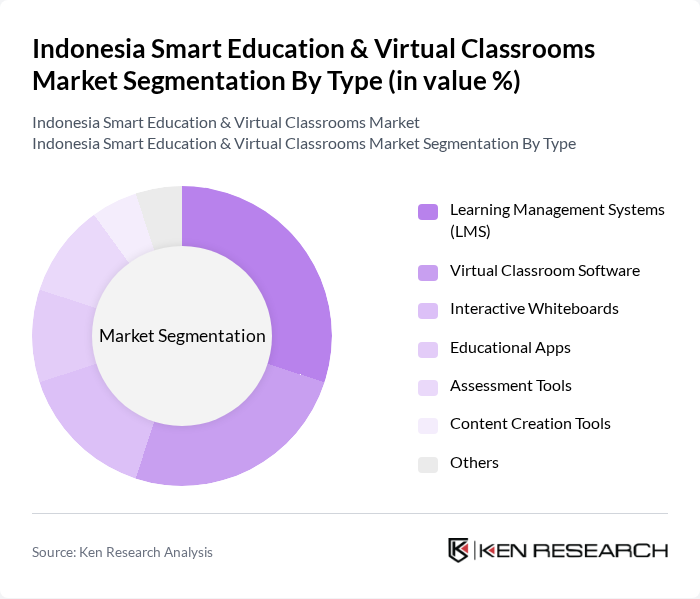
By Type:The market is segmented into various types, including Learning Management Systems (LMS), Virtual Classroom Software, Interactive Whiteboards, Educational Apps, Assessment Tools, Content Creation Tools, and Others. Each of these segments plays a crucial role in enhancing the educational experience by providing tailored solutions for different learning environments. The adoption of LMS and virtual classroom software is particularly strong, driven by the need for scalable, interactive, and data-driven learning solutions that support both synchronous and asynchronous instruction .
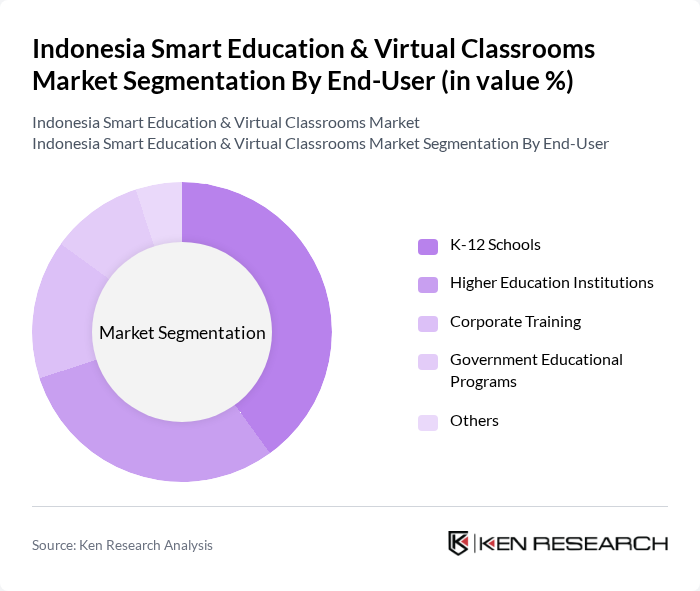
By End-User:The end-user segmentation includes K-12 Schools, Higher Education Institutions, Corporate Training, Government Educational Programs, and Others. Each segment has unique requirements and preferences, influencing the adoption of smart education technologies. K-12 and higher education institutions are the largest adopters, driven by curriculum digitization mandates and the need for flexible, remote learning options. Corporate training and government programs are increasingly leveraging smart education tools for workforce development and public sector upskilling .
The Indonesia Smart Education & Virtual Classrooms Market is characterized by a dynamic mix of regional and international players. Leading participants such as Ruangguru, Zenius Education, HarukaEdu, Quipper, KelasKita, Cakap, Eduka System, Sekolah.mu, SmartClass, Pijar Belajar, Edmodo, Google for Education, Microsoft Education, Cisco Webex Education, Moodle, Universitas Indonesia, Universitas Gadjah Mada, Institut Teknologi Bandung, Binus University, Universitas Airlangga contribute to innovation, geographic expansion, and service delivery in this space.
The future of Indonesia's smart education and virtual classrooms market appears promising, driven by ongoing government support and technological advancements. As internet penetration continues to rise, more students will gain access to digital learning resources. Additionally, the integration of AI and machine learning will enhance personalized learning experiences, making education more engaging and effective. The shift towards hybrid learning models is expected to further transform educational practices, fostering a more inclusive and adaptive learning environment for all students.
| Segment | Sub-Segments |
|---|---|
| By Type | Learning Management Systems (LMS) Virtual Classroom Software Interactive Whiteboards Educational Apps Assessment Tools Content Creation Tools Others |
| By End-User | K-12 Schools Higher Education Institutions Corporate Training Government Educational Programs Others |
| By Application | Classroom Learning Remote Learning Blended Learning Professional Development Others |
| By Distribution Channel | Direct Sales Online Platforms Resellers and Distributors Educational Partnerships Others |
| By Pricing Model | Subscription-Based One-Time Purchase Freemium Model Pay-Per-Use Others |
| By Content Type | Video Content Textual Content Interactive Content Assessment Content Others |
| By User Demographics | Age Group (Children, Teenagers, Adults) Educational Background (Primary, Secondary, Tertiary) Learning Preferences (Visual, Auditory, Kinesthetic) Others |
| By Educational Level | Early Childhood Education Primary Education Middle Education Secondary Education Vocational Education Tertiary Education |
| By Method | Offline Classes Online Learning Platforms |
| By Region | Java Sumatra Kalimantan Sulawesi Bali & Nusa Tenggara |
| Scope Item/Segment | Sample Size | Target Respondent Profiles |
|---|---|---|
| Primary Education Institutions | 60 | School Principals, IT Coordinators |
| Secondary Education Institutions | 50 | Teachers, Curriculum Developers |
| Tertiary Education Institutions | 40 | University Administrators, Faculty Members |
| EdTech Solution Providers | 45 | Product Managers, Sales Executives |
| Parents of Students in Smart Education Programs | 55 | Parents, Guardians |
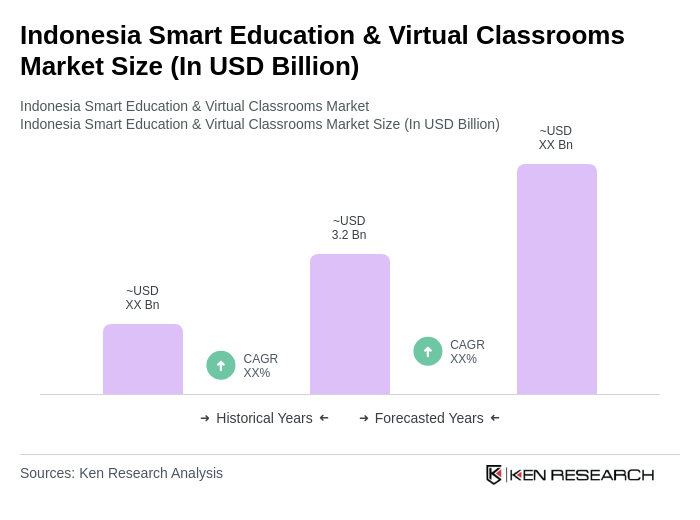
The Indonesia Smart Education & Virtual Classrooms Market is valued at approximately USD 3.2 billion, reflecting significant growth driven by digital learning solutions, government initiatives, and the demand for personalized learning experiences, especially post-COVID-19.

What makes us stand out is that our consultants follow Robust, Refine and Result (RRR) methodology. Robust for clear definitions, approaches and sanity checking, Refine for differentiating respondents' facts and opinions, and Result for presenting data with story.

We have set a benchmark in the industry by offering our clients with syndicated and customized market research reports featuring coverage of entire market as well as meticulous research and analyst insights.

While we don't replace traditional research, we flip the method upside down. Our dual approach of Top Bottom & Bottom Top ensures quality deliverable by not just verifying company fundamentals but also looking at the sector and macroeconomic factors.

With one step in the future, our research team constantly tries to show you the bigger picture. We help with some of the tough questions you may encounter along the way: How is the industry positioned? Best marketing channel? KPI's of competitors? By aligning every element, we help maximize success.

Our report gives you instant access to the answers and sources that other companies might choose to hide. We elaborate each steps of research methodology we have used and showcase you the sample size to earn your trust.

If you need any support, we are here! We pride ourselves on universe strength, data quality, and quick, friendly, and professional service.













