Region:Asia
Author(s):Shubham
Product Code:KRAA8877
Pages:84
Published On:November 2025
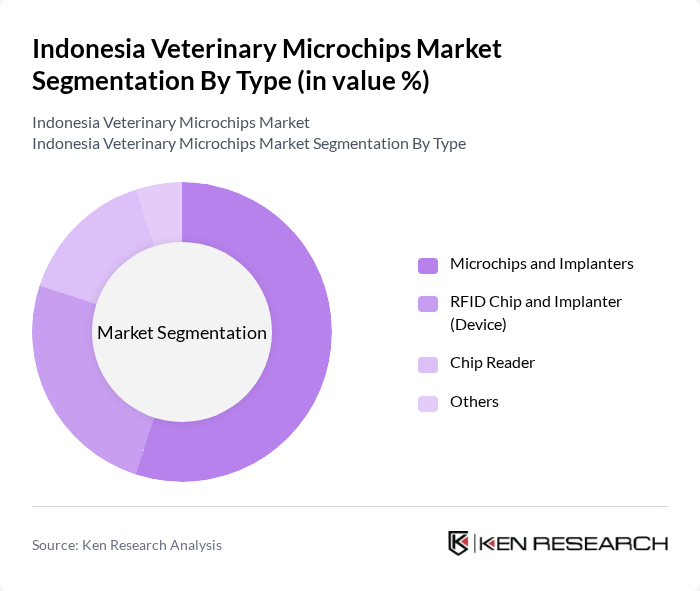
By Type:The market is segmented into various types of microchip products, including Microchips and Implanters, RFID Chip and Implanter (Device), Chip Reader, and Others. Among these, Microchips and Implanters are the most dominant due to their essential role in pet identification and recovery. The increasing adoption of pets and the need for effective identification methods have led to a surge in demand for these products. The market is also witnessing a shift toward advanced microchips with integrated health monitoring and data storage capabilities, reflecting broader trends in animal health management .
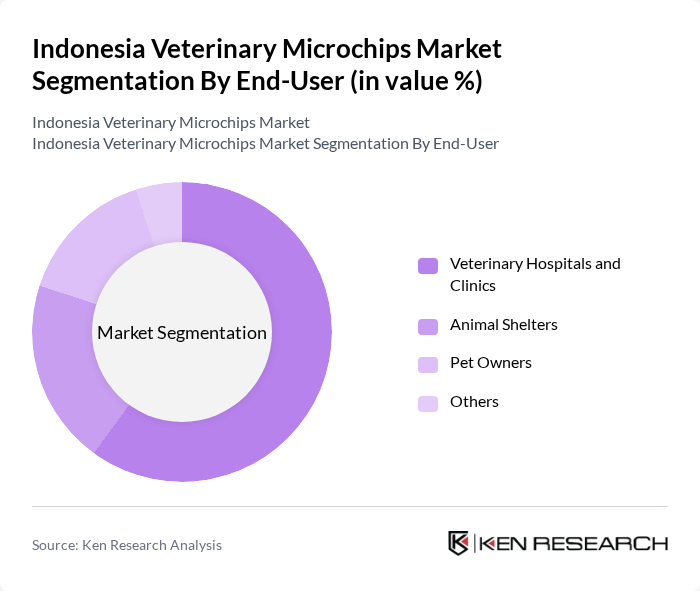
By End-User:The end-user segmentation includes Veterinary Hospitals and Clinics, Animal Shelters, Pet Owners, and Others. Veterinary Hospitals and Clinics are the leading end-users, as they are the primary providers of microchipping services. The increasing number of veterinary practices and the growing trend of responsible pet ownership have significantly contributed to the demand from this segment. Animal shelters and pet owners are also key contributors, particularly as awareness campaigns and regulatory compliance drive adoption .
The Indonesia Veterinary Microchips Market is characterized by a dynamic mix of regional and international players. Leading participants such as PetLink, HomeAgain, AVID Identification Systems, Datamars, Trovan, Microchip ID Systems, Allflex (MSD Animal Health), PetSafe, Identichip, SmartTag, Sure Petcare (SureFlap), PetPace, Find My Pet, Animal Microchips, and PetTracer contribute to innovation, geographic expansion, and service delivery in this space. The global market is led by companies such as HomeAgain (Merck Animal Health), Trovan, PetLink (Datamars), and AVID Identification Systems, which together account for a significant share of the global veterinary microchips market .
The future of the veterinary microchip market in Indonesia appears promising, driven by ongoing government regulations mandating microchipping and increasing integration with mobile applications for pet tracking. As technology advances, microchips are expected to incorporate features such as GPS tracking and health monitoring, enhancing their appeal. Additionally, the growing focus on animal welfare will likely encourage more pet owners to adopt microchipping, further solidifying its role in responsible pet ownership and safety.
| Segment | Sub-Segments |
|---|---|
| By Type | Microchips and Implanters RFID Chip and Implanter (Device) Chip Reader Others |
| By End-User | Veterinary Hospitals and Clinics Animal Shelters Pet Owners Others |
| By Animal Type | Companion Animals (Dogs, Cats) Livestock Animals Others |
| By Region | Java Sumatra Bali Others |
| By Distribution Channel | Online Retail Offline Retail Veterinary Clinics Others |
| By Technology | kHz Frequency kHz Frequency kHz Frequency Others |
| By Application | Pet Recovery Veterinary Services Animal Control Others |
| Scope Item/Segment | Sample Size | Target Respondent Profiles |
|---|---|---|
| Veterinary Clinics | 80 | Veterinarians, Clinic Managers |
| Pet Owners | 120 | Dog and Cat Owners, Pet Enthusiasts |
| Pet Supply Retailers | 60 | Store Managers, Product Buyers |
| Regulatory Bodies | 40 | Policy Makers, Compliance Officers |
| Microchip Manufacturers | 40 | Sales Executives, Product Development Managers |
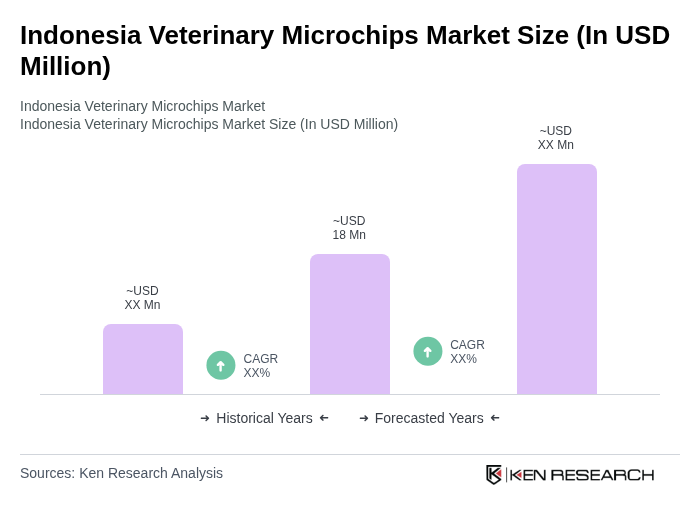
The Indonesia Veterinary Microchips Market is valued at approximately USD 18 million, reflecting a significant growth driven by increasing pet ownership, awareness of animal identification, and the expansion of veterinary services across the region.

What makes us stand out is that our consultants follow Robust, Refine and Result (RRR) methodology. Robust for clear definitions, approaches and sanity checking, Refine for differentiating respondents' facts and opinions, and Result for presenting data with story.

We have set a benchmark in the industry by offering our clients with syndicated and customized market research reports featuring coverage of entire market as well as meticulous research and analyst insights.

While we don't replace traditional research, we flip the method upside down. Our dual approach of Top Bottom & Bottom Top ensures quality deliverable by not just verifying company fundamentals but also looking at the sector and macroeconomic factors.

With one step in the future, our research team constantly tries to show you the bigger picture. We help with some of the tough questions you may encounter along the way: How is the industry positioned? Best marketing channel? KPI's of competitors? By aligning every element, we help maximize success.

Our report gives you instant access to the answers and sources that other companies might choose to hide. We elaborate each steps of research methodology we have used and showcase you the sample size to earn your trust.

If you need any support, we are here! We pride ourselves on universe strength, data quality, and quick, friendly, and professional service.













