
APAC AI wearables market outlook to 2030
Region:Asia
Author(s):Shambhavi
Product Code:KROD2059
Region:Asia
Author(s):Shambhavi
Product Code:KROD2059
November 2024
84
|
Company |
Establishment Year |
Headquarters |
|
Samsung Electronics |
1969 |
South Korea |
|
Xiaomi |
2010 |
China |
|
Huawei |
1987 |
China |
|
Apple |
1976 |
USA |
|
Fitbit |
2007 |
USA |
The APAC AI wearables market is expected to witness robust growth, driven by advancements in AI technology, expanding 5G networks, and increasing demand for health and fitness monitoring devices. Key markets like China, Japan, and South Korea will continue to lead, while emerging markets such as India and Australia are poised for significant expansion in healthcare and fitness applications.
|
By Product Type |
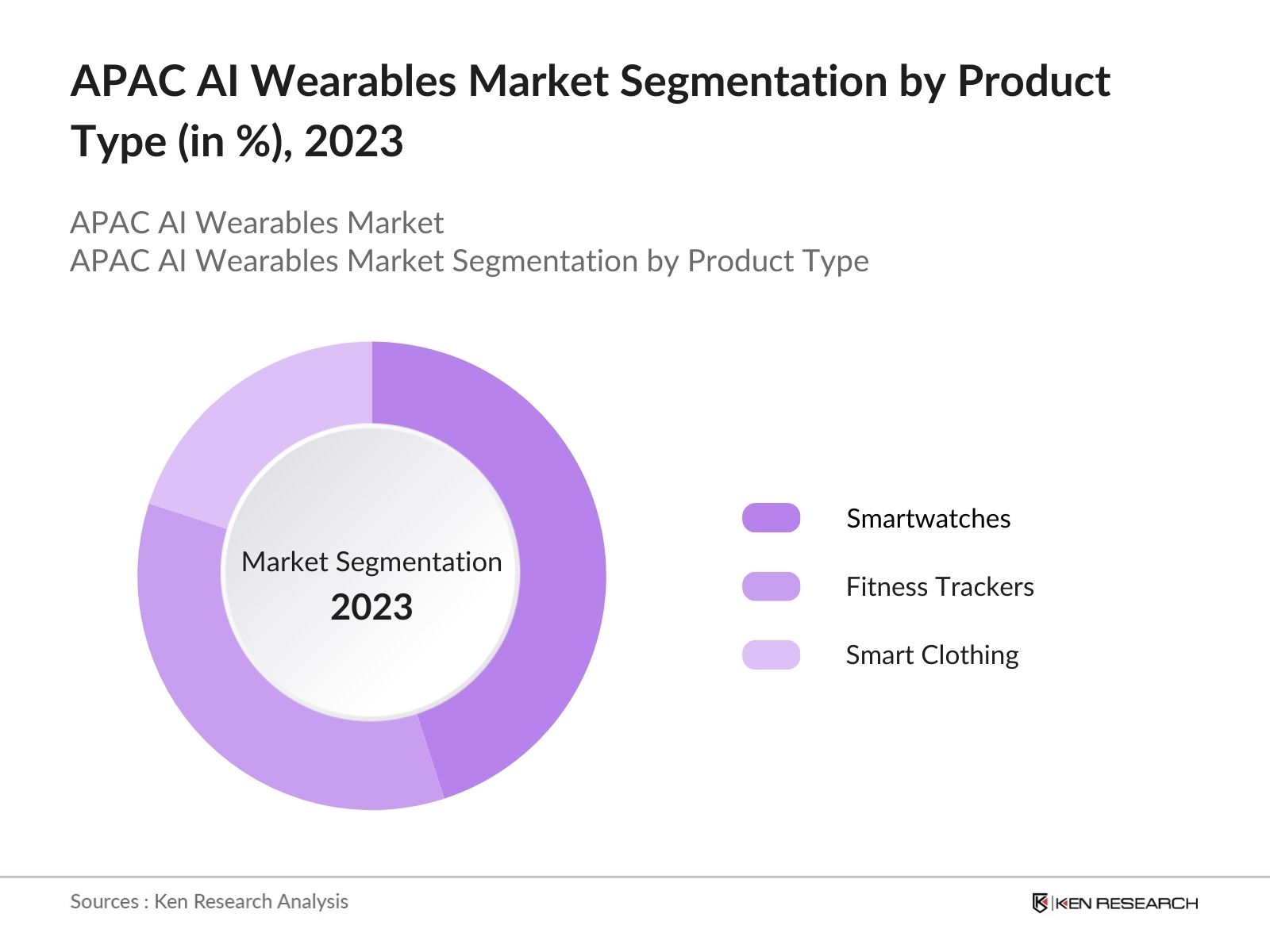
Smartwatches Fitness Trackers Smart Clothing |
|
By Application |
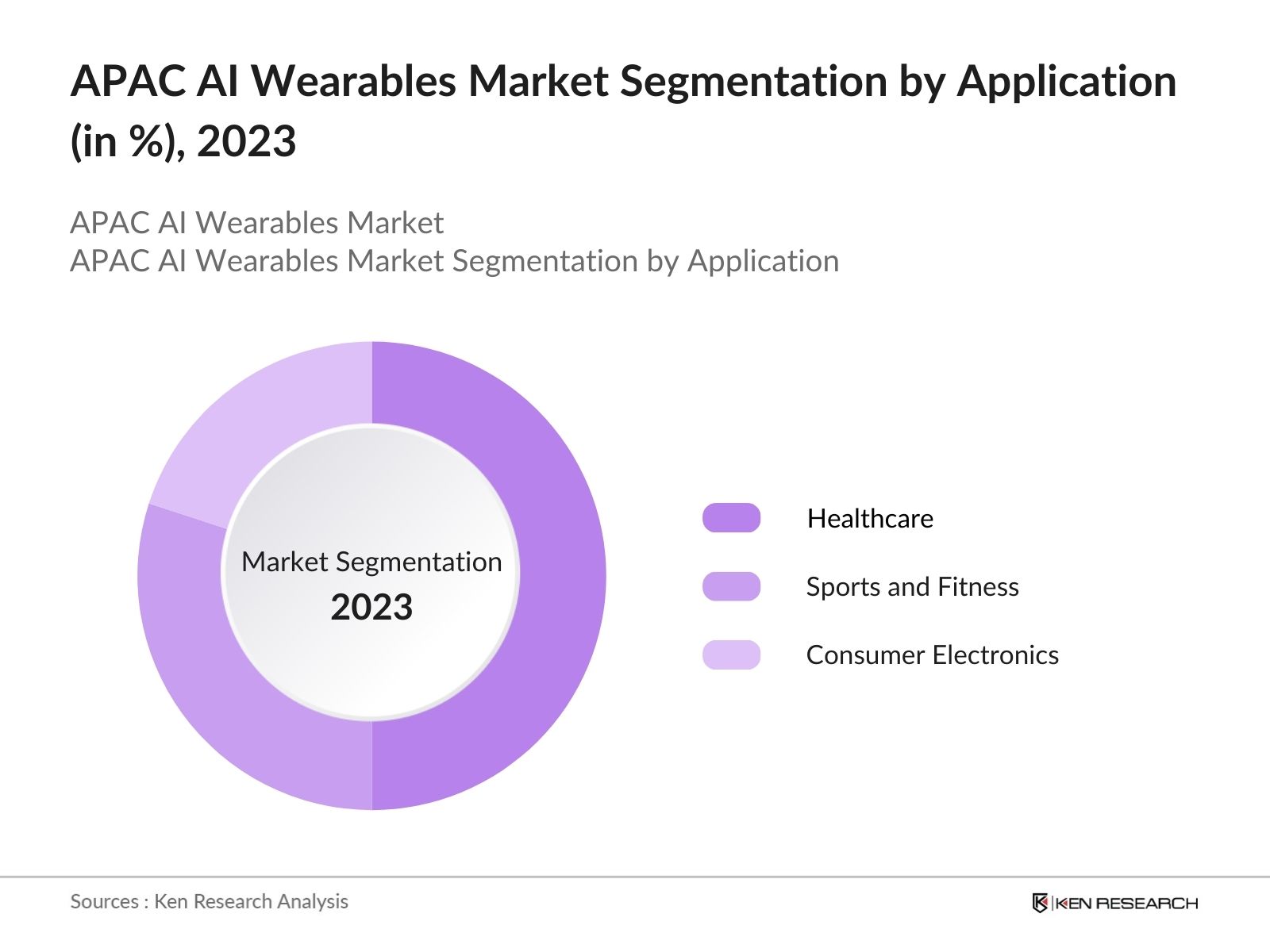
Healthcare Sports and Fitness Consumer Electronics |
|
By Region |
China South Korea Japan India Australia Rest of APAC |
1.1. Definition and Scope
1.2. Market Taxonomy
1.3. Market Growth Rate (CAGR, Market Size Growth)
1.4. Overview of Market Segmentation (By Product Type, By Application, By Region)
2.1. Historical Market Size
2.2. Year-on-Year Growth Analysis
2.3. Key Market Developments and Milestones
3.1. Growth Drivers
3.1.1. Increasing Integration of AI in Healthcare
3.1.2. Expansion of 5G Networks Enabling Wearable AI Functionality
3.1.3. Rising Demand for Personalized Health and Fitness Solutions
3.2. Market Challenges
3.2.1. Data Privacy and Security Concerns
3.2.2. High Costs of Premium AI Wearables
3.2.3. Fragmented Technological Infrastructure Across APAC
3.3. Market Opportunities
3.3.1. Untapped Potential in Emerging Markets
3.3.2. Government Initiatives Supporting AI in Healthcare
3.3.3. Growing Demand for AI-Based Mental Health Monitoring
4.1. Chinas AI Health Initiative
4.2. Japans AI-Driven Healthcare Subsidy Program
4.3. Indias National Digital Health Mission
4.4. South Koreas AI Health Monitoring Program
4.5. Data Privacy Regulations (e.g., South Korea PDPA, Singapore PDPC)
5.1. AI-Powered Health Diagnostics Integration with Telemedicine
5.2. Wearable Solutions for Mental Health Monitoring
5.3. AI Wearables for Womens Health and Fertility Tracking
5.4. Wearable Integration with IoT and Smart Homes
5.5. AI Wearables as a Preventive Healthcare Tool
6.1. By Product Type (in value %)
6.1.1. Smartwatches
6.1.2. Fitness Trackers
6.1.3. Smart Clothing
6.2. By Application (in value %)
6.2.1. Healthcare
6.2.2. Sports and Fitness
6.2.3. Consumer Electronics
6.3. By Technology (in value %)
6.3.1. AI-Integrated Wearables
6.3.2. Biometric Sensors
6.3.3. Health Monitoring Algorithms
6.4. By User Group (in value %)
6.4.1. Elderly
6.4.2. Fitness Enthusiasts
6.4.3. Patients with Chronic Diseases
6.5. By Region (in value %)
6.5.1. China
6.5.2. India
6.5.3. Japan
6.5.4. South Korea
6.5.5 Rest of APAC
7.1. Detailed Profiles of Major Companies
7.1.1. Samsung Electronics
7.1.2. Xiaomi
7.1.3. Huawei
7.1.4. Apple
7.1.5. Fitbit
7.1.6. Garmin
7.1.7. Realme
7.1.8. Sony
7.1.9. Oppo
7.1.10. LG Electronics
7.1.11. Google
7.1.12. Huami
7.1.13. Fossil Group
7.1.14. Motorola
7.1.15. Bose
7.2. Cross-Comparison Parameters (Establishment Year, Headquarters, No. of Employees, Revenue)
7.3. Competitive Landscape Analysis (Market Share, Key Competitor Strategies)
7.4. Strategic Initiatives (Product Launches, Mergers & Acquisitions, Partnerships)
8.1. Venture Capital Funding for AI Wearables
8.2. Private Equity Investments in AI Health Technologies
8.3. Government Grants and Subsidies
8.4. Corporate Investments in AI Wearable Startups
9.1. Future Market Size Projections
9.2. Key Factors Driving Future Market Growth
9.3. Emerging Trends (AI Wearables for Predictive Health Diagnostics, Expansion into Rural Markets)
9.4. Challenges Expected in the Future (Data Privacy, Cost Barriers in Emerging Markets)
10.1. TAM/SAM/SOM Analysis
10.2. Market Entry Strategies for New Players
10.3. Investment Opportunities and White Space Analysis
10.4. Future Collaboration and Innovation Opportunities
Ecosystem creation for all major entities and referring to multiple secondary and proprietary databases to perform desk research around the market to collate market-level information.
Collating statistics on the APAC AI Wearables Market over the years, analyzing the penetration of APAC AI Wearables technologies, and computing the revenue generated for the market. This step also involves reviewing technology adoption rates and application effectiveness to ensure accuracy behind the data points shared.
Building market hypotheses and conducting CATIs with market experts belonging to different companies to validate statistics and seek operational and financial information from company representatives.
Our team will approach multiple APAC AI Wearables companies to understand the nature of technology segments, consumer preferences, and other parameters. This supports validating statistics derived through a bottom-to-top approach from these APAC AI Wearables companies, ensuring accuracy and reliability in the report.
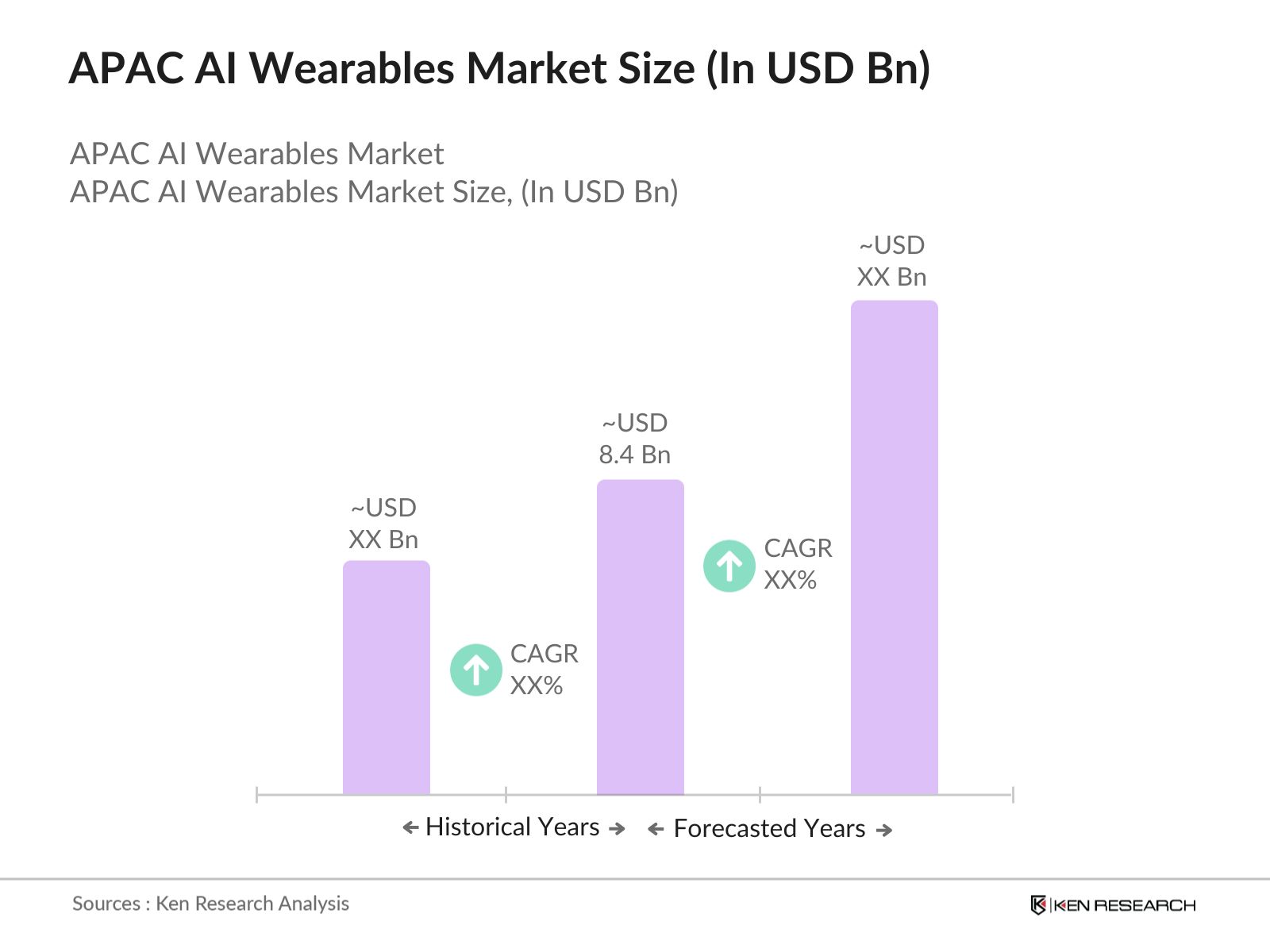
The APAC AI wearables market was valued at USD 8.4 billion in 2023, driven by increasing adoption in healthcare, fitness, and consumer electronics sectors. The rapid expansion of 5G networks and AI integration into health monitoring devices are key contributors to the markets growth.
Challenges in the APAC AI wearables market include data privacy concerns, high costs of premium devices, and the fragmented technological infrastructure across the region. These factors hinder market penetration, particularly in cost-sensitive and developing areas.
Key players in the APAC AI wearables market include Samsung Electronics, Xiaomi, Huawei, Apple, and Fitbit. These companies dominate due to their advanced AI integration, innovative product features, and strong presence in both developed and emerging markets.
The APAC AI wearables market is driven by the rising demand for AI-powered health monitoring devices, expansion of 5G connectivity, and government initiatives supporting AI integration in healthcare. Increasing awareness of preventive healthcare is also accelerating market growth.
Recent trends in the APAC AI wearables market include the development of AI-based wearables for mental health monitoring, increased integration with telehealth platforms, and the growing demand for womens health-focused wearables. These trends reflect the expanding scope of AI applications in health and fitness.

What makes us stand out is that our consultants follows Robust, Refine and Result (RRR) methodology. i.e. Robust for clear definitions, approaches and sanity checking, Refine for differentiating respondents facts and opinions and Result for presenting data with story

We have set a benchmark in the industry by offering our clients with syndicated and customized market research reports featuring coverage of entire market as well as meticulous research and analyst insights.

While we don't replace traditional research, we flip the method upside down. Our dual approach of Top Bottom & Bottom Top ensures quality deliverable by not just verifying company fundamentals but also looking at the sector and macroeconomic factors.

With one step in the future, our research team constantly tries to show you the bigger picture. We help with some of the tough questions you may encounter along the way: How is the industry positioned? Best marketing channel? KPI's of competitors? By aligning every element, we help maximize success.

Our report gives you instant access to the answers and sources that other companies might choose to hide. We elaborate each steps of research methodology we have used and showcase you the sample size to earn your trust.

If you need any support, we are here! We pride ourselves on universe strength, data quality, and quick, friendly, and professional service.