
APAC Anti-Wrinkle Products Market Outlook to 2030

Region:Asia

Author(s):Shubham

Product Code:KROD6007

Published On

November 2024

Total pages

90

About the Report

APAC Anti-Wrinkle Products Market Overview
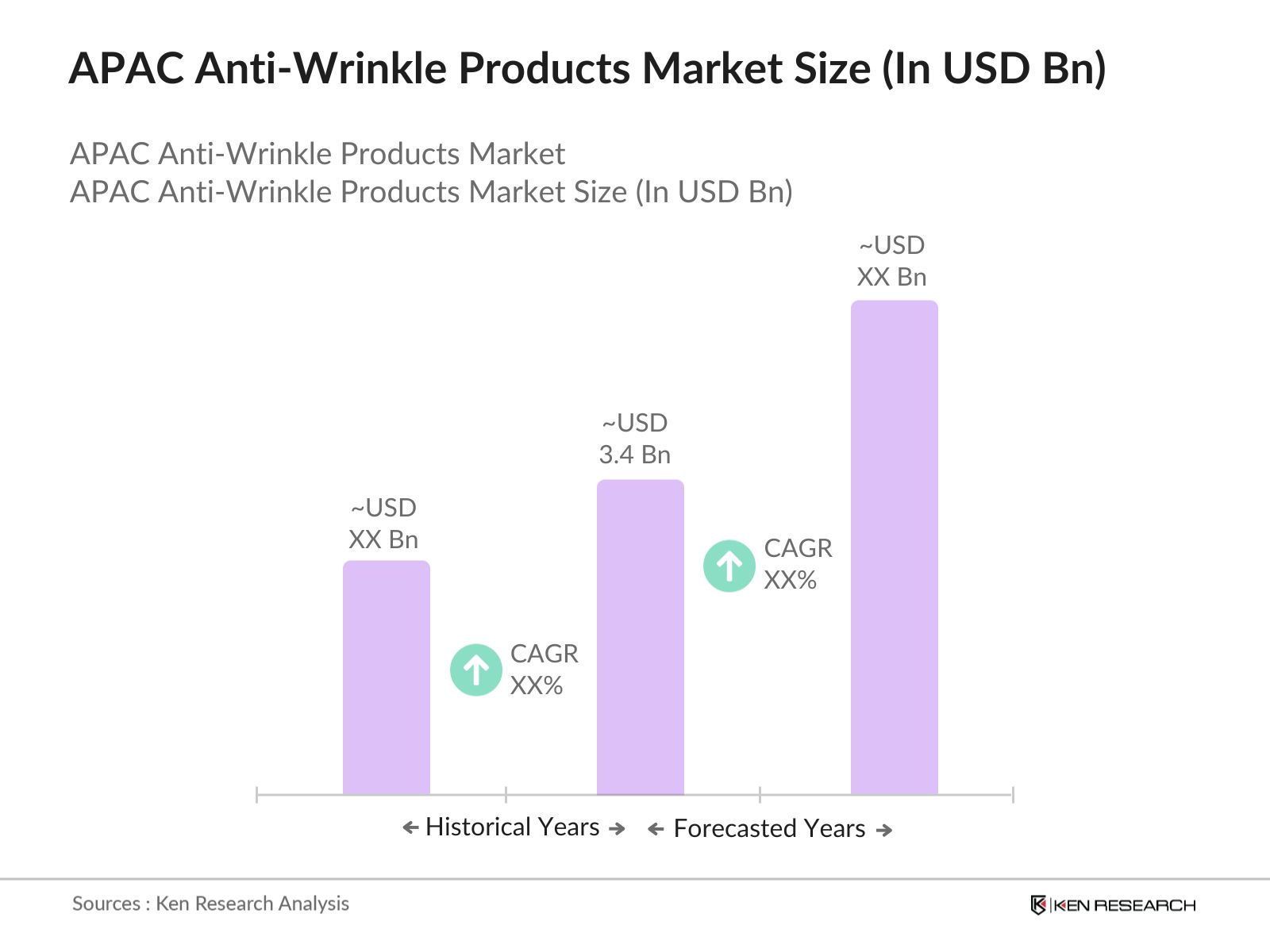
  • The APAC Anti-Wrinkle Products market is valued at USD 3.4 billion, driven by increasing demand for effective anti-aging solutions and a growing consumer base with disposable incomes dedicated to skincare. This market expansion is supported by a rising aging population, especially in countries like Japan, South Korea, and China, alongside advancements in dermatological research that are delivering more sophisticated anti-wrinkle formulations. The market's growth is further bolstered by the extensive distribution networks across APAC, reaching both urban and rural areas. market overviews
  • China, Japan, and South Korea dominate the APAC Anti-Wrinkle Products market due to strong consumer interest in skincare and anti-aging treatments. Japan leads with innovative products and a deeply ingrained skincare culture, while South Koreas influence stems from its global K-beauty trend and the continuous demand for youthful, healthy skin. China, with its expansive skincare market and a rapidly growing middle class, is another significant player, contributing to the markets growth through both online and offline sales channels.
  • In the APAC region, stringent skincare regulations ensure product safety and efficacy, directly impacting the anti-wrinkle market. Japans Ministry of Health, Labour, and Welfare mandates rigorous safety inspections, with over 11,000 skincare products, including anti-wrinkle formulations, undergoing mandatory testing in 2023 for compliance with standards on ingredient safety and labeling accuracy. Similarly, in South Korea, the Ministry of Food and Drug Safety requires specific safety validations for anti-aging claims, with nearly 9,500 cosmetic products reviewed in 2023 to verify their claims and prevent misleading advertising.

APAC Anti-Wrinkle Products Market Segmentation
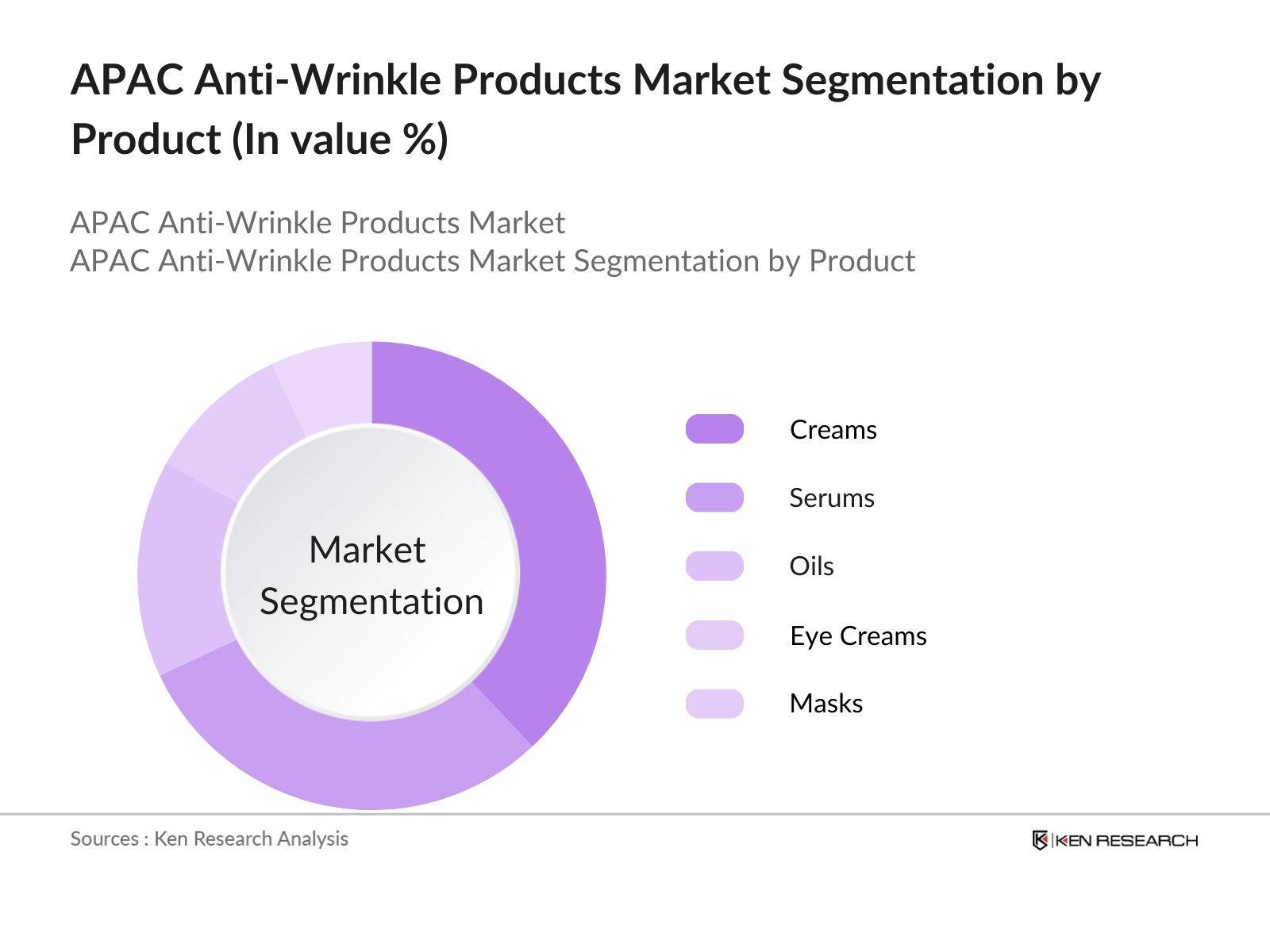
  • By Product Type: The market is segmented by product type into creams, serums, oils, eye creams, and masks. Recently, creams hold the dominant market share within this segment, largely due to their widespread availability and the convenience they offer in daily skincare routines. Additionally, creams are often perceived as more hydrating and long-lasting, making them a preferred choice among consumers seeking quick and reliable results. Major skincare brands continually innovate within this category to offer enhanced efficacy, further boosting their popularity. market overviews
  • By Distribution Channel: The market is segmented by distribution channel into online and offline retail, including specialty stores, supermarkets, and pharmacies. Offline retail dominates this segment, thanks to a well-established retail infrastructure across APAC that encourages consumers to explore products physically. Many consumers prefer testing skincare products in stores before purchasing, and the presence of dedicated skincare sections in major retail outlets enhances the convenience of offline shopping. Additionally, offline retail allows consumers to benefit from personalized consultations, which further strengthens its position.

market overviews

APAC Anti-Wrinkle Products Market Competitive Landscape

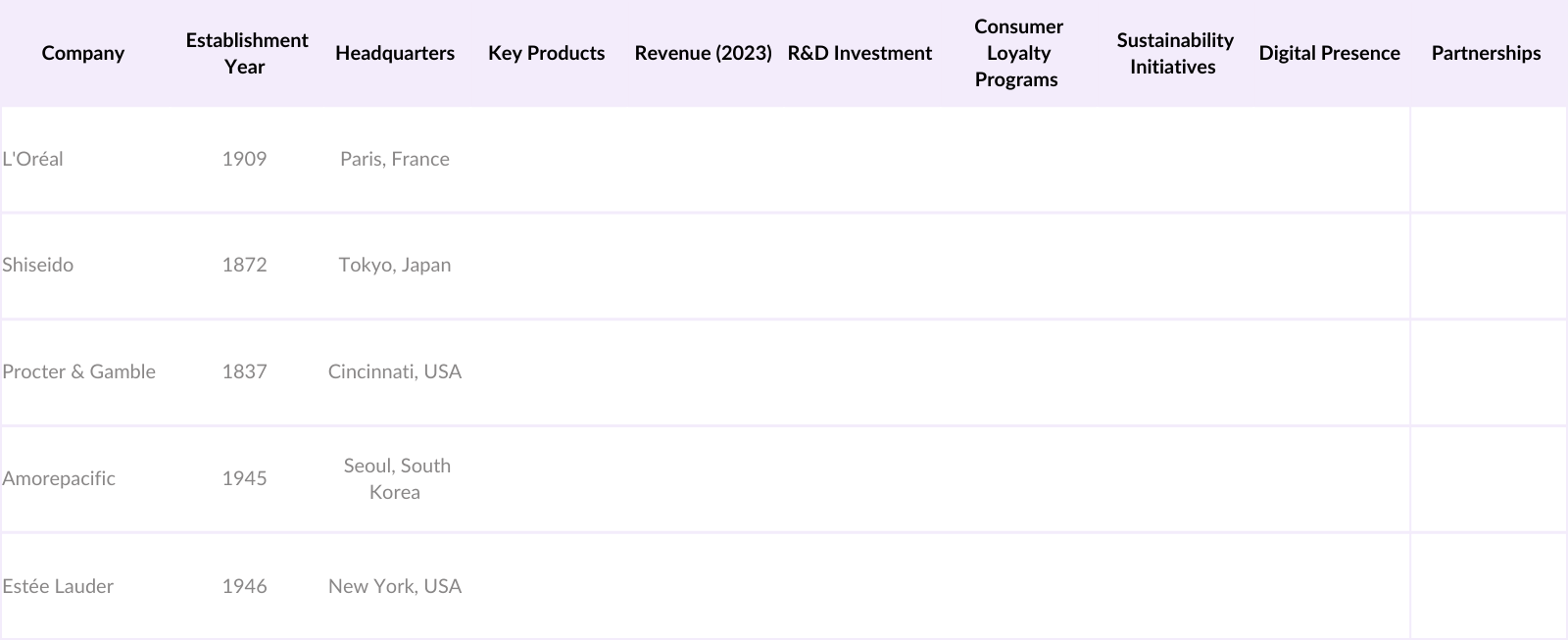
The APAC Anti-Wrinkle Products market is highly competitive, with leading players focused on product innovation, brand loyalty, and expansive distribution networks. Key companies, including global giants and regional brands, dominate due to their strong market presence and consumer trust.market overviews
APAC Anti-Wrinkle Products Market Industry Analysis

Growth Drivers

  • Increasing Aging Population: The APAC region is experiencing a notable increase in its elderly demographic, driving demand for anti-wrinkle products. In Japan alone, as of 2023, over 36 million people are aged 65 or older, accounting for nearly one-third of the population, according to the Ministry of Internal Affairs and Communications source. Additionally, South Korea recorded over 8.6 million people aged 65+ in 2023, up from 7.5 million in 2021, as per the Korean Statistical Information Service. This demographic shift is intensifying the need for skincare products addressing age-related concerns, particularly anti-wrinkle treatments, positioning the market for continued demand growth.
  • Rising Consumer Demand for Skincare: With growing income levels, consumers in the APAC region are increasingly prioritizing skincare, particularly anti-aging solutions. Chinas National Bureau of Statistics reports that in 2023, disposable income per capita rose by 6,570 CNY in urban areas compared to 2022. This increase has translated into higher expenditure on skincare products. Similarly, in India, household expenditure on personal care and wellness products increased substantially from 2021 to 2023, according to the Ministry of Statistics and Programme Implementation. These trends highlight a strong consumer base willing to invest in anti-wrinkle products.
  • Advancements in Dermatology: Recent advances in dermatological research have bolstered product efficacy, thereby attracting more consumers to anti-wrinkle solutions. In South Korea, the development of peptide-based skincare formulations has been supported by investments exceeding billions of KRW in 2023 by the Ministry of Health and Welfare source. Similarly, Chinas Ministry of Science and Technology reported that government and private entities have invested heavily in anti-aging research, funding over 55,000 new dermatological studies as of 2024. These advancements are increasing product credibility and consumer confidence in anti-wrinkle treatments.

Market Challenges

  • High R&D Costs: The anti-wrinkle product market faces substantial R&D expenses due to the extensive testing and precise formulation requirements. In Japan, skincare product development demands high investment in research, especially for products targeting specific age-related concerns. Similarly, in China, the rising expenditure on research by cosmetics companies highlights the competitive push for innovation and advanced formulation. These financial requirements create notable entry barriers for smaller firms, which may find it challenging to allocate the necessary resources to compete effectively in this market.
  • Product Regulation Compliance: Strict regulatory compliance presents significant challenges in the APAC anti-wrinkle market. Regulatory bodies like the Health Sciences Authority of Singapore require cosmetic products, including anti-aging formulations, to undergo thorough registration and validation for claims. Similarly, Japans cosmetic standards mandate multiple rounds of testing before products are allowed into the market, ensuring consumer safety and accurate product labeling. These regulations not only increase compliance costs but can also delay market entry, impacting time-to-market strategies for anti-wrinkle product manufacturers.

APAC Anti-Wrinkle Products Market Future Outlook

The APAC Anti-Wrinkle Products market is expected to grow considerably over the next five years. This growth is anticipated to be fueled by increased consumer awareness, advancements in dermatology, and a preference for high-quality, premium skincare solutions across APAC. Major players are expected to invest in research and development to meet evolving consumer preferences, creating ample opportunities for innovation.

Future Market Opportunities

  • Expansion of Anti-Wrinkle Product Segments: Product diversification in the anti-wrinkle category offers strong growth opportunities in APAC, as consumers seek tailored skincare solutions. The China Association of Fragrance Flavor and Cosmetic Industries recorded an increase of thousands of new anti-aging product launches in 2023, driven by rising consumer interest in age-specific formulations. In Japan, market data from the Ministry of Health, Labour, and Welfare highlights that over majority of skincare companies introduced specialized anti-wrinkle lines targeting specific age groups in 2023, demonstrating a growing market for segmented offerings.
  • Increasing E-commerce Channels: The growth of e-commerce in APAC facilitates greater access to anti-wrinkle products. According to Chinas Ministry of Commerce, online retail sales of beauty and skincare products reached anall-time high in 2023. Similarly, in India, the Ministry of Electronics and Information Technology reported a notworthy rise in e-commerce skincare purchases in 2023, reflecting heightened consumer engagement through online channels. This expansion in e-commerce offers new distribution avenues, allowing brands to reach a wider audience.

Scope of the Report

By Product Type

Creams and Moisturizers

Serums

Gels and Oils

Eye Creams

Others

By Age Group

Below 30

3050

Above 50

By Distribution Channel

Online Retail

Offline Retail (Pharmacies, Supermarkets)

By Ingredient Type

Synthetic

Natural/Botanical

Hybrid

By Country

China

Japan

South Korea

India

Australia

Rest of the APAC

Products


Key Target Audience

  • Skincare Manufacturers

  • Retailers and Distributors

  • Online Marketplaces

  • Banks and Financial Institutions

  • Investors and Venture Capitalists

  • Government and Regulatory Bodies (e.g., Ministry of Health in APAC countries)

  • Raw Material Suppliers

  • Consumer Goods Corporations

Companies


Players Mentioned in the Report

  • L'Oral

  • Este Lauder

  • Procter & Gamble

  • Shiseido

  • Amorepacific

  • Kao Corporation

  • Beiersdorf AG

  • Coty Inc.

  • LG Household & Health Care

  • Johnson & Johnson

  • Pola Orbis Holdings

  • LVMH Mot Hennessy Louis Vuitton

  • Unilever

  • Proya Cosmetics

  • KOS Corporation

Table of Contents

1. APAC Anti-Wrinkle Products Market Overview

1.1 Definition and Scope

1.2 Market Taxonomy

1.3 Product Lifecycle Analysis

1.4 Value Chain Analysis

1.5 Market Segmentation Overview

2. APAC Anti-Wrinkle Products Market Size (in USD Billion)

2.1 Historical Market Size

2.2 Year-On-Year Growth Analysis

2.3 Market Milestones and Key Events

2.4 Major Market Innovations

3. APAC Anti-Wrinkle Products Market Analysis

3.1 Growth Drivers (Consumer Preferences, Technological Advancements, Ageing Population)

3.2 Market Challenges (High R&D Costs, Regulatory Constraints)

3.3 Opportunities (Digital Marketing, Emerging Markets)

3.4 Trends (Natural Ingredients, E-commerce Growth, Customized Solutions)

3.5 Regulatory Landscape

3.5.1 Key Regional Regulatory Authorities

3.5.2 Product Safety Standards

3.5.3 Compliance Requirements for Imports

3.6 SWOT Analysis

3.7 Stakeholder Ecosystem

3.8 Porters Five Forces Analysis

3.9 Competitive Landscape Overview

4. APAC Anti-Wrinkle Products Market Segmentation

4.1 By Product Type (in Value %)

4.1.1 Creams and Moisturizers

4.1.2 Serums

4.1.3 Gels and Oils

4.1.4 Eye Creams

4.1.5 Others

4.2 By Age Group (in Value %)

4.2.1 Below 30

4.2.2 3050

4.2.3 Above 50

4.3 By Distribution Channel (in Value %)

4.3.1 Online Retail

4.3.2 Offline Retail (Pharmacies, Supermarkets)

4.4 By Ingredient Type (in Value %)

4.4.1 Synthetic

4.4.2 Natural/Botanical

4.4.3 Hybrid

4.5 By Region (in Value %)

4.5.1 China

4.5.2 Japan

4.5.3 South Korea

4.5.4 India

4.5.5 Australia

5. APAC Anti-Wrinkle Products Market Competitive Analysis

5.1 Detailed Profiles of Major Companies

5.1.1 L'Oral

5.1.2 Este Lauder

5.1.3 Procter & Gamble

5.1.4 Shiseido

5.1.5 Unilever

5.1.6 Johnson & Johnson

5.1.7 Amorepacific

5.1.8 Kao Corporation

5.1.9 Beiersdorf AG

5.1.10 Proya Cosmetics

5.1.11 KOS Corporation

5.1.12 Coty Inc.

5.1.13 LG Household & Health Care

5.1.14 Pola Orbis Holdings

5.1.15 LVMH Mot Hennessy Louis Vuitton

5.2 Cross Comparison Parameters (Product Range, Market Positioning, R&D Investment, Target Audience, Brand Value, Customer Loyalty, Ingredient Sourcing, Sustainability Initiatives)

5.3 Market Share Analysis (in % Value)

5.4 Strategic Initiatives and Expansion Plans

5.5 Mergers and Acquisitions Activity

5.6 Funding and Investment Analysis

6. APAC Anti-Wrinkle Products Market Regulatory Framework

6.1 Product Registration and Approval Processes

6.2 Labeling and Advertising Regulations

6.3 Environmental Impact Standards

6.4 Import/Export Compliance Standards

7. APAC Anti-Wrinkle Products Future Market Size (in USD Billion)

7.1 Projected Market Size

7.2 Key Factors Driving Future Growth

8. APAC Anti-Wrinkle Products Future Market Segmentation

8.1 By Product Type (in Value %)

8.2 By Age Group (in Value %)

8.3 By Distribution Channel (in Value %)

8.4 By Ingredient Type (in Value %)

8.5 By Region (in Value %)

9. APAC Anti-Wrinkle Products Market Analysts Recommendations

9.1 TAM/SAM/SOM Analysis

9.2 Key Marketing Strategies

9.3 White Space Opportunities

9.4 Customer Demographic Analysis

Disclaimer Contact Us

Research Methodology

Step 1: Identification of Key Variables


The initial phase involves identifying key stakeholders within the APAC Anti-Wrinkle Products Market and mapping the competitive landscape through secondary research and proprietary databases.

Step 2: Market Analysis and Construction


In this phase, historical market data is analyzed, including sales statistics and consumer trends. This analysis helps build a foundational understanding of market dynamics, segment growth, and regional differences.

Step 3: Hypothesis Validation and Expert Consultation


Market hypotheses are refined through interviews with industry experts, providing insights on operational and financial aspects, thereby enhancing data accuracy.

Step 4: Research Synthesis and Final Output


The last phase involves synthesizing insights from manufacturers, which ensures comprehensive, validated analysis across market segments and informs future trends in the APAC Anti-Wrinkle Products Market.


Frequently Asked Questions

01. How big is the APAC Anti-Wrinkle Products Market?

The APAC Anti-Wrinkle Products Market is valued at USD 3.4 billion, driven by rising consumer demand for effective anti-aging skincare solutions across the region.

02. What are the primary challenges in the APAC Anti-Wrinkle Products Market?

Key challenges in the APAC Anti-Wrinkle Products Market include high R&D costs associated with product innovation and strict regulatory requirements across countries like Japan and South Korea, which can delay product releases.

03. Who are the major players in the APAC Anti-Wrinkle Products Market?

Top players in the APAC Anti-Wrinkle Products Market include L'Oral, Shiseido, Procter & Gamble, Este Lauder, and Amorepacific, recognized for their extensive product lines, strong brand presence, and innovation in anti-aging solutions.

04. What drives growth in the APAC Anti-Wrinkle Products Market?

The APAC Anti-Wrinkle Products Market growth is largely driven by the aging population, increasing disposable incomes, and a trend toward premium skincare solutions across APAC, particularly in Japan, China, and South Korea.


Why Buy From Us?

RRR
Refine Robust Result (RRR) Framework

What makes us stand out is that our consultants follows Robust, Refine and Result (RRR) methodology. i.e. Robust for clear definitions, approaches and sanity checking, Refine for differentiating respondents facts and opinions and Result for presenting data with story

Our Reach Is Unmatched

We have set a benchmark in the industry by offering our clients with syndicated and customized market research reports featuring coverage of entire market as well as meticulous research and analyst insights.

Research
Shifting the Research Paradigm

While we don't replace traditional research, we flip the method upside down. Our dual approach of Top Bottom & Bottom Top ensures quality deliverable by not just verifying company fundamentals but also looking at the sector and macroeconomic factors.

Insite
More Insights-Better Decisions

With one step in the future, our research team constantly tries to show you the bigger picture. We help with some of the tough questions you may encounter along the way: How is the industry positioned? Best marketing channel? KPI's of competitors? By aligning every element, we help maximize success.

Trust
Transparency and Trust

Our report gives you instant access to the answers and sources that other companies might choose to hide. We elaborate each steps of research methodology we have used and showcase you the sample size to earn your trust.

support
Round the Clock Support

If you need any support, we are here! We pride ourselves on universe strength, data quality, and quick, friendly, and professional service.

Why Client Choose Us?

400000+ Reports in repository
150+ Consulting project a year
100+ Analysts
8000+ Client Queries in 2022