Ken Research Logo

APAC Aviation Market Outlook to 2030

Region:Asia

Author(s):Shubham Kashyap

Product Code:KROD7896

Published On

December 2024

Total pages

100

About the Report

APAC Aviation Market Overview

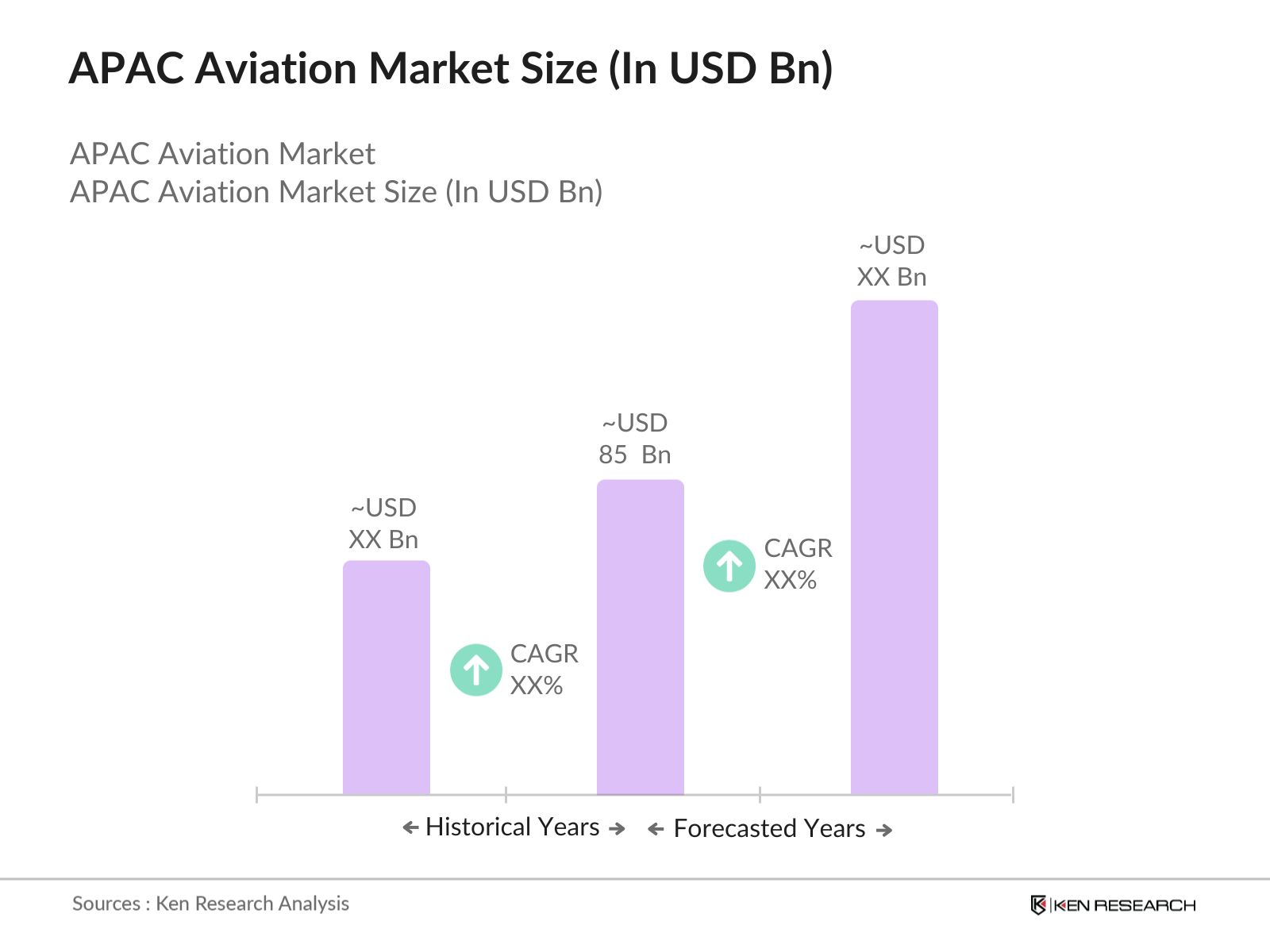
  • The APAC Aviation market is expanding at a significant pace, with an estimated valuation of USD 85 billion, driven by increasing air travel demand, economic growth, and urbanization across the region. This growth is further accelerated by the adoption of low-cost carriers and advancements in aviation infrastructure. The aviation sector in APAC also benefits from government investments in airport expansion and fleet modernization, aligning with rising passenger volumes and evolving consumer expectations for affordable and efficient travel options.

APAC Aviation Market Size

  • China, Japan, and India stand at the forefront of the APAC aviation sector. China leads with its extensive airport infrastructure projects and the growth of domestic airlines. Japan, known for its advanced technological infrastructure and commitment to efficient air travel services, further strengthens its position with government policies favoring innovation in aviation. Indias dominance is propelled by a surge in domestic tourism, a young population eager to travel, and government initiatives to promote aviation as a key transportation mode.
  • APAC governments are strengthening safety protocols to elevate operational standards and passenger safety within the aviation industry. Japans Civil Aviation Bureau, for instance, recently implemented updated flight safety guidelines in 2023, leading to a notable improvement in compliance among regional carriers. Enhanced safety regulations across the region are designed to reduce risks, streamline procedures, and ultimately ensure a safer travel experience for passengers.

APAC Aviation Market Segmentation

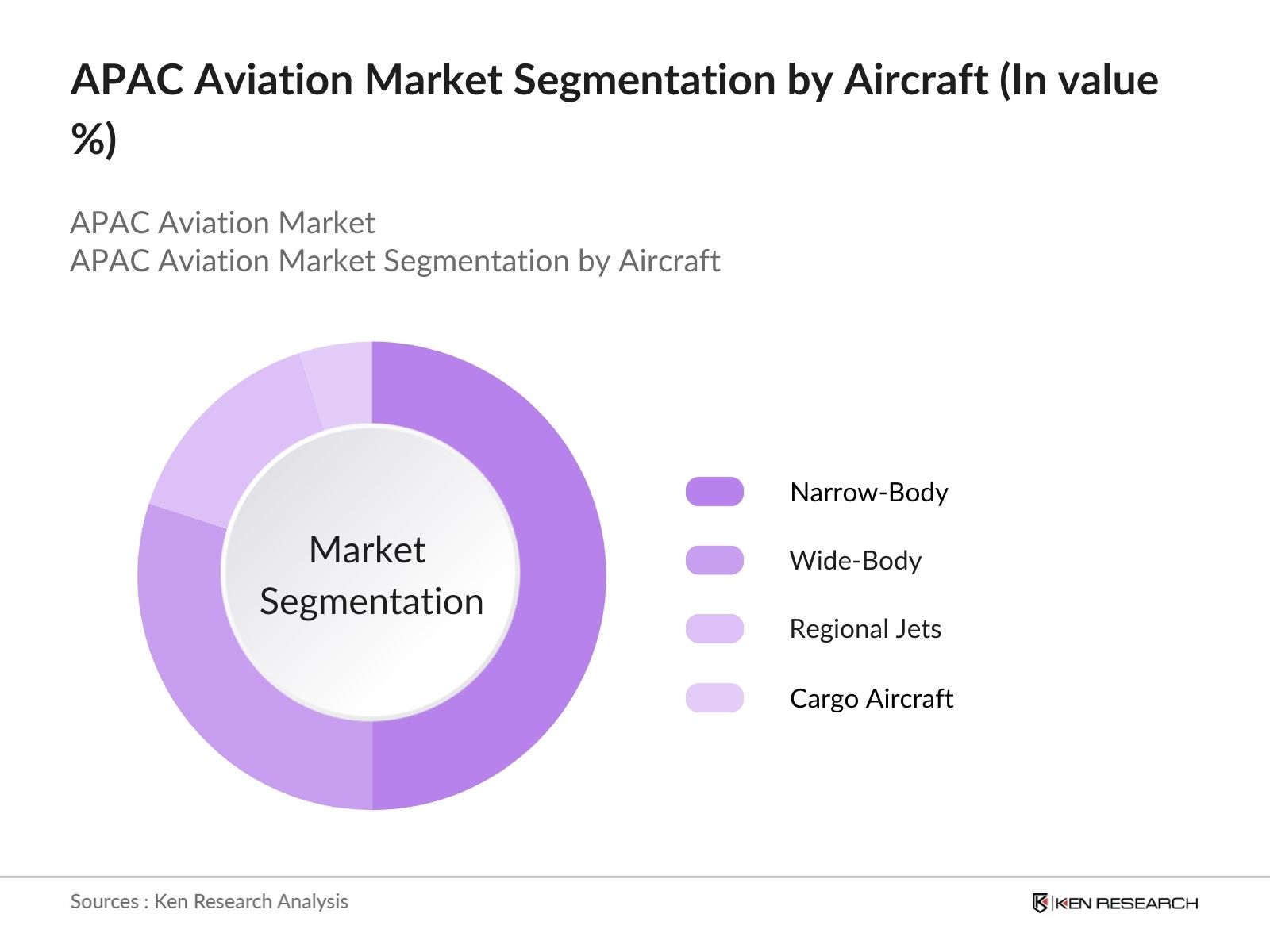
  • By Aircraft Type: The market is segmented by aircraft type into narrow-body, wide-body, regional jets, and cargo aircraft. Narrow-body aircraft hold a dominant position, largely due to their operational cost-efficiency and suitability for short- to medium-haul routes, which are popular among budget carriers in APAC. The increased adoption of narrow-body aircraft is also influenced by rising regional travel demand across high-density routes within the Asia-Pacific region.

APAC Aviation Market Segmentation By Aircraft Type

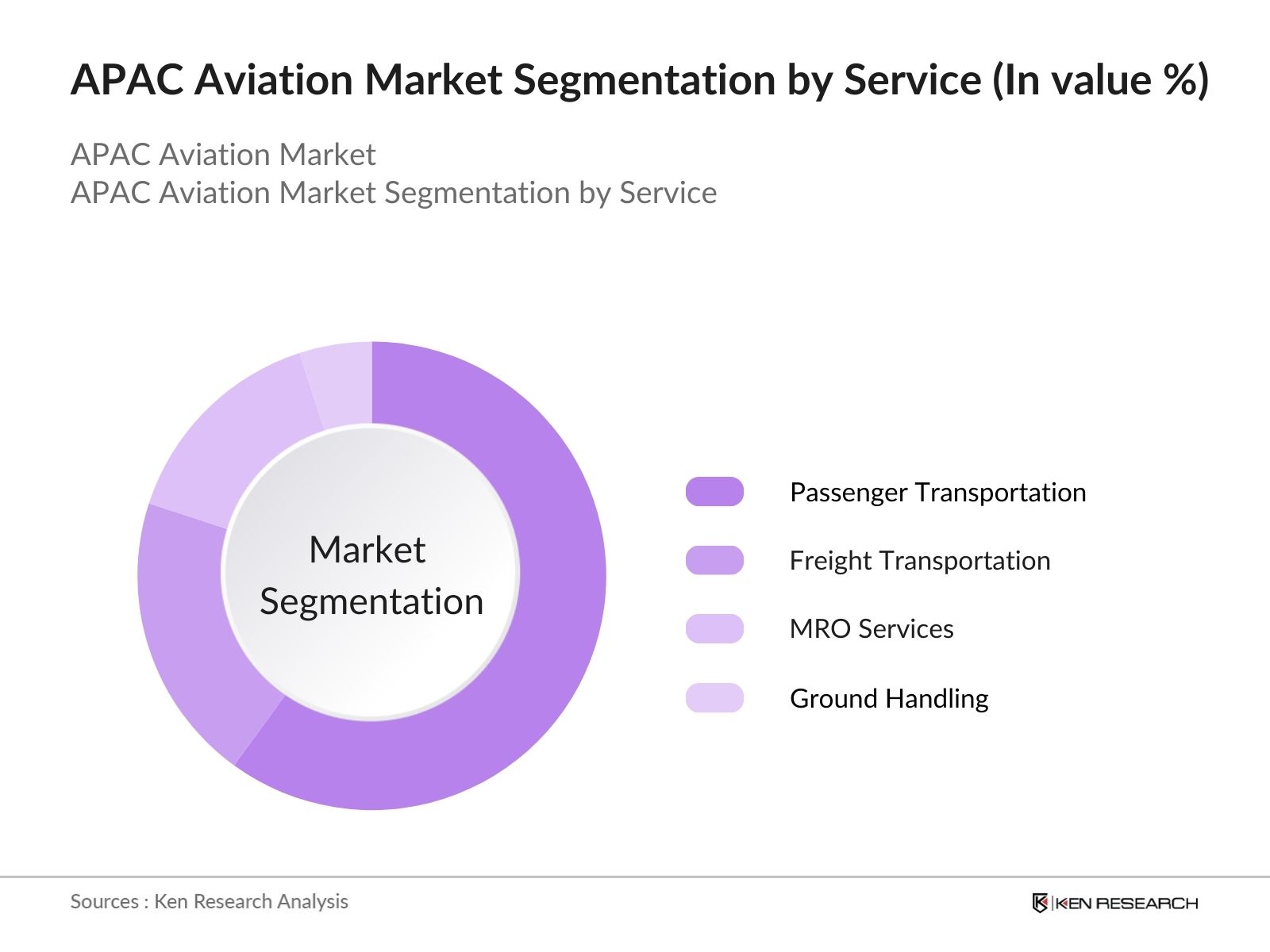
  • By Service Type: The market is further segmented by service type into passenger transportation, freight transportation, MRO (Maintenance, Repair, and Overhaul) services, and ground handling. Passenger transportation dominates the segment, fueled by increased consumer spending, the proliferation of low-cost airlines, and a strong demand for both domestic and international flights. The market for passenger transportation is also bolstered by government policies promoting tourism and regional connectivity within APAC.

APAC Aviation Market Segmentation By Service Type

APAC Aviation Market Competitive Landscape

The APAC aviation market is marked by the presence of a mix of global giants and regional players, with companies investing significantly in fleet expansion and digital innovation to stay competitive. Major players like Boeing, Airbus, and Embraer dominate the industry alongside regional leaders in APAC who focus on enhancing operational efficiency and customer service.
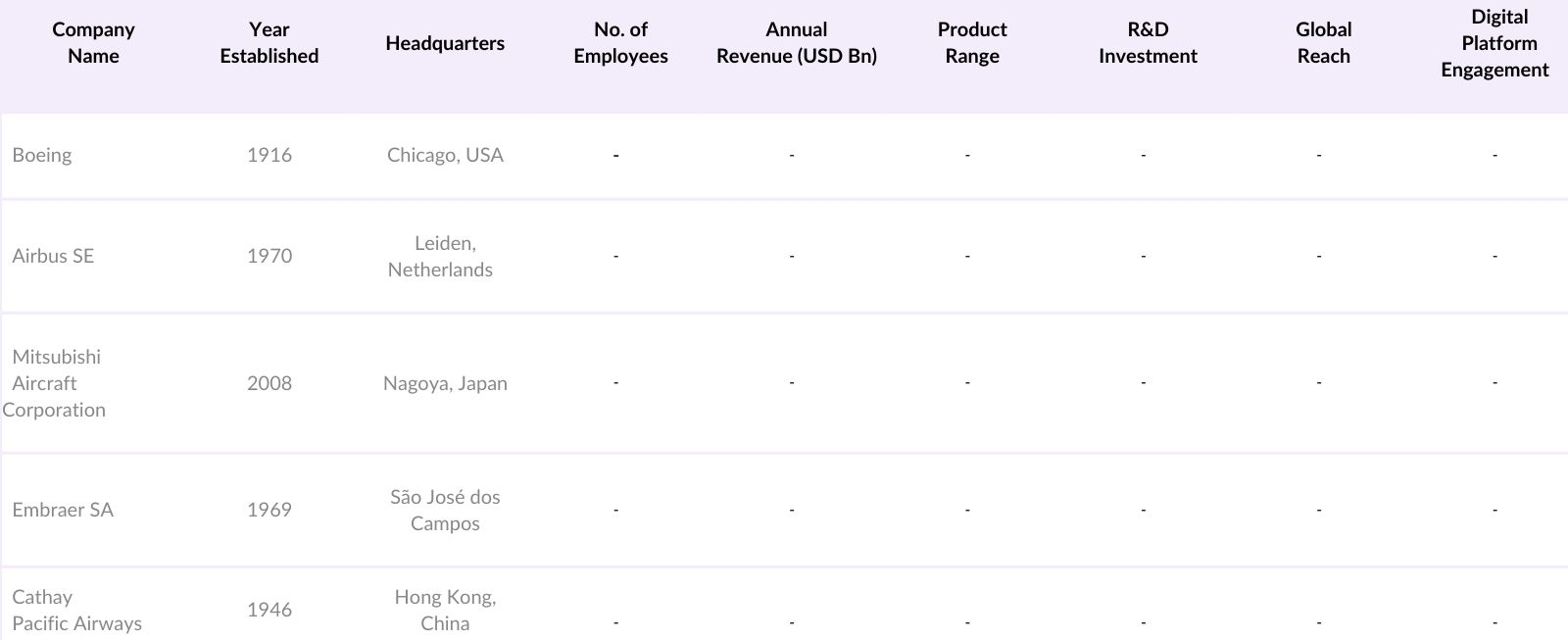
APAC Aviation Market Competitive Landscape

APAC Aviation Market Analysis

Growth Drivers

  • Expansion in the Aviation Sector: The APAC region has witnessed a significant increase in air travel demand, driven largely by its rising middle class, especially in China, India, and Southeast Asia. For the first eight months of 2023, Asia-Pacific airlines carried 240.2 million international passengers, marking a 36.3% increase compared to the same period in 2022, due to improving economic conditions and urbanization. Major countries in APAC, such as China and India, have recorded substantial air passenger growth rates. Chinas Civil Aviation Administration estimates the countrys passenger air travel at 620 million in 2023, reflecting the regions strong recovery momentum and the increase in consumer spending.
  • Economic Growth and Urbanization: The regions robust economic growth has spurred aviation market expansion, as urban populations increase and incomes rise. In 2024, APACs urbanization rate is projected to exceed 59%, driven by rapid city expansion in countries like Vietnam and Indonesia. The World Bank noted that China's GDP growth rate reached 5.2% in 2023, contributing to the demand for increased air travel. Such economic progress has resulted in greater air mobility demand, especially for intra-Asia travel among rapidly urbanizing populations.
  • Regional Connectivity Enhancements: APAC countries have been enhancing regional connectivity to cater to the booming demand for air travel. In 2024, Indias Ude Desh ka Aam Naagrik (UDAN) scheme added 78 new regional routes, while ASEAN Open Skies has allowed seamless travel among member countries. Chinas Belt and Road Initiative includes significant airport projects in Southeast Asia, increasing regional accessibility. Government investments in regional airports in 2023 amounted to over USD 12 billion across APAC, signifying the push for greater interconnectivity in the region.

Market Challenges

  • Infrastructure Constraints in the Region: Airport infrastructure across the APAC region faces challenges in keeping pace with rising passenger volumes. Major airports in countries like India, Japan, and Indonesia are operating beyond their intended capacities, leading to significant congestion and operational bottlenecks. Delays in expansion projects and complex land acquisition issues have further stressed these high-traffic hubs, impacting service efficiency and heightening operational challenges as the aviation sector continues to expand.
  • Regulatory Hurdles: Diverse regulatory frameworks across APAC nations present challenges for seamless market growth in the aviation industry. Varied processes in areas such as route approvals and licensing requirements create barriers for international carriers aiming to enter local markets. Additionally, strict local ownership regulations in certain countries add complexities for foreign partnerships. Different safety and operational standards across ASEAN countries also hinder the establishment of joint ventures, limiting operational integration across the region.

APAC Aviation Market Future Outlook

The APAC Aviation market is expected to experience substantial growth through 2028, propelled by a robust demand for passenger air travel, continuous government investments in aviation infrastructure, and advancements in aviation technology. The expansion of airport capacities and the adoption of digital tools across operations are anticipated to support market sustainability.

Future Market Opportunities

  • Fleet Modernization Initiatives: Driven by regulatory pressures and the need for operational efficiency, airlines across the APAC region are actively engaged in fleet modernization efforts. Leading carriers like Japan Airlines and China Southern Airlines have made substantial investments in fuel-efficient, next-generation aircraft, aimed at reducing carbon emissions and lowering overall fuel dependency. This transition to advanced, environmentally-friendly fleets supports both cost savings and compliance with evolving environmental standards. By prioritizing fleet upgrades, APAC airlines are not only enhancing their operational efficiency but also contributing to broader sustainability goals across the aviation industry in the region.
  • Technological Integration: Digital transformation remains a key focus for APAC airlines, with a significant emphasis on leveraging artificial intelligence to enhance operational efficiency and customer satisfaction. Major carriers such as Singapore Airlines and Qantas have integrated AI-driven systems to streamline services, improving response times and minimizing delays, which substantially elevates the customer experience. This adoption of advanced technologies underscores a broader industry shift toward digital solutions, positioning APAC airlines at the forefront of a more seamless, tech-empowered aviation experience that meets the growing expectations of travelers across the region.

Scope of the Report

By Aircraft Type

Narrow-Body Aircraft
Wide-Body Aircraft
Regional Jets
Cargo Aircraft

By Service Type

Passenger Transportation
Freight Transportation
MRO Services
Ground Handling

By End User

Commercial Airlines
Cargo Airlines
Charter Services
Government Aviation

By Technology

IoT Integration
AI and Automation
Big Data Analytics
Blockchain in Aviation

By Region

China
India
Japan
Southeast Asia
Australia

Products

Key Target Audience

  • Investors and Venture Capitalist Firms

  • Banks and Financial Institutions

  • Government and Regulatory Bodies (e.g., Civil Aviation Authority of Singapore, Directorate General of Civil Aviation India)

  • Airlines and Aircraft Manufacturers

  • Airport Authorities

  • Aviation Training Institutions

  • Logistics and Cargo Companies

  • Technology Providers for Aviation Industry

Companies

Players Mentioned in the Report

  • Boeing

  • Airbus SE

  • Mitsubishi Aircraft Corporation

  • Embraer SA

  • Bombardier Inc.

  • Singapore Airlines Engineering Company

  • ST Engineering Aerospace

  • Cathay Pacific Airways

  • Qantas Airways Limited

  • China Eastern Airlines

  • ANA Holdings Inc.

  • Garuda Indonesia

  • Lion Air Group

  • HNA Group

  • Vietnam Airlines

Table of Contents

01 APAC Aviation Market Overview

1.1 Definition and Scope

1.2 Market Taxonomy

1.3 Growth Rate and Market Dynamics

1.4 Key Developments and Trends

1.5 Market Segmentation Overview

02 APAC Aviation Market Size (in USD Billion)

2.1 Historical Market Size (Growth Trajectory)

2.2 Year-on-Year Growth Analysis

2.3 Key Milestones and Market Transitions

03 APAC Aviation Market Analysis

3.1 Growth Drivers

3.1.1 Rising Air Travel Demand

3.1.2 Regional Connectivity Enhancements

3.1.3 Economic Growth and Urbanization

3.1.4 Expansion of Budget Airlines

3.2 Market Challenges

3.2.1 Infrastructure Constraints

3.2.2 Regulatory Hurdles

3.2.3 Fuel Cost Volatility

3.2.4 Skilled Workforce Shortage

3.3 Opportunities

3.3.1 Fleet Modernization Initiatives

3.3.2 Technological Integration

3.3.3 Growth in E-Commerce Cargo Demand

3.3.4 Partnerships and Joint Ventures

3.4 Trends

3.4.1 Sustainability and Green Aviation

3.4.2 Digital Transformation in Operations

3.4.3 Increased Airport Development

3.4.4 Growing Demand for Premium Services

3.5 Regulatory Landscape

3.5.1 Aviation Safety Regulations

3.5.2 Emission Standards

3.5.3 Licensing and Compliance

3.5.4 Regional Air Agreements

3.6 SWOT Analysis

3.7 Stakeholder Ecosystem

3.8 Porters Five Forces Analysis

3.9 Competitive Ecosystem

04 APAC Aviation Market Segmentation

4.1 By Aircraft Type (in Value %)

4.1.1 Narrow-Body Aircraft

4.1.2 Wide-Body Aircraft

4.1.3 Regional Jets

4.1.4 Cargo Aircraft

4.2 By Service Type (in Value %)

4.2.1 Passenger Transportation

4.2.2 Freight Transportation

4.2.3 MRO Services

4.2.4 Ground Handling

4.3 By End User (in Value %)

4.3.1 Commercial Airlines

4.3.2 Cargo Airlines

4.3.3 Charter Services

4.3.4 Government Aviation

4.4 By Technology (in Value %)

4.4.1 IoT Integration

4.4.2 AI and Automation

4.4.3 Big Data Analytics

4.4.4 Blockchain in Aviation

4.5 By Region (in Value %)

4.5.1 China

4.5.2 India

4.5.3 Japan

4.5.4 Southeast Asia

4.5.5 Australia

05 APAC Aviation Market Competitive Analysis

5.1 Detailed Profiles of Major Companies

5.1.1 Boeing

5.1.2 Airbus SE

5.1.3 Mitsubishi Aircraft Corporation

5.1.4 Embraer SA

5.1.5 Bombardier Inc.

5.1.6 Singapore Airlines Engineering Company

5.1.7 ST Engineering Aerospace

5.1.8 Cathay Pacific Airways

5.1.9 Qantas Airways Limited

5.1.10 China Eastern Airlines

5.1.11 ANA Holdings Inc.

5.1.12 Garuda Indonesia

5.1.13 Lion Air Group

5.1.14 HNA Group

5.1.15 Vietnam Airlines

5.2 Cross Comparison Parameters (Fleet Size, Routes Served, Passenger Traffic, Revenue, Operating Costs, Market Share, Cargo Handling, Innovation Adoption)

5.3 Market Share Analysis

5.4 Strategic Initiatives

5.5 Mergers and Acquisitions

5.6 Investment Analysis

5.7 Government Support and Funding

5.8 Partnerships and Collaborations

5.9 Expansion Strategies

06 APAC Aviation Market Regulatory Framework

6.1 Environmental Standards for Emission Reduction

6.2 Compliance Requirements for Air Safety

6.3 Certification Processes and Licensing

6.4 Bilateral Air Agreements and Policy Influences

07 APAC Aviation Future Market Size (in USD Billion)

7.1 Future Market Projections

7.2 Key Factors Influencing Future Market Size

08 APAC Aviation Future Market Segmentation

8.1 By Aircraft Type (in Value %)

8.2 By Service Type (in Value %)

8.3 By End User (in Value %)

8.4 By Technology (in Value %)

8.5 By Region (in Value %)

09 APAC Aviation Market Analysts Recommendations

9.1 Total Addressable Market (TAM) and Serviceable Available Market (SAM)

9.2 Customer Cohort Analysis

9.3 Marketing and Distribution Strategy

9.4 White Space and Market Opportunity Analysis

Disclaimer Contact Us

Research Methodology

Step 1: Identification of Key Variables


We begin by mapping the entire APAC Aviation Market ecosystem, which includes all stakeholders from airline companies to technology providers. Our team relies on comprehensive secondary data sources to outline these key market influences and trends.

Step 2: Market Analysis and Data Construction


Through this phase, we gather historical data, covering aspects like fleet expansion rates, regional passenger traffic, and service trends, which assist in forecasting market size and revenue generation.

Step 3: Hypothesis Validation and Expert Consultation


Our findings are corroborated with insights from industry experts via in-depth interviews, ensuring accuracy in reporting and projections. This stage includes consultations with major airlines and regulatory agencies.

Step 4: Research Synthesis and Final Output


A detailed synthesis of market insights is conducted, which involves comparing insights from airlines and regional transportation authorities to validate projections. This is followed by a thorough data cross-verification to maintain report accuracy.

Frequently Asked Questions

01. How big is the APAC Aviation Market?

The APAC Aviation Market is valued at USD 85 billion, driven by regional income growth, expansion of low-cost carriers, and increased government investment in aviation infrastructure.

02. What challenges does the APAC Aviation Market face?

Key challenges in the APAC Aviation Market include infrastructure constraints, regulatory compliance requirements, and rising fuel costs. These issues can impact market growth and operational efficiency for airlines.

03. Which are the major players in the APAC Aviation Market?

Major players in the APAC Aviation Market include Boeing, Airbus SE, Mitsubishi Aircraft Corporation, Cathay Pacific Airways, and Singapore Airlines Engineering Company, who dominate due to their established market presence and technological innovations.

04. What drives the APAC Aviation Markets growth?

Factors driving growth in the APAC Aviation Market include increasing passenger demand, rapid urbanization, and supportive government policies aimed at expanding the aviation infrastructure in the region.

Why Buy From Us?

RRR
Refine Robust Result (RRR) Framework

What makes us stand out is that our consultants follows Robust, Refine and Result (RRR) methodology. i.e. Robust for clear definitions, approaches and sanity checking, Refine for differentiating respondents facts and opinions and Result for presenting data with story

Our Reach Is Unmatched

We have set a benchmark in the industry by offering our clients with syndicated and customized market research reports featuring coverage of entire market as well as meticulous research and analyst insights.

Research
Shifting the Research Paradigm

While we don't replace traditional research, we flip the method upside down. Our dual approach of Top Bottom & Bottom Top ensures quality deliverable by not just verifying company fundamentals but also looking at the sector and macroeconomic factors.

Insite
More Insights-Better Decisions

With one step in the future, our research team constantly tries to show you the bigger picture. We help with some of the tough questions you may encounter along the way: How is the industry positioned? Best marketing channel? KPI's of competitors? By aligning every element, we help maximize success.

Trust
Transparency and Trust

Our report gives you instant access to the answers and sources that other companies might choose to hide. We elaborate each steps of research methodology we have used and showcase you the sample size to earn your trust.

support
Round the Clock Support

If you need any support, we are here! We pride ourselves on universe strength, data quality, and quick, friendly, and professional service.

Why Client Choose Us?

400000+ Reports in repository
150+ Consulting project a year
100+ Analysts
8000+ Client Queries in 2022