
APAC Bedroom Market Outlook to 2030
Region:Bangladesh
Author(s):Mukul
Product Code:KROD8278
Region:Bangladesh
Author(s):Mukul
Product Code:KROD8278
October 2024
87

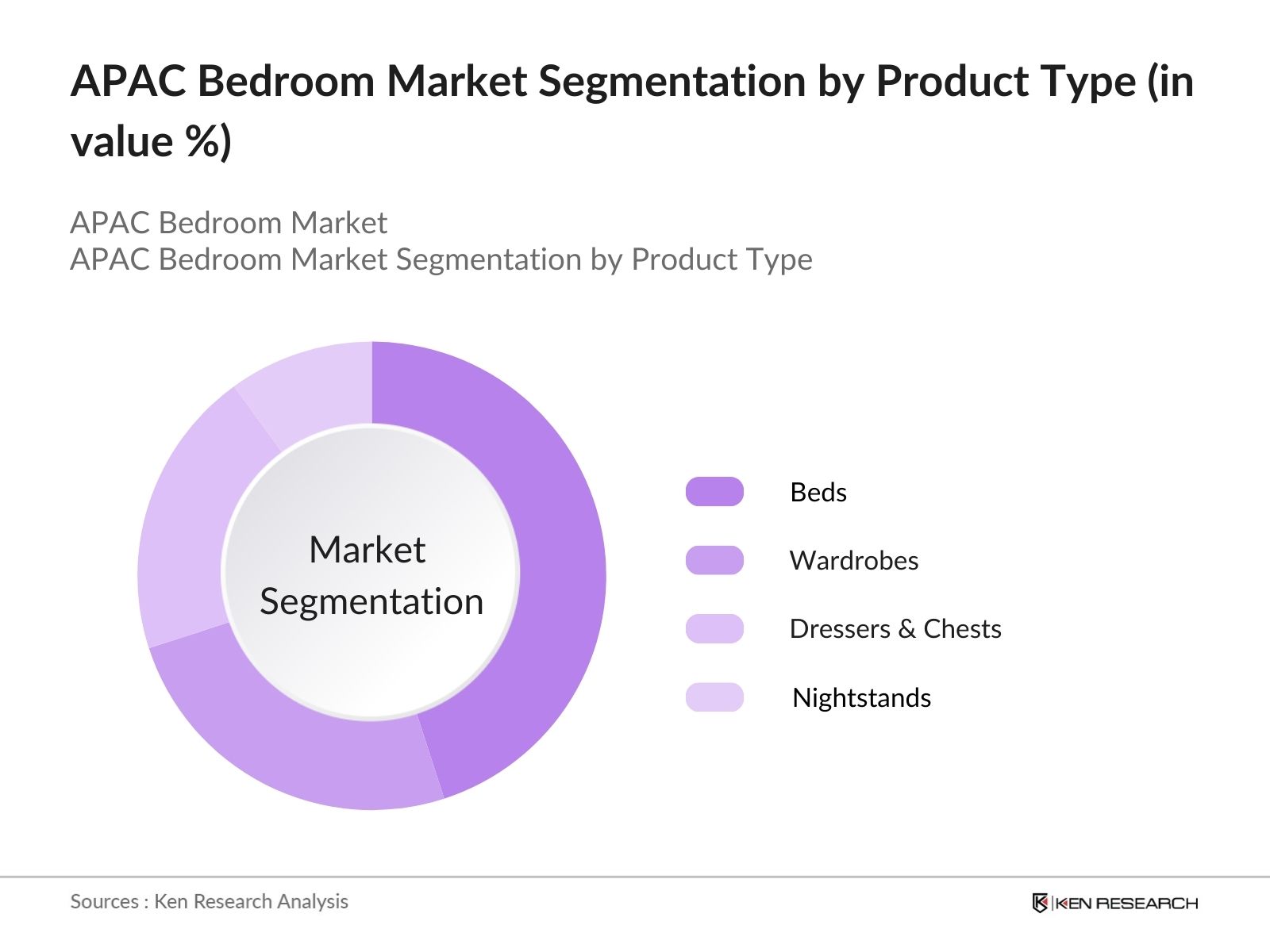
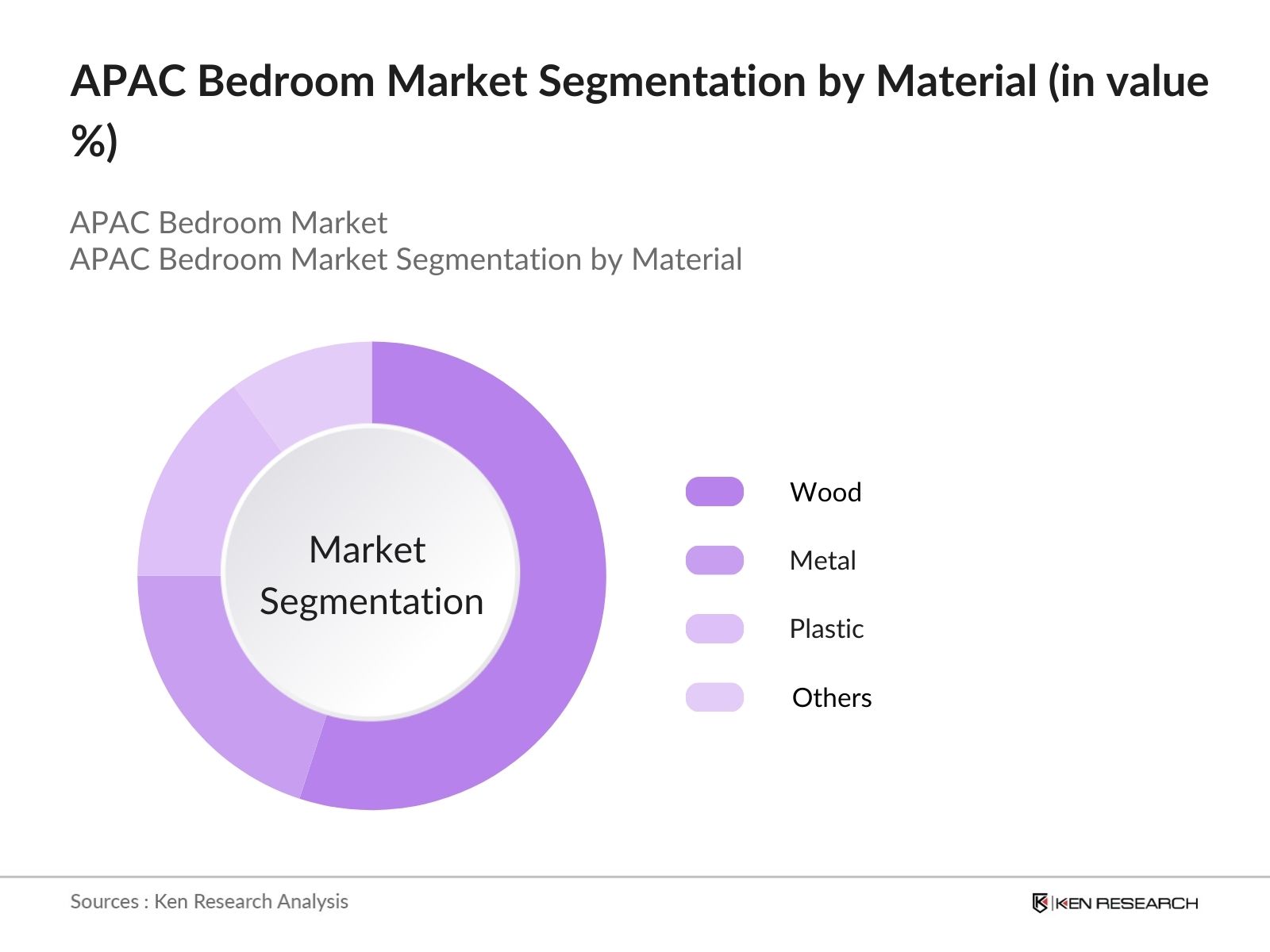
The APAC bedroom furniture market is dominated by a mix of local and international players, reflecting the regions diverse consumer preferences and manufacturing capabilities. Key players focus on providing innovative, space-efficient designs and cater to both luxury and affordable segments. Brands like IKEA, which lead in modular and ready-to-assemble furniture, have expanded significantly in Asia, capitalizing on the growing demand for convenience and affordability.
|
Company Name |
Establishment Year |
Headquarters |
Key Products |
Market Strategy |
Revenue (2023) |
Number of Stores |
Sustainability Initiatives |
Global Reach |
|
IKEA Group |
1943 |
Netherlands |
||||||
|
Ashley Furniture |
1945 |
USA |
||||||
|
Godrej Interio |
1897 |
India |
||||||
|
Stanley Furniture |
1924 |
USA |
||||||
|
HNI Corporation |
1944 |
USA |
Growth Drivers
Market Restraints
The APAC bedroom furniture market is expected to witness significant growth in the coming years, fueled by urbanization, rising disposable incomes, and an increased focus on interior home design. The growing trend of modular and multifunctional furniture, driven by shrinking living spaces, will continue to propel market demand. Additionally, the growing adoption of sustainable furniture materials and eco-friendly designs will influence purchasing decisions. Countries like China and India will remain dominant players, while Southeast Asian markets such as Vietnam and Indonesia are expected to emerge as key growth areas due to their booming real estate sectors and young populations.
Market Opportunities
|
By Product Type |
Beds Wardrobes Dressers & Chests Nightstands |
|
By Material |
Wood Metal Plastic Others |
|
By Distribution |
Offline Stores Online Stores |
|
By End-User |
Residential Commercial |
|
By Region |
China India Japan Southeast Asia Australia |
1.1. Definition and Scope
1.2. Market Taxonomy
1.3. Market Growth Rate
1.4. Market Segmentation Overview
2.1. Historical Market Size
2.2. Year-On-Year Growth Analysis
2.3. Key Market Developments and Milestones
3.1. Growth Drivers (Urbanization, Disposable Income, Changing Lifestyle, E-Commerce Adoption)
3.2. Market Challenges (Raw Material Shortages, Fluctuating Transportation Costs, Trade Barriers, Supply Chain Disruptions)
3.3. Opportunities (Rising Demand for Modular Furniture, Sustainability Trends, Growth in Online Retail, Technological Integration)
3.4. Trends (Customizable Furniture, Smart Home Integration, Minimalist Designs, Use of Sustainable Materials)
3.5. Government Regulations (Environmental Compliance, Labor Regulations, Trade Agreements, Import Tariffs)
3.6. SWOT Analysis
3.7. Stakeholder Ecosystem
3.8. Porters Five Forces Analysis
3.9. Competition Ecosystem
4.1. By Product Type (In Value %)
4.1.1. Beds
4.1.2. Wardrobes
4.1.3. Dressers & Chests of Drawers
4.1.4. Nightstands
4.2. By Material (In Value %)
4.2.1. Wood
4.2.2. Metal
4.2.3. Plastic
4.2.4. Others
4.3. By Distribution Channel (In Value %)
4.3.1. Offline Stores
4.3.2. Online Stores
4.4. By End-User (In Value %)
4.4.1. Residential
4.4.2. Commercial (Hospitality, Corporate, etc.)
4.5. By Region (In Value %)
4.5.1. China
4.5.2. India
4.5.3. Japan
4.5.4. Southeast Asia
4.5.5. Australia
5.1 Detailed Profiles of Major Companies
5.1.1. IKEA Group
5.1.2. Ashley Furniture Industries
5.1.3. Inter IKEA Systems B.V.
5.1.4. Godrej Interio
5.1.5. Williams-Sonoma, Inc.
5.1.6. Stanley Furniture Company, Inc.
5.1.7. HNI Corporation
5.1.8. Steelcase Inc.
5.1.9. Durham Furniture
5.1.10. Hooker Furniture Corporation
5.1.11. Restoration Hardware
5.1.12. Kimball International, Inc.
5.1.13. Heritage Home Group
5.1.14. Sauder Woodworking Co.
5.1.15. Leggett & Platt, Incorporated
5.2 Cross Comparison Parameters (Number of Employees, Headquarters, Revenue, Product Categories, Global Reach)
5.3 Market Share Analysis
5.4 Strategic Initiatives
5.5 Mergers and Acquisitions
5.6 Investment Analysis
5.7 Venture Capital Funding
5.8 Government Grants
5.9 Private Equity Investments
6.1. Environmental Standards
6.2. Compliance Requirements
6.3. Certification Processes
7.1. Future Market Size Projections
7.2. Key Factors Driving Future Market Growth
8.1. By Product Type (In Value %)
8.2. By Material (In Value %)
8.3. By Distribution Channel (In Value %)
8.4. By End-User (In Value %)
8.5. By Region (In Value %)
9.1. TAM/SAM/SOM Analysis
9.2. Customer Cohort Analysis
9.3. Marketing Initiatives
9.4. White Space Opportunity Analysis
This stage involves mapping the APAC bedroom furniture market ecosystem, identifying key stakeholders, and determining influential market variables. In-depth desk research combined with secondary and proprietary databases helps pinpoint crucial market drivers, challenges, and opportunities.
During this phase, historical market data is analyzed, focusing on product segment penetration, the retail landscape, and revenue generation patterns. Key performance indicators are derived to assess the competitive landscape and future trends.
Initial market assumptions are refined through consultations with industry experts using computer-assisted telephone interviews (CATI). Insights from manufacturers and retailers help validate the analysis and fill in data gaps.
A final synthesis of market data is conducted, involving direct interactions with top manufacturers to gain a deeper understanding of product innovations, market preferences, and upcoming trends. The output is thoroughly validated to ensure accuracy and reliability.
The APAC bedroom furniture market is valued at USD 26.50 billion. This growth is attributed to urbanization, increased consumer spending on home interiors, and the availability of diverse furniture options through e-commerce platforms.
The key challenges include rising raw material costs, supply chain disruptions, and high competition from both local and global players. Fluctuating transportation costs also pose significant challenges to manufacturers.
Key players include IKEA Group, Ashley Furniture, Godrej Interio, Stanley Furniture, and HNI Corporation. These companies lead the market due to their strong manufacturing capabilities, innovative designs, and extensive distribution networks.
The market is driven by rapid urbanization, rising disposable incomes, and increased demand for modern, space-efficient furniture. Additionally, growing consumer interest in eco-friendly and sustainable furniture options contributes to market expansion.

What makes us stand out is that our consultants follows Robust, Refine and Result (RRR) methodology. i.e. Robust for clear definitions, approaches and sanity checking, Refine for differentiating respondents facts and opinions and Result for presenting data with story

We have set a benchmark in the industry by offering our clients with syndicated and customized market research reports featuring coverage of entire market as well as meticulous research and analyst insights.

While we don't replace traditional research, we flip the method upside down. Our dual approach of Top Bottom & Bottom Top ensures quality deliverable by not just verifying company fundamentals but also looking at the sector and macroeconomic factors.

With one step in the future, our research team constantly tries to show you the bigger picture. We help with some of the tough questions you may encounter along the way: How is the industry positioned? Best marketing channel? KPI's of competitors? By aligning every element, we help maximize success.

Our report gives you instant access to the answers and sources that other companies might choose to hide. We elaborate each steps of research methodology we have used and showcase you the sample size to earn your trust.

If you need any support, we are here! We pride ourselves on universe strength, data quality, and quick, friendly, and professional service.