















APAC Distribution Automation Market Outlook to 2030
Region:Asia
Author(s):Shubham Kashyap
Product Code:KROD4995
December 2024
85
About the Report
APAC Distribution Automation Market Overview
- The APAC Distribution Automation Market is valued at USD 5.0 billion, primarily driven by increasing energy demand, rapid urbanization, and the integration of renewable energy sources. The market benefits significantly from advancements in smart grid technologies, which enhance energy efficiency and reliability. Countries across the region are prioritizing grid modernization to reduce energy losses and improve operational efficiency, supported by government initiatives and investments in smart distribution systems. This emphasis on innovation solidifies APAC as a global leader in distribution automation.
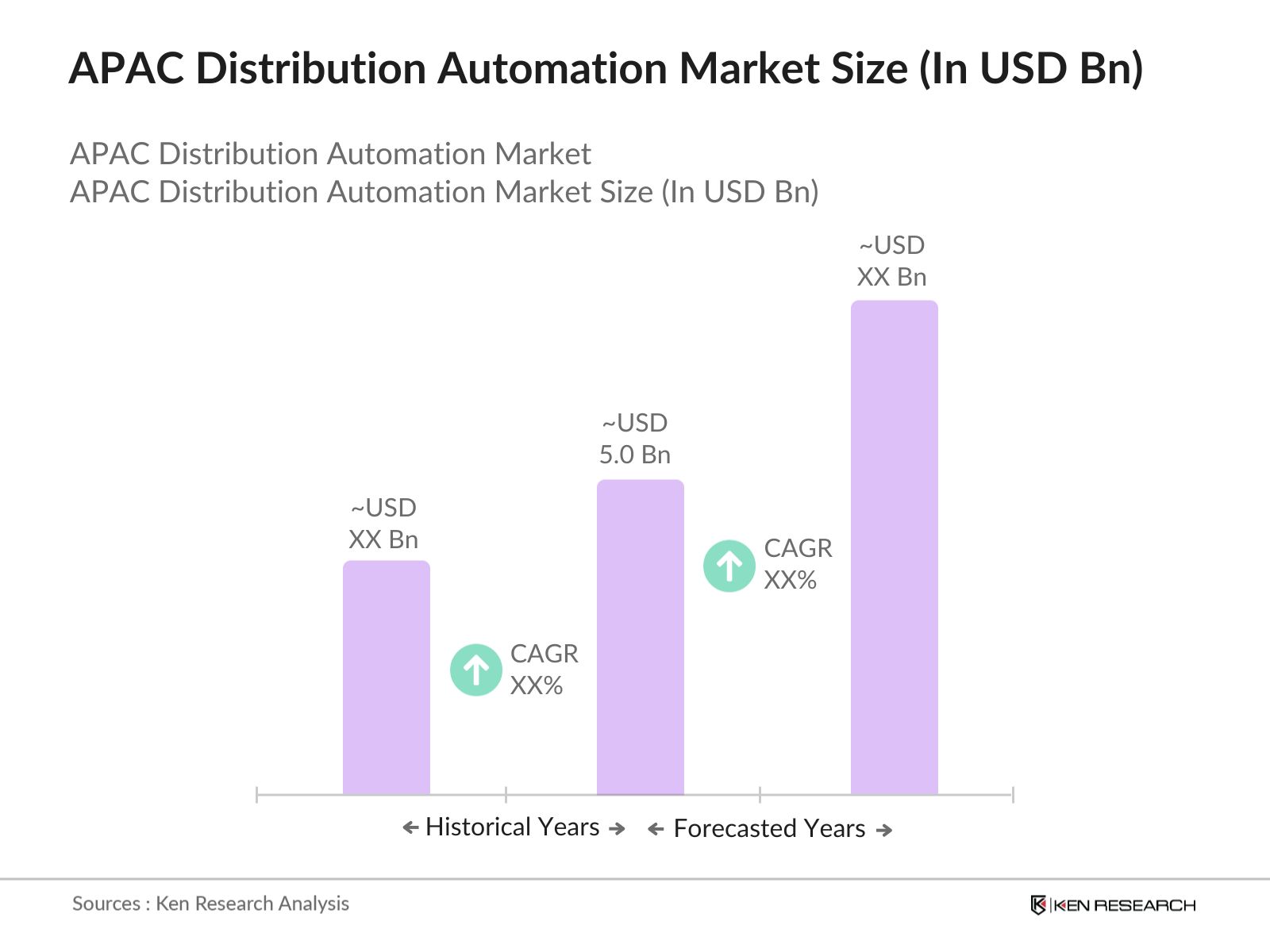
- Major demand centers for distribution automation in APAC include China, India, and Japan. China's dominance stems from its significant investments in grid modernization and renewable energy integration. India benefits from its ongoing electrification projects and efforts to improve power distribution networks in rural areas. Japan's focus on disaster-resilient grid technologies and energy efficiency further strengthens its position in the market. These countries proactive approaches to energy infrastructure modernization drive their leadership roles in the region.
- Governments across the Asia Pacific region are implementing policies to promote smart grid technologies. For instance, China's 14th Five-Year Plan emphasizes the modernization of power grids, allocating substantial funds for automation technologies. Similarly, India's National Smart Grid Mission aims to deploy smart grid technologies across the country, with significant investments in distribution automation.
APAC Distribution Automation Market Segmentation
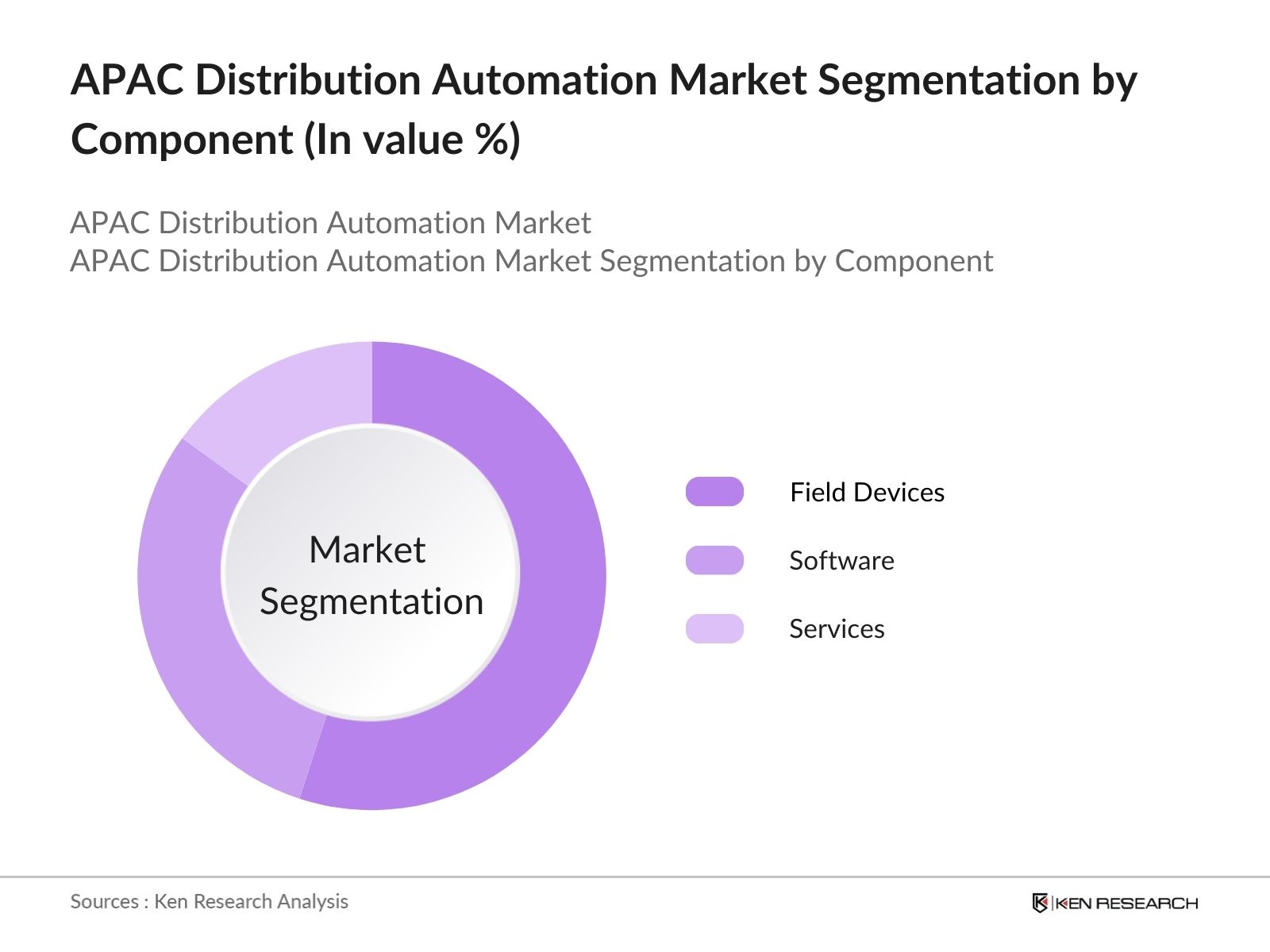
- By Component: The Market is segmented by component into field devices, software, and services. Field Devices hold a dominant market share within this segmentation due to their essential role in real-time monitoring and control of power distribution networks. These devices, including sensors, switches, and reclosers, ensure the reliability and efficiency of power supply. Their widespread deployment in industrial and commercial sectors underscores their importance in achieving operational excellence and reducing energy losses.
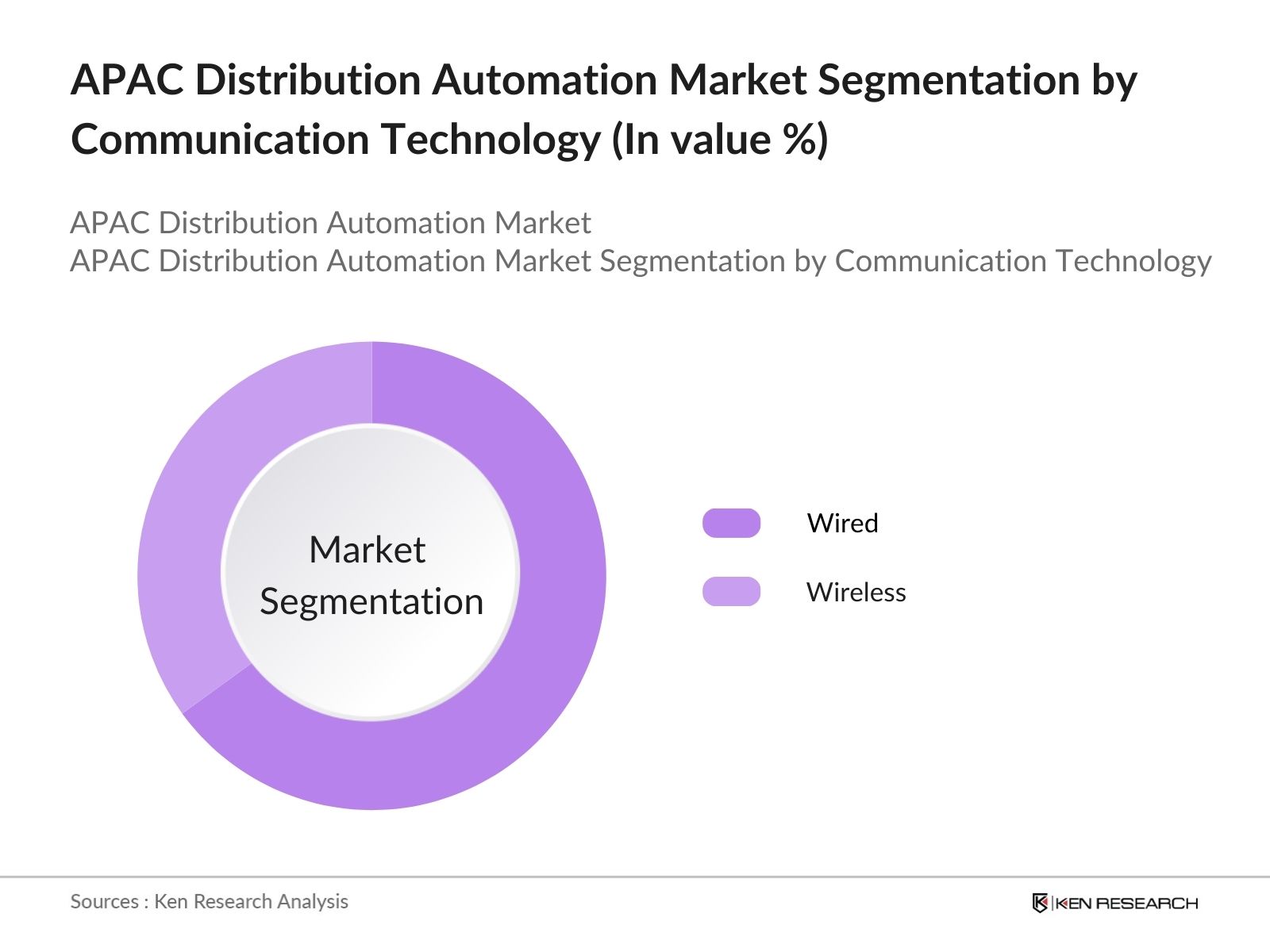
- By Communication Technology: The market is segmented by communication technology into wired and wireless systems. Wired Technology leads the segment due to its high reliability and robustness, especially in high-demand environments like industrial applications. While wireless communication is gaining traction for its scalability and cost-effectiveness, wired systems remain the preferred choice in settings requiring uninterrupted, low-latency communication for critical operations.
APAC Distribution Automation Market Competitive Landscape
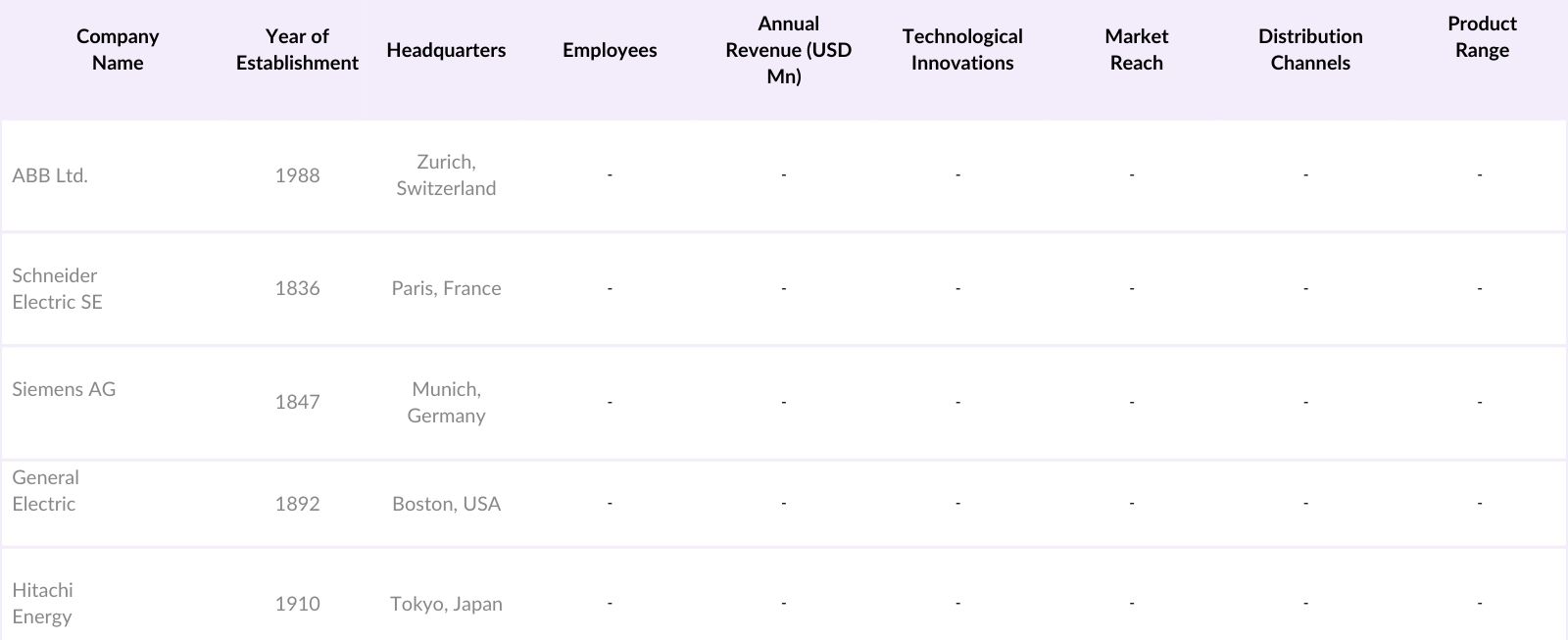
The APAC Distribution Automation Market is dominated by a few key players, leveraging advanced technologies, strong distribution networks, and strategic partnerships. Their focus on innovation and regional expansion solidifies their leadership.
APAC Distribution Automation Market Analysis
Growth Drivers
- Increasing Demand for Reliable Power Supply: The Asia Pacific region is experiencing a surge in electricity consumption due to rapid urbanization and industrialization. In 2022, China's electricity consumption reached around 8,300 terawatt-hours, reflecting the nation's expanding industrial activities. Similarly, India's electricity consumption was about 1,600 terawatt-hours in the same year, driven by urban growth and increased industrial output. This escalating demand underscores the necessity for reliable power distribution systems to prevent outages and ensure consistent energy delivery.
- Advancements in Smart Grid Technologies: The integration of smart grid technologies is transforming power distribution across the Asia Pacific. Japan has implemented over 80 million smart meters, enhancing grid efficiency and real-time monitoring. South Korea's smart grid initiatives aim to establish a nationwide smart grid by 2030, with significant investments in automation and digital infrastructure. These advancements facilitate better demand response, reduce transmission losses, and improve overall grid reliability.
- Government Initiatives and Policies: Governments in the Asia Pacific are actively promoting distribution automation through supportive policies. China's 14th Five-Year Plan emphasizes the modernization of power grids, allocating substantial funds for automation technologies. India's National Smart Grid Mission aims to deploy smart grid technologies across the country, with significant investments in distribution automation. These initiatives are designed to enhance grid resilience, integrate renewable energy sources, and improve energy efficiency.
Challenges
- High Initial Costs: Implementing distribution automation systems requires substantial capital investment, posing a significant challenge for utilities, especially in developing economies where budgets for infrastructure upgrades are often limited. Modernizing power grids involves the deployment of advanced technologies such as smart meters, sensors, and communication networks, which can be prohibitively expensive for many organizations. The financial burden is further exacerbated by the need for additional investments in training personnel, upgrading software systems, and maintaining the newly installed equipment.
- Complexity in Integration with Existing Systems: Integrating new automation technologies with legacy power distribution infrastructure is a complex and resource-intensive process, often requiring extensive overhauls. Many utilities in the Asia Pacific region rely on outdated systems that are incompatible with modern technologies, creating significant technical challenges during implementation. The process may involve replacing or upgrading legacy equipment, reconfiguring existing networks, and ensuring seamless data exchange between old and new systems.
APAC Distribution Automation Market Future Outlook
The APAC Distribution Automation Market is poised for robust growth, supported by advancements in grid technologies and increasing demand for reliable power distribution. The integration of renewable energy and government-backed initiatives to modernize infrastructure are key drivers. The market is expected to witness a surge in demand for field devices and wired communication technologies due to their reliability and efficiency.
Future Market Opportunities
- Technological Innovations: Advancements in technologies such as the Internet of Things (IoT) and Artificial Intelligence (AI) are creating new opportunities in distribution automation. IoT-enabled devices allow for real-time monitoring and control of distribution networks, enhancing operational efficiency. AI algorithms can predict equipment failures and optimize energy distribution, reducing downtime and improving service reliability. These innovations are driving the adoption of automation solutions across the region.
- Expansion in Emerging Economies: Emerging economies in the Asia Pacific, such as Vietnam and Indonesia, are investing in modernizing their power infrastructure. Vietnam's electricity consumption reached around 240 terawatt-hours in 2022, reflecting its rapid industrial growth. Indonesia's electricity consumption was about 270 terawatt-hours in the same year, driven by urbanization and economic development. These countries are focusing on deploying distribution automation systems to enhance grid reliability and meet growing energy demands.
Scope of the Report
|
By Component |
Field Devices |
|
By Communication Technology |
Wired |
|
By Utility Type |
Public Utilities |
|
By End-User |
Industrial |
|
By Region |
China |
Products
Key Target Audience
Distribution Utility Companies
Industrial Automation Firms
Renewable Energy Developers
Grid Technology Providers
Investors and Venture Capitalist Firms
Banks and Financial Institutions
Government and Regulatory Bodies (e.g., Ministry of Energy, National Grid Operators)
Technology Solution Providers
Companies
Players Mentioned in the Report
ABB Ltd.
Schneider Electric SE
Siemens AG
General Electric
Hitachi Energy
Honeywell International Inc.
Toshiba Corporation
Mitsubishi Electric Corporation
Eaton Corporation PLC
Emerson Electric Co.
Rockwell Automation Inc.
G&W Electric
S&C Electric Company
Itron Inc.
Xylem Inc.
Table of Contents
01 Asia Pacific Distribution Automation Market Overview
Definition and Scope
Market Taxonomy
Market Growth Rate
Market Segmentation Overview
02 Asia Pacific Distribution Automation Market Size (USD Billion)
Historical Market Size
Year-On-Year Growth Analysis
Key Market Developments and Milestones
03 Asia Pacific Distribution Automation Market Analysis
Growth Drivers
Increasing Demand for Reliable Power Supply
Advancements in Smart Grid Technologies
Government Initiatives and Policies
Integration of Renewable Energy Sources
Market Challenges
High Initial Investment Costs
Complexity in Integration with Existing Systems
Lack of Skilled Workforce
Opportunities
Technological Innovations
Expansion in Emerging Economies
Collaborations and Partnerships
Trends
Adoption of IoT and AI in Distribution Systems
Shift Towards Decentralized Power Generation
Emphasis on Energy Efficiency and Sustainability
Government Regulations
Smart Grid Policies
Renewable Energy Integration Standards
Incentives for Automation Adoption
Cybersecurity Guidelines
SWOT Analysis
Stakeholder Ecosystem
Porter's Five Forces Analysis
Competitive Landscape
04 Asia Pacific Distribution Automation Market Segmentation
By Component (Value %)
Field Devices
Software
Services
By Communication Technology (Value %)
Wired
Wireless
By Utility Type (Value %)
Public Utilities
Private Utilities
By End-User Industry (Value %)
Industrial
Commercial
Residential
By Country (Value %)
China
India
Japan
South Korea
Australia
Rest of Asia Pacific
05 Asia Pacific Distribution Automation Market Competitive Analysis
Detailed Profiles of Major Companies
ABB Ltd.
Schneider Electric SE
Siemens AG
Eaton Corporation PLC
General Electric Company
Itron, Inc.
Toshiba Corporation
Xylem Inc.
G&W Electric
S&C Electric Company
Mitsubishi Electric Corporation
Hitachi, Ltd.
Honeywell International Inc.
Rockwell Automation, Inc.
Emerson Electric Co.
Cross Comparison Parameters
Number of Employees
Headquarters Location
Year of Establishment
Revenue
Product Portfolio
Market Share
Recent Developments
Strategic Initiatives
Market Share Analysis
Strategic Initiatives
Mergers and Acquisitions
Investment Analysis
Venture Capital Funding
Government Grants
Private Equity Investments
06 Asia Pacific Distribution Automation Market Regulatory Framework
Environmental Standards
Compliance Requirements
Certification Processes
07 Asia Pacific Distribution Automation Future Market Size (USD Billion)
Future Market Size Projections
Key Factors Driving Future Market Growth
08 Asia Pacific Distribution Automation Future Market Segmentation
By Component (Value %)
By Communication Technology (Value %)
By Utility Type (Value %)
By End-User Industry (Value %)
By Country (Value %)
09 Asia Pacific Distribution Automation Market Analysts Recommendations
Total Addressable Market (TAM), Serviceable Available Market (SAM), and Serviceable Obtainable Market (SOM) Analysis
Customer Cohort Analysis
Marketing Initiatives
White Space Opportunity Analysis
Disclaimer Contact UsResearch Methodology
Step 1: Identification of Key Variables
An ecosystem map was constructed to include all stakeholders in the APAC Distribution Automation Market. Extensive desk research identified variables such as energy demand trends, technological innovations, and regional policy impacts.
Step 2: Market Analysis and Construction
Historical data on grid modernization projects and renewable energy integration was compiled. The study also evaluated the distribution of automation technologies across various utility sectors.
Step 3: Hypothesis Validation and Expert Consultation
Market hypotheses were validated through interviews with key industry players and utilities. These consultations provided operational insights and verified data accuracy.
Step 4: Research Synthesis and Final Output
Data from primary and secondary research was synthesized to create a comprehensive analysis. The findings were validated with industry experts to ensure reliability and accuracy.
Frequently Asked Questions
01 How big is the APAC Distribution Automation Market?
The APAC Distribution Automation Market is valued at USD 5.0 billion, driven by rapid urbanization, industrialization, and renewable energy integration.
02 What are the challenges in the APAC Distribution Automation Market?
Challenges in the APAC Distribution Automation Market include high initial costs for automation systems and technical difficulties in integrating new technologies with legacy infrastructure.
03 Who are the major players in the APAC Distribution Automation Market?
Key players in the APAC Distribution Automation Market include ABB Ltd., Schneider Electric SE, Siemens AG, General Electric, and Hitachi Energy, leveraging advanced technologies and strategic partnerships.
04 What are the growth drivers of the APAC Distribution Automation Market?
The APAC Distribution Automation Market is propelled by grid modernization initiatives, increasing energy demand, and investments in smart grid technologies
Why Buy From Us?

What makes us stand out is that our consultants follows Robust, Refine and Result (RRR) methodology. i.e. Robust for clear definitions, approaches and sanity checking, Refine for differentiating respondents facts and opinions and Result for presenting data with story

We have set a benchmark in the industry by offering our clients with syndicated and customized market research reports featuring coverage of entire market as well as meticulous research and analyst insights.

While we don't replace traditional research, we flip the method upside down. Our dual approach of Top Bottom & Bottom Top ensures quality deliverable by not just verifying company fundamentals but also looking at the sector and macroeconomic factors.

With one step in the future, our research team constantly tries to show you the bigger picture. We help with some of the tough questions you may encounter along the way: How is the industry positioned? Best marketing channel? KPI's of competitors? By aligning every element, we help maximize success.

Our report gives you instant access to the answers and sources that other companies might choose to hide. We elaborate each steps of research methodology we have used and showcase you the sample size to earn your trust.

If you need any support, we are here! We pride ourselves on universe strength, data quality, and quick, friendly, and professional service.