
APAC Electric Vehicle Supply Equipment (EVSE) Market Outlook to 2030
Region:Afganistan
Author(s):Shambhavi
Product Code:KROD4675
Region:Afganistan
Author(s):Shambhavi
Product Code:KROD4675
November 2024
92
Listen to the audio summary
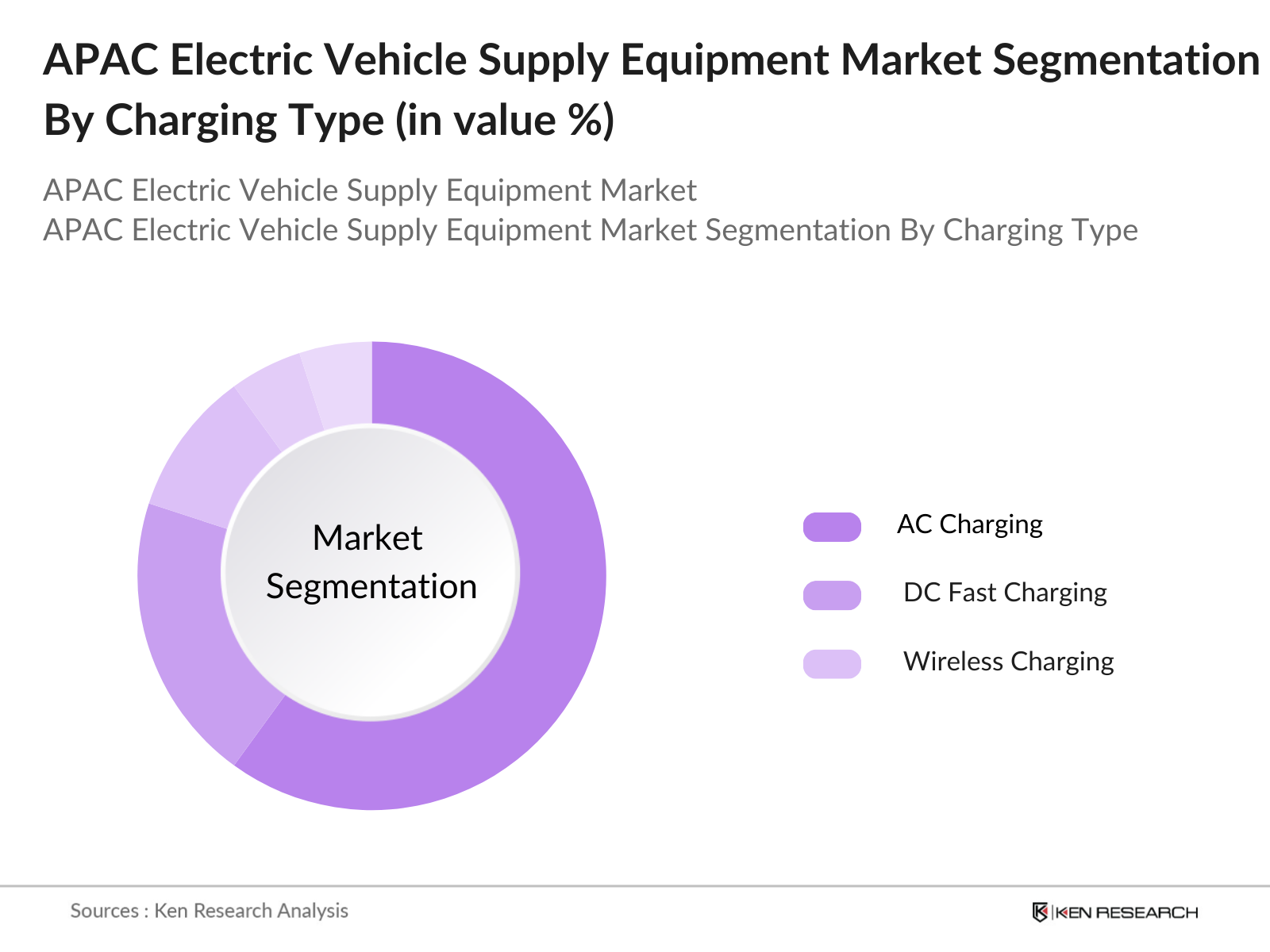
By Charging Type: The APAC Electric Vehicle Supply Equipment market is segmented by charging type into AC charging, DC fast charging, and wireless charging. Recently, DC fast charging has held a dominant market share in the APAC region, primarily due to its ability to rapidly charge EVs within a short period. The preference for fast charging stems from growing consumer demand for quick charging solutions in urban settings, especially in countries like China and Japan. With the expansion of fast-charging stations, particularly in metropolitan areas, this segment continues to lead.
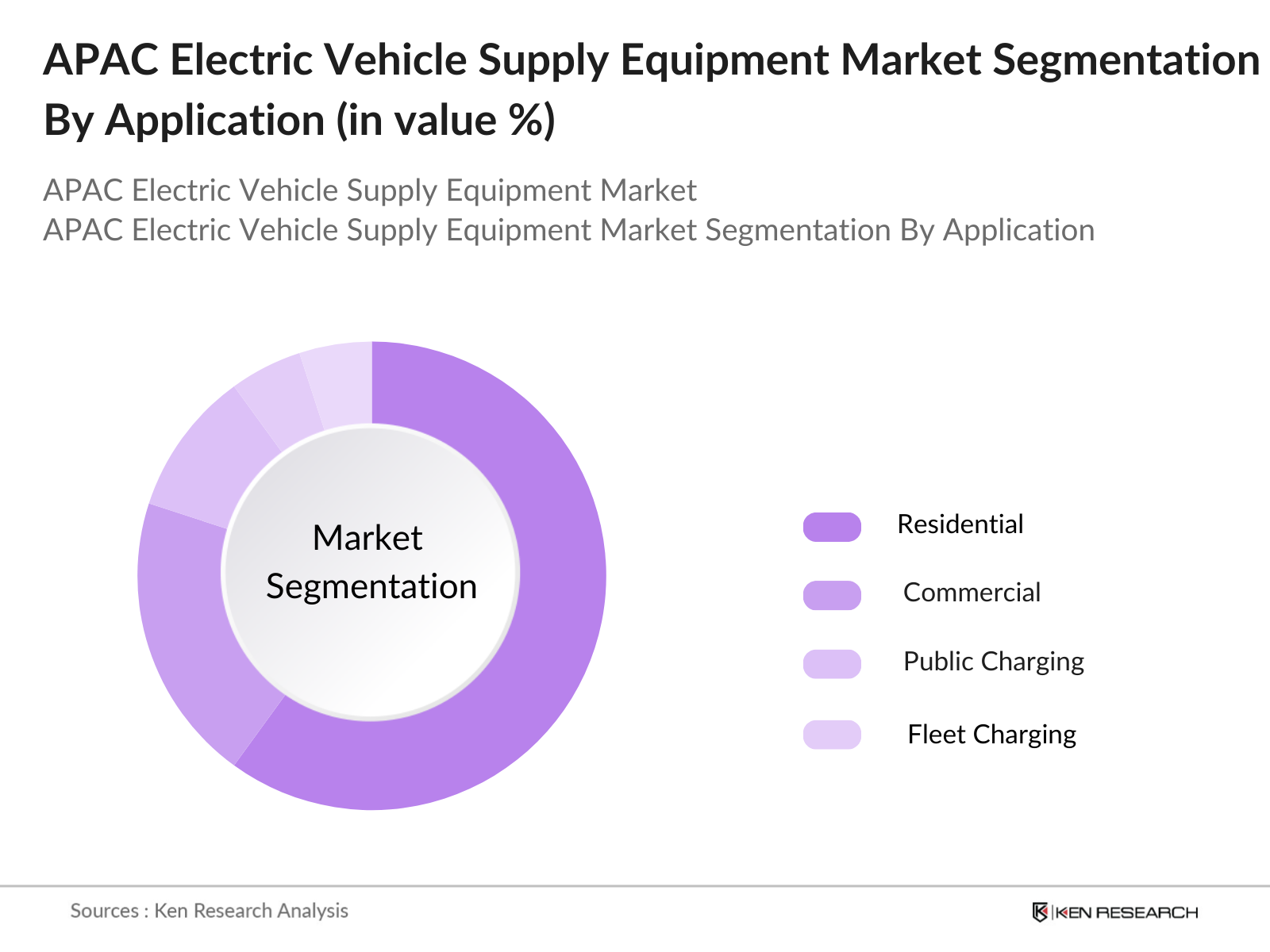
By Application: The APAC EVSE market is segmented by application into residential, commercial, public, and fleet charging. Public charging stations dominate the market share due to the widespread demand for accessible charging infrastructure in high-density urban centers. Public chargers are installed by governments and private enterprises alike, especially in countries like China, which has the largest EV population in the world. The rapid urbanization and increasing commuter traffic further drive the expansion of public charging facilities.
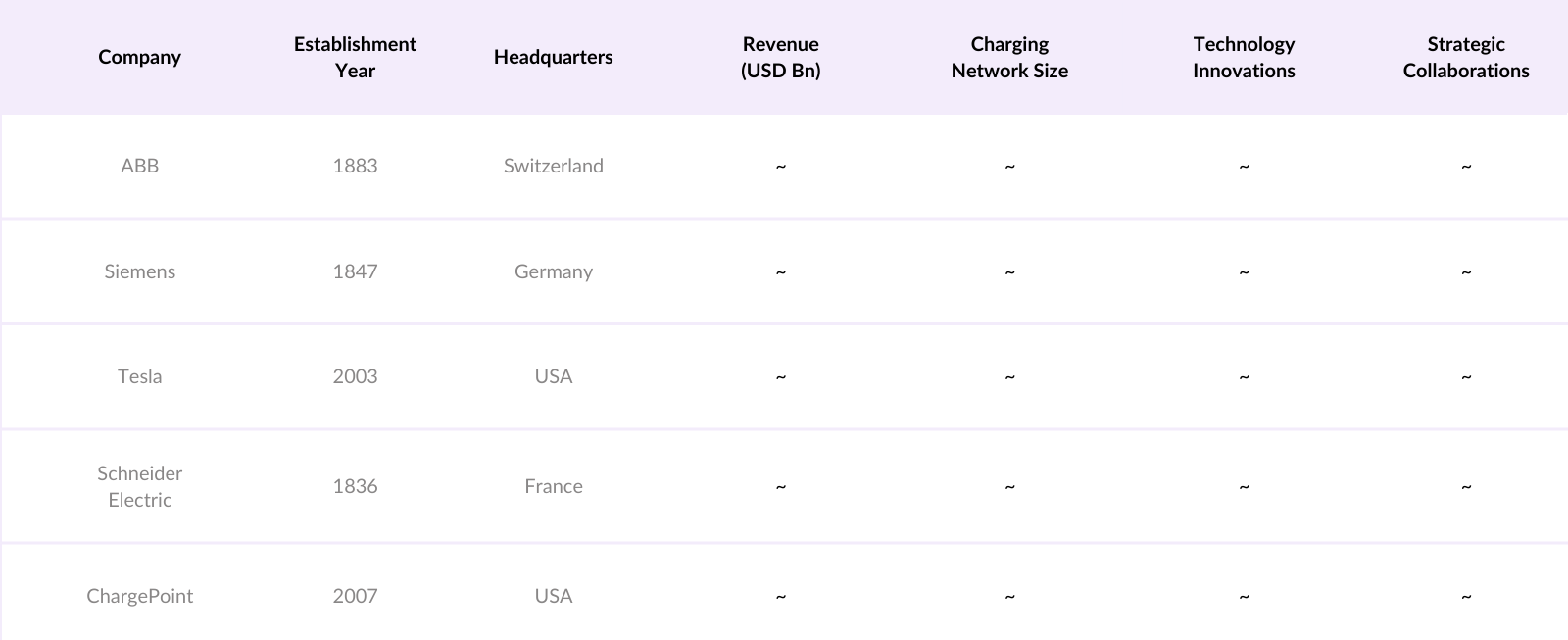
The APAC Electric Vehicle Supply Equipment market is dominated by a few key players who have established strong regional and global operations. Local manufacturers, particularly in China, compete with international companies offering advanced technologies and extensive charging networks. The market's competitive landscape is shaped by Chinas dominance in infrastructure development: Chinese companies benefit from government incentives and vast domestic demand. Japan's focus on fast and wireless charging innovations strengthens its market position. Multinational collaborations are helping key players penetrate new markets across the APAC region.
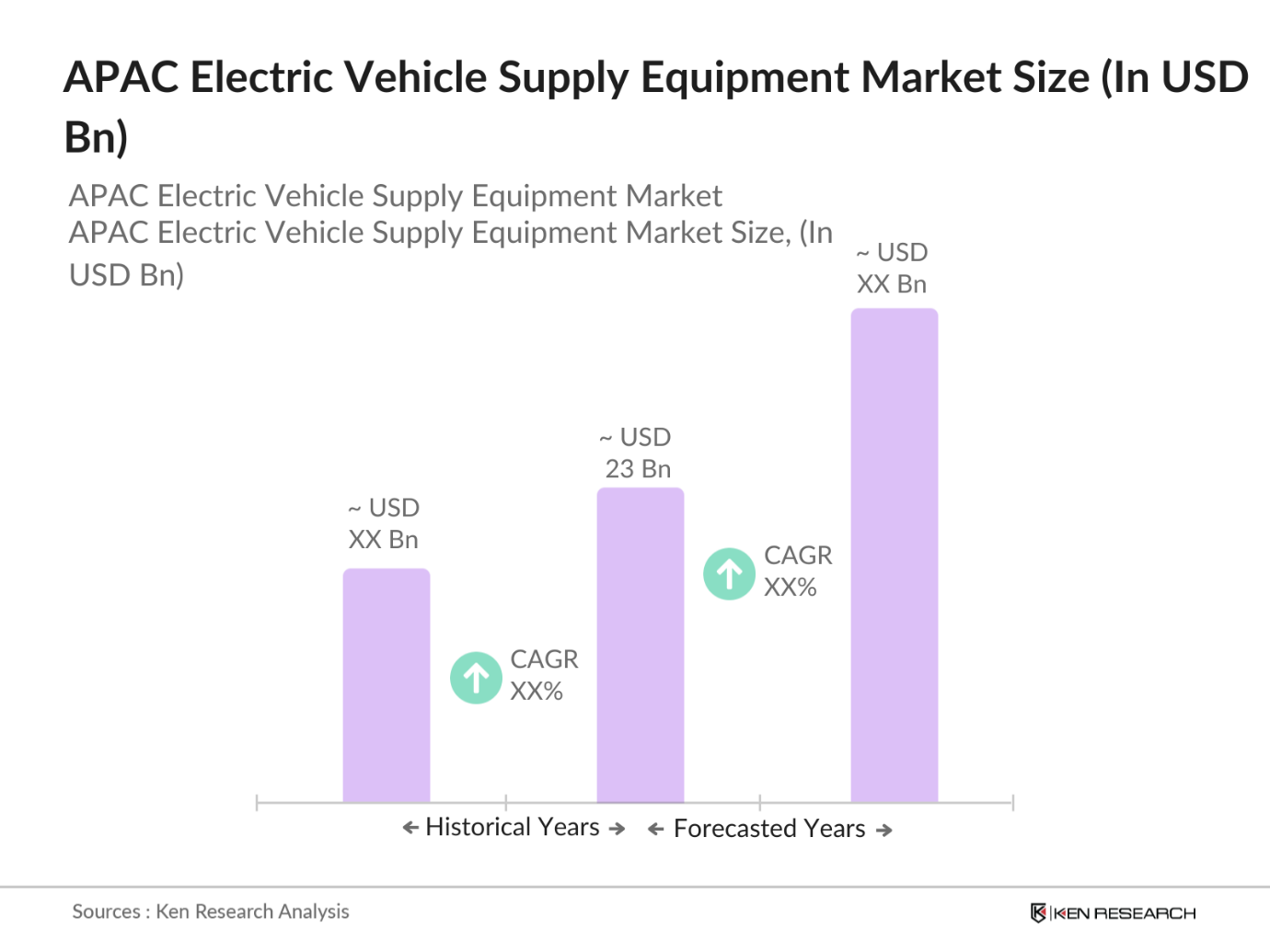
Over the next few years, the APAC Electric Vehicle Supply Equipment market is expected to witness significant growth driven by continued government support, advances in EV charging technology, and increasing consumer demand for EVs. Urbanization, rising environmental concerns, and financial incentives for EV infrastructure development will play a crucial role in expanding the EVSE market across the region. As more countries in APAC commit to reducing carbon emissions, the demand for robust EV charging networks will grow exponentially, supported by advancements such as ultra-fast charging, vehicle-to-grid (V2G) systems, and renewable energy integration. The focus on expanding infrastructure in both developed and emerging markets is likely to accelerate the adoption of EVSE, providing immense opportunities for businesses operating in this space.
|
Segment |
Sub-segments |
|
By Charging Type |
AC Charging, DC Fast Charging, Wireless Charging |
|
By Application |
Residential, Commercial, Public Charging, Fleet Charging |
|
By Power Output |
Up to 11 kW, 12-50 kW, Above 50 kW |
|
By Connector Type |
CHAdeMO, CCS, Type 1, Type 2, GB/T |
|
By Region |
China, Japan, South Korea, India, Australia |
1.1. Definition and Scope
1.2. Market Taxonomy
1.3. Market Growth Rate
1.4. Market Segmentation Overview
2.1. Historical Market Size
2.2. Year-On-Year Growth Analysis
2.3. Key Market Developments and Milestones
3.1. Growth Drivers (Electric vehicle adoption rates, government incentives, EVSE infrastructure investments)
3.1.1. Surge in Electric Vehicle Sales
3.1.2. Government Policies Promoting Electrification
3.1.3. Investments in Charging Infrastructure
3.1.4. Increasing Urbanization and Smart City Initiatives
3.2. Market Challenges (High initial installation costs, grid infrastructure limitations, lack of standardization)
3.2.1. High Installation and Maintenance Costs
3.2.2. Lack of Uniform Charging Standards
3.2.3. Limited Charging Infrastructure in Rural Areas
3.2.4. Impact of Power Grid Reliability and Capacity
3.3. Opportunities (Growth in fast charging networks, cross-border EVSE partnerships, renewable energy integration)
3.3.1. Expanding Fast Charging Network
3.3.2. Collaborations with Automakers and Utility Providers
3.3.3. Integration of Renewable Energy into Charging Stations
3.3.4. Emerging Markets in Southeast Asia
3.4. Trends (Wireless charging systems, ultra-fast charging, V2G technology)
3.4.1. Adoption of Ultra-Fast Charging Technologies
3.4.2. Emergence of Wireless Charging Systems
3.4.3. Vehicle-to-Grid (V2G) Technology Implementation
3.4.4. Increasing Use of IoT in EVSE Management Systems
3.5. Government Regulation (EVSE installation guidelines, carbon reduction policies, EV incentives)
3.5.1. Subsidies for EVSE Infrastructure
3.5.2. Emission Reduction Policies
3.5.3. Mandatory EV Charging Station Installation in New Developments
3.5.4. Public-Private Partnerships for EVSE Expansion
3.6. SWOT Analysis (Market Strengths, Weaknesses, Opportunities, Threats)
3.7. Stakeholder Ecosystem (OEMs, utility providers, technology providers, government bodies)
3.8. Porters Five Forces (Buyer power, supplier power, competition intensity, new entrants, substitutes)
3.9. Competition Ecosystem (Market competitiveness, consolidation trends, new entrants)
4.1. By Charging Type (In Value %)
4.1.1. AC Charging
4.1.2. DC Fast Charging
4.1.3. Wireless Charging
4.2. By Application (In Value %)
4.2.1. Residential
4.2.2. Commercial
4.2.3. Public Charging
4.2.4. Fleet Charging
4.3. By Power Output (In Value %)
4.3.1. Up to 11 kW
4.3.2. 12-50 kW
4.3.3. Above 50 kW
4.4. By Connector Type (In Value %)
4.4.1. CHAdeMO
4.4.2. CCS
4.4.3. Type 1
4.4.4. Type 2
4.4.5. GB/T
4.5. By Region (In Value %)
4.5.1. China
4.5.2. Japan
4.5.3. South Korea
4.5.4. India
4.5.5. Australia
5.1. Detailed Profiles of Major Companies
5.1.1. ABB
5.1.2. Siemens
5.1.3. Tesla
5.1.4. Schneider Electric
5.1.5. ChargePoint
5.1.6. BP Pulse
5.1.7. EVBox
5.1.8. Webasto
5.1.9. Delta Electronics
5.1.10. NIO Power
5.1.11. ClipperCreek
5.1.12. Enel X
5.1.13. Leviton
5.1.14. TGOOD
5.1.15. Efacec
5.2. Cross Comparison Parameters (Revenue, Market Presence, Technology Innovations, Charging Network Size, Strategic Collaborations, Sustainability Initiatives, Regional Coverage, Customer Base)
5.3. Market Share Analysis
5.4. Strategic Initiatives (Partnerships, Expansions, Innovations)
5.5. Mergers and Acquisitions
5.6. Investment Analysis (Public and private investments, market funding)
5.7. Venture Capital Funding
5.8. Government Grants
5.9. Private Equity Investments
6.1. EV Charging Standards
6.2. Compliance Requirements
6.3. Certification Processes (Regional certifications, technical standards compliance)
7.1. Future Market Size Projections
7.2. Key Factors Driving Future Market Growth (EV sales growth, government incentives, renewable integration)
8.1. By Charging Type (In Value %)
8.2. By Application (In Value %)
8.3. By Power Output (In Value %)
8.4. By Connector Type (In Value %)
8.5. By Region (In Value %)
9.1. TAM/SAM/SOM Analysis
9.2. Customer Cohort Analysis (Residential vs. commercial demand, fleet operations, urban vs. rural)
9.3. Marketing Initiatives (Targeted marketing, digital campaigns, partnership-driven strategies)
9.4. White Space Opportunity Analysis
The initial phase involves mapping the ecosystem of the APAC EVSE market, identifying key stakeholders such as electric vehicle manufacturers, charging infrastructure developers, and government bodies. This step is supported by extensive desk research using industry reports, government databases, and proprietary research tools.
In this phase, historical data on the APAC EVSE market is compiled and analyzed to assess market growth. Factors such as the penetration of electric vehicles, the number of charging stations, and the revenue generated from EVSE installations are examined to determine market trends and dynamics.
Market hypotheses are developed and validated through consultations with industry experts, including professionals from leading EV manufacturers and EVSE providers. These discussions provide insight into market operations and challenges, ensuring the accuracy of our analysis.
This step involves synthesizing data collected from primary and secondary sources to produce a comprehensive report. Our final output is reviewed for accuracy and completeness, ensuring it provides actionable insights into the APAC EVSE market.

What makes us stand out is that our consultants follows Robust, Refine and Result (RRR) methodology. i.e. Robust for clear definitions, approaches and sanity checking, Refine for differentiating respondents facts and opinions and Result for presenting data with story

We have set a benchmark in the industry by offering our clients with syndicated and customized market research reports featuring coverage of entire market as well as meticulous research and analyst insights.

While we don't replace traditional research, we flip the method upside down. Our dual approach of Top Bottom & Bottom Top ensures quality deliverable by not just verifying company fundamentals but also looking at the sector and macroeconomic factors.

With one step in the future, our research team constantly tries to show you the bigger picture. We help with some of the tough questions you may encounter along the way: How is the industry positioned? Best marketing channel? KPI's of competitors? By aligning every element, we help maximize success.

Our report gives you instant access to the answers and sources that other companies might choose to hide. We elaborate each steps of research methodology we have used and showcase you the sample size to earn your trust.

If you need any support, we are here! We pride ourselves on universe strength, data quality, and quick, friendly, and professional service.