















APAC Energy Recovery Ventilator Market Outlook to 2030
Region:Asia
Author(s):Shubham Kashyap
Product Code:KROD5629
December 2024
86
About the Report
APAC Energy Recovery Ventilator Market Overview
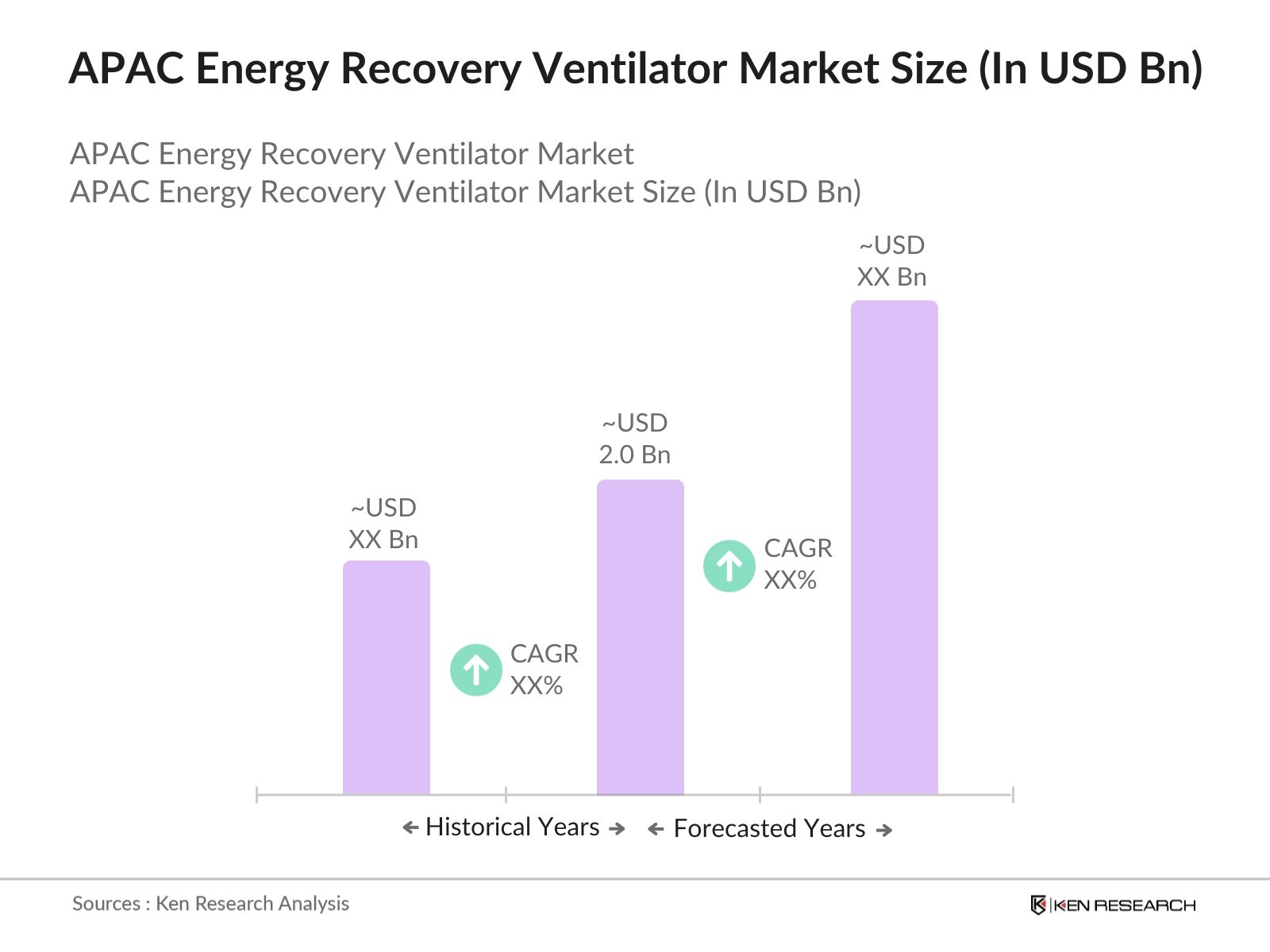
- The APAC Energy Recovery Ventilator (ERV) market is currently valued at USD 2.0 billion, driven by increasing government regulations promoting energy efficiency in commercial and residential buildings, coupled with growing demand for improved indoor air quality. The rise in energy costs across the region is further encouraging the adoption of energy recovery ventilators in HVAC systems to reduce operational expenses. Additionally, the expansion of smart city projects in major urban centers is fueling the demand for energy-efficient ventilation systems.
- Leading markets such as China, Japan, and South Korea dominate the APAC ERV market. China is a prominent player due to its massive investments in urban infrastructure and energy-efficient buildings. Japan, with its advanced technology landscape, is adopting ERVs as part of its push toward energy savings in both commercial and residential sectors. South Koreas focus on green buildings and smart cities also makes it a key contributor to the markets growth. Emerging markets such as Southeast Asia are seeing an increasing demand for ERV systems as they enhance energy efficiency in new urban projects.
- Indoor air quality standards across the region, particularly in countries like Japan and Australia, are becoming more stringent. In 2023, Japan enforced compliance with ASHRAE standards in its commercial and public buildings, which mandate the use of energy-efficient ventilation systems to ensure high indoor air quality. The Australian government also launched its Indoor Air Quality initiative, requiring ERVs to be integrated into HVAC systems in public buildings to maintain a clean and energy-efficient indoor environment, further propelling the market demand.
APAC Energy Recovery Ventilator Market Segmentation
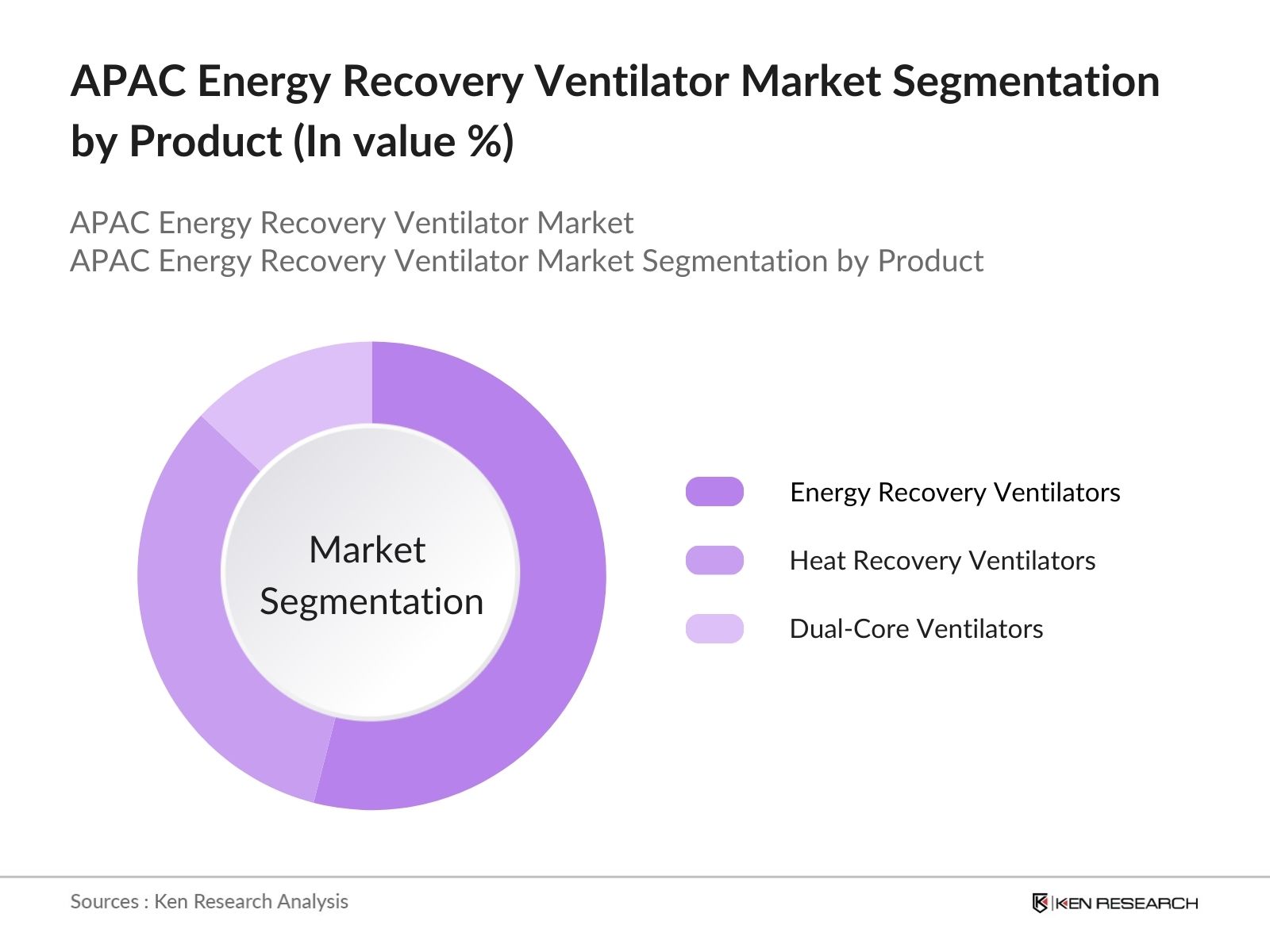
- By Product Type: The market is segmented by product type into heat recovery ventilators, energy recovery ventilators, and dual-core ventilators. Energy recovery ventilators hold the dominant market share in 2023 due to their ability to efficiently manage both heat and humidity. This makes them particularly suitable for regions with high humidity, such as Southeast Asia. Their growing adoption in commercial buildings, where humidity control is critical for maintaining a comfortable environment, further drives their dominance in the market.
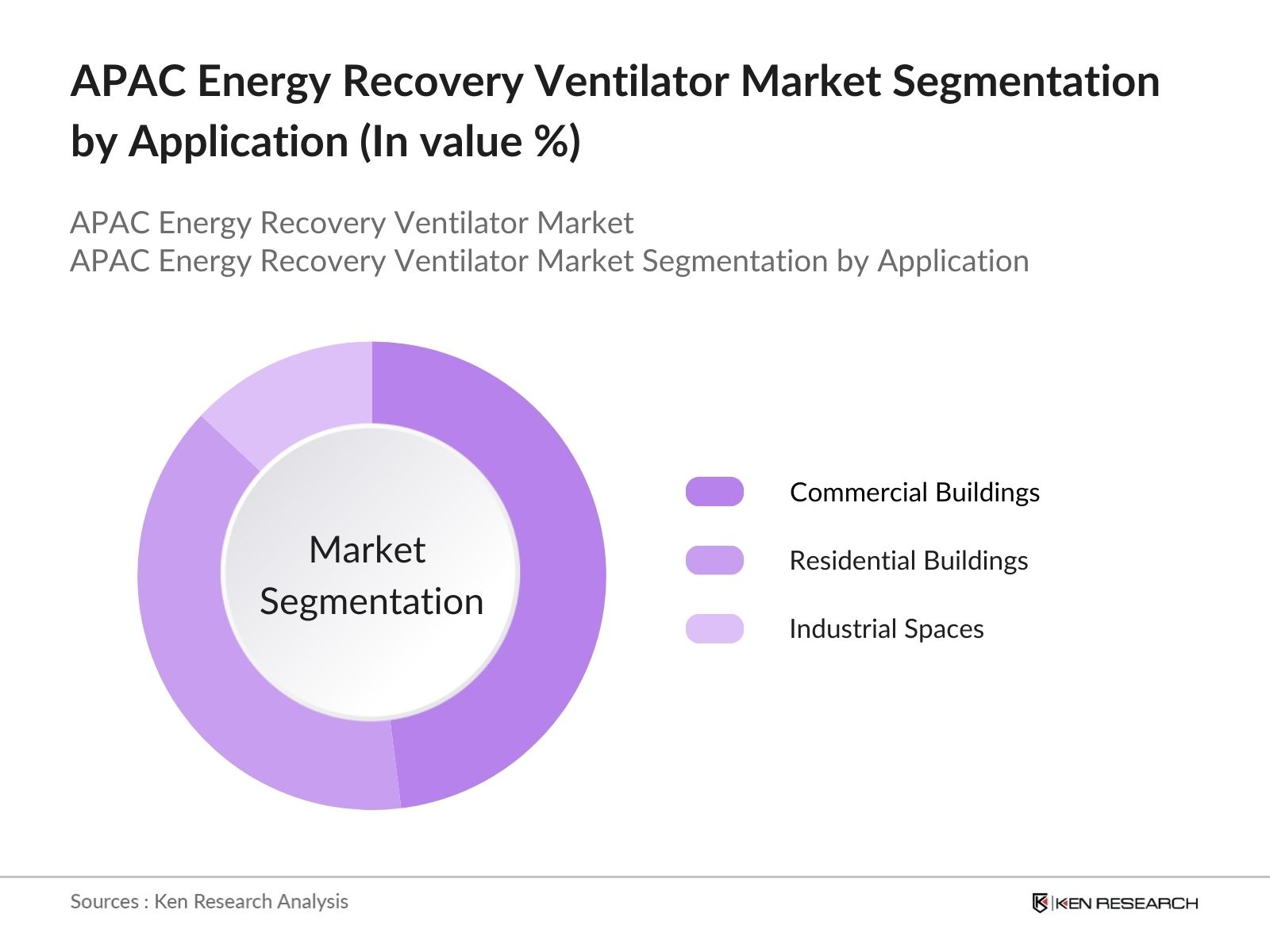
- By Application: The market is also segmented by application into residential buildings, commercial buildings, and industrial spaces. Commercial buildings hold the largest share of the market in 2023, as they require sophisticated HVAC systems capable of efficiently managing large volumes of air exchange. With the increasing number of office buildings, shopping malls, and commercial complexes across the region, the demand for energy-efficient solutions like ERVs has surged. Government regulations mandating energy-efficient building designs further propel the demand for ERVs in commercial applications.
APAC Energy Recovery Ventilator Market Competitive Landscape
The APAC Energy Recovery Ventilator market is highly competitive, with major players focusing on expanding their technological capabilities and enhancing their product portfolios to meet the growing demand for energy-efficient solutions. Companies are increasingly investing in R&D to introduce innovative ERV systems that integrate IoT features and smart home technologies, catering to the evolving needs of urban residential and commercial projects.
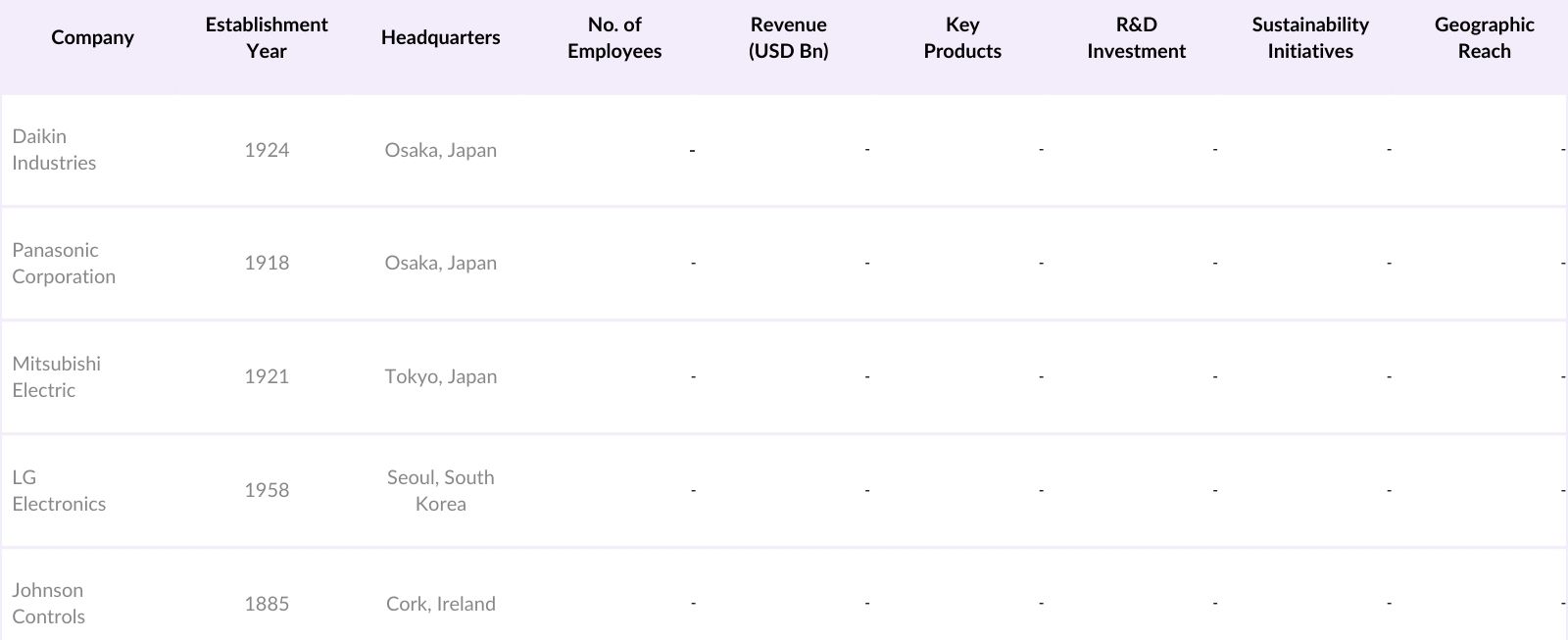
The competitive landscape of the APAC ERV market is shaped by a mix of regional and international companies. Leading players such as Daikin Industries and Mitsubishi Electric have strong regional presences, thanks to their robust product portfolios and innovative energy recovery technologies. Panasonic and LG Electronics are also key players, focusing on integrating energy management systems with their HVAC solutions to enhance energy efficiency in commercial and residential applications.
APAC Energy Recovery Ventilator Market Industry Analysis
Growth Drivers:
- Rising Energy Efficiency Standards: Energy efficiency policies in the Asia-Pacific region have been increasingly stringent, driving the adoption of energy recovery ventilators (ERVs). Countries like Japan, Australia, and South Korea have implemented energy savings programs, such as the Energy Conservation Law (Japan) and NABERS (Australia), which require stricter compliance in building energy management. In 2024, Japans energy savings program aimed to reduce electricity demand by over 1.2 million kWh in urban commercial buildings. These policies are pushing the demand for ERVs as they contribute to lowering energy consumption in HVAC systems substantially, improving compliance with regional standards.
- Green Building Initiatives: Green building initiatives are expanding across APAC, with countries mandating certifications like LEED (Leadership in Energy and Environmental Design) and BREEAM (Building Research Establishment Environmental Assessment Method). In 2023, China reported over 1583 green buildings certified under its Green Building Evaluation Standard, directly influencing the demand for energy recovery ventilators. Building codes such as Indias Energy Conservation Building Code (ECBC) also mandate energy-efficient ventilation systems, making ERVs essential in commercial and high-rise residential projects. These initiatives are boosting ERV integration as buildings prioritize energy savings and indoor air quality.
- Growing Urbanization and Infrastructure Development: The rapid urbanization and infrastructure development in APAC, particularly in countries like India and China, are driving the demand for HVAC systems integrated with ERVs. India is projected to have 50% of its population residing in urban areas by 2030, leading to a surge in high-rise residential and commercial projects. This urban expansion is pushing the installation of efficient HVAC systems, where ERVs play a crucial role in optimizing energy use. In 2023, Indias urban residential sector consumed around 125 billion kWh, creating a substantial market for energy-efficient ventilators.
Market Challenges:
- High Initial Investment: Despite the long-term energy savings, the high initial cost of energy recovery ventilators (ERVs) is a significant barrier to adoption in APAC. The cost of installing an ERV system in commercial buildings is high, with a lengthy payback period, making it less attractive to smaller developers. This, combined with the initial capital outlay, discourages widespread adoption despite the energy efficiency benefits. While governments have started offering incentives to alleviate the burden, the cost remains a challenge, particularly for large-scale implementation in smaller and mid-sized development projects.
- Lack of Awareness Among End Users: Many end-users, especially in emerging APAC markets, are unaware of the energy and cost-saving potential of ERVs. There is a lack of sufficient education about the benefits of ERV systems, particularly in residential and small commercial sectors. Most developers tend to invest in traditional HVAC systems without considering the long-term efficiency and energy savings ERVs can offer. To overcome this challenge, government-led campaigns and industry awareness initiatives are essential to promote ERV adoption, but the current efforts have not yet reached a wide audience.
APAC Energy Recovery Ventilator Market Future Outlook
The APAC Energy Recovery Ventilator market is set to experience strong growth over the next five years, driven by the continued push toward energy-efficient building practices, the expansion of urban infrastructure, and the increasing demand for improved indoor air quality. The market is expected to see significant technological advancements, with the integration of IoT and smart home technologies into ERV systems. Governments in the region are also likely to introduce more stringent energy regulations, further accelerating the adoption of ERVs in commercial and residential buildings.
Future Market Opportunities
- Adoption of IoT and Automation in HVAC Systems: The adoption of IoT-enabled HVAC systems is gaining traction in APAC, providing a significant growth opportunity for energy recovery ventilators. In 2023, smart buildings in Japan and Singapore integrated over 1.5 million IoT devices to optimize energy management. ERVs connected with IoT systems provide predictive maintenance, enhance ventilation efficiency, and reduce operational costs substantially. With government-led smart city initiatives in countries like Singapore, which invested a noteworthy amount in smart infrastructure in 2024, the integration of IoT in HVAC systems will drive ERV market expansion.
- Growing Demand for Residential Ventilators: Residential demand for ERVs is on the rise, driven by increasing consumer awareness about indoor air quality and health. In 2023, air quality concerns led to a 20% rise in residential ERV installations in urban areas of Japan, Australia, and South Korea. The increasing preference for better indoor air quality, especially in high-density residential buildings, has created a strong market for ERVs in the residential sector. This trend is supported by regulatory bodies enforcing indoor air quality standards in residential developments.
Scope of the Report
|
By Product Type |
Heat Recovery Ventilators Energy Recovery Ventilators Dual-Core Ventilators |
|
By Application |
Residential Buildings Commercial Buildings Industrial Spaces |
|
By Technology |
Heat Pipe Heat Exchanger (HPHE) Rotary Heat Exchanger Fixed Plate Heat Exchanger Thermosiphon |
|
By Distribution Channel |
Direct Sales Retail Sales Online Sales |
|
By Region |
China Japan South Korea India Rest of the APAC |
Products
Key Target Audience
HVAC System Manufacturers
Smart Home Technology Providers
Construction Companies (Residential and Commercial)
Government and Regulatory Bodies (Energy Efficiency Standards Authority, APAC Building Regulatory Agency)
Investors and Venture Capitalist Firms
Banks and Financial Institutions
Commercial Real Estate Developers
Energy Efficiency Consultants
Companies
Players Mentioned in the Report
Daikin Industries
Panasonic Corporation
Mitsubishi Electric
LG Electronics
Johnson Controls
Honeywell International
Lennox International
Nortek Air Solutions
Fujitsu General
Zehnder Group
Greenheck Fan Corporation
Systemair
FlaktGroup
Hitachi
Samsung Electronics
Table of Contents
01 APAC Energy Recovery Ventilator Market Overview
1.1. Definition and Scope
1.2. Market Taxonomy
1.3. Market Growth Rate
1.4. Market Segmentation Overview
02 APAC Energy Recovery Ventilator Market Size (In USD Mn)
2.1. Historical Market Size
2.2. Year-On-Year Growth Analysis
2.3. Key Market Developments and Milestones
03 APAC Energy Recovery Ventilator Market Analysis
3.1. Growth Drivers
3.1.1. Rising Energy Efficiency Standards (Regional Efficiency Policies, Government Energy Savings Programs)
3.1.2. Green Building Initiatives (LEED Certifications, Building Energy Codes)
3.1.3. Growing Urbanization and Infrastructure Development (Smart Cities, High-Rise Residential Projects)
3.1.4. HVAC System Integration (Smart HVAC, Residential and Commercial Uptake)
3.2. Market Challenges
3.2.1. High Initial Investment (Cost Concerns, Long Payback Period)
3.2.2. Lack of Awareness Among End Users (Market Education, Awareness Campaigns)
3.2.3. Technological Complexity (System Maintenance, Skilled Workforce Requirement)
3.3. Opportunities
3.3.1. Adoption of IoT and Automation in HVAC Systems (Smart Ventilators, Predictive Maintenance)
3.3.2. Growing Demand for Residential Ventilators (Increased Air Quality Awareness, Consumer Preferences)
3.3.3. Expansion into Emerging Markets (Rural Electrification, Affordable Housing)
3.4. Trends
3.4.1. Integration with Smart Home Technologies (Connected Home Systems, Energy Monitoring Tools)
3.4.2. Growth of Heat Recovery Ventilators (Demand for Balanced Ventilation, Indoor Air Quality Standards)
3.4.3. Use of Advanced Materials in Core Components (Corrosion-Resistant Materials, Eco-Friendly Technologies)
3.5. Government Regulations
3.5.1. National Energy Efficiency Programs (Building Codes, HVAC Regulations)
3.5.2. Indoor Air Quality Standards (ASHRAE Compliance, National Air Quality Index)
3.5.3. Energy Performance Certification Requirements (Energy Labeling, Energy Audits)
3.5.4. Tax Incentives and Rebates (Energy Savings Programs, Green Building Support)
3.6. SWOT Analysis (Strengths, Weaknesses, Opportunities, Threats)
3.7. Stakeholder Ecosystem (Manufacturers, Distributors, End Users)
3.8. Porters Five Forces Analysis (Buyer Power, Supplier Power, Substitutes, Industry Rivalry, New Entrants)
3.9. Competition Ecosystem (Local and International Competitors, Joint Ventures, Partnerships)
04 APAC Energy Recovery Ventilator Market Segmentation
4.1. By Product Type (In Value %)
4.1.1. Heat Recovery Ventilators
4.1.2. Energy Recovery Ventilators
4.1.3. Dual-Core Ventilators
4.2. By Application (In Value %)
4.2.1. Residential Buildings
4.2.2. Commercial Buildings
4.2.3. Industrial Spaces
4.3. By Technology (In Value %)
4.3.1. Heat Pipe Heat Exchanger (HPHE)
4.3.2. Rotary Heat Exchanger
4.3.3. Fixed Plate Heat Exchanger
4.3.4. Thermosiphon
4.4. By Distribution Channel (In Value %)
4.4.1. Direct Sales
4.4.2. Retail Sales
4.4.3. Online Sales
4.5. By Region (In Value %)
4.5.1. China
4.5.2. Japan
4.5.3. South Korea
4.5.4. Southeast Asia
4.5.5. India
05 APAC Energy Recovery Ventilator Market Competitive Analysis
5.1. Detailed Profiles of Major Companies
5.1.1. Daikin Industries
5.1.2. Johnson Controls
5.1.3. Panasonic Corporation
5.1.4. Honeywell International
5.1.5. LG Electronics
5.1.6. Mitsubishi Electric
5.1.7. Lennox International
5.1.8. Nortek Air Solutions
5.1.9. Carrier Corporation
5.1.10. Fujitsu General
5.1.11. Zehnder Group
5.1.12. Greenheck Fan Corporation
5.1.13. Vent-Axia Group
5.1.14. Systemair
5.1.15. FlaktGroup
5.2. Cross Comparison Parameters (Revenue, Number of Employees, Market Presence, Product Portfolio, R&D Investments, Technology Adoption, Sustainability Initiatives, Strategic Partnerships)
5.3. Market Share Analysis
5.4. Strategic Initiatives (Product Launches, Collaborations, R&D)
5.5. Mergers and Acquisitions
5.6. Investment Analysis (Venture Capital, Private Equity)
5.7. Government Grants
5.8. Market Innovations (Energy Efficient Technologies, New Patents)
06 APAC Energy Recovery Ventilator Market Regulatory Framework
6.1. Energy Efficiency Standards (Compliance Requirements, Certifications)
6.2. Environmental Regulations (Emissions, Building Codes)
6.3. Certification Processes (ISO, ENERGY STAR)
07 APAC Energy Recovery Ventilator Future Market Size (In USD Mn)
7.1. Future Market Size Projections
7.2. Key Factors Driving Future Market Growth
08 APAC Energy Recovery Ventilator Future Market Segmentation
8.1. By Product Type (In Value %)
8.2. By Application (In Value %)
8.3. By Technology (In Value %)
8.4. By Distribution Channel (In Value %)
8.5. By Region (In Value %)
09 APAC Energy Recovery Ventilator Market Analysts Recommendations
9.1. TAM/SAM/SOM Analysis
9.2. Customer Cohort Analysis
9.3. White Space Opportunity Analysis
Disclaimer Contact UsResearch Methodology
Step 1: Identification of Key Variables
The first step involves creating a comprehensive map of stakeholders within the APAC Energy Recovery Ventilator market. Desk research is carried out using secondary databases and proprietary data sources to gather relevant information on market dynamics, regulations, and trends. The objective is to identify critical variables that drive the market.
Step 2: Market Analysis and Construction
The second phase involves compiling and analyzing historical data on the APAC ERV market. Market penetration, product sales data, and consumer preferences are studied to generate accurate revenue estimates. An analysis of HVAC system performance and energy efficiency trends is also conducted.
Step 3: Hypothesis Validation and Expert Consultation
Market hypotheses are formulated and validated through consultations with industry experts, including HVAC manufacturers and building efficiency specialists. These consultations provide insights into operational challenges and opportunities, which help refine the market analysis.
Step 4: Research Synthesis and Final Output
The final step includes synthesizing data from various sources to generate a complete market outlook. Industry players are engaged to validate product segments, consumer demand, and market forecasts. This ensures that the final report provides an accurate and reliable view of the APAC Energy Recovery Ventilator market.
Frequently Asked Questions
01. How big is the APAC Energy Recovery Ventilator Market?
The APAC Energy Recovery Ventilator market is valued at USD 2.0 billion, driven by increasing demand for energy-efficient HVAC systems and government regulations promoting green building practices.
02. What are the challenges in the APAC Energy Recovery Ventilator Market?
Challenges in the APAC ERV market include high initial installation costs and a lack of awareness among consumers in emerging markets. Additionally, technological complexity in maintaining ERVs can hinder adoption in certain regions.
03. Who are the major players in the APAC Energy Recovery Ventilator Market?
Key players in the APAC ERV market include Daikin Industries, Panasonic Corporation, Mitsubishi Electric, LG Electronics, and Johnson Controls. These companies dominate the market with innovative product offerings and strong regional presence.
04. What are the growth drivers of the APAC Energy Recovery Ventilator Market?
The APAC ERV market is propelled by government initiatives promoting energy efficiency, rising energy costs, and the growing trend of green building construction. The integration of smart technologies in ERVs is also boosting market growth.
Why Buy From Us?

What makes us stand out is that our consultants follows Robust, Refine and Result (RRR) methodology. i.e. Robust for clear definitions, approaches and sanity checking, Refine for differentiating respondents facts and opinions and Result for presenting data with story

We have set a benchmark in the industry by offering our clients with syndicated and customized market research reports featuring coverage of entire market as well as meticulous research and analyst insights.

While we don't replace traditional research, we flip the method upside down. Our dual approach of Top Bottom & Bottom Top ensures quality deliverable by not just verifying company fundamentals but also looking at the sector and macroeconomic factors.

With one step in the future, our research team constantly tries to show you the bigger picture. We help with some of the tough questions you may encounter along the way: How is the industry positioned? Best marketing channel? KPI's of competitors? By aligning every element, we help maximize success.

Our report gives you instant access to the answers and sources that other companies might choose to hide. We elaborate each steps of research methodology we have used and showcase you the sample size to earn your trust.

If you need any support, we are here! We pride ourselves on universe strength, data quality, and quick, friendly, and professional service.