
APAC EV Charging Station Market Outlook to 2030
Region:Bangladesh
Author(s):Mukul
Product Code:KROD6417
Region:Bangladesh
Author(s):Mukul
Product Code:KROD6417
December 2024
97
The APAC EV charging station market is characterized by the dominance of both global and regional players. Companies are actively focusing on technological innovation, strategic partnerships, and geographic expansion to maintain their market position. For instance, Teslas Supercharger network is expanding rapidly across major APAC markets, while local players like BYD and Delta Electronics are reinforcing their presence through collaborations with government entities and auto manufacturers.
|
Company |
Establishment Year |
Headquarters |
Charger Types |
Charging Speed (kW) |
Geographic Reach |
Strategic Partnerships |
R&D Investment (USD) |
Installed Charging Points |
|
Tesla |
2003 |
California, USA |
- | - | - | - | - | - |
|
BYD |
1995 |
Shenzhen, China |
- | - | - | - | - | - |
|
Delta Electronics |
1971 |
Taipei, Taiwan |
- | - | - | - | - | - |
|
Siemens AG |
1847 |
Munich, Germany |
- | - | - | - | - | - |
|
Tata Power |
1919 |
Mumbai, India |
Over the next five years, the APAC EV charging station market is expected to experience significant growth, driven by continuous government support, advancements in EV charging technology, and rising consumer demand for eco-friendly transportation solutions. The transition towards electrification in the automotive industry, supported by ambitious net-zero carbon goals, is likely to bolster the demand for efficient charging infrastructure across the region. Additionally, investments in fast-charging networks, particularly along highways and in urban areas, will play a pivotal role in expanding the market.
|
Segment |
Sub-segments |
|
Charger Type |
AC Charging Station |
|
DC Charging Station |
|
|
Wireless Charging |
|
|
Connector Type |
CHAdeMO |
|
CCS |
|
|
GB/T |
|
|
Type 2 |
|
|
Installation Type |
Public Charging Station |
|
Private Charging Station |
|
|
Workplace Charging |
|
|
Charging Speed |
Slow Charging |
|
Fast Charging |
|
|
Ultra-Fast Charging |
|
|
Country |
China |
|
India |
|
|
Japan |
|
|
South Korea |
|
|
Australia |
1.1. Definition and Scope
1.2. Market Taxonomy
1.3. Market Growth Rate
1.4. Market Segmentation Overview
2.1. Historical Market Size
2.2. Year-On-Year Growth Analysis
2.3. Key Market Developments and Milestones
3.1. Growth Drivers
3.1.1. Government Policies (Subsidies, Incentives, Mandates)
3.1.2. Rising Electric Vehicle Sales (EV Adoption Rate, Growth of EV Market)
3.1.3. Expansion of Charging Infrastructure (Public & Private Initiatives)
3.1.4. Technological Advancements (Smart Charging, Wireless Charging)
3.2. Market Challenges
3.2.1. High Installation Costs
3.2.2. Lack of Standardization in Charging Protocols
3.2.3. Limited Grid Capacity in Rural Areas
3.3. Opportunities
3.3.1. Expansion in Untapped Markets (Rural and Semi-Urban Areas)
3.3.2. Integration with Renewable Energy (Solar-Powered Charging Stations)
3.3.3. Partnerships and Collaborations with OEMs
3.4. Trends
3.4.1. Adoption of Fast Charging Solutions (High-Power Charging Stations)
3.4.2. Deployment of IoT-based Charging Solutions
3.4.3. Increasing Use of Ultra-Rapid Chargers (Ultra-High DC Charging Stations)
3.5. Government Regulation
3.5.1. National EV Infrastructure Policy
3.5.2. Zero Emission Vehicle Mandates
3.5.3. Public-Private Partnerships (EV Infrastructure Grants)
3.5.4. Tax Incentives for Charging Station Installation
3.6. SWOT Analysis
3.7. Stakeholder Ecosystem (Utility Providers, EV Manufacturers, Charging Station Operators)
3.8. Porters Five Forces
3.9. Competition Ecosystem
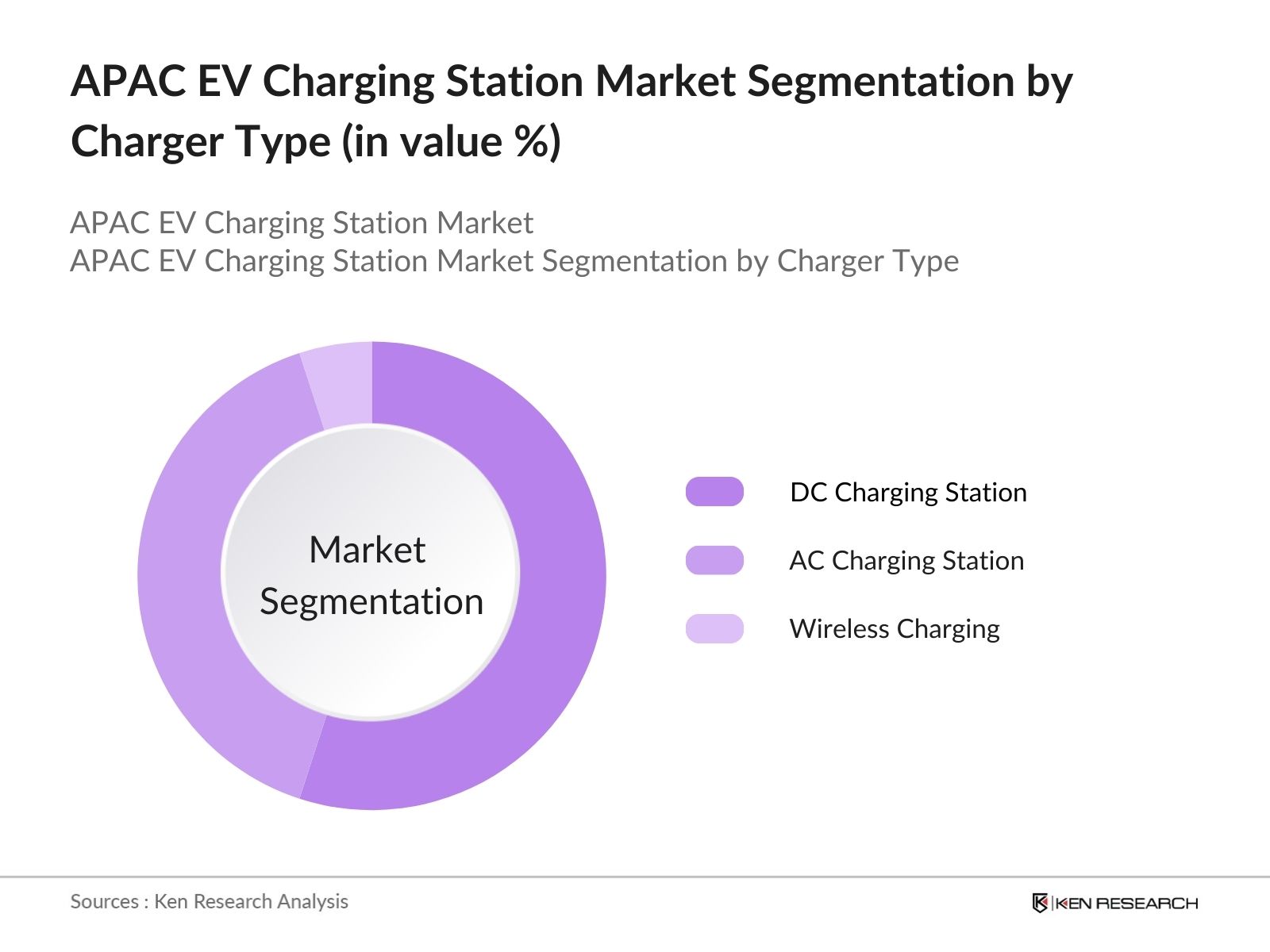
4.1. By Charger Type (In Value %) 4.1.1. AC Charging Station
4.1.2. DC Charging Station
4.1.3. Wireless Charging
4.2. By Connector Type (In Value %) 4.2.1. CHAdeMO
4.2.2. CCS
4.2.3. GB/T
4.2.4. Type 2
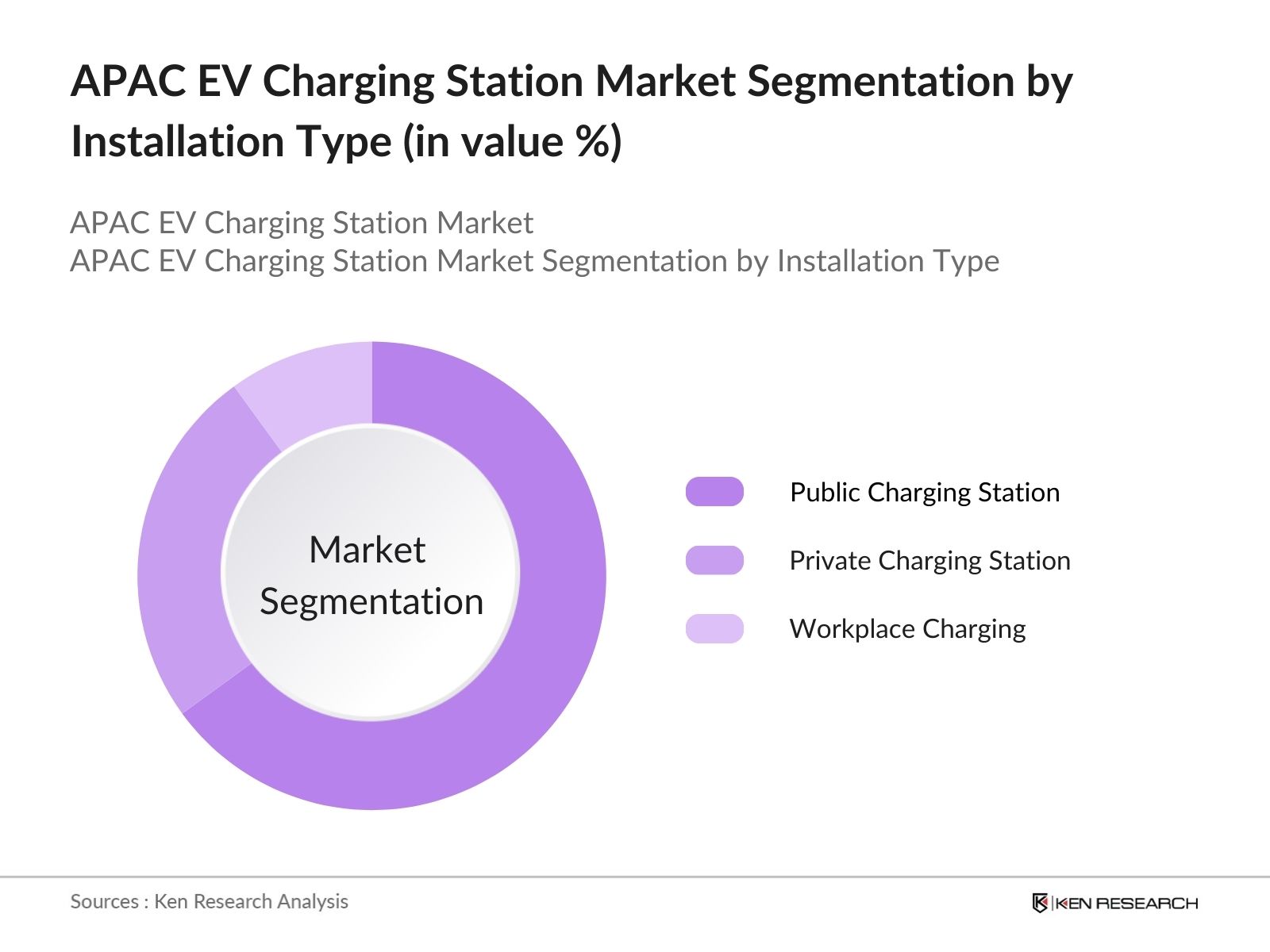
4.3. By Installation Type (In Value %) 4.3.1. Public Charging Station
4.3.2. Private Charging Station
4.3.3. Workplace Charging
4.4. By Charging Speed (In Value %) 4.4.1. Slow Charging
4.4.2. Fast Charging
4.4.3. Ultra-Fast Charging
4.5. By Country (In Value %) 4.5.1. China
4.5.2. India
4.5.3. Japan
4.5.4. South Korea
4.5.5. Australia
5.1. Detailed Profiles of Major Companies
5.1.1. ABB Ltd.
5.1.2. Tesla, Inc.
5.1.3. Schneider Electric
5.1.4. Siemens AG
5.1.5. ChargePoint, Inc.
5.1.6. BYD Company Ltd.
5.1.7. Delta Electronics, Inc.
5.1.8. EVBox Group
5.1.9. BP Pulse
5.1.10. Shell Recharge
5.1.11. Tata Power
5.1.12. NIO Power
5.1.13. Star Charge
5.1.14. Envision Digital
5.1.15. Tritium DCFC Limited
5.2. Cross Comparison Parameters
No. of Employees
Headquarters
Inception Year
Revenue
Market Share (Global/Regional)
Charging Stations Installed
Product Portfolio (Charger Types, Connector Compatibility)
Strategic Partnerships (OEMs, Governments)
5.3. Market Share Analysis
5.4. Strategic Initiatives
5.5. Mergers and Acquisitions
5.6. Investment Analysis
5.7. Venture Capital Funding
5.8. Government Grants
5.9. Private Equity Investments
6.1. EV Infrastructure Standards (Charging Protocols, Safety Regulations)
6.2. Compliance Requirements (Country-Specific EV Charging Standards)
6.3. Certification Processes (ISO Standards, Local Certifications)
7.1. Future Market Size Projections
7.2. Key Factors Driving Future Market Growth
8.1. By Charger Type (In Value %)
8.2. By Connector Type (In Value %)
8.3. By Installation Type (In Value %)
8.4. By Charging Speed (In Value %)
8.5. By Country (In Value %)
9.1. TAM/SAM/SOM Analysis
9.2. Customer Cohort Analysis
9.3. Marketing Initiatives
9.4. White Space Opportunity Analysis
The first step involves mapping out the ecosystem of the APAC EV Charging Station Market. This includes identifying key stakeholders such as EV manufacturers, utility providers, and charging station operators. A combination of desk research and proprietary databases is employed to extract critical data on market size, segmentation, and technological advancements.
We analyze historical data, focusing on market penetration of EVs and the number of installed charging points. This includes an evaluation of key geographic regions, assessing the market share by charger type, and installation type. Revenue data and growth trends are further evaluated to ensure reliable forecasting.
Market hypotheses are generated based on preliminary research and are validated through consultations with industry experts from key companies. Interviews with stakeholders help refine the analysis, ensuring accuracy in the data and projections.
In this phase, the final report is synthesized, incorporating feedback from stakeholders. The data is reviewed and cross-checked with both top-down and bottom-up approaches to ensure that the report delivers a comprehensive and accurate overview of the APAC EV Charging Station Market.
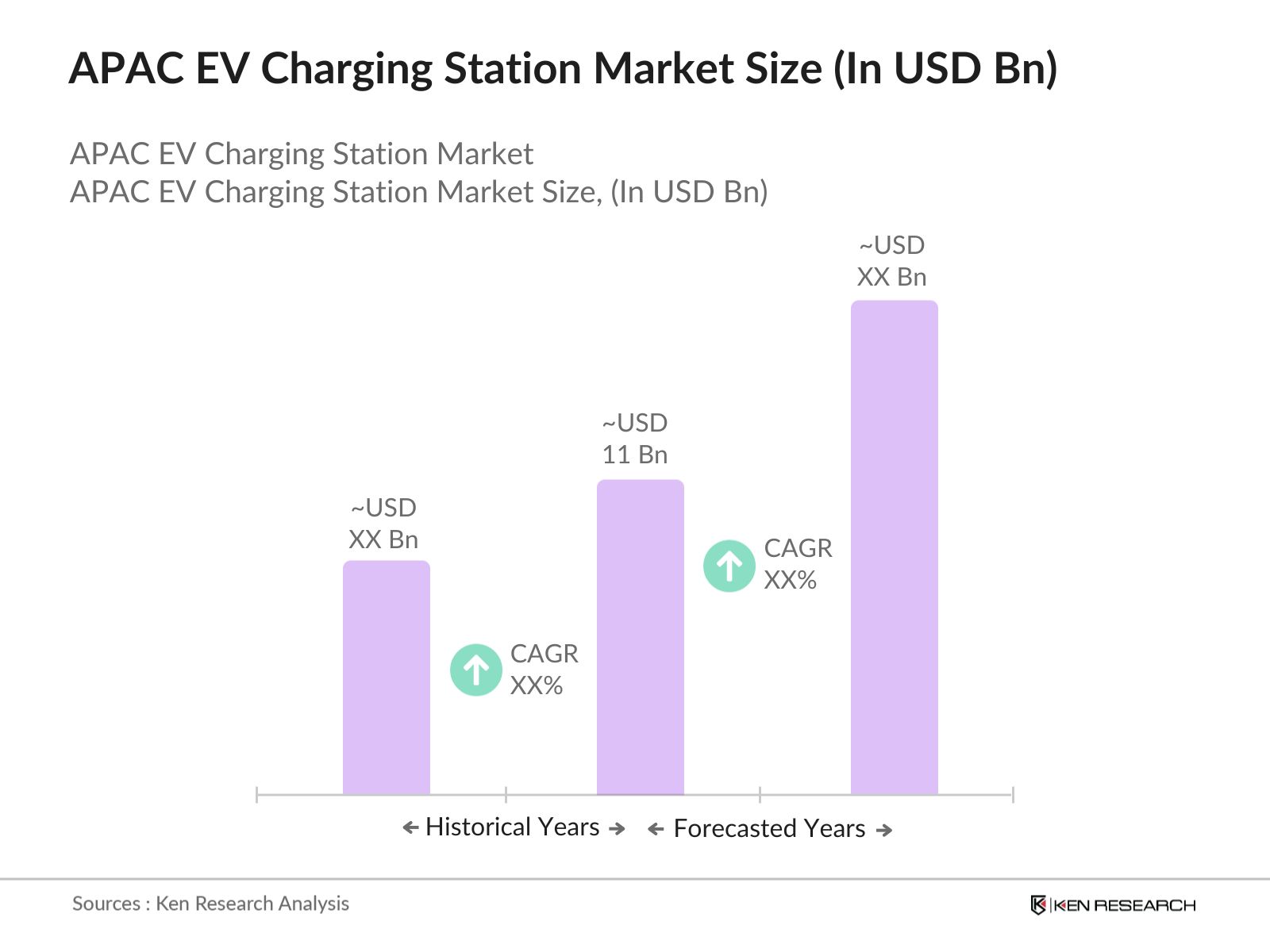
The APAC EV Charging Station Market is valued at USD 11 billion, driven by increasing electric vehicle sales, government subsidies, and the expansion of charging infrastructure across the region.
Challenges include high initial installation costs, lack of standardization in charging protocols, and limited grid capacity, especially in rural regions. Overcoming these challenges will be crucial for sustained growth.
Key players include Tesla, BYD, Delta Electronics, Siemens AG, and Tata Power, among others. These companies dominate the market due to their technological innovations, extensive charging networks, and strong government partnerships.
The growth is driven by rising electric vehicle adoption, government policies promoting EV infrastructure, and technological advancements in charging solutions such as fast and wireless charging technologies.

What makes us stand out is that our consultants follows Robust, Refine and Result (RRR) methodology. i.e. Robust for clear definitions, approaches and sanity checking, Refine for differentiating respondents facts and opinions and Result for presenting data with story

We have set a benchmark in the industry by offering our clients with syndicated and customized market research reports featuring coverage of entire market as well as meticulous research and analyst insights.

While we don't replace traditional research, we flip the method upside down. Our dual approach of Top Bottom & Bottom Top ensures quality deliverable by not just verifying company fundamentals but also looking at the sector and macroeconomic factors.

With one step in the future, our research team constantly tries to show you the bigger picture. We help with some of the tough questions you may encounter along the way: How is the industry positioned? Best marketing channel? KPI's of competitors? By aligning every element, we help maximize success.

Our report gives you instant access to the answers and sources that other companies might choose to hide. We elaborate each steps of research methodology we have used and showcase you the sample size to earn your trust.

If you need any support, we are here! We pride ourselves on universe strength, data quality, and quick, friendly, and professional service.