















APAC Foam Dressings Market Outlook to 2030
Region:Asia
Author(s):Mukul Soni
Product Code:KROD5647
December 2024
99
About the Report
APAC Foam Dressings Market Overview
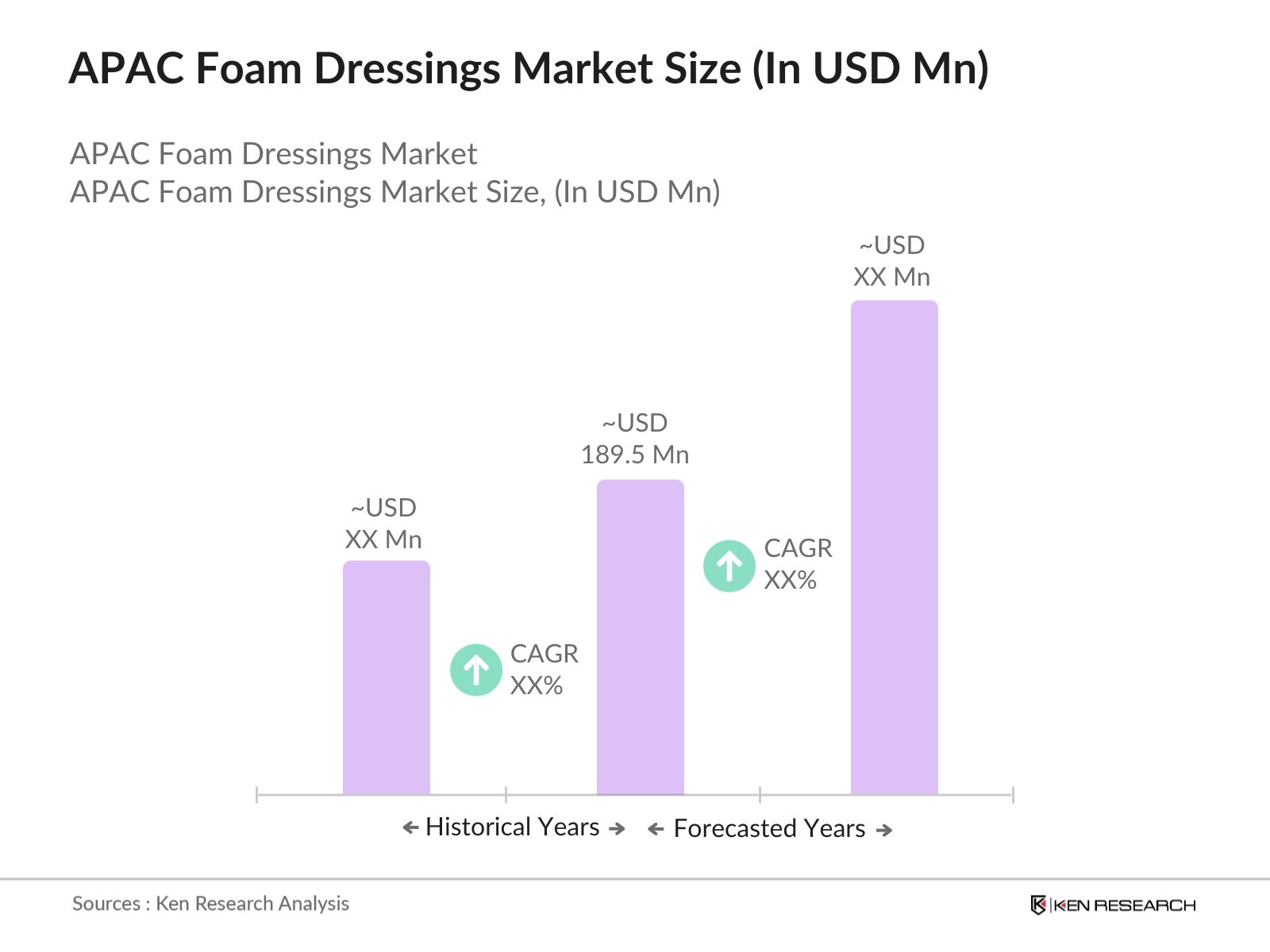
- The APAC foam dressings market has been valued at approximately USD 189.5 million in 2023, driven by a growing demand for advanced wound care solutions. This growth is propelled by the rising prevalence of chronic conditions such as diabetes, pressure ulcers, and venous leg ulcers. Additionally, technological advancements in wound care products, such as adhesive and non-adhesive foam dressings, provide patients with enhanced comfort and care, further contributing to market expansion.
- Key countries that dominate the market include China, India, and Japan. The dominance of these nations is largely due to the increasing geriatric population, rising healthcare expenditure, and the rapid adoption of advanced medical technologies. Japan, in particular, leads the market with its highly developed healthcare infrastructure, while China and India are rapidly expanding due to improved healthcare access in urban areas.
- Regulatory approvals and certifications are critical for the introduction of new foam dressings in the market. In 2024, South Korea's Ministry of Food and Drug Safety (MFDS) approved over 120 new foam dressing products, focusing on advancements in antimicrobial properties and biodegradable materials. This regulatory push is encouraging local manufacturers to innovate and bring new solutions to the market. Likewise, China has streamlined its approval process for medical devices, resulting in faster certification times for wound care products, thereby boosting the supply of advanced foam dressings.
APAC Foam Dressings Market Segmentation
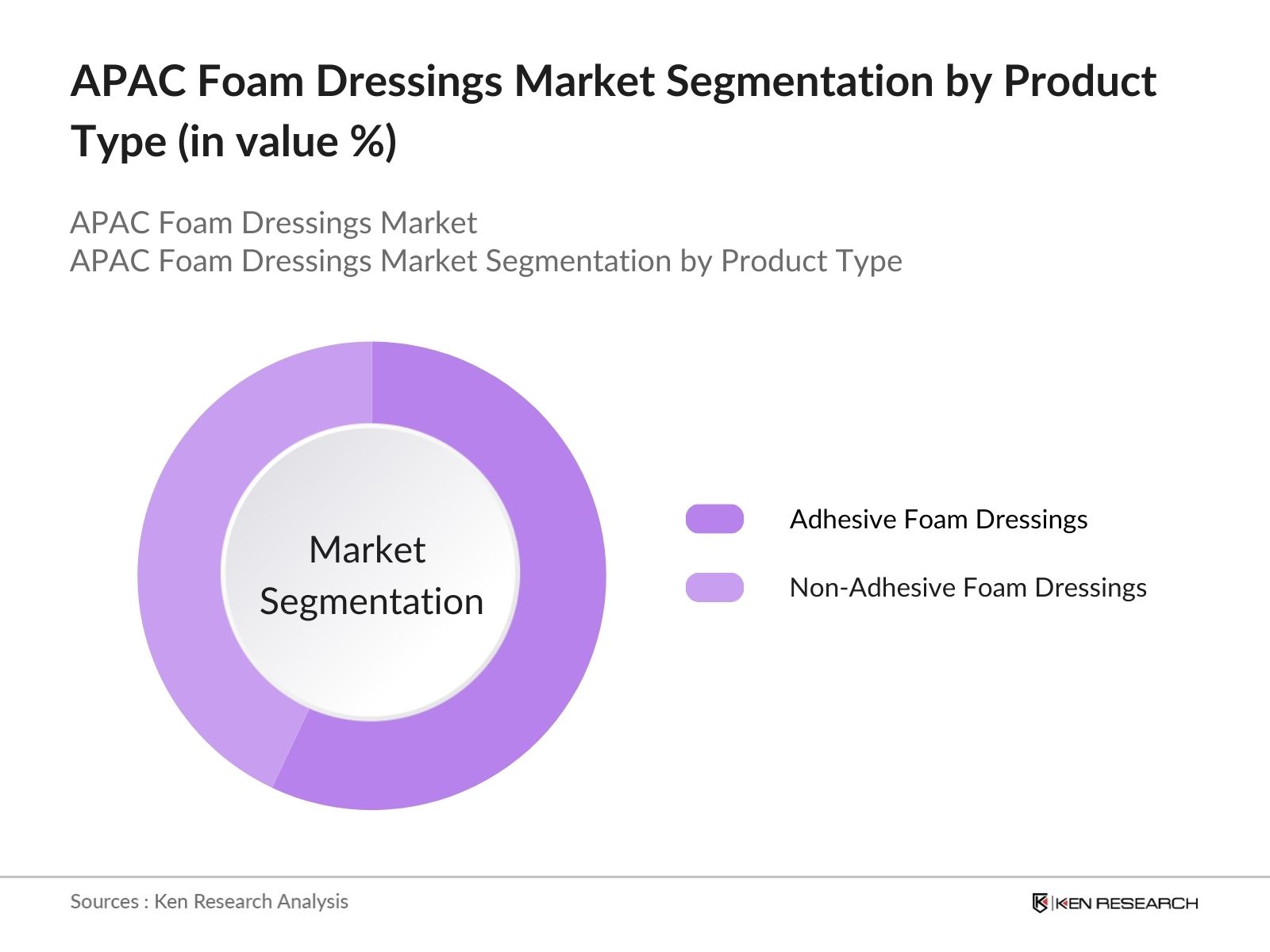
- By Product Type: The APAC foam dressings market is segmented by product type into adhesive foam dressings and non-adhesive foam dressings. Adhesive foam dressings hold the dominant share in the product type segment, driven by their strong adherence properties, which ensure secure placement even on difficult-to-treat areas. Their breathability and flexibility make them ideal for managing chronic wounds such as diabetic foot ulcers and pressure sores, particularly in regions like China and Japan, where there is a higher prevalence of diabetes and elderly care.
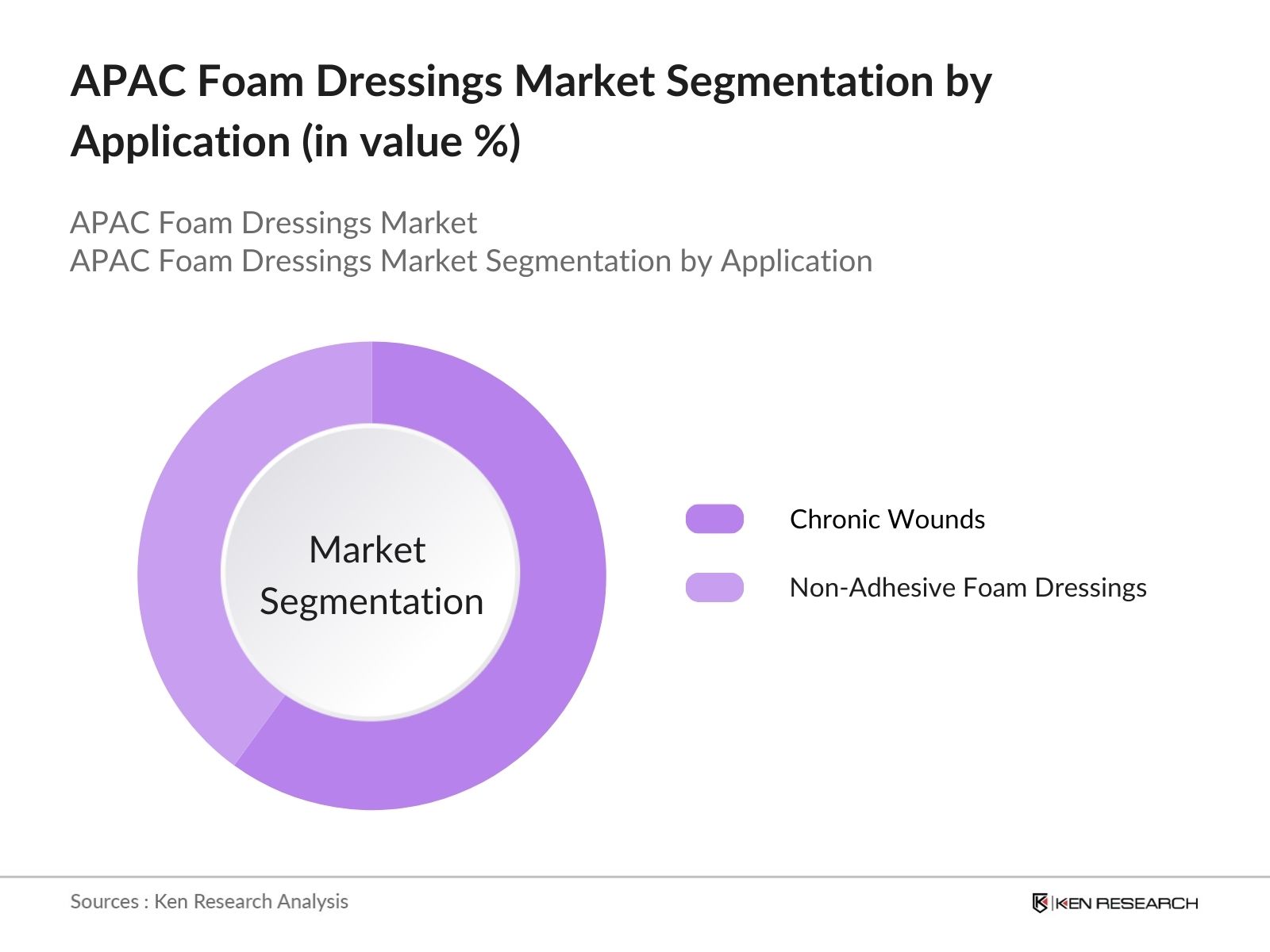
- By Application: The foam dressings market is segmented by application into chronic wounds and acute wounds. Chronic wounds, including diabetic ulcers and venous leg ulcers, dominate this segment due to the growing number of patients suffering from long-term conditions such as diabetes and vascular diseases in countries like India and China. The rising geriatric population further intensifies the need for advanced wound care products, as elderly individuals are more prone to developing chronic wounds that require longer healing times and specialized care solutions.
APAC Foam Dressings Market Competitive Landscape
The APAC foam dressings market is highly competitive, with several key players continuously developing new products and expanding their market presence. The market is dominated by both global and regional companies, with strong competition focusing on product innovation, distribution networks, and strategic partnerships. Companies are leveraging new technologies such as silicone-based foam dressings to cater to the increasing demand for effective wound care solutions.
|
Company Name |
Established |
Headquarters |
Revenue (2023) |
Product Portfolio |
R&D Investments |
Global Presence |
New Product Launches |
Mergers & Acquisitions |
Market Share (2023) |
|
Smith & Nephew |
1856 |
London, UK |
- | - | - | - | - | - | - |
|
Molnlycke Health Care |
1849 |
Gothenburg, Sweden |
- | - | - | - | - | - | - |
|
Coloplast Corp |
1957 |
Humlebaek, Denmark |
- | - | - | - | - | - | - |
|
3M Company |
1902 |
St. Paul, USA |
- | - | - | - | - | - | - |
APAC Foam Dressings Industry Analysis
Growth Drivers
- Rise in Chronic Diseases (Prevalence of Diabetes, Pressure Ulcers): Chronic diseases, particularly diabetes, have been on the rise across the Asia-Pacific region. As of 2024, over 158 million people in Southeast Asia alone suffer from diabetes, according to the World Health Organization (WHO). This is significant because diabetes-related wounds, such as foot ulcers, necessitate advanced wound care products like foam dressings. Additionally, pressure ulcers, commonly found in aging populations and immobile patients, are prevalent across the region. Japan, with one of the world's largest aging populations (over 36 million people aged 65 and older), further drives demand for foam dressings to treat chronic wounds.
- Technological Advancements (Hydrocolloid and Polyurethane Foam Technology): Technological advancements in foam dressings, particularly the integration of hydrocolloid and polyurethane foam technologies, are improving patient outcomes. By 2024, polyurethane foam dressings are widely adopted due to their breathability and high absorption rates. Countries like South Korea and Japan have been at the forefront of adopting new wound care technologies, driven by an increasing number of health tech startups. For instance, Japan's Ministry of Health reported that over 3,000 new patents related to wound care products were filed between 2022 and 2024, demonstrating a push toward innovative healthcare solutions.
- Government Initiatives for Wound Care Solutions: Government initiatives promoting better wound care solutions have positively impacted foam dressing adoption. India, for instance, introduced its National Health Mission (NHM) to improve healthcare access, with a significant focus on chronic wound care management. By 2024, under the NHM, over 75,000 community health workers have been trained to address wound care, especially in diabetic and pressure ulcer cases. Meanwhile, Chinas Healthy China 2030 plan has also driven investments in wound care facilities and resources, focusing on rural healthcare infrastructure development.
Market Restraints
- High Treatment Costs: One of the major challenges in the APAC foam dressing market is the high cost of treatment, particularly for advanced foam dressings used in chronic and post-operative wounds. A report by the Australian Institute of Health and Welfare (AIHW) in 2024 highlighted that the average cost of managing a chronic wound, such as a diabetic ulcer, ranges between $15,000 and $25,000 per patient annually. These costs include hospital stays, dressing changes, and medical consultations, making access to foam dressings limited for lower-income populations.
- Limited Access to Advanced Healthcare in Rural Areas: Access to advanced healthcare remains limited in rural regions across the Asia-Pacific, particularly in countries like India, Indonesia, and the Philippines. According to the World Bank, in 2024, only 30% of rural populations in low-income countries within APAC have access to healthcare services that offer advanced wound care, including foam dressings. The absence of adequate infrastructure and healthcare professionals further exacerbates this challenge, contributing to a lower adoption rate of advanced foam dressings in rural areas.
APAC Foam Dressings Market Future Outlook
Over the next five years, the APAC foam dressings market is expected to witness substantial growth driven by advancements in wound care technologies and increasing healthcare investments in the region. The expanding geriatric population, particularly in China, Japan, and India, will continue to fuel demand for advanced wound care products, particularly for chronic conditions. Additionally, the rise in healthcare awareness and the increasing prevalence of diabetes in emerging economies will significantly impact the demand for foam dressings across various healthcare settings.
Market Opportunities
- Expansion of Home Care Services: The increasing focus on home healthcare presents a significant growth opportunity for the foam dressings market. In 2024, over 20 million elderly individuals across APAC receive care in home settings, as reported by the International Labour Organization (ILO). This shift toward home-based care, particularly in aging populations in Japan, South Korea, and China, has driven demand for easy-to-use, self-applicable foam dressings. Additionally, governments in countries like Australia and Singapore have implemented policies that support home care initiatives, providing financial support to families who require medical supplies, including foam dressings.
- Increased Demand for Non-Adhesive and Specialty Foam Dressings: The demand for non-adhesive and specialty foam dressings has been rising due to the growing number of patients with sensitive skin or severe wound conditions. In 2024, China's National Medical Products Administration (NMPA) recorded a 22% increase in approvals for specialty foam dressings designed for burn and trauma patients. These dressings are particularly favored for their gentle application and non-irritating features, which are crucial for patients with compromised skin integrity. This trend is also observed in India, where specialized foam dressings are increasingly used in post-surgical care, especially among diabetic patients
Scope of the Report
|
Product Type |
Adhesive Foam Dressings Non-Adhesive Foam Dressings |
|
Application |
Chronic Wounds (Diabetic Ulcers, Venous Leg Ulcers) Acute Wounds (Surgical, Traumatic, Burns) |
|
Material |
Polyurethane Foam Silicone Foam Alginate Foam Collagen Foam |
|
End User |
Hospitals Specialty Clinics Home Care Settings |
|
Region |
China India Japan South Korea Southeast Asia |
Products
Key Target Audience
Government and Regulatory Bodies (e.g., National Health Commission of China, Indian Ministry of Health)
Hospitals and Healthcare Providers
Specialty Clinics
Home Healthcare Providers
Wound Care Centers
Medical Device Manufacturers
Venture Capital and Investment Firms
Insurance Companies and Reimbursement Bodies
Companies
Players Mentioned in the Report:
Smith & Nephew
Molnlycke Health Care
ConvaTec Group PLC
Coloplast Corp
3M Company
B. Braun Melsungen AG
Medline Industries Inc.
Cardinal Health
Medtronic
BSN Medical
Hollister Incorporated
Urgo Medical
Advancis Medical
Winner Medical Group
Acelity L.P. Inc. (now part of 3M)
Table of Contents
1. Market Overview
1.1 Definition and Scope
1.2 Market Taxonomy
1.3 Growth Rate Overview
1.4 Market Segmentation Overview
2. APAC Foam Dressings Market Size (In USD Mn)
2.1 Historical Market Size
2.2 Year-on-Year Growth Analysis
2.3 Key Market Developments and Milestones
3. APAC Foam Dressings Market Dynamics
3.1 Growth Drivers
3.1.1 Rise in Chronic Diseases (Prevalence of Diabetes, Pressure Ulcers)
3.1.2 Technological Advancements (Hydrocolloid and Polyurethane Foam Technology)
3.1.3 Government Initiatives for Wound Care Solutions
3.2 Market Challenges
3.2.1 High Treatment Costs
3.2.2 Limited Access to Advanced Healthcare in Rural Areas
3.3 Opportunities
3.3.1 Expansion of Home Care Services
3.3.2 Increased Demand for Non-Adhesive and Specialty Foam Dressings
3.4 Trends
3.4.1 Adoption of Non-Adherent Foam Dressings (Silicone, Hydrocellular Technology)
3.4.2 Use of Foam Dressings in Burn and Trauma Care
3.5 Government Regulations
3.5.1 Reimbursement Policies in Emerging Markets
3.5.2 Regulatory Approvals and Certifications for New Products
3.6 SWOT Analysis
3.7 Stakeholder Ecosystem
3.8 Porters Five Forces Analysis
3.9 Competitive Landscape
4. APAC Foam Dressings Market Segmentation
4.1 By Product Type
4.1.1 Adhesive Foam Dressings
4.1.2 Non-Adhesive Foam Dressings
4.2 By Application
4.2.1 Chronic Wounds (Diabetic Ulcers, Venous Leg Ulcers)
4.2.2 Acute Wounds (Surgical, Traumatic, Burns)
4.3 By Material
4.3.1 Polyurethane Foam
4.3.2 Silicone Foam
4.3.3 Alginate Foam
4.3.4 Collagen Foam
4.4 By End User
4.4.1 Hospitals
4.4.2 Specialty Clinics
4.4.3 Home Care Settings
4.5 By Region
4.5.1 China
4.5.2 India
4.5.3 Japan
4.5.4 South Korea
4.5.5 Southeast Asia
5. APAC Foam Dressings Market Competitive Analysis
5.1 Detailed Profiles of Major Competitors
5.1.1 Smith & Nephew
5.1.2 Molnlycke Health Care
5.1.3 ConvaTec Group PLC
5.1.4 Coloplast Corp
5.1.5 3M Company
5.1.6 Acelity L.P. Inc. (now part of 3M)
5.1.7 B. Braun Melsungen AG
5.1.8 Medline Industries Inc.
5.1.9 Hollister Incorporated
5.1.10 Cardinal Health
5.1.11 Medtronic
5.1.12 BSN Medical
5.1.13 Urgo Medical
5.1.14 Advancis Medical
5.1.15 Winner Medical Group
5.2 Cross-Comparison Parameters (Revenue, R&D Investments, Global Reach, Strategic Initiatives, Product Launches, Technological Innovations)
5.3 Market Share Analysis
5.4 Strategic Initiatives
5.5 Mergers and Acquisitions
5.6 Investment Analysis
5.7 Venture Capital and Private Equity Funding
6. Regulatory Landscape
6.1 APAC Healthcare Standards for Wound Management
6.2 Compliance Requirements for Foam Dressings
6.3 Certification and Approvals for Product Launches
7. APAC Foam Dressings Future Market Size (In USD Mn)
7.1 Future Market Size Projections
7.2 Key Drivers for Future Market Growth
8. APAC Future Market Segmentation
8.1 By Product Type
8.2 By Application
8.3 By Material
8.4 By End User
8.5 By Region
9. Market Analyst Recommendations
9.1 Total Addressable Market (TAM), Serviceable Addressable Market (SAM), Serviceable Obtainable Market (SOM) Analysis
9.2 Customer Segmentation and Cohort Analysis
9.3 Strategic Marketing Initiatives
9.4 White Space Opportunity Analysis
Disclaimer
Contact Us
Research Methodology
Step 1: Identification of Key Variables
In this phase, we map the entire ecosystem of the APAC foam dressings market, including major stakeholders such as hospitals, clinics, home care providers, and product manufacturers. This involves thorough secondary research to gather data on market size, growth factors, and industry dynamics.
Step 2: Market Analysis and Construction
We compile and analyze historical data to identify trends in the market. This includes understanding the adoption rate of foam dressings across various healthcare settings and evaluating the impact of technological advancements on the market.
Step 3: Hypothesis Validation and Expert Consultation
We conduct interviews with industry experts, including wound care specialists, product manufacturers, and regulatory bodies, to validate the initial findings. These consultations provide valuable insights into the operational dynamics and future opportunities in the market.
Step 4: Research Synthesis and Final Output
The final phase involves synthesizing the research data to generate a comprehensive report, which includes market size forecasts, competitive analysis, and future outlook. This ensures the final report is accurate, reliable, and actionable for stakeholders.
Frequently Asked Questions
01. How big is the APAC Foam Dressings Market?
The APAC foam dressings market is valued at USD 189.5 million in 2023, driven by an increasing prevalence of chronic wounds and advancements in wound care technologies.
02. What are the major challenges in the APAC Foam Dressings Market?
The major challenges include high treatment costs, limited access to advanced healthcare in rural regions, and the need for more skilled healthcare professionals to handle advanced wound care solutions.
03. Who are the leading players in the APAC Foam Dressings Market?
Key players in the market include Smith & Nephew, Molnlycke Health Care, ConvaTec Group PLC, Coloplast Corp, and 3M Company. These companies dominate the market due to their innovative product portfolios and strong distribution networks.
04. What are the growth drivers of the APAC Foam Dressings Market?
The market is driven by the increasing geriatric population, rising prevalence of chronic diseases such as diabetes, and the adoption of advanced wound care technologies across hospitals and home healthcare settings.
Why Buy From Us?

What makes us stand out is that our consultants follows Robust, Refine and Result (RRR) methodology. i.e. Robust for clear definitions, approaches and sanity checking, Refine for differentiating respondents facts and opinions and Result for presenting data with story

We have set a benchmark in the industry by offering our clients with syndicated and customized market research reports featuring coverage of entire market as well as meticulous research and analyst insights.

While we don't replace traditional research, we flip the method upside down. Our dual approach of Top Bottom & Bottom Top ensures quality deliverable by not just verifying company fundamentals but also looking at the sector and macroeconomic factors.

With one step in the future, our research team constantly tries to show you the bigger picture. We help with some of the tough questions you may encounter along the way: How is the industry positioned? Best marketing channel? KPI's of competitors? By aligning every element, we help maximize success.

Our report gives you instant access to the answers and sources that other companies might choose to hide. We elaborate each steps of research methodology we have used and showcase you the sample size to earn your trust.

If you need any support, we are here! We pride ourselves on universe strength, data quality, and quick, friendly, and professional service.