
APAC Garbage Truck Bodies Market Outlook to 2030
Region:Asia
Author(s):Mukul
Product Code:KROD4084
October 2024
89
About the Report
APAC Garbage Truck Overview
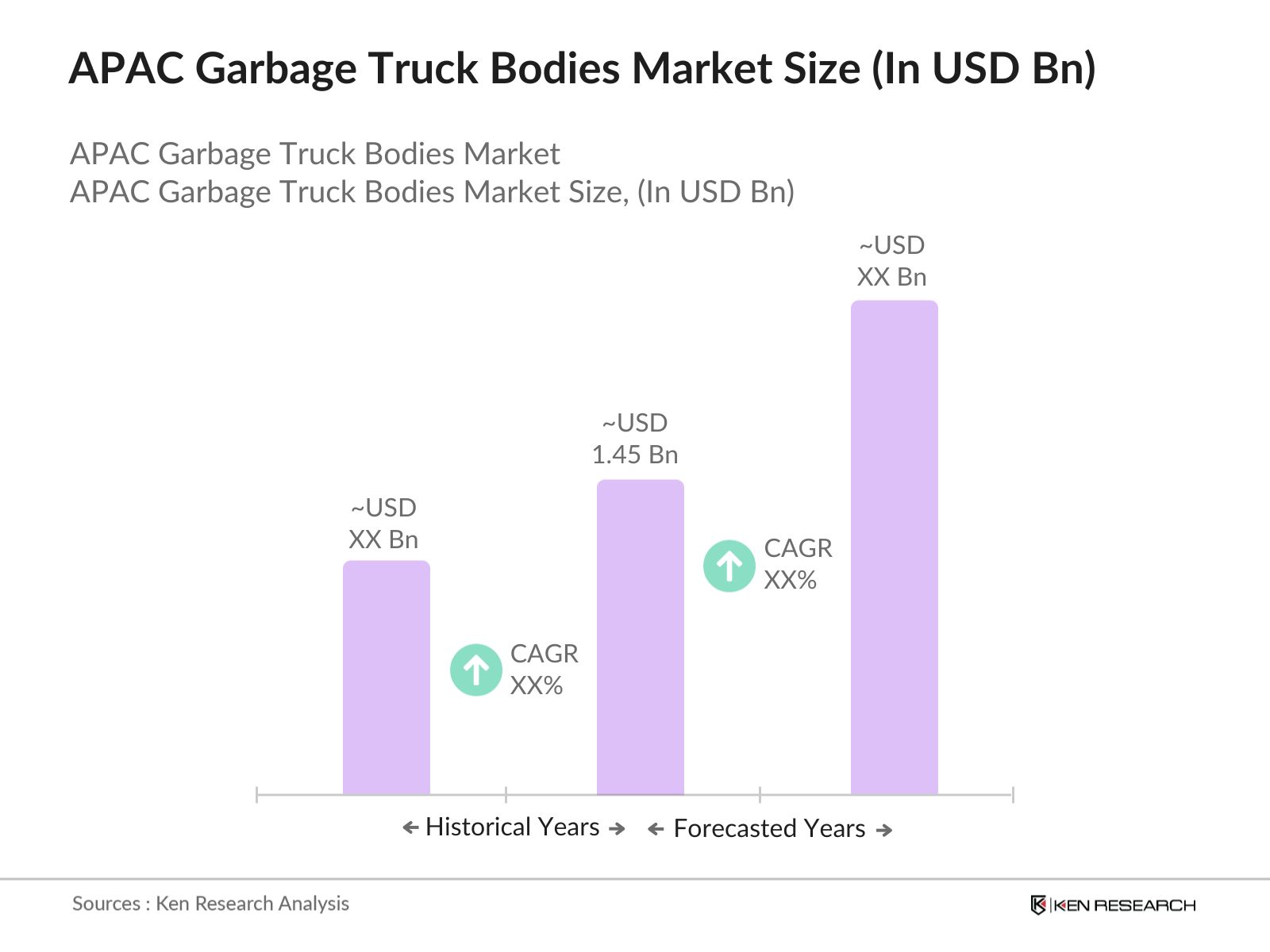
- The APAC Garbage Truck Bodies Market is driven by growing urbanization and increasing waste generation across major cities in the region. The market is valued at USD 1.45 billion, driven by substantial investments in municipal waste management infrastructure and the adoption of advanced garbage truck bodies, including electric and hybrid models. As urban centers expand, the demand for efficient waste collection systems rises, contributing to the market's sustained growth, particularly in countries with high waste generation rates like China and India.
- China and Japan dominate the APAC Garbage Truck Bodies market due to their established infrastructure and advanced waste management systems. China's dominance is fueled by its large urban population and government initiatives to address waste management challenges. Japan's leadership stems from its early adoption of sustainable technologies and high waste collection efficiency. Meanwhile, other countries such as South Korea and Singapore are gaining traction due to stringent environmental policies and the deployment of smart waste solutions.
- Government regulations are driving changes in the waste management sector, particularly through stricter disposal and emission standards. China’s revised "Solid Waste Law" in 2023 mandates stringent waste separation and disposal requirements, necessitating the use of advanced garbage truck bodies capable of handling different waste streams. Similarly, countries like Singapore and Japan have introduced emission standards that directly affect the design and production of garbage trucks.
APAC Garbage Truck Bodies Market Segmentation
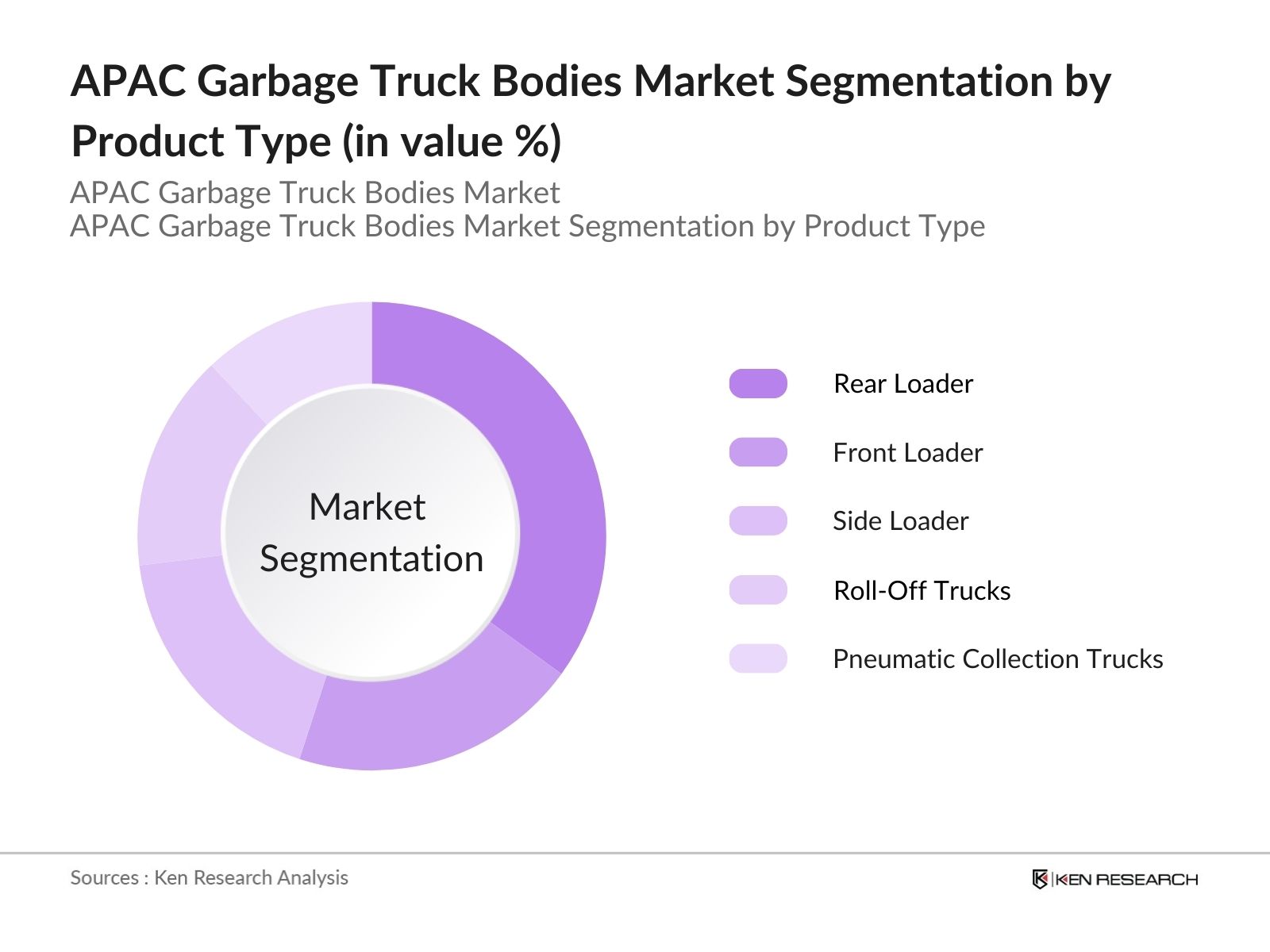
- By Product Type: The APAC Garbage Truck Bodies market is segmented by product type into Front Loader, Rear Loader, Side Loader, Roll-Off Trucks, and Pneumatic Collection Trucks. Recently, Rear Loaders have taken a dominant market share under this segmentation, driven by their widespread use in municipal waste collection due to easy handling and compatibility with urban waste systems. Cities with dense populations such as Tokyo, Seoul, and Mumbai prefer rear loaders for their efficiency and compact design, allowing easy maneuverability through narrow streets.
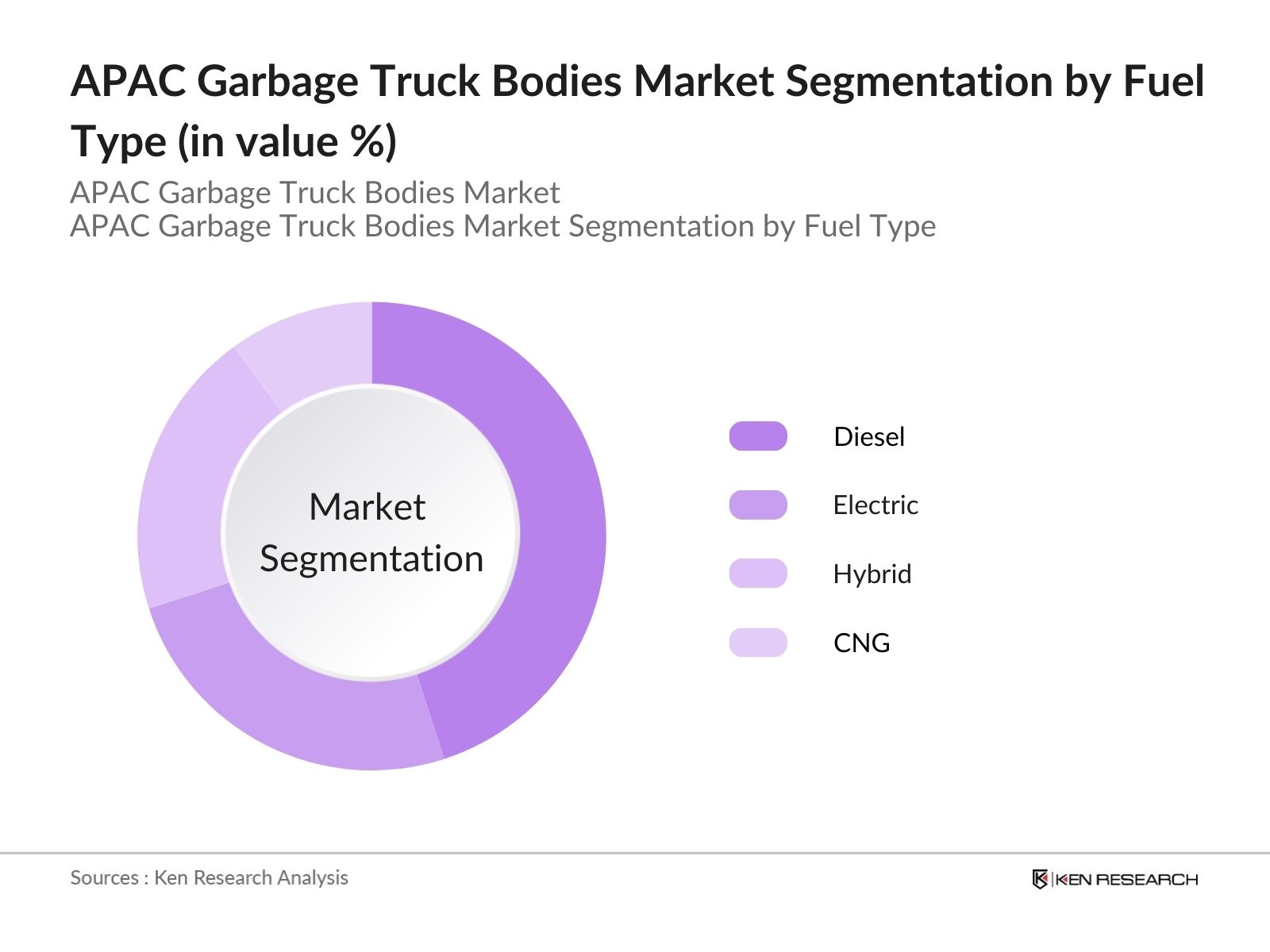
- By Fuel Type: The APAC Garbage Truck Bodies Market is also segmented by fuel type into Diesel, Electric, Hybrid, and CNG. The Electric segment has gained significant momentum due to global efforts to reduce carbon emissions and promote sustainability. Cities like Shanghai and Singapore are investing heavily in electric garbage trucks as part of broader green initiatives. Electric trucks offer a quieter and more environmentally friendly solution, which has been critical in cities facing noise pollution challenges and stringent emission regulations.
APAC Garbage Truck Bodies Market Competitive Landscape
The APAC Garbage Truck Bodies market is highly competitive, with several major players leading the industry through innovations in truck body designs, sustainability practices, and smart technology integration. These players focus on expanding their production capabilities and investing in electric and hybrid truck bodies to meet the growing demand for eco-friendly solutions. The market remains consolidated, with the top players holding significant influence across the region.
|
Company Name |
Establishment Year |
Headquarters |
Fleet Size |
Technology Adoption |
Sustainability Score |
Market Presence |
Customer Satisfaction |
Warranty Offering |
|
Heil Environmental |
1901 |
USA |
|
|
|
|
|
|
|
New Way Trucks |
1971 |
USA |
|
|
|
|
|
|
|
Fujian Longma Environmental |
1981 |
China |
|
|
|
|
|
|
|
BYD Company Ltd. |
1995 |
China |
|
|
|
|
|
|
|
Dongfeng Motor Corporation |
1969 |
China |
|
|
|
|
|
|
APAC Garbage Truck Bodies Industry Analysis
APAC Garbage Truck Bodies Market Growth Drivers
- Urban Waste Management Initiatives (National Policy Frameworks) The APAC region is experiencing a significant rise in urbanization, leading to a surge in waste production. By 2024, urban population growth is projected to increase waste generation in countries like India and China. India's Ministry of Housing and Urban Affairs reports that municipal waste generation in India was 150,000 tonnes per day in 2022, expected to rise further in 2024. National policies such as China's "Solid Waste Law" aim to enhance urban waste management systems, mandating stricter waste disposal protocols and encouraging advanced garbage collection solutions like modern truck bodies.
- Industrialization and Commercial Waste Surge (Waste Volume Statistics) Industrial growth across Asia is leading to a sharp rise in commercial waste. For instance, China alone produced 3.22 billion metric tons of industrial waste in 2023, with steel and construction industries contributing heavily. Southeast Asian countries, including Vietnam and Thailand, are witnessing similar trends with their rapid industrialization, making it necessary for advanced waste collection mechanisms. This increase in waste volume emphasizes the need for robust garbage truck bodies, capable of managing larger waste volumes efficiently.
- Adoption of Smart Waste Solutions (Adoption Rate, Technology Penetration) Smart waste management systems are being adopted at a rapid pace across major APAC cities. In 2024, Japan and South Korea are leading the charge, with over 5,000 smart bins installed in urban centers, using IoT sensors to optimize waste collection routes. These innovations are driving the demand for advanced garbage truck bodies integrated with IoT technology. Reports from Japan’s Ministry of Environment suggest that waste collection efficiency increased by 30% after the introduction of IoT-based systems in 2023.
APAC Garbage Truck Bodies Market Restraints
- Lack of Skilled Workforce for Smart Solutions While smart waste management solutions are being adopted, a significant challenge remains the shortage of skilled labor to manage and maintain these advanced systems. APAC countries like Indonesia and the Philippines reported a 20% gap in skilled labor availability for IoT and AI-integrated garbage truck maintenance in 2023. This shortage is slowing down the penetration of these advanced waste solutions in developing economies.
- Maintenance & Repair Issues (Cost Analysis, Timeframe for Downtime) Maintaining and repairing garbage trucks equipped with advanced technology poses additional challenges. The average repair cost for an IoT-integrated garbage truck in APAC was estimated at $10,000 per incident in 2023, while downtime for these trucks could extend up to two weeks. This not only increases the operational costs for fleet managers but also reduces the efficiency of waste collection services, affecting overall market growth.
APAC Garbage Truck Bodies Market Future Outlook
Over the next five years, the APAC Garbage Truck Bodies market is expected to experience robust growth, driven by continued urbanization, government support for sustainable waste management solutions, and advancements in electric vehicle technologies. Cities are increasingly investing in smart waste management systems, further boosting demand for IoT-integrated garbage trucks. In addition, stringent emissions regulations across the APAC region will encourage the adoption of eco-friendly garbage truck bodies, leading to a surge in electric and hybrid models.
Market Opportunities
- Investment in Electric Garbage Trucks (Battery Capacity, EV Integration): Electric garbage trucks are gaining traction in the APAC region as governments push for reduced emissions. In 2023, China reported 7,000 electric garbage trucks in service across major cities like Beijing and Shanghai. With the average battery capacity reaching 300 kWh, these trucks can handle an entire day’s waste collection on a single charge. The Chinese government’s subsidy program for electric vehicles (EVs) further fuels this growth, promoting more investment in the sector.
- Expansion of Fleet Size in Developing Economies (Urbanization Index): Deloping economies in Southeast Asia, including Vietnam, Indonesia, and the Philippines, are seeing a rise in waste production due to increased urbanization. Vietnam’s urbanization index reached 40% in 2023, leading to increased demand for expanded waste collection fleets. Governments are prioritizing investments in new garbage trucks to cope with this growing waste volume. For example, the Indonesian government has committed $500 million to fleet expansion in 2024, addressing waste management challenges in urban areas.
Scope of the Report
|
By Product Type |
Front Loader Rear Loader Side Loader Roll-Off Trucks Pneumatic Collection Trucks |
|
By Fuel Type |
Diesel Electric Hybrid CNG |
|
By Application |
Municipal Waste Collection Industrial Waste Collection Commercial Waste Collection |
|
By Material Type |
Steel Aluminum Fiber-Reinforced Plastics (FRP) |
|
By Region |
East Asia Southeast Asia South Asia Oceania |
Products
Key Target Audience
- Government and Regulatory Bodies (Environmental Protection Agency, Ministry of Urban Development)
- Municipal Waste Management Companies
- Truck Body Manufacturers
- Electric Vehicle Manufacturers
- Technology Providers for Smart Waste Solutions
- Waste Collection Service Providers
- Investments and Venture Capitalist Firms
- Local and Regional Distributors
Time Period Captured in the Report:
- Historical Period: 2018-2023
- Base Year: 2023
- Forecast Period: 2023-2028
Companies
- Heil Environmental
- New Way Trucks
- Fujian Longma Environmental
- BYD Company Ltd.
- Dongfeng Motor Corporation
- McNeilus Truck and Manufacturing
- Labrie Enviroquip Group
- Curbtender Inc.
- Bridgeport Manufacturing
- FAUN Group
- Dennis Eagle Ltd.
- Zoomlion Heavy Industry Science & Technology
- EZ Pack Refuse Hauling Solutions
- Autocar LLC
- Navistar, Inc.
Table of Contents
1. APAC Garbage Truck Bodies Market Overview
1.1. Definition and Scope
1.2. Market Taxonomy
1.3. Market Growth Rate
1.4. Market Segmentation Overview
2. APAC Garbage Truck Bodies Market Size (In USD Bn)
2.1. Historical Market Size
2.2. Year-On-Year Growth Analysis
2.3. Key Market Developments and Milestones
3. APAC Garbage Truck Bodies Market Analysis
3.1. Growth Drivers
3.1.1. Urban Waste Management Initiatives (National Policy Frameworks)
3.1.2. Industrialization and Commercial Waste Surge (Waste Volume Statistics)
3.1.3. Adoption of Smart Waste Solutions (Adoption Rate, Technology Penetration)
3.1.4. Government Initiatives on Sustainability (Legislative Framework, Policy Support)
3.2. Market Challenges
3.2.1. High Manufacturing Costs (Steel, Aluminum Prices)
3.2.2. Lack of Skilled Workforce for Smart Solutions
3.2.3. Maintenance & Repair Issues (Cost Analysis, Timeframe for Downtime)
3.3. Opportunities
3.3.1. Investment in Electric Garbage Trucks (Battery Capacity, EV Integration)
3.3.2. Expansion of Fleet Size in Developing Economies (Urbanization Index)
3.3.3. Shift Towards Modular Truck Bodies (Adoption Rate, Repair Efficiency)
3.4. Trends
3.4.1. Integration of IoT and Sensor-Based Monitoring (Smart Fleet Adoption Rate)
3.4.2. Development of Hybrid and Electric Truck Bodies (Percentage of Hybrid/Electric Garbage Trucks)
3.4.3. Use of Lightweight Materials (Weight Reduction Stats, Material Innovations)
3.5. Government Regulation
3.5.1. Waste Disposal Regulations and Emission Standards
3.5.2. Subsidies for Electric Garbage Trucks (Government Incentives, Tax Rebates)
3.5.3. Public-Private Partnership Projects (PPP Adoption Rates, Investment Volume)
3.5.4. Regional Waste Management Initiatives (Focus on Asia, Compliance Rules)
3.6. SWOT Analysis
3.7. Stake Ecosystem (Suppliers, Assemblers, Dealers)
3.8. Porter’s Five Forces (Bargaining Power, Competitive Rivalry, Entry Barriers)
3.9. Competition Ecosystem
4. APAC Garbage Truck Bodies Market Segmentation
4.1. By Product Type (In Value %)
4.1.1. Front Loader
4.1.2. Rear Loader
4.1.3. Side Loader
4.1.4. Roll-Off Trucks
4.1.5. Pneumatic Collection Trucks
4.2. By Fuel Type (In Value %)
4.2.1. Diesel
4.2.2. Electric
4.2.3. Hybrid
4.2.4. CNG
4.3. By Application (In Value %)
4.3.1. Municipal Waste Collection
4.3.2. Industrial Waste Collection
4.3.3. Commercial Waste Collection
4.4. By Material Type (In Value %)
4.4.1. Steel
4.4.2. Aluminum
4.4.3. Fiber-Reinforced Plastics (FRP)
4.5. By Region (In Value %)
4.5.1. East Asia
4.5.2. Southeast Asia
4.5.3. South Asia
4.5.4. Oceania
5. APAC Garbage Truck Bodies Market Competitive Analysis
5.1. Detailed Profiles of Major Companies
5.1.1. Heil Environmental
5.1.2. New Way Trucks
5.1.3. McNeilus Truck and Manufacturing
5.1.4. Labrie Enviroquip Group
5.1.5. Fujian Longma Environmental Sanitation Equipment Co., Ltd
5.1.6. BYD Company Ltd.
5.1.7. Curbtender Inc.
5.1.8. Bridgeport Manufacturing
5.1.9. FAUN Group
5.1.10. Dennis Eagle Ltd.
5.1.11. Dongfeng Motor Corporation
5.1.12. EZ Pack Refuse Hauling Solutions
5.1.13. Zoomlion Heavy Industry Science & Technology Co., Ltd
5.1.14. Autocar LLC
5.1.15. Navistar, Inc.
5.2. Cross Comparison Parameters (Revenue, Fleet Size, Manufacturing Plants, Market Share, Technology Adoption, Sustainability Score, Warranty Offering, Customer Satisfaction Score)
5.3. Market Share Analysis
5.4. Strategic Initiatives (Partnerships, Expansions, Innovations)
5.5. Mergers and Acquisitions
5.6. Investment Analysis
5.7. Venture Capital Funding
5.8. Government Grants
5.9. Private Equity Investments
6. APAC Garbage Truck Bodies Market Regulatory Framework
6.1. Environmental Standards
6.2. Certification Processes
6.3. Compliance Requirements
7. APAC Garbage Truck Bodies Future Market Size (In USD Bn)
7.1. Future Market Size Projections
7.2. Key Factors Driving Future Market Growth
8. APAC Garbage Truck Bodies Future Market Segmentation
8.1. By Product Type (In Value %)
8.2. By Fuel Type (In Value %)
8.3. By Application (In Value %)
8.4. By Material Type (In Value %)
8.5. By Region (In Value %)
9. APAC Garbage Truck Bodies Market Analysts’ Recommendations
9.1. TAM/SAM/SOM Analysis
9.2. Customer Cohort Analysis
9.3. Marketing Initiatives
9.4. White Space Opportunity Analysis
Disclaimer
Contact Us
Research Methodology
Step 1: Identification of Key Variables
The initial phase involves identifying the primary variables influencing the APAC Garbage Truck Bodies market, such as fleet sizes, emission standards, and material innovations. Extensive desk research using secondary databases like government reports and industry publications was conducted to map the ecosystem.
Step 2: Market Analysis and Construction
This phase involved historical data collection for fleet expansion, technological advancements, and waste collection infrastructure. Key performance indicators such as fleet utilization rates, downtime periods, and repair costs were also analyzed.
Step 3: Hypothesis Validation and Expert Consultation
Insights were gathered through expert consultations, focusing on fleet operators, truck manufacturers, and waste management authorities. This helped refine the research, ensuring it aligned with market realities.
Step 4: Research Synthesis and Final Output
Data from bottom-up and top-down approaches were synthesized, verifying industry performance and consumer demand. This final step ensured that the report accurately reflects current trends and forecasts in the market.
Frequently Asked Questions
1. How big is the APAC Garbage Truck Bodies Market?
The APAC Garbage Truck Bodies Market is valued at USD 1.45 billion, driven by urbanization, increased waste generation, and investments in smart waste management solutions across major cities in the region.
2. What are the challenges in the APAC Garbage Truck Bodies Market?
Challenges include high initial costs for electric and hybrid models, limited infrastructure in developing nations, and the need for skilled workforce to maintain and operate advanced systems.
3. Who are the major players in the APAC Garbage Truck Bodies Market?
Major players include Heil Environmental, New Way Trucks, Fujian Longma Environmental, BYD Company Ltd., and Dongfeng Motor Corporation. These companies dominate due to their technological innovations and wide market reach.
4. What are the growth drivers of the APAC Garbage Truck Bodies Market?
Key growth drivers include urbanization, government initiatives for sustainability, and the adoption of smart waste management systems with integrated IoT solutions.
|
Product Type |
Market Share (2023) |
|
Front Loader |
20% |
|
Rear Loader |
35% |
|
Side Loader |
18% |
|
Roll-Off Trucks |
15% |
|
Pneumatic Collection Trucks |
12% |
|
Fuel Type |
Market Share (2023) |
|
Diesel |
45% |
|
Electric |
25% |
|
Hybrid |
20% |
|
CNG |
10% |
Why Buy From Us?

What makes us stand out is that our consultants follows Robust, Refine and Result (RRR) methodology. i.e. Robust for clear definitions, approaches and sanity checking, Refine for differentiating respondents facts and opinions and Result for presenting data with story

We have set a benchmark in the industry by offering our clients with syndicated and customized market research reports featuring coverage of entire market as well as meticulous research and analyst insights.

While we don't replace traditional research, we flip the method upside down. Our dual approach of Top Bottom & Bottom Top ensures quality deliverable by not just verifying company fundamentals but also looking at the sector and macroeconomic factors.

With one step in the future, our research team constantly tries to show you the bigger picture. We help with some of the tough questions you may encounter along the way: How is the industry positioned? Best marketing channel? KPI's of competitors? By aligning every element, we help maximize success.

Our report gives you instant access to the answers and sources that other companies might choose to hide. We elaborate each steps of research methodology we have used and showcase you the sample size to earn your trust.

If you need any support, we are here! We pride ourselves on universe strength, data quality, and quick, friendly, and professional service.