
APAC Gluten-Free Products Market Outlook to 2030
Region:Afganistan
Author(s):Meenakshi Bisht
Product Code:KROD6987
Region:Afganistan
Author(s):Meenakshi Bisht
Product Code:KROD6987
December 2024
93
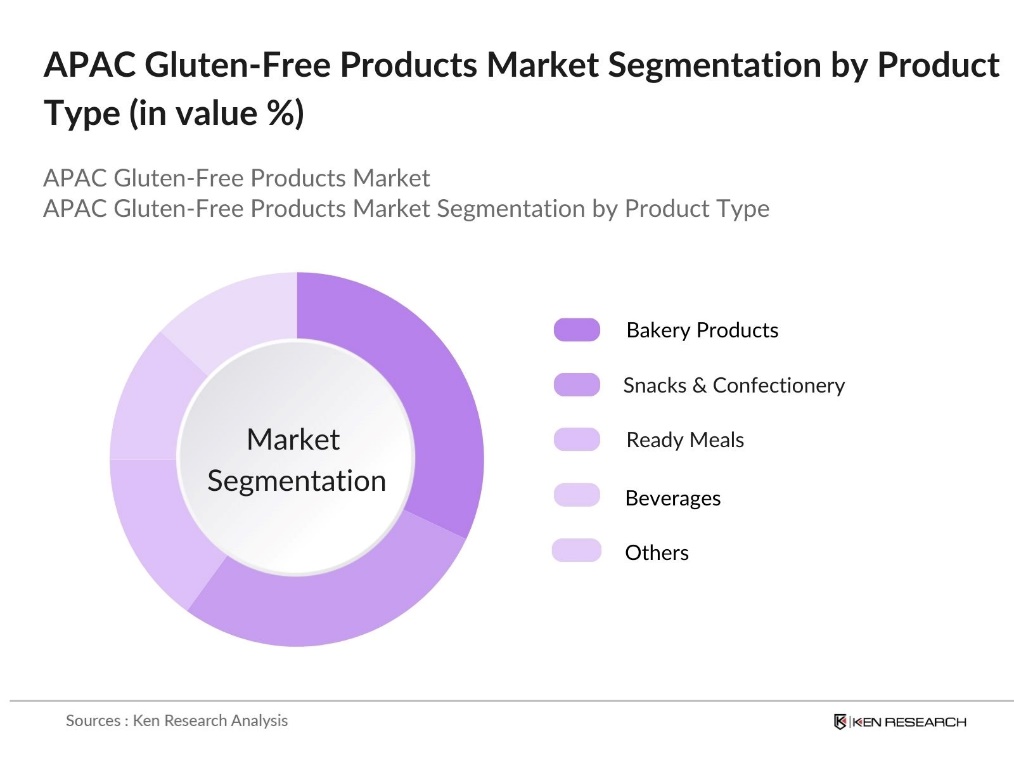
By Product Type: The market is segmented by product type into bakery products, snacks and confectionery, ready meals, beverages, and others. Bakery products currently dominate the product type segment due to their wide acceptance among consumers with gluten sensitivity, as well as those following healthier diets. The demand for gluten-free bakery items has surged due to enhanced taste and texture from new product formulations. These products align well with APACs urban demographic, which values convenient, on-the-go gluten-free options available in supermarkets and specialty stores.
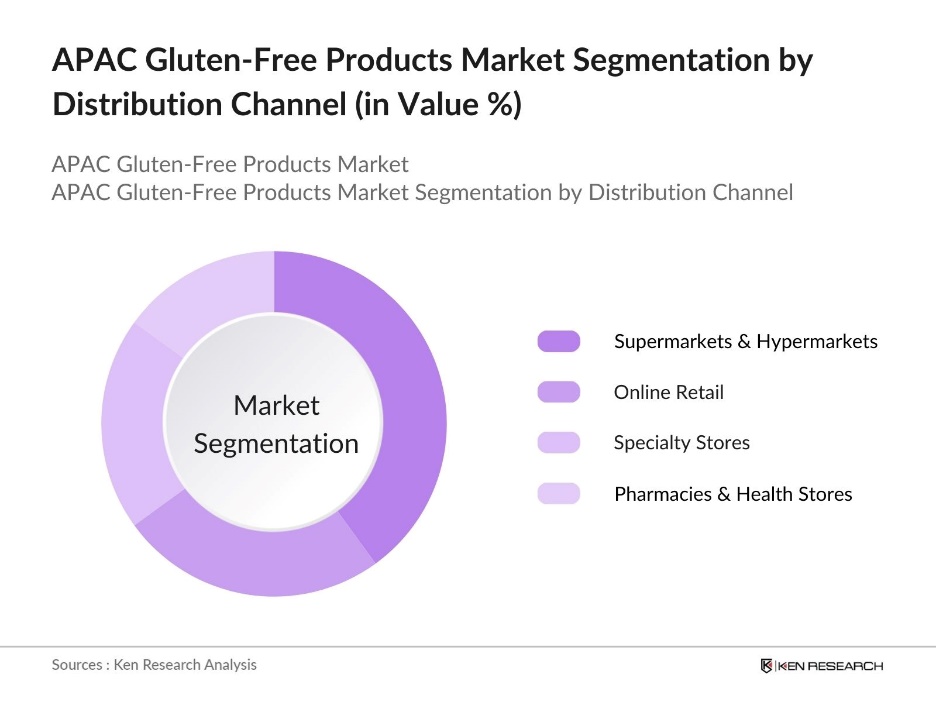
By Distribution Channel: The distribution channels in this market are segmented into supermarkets & hypermarkets, online retail, specialty stores, and pharmacies & health stores. Supermarkets and hypermarkets lead this segment as they provide the widest selection of gluten-free products, complemented by their ability to cater to a high volume of consumers. Many supermarkets have dedicated gluten-free sections, making it easier for consumers to access these products conveniently.
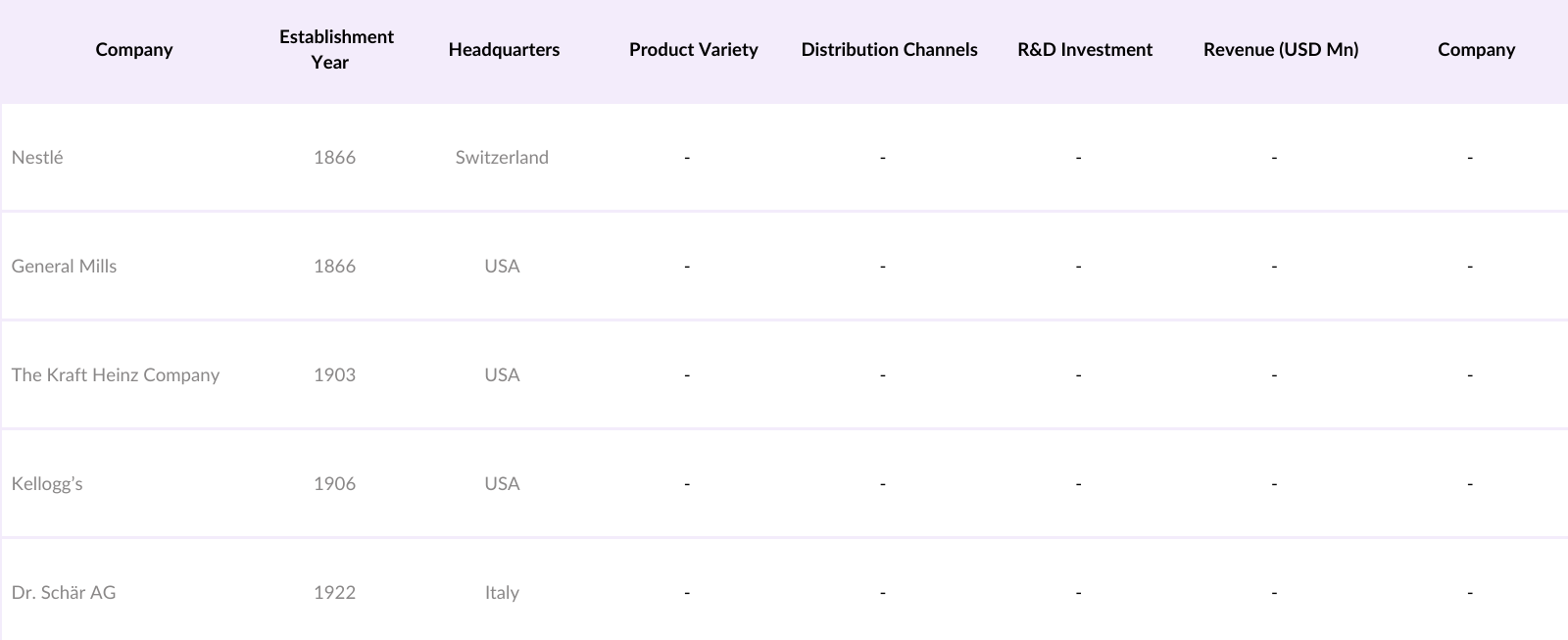
The APAC Gluten-Free Products Market is dominated by both multinational corporations and regional players, all competing on product quality, variety, and pricing. Prominent companies have invested significantly in product innovation and strategic partnerships to gain a competitive edge. Global players such as Nestl and General Mills have leveraged strong brand recognition and extensive distribution networks to maintain market presence, while local companies focus on regionally inspired gluten-free products.
Over the next five years, the APAC Gluten-Free Products Market is expected to expand, driven by an increase in dietary health awareness and product innovation. Rising urbanization and disposable income in key countries like China, Japan, and India will further boost demand. Additionally, the adoption of gluten-free products beyond those with gluten intolerance points towards an evolving consumer base seeking healthier lifestyles. Expansion in retail distribution, particularly online, will likely amplify market reach, offering opportunities for growth in untapped regions within the APAC.
|
By Product Type |
Bakery Products Snacks and Confectionery Ready Meals Beverages Others |
|
By Distribution Channel |
Supermarkets & Hypermarkets Online Retail Specialty Stores Pharmacies and Health Stores |
|
By Ingredient Type |
Rice-Based Corn-Based Millet-Based Quinoa-Based |
|
By Consumer Segment |
Health-Conscious Consumers Individuals with Celiac Disease Lactose-Intolerant Consumers Other Dietary Needs |
|
By Region |
East Asia South Asia Southeast Asia Australasia Other APAC Regions |
1.1 Definition and Scope
1.2 Market Taxonomy
1.3 Demand Drivers in the Gluten-Free Segment
1.4 Market Segmentation Overview
2.1 Historical Market Size
2.2 Year-on-Year Growth Analysis
2.3 Key Market Developments and Milestones
3.1 Growth Drivers
3.1.1 Rising Health Awareness and Lifestyle Changes
3.1.2 Prevalence of Gluten Intolerance and Celiac Disease
3.1.3 Government Initiatives for Healthy Eating
3.1.4 Increasing Product Innovations in Gluten-Free Foods
3.2 Market Challenges
3.2.1 High Production Costs and Pricing Challenges
3.2.2 Limited Availability of Raw Materials
3.2.3 Consumer Misperceptions of Gluten-Free Products
3.3 Opportunities
3.3.1 Expansion in Untapped Asian Markets
3.3.2 Adoption of E-commerce Channels
3.3.3 Collaboration with Local Suppliers for Regional Flavors
3.4 Trends
3.4.1 Growing Demand for Clean Label Products
3.4.2 Rise in Plant-Based and Organic Gluten-Free Offerings
3.4.3 Innovations in Functional Gluten-Free Snacks
3.5 Regulatory Environment
3.5.1 Gluten-Free Labeling Standards
3.5.2 Certification Requirements for Gluten-Free Products
3.5.3 Safety Standards and Allergen Regulations
3.6 Consumer Insights (Demographic Preferences)
3.7 Competitive Ecosystem (Brand Strategies)
3.8 Porters Five Forces (Market Dynamics)
3.9 Cross-Comparison Parameters (Taste, Texture, Price, Variety)
4.1 By Product Type (in Value %)
4.1.1 Bakery Products
4.1.2 Snacks and Confectionery
4.1.3 Ready Meals
4.1.4 Beverages
4.1.5 Others
4.2 By Distribution Channel (in Value %)
4.2.1 Supermarkets & Hypermarkets
4.2.2 Online Retail
4.2.3 Specialty Stores
4.2.4 Pharmacies and Health Stores
4.3 By Ingredient Type (in Value %)
4.3.1 Rice-Based
4.3.2 Corn-Based
4.3.3 Millet-Based
4.3.4 Quinoa-Based
4.4 By Consumer Segment (in Value %)
4.4.1 Health-Conscious Consumers
4.4.2 Individuals with Celiac Disease
4.4.3 Lactose-Intolerant Consumers
4.4.4 Other Dietary Needs
4.5 By Region (in Value %)
4.5.1 East Asia
4.5.2 South Asia
4.5.3 Southeast Asia
4.5.4 Australasia
4.5.5 Other APAC Regions
5.1 Profiles of Key Competitors
5.1.1 Nestl
5.1.2 General Mills
5.1.3 The Kraft Heinz Company
5.1.4 Kelloggs
5.1.5 Conagra Brands
5.1.6 Amys Kitchen
5.1.7 Boulder Brands
5.1.8 Dr. Schr AG
5.1.9 Barilla Group
5.1.10 Freedom Foods
5.1.11 PepsiCo
5.1.12 Bobs Red Mill
5.1.13 Glutino (Groupe Le Duff)
5.1.14 Enjoy Life Foods
5.1.15 Jovial Foods
5.2 Cross-Comparison Parameters (Product Range, Market Presence, Pricing Strategy, Distribution Network, Brand Recognition, Innovation, Customer Reach, Ingredient Sourcing)
5.3 Market Share Analysis
5.4 Strategic Initiatives by Key Players
5.5 Mergers and Acquisitions
5.6 Investment and Funding Analysis
5.7 Partnerships and Collaborations
5.8 Product Development and Innovation
5.9 Consumer Feedback and Brand Loyalty
6.1 Gluten-Free Certification Process
6.2 Labeling and Compliance Standards
6.3 Quality and Safety Requirements
6.4 Import-Export Regulations for Gluten-Free Products
7.1 By Product Type (in Value %)
7.2 By Distribution Channel (in Value %)
7.3 By Ingredient Type (in Value %)
7.4 By Consumer Segment (in Value %)
7.5 By Region (in Value %)
8.1 Consumer Demographic Analysis
8.2 Customer Experience Enhancement
8.3 Product Diversification Strategies
8.4 White Space Opportunities in the Market
Disclaimer Contact UsThis step entails creating a comprehensive framework to map all primary stakeholders within the APAC Gluten-Free Products Market. Extensive desk research, including secondary and proprietary databases, is utilized to gather in-depth data about industry players, consumer segments, and other critical variables that influence market dynamics.
In this phase, historical data related to the markets penetration and consumer preferences are compiled and assessed. The assessment focuses on consumption ratios, the distribution channel prevalence, and the resultant impact on market revenue to ensure accurate analysis of segment trends.
Using insights from initial research, market hypotheses are formulated and subsequently validated via computer-assisted telephone interviews (CATIs) with leading industry experts. These discussions provide operational and financial insights that are essential for refining and verifying market data.
The final phase involves collaboration with gluten-free product manufacturers and retailers to gather specific insights on sales performance, consumer preferences, and key factors influencing the market. This step verifies data derived from the bottom-up approach and ensures a holistic, validated view of the APAC Gluten-Free Products Market.
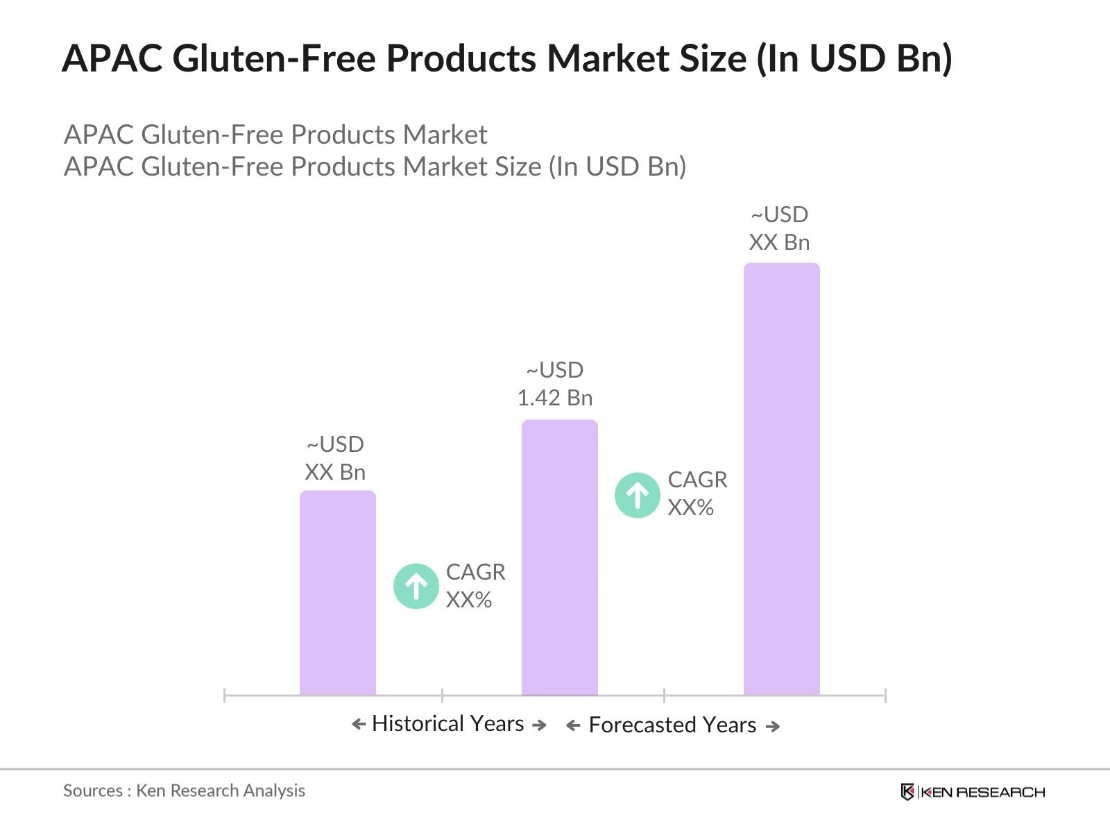
The APAC Gluten-Free Products Market is valued at USD 1.42 billion, driven primarily by health-conscious consumers, rising awareness of gluten intolerance, and expanding product accessibility across major cities.
The APAC Gluten-Free Products Market faces challenges such as high production costs, limited availability of gluten-free ingredients, and consumer misperceptions about the need for gluten-free products, impacting broader market adoption.
Leading companies in the APAC Gluten-Free Products Market include Nestl, General Mills, The Kraft Heinz Company, and Dr. Schr AG, driven by strong distribution networks and extensive product portfolios.
Growth in this APAC Gluten-Free Products Market is propelled by factors like the rise in health consciousness, increasing cases of gluten intolerance, and the availability of gluten-free products in retail chains and online platforms across APAC.

What makes us stand out is that our consultants follows Robust, Refine and Result (RRR) methodology. i.e. Robust for clear definitions, approaches and sanity checking, Refine for differentiating respondents facts and opinions and Result for presenting data with story

We have set a benchmark in the industry by offering our clients with syndicated and customized market research reports featuring coverage of entire market as well as meticulous research and analyst insights.

While we don't replace traditional research, we flip the method upside down. Our dual approach of Top Bottom & Bottom Top ensures quality deliverable by not just verifying company fundamentals but also looking at the sector and macroeconomic factors.

With one step in the future, our research team constantly tries to show you the bigger picture. We help with some of the tough questions you may encounter along the way: How is the industry positioned? Best marketing channel? KPI's of competitors? By aligning every element, we help maximize success.

Our report gives you instant access to the answers and sources that other companies might choose to hide. We elaborate each steps of research methodology we have used and showcase you the sample size to earn your trust.

If you need any support, we are here! We pride ourselves on universe strength, data quality, and quick, friendly, and professional service.