















APAC Hearing Amplifiers Market Outlook to 2030
Region:Asia
Author(s):Shambhavi
Product Code:KROD7024
November 2024
85
About the Report
APAC Hearing Amplifiers Market Overview
- The APAC Hearing Amplifiers market holds a valuation of USD 1.6 billion, based on a five-year historical analysis. This markets growth is driven primarily by the regions aging population and increasing awareness regarding auditory health. With advanced technologies, such as digital and Bluetooth-enabled hearing amplifiers, catering to diverse consumer preferences, demand continues to rise across the region. Furthermore, governments are prioritizing accessible auditory health programs, which have bolstered the adoption rate of hearing amplifiers in both urban and rural regions.
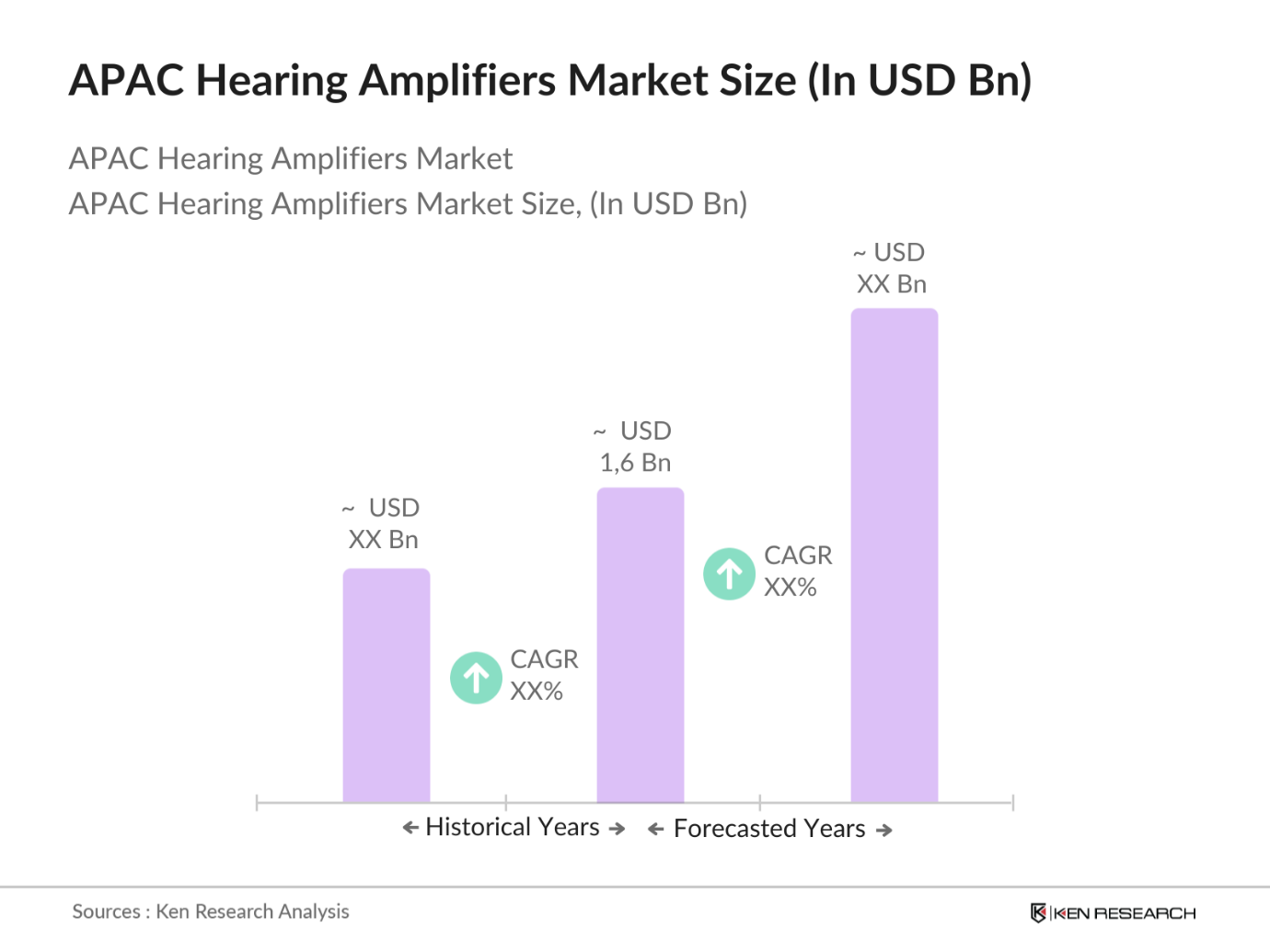
- Japan and China are the dominant players in the APAC Hearing Amplifiers market, largely due to their large elderly population, robust healthcare infrastructure, and high awareness of hearing solutions. Japans established medical technology sector enables innovation and rapid adoption of advanced devices. In China, government-backed health initiatives and awareness programs have enhanced public accessibility, driving substantial demand for hearing amplifiers across metropolitan and rural areas alike.
- With increased environmental awareness, over 30% of U.S. high-net-worth individuals are now opting for luxury EVs to reduce their carbon footprint, according to the Pew Research Center. Wealthier demographics are more inclined to choose sustainable transportation options, especially as these vehicles showcase advanced technology. This environmental shift supports a market preference towards electric luxury vehicles over traditional combustion engine models in the luxury segment.
APAC Hearing Amplifiers Market Segmentation
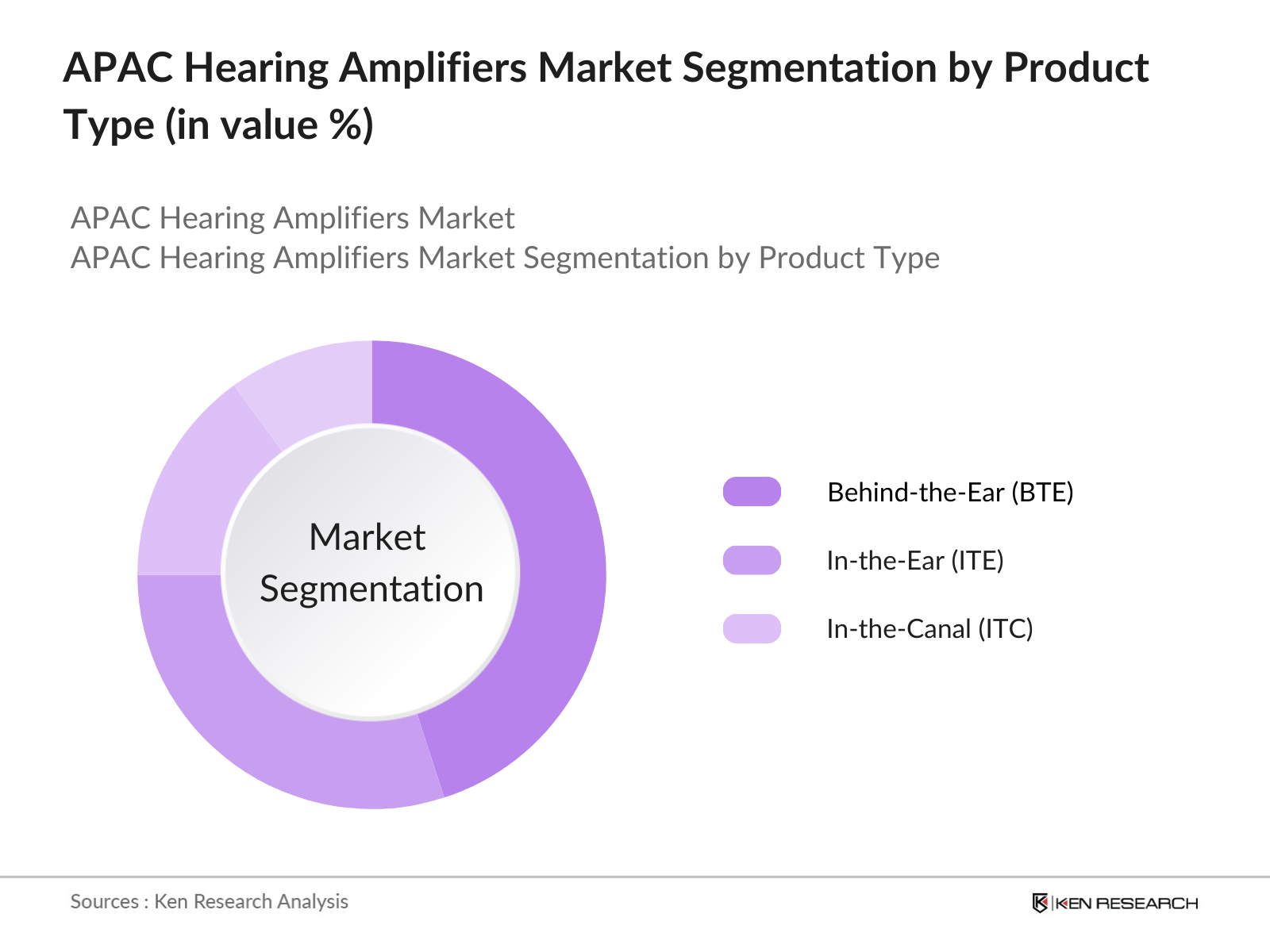
By Product Type: The APAC Hearing Amplifiers market is segmented by product type into In-the-Ear (ITE), Behind-the-Ear (BTE), and In-the-Canal (ITC) devices. Among these, Behind-the-Ear (BTE) amplifiers lead the market. The dominance of BTE amplifiers can be attributed to their ease of use and suitability for all degrees of hearing impairment. With their customizable fit and long battery life, BTE devices have become a preferred choice for the elderly population in urban regions, especially in countries like Japan and South Korea, where auditory health awareness is high.
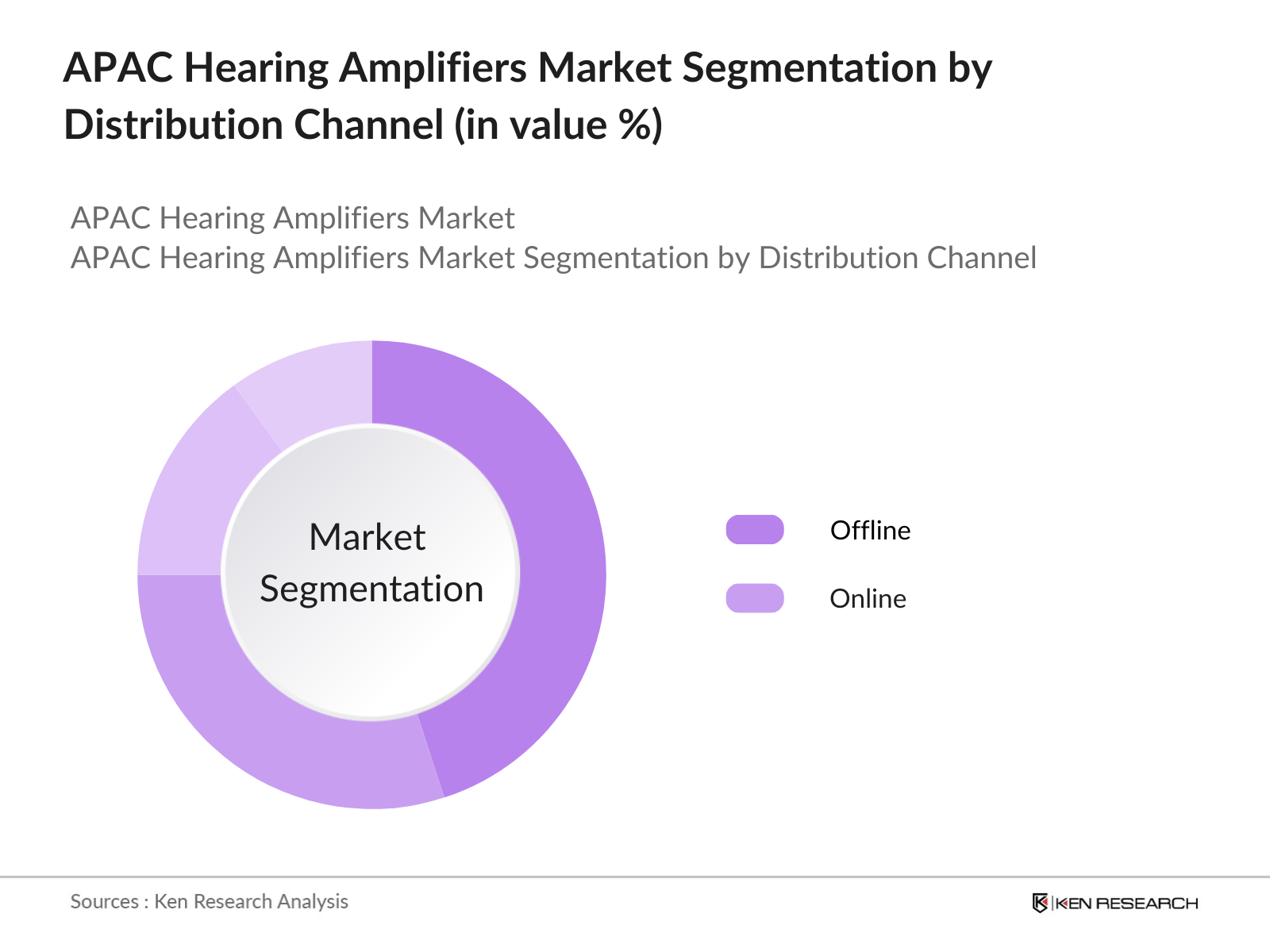
By Distribution Channel: The distribution channels for the APAC Hearing Amplifiers market include Offline and Online avenues. Offline channels, which encompass hospitals, clinics, and retail stores, dominate the market. This is due to the critical role of professional guidance in purchasing decisions for hearing devices, particularly among elderly patients. In markets such as India and Southeast Asia, consumers prefer physical stores for product demonstrations and fitting services, enhancing the popularity of offline sales channels.
APAC Hearing Amplifiers Market Competitive Landscape
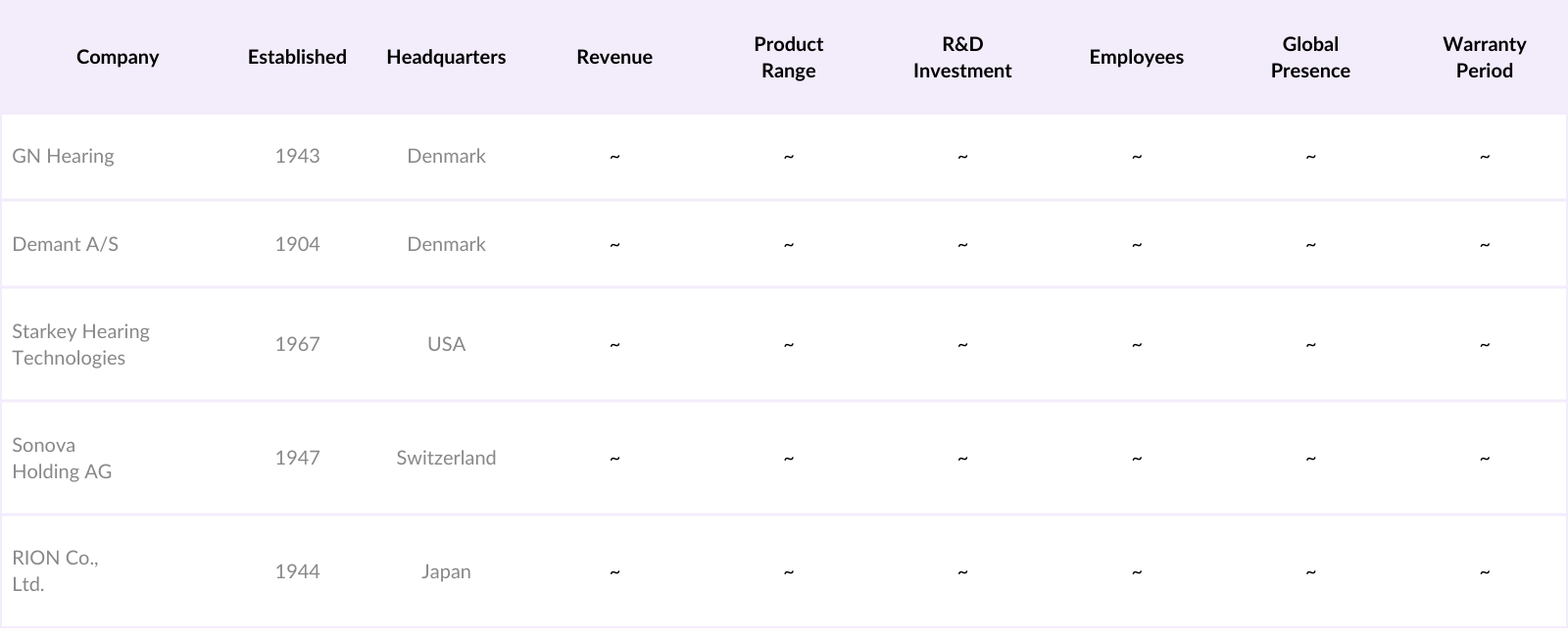
The APAC Hearing Amplifiers market is consolidated, with a few key players holding substantial influence, including GN Hearing and Demant A/S, alongside regional players with strong brand loyalty.
APAC Hearing Amplifiers Market Analysis
Growth Drivers
- Innovation in Battery Technology: The luxury EV market has seen substantial advancements in battery technology, where battery density has increased to enable a longer driving range, now reaching an average of 400 miles per charge in many high-end models, according to data from the U.S. Department of Energy. Additionally, charging times have seen reductions, with some fast-charging stations offering up to 80% charge in just 20 minutes, enhancing convenience for luxury EV owners. These technical improvements cater to the high expectations of luxury consumers seeking performance on par with combustion engines.
- Premium EV Tax Incentives: The U.S. governments tax incentives have significantly supported luxury EV adoption. Eligible high-income buyers of electric vehicles can receive up to $7,500 in federal tax credits, and in states like California, additional incentives of up to $4,500 are offered for luxury EVs. These incentives drive demand, especially among affluent buyers who benefit from financial relief while accessing sustainable vehicle options. These incentives align with national emissions targets and support the shift toward renewable energy-based vehicles.
- Expansion of Charging Infrastructure: The installation of charging points across the U.S. has expanded, with approximately 140,000 public charging points available in 2024, up from 95,000 in recent years, according to data from the U.S. Department of Energy. This increase supports the luxury EV market, offering convenience for long-distance drivers and attracting customers previously deterred by limited charging infrastructure. Cities like Los Angeles and New York lead in charging station availability, providing ease of access for high-end EV users in urban areas.
Market Challenges
- High Production Costs of Advanced EV Components: Advanced EV components, particularly lithium-ion batteries and autonomous driving sensors, contribute significantly to production costs. For instance, the average cost of a luxury EV battery pack remains above $15,000, making these vehicles expensive to manufacture compared to conventional luxury cars. This cost challenge impacts manufacturers aiming to offer high-tech yet affordable options for luxury EV buyers, according to the U.S. Energy Information Administration.
- Limited Resale Market for Luxury EVs: Luxury EVs face a limited resale market due to rapid advancements in EV technology, resulting in faster depreciation. EV resale values drop by approximately 20-30% more than combustion vehicles within the first three years, as per a report by the U.S. Department of Energy. High depreciation rates discourage some buyers from investing in luxury EVs, particularly those interested in shorter-term ownership or those accustomed to higher resale values in the luxury segment.
APAC Hearing Amplifiers Future Outlook
Over the next several years, the APAC Hearing Amplifiers market is positioned for steady growth, driven by factors such as rising auditory health awareness, technological advances in miniaturized and customizable devices, and government initiatives to make healthcare accessible in rural areas. Additionally, the growing trend of direct-to-consumer channels and online platforms in urban settings will continue to shape the distribution dynamics, making hearing amplifiers more accessible to a broader demographic base.
Market Opportunities
- Technological Advancements (Autonomous Driving Features): The luxury EV market benefits from cutting-edge technological advancements, including semi-autonomous and fully autonomous driving features. As of 2024, around 25% of luxury EVs on the U.S. market come with Level 3 autonomy, according to the National Highway Traffic Safety Administration. These advancements not only attract tech-savvy buyers but also increase the appeal of luxury EVs by offering a seamless, high-tech driving experience tailored to affluent consumers seeking premium technology.
- Market Penetration in New Geographic Regions: Luxury EV brands are increasingly targeting high-income consumers in states with emerging demand, like Texas and Florida, where adoption rates are now comparable to early-adopter regions such as California, based on the Department of Transportations regional sales data. Expanding market penetration in these states presents a substantial opportunity to capture a diverse luxury EV consumer base, supported by high levels of disposable income and increasing urbanization.
Scope of the Report
|
Segment |
Sub-Segments |
|
By Product Type |
In-the-Ear (ITE), Behind-the-Ear (BTE), Receiver-in-Canal (RIC), Completely-in-Canal (CIC) |
|
By Distribution Channel |
Online Retail, Medical Stores, Specialty Clinics |
|
By Technology |
Analog Hearing Amplifiers, Digital Hearing Amplifiers |
|
By Application |
Mild Hearing Loss, Moderate Hearing Loss, Severe Hearing Loss |
|
By Country |
China, Japan, South Korea, Australia, India |
Products
Key Target Audience
Investor and Venture Capitalist Firms
Government and Regulatory Bodies (Ministries of Health across APAC)
Hearing Aid Retail Chains
Hospital Chains and Clinics
Healthcare Device Manufacturers
Insurance Providers
Senior Living Facilities
Digital Health Platform Providers
Companies
Players mentioned in the report
GN Hearing
Demant A/S
Starkey Hearing Technologies
Sonova Holding AG
RION Co., Ltd.
Beurer GmbH
Miracle-Ear Inc.
Eargo Inc.
Banglijian Hearing Amplifier
Audien Hearing Inc.
Hearing Life
Bellman & Symfon
WS Audiology
MEDca Hearing Amplifiers
Panasonic Healthcare
Table of Contents
1. APAC Hearing Amplifiers Market Overview
1.1 Definition and Scope
1.2 Market Taxonomy
1.3 Market Growth Rate
1.4 Market Segmentation Overview
2. APAC Hearing Amplifiers Market Size (In USD Mn)
2.1 Historical Market Size
2.2 Year-On-Year Growth Analysis
2.3 Key Market Developments and Milestones
3. APAC Hearing Amplifiers Market Analysis
3.1 Growth Drivers
3.1.1 Aging Population Growth
3.1.2 Rise in Hearing Impairment Cases
3.1.3 Technological Advancements in Amplification Devices
3.1.4 Increased Healthcare Spending
3.2 Market Challenges
3.2.1 High Cost of Advanced Hearing Devices
3.2.2 Social Stigma Related to Hearing Aids
3.2.3 Limited Awareness in Rural Areas
3.3 Opportunities
3.3.1 Demand for Customized Hearing Solutions
3.3.2 Expansion of Online Distribution Channels
3.3.3 Rise in Disposable Income
3.4 Trends
3.4.1 Adoption of AI-Driven Sound Enhancement
3.4.2 Integration with Smartphone Apps
3.4.3 Growing Focus on Compact and Inconspicuous Designs
3.5 Government Regulation
3.5.1 Product Quality and Safety Standards
3.5.2 Accessibility Policies
3.5.3 Support for Elderly Healthcare
3.6 SWOT Analysis
3.7 Stake Ecosystem
3.8 Porters Five Forces
3.9 Competition Ecosystem
4. APAC Hearing Amplifiers Market Segmentation
4.1 By Product Type (In Value %)
4.1.1 In-the-Ear (ITE)
4.1.2 Behind-the-Ear (BTE)
4.1.3 Receiver-in-Canal (RIC)
4.1.4 Completely-in-Canal (CIC)
4.2 By Distribution Channel (In Value %)
4.2.1 Online Retail
4.2.2 Medical Stores
4.2.3 Specialty Clinics
4.3 By Technology (In Value %)
4.3.1 Analog Hearing Amplifiers
4.3.2 Digital Hearing Amplifiers
4.4 By Application (In Value %)
4.4.1 Mild Hearing Loss
4.4.2 Moderate Hearing Loss
4.4.3 Severe Hearing Loss
4.5 By Country (In Value %)
4.5.1 China
4.5.2 Japan
4.5.3 South Korea
4.5.4 Australia
4.5.5 India
5. APAC Hearing Amplifiers Market Competitive Analysis
5.1 Detailed Profiles of Major Companies
5.1.1 Sonova Holding AG
5.1.2 Demant A/S
5.1.3 Starkey Hearing Technologies
5.1.4 WS Audiology
5.1.5 GN Hearing A/S
5.1.6 Amplifon
5.1.7 Cochlear Limited
5.1.8 Audicus
5.1.9 Eargo Inc.
5.1.10 RION Co., Ltd.
5.1.11 MED-EL
5.1.12 iHEAR Medical Inc.
5.1.13 Zounds Hearing
5.1.14 Hearing Life
5.1.15 Benson Hearing
5.2 Cross Comparison Parameters (Market Share, Revenue, Headquarters Location, Product Range, Distribution Channels, Technological Integration, Recent Innovations, Strategic Partnerships)
5.3 Market Share Analysis
5.4 Strategic Initiatives
5.5 Mergers and Acquisitions
5.6 Investment Analysis
5.7 Venture Capital Funding
5.8 Government Grants
5.9 Private Equity Investments
6. APAC Hearing Amplifiers Market Regulatory Framework
6.1 Safety and Certification Standards
6.2 Compliance Requirements
6.3 Import and Export Regulations
7. APAC Hearing Amplifiers Future Market Size (In USD Mn)
7.1 Future Market Size Projections
7.2 Key Factors Driving Future Market Growth
8. APAC Hearing Amplifiers Future Market Segmentation
8.1 By Product Type (In Value %)
8.2 By Distribution Channel (In Value %)
8.3 By Technology (In Value %)
8.4 By Application (In Value %)
8.5 By Country (In Value %)
9. APAC Hearing Amplifiers Market Analysts Recommendations
9.1 TAM/SAM/SOM Analysis
9.2 Customer Cohort Analysis
9.3 Marketing Initiatives
9.4 White Space Opportunity Analysis
Disclaimer
Contact Us
Research Methodology
Step 1: Identification of Key Variables
This stage involves mapping out the APAC Hearing Amplifiers Market ecosystem, utilizing secondary research to understand key stakeholders and identifying influential factors such as population demographics and technological trends that impact market growth.
Step 2: Market Analysis and Data Compilation
Historical data from 2018-2023 is compiled to assess growth trends in hearing amplifier adoption, market penetration across APAC, and technology integration. This stage also involves qualitative analysis to determine market drivers.
Step 3: Hypothesis Validation and Expert Consultation
Developed hypotheses are validated through expert interviews with industry veterans in the APAC hearing health industry. These insights allow us to fine-tune market estimates and validate the demand trends for hearing amplifiers.
Step 4: Synthesis of Research Findings
The final stage involves synthesizing data from the bottom-up approach, combining industry-specific insights with market data to generate a comprehensive, data-backed analysis of the APAC Hearing Amplifiers Market.
Frequently Asked Questions
01. How big is the APAC Hearing Amplifiers Market?
The APAC Hearing Amplifiers Market was valued at USD 1.6 billion based on historical market trends, driven by increasing demand from aging populations and awareness of auditory health solutions.
02. What are the main challenges in the APAC Hearing Amplifiers Market?
Challenges include high costs associated with advanced digital hearing amplifiers and limited availability of auditory health resources in rural areas, which can limit market growth.
03. Who are the major players in the APAC Hearing Amplifiers Market?
Key players include GN Hearing, Demant A/S, Starkey Hearing Technologies, Sonova Holding AG, and RION Co., Ltd., which hold significant influence due to their established brands and extensive distribution networks.
04. What factors are driving growth in the APAC Hearing Amplifiers Market?
The market is driven by a large elderly population, increasing awareness of auditory health, government healthcare initiatives, and advancements in device technology such as Bluetooth-enabled and rechargeable hearing amplifiers.
05. Which distribution channel dominates the APAC Hearing Amplifiers Market?
Offline channels, including hospitals, clinics, and retail stores, dominate due to the necessity for professional assistance in selecting and fitting hearing amplifiers.
06. What are the technological trends in the APAC Hearing Amplifiers Market?
Trends include the integration of smart technology such as Bluetooth connectivity, rechargeable devices, and mobile app support, making hearing amplifiers more convenient for users across all age groups.
Why Buy From Us?

What makes us stand out is that our consultants follows Robust, Refine and Result (RRR) methodology. i.e. Robust for clear definitions, approaches and sanity checking, Refine for differentiating respondents facts and opinions and Result for presenting data with story

We have set a benchmark in the industry by offering our clients with syndicated and customized market research reports featuring coverage of entire market as well as meticulous research and analyst insights.

While we don't replace traditional research, we flip the method upside down. Our dual approach of Top Bottom & Bottom Top ensures quality deliverable by not just verifying company fundamentals but also looking at the sector and macroeconomic factors.

With one step in the future, our research team constantly tries to show you the bigger picture. We help with some of the tough questions you may encounter along the way: How is the industry positioned? Best marketing channel? KPI's of competitors? By aligning every element, we help maximize success.

Our report gives you instant access to the answers and sources that other companies might choose to hide. We elaborate each steps of research methodology we have used and showcase you the sample size to earn your trust.

If you need any support, we are here! We pride ourselves on universe strength, data quality, and quick, friendly, and professional service.