















APAC Mental Wellness Apps Market Analysis outlook to 2030
Region:Asia
Author(s):Shambhavi
Product Code:KROD5932
November 2024
80
About the Report
APAC Mental Wellness Apps Market Overview
- The APAC Mental Wellness Apps market is valued at USD 0.5 billion, based on a five-year historical analysis. This market is primarily driven by a rise in mental health awareness, the increasing penetration of smartphones, and the growing use of digital platforms for mental health management. With the backing of government initiatives that support mental health programs, the demand for mental wellness apps has steadily grown. Furthermore, urbanization and increased access to the internet in rural areas have expanded the reach of these applications across a broader population base.
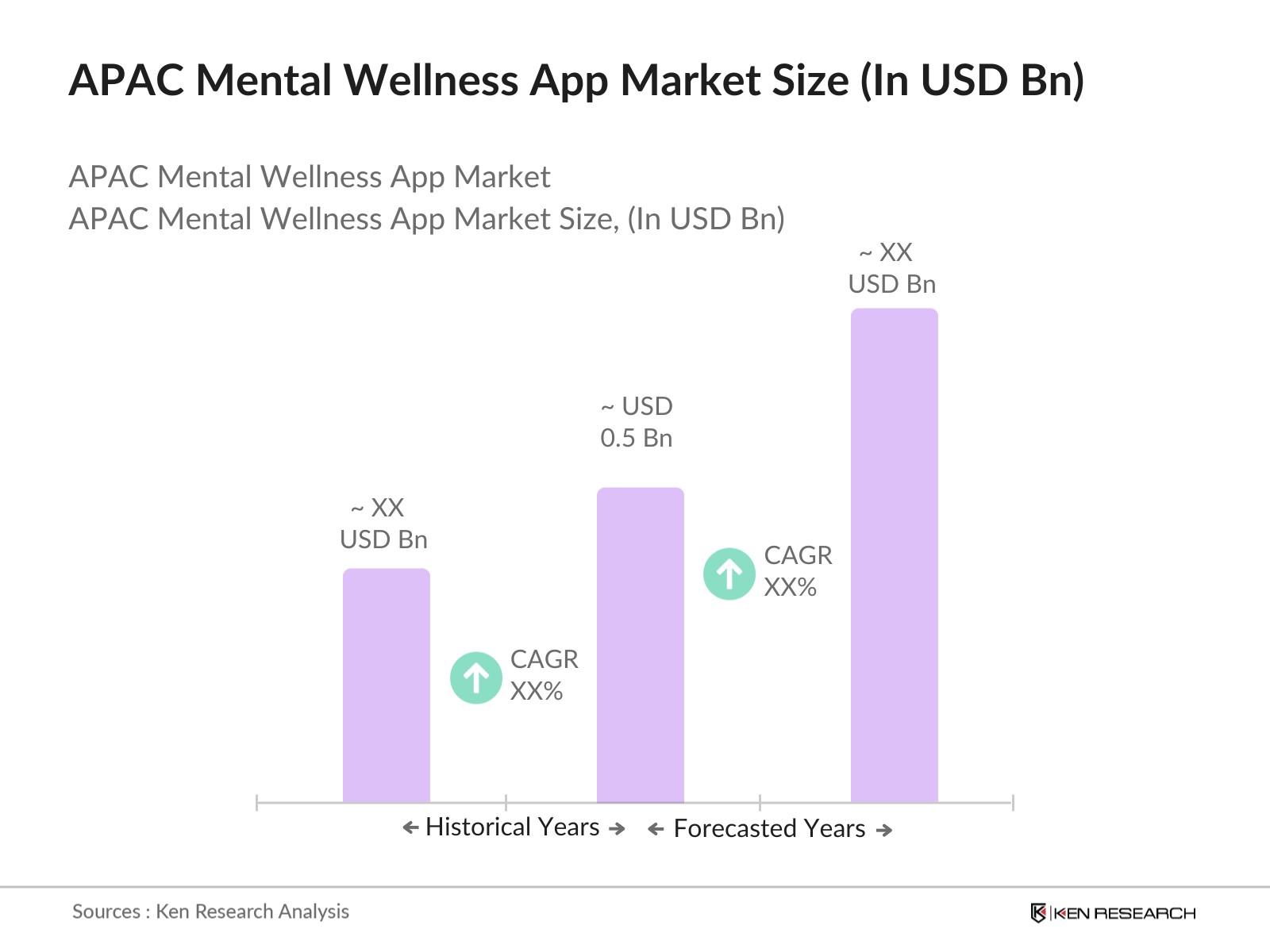
- In APAC, key cities such as Ho Chi Minh City and Hanoi dominate the mental wellness apps market due to their higher population density, tech-savvy demographics, and growing awareness of mental health issues. These cities are home to a significant number of startups and businesses focusing on mental health solutions. The urban middle-class population, in particular, exhibits a higher demand for mental wellness apps, driven by stressful work environments and fast-paced lifestyles that increase the need for stress management tools.
- Governments across APAC are implementing programs to address mental health issues, such as Australias Head to Health digital gateway and Singapore's "Mindful Living" initiatives. In 2024, South Korea allocated an additional $50 million to support digital mental health applications through its Ministry of Health and Welfare. Japans Ministry of Health also increased funding for mental health by 25% since 2022, focusing on technology-based services as part of its broader healthcare reforms. These government-backed initiatives highlight the importance of accessible mental health support in APAC and contribute to the popularity of wellness apps.
APAC Mental Wellness Apps Market Segmentation
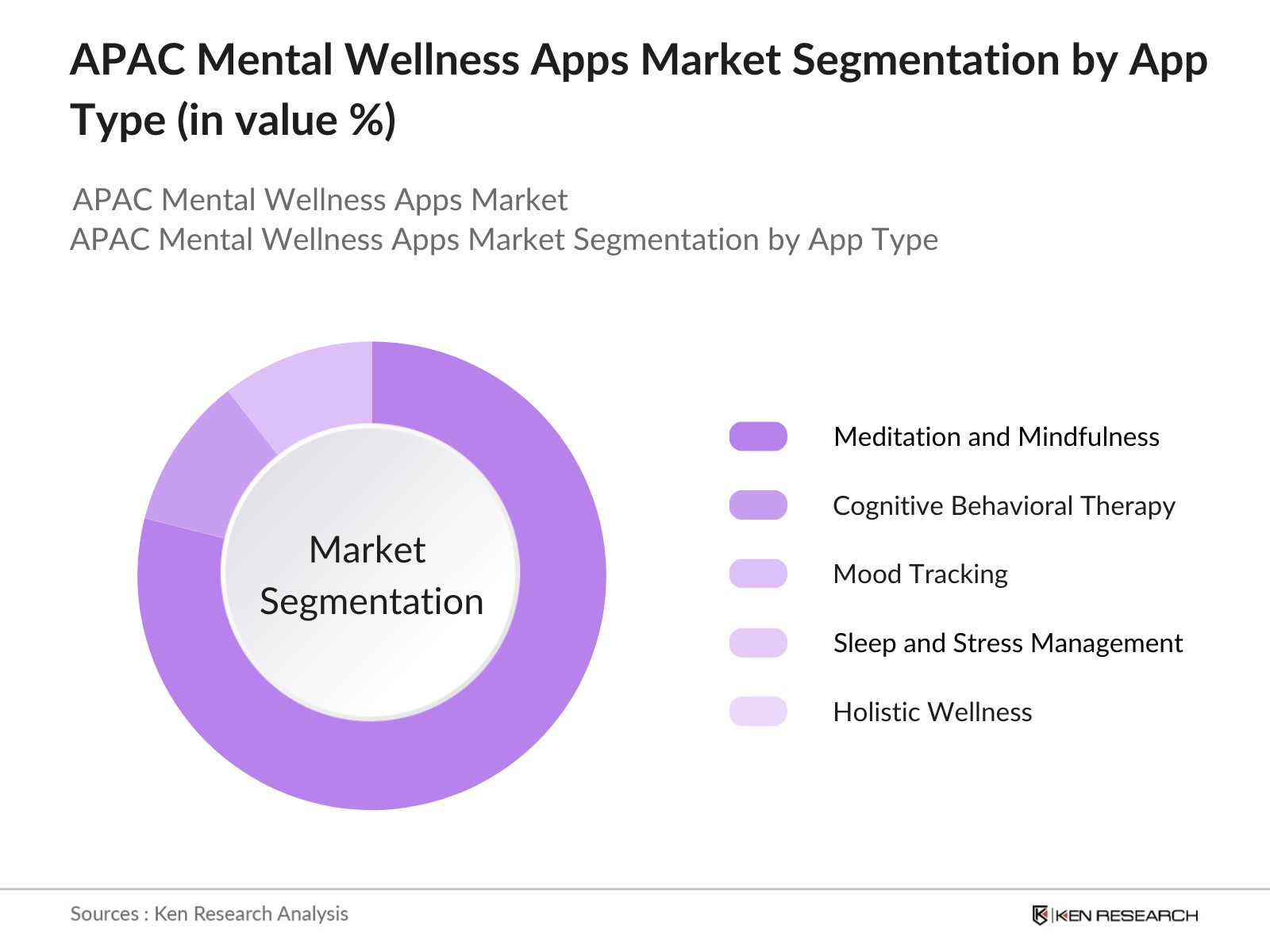
By App Type APACs Mental Wellness Apps market is segmented by app type into meditation and mindfulness apps, cognitive behavioral therapy (CBT) apps, mood tracking apps, sleep and stress management apps, and holistic wellness apps. Recently, meditation and mindfulness apps have held a dominant market share under the segmentation due to their appeal for stress relief and ease of use. Apps such as Calm and Headspace have become popular due to their vast content libraries and personalization features, which help users manage stress, anxiety, and overall mental health.
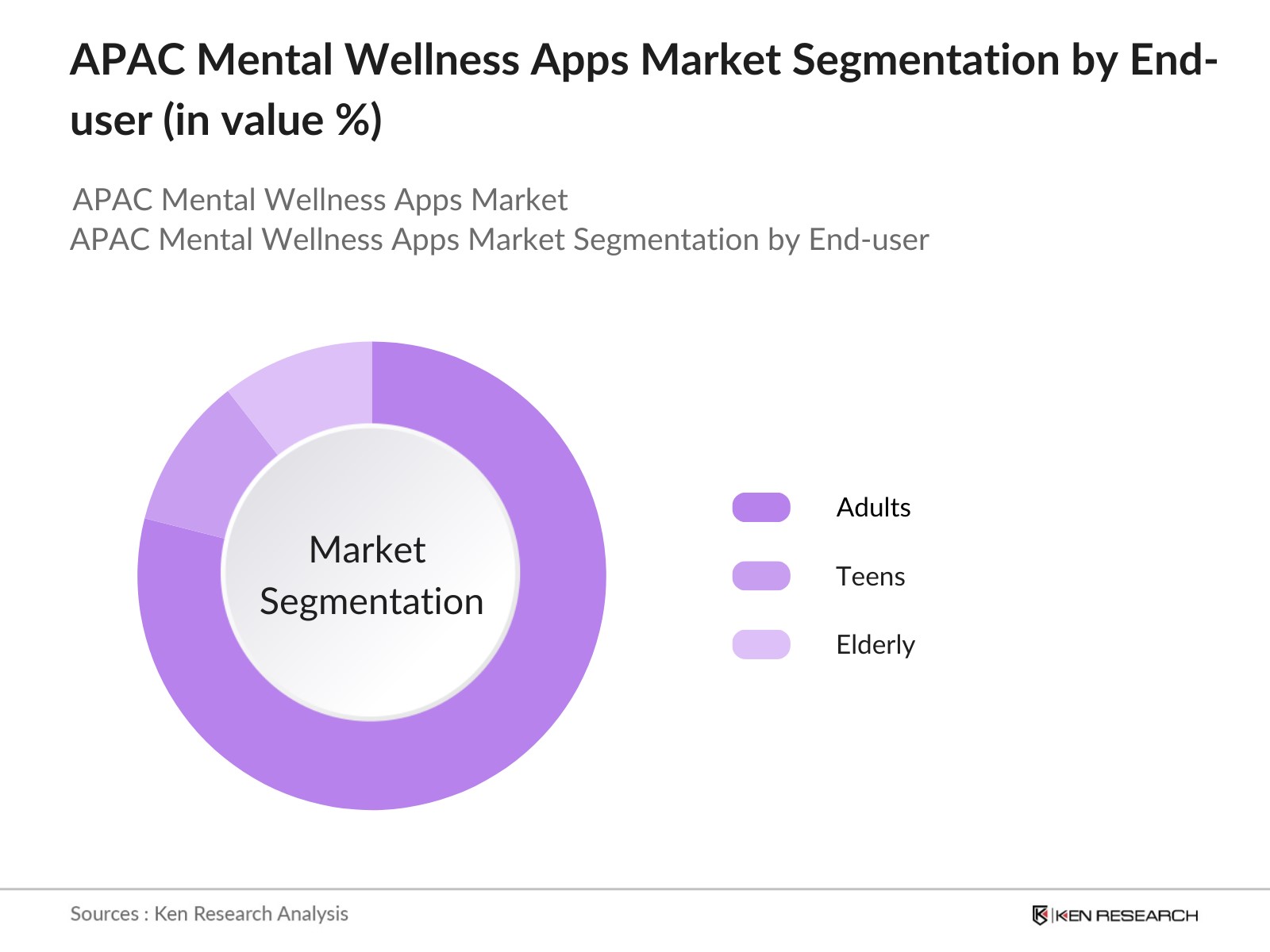
By End-user Demographics: The APAC Mental Wellness Apps market is segmented by end-user demographics into teens, adults, and the elderly. Among these, adults dominate the market share due to their increased awareness of mental health issues and higher purchasing power. Adults between the ages of 25 to 45, particularly those in urban areas, have the highest app usage rate, as they seek tools for managing work-related stress and achieving work-life balance. The rise of corporate wellness programs has also increased app usage in this demographic.
APAC Mental Wellness Apps Market Competitive Landscape
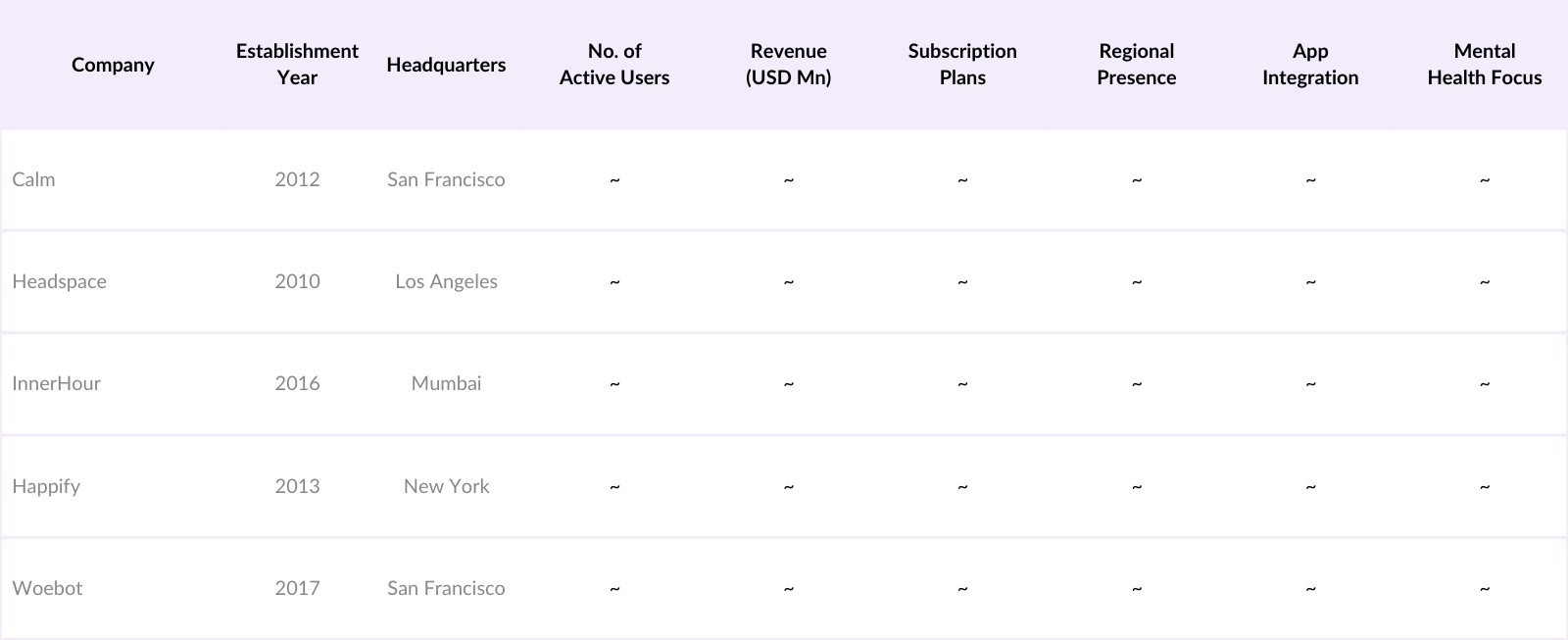
The APAC Mental Wellness Apps market is characterized by the presence of both global and local players. Global players such as Calm and Headspace hold a strong position due to their comprehensive mental wellness solutions, while local developers are gaining traction through culturally relevant content and language support. This market consolidation illustrates the influence of both international and local companies in shaping the mental wellness ecosystem in APAC.
APAC Mental Wellness Apps Market Analysis
Growth Drivers
- Rising Mental Health Awareness: Growing awareness about mental health issues across the Asia-Pacific (APAC) region is demonstrated by an increase in mental health services and helplines provided by governments. In Japan, the Ministry of Health reports that mental health services utilization has risen by over 120,000 cases annually since 2022, reflecting heightened awareness. Additionally, South Korea's mental health support centers saw a 30% increase in calls for assistance in 2023, showcasing a regional demand for mental health resources as awareness grows. The World Bank indicates that APAC governments allocated a higher portion of healthcare budgets to mental health support from 2022-2024, emphasizing this as a priority area
- Increased Smartphone Penetration: With smartphone penetration in APAC surpassing 2 billion active devices in 2024, mental wellness apps are becoming more accessible. Countries like India and Indonesia, where smartphone adoption increased by 100 million and 40 million new users, respectively, between 2022 and 2024, have created fertile ground for digital mental health solutions. Smartphone adoption rates in urban areas of Thailand and the Philippines reached close to 80% in 2023, promoting the adoption of mental wellness applications and making access to support easier in remote locations
- Influence of Cultural Acceptance: The cultural shift in APAC societies towards discussing mental health openly has expanded access to mental wellness services. In 2023, mental health helpline usage increased by 27% across major APAC countries, including Japan and South Korea, reflecting greater public comfort in seeking help. Additionally, in India and China, public awareness campaigns by mental health organizations and community groups have reached over 300 million people since 2022, according to government estimates. This cultural change supports the increased use of mental wellness apps as awareness grows
Market Challenges
- Privacy and Data Security Concerns: Data security has become a major challenge for mental wellness apps in APAC. According to a 2024 survey by the Asia Internet Coalition, over 62% of APAC users express concerns about the privacy of personal health data, especially in digital health applications. The implementation of stricter data regulations in countries like South Korea and Singapore reflects the need for compliance with data security standards, with recent legislation mandating higher data protection standards for health app providers
- Low Digital Health Literacy: Digital health literacy is relatively low in parts of APAC, particularly in rural regions, where internet literacy rates hover around 55-60%. The gap in digital literacy affects user confidence and hinders adoption of mental wellness apps, especially among older populations in nations like Thailand and Indonesia, where literacy rates for digital healthcare tools have only risen by 10% since 2022. In 2024, governments in these countries launched initiatives to boost digital health literacy, but challenges remain
APAC Mental Wellness Apps Market Future Outlook
Over the next five years, the APAC Mental Wellness Apps market is expected to experience significant growth due to increasing mental health awareness, expanding digital health infrastructure, and rising adoption of mobile technologies. The ongoing integration of artificial intelligence, wearable devices, and personalized health data analytics will further enhance app capabilities, driving user engagement and market expansion. As corporate wellness programs and government support for mental health services grow, the demand for accessible, digital mental health solutions is expected to rise across urban and rural areas alike.
Market Opportunities
- Integration with Telehealth Services: Telehealth services in APAC have expanded significantly, with the Ministry of Health reporting 4.5 million telehealth consultations in 2023, a 28% increase from the previous year. This growth represents a promising avenue for mental wellness apps, which can integrate with telehealth platforms to offer mental health consultations alongside physical health services. Such integration increases accessibility and improves mental health support in areas with limited healthcare facilities.
- Growing Corporate Wellness Programs: Corporate wellness programs in APAC are rising, with over 1,500 businesses offering employee mental health resources as part of wellness packages in 2023, as per data from the Vietnam Chamber of Commerce and Industry. These programs provide a significant opportunity for mental wellness apps to cater to corporate clients by offering tailored mental health solutions, fostering a proactive approach to employee well-being.
Scope of the Report
|
Segments |
Sub-segments |
|
App Type |
Meditation and Mindfulness Apps CBT Apps Mood Tracking Apps Sleep and Stress Management Apps Holistic Wellness Apps |
|
Operating System |
iOS Android |
|
Subscription Model |
Freemium Model Paid Model |
|
Application Type |
Self-care Healthcare Professional Assistance Corporate Wellness Adolescent and Youth Programs |
|
End-user Demographics |
Teens Adults Elderly |
Products
Key Target Audience
Mental Health Clinics and Practitioners
Corporate Wellness Program Providers
Investors and Venture Capitalist Firms
Government and Regulatory Bodies (APAC Ministry of Health, National Institute of Mental Health)
Health Insurance Companies
Healthcare Technology Providers
Telemedicine Platforms
Digital Health Startups
Companies
Players mentioned in the report
Calm
Headspace
InnerHour
Woebot
Happify
Sanvello
BetterHelp
MyFitnessPal
Moodfit
Thrive
MindFi
Talkspace
Youper
Jour
Remente
Table of Contents
1. APAC Mental Wellness Apps Market Overview
1.1. Definition and Scope
1.2. Market Taxonomy
1.3. Market Adoption Rate
1.4. Market Segmentation Overview
2. APAC Mental Wellness Apps Market Size (In USD Mn)
2.1. Historical Market Size
2.2. Year-On-Year Growth Analysis
2.3. Key Market Developments and Milestones
3. APAC Mental Wellness Apps Market Analysis
3.1. Growth Drivers
3.1.1. Rising Mental Health Awareness
3.1.2. Increased Smartphone Penetration
3.1.3. Government Mental Health Programs
3.1.4. Influence of Cultural Acceptance
3.2. Market Challenges
3.2.1. Privacy and Data Security Concerns
3.2.2. Low Digital Health Literacy
3.2.3. Fragmentation of Healthcare Systems
3.3. Opportunities
3.3.1. Integration with Telehealth Services
3.3.2. Growing Corporate Wellness Programs
3.3.3. Collaborations with Health Insurance Providers
3.4. Trends
3.4.1. AI-based Personalized Mental Health Solutions
3.4.2. Integration with Wearables and Fitness Trackers
3.4.3. Gamification of Mental Health
3.5. Government Regulations
3.5.1. National Digital Health Strategy
3.5.2. Mental Health Legislation and Policies
3.5.3. Data Privacy and Compliance Standards
3.6. SWOT Analysis
3.7. Stakeholder Ecosystem (Healthcare Providers, App Developers, Patients, Government)
3.8. Porters Five Forces Analysis
3.9. Competition Ecosystem
4. APAC Mental Wellness Apps Market Segmentation
4.1. By App Type (In Value %)
4.1.1. Meditation and Mindfulness Apps
4.1.2. Cognitive Behavioral Therapy (CBT) Apps
4.1.3. Mood Tracking Apps
4.1.4. Sleep and Stress Management Apps
4.1.5. Holistic Wellness Apps
4.2. By Operating System (In Value %)
4.2.1. iOS
4.2.2. Android
4.3. By Subscription Model (In Value %)
4.3.1. Freemium Model
4.3.2. Paid Model
4.4. By Application Type (In Value %)
4.4.1. Self-care
4.4.2. Healthcare Professional Assistance
4.4.3. Corporate Wellness
4.4.4. Adolescent and Youth Programs
4.5. By End-user Demographics (In Value %)
4.5.1. Teens
4.5.2. Adults
4.5.3. Elderly
5. APAC Mental Wellness Apps Market Competitive Analysis
5.1. Detailed Profiles of Major Companies
5.1.1. Calm
5.1.2. Headspace
5.1.3. BetterHelp
5.1.4. Happify
5.1.5. Sanvello
5.1.6. InnerHour
5.1.7. Moodfit
5.1.8. Woebot
5.1.9. MyFitnessPal
5.1.10. Youper
5.1.11. MindFi
5.1.12. Thrive
5.1.13. Talkspace
5.1.14. Jour
5.1.15. Remente
5.2. Cross Comparison Parameters (User Base, Revenue, Subscription Plans, Partnerships, Technological Advancements, Regional Presence, Integration Capabilities, Mental Health Focus Areas)
5.3. Market Share Analysis
5.4. Strategic Initiatives
5.5. Mergers and Acquisitions
5.6. Investment Analysis
5.7. Venture Capital Funding
5.8. Government Grants and Support
5.9. Private Equity Investments
6. APAC Mental Wellness Apps Market Regulatory Framework
6.1. Data Protection Regulations
6.2. Health Information Sharing Compliance
6.3. Certification and Accreditation Standards
7. APAC Mental Wellness Apps Market Analysts Recommendations
7.1. TAM/SAM/SOM Analysis
7.2. Customer Segment Analysis
7.3. Market Penetration Strategies
7.4. Growth Opportunities and White Space Identification
Disclaimer
Contact Us
Research Methodology
Step 1: Identification of Key Variables
The initial step involves mapping key stakeholders in the APAC Mental Wellness Apps market, including app developers, healthcare providers, and regulatory bodies. This process includes reviewing secondary data from industry reports, government publications, and proprietary databases to identify key variables such as user base, revenue, and app adoption trends.
Step 2: Market Analysis and Construction
In this step, historical data on app usage, revenue generation, and mental health trends are compiled. The data is analyzed to understand the impact of mobile penetration, mental health awareness, and user behavior on market performance. A detailed analysis of app performance metrics such as session length, retention rate, and user feedback is conducted.
Step 3: Hypothesis Validation and Expert Consultation
Expert interviews with mental health professionals, app developers, and corporate wellness program managers are conducted to validate market hypotheses. These insights provide clarity on user preferences, subscription model success, and app engagement rates, ensuring the accuracy of market estimates.
Step 4: Research Synthesis and Final Output
The final phase includes synthesizing insights from expert consultations, secondary data analysis, and proprietary databases. Detailed profiles of app usage trends, mental health app development patterns, and corporate wellness initiatives are generated to create a holistic view of the APAC Mental Wellness Apps market.
Frequently Asked Questions
01. How big is the APAC Mental Wellness Apps market?
The APAC Mental Wellness Apps market is valued at USD 0.5 Billion, driven by the increasing awareness of mental health issues and the growing use of digital health platforms.
02. What are the key challenges in the APAC Mental Wellness Apps market?
Challenges include concerns about data privacy and security, as well as low digital health literacy in rural areas. Additionally, the fragmentation of healthcare systems makes it difficult for app developers to provide standardized care across regions.
03. Who are the major players in the APAC Mental Wellness Apps market?
Key players include Calm, Headspace, InnerHour, Woebot, and Happify. These companies dominate the market due to their diverse content offerings, ease of use, and effective user engagement strategies.
04. What are the growth drivers of the APAC Mental Wellness Apps market?
The market is driven by increasing mental health awareness, higher smartphone penetration, and government support for digital health initiatives. The expansion of corporate wellness programs also boosts app usage among working professionals.
05. What trends are shaping the APAC Mental Wellness Apps market?
Key trends include the integration of AI-based personalized mental health solutions, the adoption of wearable devices for mental health tracking, and the rise of telehealth services that integrate mental wellness apps into broader healthcare platforms.
Why Buy From Us?

What makes us stand out is that our consultants follows Robust, Refine and Result (RRR) methodology. i.e. Robust for clear definitions, approaches and sanity checking, Refine for differentiating respondents facts and opinions and Result for presenting data with story

We have set a benchmark in the industry by offering our clients with syndicated and customized market research reports featuring coverage of entire market as well as meticulous research and analyst insights.

While we don't replace traditional research, we flip the method upside down. Our dual approach of Top Bottom & Bottom Top ensures quality deliverable by not just verifying company fundamentals but also looking at the sector and macroeconomic factors.

With one step in the future, our research team constantly tries to show you the bigger picture. We help with some of the tough questions you may encounter along the way: How is the industry positioned? Best marketing channel? KPI's of competitors? By aligning every element, we help maximize success.

Our report gives you instant access to the answers and sources that other companies might choose to hide. We elaborate each steps of research methodology we have used and showcase you the sample size to earn your trust.

If you need any support, we are here! We pride ourselves on universe strength, data quality, and quick, friendly, and professional service.