
APAC Permanent Magnet Market Outlook to 2030
Region:Bangladesh
Author(s):Paribhasha Tiwari
Product Code:KROD3028
Region:Bangladesh
Author(s):Paribhasha Tiwari
Product Code:KROD3028
October 2024
90
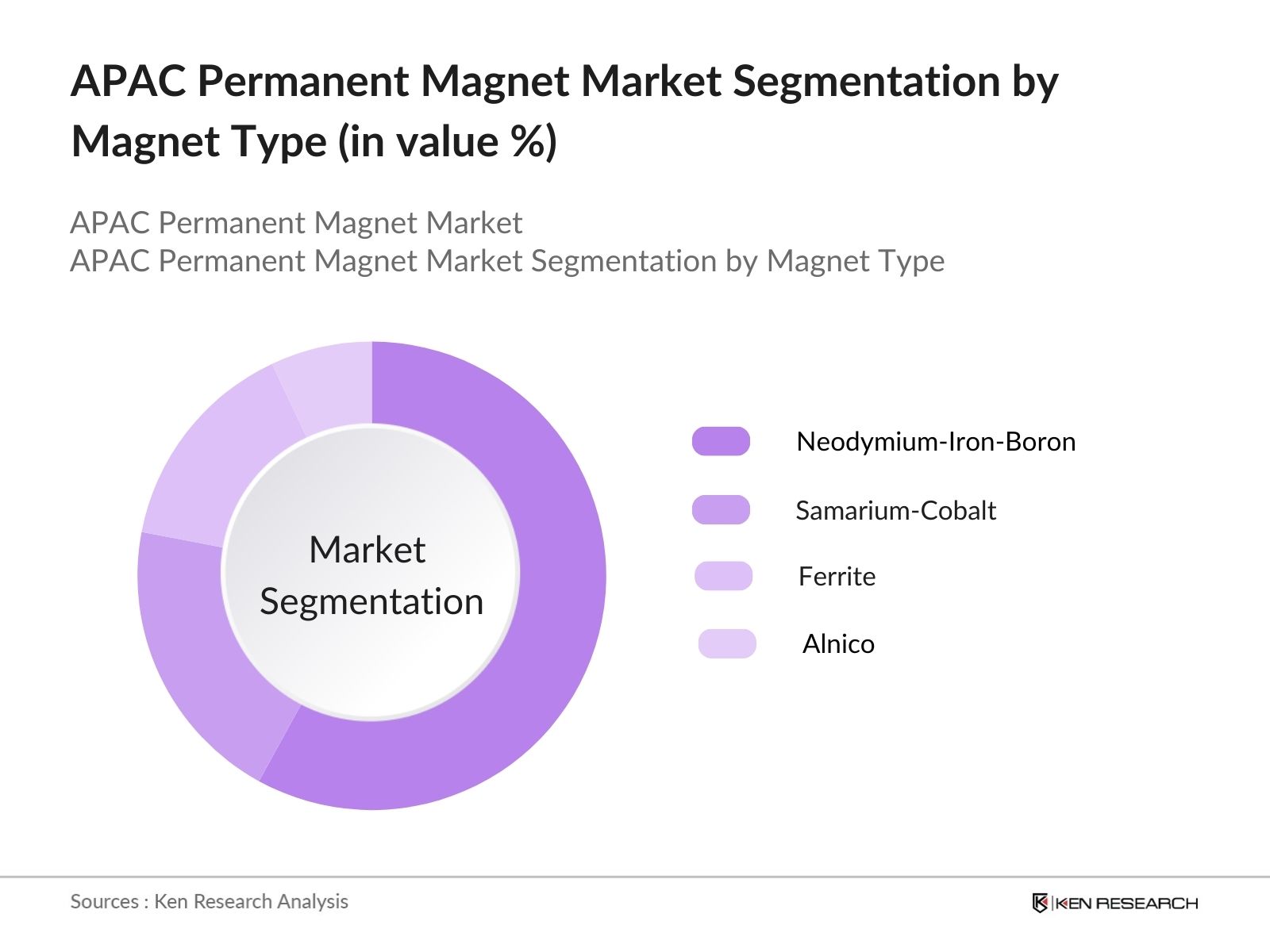
By Magnet Type: The APAC Permanent Magnet Market is segmented by magnet type into Neodymium-Iron-Boron (NdFeB), Samarium-Cobalt (SmCo), Ferrite, and Alnico magnets. Neodymium-Iron-Boron magnets hold the dominant market share in this segment due to their superior magnetic strength and widespread application across industries such as automotive and consumer electronics. The high demand for NdFeB magnets in electric vehicles (EVs) and wind turbines is driven by their strong magnetic fields, which contribute to energy efficiency and reduced environmental impact.
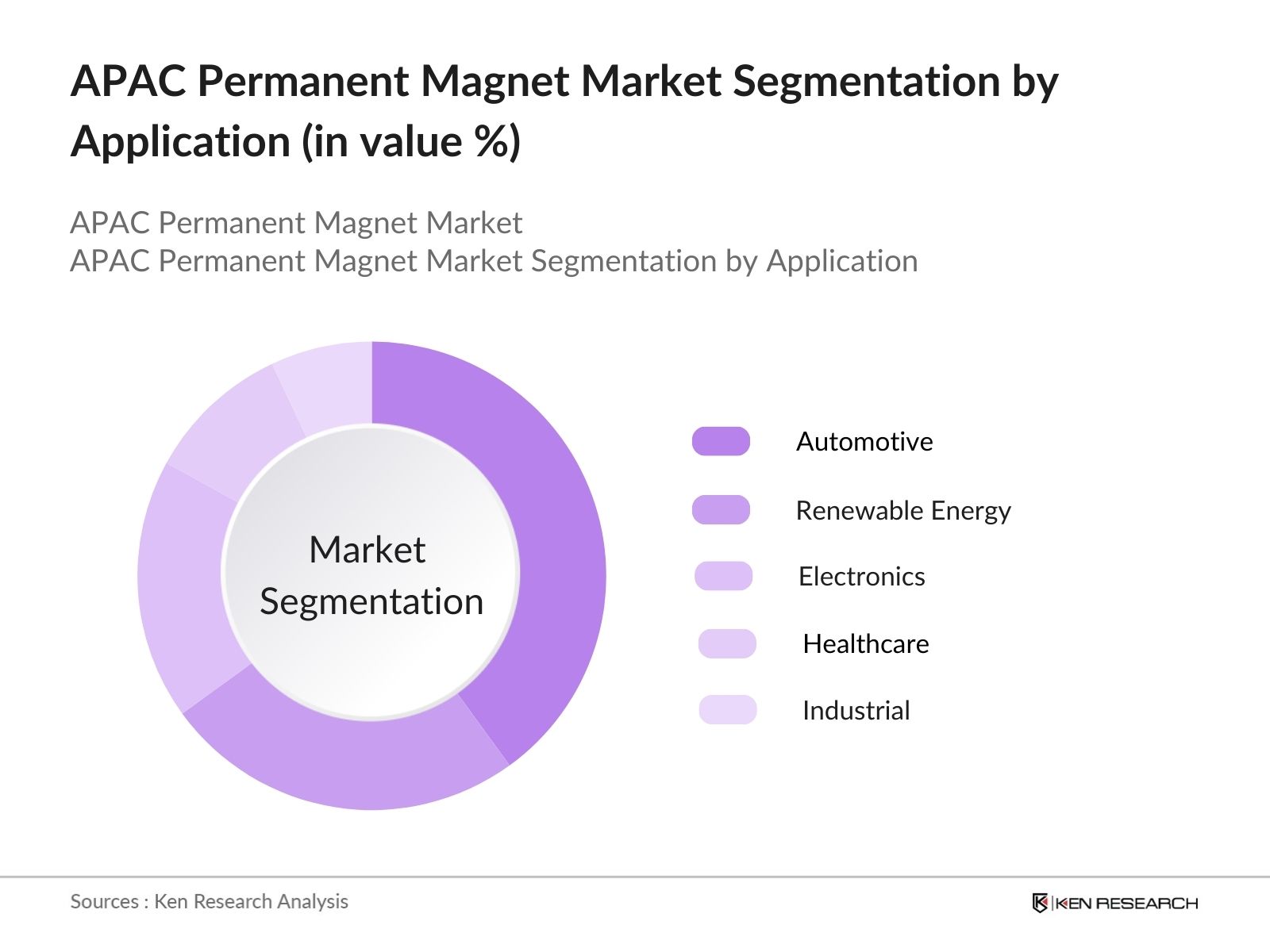
By Application: The APAC Permanent Magnet Market is also segmented by application into Automotive, Renewable Energy, Electronics, Healthcare, and Industrial. Automotive applications have the largest market share, driven by the rising production of electric and hybrid vehicles. Permanent magnets are crucial components in electric vehicle motors, helping improve energy efficiency and reduce weight. As governments across APAC regions continue to promote eco-friendly transport solutions, the automotive segments demand for permanent magnets is expected to remain strong.
The APAC Permanent Magnet Market is characterized by intense competition, with key players dominating the industry due to their control over raw materials, strong manufacturing capabilities, and innovations in magnet technology. Companies such as Hitachi Metals Ltd. and Shin-Etsu Chemical Co., Ltd. have established a strong foothold in the market, leveraging their expertise in high-performance magnet production and extensive R&D efforts.
|
Company Name |
Establishment Year |
Headquarters |
Magnet Production Capacity |
Key Markets |
Major Products |
Patents Held |
Global Presence |
R&D Investments |
Number of Employees |
|
Hitachi Metals Ltd. |
1956 |
Tokyo, Japan |
|||||||
|
Shin-Etsu Chemical Co., Ltd. |
1926 |
Tokyo, Japan |
|||||||
|
TDK Corporation |
1935 |
Tokyo, Japan |
|||||||
|
Advanced Technology & Materials |
1984 |
Beijing, China |
|||||||
|
Daido Steel Co., Ltd. |
1916 |
Nagoya, Japan |
Over the next five years, the APAC Permanent Magnet Market is expected to witness robust growth, driven by increasing demand for energy-efficient solutions across sectors like automotive, renewable energy, and electronics. The transition to electric vehicles and advancements in renewable energy technology are anticipated to significantly boost demand for high-performance magnets such as NdFeB and SmCo. Additionally, the focus on reducing dependency on traditional fuel sources is creating new opportunities for magnet manufacturers in the wind energy and electric vehicle segments.
|
Magnet Type |
Neodymium-Iron-Boron (NdFeB) Samarium-Cobalt (SmCo) Ferrite Alnico |
|
Application |
Automotive Renewable Energy Electronics Healthcare Industrial |
|
End-User Industry |
Automotive Aerospace Consumer Electronics Healthcare |
|
Technology |
Bonded Magnets Sintered Magnets Injection Molded Magnets |
|
Region |
China Japan South Korea India Southeast Asia |
1.1 Definition and Scope
1.2 Market Taxonomy
1.3 Market Growth Rate
1.4 Market Segmentation Overview
2.1 Historical Market Size
2.2 Year-On-Year Growth Analysis
2.3 Key Market Developments and Milestones
3.1 Growth Drivers
3.1.1 Rise in Electric Vehicle (EV) Adoption
3.1.2 Increase in Renewable Energy Projects
3.1.3 Expansion in Consumer Electronics
3.1.4 Government Initiatives in Industrialization (Policy Changes)
3.2 Market Challenges
3.2.1 Volatility in Raw Material Prices (Neodymium, Samarium)
3.2.2 Environmental Concerns Linked to Rare Earth Mining
3.2.3 Geopolitical Supply Chain Risks
3.3 Opportunities
3.3.1 Technological Advancements in Manufacturing Processes
3.3.2 Increased Investment in Wind Power and Solar Power Sectors
3.3.3 Potential Expansion in Medical Devices (Magnetic Resonance Imaging)
3.4 Trends
3.4.1 Miniaturization in Electronics (Reduction in Size, Weight, and Cost)
3.4.2 Focus on Recycling and Sustainable Sourcing of Rare Earth Metals
3.4.3 Rise of Permanent Magnet Use in Robotics and Automation
3.5 Government Regulations
3.5.1 Environmental Regulations for Rare Earth Extraction
3.5.2 Subsidies for Renewable Energy Projects
3.5.3 Trade Tariffs and Export Policies (Rare Earth Exports)
3.5.4 National Electric Mobility Missions
3.6 SWOT Analysis
3.7 Stakeholder Ecosystem (Manufacturers, Suppliers, End Users)
3.8 Porters Five Forces
3.9 Competitive Landscape
4.2 By Application (In Value %)
4.2.1 Automotive
4.2.2 Renewable Energy (Wind, Solar)
4.2.3 Electronics (Consumer Devices, Wearables)
4.2.4 Healthcare (Medical Devices)
4.2.5 Industrial (Motors, Generators)
4.3 By End-User Industry (In Value %)
4.3.1 Automotive
4.3.2 Aerospace
4.3.3 Consumer Electronics
4.3.4 Healthcare
4.4 By Technology (In Value %)
4.4.1 Bonded Magnets
4.4.2 Sintered Magnets
4.4.3 Injection Molded Magnets
4.5 By Region (In Value %)
4.5.1 China
4.5.2 Japan
4.5.3 South Korea
4.5.4 India
4.5.5 Southeast Asia
5.2 Cross Comparison Parameters (Magnet Production Capacity, Headquarters, Inception Year, Revenue, R&D Spending, Geographical Presence, Market Share, Key Patents)
5.3 Market Share Analysis
5.4 Strategic Initiatives
5.5 Mergers and Acquisitions
5.6 Investment Analysis
5.7 Venture Capital Funding
5.8 Government Grants
5.9 Private Equity Investments
6.1 Environmental Standards for Mining Rare Earth Elements
6.2 Compliance Requirements for Magnet Manufacturing
6.3 Certification Processes for Magnetic Components
7.1 Future Market Size Projections
7.2 Key Factors Driving Future Market Growth
8.1 By Magnet Type (In Value %)
8.2 By Application (In Value %)
8.3 By End-User Industry (In Value %)
8.4 By Technology (In Value %)
8.5 By Region (In Value %)
9.1 TAM/SAM/SOM Analysis
9.2 Customer Cohort Analysis
9.3 Marketing Initiatives
9.4 White Space Opportunity Analysis
The initial step involves creating a comprehensive ecosystem map of stakeholders in the APAC Permanent Magnet Market. Through desk research utilizing secondary and proprietary databases, the key factors influencing market dynamicssuch as raw material availability, regulatory changes, and technological advancementsare identified and defined.
This phase focuses on the collection and analysis of historical market data. Metrics such as production volume, demand fluctuations, and revenue streams are thoroughly examined to understand the market's past performance. Additionally, a thorough evaluation of the competitive landscape is conducted to ensure the accuracy of projections.
Hypotheses regarding future market developments are validated by consulting industry experts through structured interviews. These consultations provide insights into emerging trends, operational challenges, and future growth potential, which are crucial for refining market forecasts.
The final phase involves compiling and synthesizing all collected data, validating it through bottom-up analysis and expert consultation. This ensures that the market insights provided in the final report are comprehensive, accurate, and reliable.
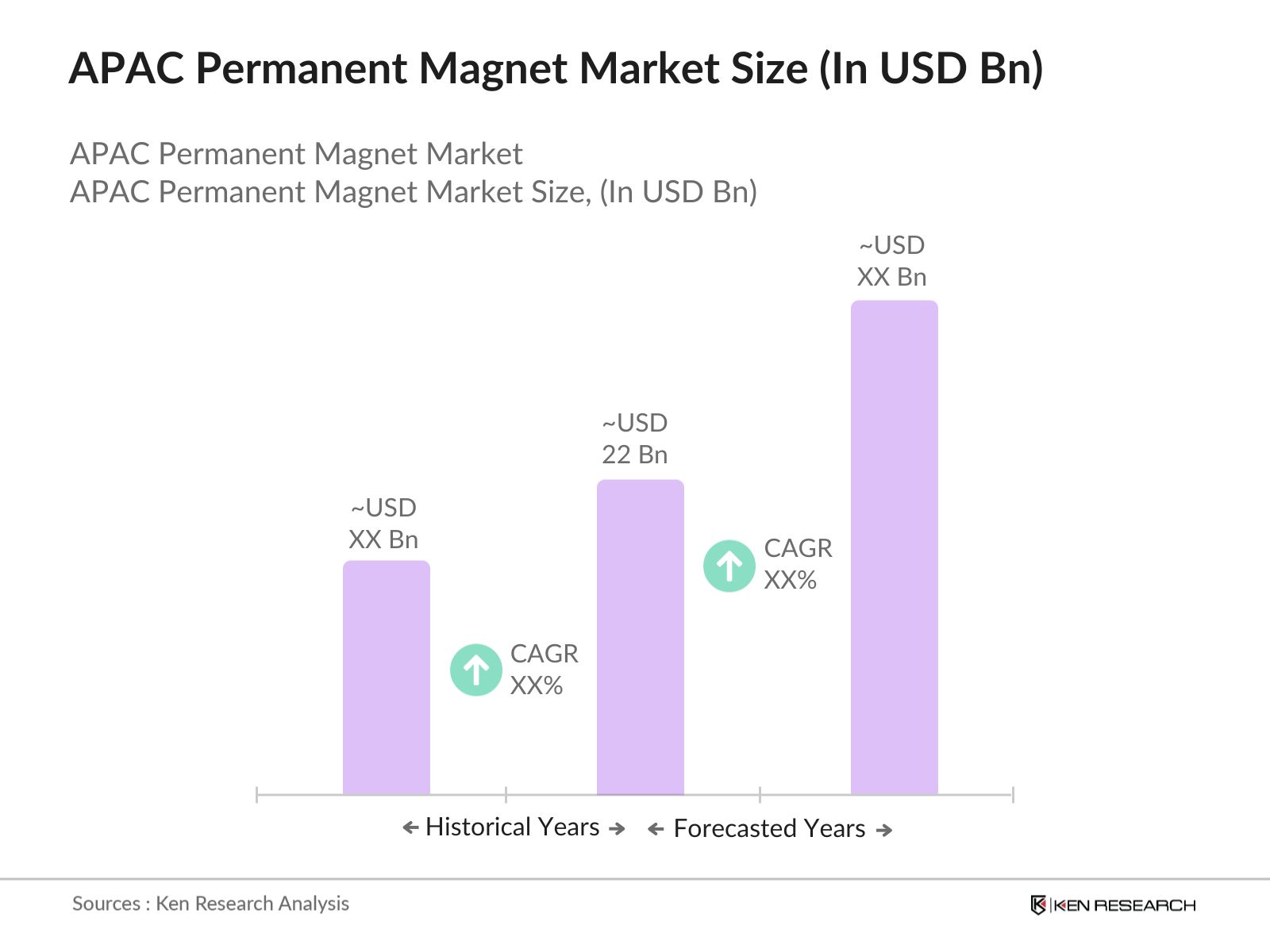
The APAC Permanent Magnet Market is valued at USD 22 billion, driven by increased demand across industries such as automotive, renewable energy, and consumer electronics.
Challenges include raw material price volatility, geopolitical risks affecting supply chains, and environmental concerns related to rare earth element extraction.
Key players include Hitachi Metals Ltd., Shin-Etsu Chemical Co., Ltd., TDK Corporation, Advanced Technology & Materials Co., Ltd., and Daido Steel Co., Ltd.
Growth is primarily driven by increasing electric vehicle production, advancements in renewable energy technologies, and the growing demand for energy-efficient electronic devices.

What makes us stand out is that our consultants follows Robust, Refine and Result (RRR) methodology. i.e. Robust for clear definitions, approaches and sanity checking, Refine for differentiating respondents facts and opinions and Result for presenting data with story

We have set a benchmark in the industry by offering our clients with syndicated and customized market research reports featuring coverage of entire market as well as meticulous research and analyst insights.

While we don't replace traditional research, we flip the method upside down. Our dual approach of Top Bottom & Bottom Top ensures quality deliverable by not just verifying company fundamentals but also looking at the sector and macroeconomic factors.

With one step in the future, our research team constantly tries to show you the bigger picture. We help with some of the tough questions you may encounter along the way: How is the industry positioned? Best marketing channel? KPI's of competitors? By aligning every element, we help maximize success.

Our report gives you instant access to the answers and sources that other companies might choose to hide. We elaborate each steps of research methodology we have used and showcase you the sample size to earn your trust.

If you need any support, we are here! We pride ourselves on universe strength, data quality, and quick, friendly, and professional service.