
APAC Plastic Recycling Market Outlook to 2030
Region:Afganistan
Author(s):Shubham Kashyap
Product Code:KROD9556
Region:Afganistan
Author(s):Shubham Kashyap
Product Code:KROD9556
December 2024
80
The APAC plastic recycling market is highly competitive, with several key players dominating through extensive operational networks, technological innovations, and strategic partnerships. Major companies leverage their brand recognition and advanced recycling capabilities to maintain their market leadership.
The APAC plastic recycling market is expected to exhibit steady growth, driven by increasing awareness of environmental issues and regulatory pressure to manage plastic waste responsibly. The region's commitment to sustainability is fostering investments in recycling technologies, which will support the market's growth trajectory and position it favorably for long-term expansion.
|
By Resin Type |
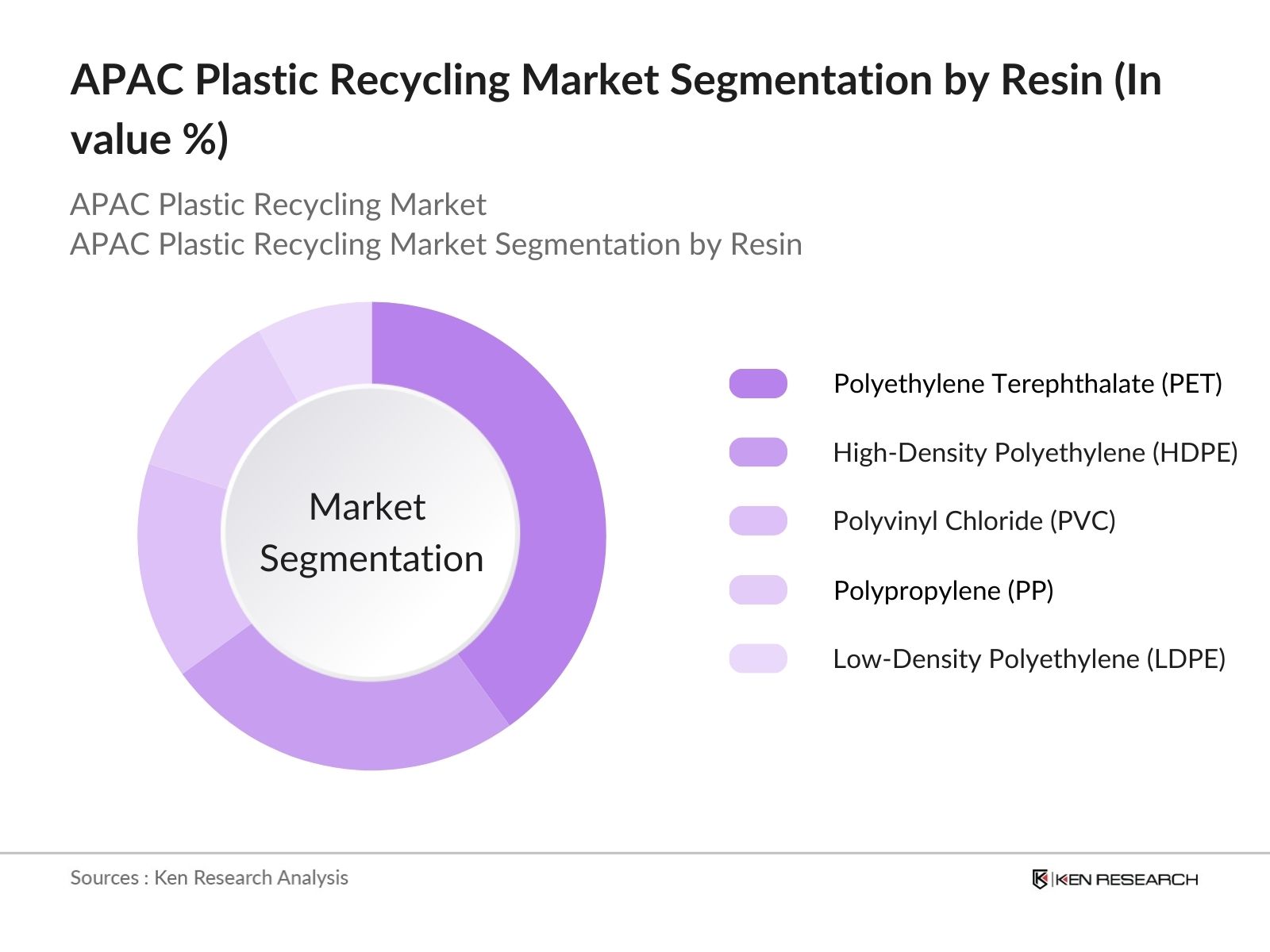
Polyethylene Terephthalate (PET) |
|
By Recycling Process |
MechanicalRecycling |
|
By Sourceof Collection |
IndustrialWaste |
|
By Application |
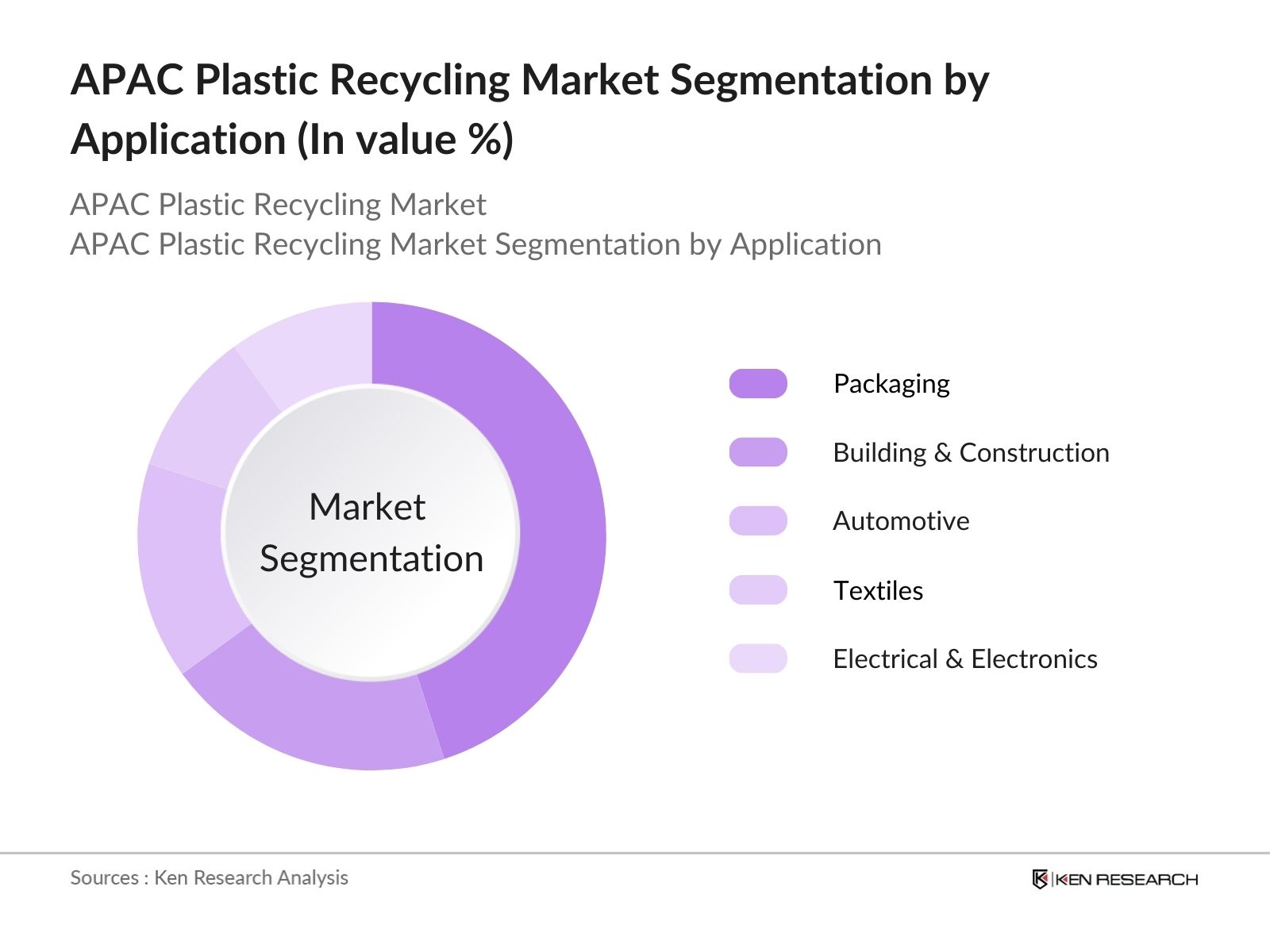
Packaging |
|
By Region |
China |
1.1 Definition and Scope
1.2 Market Taxonomy
1.3 Market Growth Rate
1.4 Market Segmentation Overview
2.1 Historical Market Size
2.2 Year-On-Year Growth Analysis
2.3 Key Market Developments and Milestones
3.1 Growth Drivers
3.1.1 Increasing Plastic Consumption (Metric: Consumption Rate)
3.1.2 Government Regulations (Metric: Regulatory Standards)
3.1.3 Technological Advancements (Metric: R&D Investment)
3.1.4 Environmental Awareness (Metric: Recycling Rate)
3.2 Market Challenges
3.2.1 High Processing Costs (Metric: Cost Structure)
3.2.2 Quality Control Issues (Metric: Product Quality Standards)
3.2.3 Infrastructure Gaps (Metric: Facility Coverage)
3.3 Opportunities
3.3.1 Expansion of Recycling Facilities (Metric: Facility Expansion Rate)
3.3.2 Innovation in Recycling Techniques (Metric: Patents Filed)
3.3.3 Partnerships with Waste Management Companies (Metric: Partnership Growth)
3.4 Trends
3.4.1 Use of Artificial Intelligence in Sorting (Metric: Technology Adoption Rate)
3.4.2 Focus on Circular Economy (Metric: Circular Economy Index)
3.4.3 Increased Demand for Recycled Plastics (Metric: Market Penetration Rate)
3.5 Government Regulations
3.5.1 Recycling Mandates (Metric: Compliance Rate)
3.5.2 Import/Export Regulations (Metric: Trade Regulations)
3.5.3 Subsidies for Recycling Initiatives (Metric: Subsidy Allocation)
3.6 SWOT Analysis
3.7 Stakeholder Ecosystem
3.8 Porters Five Forces Analysis
3.9 Competitive Landscape
4.1 By Resin Type (In Value %)
4.1.1 Polyethylene Terephthalate (PET)
4.1.2 High-Density Polyethylene (HDPE)
4.1.3 Polyvinyl Chloride (PVC)
4.1.4 Polypropylene (PP)
4.1.5 Low-Density Polyethylene (LDPE)
4.2 By Recycling Process (In Value %)
4.2.1 Mechanical Recycling
4.2.2 Chemical Recycling
4.2.3 Energy Recovery
4.3 By Source of Collection (In Value %)
4.3.1 Industrial Waste
4.3.2 Consumer Waste
4.3.3 Institutional Waste
4.4 By Application (In Value %)
4.4.1 Packaging
4.4.2 Building & Construction
4.4.3 Automotive
4.4.4 Textiles
4.4.5 Electrical & Electronics
4.5 By Region (In Value %)
4.5.1 East Asia
4.5.2 Southeast Asia
4.5.3 South Asia
4.5.4 Oceania
5.1 Detailed Profiles of Major Companies
5.1.1 Veolia
5.1.2 Suez
5.1.3 Indorama Ventures
5.1.4 Waste Management Inc.
5.1.5 China Recycling Development Corp.
5.1.6 Polyquest Inc.
5.1.7 CarbonLite
5.1.8 Biffa plc
5.1.9 Far Eastern New Century Corp.
5.1.10 Cleanaway
5.1.11 Borealis AG
5.1.12 Coca-Cola Recycling
5.1.13 Alpek Polyester
5.1.14 Republic Services
5.1.15 Loop Industries
5.2 Cross Comparison Parameters (No. of Employees, Headquarters, Revenue, Recycling Capacity, Market Presence, Facility Locations, Technology Innovation, Product Quality)
5.3 Market Share Analysis
5.4 Strategic Initiatives
5.5 Mergers & Acquisitions
5.6 Investment Analysis
5.7 Venture Capital Funding
5.8 Government Grants
5.9 Private Equity Investments
6.1 Environmental Standards
6.2 Compliance Requirements
6.3 Certification Processes
7.1 Future Market Size Projections
7.2 Key Factors Driving Future Market Growth
8.1 By Resin Type (In Value %)
8.2 By Recycling Process (In Value %)
8.3 By Source of Collection (In Value %)
8.4 By Application (In Value %)
8.5 By Region (In Value %)
9.1 TAM/SAM/SOM Analysis
9.2 Customer Cohort Analysis
9.3 Marketing Initiatives
9.4 White Space Opportunity Analysis
Disclaimer Contact Us
In the initial stage, we constructed an ecosystem map encompassing all major stakeholders within the APAC Plastic Recycling Market. Using extensive desk research, we identified and defined critical variables influencing market dynamics, such as regulatory frameworks, industry partnerships, and technological developments.
This phase involved gathering historical data on the APAC Plastic Recycling Market to assess market penetration, sector distribution, and revenue generation. We analyzed recycling facility locations, processing capacities, and collected secondary data on plastic waste volumes to ensure accurate revenue estimates.
We conducted expert interviews through computer-assisted telephone interviews (CATI) with industry practitioners. This consultation provided operational insights, confirming and refining the market data. Insights from government officials, recycling companies, and technology providers were also incorporated.
The last step involved synthesizing insights from primary and secondary sources. This synthesis created a robust and validated analysis, ensuring the comprehensiveness of the APAC Plastic Recycling Market report, with a focus on key growth drivers, challenges, and future opportunities.
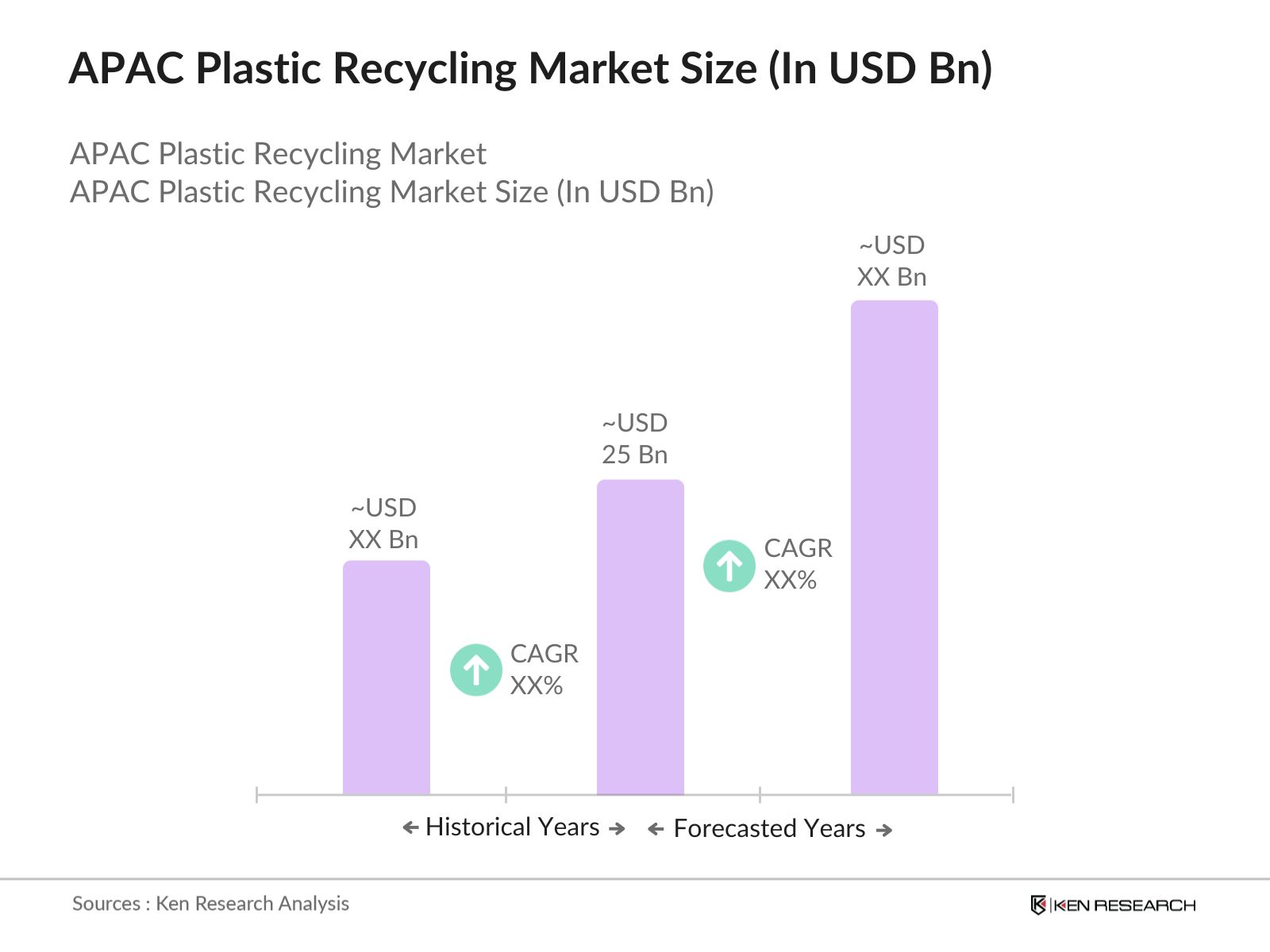
The APAC Plastic Recycling Market is valued at USD 25 billion, driven by regulatory mandates on plastic waste reduction and a rising demand for sustainable materials in various sectors.
Challenges in the APAC Plastic Recycling Market include high operational costs, quality control issues, and insufficient recycling infrastructure, which complicates large-scale recycling processes and impacts profitability.
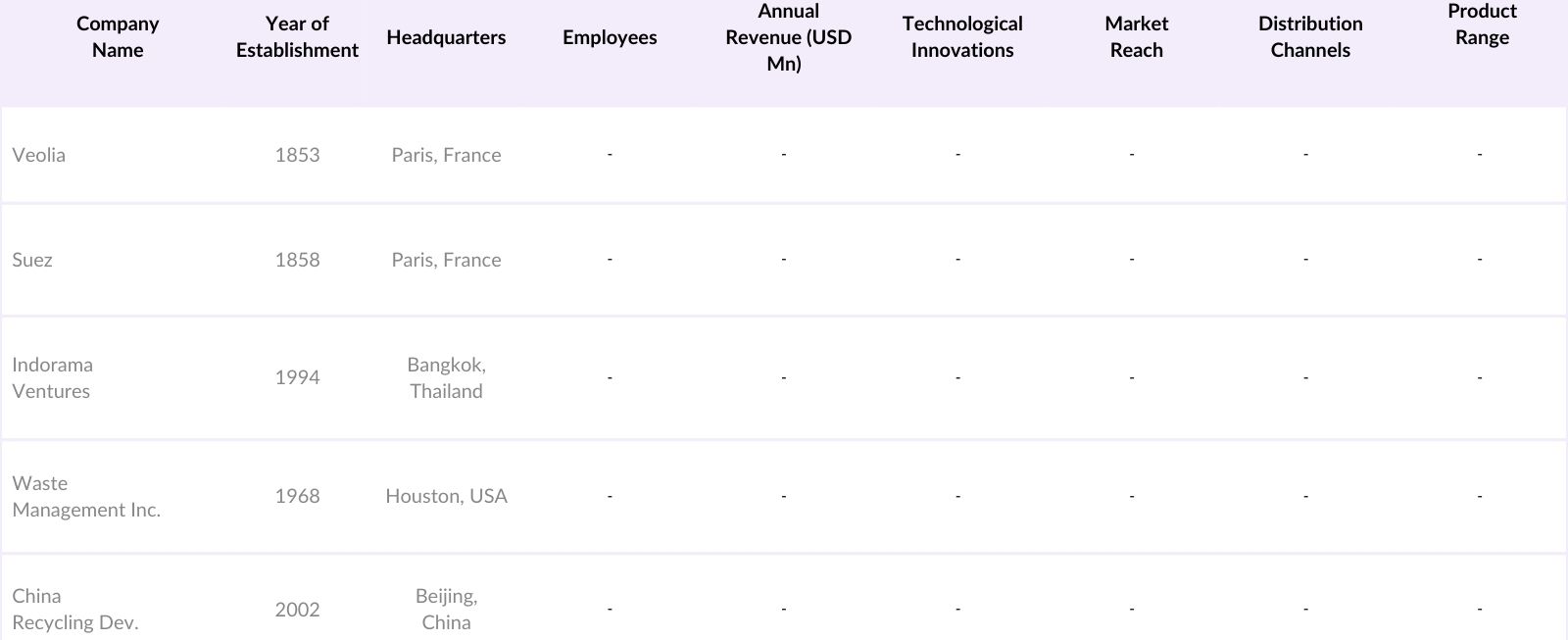
Key players in the APAC Plastic Recycling Market include Veolia, Suez, Indorama Ventures, Waste Management Inc., and China Recycling Development Corporation, all of which have extensive operations and partnerships across the APAC region.
APAC Plastic Recycling Market growth is propelled by strict government regulations on plastic waste management, rising consumer awareness, and advancements in recycling technologies that increase the efficiency and scalability of recycling processes.

What makes us stand out is that our consultants follows Robust, Refine and Result (RRR) methodology. i.e. Robust for clear definitions, approaches and sanity checking, Refine for differentiating respondents facts and opinions and Result for presenting data with story

We have set a benchmark in the industry by offering our clients with syndicated and customized market research reports featuring coverage of entire market as well as meticulous research and analyst insights.

While we don't replace traditional research, we flip the method upside down. Our dual approach of Top Bottom & Bottom Top ensures quality deliverable by not just verifying company fundamentals but also looking at the sector and macroeconomic factors.

With one step in the future, our research team constantly tries to show you the bigger picture. We help with some of the tough questions you may encounter along the way: How is the industry positioned? Best marketing channel? KPI's of competitors? By aligning every element, we help maximize success.

Our report gives you instant access to the answers and sources that other companies might choose to hide. We elaborate each steps of research methodology we have used and showcase you the sample size to earn your trust.

If you need any support, we are here! We pride ourselves on universe strength, data quality, and quick, friendly, and professional service.