















APAC Salad Dressings and Mayonnaise Market Outlook to 2030
Region:Asia
Author(s):Paribhasha Tiwari
Product Code:KROD10503
December 2024
99
About the Report
APAC Salad Dressings and Mayonnaise Market Overview
- The APAC Salad Dressings and Mayonnaise Market is valued at USD 4.2 billion, driven by evolving consumer preferences for convenient, ready-to-use products that complement fast-paced lifestyles. This market is further fueled by the rising health consciousness and inclination towards healthier ingredients like low-fat dressings. The shift towards diverse, ethnic flavors in salad dressings has broadened the appeal of these products across various demographic segments.
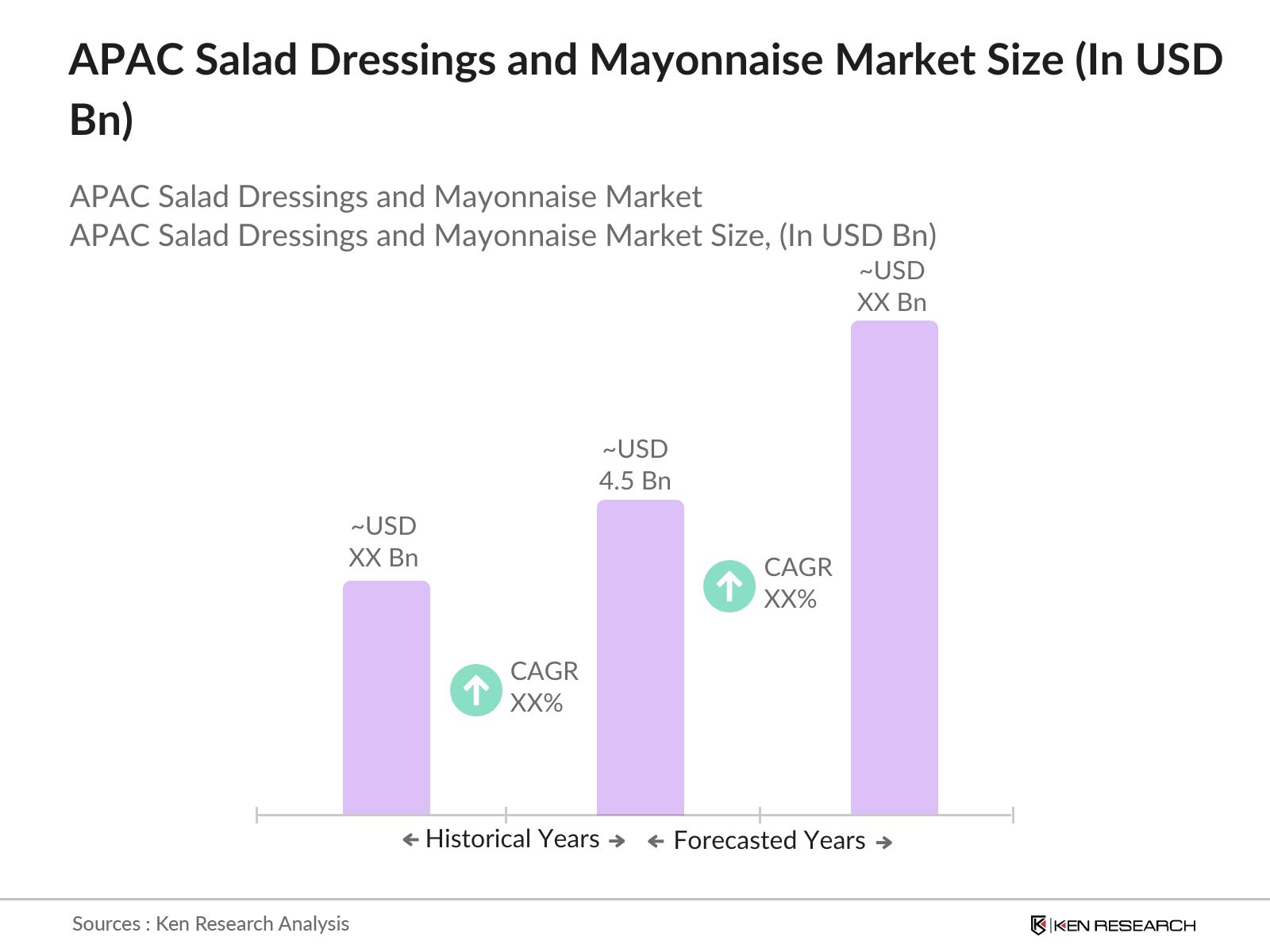
- China and Japan lead the market in the APAC region, supported by high urbanization rates and a robust food processing industry. Chinas preference for Western-style products and Japans established market for convenience foods underpin their dominance. Additionally, South Korea shows rapid growth due to the popularity of Western cuisine and expanding culinary experimentation among young consumers.
- Governments across APAC, particularly in India and Malaysia, are offering tax rebates and subsidies to promote local condiment manufacturing as part of economic self-reliance policies. In 2024, such initiatives have led to the establishment of 150 new small and medium-sized manufacturing units, which is expected to reduce dependency on imports and stabilize prices.
APAC Salad Dressings and Mayonnaise Market Segmentation
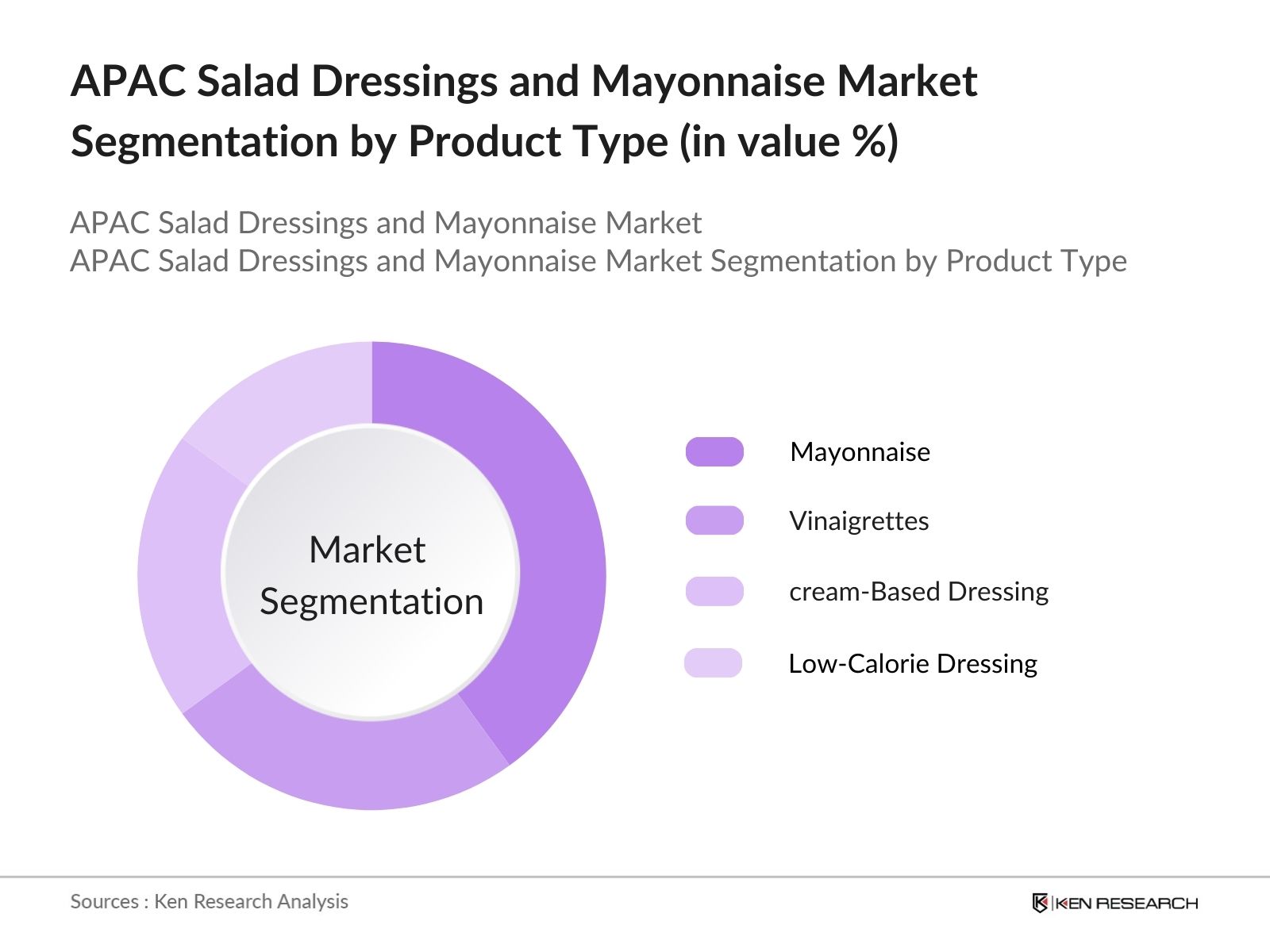
By Product Type: The APAC Salad Dressings and Mayonnaise Market is segmented by product type into mayonnaise, vinaigrettes, cream-based dressings, and low-calorie dressings. Currently, mayonnaise holds a dominant market share due to its established presence in various regional dishes and widespread acceptance across demographics. Leading brands have capitalized on this demand by offering localized flavors to cater to regional tastes, which has sustained mayonnaise's top position in this segment.
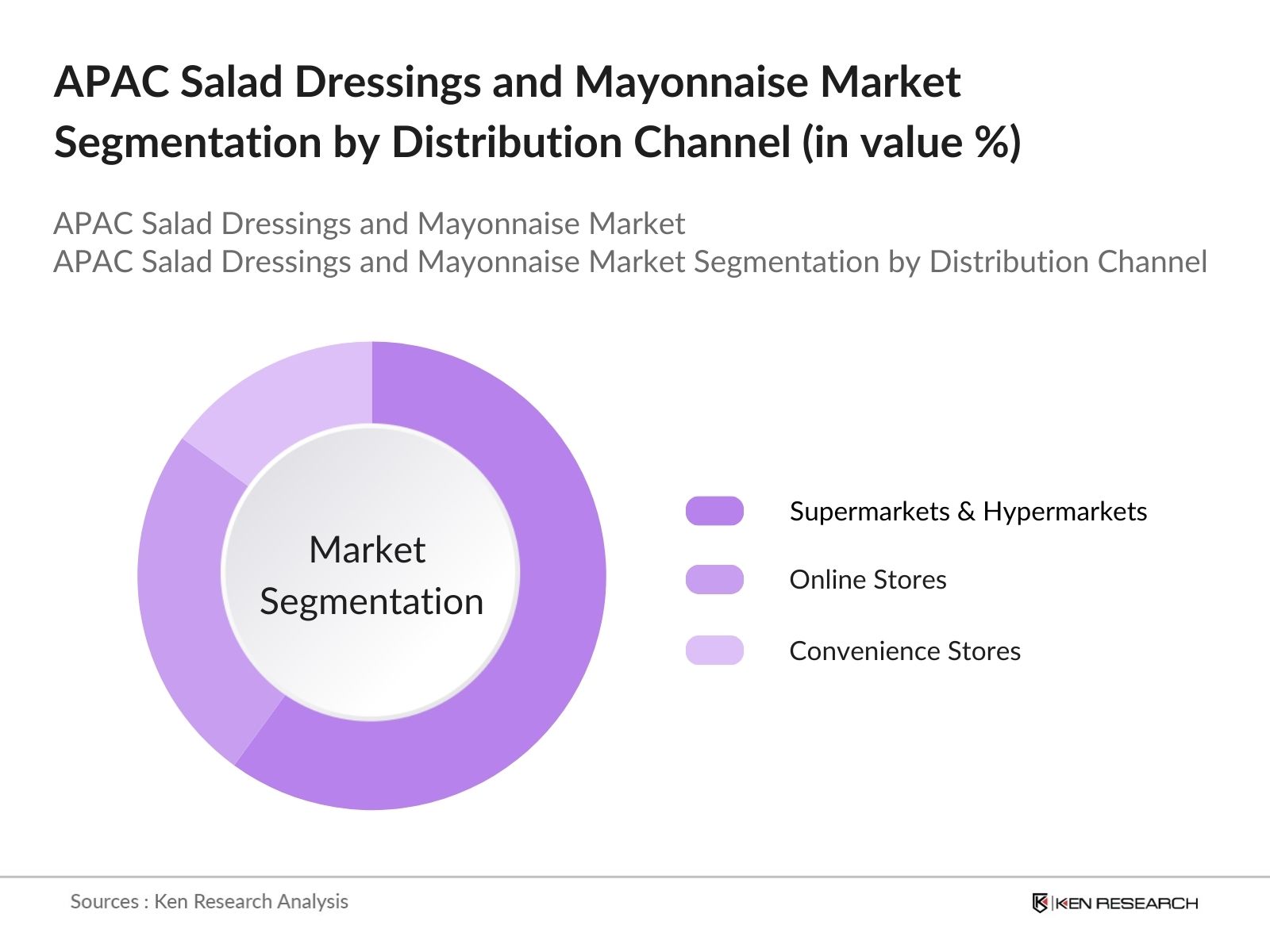
By Distribution Channel: The market segmentation by distribution channel includes supermarkets & hypermarkets, online retail, and convenience stores. Supermarkets & hypermarkets lead the market share due to their widespread presence, which facilitates easy consumer access to a variety of salad dressings and mayonnaise products. The in-store promotions and high visibility in these outlets drive consumer purchases, consolidating the segments market leadership.
APAC Salad Dressings and Mayonnaise Market Competitive Landscape
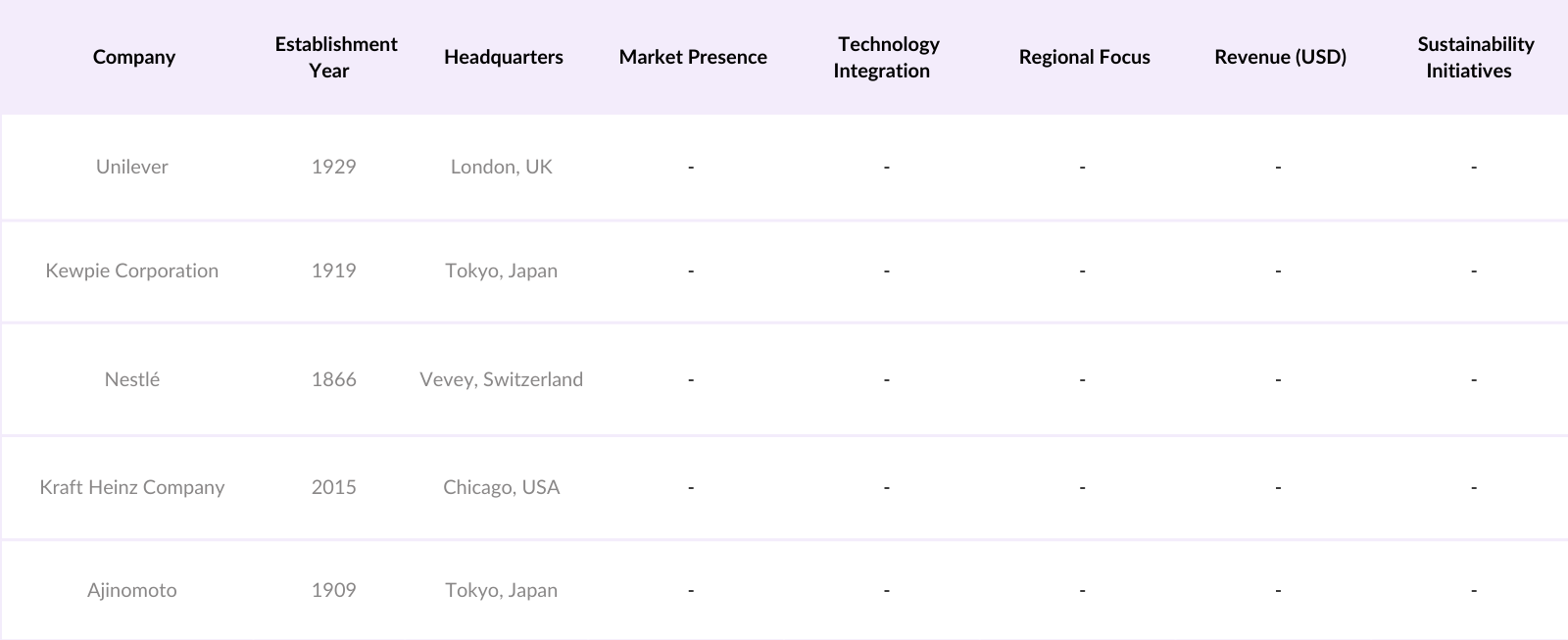
The APAC Salad Dressings and Mayonnaise Market is dominated by a mix of global giants and local players who offer region-specific flavors. This concentration of brands highlights the markets strong competitive landscape, where global brands leverage extensive distribution networks, and local brands focus on traditional flavor innovations.
APAC Salad Dressings and Mayonnaise Market Analysis
Growth Drivers
- Changing Consumer Preferences Towards Health-Conscious Products: In 2024, an increasing number of APAC consumers are opting for salad dressings and mayonnaise options that are perceived as healthier. For instance, Australia alone has seen a surge in demand for low-fat and low-sodium dressings, with around 50 million units of these healthier alternatives sold in 2023, as noted by the regions food standards agency. This shift is primarily driven by consumers aged 25-40 who are increasingly focused on health, propelling demand for products that align with their dietary goals.
- Increased Demand from Quick-Service Restaurants (QSRs): The quick-service restaurant sector in APAC has experienced rapid expansion, with over 100,000 QSR outlets operating in Southeast Asia by 2024. This growth, fueled by high consumer footfall in urban areas, has spurred the demand for convenient condiments like salad dressings and mayonnaise. These products are heavily used in ready-to-eat meals and are essential for the fast preparation standards in these establishments, adding significant revenue streams for condiment producers in APAC.
- Diversification in Distribution Channels: The APAC region has seen a substantial increase in modern retail channels, with approximately 250,000 new grocery outlets opened across the region since 2022. This includes not only physical stores but also a marked rise in online grocery sales, with e-commerce platforms facilitating direct-to-consumer delivery. This expansion in distribution channels allows salad dressing and mayonnaise brands to reach a broader audience, especially in developing countries where access to such products was previously limited.
Market Challenges
- Rising Ingredient Costs: Essential ingredients, like vegetable oils and eggs, have seen price hikes across APAC due to supply chain disruptions and inflation, with vegetable oil imports reaching 500,000 metric tons in 2023 to meet local demand. This inflation in ingredient prices has escalated the production costs of salad dressings and mayonnaise, challenging manufacturers to maintain price stability while sustaining profit margins.
- Stringent Regulations on Food Additives: APAC governments, including the Food Standards Australia New Zealand (FSANZ) and the Food Safety and Standards Authority of India (FSSAI), have imposed rigorous standards on food additives, particularly preservatives and artificial flavoring agents. In 2024, compliance costs have risen as manufacturers adopt costly reformulations and testing to meet these standards, adding to the production complexities in the region.
APAC Salad Dressings and Mayonnaise Market Future Outlook
The APAC Salad Dressings and Mayonnaise Market is anticipated to experience substantial growth driven by changing dietary patterns, increased disposable income, and a rising demand for healthy food options. The adoption of innovative, health-oriented product lines and the expansion of e-commerce channels will further bolster market growth, aligning with consumer shifts towards convenience and diversified flavors.
Market Opportunities
- Expansion in Organic and Vegan Product Lines: As of 2024, the demand for organic and vegan-friendly salad dressings and mayonnaise products is steadily rising, with nearly 10 million units of such products projected to sell across APAC. The health-conscious and environmentally aware segment of consumers is driving this trend, providing manufacturers an opportunity to introduce plant-based alternatives that cater to these preferences.
- Growth Potential in Rural Markets: While urban centers in APAC have a high penetration of branded condiments, rural areas remain underexploited. With nearly 500 million rural consumers gaining access to organized retail, these areas present untapped potential for manufacturers, especially those able to offer cost-effective and adaptable products tailored to local preferences and price sensitivities.
Scope of the Report
|
By Product Type |
Mayonnaise |
|
By Distribution Channel |
Supermarkets & Hypermarkets |
|
By Flavor |
Classic/Original |
|
By Consumer Demographics |
Millennials |
|
By Country |
China |
Products
Key Target Audience
Food and Beverage Manufacturers
Retail Chains and Supermarkets
Online Retail Platforms
Restaurant Chains and Quick Service Restaurants (QSRs)
Investors and Venture Capitalist Firms
Government and Regulatory Bodies (Food Safety Standards Authority, Health Ministries)
Product Development and Innovation Teams
Health and Nutrition Advocacy Groups
Companies
Players Mentioned in the Report:
Unilever
Kewpie Corporation
Nestl
Kraft Heinz Company
Ajinomoto
Dr. Oetker
McCormick & Company
Del Monte Foods
Mizkan
Veeba Foods
Table of Contents
1. APAC Salad Dressings and Mayonnaise Market Overview
1.1. Definition and Scope
1.2. Market Taxonomy
1.3. Market Growth Rate (Market Size Dynamics, Revenue Expansion)
1.4. Market Segmentation Overview
2. APAC Salad Dressings and Mayonnaise Market Size (In USD Mn)
2.1. Historical Market Size
2.2. Year-On-Year Growth Analysis
2.3. Key Market Developments and Milestones
3. APAC Salad Dressings and Mayonnaise Market Analysis
3.1. Growth Drivers
3.1.1. Changing Consumer Preferences (Shift to Health-Conscious Products)
3.1.2. Urbanization and Rise of Quick-Service Restaurants
3.1.3. Expansion of Distribution Channels
3.2. Market Challenges
3.2.1. Rising Ingredient Costs
3.2.2. Regulatory Standards on Food Additives
3.2.3. Increasing Competition from Local Brands
3.3. Opportunities
3.3.1. Introduction of Organic and Vegan Products
3.3.2. Expansion in Rural Markets
3.3.3. Innovation in Packaging
3.4. Trends
3.4.1. Popularity of Low-Calorie Dressings
3.4.2. Adoption of Natural Ingredients
3.4.3. Enhanced Shelf-Life Technologies
3.5. Regulatory Landscape
3.5.1. Food Safety Standards (FSSAI, CFDA)
3.5.2. Import Regulations
3.5.3. Nutritional Labeling Requirements
3.6. SWOT Analysis
3.7. Stakeholder Ecosystem
3.8. Porters Five Forces Analysis
3.9. Competitive Environment
4. APAC Salad Dressings and Mayonnaise Market Segmentation
4.1. By Product Type (In Value %)
4.1.1. Mayonnaise
4.1.2. Salad Dressings
4.1.2.1. Vinaigrettes
4.1.2.2. Cream-Based Dressings
4.1.2.3. Low-Calorie Dressings
4.2. By Distribution Channel (In Value %)
4.2.1. Supermarkets & Hypermarkets
4.2.2. Online Retail
4.2.3. Convenience Stores
4.3. By Flavor (In Value %)
4.3.1. Classic/Original
4.3.2. Herb & Spice Infused
4.3.3. Ethnic Flavors (Asian, Mediterranean)
4.4. By Consumer Demographics (In Value %)
4.4.1. Millennials
4.4.2. Generation X
4.4.3. Baby Boomers
4.5. By Country (In Value %)
4.5.1. China
4.5.2. Japan
4.5.3. India
4.5.4. South Korea
4.5.5. Australia
5. APAC Salad Dressings and Mayonnaise Market Competitive Analysis
5.1. Detailed Profiles of Major Companies
5.1.1. Unilever
5.1.2. Kewpie Corporation
5.1.3. Nestl
5.1.4. Kraft Heinz Company
5.1.5. Ajinomoto
5.1.6. Dr. Oetker
5.1.7. McCormick & Company
5.1.8. Del Monte Foods
5.1.9. Mizkan
5.1.10. Empire Mayonnaise
5.1.11. Crosse & Blackwell
5.1.12. Remia
5.1.13. Purefoods Hormel
5.1.14. Tata Consumer Products
5.1.15. Veeba Foods
5.2. Cross Comparison Parameters (Revenue, Product Portfolio, Market Presence, Brand Strength, Innovation, Marketing Strategy, Consumer Reach, Sustainability Efforts)
5.3. Market Share Analysis
5.4. Strategic Initiatives
5.5. Mergers and Acquisitions
5.6. Investment and Expansion Analysis
5.7. Government Grants
5.8. Private Equity Investments
5.9. Research and Development Focus
6. APAC Salad Dressings and Mayonnaise Market Regulatory Framework
6.1. Quality and Safety Standards
6.2. Labeling and Nutritional Information Compliance
6.3. Import and Export Regulations
7. APAC Salad Dressings and Mayonnaise Future Market Size (In USD Mn)
7.1. Future Market Size Projections
7.2. Key Factors Driving Future Market Growth
8. APAC Salad Dressings and Mayonnaise Market Analysts Recommendations
8.1. Target Audience Analysis
8.2. Consumer Preference Cohorts
8.3. Market Entry Recommendations
8.4. Product Positioning Strategies
Disclaimer Contact UsResearch Methodology
Step 1: Identification of Key Variables
This phase involves mapping the key stakeholders within the APAC Salad Dressings and Mayonnaise Market. Extensive desk research through secondary and proprietary databases aids in identifying critical variables like consumer preferences, distribution channels, and product types impacting market trends.
Step 2: Market Analysis and Construction
We compile historical data related to the markets growth, penetration rates, and brand performance metrics. This involves assessing the markets reach across various consumer demographics and channel types, resulting in reliable revenue estimates.
Step 3: Hypothesis Validation and Expert Consultation
To validate initial hypotheses, in-depth telephone interviews are conducted with industry experts from major companies. These discussions offer direct insights on product demand and market drivers, essential for refining the markets data accuracy.
Step 4: Research Synthesis and Final Output
The final phase entails direct engagement with companies within the salad dressings and mayonnaise sector, allowing us to gather insights on consumer preferences, product performance, and emerging trends. This stage verifies the bottom-up approach and solidifies the report's reliability.
Frequently Asked Questions
1. How big is the APAC Salad Dressings and Mayonnaise Market?
The APAC Salad Dressings and Mayonnaise Market is valued at USD 4.2 billion, driven by increasing demand for convenience foods and diverse flavor profiles suited to regional tastes.
2. What are the challenges in the APAC Salad Dressings and Mayonnaise Market?
The APAC Salad Dressings and Mayonnaise Market faces challenges including the rising cost of ingredients, stringent food safety regulations, and competitive pressures from local brands offering affordable options.
3. Who are the major players in the APAC Salad Dressings and Mayonnaise Market?
Key players in the APAC Salad Dressings and Mayonnaise Market include Unilever, Kewpie Corporation, Nestl, Kraft Heinz, and Ajinomoto, each leveraging a strong presence and diverse product portfolios tailored to APAC preferences.
4. What are the growth drivers of the APAC Salad Dressings and Mayonnaise Market?
Growth drivers in the APAC Salad Dressings and Mayonnaise Market include urbanization, a trend toward convenience foods, and increased health awareness, which has led to demand for low-calorie and natural ingredient products.
Why Buy From Us?

What makes us stand out is that our consultants follows Robust, Refine and Result (RRR) methodology. i.e. Robust for clear definitions, approaches and sanity checking, Refine for differentiating respondents facts and opinions and Result for presenting data with story

We have set a benchmark in the industry by offering our clients with syndicated and customized market research reports featuring coverage of entire market as well as meticulous research and analyst insights.

While we don't replace traditional research, we flip the method upside down. Our dual approach of Top Bottom & Bottom Top ensures quality deliverable by not just verifying company fundamentals but also looking at the sector and macroeconomic factors.

With one step in the future, our research team constantly tries to show you the bigger picture. We help with some of the tough questions you may encounter along the way: How is the industry positioned? Best marketing channel? KPI's of competitors? By aligning every element, we help maximize success.

Our report gives you instant access to the answers and sources that other companies might choose to hide. We elaborate each steps of research methodology we have used and showcase you the sample size to earn your trust.

If you need any support, we are here! We pride ourselves on universe strength, data quality, and quick, friendly, and professional service.