
APAC Telecom Analytics Market Outlook to 2030
Region:China
Author(s):Vijay Kumar
Product Code:KROD5206
Region:China
Author(s):Vijay Kumar
Product Code:KROD5206
December 2024
82
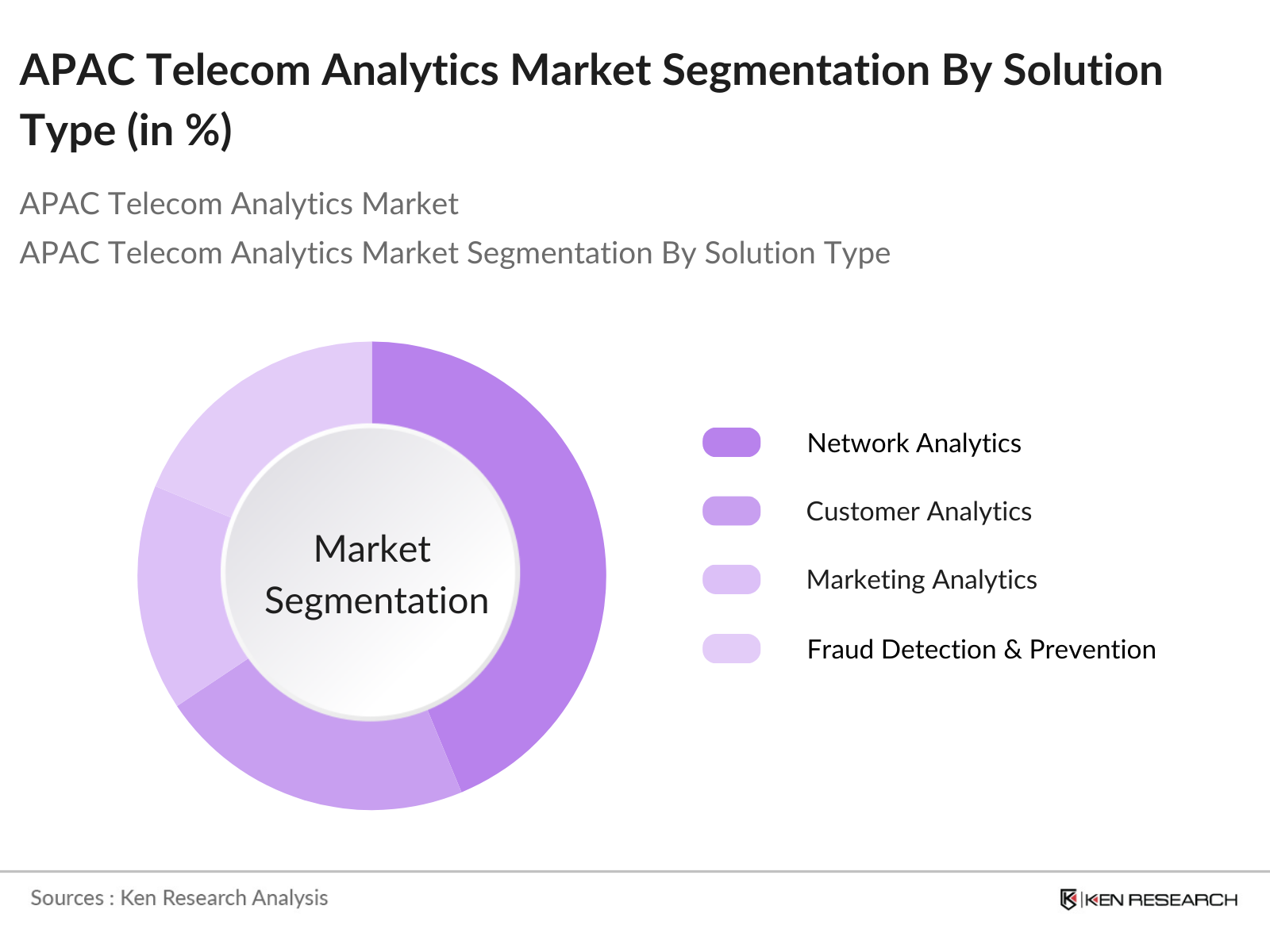
By Solution Type: The market is segmented by solution type into network analytics, customer analytics, marketing analytics, fraud detection and prevention, and operational analytics. Among these, network analytics holds a dominant market share due to the ongoing expansion of 5G networks in the region. Telecom operators rely heavily on network analytics to manage and optimize their growing data traffic, particularly in markets like China and South Korea.
By Application: The market is further segmented by application into customer retention, network management, revenue management, marketing campaigns, and risk and compliance management. Customer retention leads this segment as telecom companies in markets like India and Southeast Asia face intense competition and high churn rates.

The APAC Telecom Analytics market is dominated by both regional and global players that offer comprehensive analytics solutions to telecom operators. This market is highly competitive, with players investing in AI-driven analytics platforms and cloud-based solutions to stay ahead. Some of the key players are working closely with telecom companies to enhance network efficiency and offer personalized customer experiences.
The APAC Telecom Analytics market is expected to witness significant growth over the next five years, driven by the rapid expansion of 5G networks, increased adoption of cloud-based analytics solutions, and growing reliance on AI and machine learning for predictive insights. Telecom companies in the region are projected to invest heavily in analytics platforms to enhance customer experiences, optimize network operations, and mitigate fraud.
|
Solution Type |
Network Analytics Customer Analytics Marketing Analytics Fraud Detection and Prevention Operational Analytics |
|
Deployment Mode |
On-Premise Cloud-Based |
|
Application |
Customer Retention Network Management Revenue Management Marketing Campaigns Risk and Compliance Management |
|
Telecom Service Type |
Mobile Networks Fixed-Line Networks Broadband Services 5G Networks |
|
Region |
East Asia Southeast Asia South Asia Oceania |
1.1. Definition and Scope
1.2. Market Taxonomy
1.3. Market Growth Rate
1.4. Market Segmentation Overview
2.1. Historical Market Size
2.2. Year-On-Year Growth Analysis
2.3. Key Market Developments and Milestones
3.1. Growth Drivers
3.1.1. Rising Mobile Data Consumption (Mobile Data Usage, 5G Rollout)
3.1.2. Growing Demand for Predictive Analytics (AI Integration, Big Data Adoption)
3.1.3. Increase in Cloud-Based Analytics Solutions (Cloud Migration, SaaS Platforms)
3.1.4. Government Support and Policies (Telecom Infrastructure Development, Digitalization)
3.2. Market Challenges
3.2.1. High Costs of Implementation (Capital Investment, Ongoing Maintenance)
3.2.2. Data Privacy and Security Concerns (Compliance with Data Regulations, Cybersecurity Threats)
3.2.3. Legacy Systems and Interoperability Issues (Integration with Legacy Systems, Scalability)
3.3. Opportunities
3.3.1. Expansion of 5G Networks (Network Performance, Data Traffic Optimization)
3.3.2. Increasing Focus on Customer Experience Management (Real-Time Analytics, Personalized Services)
3.3.3. Growth of AI-Driven Telecom Solutions (Automation, AI in Network Management)
3.4. Trends
3.4.1. Adoption of AI and Machine Learning in Telecom Analytics (AI Algorithms, Predictive Insights)
3.4.2. Transition to Cloud-Based Analytics Platforms (Scalability, Flexibility)
3.4.3. Integration of IoT Data for Telecom Analytics (IoT in Telecom, Data Aggregation)
3.5. Government Regulation
3.5.1. APAC Telecom Policy Frameworks (Digital Transformation Policies, Data Governance Laws)
3.5.2. Spectrum Allocation and Licensing (5G Spectrum, Spectrum Pricing)
3.5.3. Telecom Data Protection Laws (GDPR-Like Regulations, Data Localization Policies)
3.6. SWOT Analysis
3.7. Stakeholder Ecosystem
3.8. Porters Five Forces
3.9. Competition Ecosystem
4.1. By Solution Type (In Value %)
4.1.1. Network Analytics
4.1.2. Customer Analytics
4.1.3. Marketing Analytics
4.1.4. Fraud Detection and Prevention
4.1.5. Operational Analytics
4.2. By Deployment Mode (In Value %)
4.2.1. On-Premise
4.2.2. Cloud-Based
4.3. By Application (In Value %)
4.3.1. Customer Retention
4.3.2. Network Management
4.3.3. Revenue Management
4.3.4. Marketing Campaigns
4.3.5. Risk and Compliance Management
4.4. By Telecom Service Type (In Value %)
4.4.1. Mobile Networks
4.4.2. Fixed-Line Networks
4.4.3. Broadband Services
4.4.4. 5G Networks
4.5. By Region (In Value %)
4.5.1. East Asia
4.5.2. Southeast Asia
4.5.3. South Asia
4.5.4. Oceania
5.1. Detailed Profiles of Major Companies
5.1.1. IBM Corporation
5.1.2. Nokia Corporation
5.1.3. Ericsson
5.1.4. Huawei Technologies
5.1.5. Oracle Corporation
5.1.6. SAS Institute Inc.
5.1.7. Teradata Corporation
5.1.8. SAP SE
5.1.9. TIBCO Software Inc.
5.1.10. ZTE Corporation
5.1.11. NEC Corporation
5.1.12. Cisco Systems Inc.
5.1.13. Hewlett Packard Enterprise
5.1.14. Amdocs Ltd.
5.1.15. Viavi Solutions
5.2. Cross Comparison Parameters (Revenue, Market Share, Innovation Capabilities, Global Footprint, Telecom Analytics Solutions Portfolio, AI Integration, Key Partnerships, R&D Investment)
5.3. Market Share Analysis
5.4. Strategic Initiatives
5.5. Mergers and Acquisitions
5.6. Investment Analysis
5.7. Venture Capital Funding
5.8. Government Grants
5.9. Private Equity Investments
6.1. Telecom Data Governance Standards
6.2. Data Sovereignty and Localization Policies
6.3. Compliance and Certification Requirements
7.1. Future Market Size Projections
7.2. Key Factors Driving Future Market Growth
8.1. By Solution Type (In Value %)
8.2. By Deployment Mode (In Value %)
8.3. By Application (In Value %)
8.4. By Telecom Service Type (In Value %)
8.5. By Region (In Value %)
9.1. TAM/SAM/SOM Analysis
9.2. Customer Cohort Analysis
9.3. Marketing Initiatives
9.4. White Space Opportunity Analysis
The first step involves identifying the major stakeholders within the APAC Telecom Analytics market. Through detailed desk research and database analysis, we pinpoint the key variables influencing the market, such as technological advancements, government regulations, and consumer preferences.
In this step, historical market data is compiled, focusing on market penetration and revenue generation across telecom service types. The analysis ensures the accuracy of revenue estimates by cross-referencing multiple data points, including service quality statistics.
Our market hypotheses are validated by engaging in expert consultations with telecom industry specialists. These insights are crucial in refining the data and understanding operational trends in network management and customer analytics.
The final step involves synthesizing all research findings, combining insights from telecom service providers and analytics vendors. This allows us to provide a comprehensive market analysis and validate the data collected from a bottom-up approach.
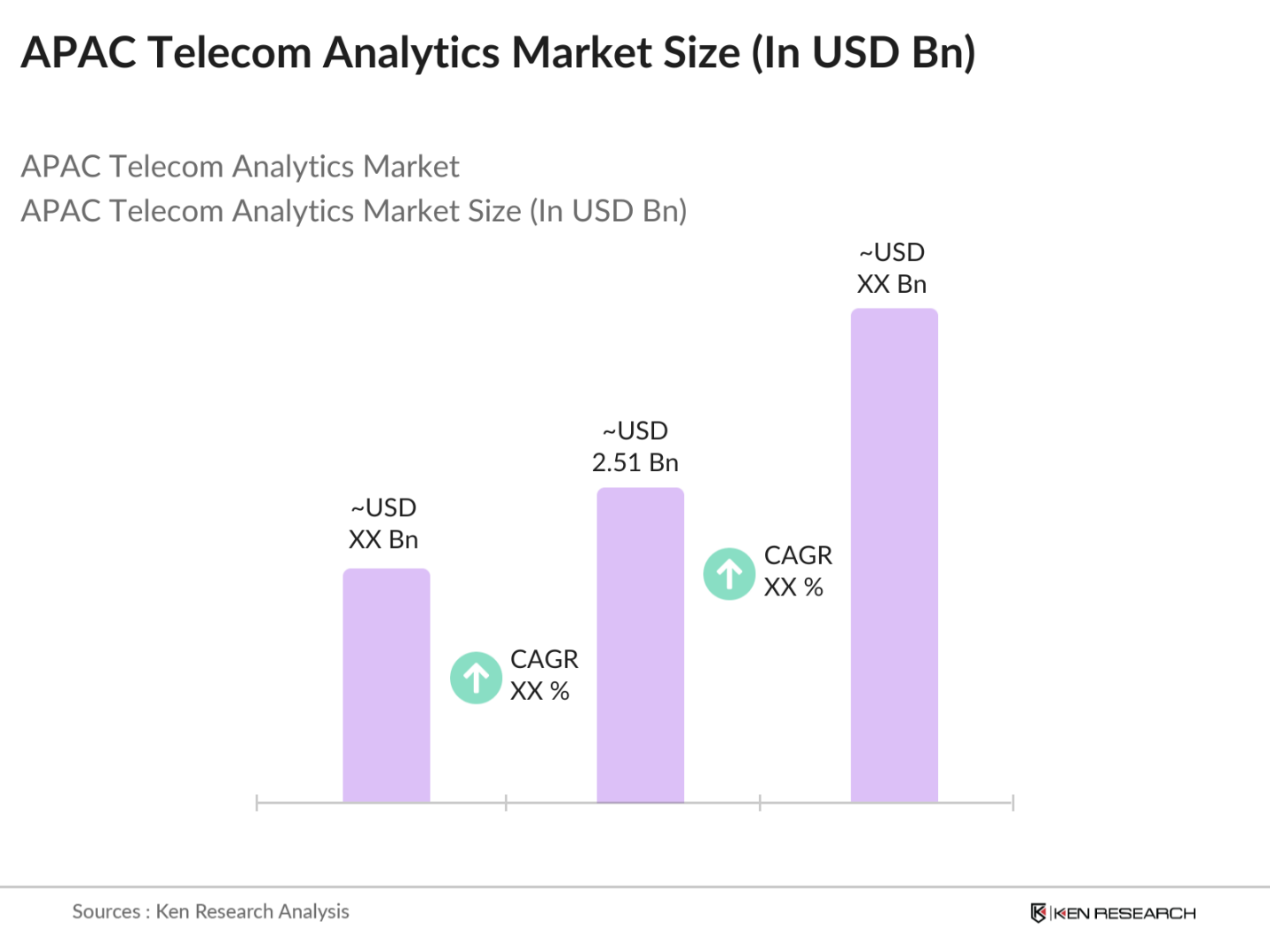
The APAC Telecom Analytics market is valued at USD 2.51 billion, based on a five-year historical analysis. This market is primarily driven by the expansion of 5G networks, increasing data traffic, and the adoption of AI-driven analytics.
Challenges include high implementation costs, data privacy concerns, and legacy system integration issues. Telecom operators also face difficulties in scaling analytics solutions across large and complex networks.
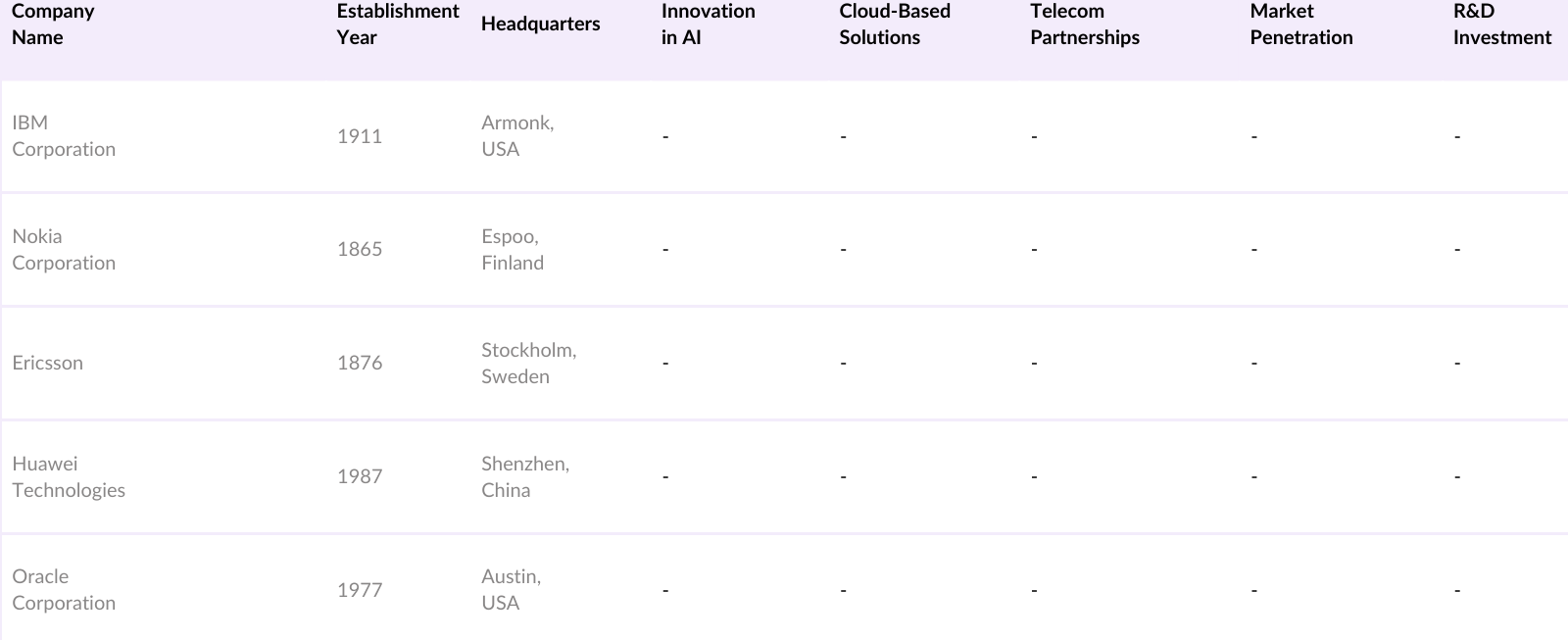
Key players in the market include IBM Corporation, Nokia Corporation, Ericsson, Huawei Technologies, and Oracle Corporation. These companies dominate due to their comprehensive telecom analytics solutions and strategic partnerships with telecom service providers.
The market is primarily driven by the expansion of 5G networks, growing data traffic, and increasing adoption of AI-driven analytics solutions. Government support for digital transformation further boosts market growth.

What makes us stand out is that our consultants follows Robust, Refine and Result (RRR) methodology. i.e. Robust for clear definitions, approaches and sanity checking, Refine for differentiating respondents facts and opinions and Result for presenting data with story

We have set a benchmark in the industry by offering our clients with syndicated and customized market research reports featuring coverage of entire market as well as meticulous research and analyst insights.

While we don't replace traditional research, we flip the method upside down. Our dual approach of Top Bottom & Bottom Top ensures quality deliverable by not just verifying company fundamentals but also looking at the sector and macroeconomic factors.

With one step in the future, our research team constantly tries to show you the bigger picture. We help with some of the tough questions you may encounter along the way: How is the industry positioned? Best marketing channel? KPI's of competitors? By aligning every element, we help maximize success.

Our report gives you instant access to the answers and sources that other companies might choose to hide. We elaborate each steps of research methodology we have used and showcase you the sample size to earn your trust.

If you need any support, we are here! We pride ourselves on universe strength, data quality, and quick, friendly, and professional service.