Asia-Pacific 5G and Small Cells Market Outlook to 2030

Region:Asia

Author(s):Mukul

Product Code:KROD2109

Published On

October 2024

Total pages

82

About the Report

Asia-Pacific 5G and Small Cells Market Overview

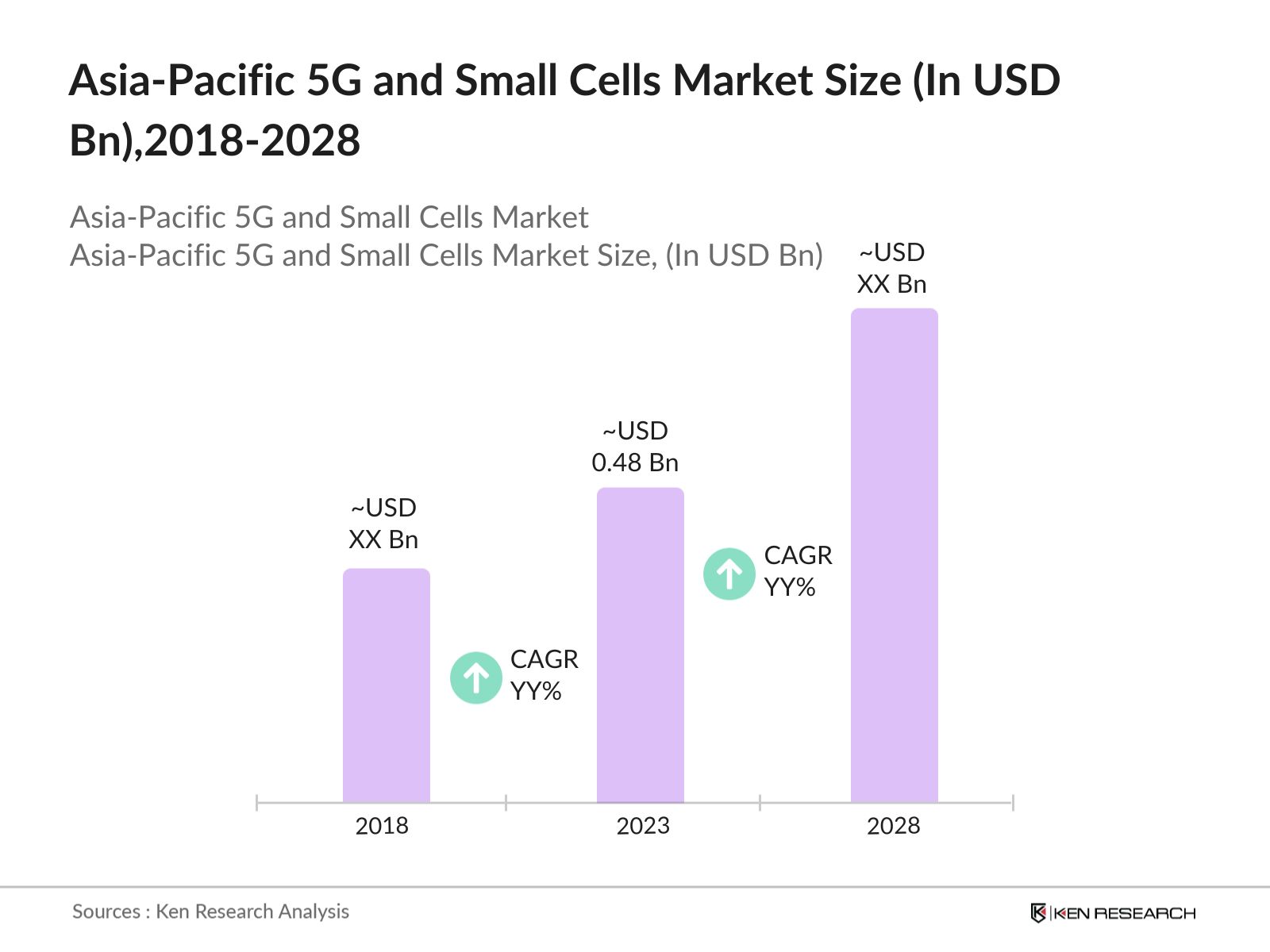
  • The Asia-Pacific 5G and Small Cells market reached a valuation of USD 0.48 billion in 2023, driven by the rapid roll-out of 5G infrastructure across key countries such as China, South Korea, Japan, and India. The increasing demand for faster internet connectivity, low-latency communication, and rising adoption of IoT applications has further fueled the growth of small cells, which are essential in densifying 5G networks, especially in urban areas with high data traffic.
  • The Asia-Pacific 5G and small cells market is led by several multinational corporations and regional telecom providers. Major players include Huawei Technologies (China), Samsung Electronics (South Korea), Nokia (Finland), ZTE Corporation (China), and Ericsson (Sweden). These companies have played a crucial role in the development of 5G infrastructure and small cells technology by providing hardware, software, and network solutions to telecom operators in the region.
  • Major cities driving the Asia-Pacific 5G and small cells market include Beijing, Seoul, Tokyo, Sydney, and Mumbai. Beijing leads due to China's aggressive push for 5G adoption with more than 1 million 5G base stations deployed by 2023. Seoul and Tokyo are early adopters of 5G technology, driven by their respective governments ambition to be at the forefront of digital transformation. Mumbai, with Indias expanding digital market, is a growing player due to its large mobile user base and 5G roll-out plans.
  • In 2023, Huawei Technologies announced a major collaboration with China Mobile to deploy 1.2 million 5G small cells across urban centers in China. This marks one of the largest deployments of small cells globally, strengthening Chinas lead in 5G coverage. The company also announced plans to invest an additional USD 1 billion in research and development for small cell technology over the next two years to enhance the scalability of its 5G offerings.market overviews

Asia-Pacific 5G and Small Cells Market Segmentation

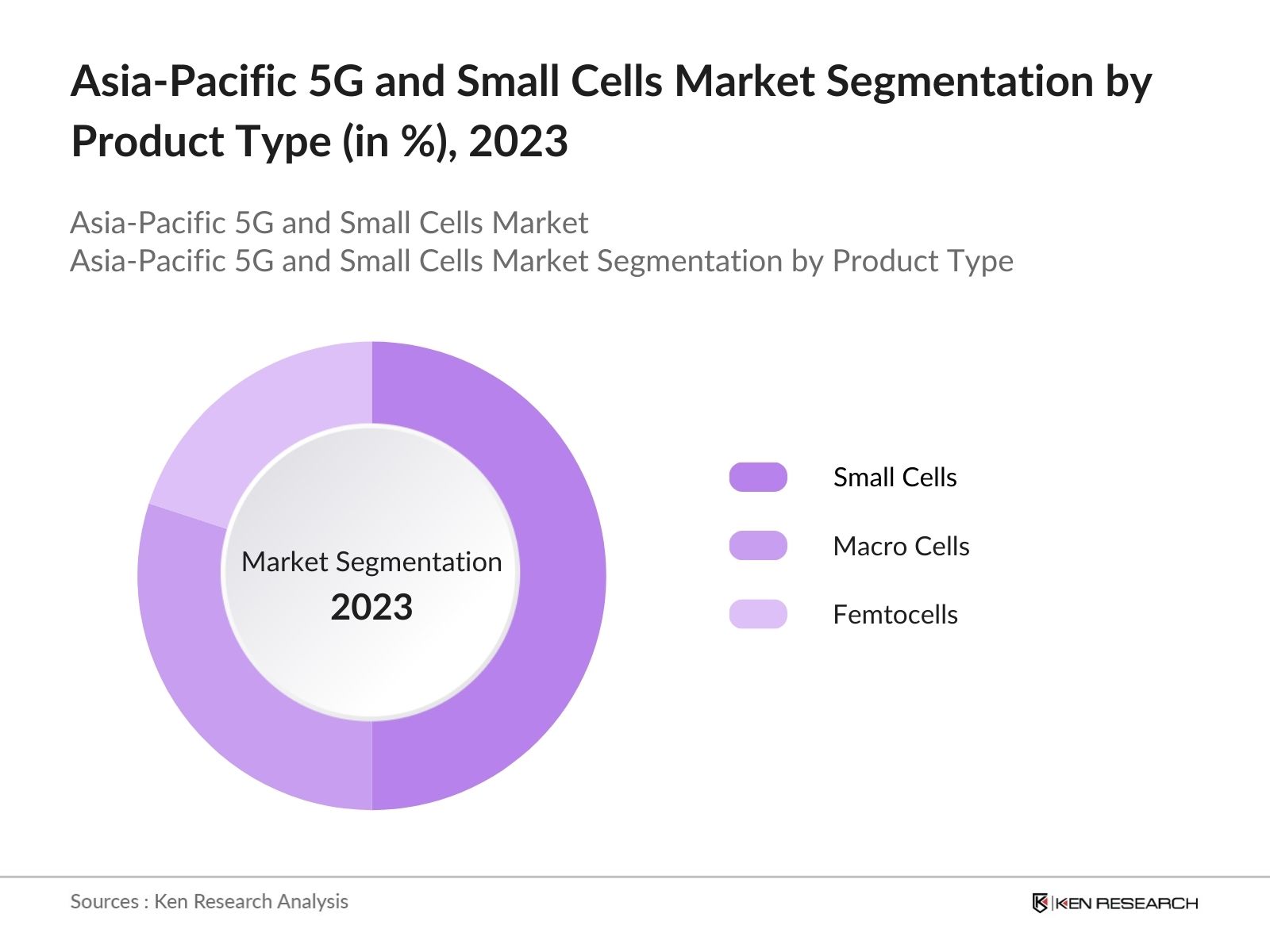
  • By Product Type: The Asia-Pacific 5G and Small Cells market is segmented into macro cells, small cells, and femtocells. In 2023, small cells dominated the market due to their ability to enhance network capacity in densely populated urban areas and their integral role in supporting 5G infrastructure. Small cells are widely deployed in areas with heavy mobile traffic, particularly in China and South Korea.market overviews
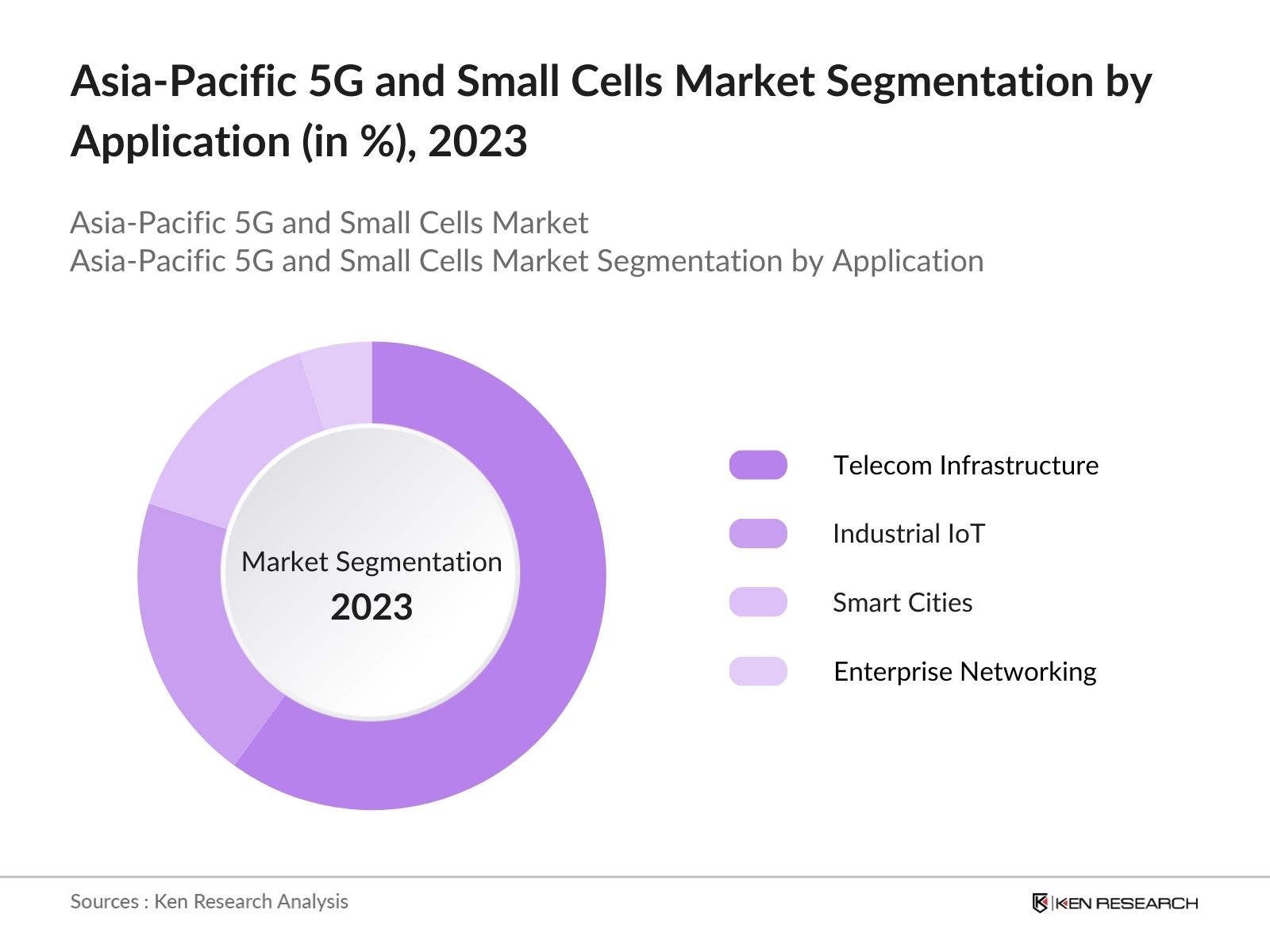
  • By Application: The Asia-Pacific 5G and Small Cells market is segmented into telecom infrastructure, industrial IoT, smart cities, and enterprise networking. In 2023, the telecom infrastructure dominated the market, driven by the rapid deployment of 5G networks across Asia-Pacific, especially in countries like China, Japan, and South Korea. The rise in demand for seamless connectivity and high-speed internet services has propelled the demand for small cells in telecom infrastructure.market overviews
  • By Region: The Asia-Pacific 5G and Small Cells market is segmented into China, South Korea, Japan, India, and Australia. In 2023, China dominated the regional segment, supported by the country's aggressive push for 5G expansion and significant investments in telecom infrastructure. China's emphasis on smart cities, IoT applications, and industrial automation has spurred demand for small cells to ensure robust and seamless network coverage.

Asia-Pacific 5G and Small Cells Market Competitive Landscape

Company Name

Establishment Year

Headquarters

Huawei Technologies

1987

Shenzhen, China

Samsung Electronics

1969

Seoul, South Korea

ZTE Corporation

1985

Shenzhen, China

Nokia

1865

Espoo, Finland

Ericsson

1876

Stockholm, Sweden

  • ZTE Corporation: On November 23, 2023, ZTE hosted the Global Services Ecosystem Forum in Bangkok, Thailand. The event focused on key topics such as Asia-Pacific market trends and collaborative development in the telecommunications sector. ZTE emphasized its commitment to building a sustainable ecosystem for digital intelligence and enhancing its services in the region.
  • Nokia: On August 31, 2023, Nokia announced the rollout of Interleaved Passive Active Antennas for Globe Telecom across the Philippines. This deployment aims to enhance 5G coverage and improve connectivity, particularly in urban areas where demand for high-speed data is increasing.

Asia-Pacific 5G and Small Cells Industry Analysis

Asia-Pacific 5G and Small Cells Market Growth Drivers

  • Chinas Rapid 5G Network Expansion: Chinas aggressive 5G roll-out has been one of the main drivers of the Asia-Pacific 5G and Small Cells market. As of 2023, China had deployed over 2.1 million 5G base stations across the country. The expansion of telecom infrastructure to support smart cities and industrial IoT applications has significantly fueled the demand for small cells, which enhance network capacity in high-density urban areas.
  • South Koreas Push for Industrial IoT: South Korea's focus on industrial IoT and smart manufacturing has significantly increased demand for small cells. The South Korean government invested USD 1.2 billion in public-private partnerships by 2023 to develop 5G-enabled smart factories, leading to a higher demand for small cells to facilitate real-time data transfer and automation in industrial settings.
  • Increasing Demand for High-Speed Connectivity: The demand for high-speed data connectivity is a major driver of the 5G and small cells market. With the rise of applications like Virtual Reality (VR), Augmented Reality (AR), and the Internet of Things (IoT), there is a pressing need for faster data speeds and lower latency, which 5G technology can provide. This demand is expected to propel the adoption of small cells to enhance network capacity, particularly in high-density urban areas

Asia-Pacific 5G and Small Cells Market Challenges

  • Spectrum Allocation Delays: Spectrum allocation has been a major challenge in countries like India and Japan. In 2021, Indias spectrum auction was delayed, pushing the commercial roll-out of 5G to 2022. As of 2023, many operators were still awaiting additional spectrum allocation, which has hindered the deployment of small cells and the broader roll-out of 5G services.
  • Geographical Constraints in Rural Areas: Deploying small cells in remote and rural areas presents logistical challenges due to the difficult terrain and lack of supporting infrastructure. In Australia, for instance, covering vast rural expanses has proven difficult. In 2023, Australia installed only 8,000 small cell units nationwide, far below the 20,000 planned for that year, according to data from the Australian Communications and Media Authority (ACMA).

Asia-Pacific 5G and Small Cells Market Government Initiatives

  • Chinas New Infrastructure Plan (2020-2025): Chinas New Infrastructure Plan, launched in 2020, focuses on expanding 5G networks and IoT infrastructure. By 2024, the Chinese government is expected to invest over USD 1.4 trillion in 5G infrastructure, including the deployment of small cells in urban and industrial areas. This initiative is key to supporting Chinas smart city projects and industrial automation.
  • South Korea's Push for Industrial IoT: The South Korean government invested USD 1.2 billion in public-private partnerships by 2023 to develop 5G-enabled smart factories, leading to a higher demand for small cells to facilitate real-time data transfer and automation in industrial settings

Asia-Pacific 5G and Small Cells Market Future Outlook

The Asia-Pacific 5G and small cells market is expected to witness rapid growth through 2028, driven by robust demand for high-speed internet and the proliferation of IoT devices in industries such as manufacturing, healthcare, and smart cities.

Future Market Trends

  • Rural 5G Expansion: Over the next five years, rural regions across the Asia-Pacific, particularly in India, Australia, and China, will witness significant 5G infrastructure development. Governments will focus on reducing the digital divide by deploying small cells to enhance rural connectivity, leading to improved access to high-speed internet in remote areas. This expansion will be driven by government subsidies and public-private partnerships that aim to bring advanced telecommunications services to underserved populations.
  • Energy-Efficient Small Cells: As environmental sustainability becomes a priority, telecom operators will increasingly adopt energy-efficient small cells powered by renewable energy. Countries like Australia and Japan are expected to lead this trend, with initiatives focusing on solar-powered and low-energy small cell units. These innovations will not only reduce operational costs but also align with global efforts to reduce carbon footprints in telecommunications infrastructure.

Scope of the Report

By Product Type

Macro Cells

Small Cells

Femtocells

By Application

Telecom Infrastructure

Industrial IoT

Smart Cities

Enterprise Networking

By Region

China

South Korea

Japan

India

Australia

By Technology Used

4G LTE Small Cells

5G NR Small Cells

By End User

Consumers

Enterprises

Government

Products

Key Target Audience Organizations and Entities Who Can Benefit by Subscribing to This Report:

  • Telecom Operators

  • Network Infrastructure Providers

  • Equipment Manufacturers

  • IoT Device Manufacturers

  • Government and Regulatory Bodies (e.g., Ministry of Industry and Information Technology in China, Ministry of Science and ICT in South Korea, Department of Telecommunications in India)

  • Investments and Venture Capitalist Firms

  • Smart City Solution Providers

  • Industrial Automation Companies

Time Period Captured in the Report

  • Historical Period: 2018-2023

  • Base Year: 2023

  • Forecast Period: 2023-2028

Companies

Players Mentioned in the Report

  • Huawei Technologies

  • Samsung Electronics

  • ZTE Corporation

  • Nokia

  • Ericsson

  • NEC Corporation

  • Fujitsu

  • China Mobile

  • Reliance Jio

  • Bharti Airtel

  • Telstra

  • SK Telecom

  • NTT Docomo

  • KDDI Corporation

  • Optus

Table of Contents

1. Asia-Pacific 5G and Small Cells Market Overview

1.1. Definition and Scope
1.2. Market Taxonomy
1.3. Market Growth Rate
1.4. Market Segmentation Overview

2. Asia-Pacific 5G and Small Cells Market Size (in USD Bn), 2018-2023

2.1. Historical Market Size
2.2. Year-on-Year Growth Analysis
2.3. Key Market Developments and Milestones

3. Asia-Pacific 5G and Small Cells Market Analysis

3.1. Growth Drivers
3.1.1. Chinas 5G Network Expansion
3.1.2. South Koreas Push for Industrial IoT
3.1.3. Increasing Demand for High-Speed Connectivity
3.2. Restraints
3.2.1. Spectrum Allocation Delays
3.2.2. High Deployment Costs
3.2.3. Geographical Constraints in Rural Areas
3.3. Opportunities
3.3.1. Government Subsidies for Rural 5G Expansion
3.3.2. Adoption of Energy-Efficient Small Cells
3.3.3. Growth in Smart City Projects
3.4. Trends
3.4.1. Small Cell Integration in Smart Cities
3.4.2. Growth in Industrial IoT Adoption
3.4.3. Expansion of Femtocells for Enterprise Networks
3.5. Government Regulation
3.5.1. Chinas New Infrastructure Plan (2020-2025)
3.5.2. Japans 5G Advancement Strategy
3.5.3. Indias 5G Bharat Mission
3.6. SWOT Analysis
3.7. Stakeholder Ecosystem
3.8. Competitive Ecosystem

4. Asia-Pacific 5G and Small Cells Market Segmentation, 2023

4.1.By Product Type (in Value %)
4.1.1. Macro Cells
4.1.2. Small Cells
4.1.3. Femtocells
4.2.By Application (in Value %)
4.2.1. Telecom Infrastructure
4.2.2. Industrial IoT
4.2.3. Smart Cities
4.2.4. Enterprise Networking
4.3.By Region (in Value %)
4.3.1. China
4.3.2. South Korea
4.3.3. Japan
4.3.4. India
4.3.5. Australia

5. Asia-Pacific 5G and Small Cells Market Cross Comparison

5.1. Detailed Profiles of Major Companies
5.1.1. Huawei Technologies
5.1.2. Samsung Electronics
5.1.3. ZTE Corporation
5.1.4. Nokia
5.1.5. Ericsson
5.2. Cross Comparison Parameters (No. of Employees, Headquarters, Inception Year, Revenue)

6. Asia-Pacific 5G and Small Cells Market Competitive Landscape

6.1. Market Share Analysis
6.2. Strategic Initiatives
6.3. Mergers and Acquisitions
6.4. Investment Analysis
6.4.1. Venture Capital Funding
6.4.2. Government Grants
6.4.3. Private Equity Investments

7. Asia-Pacific 5G and Small Cells Market Regulatory Framework

7.1. Regulatory Policies
7.2. Compliance Requirements
7.3. Certification Processes

8. Asia-Pacific 5G and Small Cells Market Future Size (in USD Bn), 2023-2028

8.1. Future Market Size Projections
8.2. Key Factors Driving Future Market Growth

9. Asia-Pacific 5G and Small Cells Market Future Segmentation, 2028

9.1.By Product Type (in Value %)
9.2.By Application (in Value %)
9.3.By Region (in Value %)

10. Asia-Pacific 5G and Small Cells Market Analysts Recommendations

10.1. TAM/SAM/SOM Analysis
10.2. Customer Cohort Analysis
10.3. Marketing Initiatives
10.4. White Space Opportunity Analysis

11. Disclaimer

12. Contact Us

Research Methodology

Step 1: Identifying Key Variables


Ecosystem creation for all major entities within the Asia-Pacific 5G and Small Cells Market by referring to multiple secondary and proprietary databases. This includes performing desk research to gather industry-level information, focusing on market dynamics, key players, product segments, and regional distributions.

Step 2: Market Building


Collating statistics on the Asia-Pacific 5G and Small Cells Market over the years, including penetration of product types, regional segmentation, and the ratio of service providers to compute revenue generated in the market. This involves analyzing market share data, sales volume, and pricing trends.

Step 3: Validating and Finalizing


Building market hypotheses and conducting Computer-Assisted Telephonic Interviews (CATIs) with industry experts from leading 5G and telecom companies. This step validates the statistics gathered and refines market insights. Additionally, operational and financial information is sought from company representatives to cross-check the data and adjust market projections.

Step 4: Research Output


Our team engages with multiple telecom operators, infrastructure providers, and industry stakeholders across Asia-Pacific to understand the nature of product segments, service channels, consumer preferences, and emerging trends. This bottom-up approach ensures that research output is comprehensive and reflective of real market conditions.

Frequently Asked Questions

1.How big is the Asia-Pacific 5G and Small Cells Market?

The Asia-Pacific 5G and Small Cells market experienced significant growth in 2023, reaching a valuation of USD 0.48 billion. This expansion was fueled by the accelerated deployment of 5G networks across major countries in the region, including China, South Korea, Japan, and India

2.What are the challenges in the Asia-Pacific 5G and Small Cells Market?

Challenges in the Asia-Pacific 5G and Small Cells market include high deployment costs, delays in spectrum allocation in countries like India and Japan, and logistical difficulties in rolling out small cells in rural and remote areas across the region.

3.Who are the major players in the Asia-Pacific 5G and Small Cells Market?

Key players in the Asia-Pacific 5G and Small Cells market include Huawei Technologies, Samsung Electronics, ZTE Corporation, Nokia, and Ericsson. These companies dominate the market due to their extensive partnerships with regional telecom operators and innovations in small cell technologies.

4.What are the growth drivers of the Asia-Pacific 5G and Small Cells Market?

Growth drivers include the large-scale 5G network expansion in countries like China, industrial IoT applications in South Korea, and government initiatives such as India's 5G Bharat Mission aimed at enhancing rural connectivity. These factors are contributing to the rising demand for small cells in both urban and rural areas.sssss

Why Buy From Us?

RRR
Refine Robust Result (RRR) Framework

What makes us stand out is that our consultants follows Robust, Refine and Result (RRR) methodology. i.e. Robust for clear definitions, approaches and sanity checking, Refine for differentiating respondents facts and opinions and Result for presenting data with story

Our Reach Is Unmatched

We have set a benchmark in the industry by offering our clients with syndicated and customized market research reports featuring coverage of entire market as well as meticulous research and analyst insights.

Research
Shifting the Research Paradigm

While we don't replace traditional research, we flip the method upside down. Our dual approach of Top Bottom & Bottom Top ensures quality deliverable by not just verifying company fundamentals but also looking at the sector and macroeconomic factors.

Insite
More Insights-Better Decisions

With one step in the future, our research team constantly tries to show you the bigger picture. We help with some of the tough questions you may encounter along the way: How is the industry positioned? Best marketing channel? KPI's of competitors? By aligning every element, we help maximize success.

Trust
Transparency and Trust

Our report gives you instant access to the answers and sources that other companies might choose to hide. We elaborate each steps of research methodology we have used and showcase you the sample size to earn your trust.

support
Round the Clock Support

If you need any support, we are here! We pride ourselves on universe strength, data quality, and quick, friendly, and professional service.

Why Client Choose Us?

400000+ Reports in repository
150+ Consulting project a year
100+ Analysts
8000+ Client Queries in 2022