
Asia Pacific Aircraft Engine Market Outlook to 2030
Region:India
Author(s):Shreya
Product Code:KROD2894
Region:India
Author(s):Shreya
Product Code:KROD2894
October 2024
99
The Asia Pacific aircraft engine market was valued at USD 24 billion in 2023. The growth is primarily driven by the increasing demand for commercial aircraft due to the rise in air travel across key economies such as China and India. Moreover, the growing defense expenditure by countries in the region to upgrade their military aircraft fleets is contributing to the demand for more advanced and efficient aircraft engines.
Major players in the Asia Pacific aircraft engine market include Rolls-Royce Holdings, GE Aviation, Pratt & Whitney, Safran Aircraft Engines, and MTU Aero Engines. These companies dominate the market due to their long-standing expertise in engine manufacturing, extensive R&D investments, and established partnerships with key aircraft manufacturers like Boeing and Airbus.
In 2023, Pratt & Whitney announced its collaboration with Indias Hindustan Aeronautics Limited (HAL) for manufacturing key engine components. This collaboration aims to enhance Pratt & Whitneys supply chain in the Asia Pacific region, addressing growing demand for aircraft engines. HAL is expected to produce over 200 engine components annually, supporting the rise in demand from both civil and military aviation sectors.
China dominated the Asia Pacific aircraft engine total market share. This dominance is primarily due to the country's rapidly growing civil aviation sector, which, in 2023, added over 400 new aircraft to its fleet. The expansion of low-cost carriers and substantial investment in military aviation has positioned China as the leading player in the region.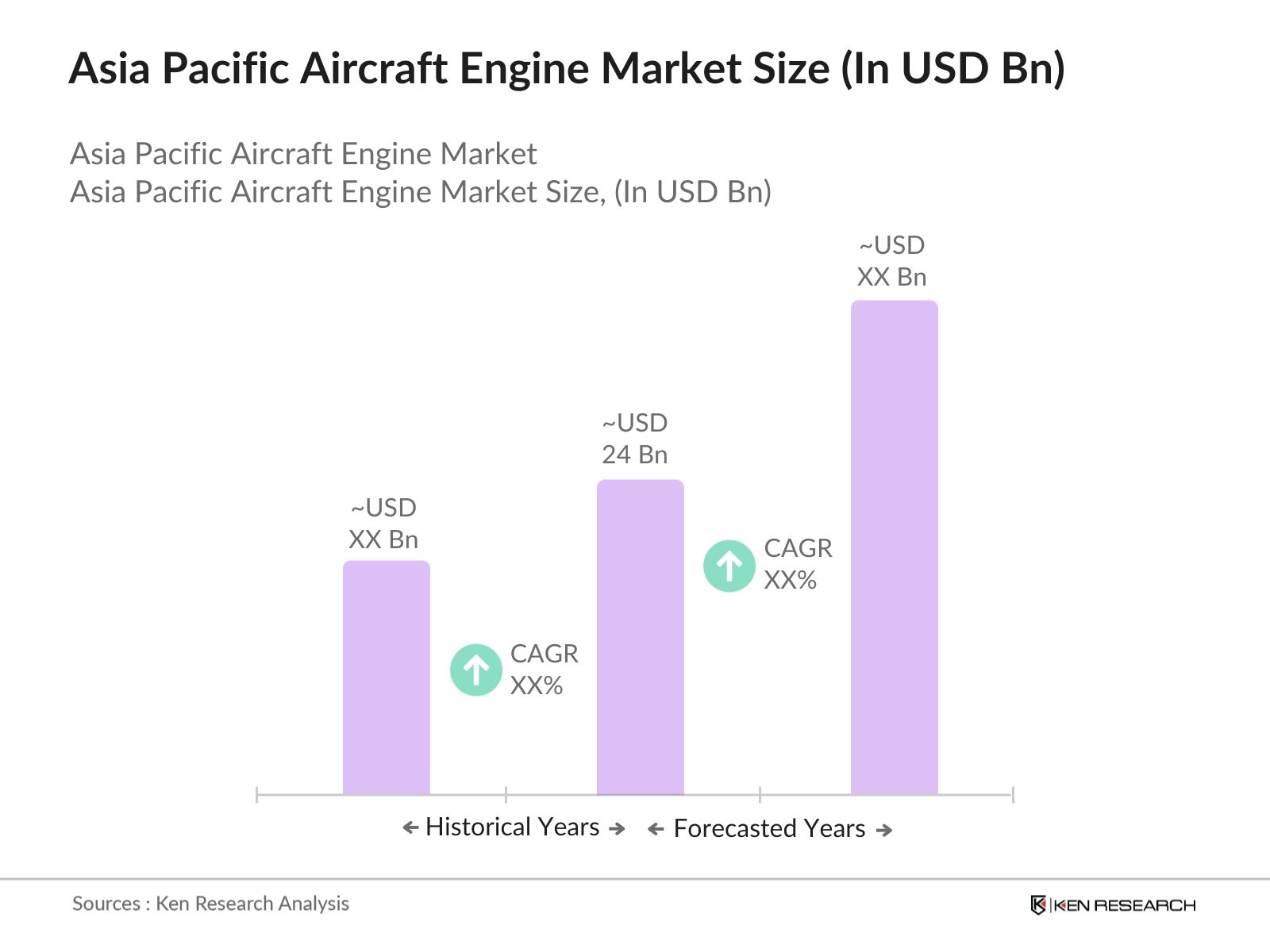
The Asia Pacific Aircraft Engine market is segmented into engine type, application and region etc.
By Engine Type: The market is segmented into Turbofan, Turboprop, and Piston engines. Turbofan engines held the dominant market share in the Asia Pacific aircraft engine market. The dominance of this segment is due to their extensive use in commercial aircraft, which makes up a significant portion of the regions aviation fleet. With increasing fuel efficiency and reduced carbon emissions, airlines are increasingly opting for modern turbofan engines to cut operational costs.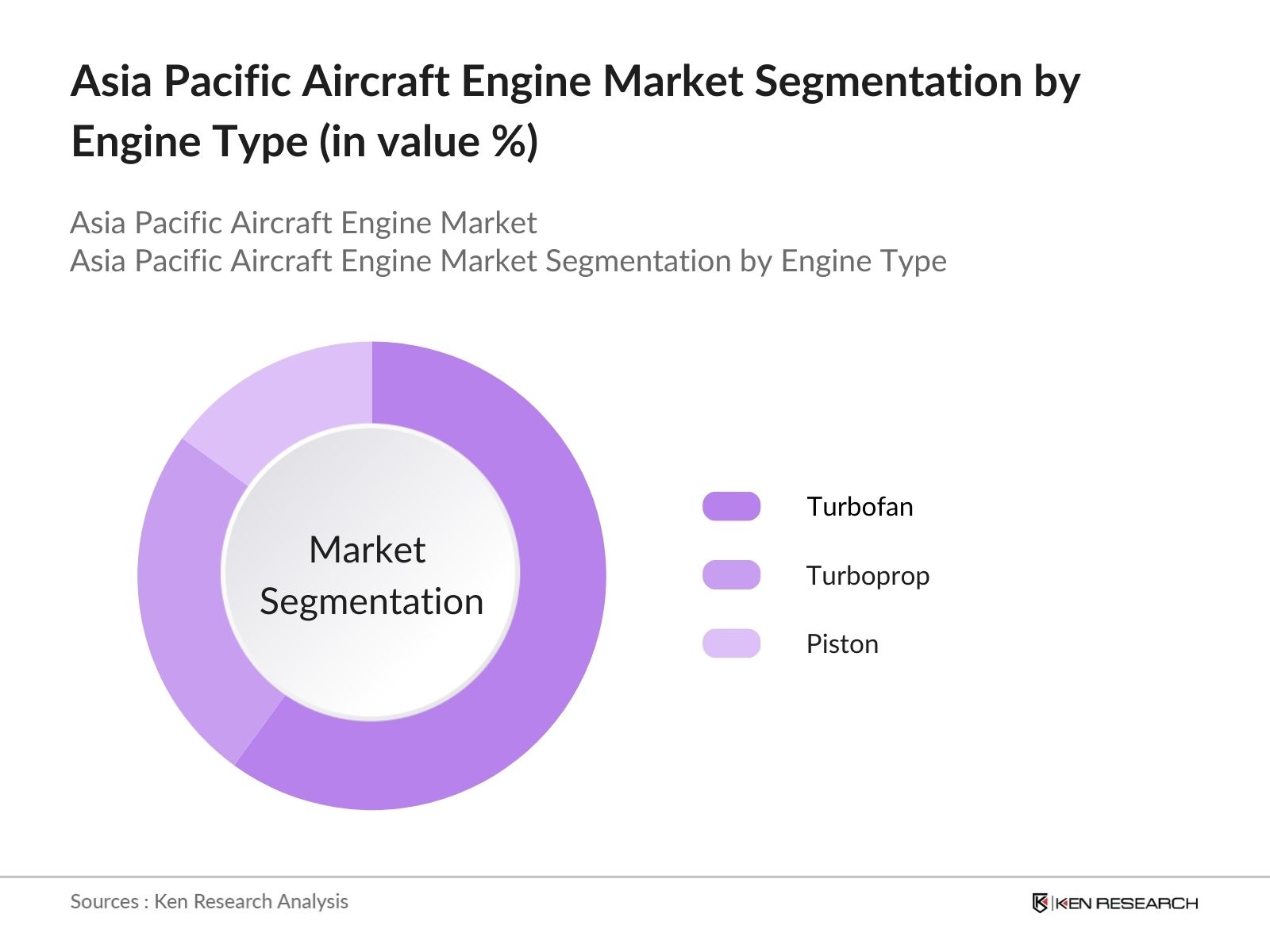
By Application: The market is segmented into commercial, military, and general aviation. Commercial aviation held the highest share, driven by the increasing number of low-cost carriers and rising demand for air travel in emerging markets like India and China. The demand for fuel-efficient and lightweight engines in commercial fleets is a key factor contributing to the dominance of this segment.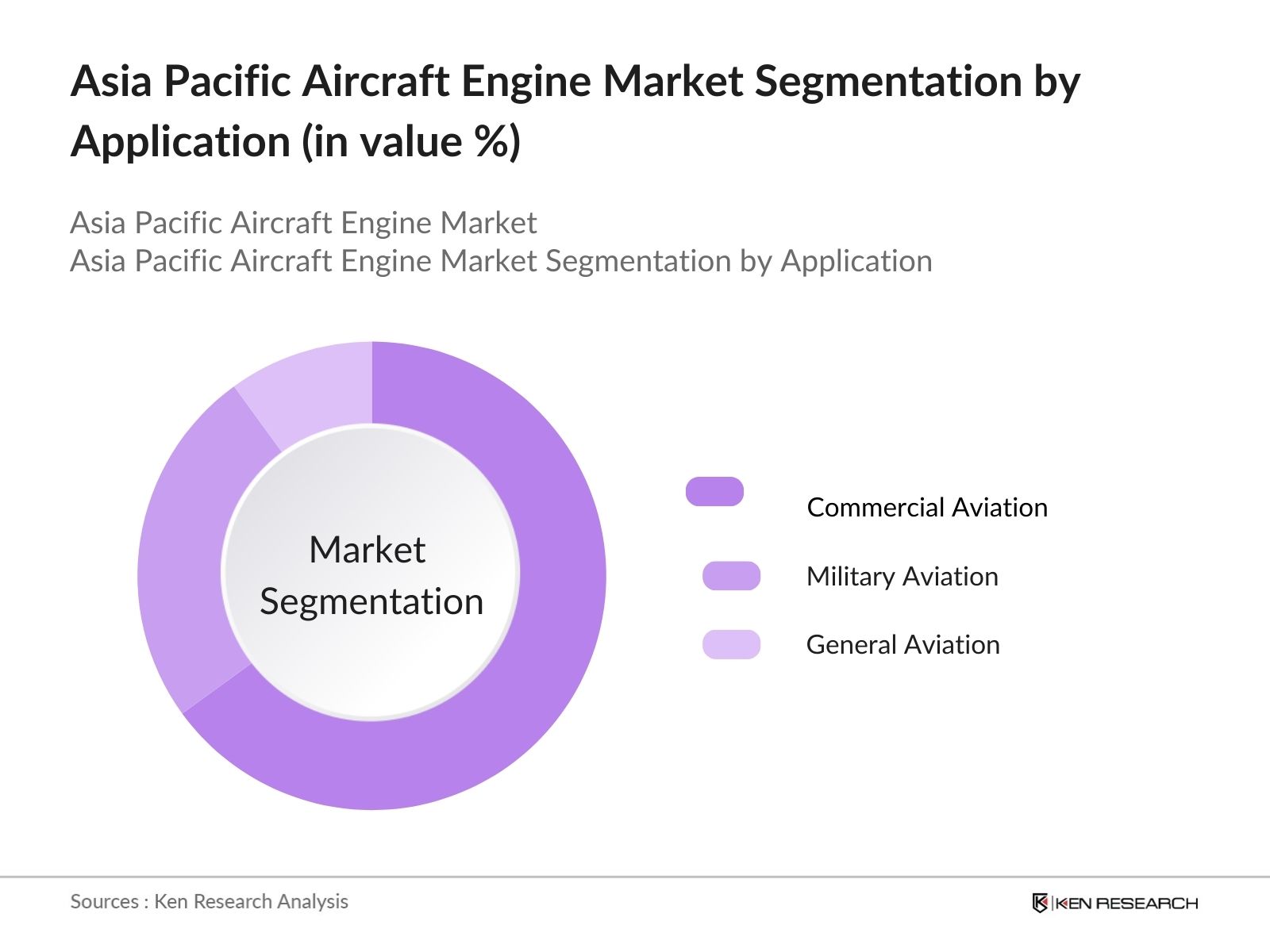
By Region The market is segmented into China, South Korea, Japan, India, Australia and Rest of APAC. China dominates the Asia Pacific aircraft engine market share, primarily driven by its large-scale commercial aviation sector, substantial defense investments, and rapid expansion of domestic low-cost carriers. China's focus on increasing self-reliance in aircraft engine production also contributes to its market dominance.
|
Company |
Establishment Year |
Headquarters |
|---|---|---|
|
Rolls-Royce Holdings |
1906 |
London, UK |
|
GE Aviation |
1917 |
Ohio, USA |
|
Pratt & Whitney |
1925 |
Connecticut, USA |
|
Safran Aircraft Engines |
1905 |
Paris, France |
|
MTU Aero Engines |
1934 |
Munich, Germany |
Rise in Air Passenger Traffic: The Asia Pacific region has seen an increase in air passenger traffic, with China and India leading in numbers. In 2024, China is expected to cater to over 800 million domestic air passengers, driven by the expansion of budget airlines and increased flight connectivity. India's air traffic has also grown, reaching 175 million passengers, supported by growing middle-class travel habits.
Rising Raw Material Costs: In 2024, the cost of key raw materials for engine production, such as nickel and titanium, has surged. The price of nickel alone has increased to USD 25,000 per metric ton, driven by limited supply and increased demand for electric vehicle batteries. This spike in material costs is affecting the profit margins of aircraft engine manufacturers, forcing them to adjust pricing strategies to maintain profitability.
Make in India for Aerospace: The Indian governments "Make in India" initiative has significantly impacted the aerospace industry. In 2024, this initiative attracted over USD 1.5 billion in foreign direct investment (FDI) for aircraft engine manufacturing, with global companies like Rolls-Royce and Pratt & Whitney setting up local production facilities. This initiative is reducing Indias reliance on imported engines and boosting domestic manufacturing capacity.
The Asia Pacific aircraft engine market is expected to grow exponentially. The market will continue to grow due to the surge in low-cost carriers (LCCs) in countries like India, China, and Southeast Asia, coupled with advancements in fuel-efficient and sustainable aircraft engine technologies. Military demand for advanced aircraft engines will also boost the markets future outlook.
Rising Demand for Sustainable Aviation Fuels (SAF): The adoption of sustainable aviation fuels is projected to rise significantly. Governments are setting stricter regulations on carbon emissions, and airlines are increasingly looking toward SAF-compatible engines to meet these requirements. Engine manufacturers will continue to invest in developing SAF-compatible models to cater to this demand.
|
By Engine Type |
Turbofan Turboprop Piston Engines |
|
By Application |
Commercial Military General Aviation |
|
By Region |
China South Korea Japan India Australia Rest of APAC |
1.1. Definition and Scope
1.2. Market Taxonomy
1.3. Market Growth Rate
1.4. Market Segmentation Overview
2.1. Historical Market Size
2.2. Year-on-Year Growth Analysis
2.3. Key Market Developments and Milestones
3.1. Growth Drivers
3.1.1. Rise in Air Passenger Traffic
3.1.2. Fleet Expansion by Regional Airlines
3.1.3. Increased Defense Spending
3.1.4. Investment in Sustainable Aviation
3.2. Restraints
3.2.1. Supply Chain Disruptions
3.2.2. Rising Raw Material Costs
3.2.3. Environmental Regulations
3.2.4. Skilled Labor Shortages
3.3. Opportunities
3.3.1. Development of Hybrid and Electric Engines
3.3.2. Expansion of Aircraft Engine Production Facilities
3.3.3. Growth in Regional Low-Cost Carriers
3.3.4. Increased Government Support for Aerospace Manufacturing
3.4. Trends
3.4.1. Adoption of Sustainable Aviation Fuels
3.4.2. Demand for Fuel-Efficient Engines
3.4.3. Expansion of Military Aircraft Fleets
3.4.4. Focus on Carbon-Emission-Reduction Technologies
3.5. Government Regulations
3.5.1. Indias Make in India Initiative
3.5.2. Chinas Aerospace Self-Reliance Program
3.5.3. South Koreas Green Aviation Initiative
3.5.4. Japans Defense Modernization Program
3.6. SWOT Analysis
3.7. Stakeholder Ecosystem
3.8. Competition Ecosystem
4.1. By Engine Type (in Value %)
4.1.1. Turbofan Engines
4.1.2. Turboprop Engines
4.1.3. Piston Engines
4.2. By Application (in Value %)
4.2.1. Commercial Aviation
4.2.2. Military Aviation
4.2.3. General Aviation
4.3. By Region (in Value %)
4.3.1. China
4.3.2. South Korea
4.3.3. South Korea
4.3.4. Japan
4.3.5. India
4.3.6. Australia
4.3.7. Rest of APAC
Asia Pacific Aircraft Engine Market Cross Comparison
5.1. Detailed Profiles of Major Companies
5.1.1. Rolls-Royce Holdings
5.1.2. GE Aviation
5.1.3. Pratt & Whitney
5.1.4. Safran Aircraft Engines
5.1.5. MTU Aero Engines
5.2. Cross Comparison Parameters (No. of Employees, Headquarters, Inception Year, Revenue)
6.1. Market Share Analysis
6.2. Strategic Initiatives
6.3. Mergers and Acquisitions
6.4. Investment Analysis
6.4.1. Venture Capital Funding
6.4.2. Government Grants
6.4.3. Private Equity Investments
7.1. Environmental Standards
7.2. Compliance Requirements
7.3. Certification Processes
8.1. Future Market Size Projections
8.2. Key Factors Driving Future Market Growth
9.1. By Engine Type (in Value %)
9.2. By Application (in Value %)
9.3. By Region (in Value %)
10.1. TAM/SAM/SOM Analysis
10.2. Customer Cohort Analysis
10.3. Marketing Initiatives
10.4. White Space Opportunity Analysis
Ecosystem creation for all the major entities and referring to multiple secondary and proprietary databases to perform desk research around market to collate industry level information.
Collating statistics on Asia Pacific Aircraft Engine market over the years, penetration of marketplaces and service providers ratio to compute revenue generated for Asia Pacific Aircraft Engine market. We will also review service quality statistics to understand revenue generated which can ensure accuracy behind the data points shared.
Building market hypothesis and conducting CATIs with industry experts belonging to different Aircraft engine companies to validate statistics and seek operational and financial information from company representatives.
Our team will approach multiple aircraft engine manufacturers and understand nature of product segments and sales, consumer preference and other parameters, which will support us validate statistics derived through bottom to top approach from aircraft engine companies.
The Asia Pacific aircraft engine market, valued at USD 24 billion in 2023, is driven by the expansion of commercial and military aviation, fleet modernization, and advancements in sustainable engine technologies.
Challenges in the Asia Pacific aircraft engine market include rising raw material costs, supply chain disruptions, environmental regulations, and a shortage of skilled labor in the aircraft manufacturing sector. These issues contribute to production delays and increased costs for manufacturers.
Key players in the Asia Pacific aircraft engine market include Rolls-Royce Holdings, GE Aviation, Pratt & Whitney, Safran Aircraft Engines, and MTU Aero Engines. These companies lead due to their advanced technologies, strong partnerships with aircraft manufacturers, and robust R&D investments.
The Asia Pacific aircraft engine market is driven by the rise in air passenger traffic, expansion of regional airlines' fleets, increased defense spending, and significant investments in sustainable aviation technologies by governments in the region.

What makes us stand out is that our consultants follows Robust, Refine and Result (RRR) methodology. i.e. Robust for clear definitions, approaches and sanity checking, Refine for differentiating respondents facts and opinions and Result for presenting data with story

We have set a benchmark in the industry by offering our clients with syndicated and customized market research reports featuring coverage of entire market as well as meticulous research and analyst insights.

While we don't replace traditional research, we flip the method upside down. Our dual approach of Top Bottom & Bottom Top ensures quality deliverable by not just verifying company fundamentals but also looking at the sector and macroeconomic factors.

With one step in the future, our research team constantly tries to show you the bigger picture. We help with some of the tough questions you may encounter along the way: How is the industry positioned? Best marketing channel? KPI's of competitors? By aligning every element, we help maximize success.

Our report gives you instant access to the answers and sources that other companies might choose to hide. We elaborate each steps of research methodology we have used and showcase you the sample size to earn your trust.

If you need any support, we are here! We pride ourselves on universe strength, data quality, and quick, friendly, and professional service.