
Asia Pacific Aircraft Hangar Market Outlook to 2030
Region:Afganistan
Author(s):Meenakshi Bisht
Product Code:KROD6595
Region:Afganistan
Author(s):Meenakshi Bisht
Product Code:KROD6595
December 2024
84
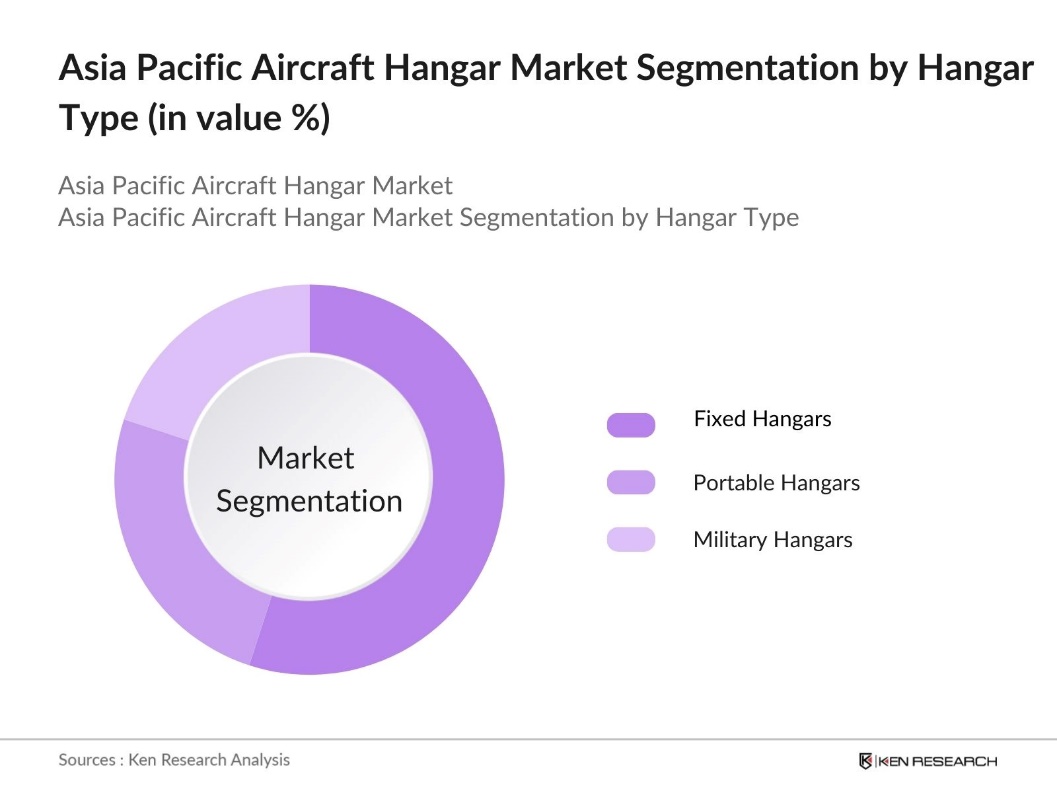
By Hangar Type: The market is segmented by hangar type into fixed hangars, portable hangars, and military hangars. Among these, fixed hangars hold a dominant position due to their established presence and suitability for commercial and maintenance purposes. These hangars, designed for long-term use, accommodate various aircraft types, providing reliable shelter, maintenance, and storage. Fixed hangars are preferred by both private and public aviation entities due to their durability and capacity, making them essential for commercial airline operations and major maintenance providers.
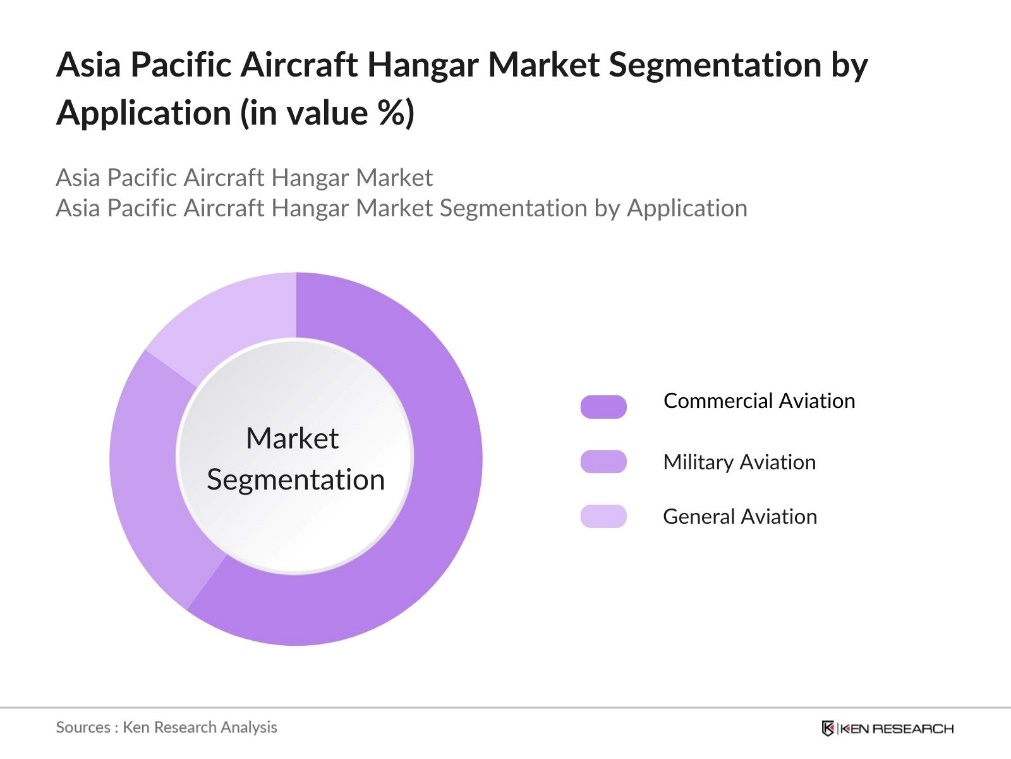
By Application: The market is segmented by application into commercial aviation, military aviation, and general aviation. Commercial aviation occupies the highest market share within this segmentation, supported by increased flight operations, a surge in passenger numbers, and airline fleet expansion in the region. This segment benefits significantly from the demand for maintenance and storage facilities for large commercial aircraft, driven by rapid urbanization and increased business and tourism travel. The substantial investment by airlines in robust hangar facilities for servicing their expanding fleets further solidifies this segment's dominance.
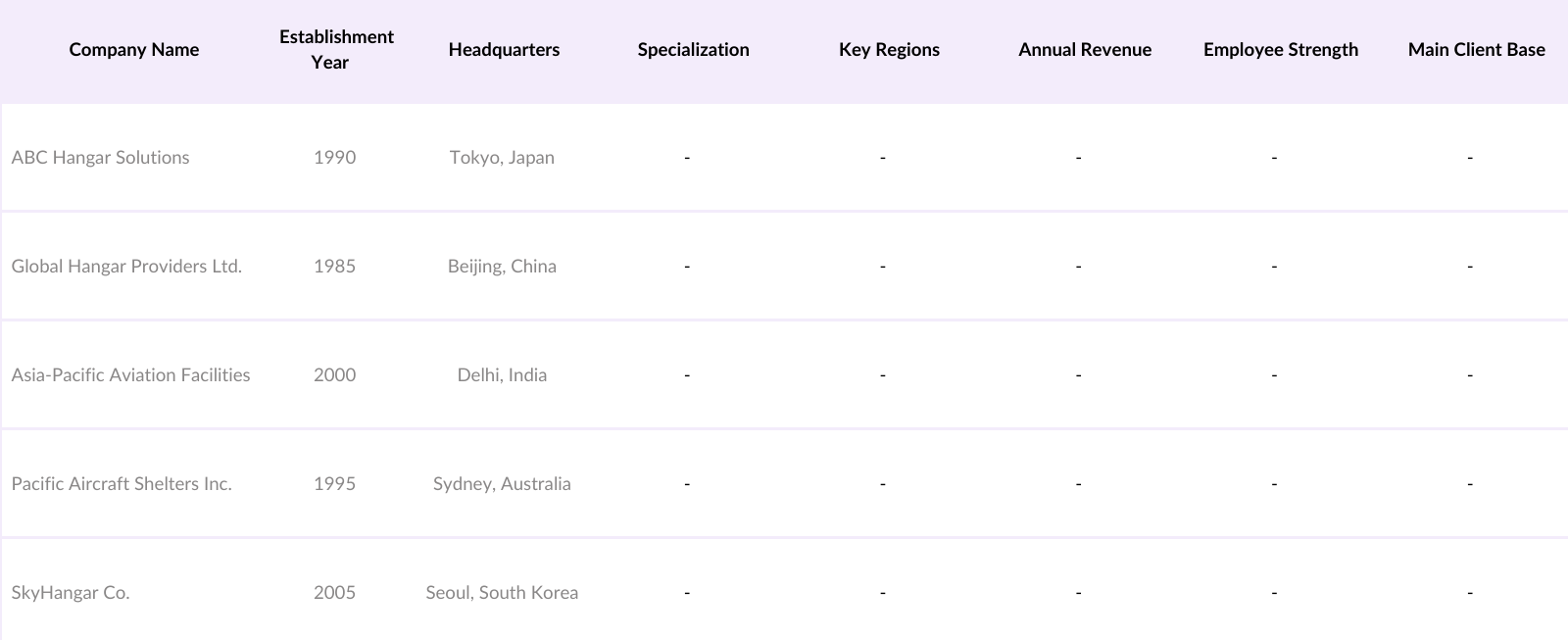
The Asia Pacific Aircraft Hangar Market is dominated by several major players, with each companys influence shaped by its unique capabilities and strategic initiatives. Key players in the market include prominent global and regional firms, which invest in expanding hangar facilities, adopting innovative construction materials, and forming partnerships to enhance their footprint in the market.
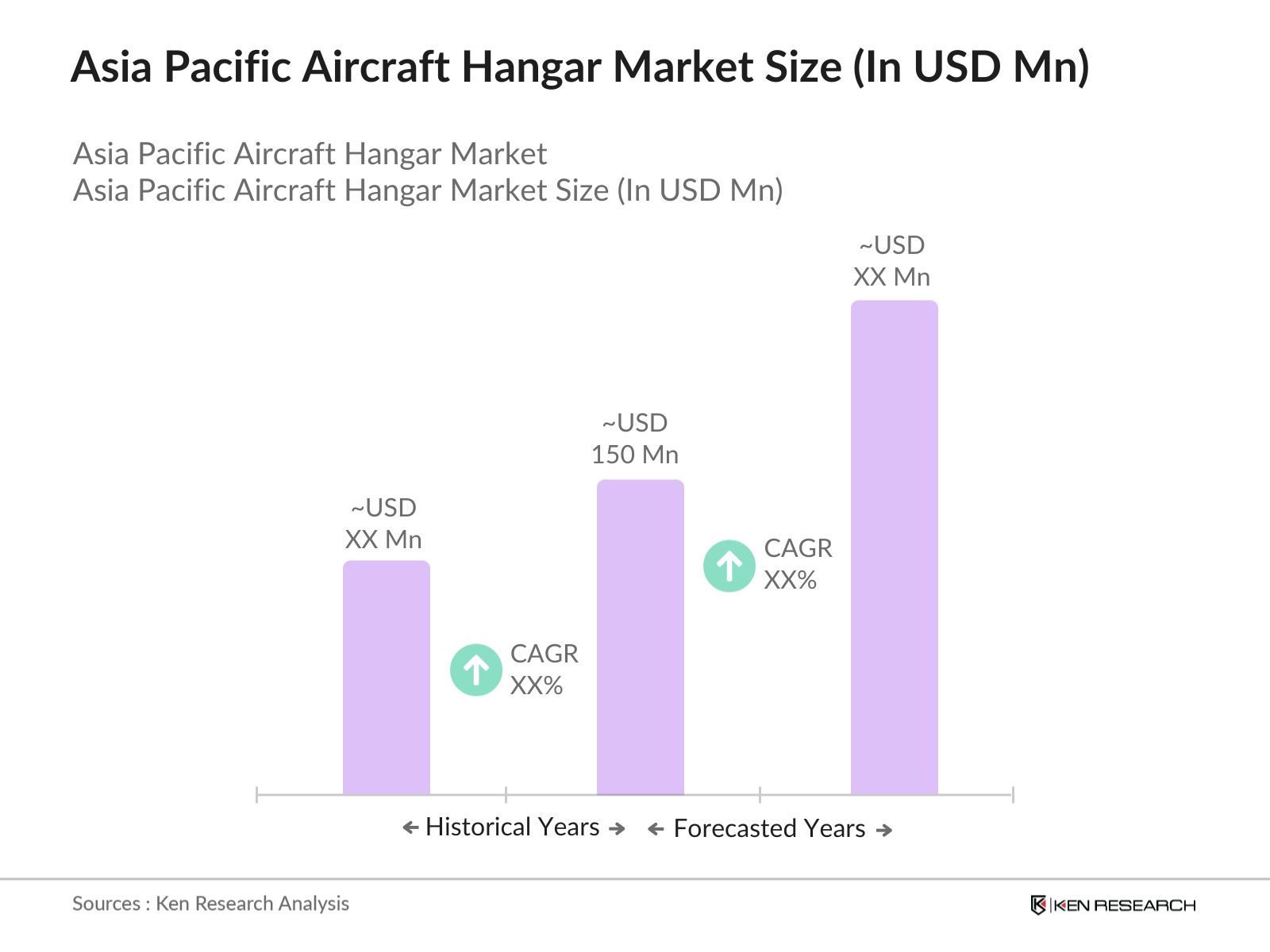
The Asia Pacific Aircraft Hangar Market is expected to see robust growth due to rising air traffic and a growing demand for maintenance, repair, and overhaul (MRO) facilities. Driven by extensive government support and infrastructure investment in aviation, the demand for advanced and multi-functional hangar solutions will continue to rise across the region. Additionally, the growing focus on eco-friendly and sustainable construction methods is expected to redefine hangar development in the coming years, making way for green and energy-efficient hangar facilities.
|
Hangar Type |
Fixed Hangars Portable Hangars Military Hangars |
|
Construction Type |
New Construction Renovation and Expansion |
|
Application |
Commercial Aviation Military Aviation General Aviation |
|
Material Used |
Steel, Aluminum Fabric |
|
Region |
East North South West |
1.1. Definition and Scope
1.2. Market Taxonomy
1.3. Market Dynamics Overview
1.4. Market Segmentation Overview
2.1. Historical Market Size
2.2. Year-On-Year Growth Analysis
2.3. Key Market Developments and Milestones
3.1. Market Growth Drivers
3.1.1. Increase in Aircraft Fleets
3.1.2. Expansion of Regional Airlines
3.1.3. Government Investments in Aviation Infrastructure
3.2. Market Challenges
3.2.1. High Initial Construction Costs
3.2.2. Environmental and Regulatory Constraints
3.2.3. Limited Availability of Land
3.3. Opportunities
3.3.1. Technological Advancements in Hangar Design
3.3.2. Green Hangar Initiatives
3.3.3. Expansion in Emerging Economies
3.4. Trends
3.4.1. Adoption of Modular Construction
3.4.2. Integration with Smart Technologies
3.4.3. Demand for Multi-Purpose Hangars
3.5. Government Regulations
3.5.1. Zoning and Land Use Regulations
3.5.2. Compliance with Safety Standards
3.5.3. Environmental Impact Assessments
3.6. SWOT Analysis
3.7. Stakeholder Ecosystem
3.8. Porters Five Forces Analysis
3.9. Competition Ecosystem
4.1. By Hangar Type (In Value %)
4.1.1. Fixed Hangars
4.1.2. Portable Hangars
4.1.3. Military Hangars
4.2. By Construction Type (In Value %)
4.2.1. New Construction
4.2.2. Renovation and Expansion
4.3. By Application (In Value %)
4.3.1. Commercial Aviation
4.3.2. Military Aviation
4.3.3. General Aviation
4.4. By Material Used (In Value %)
4.4.1. Steel
4.4.2. Aluminum
4.4.3. Fabric
4.5. By Region (In Value %)
4.5.1. East
4.5.2. North
4.5.3. South
4.5.4. West
5.1. Detailed Profiles of Major Companies
5.1.1. ABC Hangar Solutions
5.1.2. Global Hangar Providers Ltd.
5.1.3. Asia-Pacific Aviation Facilities
5.1.4. Pacific Aircraft Shelters Inc.
5.1.5. Modular Hangars Group
5.1.6. SkyHangar Co.
5.1.7. Hangar Innovations Ltd.
5.1.8. Airbase Construction Services
5.1.9. Asia Aero-Solutions
5.1.10. BuildSafe Hangars
5.1.11. Blue Sky Structures
5.1.12. Titan Hangar Systems
5.1.13. AeroBuild Industries
5.1.14. Alliance Hangar Developers
5.1.15. Durable Hangar Technologies
5.2. Cross Comparison Parameters (Revenue, Headquarters, Market Share, Primary Construction Material, Operational Regions, Total Project Portfolio, Average Project Value, Number of Employees)
5.3. Market Share Analysis
5.4. Strategic Initiatives
5.5. Mergers and Acquisitions
5.6. Investment Analysis
5.7. Government Incentives
6.1. Environmental Standards
6.2. Safety and Construction Codes
6.3. Airport Authority Guidelines
6.4. Compliance Certification Processes
7.1. Future Market Size Projections
7.2. Key Factors Influencing Future Market Demand
8.1. By Hangar Type (In Value %)
8.2. By Construction Type (In Value %)
8.3. By Application (In Value %)
8.4. By Material Used (In Value %)
8.5. By Region (In Value %)
9.1. TAM/SAM/SOM Analysis
9.2. Competitive Positioning and Market Mapping
9.3. White Space Analysis
9.4. Expansion and Partnership Opportunities
Disclaimer Contact UsThis initial step involves constructing an ecosystem map encompassing all major stakeholders within the Asia Pacific Aircraft Hangar Market. Desk research, supported by secondary and proprietary databases, identifies the critical factors influencing market dynamics, such as infrastructure investments, government policies, and demand for MRO facilities.
Historical data is analyzed to assess market penetration and development rates across segments. Key insights into revenue generation, usage patterns, and demand for different hangar types are reviewed to ensure accuracy in market size estimations.
Market hypotheses are validated through industry expert consultations using computer-assisted telephone interviews (CATIs). These consultations offer firsthand insights from stakeholders and industry leaders, allowing for a robust understanding of operational and financial dynamics.
In this final stage, in-depth discussions with aircraft hangar providers and MRO firms gather detailed information on product offerings, consumer preferences, and industry trends. This engagement further verifies and complements data from our bottom-up approach, resulting in a comprehensive, validated analysis of the Asia Pacific Aircraft Hangar Market.
The Asia Pacific Aircraft Hangar Market is valued at USD 0.51 billion, driven by increased demand for aviation infrastructure and rising air traffic within the region.
The Asia Pacific Aircraft Hangar Market is primarily driven by increasing investments in airport infrastructure, government support for aviation growth, and the growing need for maintenance facilities to support expanding airline fleets.
Key players in the Asia Pacific Aircraft Hangar Market include ABC Hangar Solutions, Global Hangar Providers Ltd., Asia-Pacific Aviation Facilities, Pacific Aircraft Shelters Inc., and SkyHangar Co., known for their specialized services and extensive regional presence.
Challenges in Asia Pacific Aircraft Hangar Market include high construction costs, stringent regulatory requirements, and environmental constraints that impact new hangar development projects.

What makes us stand out is that our consultants follows Robust, Refine and Result (RRR) methodology. i.e. Robust for clear definitions, approaches and sanity checking, Refine for differentiating respondents facts and opinions and Result for presenting data with story

We have set a benchmark in the industry by offering our clients with syndicated and customized market research reports featuring coverage of entire market as well as meticulous research and analyst insights.

While we don't replace traditional research, we flip the method upside down. Our dual approach of Top Bottom & Bottom Top ensures quality deliverable by not just verifying company fundamentals but also looking at the sector and macroeconomic factors.

With one step in the future, our research team constantly tries to show you the bigger picture. We help with some of the tough questions you may encounter along the way: How is the industry positioned? Best marketing channel? KPI's of competitors? By aligning every element, we help maximize success.

Our report gives you instant access to the answers and sources that other companies might choose to hide. We elaborate each steps of research methodology we have used and showcase you the sample size to earn your trust.

If you need any support, we are here! We pride ourselves on universe strength, data quality, and quick, friendly, and professional service.