
Asia-Pacific All-Terrain Vehicle (ATV) Market Outlook to 2030
Region:Asia
Author(s):Naman Rohilla
Product Code:KROD4445
Region:Asia
Author(s):Naman Rohilla
Product Code:KROD4445
October 2024
95
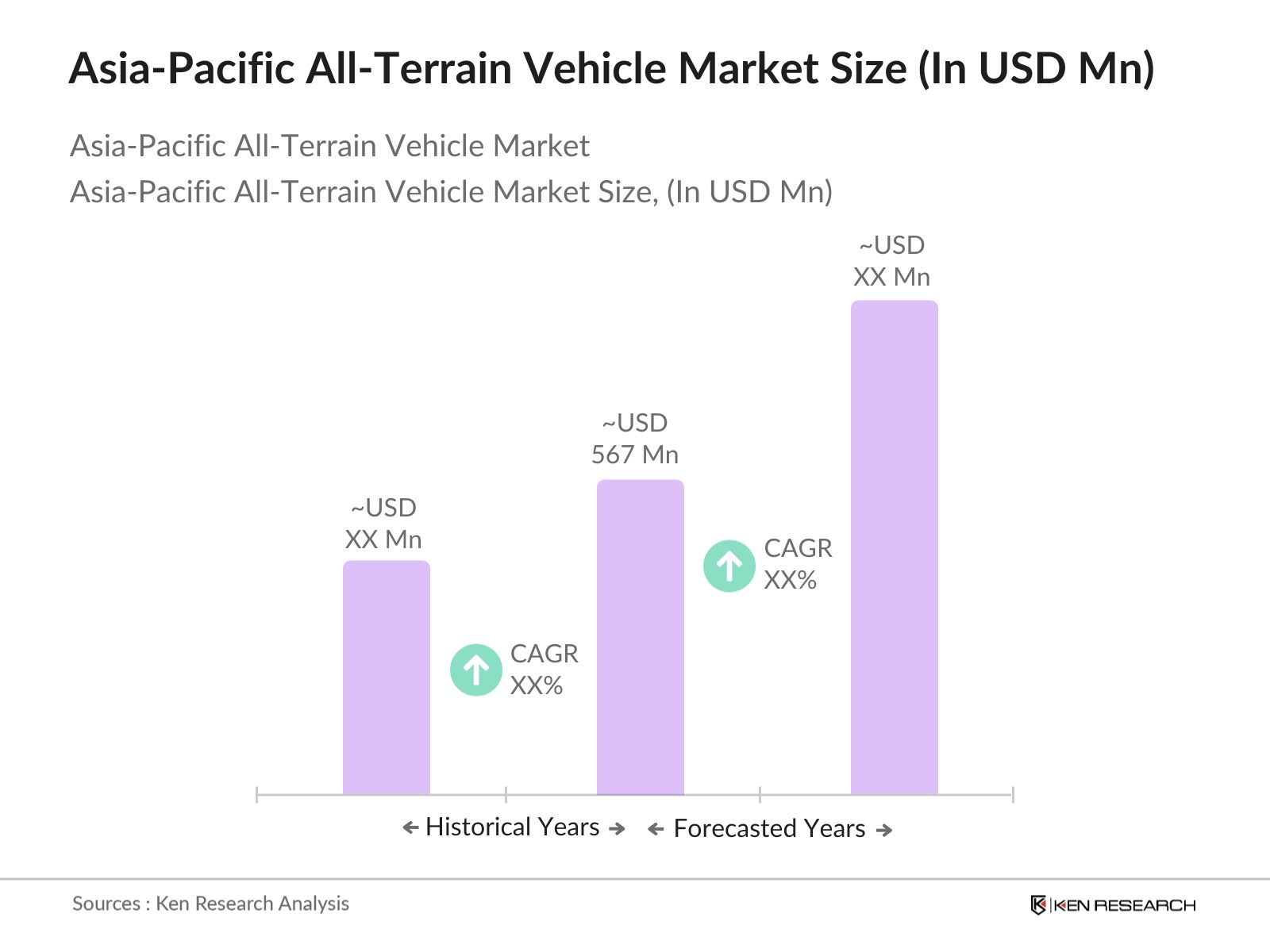
The Asia-Pacific ATV market is characterized by a few key players that dominate the industry through technological advancements, diverse product offerings, and strategic partnerships. These companies invest heavily in R&D to stay ahead of the competition and cater to the evolving needs of customers. The market is led by renowned brands such as Polaris, Honda, and Yamaha, which have established strong distribution networks across the region. These companies dominate by delivering high-quality, innovative products tailored to both recreational users and professionals in agriculture and defense.
| Company | Establish ment Year |
Head quarters |
Product Range | Global Presence | Technolo gical Innovation |
Partner ships |
Patents | Revenue | Emplo yees |
|---|---|---|---|---|---|---|---|---|---|
| Polaris Industries | 1954 | Minnesota, USA | |||||||
| Honda Motor Co., Ltd. | 1948 | Tokyo, Japan | |||||||
| Yamaha Motor Co., Ltd. | 1955 | Iwata, Japan | |||||||
| Kawasaki Heavy Industries | 1896 | Tokyo, Japan | |||||||
| BRP (Bombardier) | 2003 | Quebec, Canada |
The Asia-Pacific All-Terrain Vehicle market is poised for growth over the coming years, driven by the expansion of adventure tourism, technological advancements in electric and hybrid ATVs, and increasing demand from sectors such as agriculture and defence. Governments across the region are also implementing policies to support the use of eco-friendly vehicles, providing incentives for electric ATV manufacturers. These factors, coupled with growing consumer awareness about the utility of ATVs in various applications, will drive market expansion.
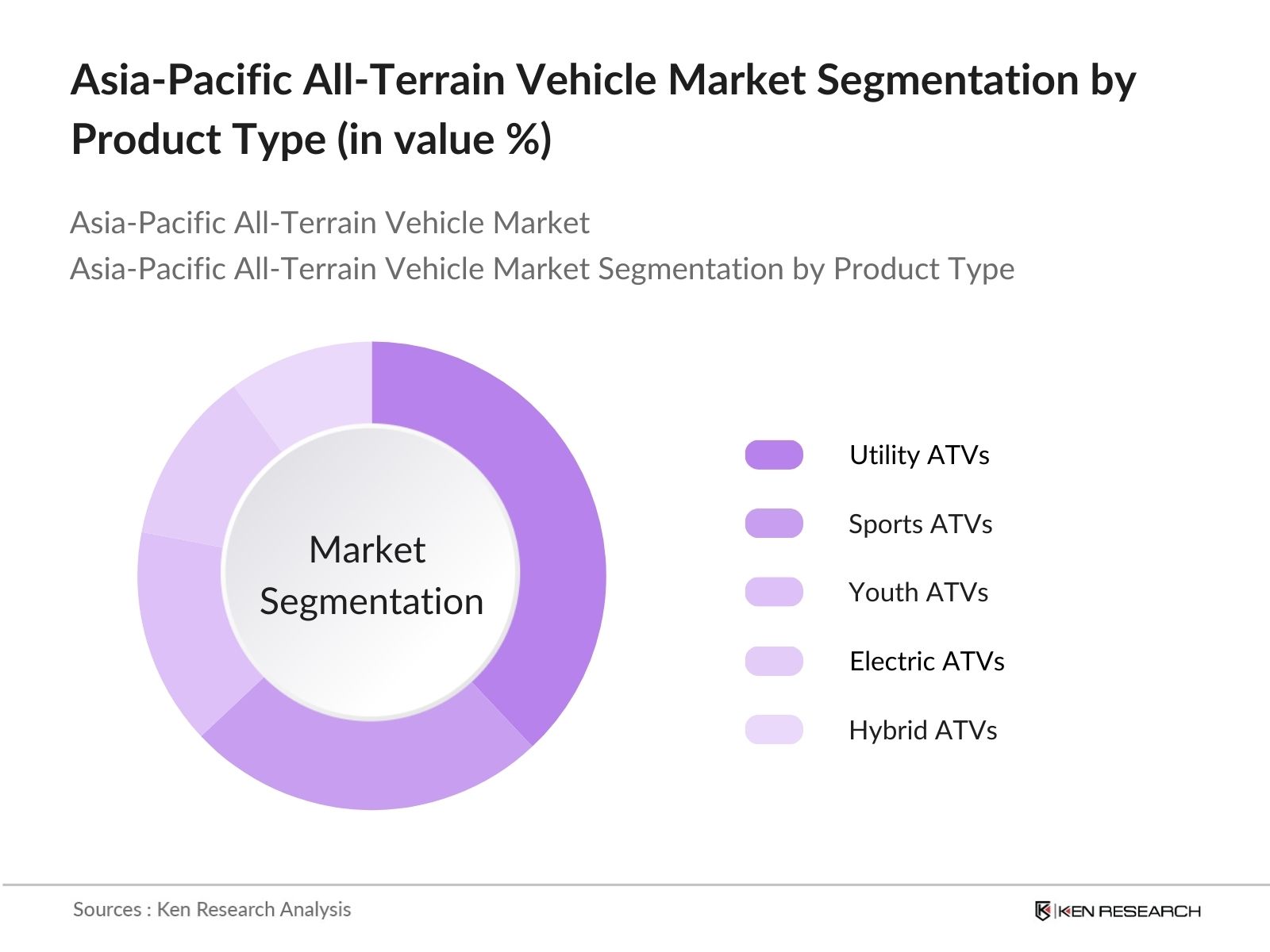
| By Product Type |
Utility ATVs Sports ATVs Youth ATVs Electric ATVs Hybrid ATVs |
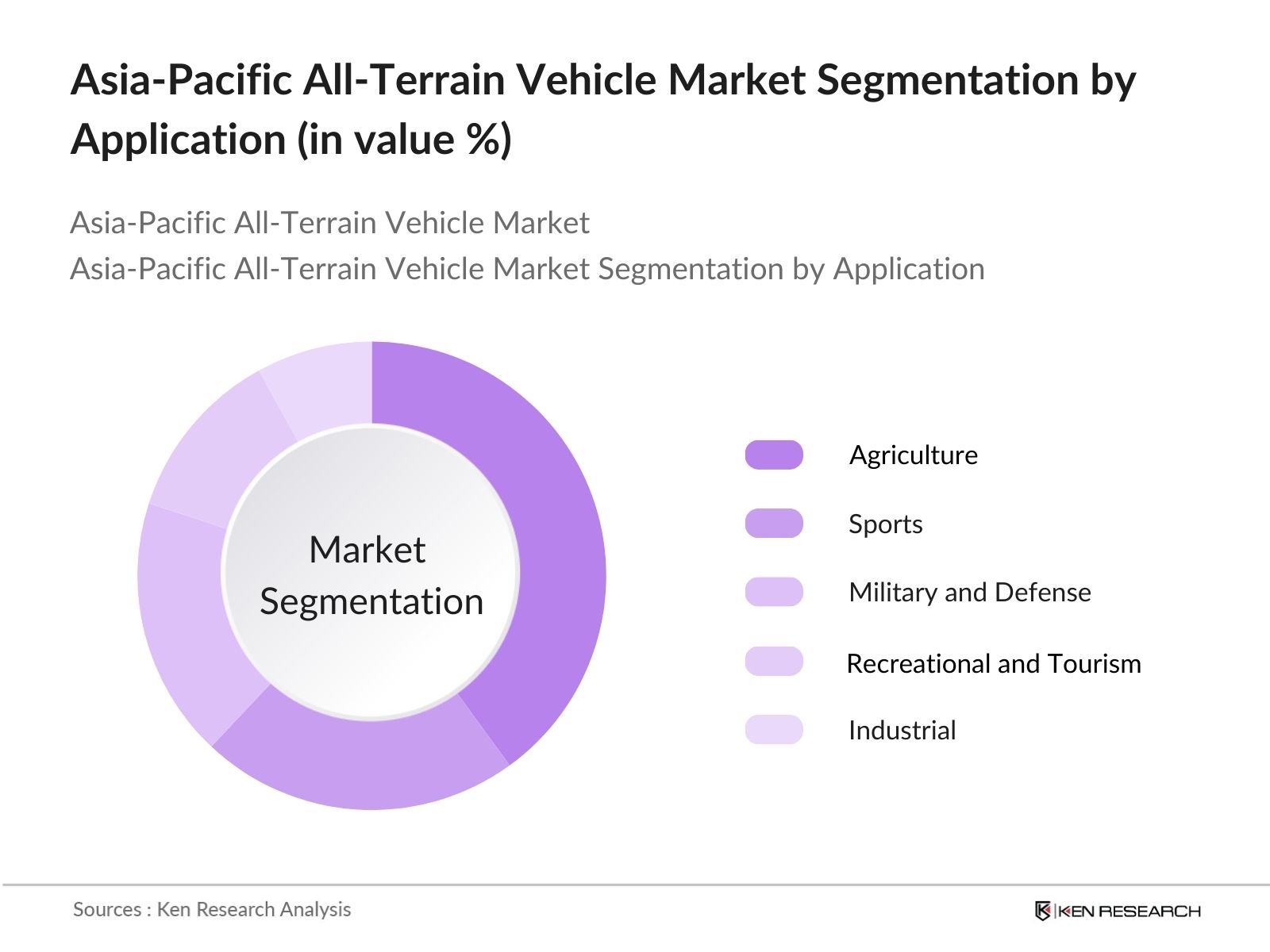
| By Application |
Agriculture, Sports Military and Defense Recreational and Tourism Industrial |
| By Engine Capacity |
Below 400cc 400cc to 800cc Above 800cc |
| By Propulsion Type |
Gasoline-Powered ATVs Electric-Powered ATVs Hybrid-Powered ATVs |
| By Country |
China Japan South Korea Australia India |
1.1. Definition and Scope
1.2. Market Taxonomy
1.3. Market Growth Rate (Influence of Government Policies, Consumer Preferences, and Economic Stability)
1.4. Market Segmentation Overview
2.1. Historical Market Size (Impact of Key Market Drivers: Tourism, Agriculture, Sports, and Military Applications)
2.2. Year-On-Year Growth Analysis (Emergence of Off-Road Sports and Expanding Tourism Sector)
2.3. Key Market Developments and Milestones (New Product Launches, Expanding Distribution Networks, Strategic Partnerships)
3.1. Growth Drivers
3.1.1. Increasing Use in Agriculture (Agricultural Efficiency and Remote Area Accessibility)
3.1.2. Growing Popularity of Off-Road Sports (Influence of Sports Events and Adventure Tourism)
3.1.3. Rising Demand from Defense Sector (Military Adoption for Tactical Mobility)
3.1.4. Technological Advancements (Integration of Electric ATVs and AI-Based Safety Features)
3.2. Market Challenges
3.2.1. High Ownership and Maintenance Costs (Pricing Impact on Market Penetration)
3.2.2. Stringent Emission Regulations (Regulatory Barriers and Compliance Costs)
3.2.3. Limited Aftermarket Services (Servicing Availability in Remote Areas)
3.3. Opportunities
3.3.1. Expansion into Rural and Adventure Tourism Markets (Emerging Markets with High Adventure Tourism Potential)
3.3.2. Development of Environmentally Friendly ATVs (Electric and Hybrid Models for Eco-Conscious Consumers)
3.3.3. Rising Interest in Racing Events (Growth in ATV Racing Clubs and Sports Tourism)
3.4. Trends
3.4.1. Shift Towards Electric and Hybrid ATVs (Eco-Friendly Technologies and Energy Efficiency)
3.4.2. Increased Customization for Off-Road Use (Demand for Specialized Performance Upgrades)
3.4.3. Integration with GPS and Smart Technologies (Enhanced Navigation and Safety Features)
3.5. Government Regulations
3.5.1. Safety Standards for ATV Manufacturing and Usage
3.5.2. Emission Norms and Environmental Regulations
3.5.3. Import and Export Policies Impacting ATV Trade
3.6. SWOT Analysis
3.7. Stakeholder Ecosystem
3.8. Porter’s Five Forces (Competitive Landscape, Barriers to Entry, and Supplier Power)
3.9. Competition Ecosystem (New Entrants, Substitute Products, Supplier Influence)
4.1. By Product Type (In Value %)
4.1.1. Utility ATVs
4.1.2. Sports ATVs
4.1.3. Youth ATVs
4.1.4. Electric ATVs
4.1.5. Hybrid ATVs
4.2. By Application (In Value %)
4.2.1. Agriculture
4.2.2. Sports
4.2.3. Military and Defense
4.2.4. Recreational and Tourism
4.2.5. Industrial
4.3. By Engine Capacity (In Value %)
4.3.1. Below 400cc
4.3.2. 400cc to 800cc
4.3.3. Above 800cc
4.4. By Propulsion Type (In Value %)
4.4.1. Gasoline-Powered ATVs
4.4.2. Electric-Powered ATVs
4.4.3. Hybrid-Powered ATVs
4.5. By Country (In Value %)
4.5.1. China
4.5.2. Japan
4.5.3. South Korea
4.5.4. Australia
4.5.5. India
5.1. Detailed Profiles of Major Competitors
5.1.1. Polaris Industries Inc.
5.1.2. Honda Motor Co., Ltd.
5.1.3. Yamaha Motor Co., Ltd.
5.1.4. Kawasaki Heavy Industries, Ltd.
5.1.5. Suzuki Motor Corporation
5.1.6. BRP Inc. (Bombardier Recreational Products)
5.1.7. Arctic Cat Inc.
5.1.8. KTM AG
5.1.9. CFMoto Powersports Inc.
5.1.10. Hisun Motors Corp.
5.1.11. Textron Inc.
5.1.12. Kymco
5.1.13. TGB Motor Co. Ltd.
5.1.14. Taiwan Golden Bee Co.
5.1.15. Linhai Group
5.2. Cross Comparison Parameters (Revenue, Headquarters, Global Presence, Product Range, Technological Innovation, Number of Patents, Partnerships, Market Share)
5.3. Market Share Analysis
5.4. Strategic Initiatives (Mergers, Acquisitions, Joint Ventures, Strategic Alliances)
5.5. Investment Analysis
5.6. Government Grants and Subsidies
5.7. Private Equity Investments
6.1. Safety and Emission Regulations
6.2. Certification Standards
6.3. Environmental Compliance
7.1. Market Size Projections
7.2. Key Factors Driving Future Growth (Focus on Electric and Hybrid ATVs, Expanding Adventure Tourism)
8.1. By Product Type (In Value %)
8.2. By Application (In Value %)
8.3. By Engine Capacity (In Value %)
8.4. By Propulsion Type (In Value %)
8.5. By Country (In Value %)
9.1. TAM/SAM/SOM Analysis
9.2. Customer Segment Analysis (Agricultural, Sports Enthusiasts, Military Procurement, Tourism)
9.3. White Space Opportunity Identification
The initial phase involves mapping the ATV market's key stakeholders, from manufacturers to end-users, through comprehensive desk research. Proprietary databases and secondary research sources are used to gather market-specific data, focusing on economic drivers and technological advancements.
This phase includes compiling historical data on ATV adoption, sector penetration, and revenue generation. We also evaluate user adoption trends in agriculture, tourism, and defence to derive accurate market estimates.
We conduct interviews with industry experts from leading ATV manufacturers and dealers to validate hypotheses. Insights gathered are cross-referenced with secondary data to ensure reliability.
This final step involves synthesizing all the gathered data to create a comprehensive, validated analysis. Direct engagement with key manufacturers ensures detailed insights into product segments and consumer behaviour.
The Asia-Pacific ATV market is valued at USD 567 million, driven by rising demand from the agriculture, tourism, and defence sectors.
Challenges in the Asia-Pacific ATV market include stringent emission regulations, high ownership costs, and a limited aftermarket network, which could impact the market's penetration in certain regions.
Asia-Pacific ATV market major players include Polaris, Honda, Yamaha, Kawasaki, and BRP, all known for their technological innovations and extensive product offerings.
Key Asia-Pacific ATV market growth drivers include the rise of adventure tourism, technological advancements in electric and hybrid ATVs, and increased demand for ATVs in agricultural and military applications.

What makes us stand out is that our consultants follows Robust, Refine and Result (RRR) methodology. i.e. Robust for clear definitions, approaches and sanity checking, Refine for differentiating respondents facts and opinions and Result for presenting data with story

We have set a benchmark in the industry by offering our clients with syndicated and customized market research reports featuring coverage of entire market as well as meticulous research and analyst insights.

While we don't replace traditional research, we flip the method upside down. Our dual approach of Top Bottom & Bottom Top ensures quality deliverable by not just verifying company fundamentals but also looking at the sector and macroeconomic factors.

With one step in the future, our research team constantly tries to show you the bigger picture. We help with some of the tough questions you may encounter along the way: How is the industry positioned? Best marketing channel? KPI's of competitors? By aligning every element, we help maximize success.

Our report gives you instant access to the answers and sources that other companies might choose to hide. We elaborate each steps of research methodology we have used and showcase you the sample size to earn your trust.

If you need any support, we are here! We pride ourselves on universe strength, data quality, and quick, friendly, and professional service.