















Asia Pacific Aluminum Composite Panel Market Outlook to 2030
Region:Asia
Author(s):Yogita Sahu
Product Code:KROD9551
December 2024
89
About the Report
Asia Pacific Aluminum Composite Panel Market Overview
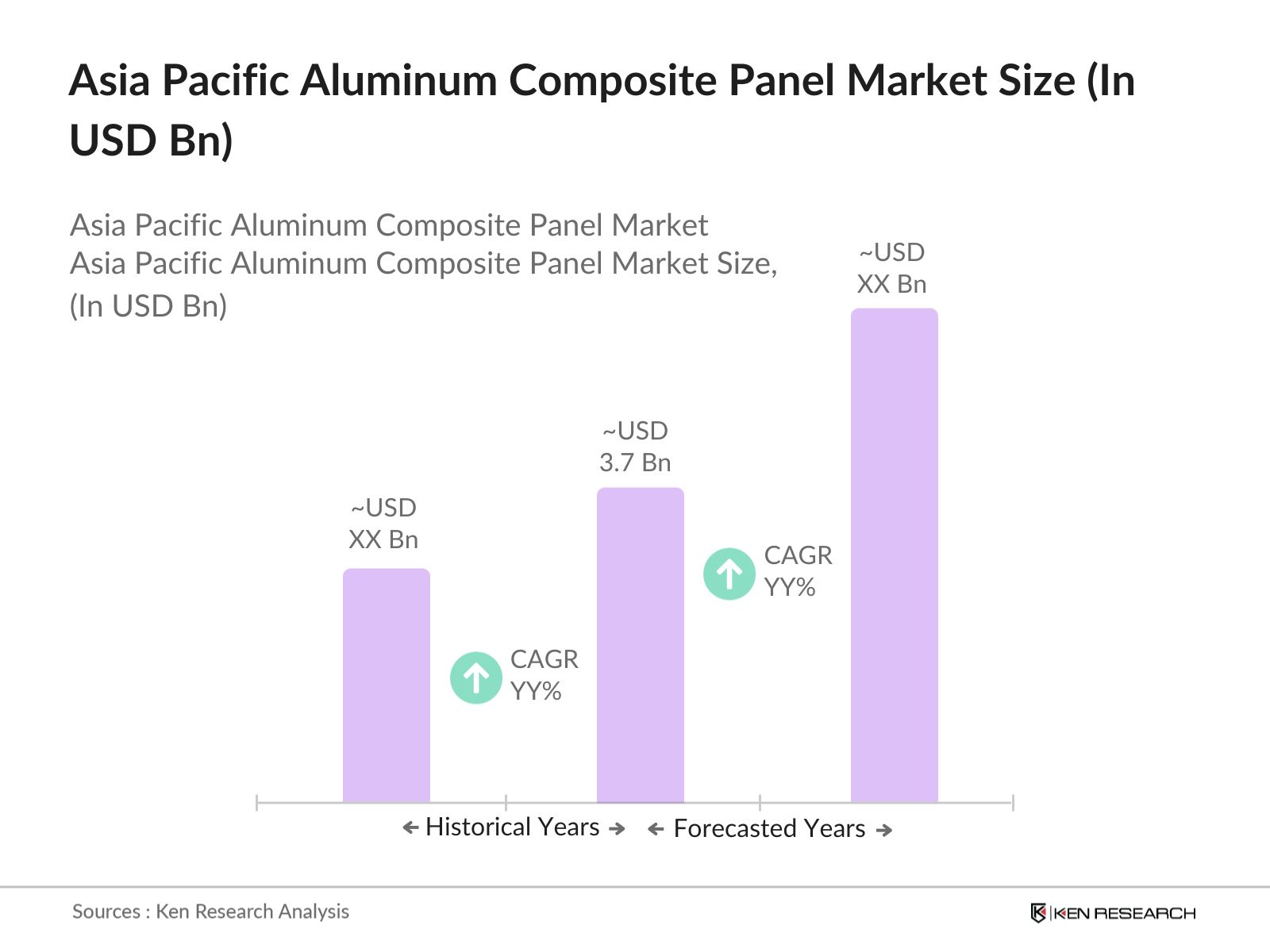
- The Asia Pacific aluminum composite panel market is experiencing steady growth, with a valuation of USD 3.7 billion. The demand for these panels is driven by rapid urbanization, ongoing infrastructure development, and the growing need for modern, high-performance materials across various industries. Key sectors such as construction, automotive, and advertising are adopting aluminum composite panels for their lightweight, durable, and aesthetically appealing properties.
- In terms of regional dominance, countries such as China, India, and Japan are leading the market. Chinas dominance is primarily due to its massive construction sector, which is bolstered by large-scale urbanization projects and investments in infrastructure. Indias fast-growing construction and transportation industries, combined with favorable government initiatives, also contribute to its share in the market.
- Chinas Belt and Road Initiative, with investments surpassing $1 trillion in 2024, is fueling demand for aluminum composite panels across Asia Pacific. This mega-infrastructure project, spanning transportation, energy, and urban development, is creating immense opportunities for the ACP market as developers increasingly rely on durable and aesthetic cladding solutions to meet project requirements.
Asia Pacific Aluminum Composite Panel Market Segmentation
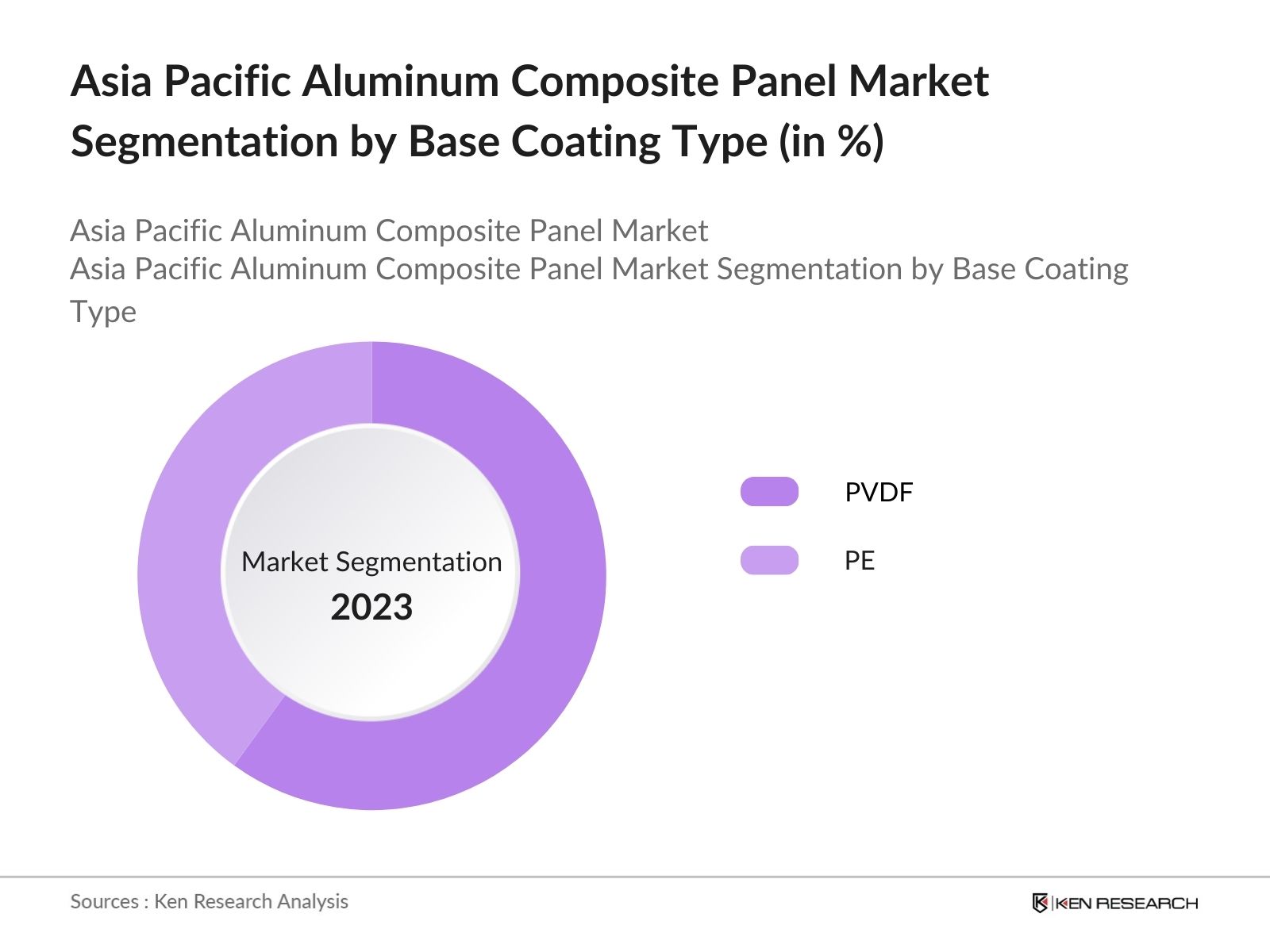
By Base Coating Type: The market is segmented by base coating type into Polyvinylidene Fluoride (PVDF) and Polyester (PE) coatings. Recently, PVDF has dominated the market due to its superior weather resistance, UV stability, and longer lifespan. These coatings are extensively used in external cladding and construction applications. The ability to retain color and withstand extreme weather conditions makes PVDF coatings the preferred choice in regions with harsh climates, particularly for large-scale infrastructure projects.
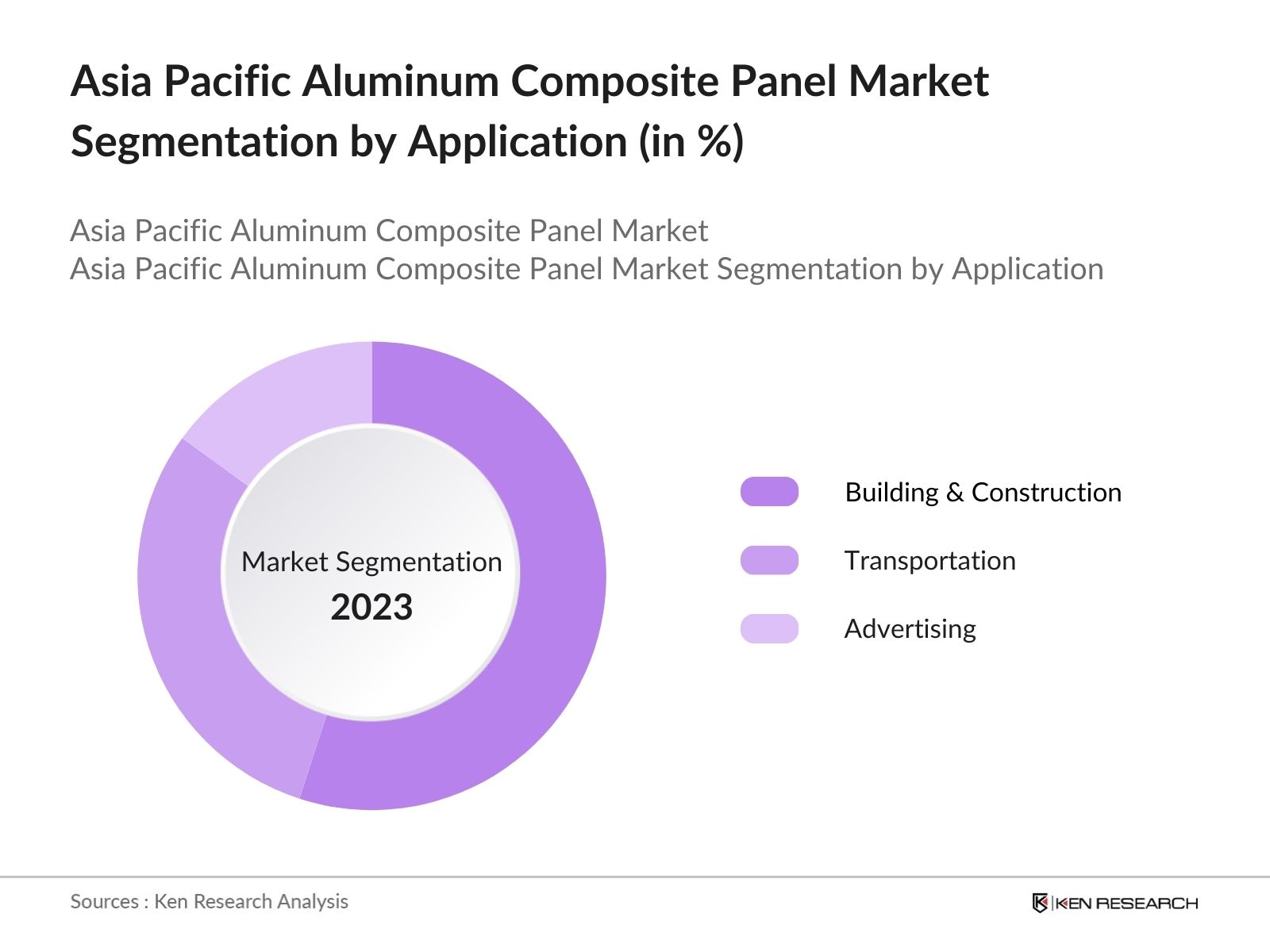
By Application: The market is also segmented by application into Building & Construction, Transportation, and Advertising. The Building & Construction segment holds the largest share due to the widespread use of aluminum composite panels in cladding, interior wall decoration, and insulation. The construction sector's preference for these panels is driven by their cost-effectiveness, ease of installation, and aesthetic appeal, especially in urban projects requiring modern and durable materials.
Asia Pacific Aluminum Composite Panel Market Competitive Landscape
The market is dominated by key players who have established a strong presence through innovation, technological advancements, and strategic investments in high-growth regions. Companies are focusing on expanding their product portfolios to meet the diverse needs of industries like construction, transportation, and advertising.
|
Company Name |
Establishment Year |
Headquarters |
Market Revenue |
Key Product Line |
Technological Innovations |
Environmental Certifications |
Strategic Partnerships |
Manufacturing Plants |
Global Reach |
|
3A Composites |
1969 |
Switzerland |
|||||||
|
Arconic Corporation |
1888 |
USA |
|||||||
|
Mitsubishi Chemical Corporation |
1933 |
Japan |
|||||||
|
Alubond U.S.A. |
1995 |
UAE |
|||||||
|
Aludecor Lamination Pvt. Ltd. |
2004 |
India |
Asia Pacific Aluminum Composite Panel Market Analysis
Market Growth Drivers
- Increasing Infrastructure Development Projects Across Asia Pacific: The Asia Pacific region is witnessing a surge in infrastructure development, with large-scale projects underway in countries like China, India, and Japan. In 2024, the governments of these countries have collectively allocated over $1.5 trillion toward construction, including residential, commercial, and transportation sectors.
- Booming Automotive Manufacturing in the Region: Asia Pacific accounts for a portion of global vehicle production, with countries such as China producing more than 27 million vehicles in 2024 alone. The demand for lightweight and fuel-efficient vehicles is driving the adoption of aluminum composite panels in vehicle exteriors, reducing the overall vehicle weight and improving fuel efficiency.
- Growing Popularity of Green Building Materials: Governments across Asia Pacific are promoting the use of eco-friendly materials in construction to reduce the carbon footprint of new developments. Countries like Singapore and Australia have set stringent sustainability targets, pushing builders toward the adoption of recyclable materials like aluminum composite panels.
Market Challenges
- Strict Fire Safety Regulations: Several countries in the Asia Pacific region have implemented stringent fire safety regulations for building materials following high-profile incidents involving combustible ACPs. For instance, Australias 2024 National Construction Code mandates the use of fire-resistant panels in high-rise buildings.
- Environmental Concerns Regarding Plastic Core Usage: Aluminum composite panels often incorporate a polyethylene (PE) or plastic core, which raises environmental concerns due to the difficulty in recycling these components. In 2024, several countries like South Korea and Japan have introduced stricter environmental policies aimed at reducing plastic waste, leading to increased scrutiny of the use of PE cores in building materials.
Asia Pacific Aluminum Composite Panel Market Future Outlook
Over the next five years, the Asia Pacific aluminum composite panel industry is expected to witness substantial growth. This growth will be driven by the continued expansion of the construction sector, rising demand for lightweight materials in transportation, and advancements in eco-friendly coatings for aluminum composite panels.
Market Future Opportunities
- Shift Toward Eco-Friendly Core Materials: In the next five years, the Asia Pacific ACP market will witness a shift toward the use of environmentally sustainable core materials. Governments are expected to impose stricter environmental regulations on polyethylene (PE) cores, pushing manufacturers to develop alternative core materials, such as mineral-filled and aluminum honeycomb cores, which are recyclable and non-combustible.
- Increasing Adoption of Digital Printing Technology in ACP Manufacturing By 2029, digital printing technology will be widely adopted in the ACP manufacturing process, allowing for more customized designs and faster production times. This trend will cater to the growing demand for personalized architectural facades and creative design solutions in commercial and residential projects across Asia Pacific.
Scope of the Report
|
Base Coating Type |
Polyvinylidene Fluoride (PVDF) Polyester (PE) |
|
Type |
Fire-Resistant Panels Anti-Bacterial Panels Antistatic Panels |
|
Application |
Building & Construction Transportation Advertising |
|
Composition |
Core Material Metal Skin |
|
Region |
China India Japan South Korea Australia |
Products
Key Target Audience Organizations and Entities Who Can Benefit by Subscribing This Report:
Construction Companies
Real Estate Developers
Architectural Firms
Government and Regulatory Bodies (Building and Construction Authority, Environmental Protection Agency)
Investors and Venture Capitalist Firms
Private Equity Firms
Automotive Manufacturers
Advertising Firms
Companies
Players Mentioned in the Report:
3A Composites
Arconic Corporation
Mitsubishi Chemical Corporation
Alubond U.S.A.
Aludecor Lamination Pvt. Ltd.
Changshu Kaidi Decoration Co., Ltd.
Guangzhou Xinghe Co., Ltd.
Yaret Industrial Group
Alumax Industrial Co., Ltd.
Jyi Shyang Industrial Co., Ltd.
Table of Contents
Asia Pacific Aluminum Composite Panel Market Overview
1.1. Definition and Scope
1.2. Market Taxonomy
1.3. Market Growth Rate
1.4. Market Segmentation Overview
Asia Pacific Aluminum Composite Panel Market Size (in USD Billion)
2.1. Historical Market Size
2.2. Year-On-Year Growth Analysis
2.3. Key Market Developments and Milestones
Asia Pacific Aluminum Composite Panel Market Analysis
3.1. Growth Drivers
3.1.1. Demand for Fire-Resistant Panels (Fire Resistance)
3.1.2. Rising Investments in Infrastructure Projects (Construction Sector)
3.1.3. Expansion of High-Performance Materials (Innovation and R&D)
3.1.4. Increasing Urbanization (Demand for Durable Panels)
3.2. Market Challenges
3.2.1. Price Sensitivity (Cost of Raw Materials)
3.2.2. Competition from Substitutes (Alternatives to ACP)
3.2.3. Regulatory Requirements (Environmental Compliance)
3.3. Opportunities
3.3.1. Growth in Emerging Markets (India and ASEAN)
3.3.2. Eco-Friendly Panels (Sustainability Initiatives)
3.3.3. Adoption in Automotive and Transportation Industries
3.4. Trends
3.4.1. Increased Use of PVDF Coatings (Weather Resistance)
3.4.2. Adoption of Nanotechnology in Panels
3.4.3. Rising Popularity of Decorative Panels (Interior Design)
3.5. Government Regulations
3.5.1. Green Building Regulations (Sustainability Focus)
3.5.2. Fire Safety Standards for Buildings (Compliance Requirements)
3.6. SWOT Analysis
3.7. Stakeholder Ecosystem
3.8. Porters Five Forces Analysis
3.9. Competition Ecosystem
Asia Pacific Aluminum Composite Panel Market Segmentation
4.1. By Base Coating Type (in Value %)
4.1.1. Polyvinylidene Fluoride (PVDF)
4.1.2. Polyester (PE)
4.2. By Type (in Value %)
4.2.1. Fire-Resistant Panels
4.2.2. Anti-Bacterial Panels
4.2.3. Antistatic Panels
4.3. By Application (in Value %)
4.3.1. Building & Construction
4.3.2. Transportation
4.3.3. Advertising
4.4. By Composition (in Value %)
4.4.1. Core Material
4.4.2. Metal Skin
4.5. By Region (in Value %)
4.5.1. China
4.5.2. India
4.5.3. Japan
4.5.4. South Korea
4.5.5. Australia
Asia Pacific Aluminum Composite Panel Market Competitive Analysis
5.1. Detailed Profiles of Major Companies
5.1.1. 3A Composites
5.1.2. Alcoa Corporation
5.1.3. Alpolic Materials
5.1.4. Arconic Corporation
5.1.5. Alubond U.S.A.
5.1.6. Alumax Industrial Co., Ltd.
5.1.7. Mitsubishi Chemical Corporation
5.1.8. Changshu Kaidi Decoration Co., Ltd.
5.1.9. Guangzhou Xinghe Co., Ltd.
5.1.10. Yaret Industrial Group
5.1.11. Aludecor Lamination Pvt. Ltd.
5.1.12. Jyi Shyang Industrial Co., Ltd.
5.1.13. Fairfield Metal LLC
5.1.14. Shanghai Huayuan Co., Ltd.
5.1.15. Laminators Incorporated
5.2. Cross Comparison Parameters (Employee Count, Headquarters, Inception Year, Revenue, Market Share, Strategic Initiatives, Certifications, Regional Presence)
5.3. Market Share Analysis
5.4. Strategic Initiatives and Partnerships
5.5. Mergers & Acquisitions
5.6. Investment and Funding Analysis
Asia Pacific Aluminum Composite Panel Market Regulatory Framework
6.1. Building Safety and Fire Regulations
6.2. Environmental Standards and Sustainability Certifications
6.3. Compliance Processes and Certifications
Asia Pacific Aluminum Composite Panel Future Market Size (in USD Billion)
7.1. Future Market Size Projections
7.2. Key Factors Driving Future Market Growth
Asia Pacific Aluminum Composite Panel Future Market Segmentation
8.1. By Base Coating Type (in Value %)
8.2. By Type (in Value %)
8.3. By Application (in Value %)
8.4. By Composition (in Value %)
8.5. By Region (in Value %)
Asia Pacific Aluminum Composite Panel Market Analysts Recommendations
9.1. TAM/SAM/SOM Analysis
9.2. Customer Cohort Analysis
9.3. Strategic Marketing Initiatives
9.4. White Space Opportunity Analysis
Disclaimer Contact UsResearch Methodology
Step 1: Identification of Key Variables
The first step involves mapping out key stakeholders in the Asia Pacific aluminum composite panel market. Extensive secondary research is conducted using proprietary databases to gather detailed information on market drivers, competitive dynamics, and end-user preferences.
Step 2: Market Analysis and Construction
In this phase, historical data from the aluminum composite panel market is collected and analyzed to determine trends in construction, advertising, and transportation industries. This includes market penetration rates, competitive landscape, and performance of key segments.
Step 3: Hypothesis Validation and Expert Consultation
Market hypotheses are developed based on desk research and subsequently validated through interviews with key industry experts. This includes consultations with aluminum composite panel manufacturers and distributors to verify market trends and growth potential.
Step 4: Research Synthesis and Final Output
The final step involves the synthesis of gathered data into a comprehensive report, focusing on key metrics such as market size, growth forecasts, competitive analysis, and future opportunities. The data is refined using a bottom-up approach to ensure accuracy.
Frequently Asked Questions
01. How big is the Asia Pacific Aluminum Composite Panel Market?
The Asia Pacific aluminum composite panel market is valued at USD 3.7 billion, driven by increasing infrastructure projects and demand for high-performance construction materials.
02. What are the challenges in the Asia Pacific Aluminum Composite Panel Market?
Challenges in the Asia Pacific aluminum composite panel market include the high cost of raw materials, regulatory compliance for fire resistance and environmental standards, and competition from cheaper alternatives like polyvinyl chloride (PVC) panels.
03. Who are the major players in the Asia Pacific Aluminum Composite Panel Market?
Key players in the Asia Pacific aluminum composite panel market include 3A Composites, Arconic Corporation, Mitsubishi Chemical Corporation, Alubond U.S.A., and Aludecor Lamination Pvt. Ltd.
04. What are the growth drivers of the Asia Pacific Aluminum Composite Panel Market?
The Asia Pacific aluminum composite panel market is propelled by the construction boom in China and India, increasing adoption of lightweight materials in the automotive sector, and the growing focus on green building initiatives.
05. What are the market trends in the Asia Pacific Aluminum Composite Panel Market?
Emerging trends in the Asia Pacific aluminum composite panel market include the rise in demand for fire-resistant and antibacterial panels, nanotechnology coatings, and eco-friendly building materials for sustainable urban development.
Why Buy From Us?

What makes us stand out is that our consultants follows Robust, Refine and Result (RRR) methodology. i.e. Robust for clear definitions, approaches and sanity checking, Refine for differentiating respondents facts and opinions and Result for presenting data with story

We have set a benchmark in the industry by offering our clients with syndicated and customized market research reports featuring coverage of entire market as well as meticulous research and analyst insights.

While we don't replace traditional research, we flip the method upside down. Our dual approach of Top Bottom & Bottom Top ensures quality deliverable by not just verifying company fundamentals but also looking at the sector and macroeconomic factors.

With one step in the future, our research team constantly tries to show you the bigger picture. We help with some of the tough questions you may encounter along the way: How is the industry positioned? Best marketing channel? KPI's of competitors? By aligning every element, we help maximize success.

Our report gives you instant access to the answers and sources that other companies might choose to hide. We elaborate each steps of research methodology we have used and showcase you the sample size to earn your trust.

If you need any support, we are here! We pride ourselves on universe strength, data quality, and quick, friendly, and professional service.