
Asia Pacific Antibiotics Market Outlook to 2030
Region:Asia
Author(s):Vijay Kumar
Product Code:KROD5234
October 2024
93
About the Report
Asia Pacific Antibiotics Market Overview
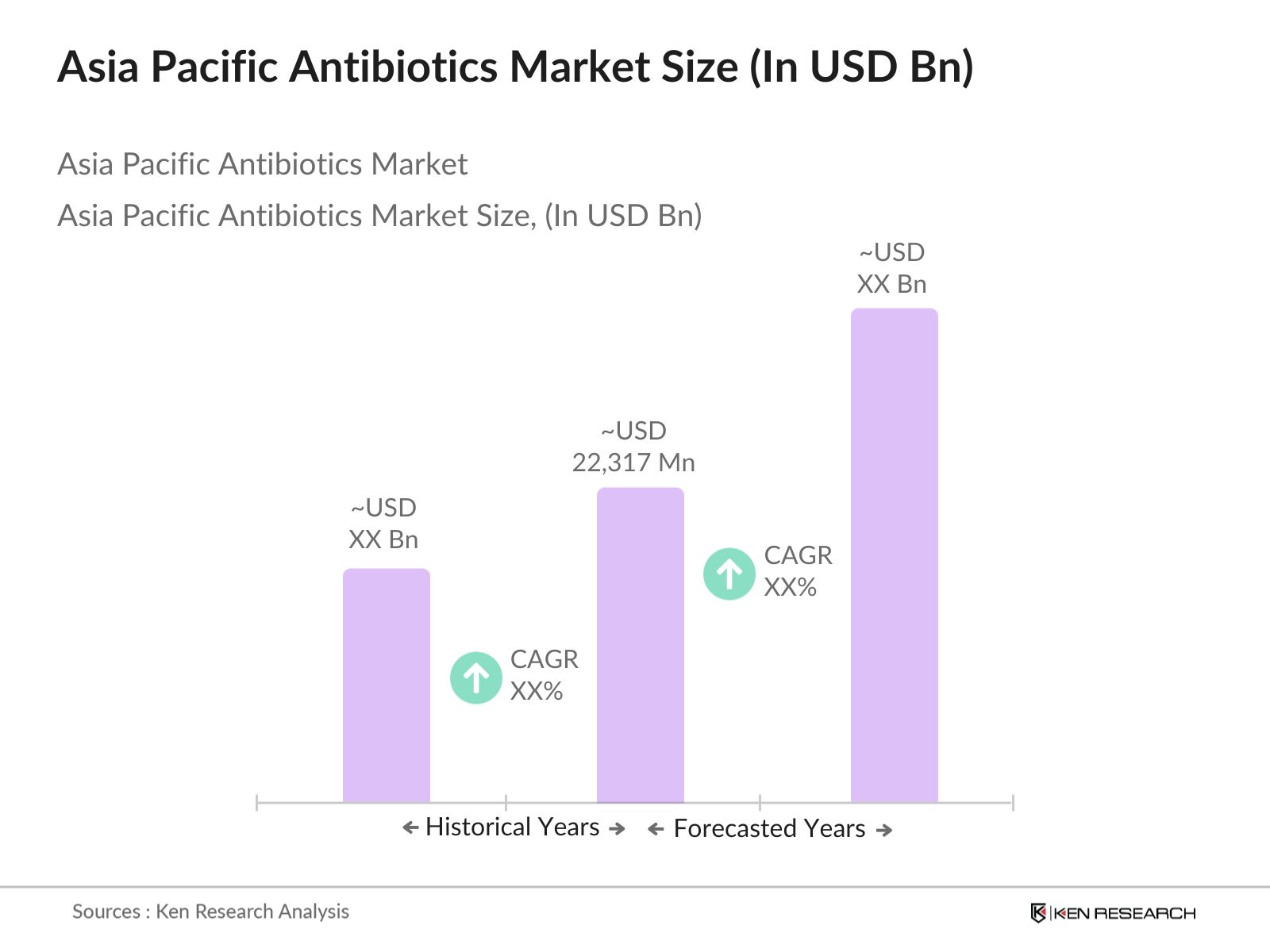
- The Asia Pacific Antibiotics market is valued at USD 22,317 million, based on a five-year historical analysis. This market is primarily driven by the increasing prevalence of infectious diseases and the growing concern over antimicrobial resistance. With governments focusing on expanding healthcare access and improving infrastructure, the demand for effective antibiotics has surged. Key sectors such as healthcare, agriculture, and pharmaceuticals are fueling the consumption of antibiotics, with rising investments in R&D for next-generation solutions.
- In terms of regional dominance, countries such as China, India, and Japan lead the antibiotics market. China holds a significant position due to its vast population, rapidly developing healthcare infrastructure, and large-scale pharmaceutical manufacturing capacity. India follows closely, benefiting from its large domestic pharmaceutical industry and growing demand for healthcare services. Japans dominance comes from its advanced healthcare system and government policies promoting the use of antibiotics in preventive care. These nations have a critical role in shaping the regional market due to their combined influence on production, research, and healthcare policies.
- Regulatory bodies across Asia Pacific have implemented rigorous drug approval processes to ensure the safety and efficacy of antibiotics. In 2024, Chinas National Medical Products Administration reported that only 60% of submitted antibiotic drugs were granted approval after stringent testing for resistance profiles and safety parameters. This strict regulatory environment ensures that only the most effective drugs enter the market, although it delays the introduction of new treatments.
Asia Pacific Antibiotics Market Segmentation
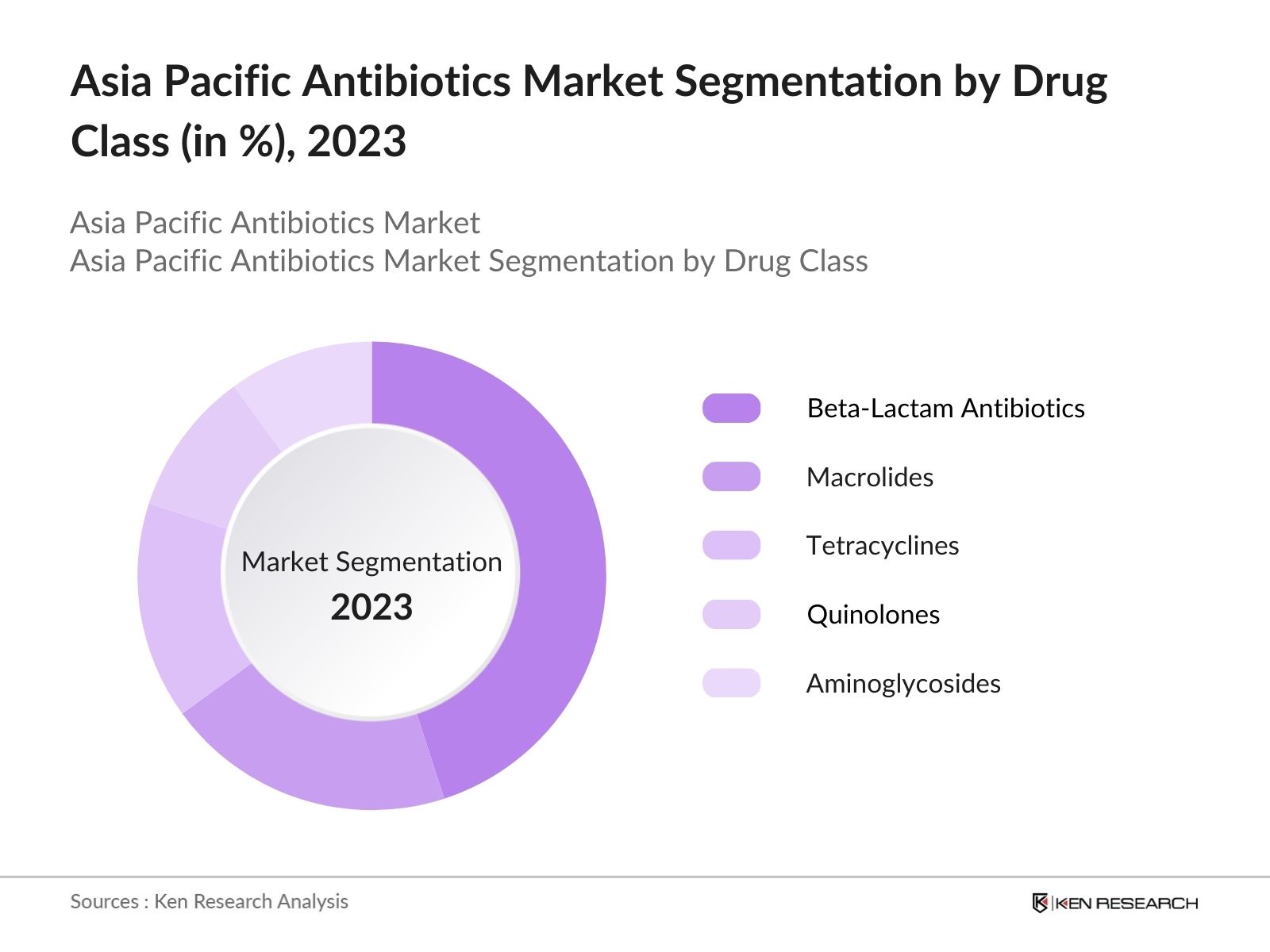
By Drug Class: The market is segmented by drug class into Beta-Lactam antibiotics (Penicillin, Cephalosporins, Carbapenems), Macrolides, Tetracyclines, Quinolones, and Aminoglycosides. Beta-Lactam antibiotics hold the dominant market share due to their wide usage in treating various bacterial infections. These drugs have an established presence in the market because of their effectiveness and relatively lower cost.
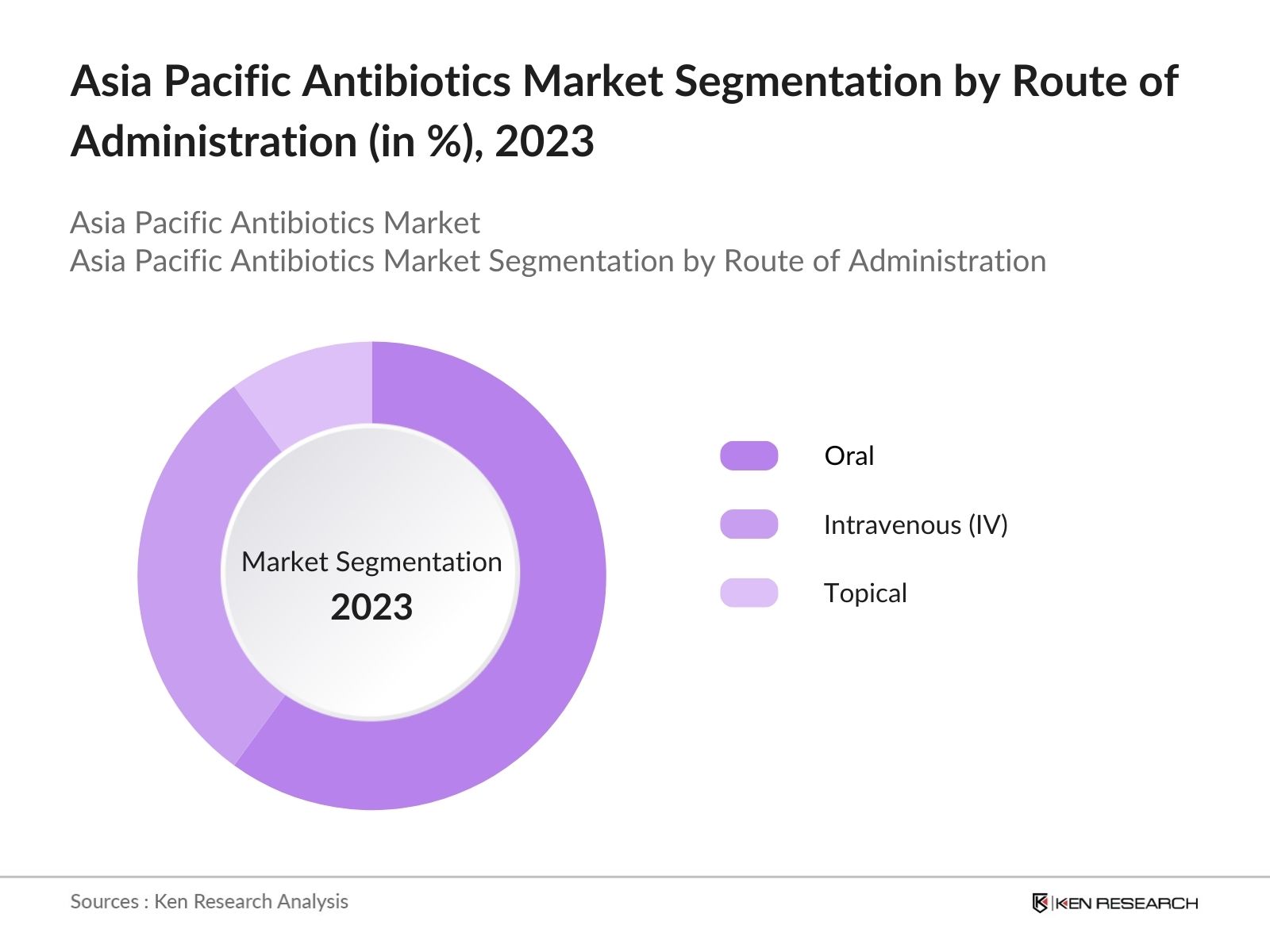
By Route of Administration: The antibiotics market is further segmented by the route of administration into oral, intravenous (IV), and topical. Oral antibiotics are the most widely consumed, accounting for the largest market share. This is due to their ease of use, patient compliance, and accessibility, especially in outpatient care settings. The demand for oral antibiotics is higher in rural areas, where healthcare infrastructure is less developed and hospitals are less accessible compared to urban centers.
Asia Pacific Antibiotics Market Competitive Landscape
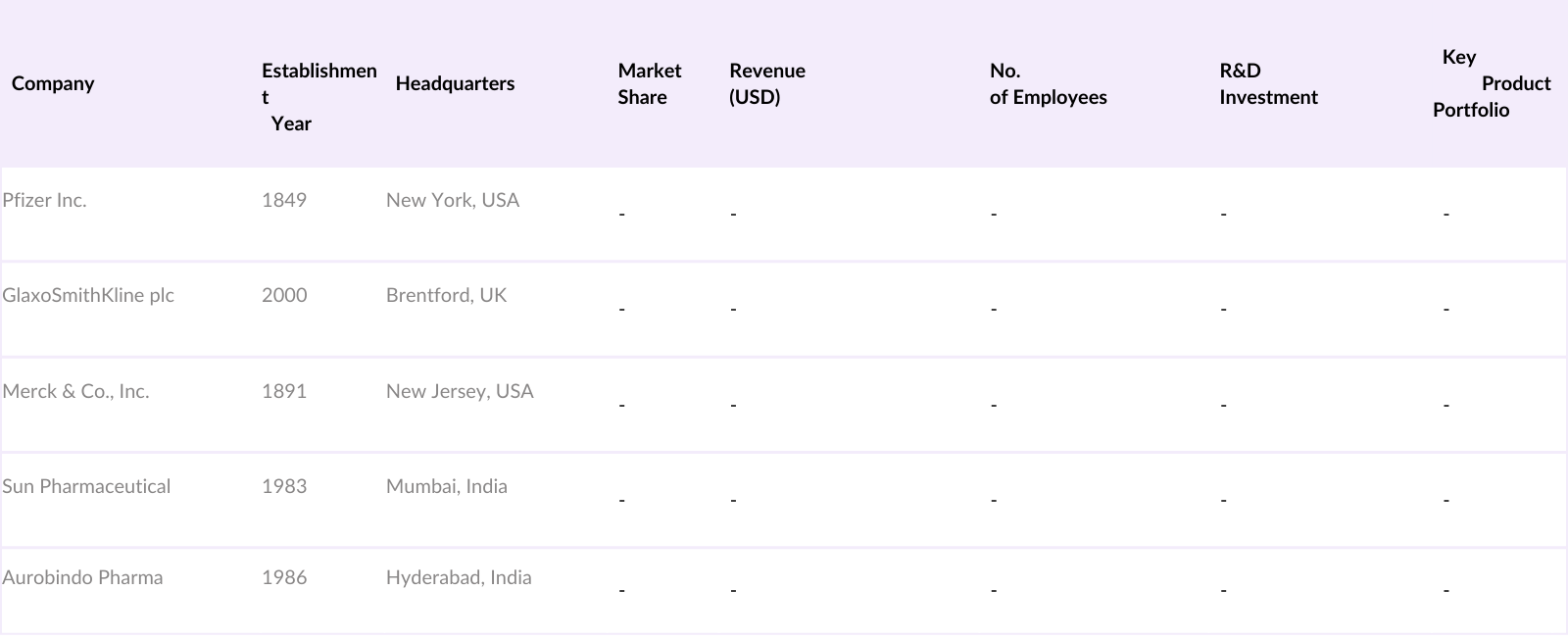
The Asia Pacific antibiotics market is dominated by several key players, including local manufacturers and global pharmaceutical giants. Companies such as Pfizer, GlaxoSmithKline, and Merck & Co. have a strong presence in the region, leveraging their extensive product portfolios and robust distribution networks. These companies are also engaged in ongoing research and development efforts to combat the rising threat of antibiotic resistance. The market is relatively consolidated, with these major players occupying a significant portion of market share.
Asia Pacific Antibiotics Industry Analysis
Growth Drivers
- Increasing Antibiotic Resistance: The rise in antibiotic resistance is a critical concern in the Asia Pacific region, where healthcare systems are facing increasing cases of drug-resistant infections. In 2024, the World Health Organization reported that more than 700,000 deaths annually are attributed to antimicrobial resistance globally, with a significant portion of these cases occurring in Asia due to overprescription and misuse of antibiotics. This has created an urgent demand for new antibiotic therapies to address the growing threat.
- Growing Prevalence of Infectious Diseases: Asia Pacific continues to battle high rates of infectious diseases such as tuberculosis, dengue, and pneumonia, exacerbated by urbanization and increasing population density. In 2024, the WHO estimated that Southeast Asia alone records over 2.5 million tuberculosis cases annually, with India accounting for a third of the global burden. This growing incidence has led to a corresponding increase in the demand for antibiotics in the region, particularly in countries like India, China, and Indonesia.
- Rising Healthcare Expenditure: Healthcare spending in Asia Pacific is growing rapidly, with countries like China and India leading the region. In 2024, Chinas healthcare expenditure reached $1.25 trillion, driven by both public and private investments aimed at improving access to medical services, including antibiotics. The rise in disposable income and government funding in public healthcare systems has led to increased antibiotic prescriptions
Market Challenges
- Regulatory Restrictions (Strict Government Guidelines): The regulatory environment in Asia Pacific remains stringent, especially concerning the approval of new antibiotics. Countries like China and India have introduced stricter drug approval processes in response to the growing misuse of antibiotics. For instance, Chinas National Medical Products Administration has imposed rigorous clinical trial requirements and post-market surveillance, leading to increased delays in bringing new drugs to market. In 2024, the average time for drug approval in China stretched to 28 months, posing a significant challenge for pharmaceutical companies.
- R&D Costs and Time: Research and development for antibiotics are particularly costly, with high attrition rates during clinical trials. In 2024, the average cost to develop a new antibiotic ranged between $800 million and $1 billion, according to industry reports, largely due to extended R&D timelines and the complexity of meeting stringent regulatory requirements. This is compounded by the lower profitability of antibiotics compared to other drug categories, which has led many pharmaceutical companies to deprioritize antibiotic development.
Asia Pacific Antibiotics Market Future Outlook
Over the next five years, the Asia Pacific antibiotics market is poised for substantial growth. This growth will be driven by several key factors, including the increasing prevalence of antibiotic-resistant bacteria, rising healthcare expenditures, and ongoing government initiatives aimed at combating infectious diseases. Additionally, advancements in research for next-generation antibiotics and improved healthcare infrastructure in emerging markets such as Southeast Asia will play a critical role in shaping the future of the antibiotics industry in the region.
Market Opportunities
- Rising Demand for Next-Generation Antibiotics: There is a growing demand for next-generation antibiotics in the Asia Pacific market, driven by the failure of older drugs to combat resistant strains. Governments in countries such as India and South Korea are supporting public-private partnerships to expedite the development of these newer treatments. In 2024, the Indian government allocated $200 million to fund research into novel antibiotics, particularly those targeting drug-resistant tuberculosis and other bacterial infections.
- Expanding Healthcare Infrastructure in Emerging Markets: Emerging economies in Asia Pacific, including Indonesia and Vietnam, are experiencing rapid healthcare infrastructure development, increasing the reach and accessibility of antibiotics. In 2024, Indonesias healthcare infrastructure expenditure was projected to exceed $50 billion, which includes investments in public hospitals and rural healthcare programs. This expansion is enabling a broader distribution of essential medicines, including antibiotics, and improving patient outcomes in remote areas.
Scope of the Report
|
Drug Class |
Beta-Lactam Macrolides Tetracyclines Quinolones Aminoglycosides |
|
Spectrum of Activity |
Broad-Spectrum Narrow-Spectrum |
|
Route of Administration |
Oral Intravenous (IV) Topical |
|
Indication |
Respiratory Infections Urinary Tract Infections Skin & Soft Tissue Infections Gastrointestinal Infections Bloodstream Infections |
|
Region |
China India Japan South Korea Australia |
Products
Key Target Audience
Government and Regulatory Bodies (FDA, CDSCO, NMPA)
Pharmaceutical Manufacturers
Healthcare Providers
Hospitals and Clinics
Public Health Organizations
Private Healthcare Providers
Investments and Venture Capitalist Firms
Research Institutions and Laboratories
Companies
Players Mentioned in the Report
Pfizer Inc.
GlaxoSmithKline plc
Merck & Co., Inc.
Sanofi
Novartis AG
Johnson & Johnson
AstraZeneca
Cipla Ltd.
Sun Pharmaceutical Industries Ltd.
Aurobindo Pharma
Table of Contents
1. Asia Pacific Antibiotics Market Overview
1.1. Definition and Scope
1.2. Market Taxonomy
1.3. Market Growth Rate
1.4. Market Segmentation Overview
2. Asia Pacific Antibiotics Market Size (In USD Bn)
2.1. Historical Market Size
2.2. Year-On-Year Growth Analysis
2.3. Key Market Developments and Milestones
3. Asia Pacific Antibiotics Market Analysis
3.1. Growth Drivers
3.1.1. Increasing Antibiotic Resistance
3.1.2. Growing Prevalence of Infectious Diseases
3.1.3. Rising Healthcare Expenditure
3.1.4. Strong Government Support and Policies
3.2. Market Challenges
3.2.1. Regulatory Restrictions (Strict Government Guidelines)
3.2.2. R&D Costs and Time
3.2.3. Emergence of Superbugs
3.3. Opportunities
3.3.1. Rising Demand for Next-Generation Antibiotics
3.3.2. Expanding Healthcare Infrastructure in Emerging Markets
3.3.3. Collaborative Research Programs (Public-Private Partnerships)
3.4. Trends
3.4.1. Development of Antibiotic Alternatives
3.4.2. Increased Use of Combination Therapies
3.4.3. Digital and AI in Antibiotic Research
3.5. Government Regulations
3.5.1. Stringent Drug Approval Process
3.5.2. Antibiotic Stewardship Programs
3.5.3. Patent Expiration & Generic Drug Entry
3.6. SWOT Analysis
3.7. Stakeholder Ecosystem
3.8. Porters Five Forces Analysis
3.9. Competitive Landscape
4. Asia Pacific Antibiotics Market Segmentation
4.1. By Drug Class (In Value %)
4.1.1. Beta-Lactam Antibiotics (Penicillin, Cephalosporins, Carbapenems)
4.1.2. Macrolides
4.1.3. Tetracyclines
4.1.4. Quinolones
4.1.5. Aminoglycosides
4.2. By Spectrum of Activity (In Value %)
4.2.1. Broad-Spectrum Antibiotics
4.2.2. Narrow-Spectrum Antibiotics
4.3. By Route of Administration (In Value %)
4.3.1. Oral
4.3.2. Intravenous (IV)
4.3.3. Topical
4.4. By Indication (In Value %)
4.4.1. Respiratory Infections
4.4.2. Urinary Tract Infections
4.4.3. Skin & Soft Tissue Infections
4.4.4. Gastrointestinal Infections
4.4.5. Bloodstream Infections
4.5. By Region (In Value %)
4.5.1. China
4.5.2. India
4.5.3. Japan
4.5.4. South Korea
4.5.5. Australia
5. Asia Pacific Antibiotics Market Competitive Analysis
5.1. Detailed Profiles of Major Companies
5.1.1. Pfizer Inc.
5.1.2. GlaxoSmithKline plc
5.1.3. Merck & Co., Inc.
5.1.4. Sanofi
5.1.5. Novartis AG
5.1.6. Johnson & Johnson
5.1.7. AstraZeneca
5.1.8. Cipla Ltd.
5.1.9. Sun Pharmaceutical Industries Ltd.
5.1.10. Aurobindo Pharma
5.1.11. Shionogi & Co., Ltd.
5.1.12. Daiichi Sankyo Company, Limited
5.1.13. Lupin Limited
5.1.14. Teva Pharmaceutical Industries Ltd.
5.1.15. Abbott Laboratories
5.2. Cross Comparison Parameters (Market Share, Revenue, Headquarters, Number of Employees, Inception Year, R&D Investments, Product Portfolio Strength, Geographical Reach)
5.3. Market Share Analysis
5.4. Strategic Initiatives
5.5. Mergers and Acquisitions
5.6. Investment Analysis
5.7. Venture Capital Funding
5.8. Government Grants and Subsidies
5.9. Private Equity Investments
6. Asia Pacific Antibiotics Market Regulatory Framework
6.1. Drug Regulatory Authorities (FDA, TGA, CDSCO, NMPA)
6.2. Compliance Requirements
6.3. Drug Pricing Policies
6.4. Antibiotic Use Restrictions
7. Asia Pacific Antibiotics Future Market Size (In USD Bn)
7.1. Future Market Size Projections
7.2. Key Factors Driving Future Market Growth
8. Asia Pacific Antibiotics Future Market Segmentation
8.1. By Drug Class (In Value %)
8.2. By Spectrum of Activity (In Value %)
8.3. By Route of Administration (In Value %)
8.4. By Indication (In Value %)
8.5. By Region (In Value %)
9. Asia Pacific Antibiotics Market Analysts Recommendations
9.1. TAM/SAM/SOM Analysis
9.2. Customer Cohort Analysis
9.3. Marketing Initiatives
9.4. White Space Opportunity Analysis
Contact Us
Research Methodology
Step 1: Identification of Key Variables
The first step involves creating a comprehensive ecosystem map of all major stakeholders in the Asia Pacific antibiotics market. This was achieved through extensive desk research and the use of proprietary databases to gather market-level information. The primary objective was to identify and define critical factors influencing the market.
Step 2: Market Analysis and Construction
In this phase, historical data was compiled and analyzed to evaluate the market penetration of antibiotics across Asia Pacific. Data was collected on market participants, product launches, and revenue generation to assess the market's growth trajectory over the past five years.
Step 3: Hypothesis Validation and Expert Consultation
Market hypotheses were developed and validated through interviews with industry experts and professionals. These consultations provided key insights into operational and financial dynamics, which were instrumental in refining market estimates and projections.
Step 4: Research Synthesis and Final Output
The final phase involved synthesizing the data gathered from primary and secondary sources, including engagement with pharmaceutical manufacturers and healthcare professionals. This ensured that the data is accurate, comprehensive, and validated for the Asia Pacific antibiotics market.
Frequently Asked Questions
01. How big is the Asia Pacific Antibiotics Market?
The Asia Pacific Antibiotics market is valued at USD 22,317 million, based on a five-year historical analysis. This market is primarily driven by the increasing prevalence of infectious diseases and the growing concern over antimicrobial resistance.
02. What are the key challenges in the Asia Pacific Antibiotics Market?
Key challenges include rising antibiotic resistance, regulatory hurdles associated with the approval of new drugs, and the high cost of research and development. Additionally, the emergence of multidrug-resistant bacteria poses a significant threat to market growth.
03. Who are the major players in the Asia Pacific Antibiotics Market?
Major players include Pfizer Inc., GlaxoSmithKline plc, Merck & Co., Inc., Sun Pharmaceutical, and Aurobindo Pharma. These companies dominate the market due to their strong R&D investments and extensive product portfolios.
04. What are the growth drivers in the Asia Pacific Antibiotics Market?
Growth drivers include the rising prevalence of infectious diseases, increasing healthcare expenditures, and government efforts to combat antimicrobial resistance. In addition, the development of new antibiotics and the expansion of healthcare infrastructure in emerging markets are key growth factors.
Why Buy From Us?

What makes us stand out is that our consultants follows Robust, Refine and Result (RRR) methodology. i.e. Robust for clear definitions, approaches and sanity checking, Refine for differentiating respondents facts and opinions and Result for presenting data with story

We have set a benchmark in the industry by offering our clients with syndicated and customized market research reports featuring coverage of entire market as well as meticulous research and analyst insights.

While we don't replace traditional research, we flip the method upside down. Our dual approach of Top Bottom & Bottom Top ensures quality deliverable by not just verifying company fundamentals but also looking at the sector and macroeconomic factors.

With one step in the future, our research team constantly tries to show you the bigger picture. We help with some of the tough questions you may encounter along the way: How is the industry positioned? Best marketing channel? KPI's of competitors? By aligning every element, we help maximize success.

Our report gives you instant access to the answers and sources that other companies might choose to hide. We elaborate each steps of research methodology we have used and showcase you the sample size to earn your trust.

If you need any support, we are here! We pride ourselves on universe strength, data quality, and quick, friendly, and professional service.