















Asia-Pacific Aromatherapy Diffuser Market Outlook to 2030
Region:Asia
Author(s):Sanjna Verma
Product Code:KROD4240
November 2024
89
About the Report
Asia Pacific Aromatherapy Diffuser Market Overview
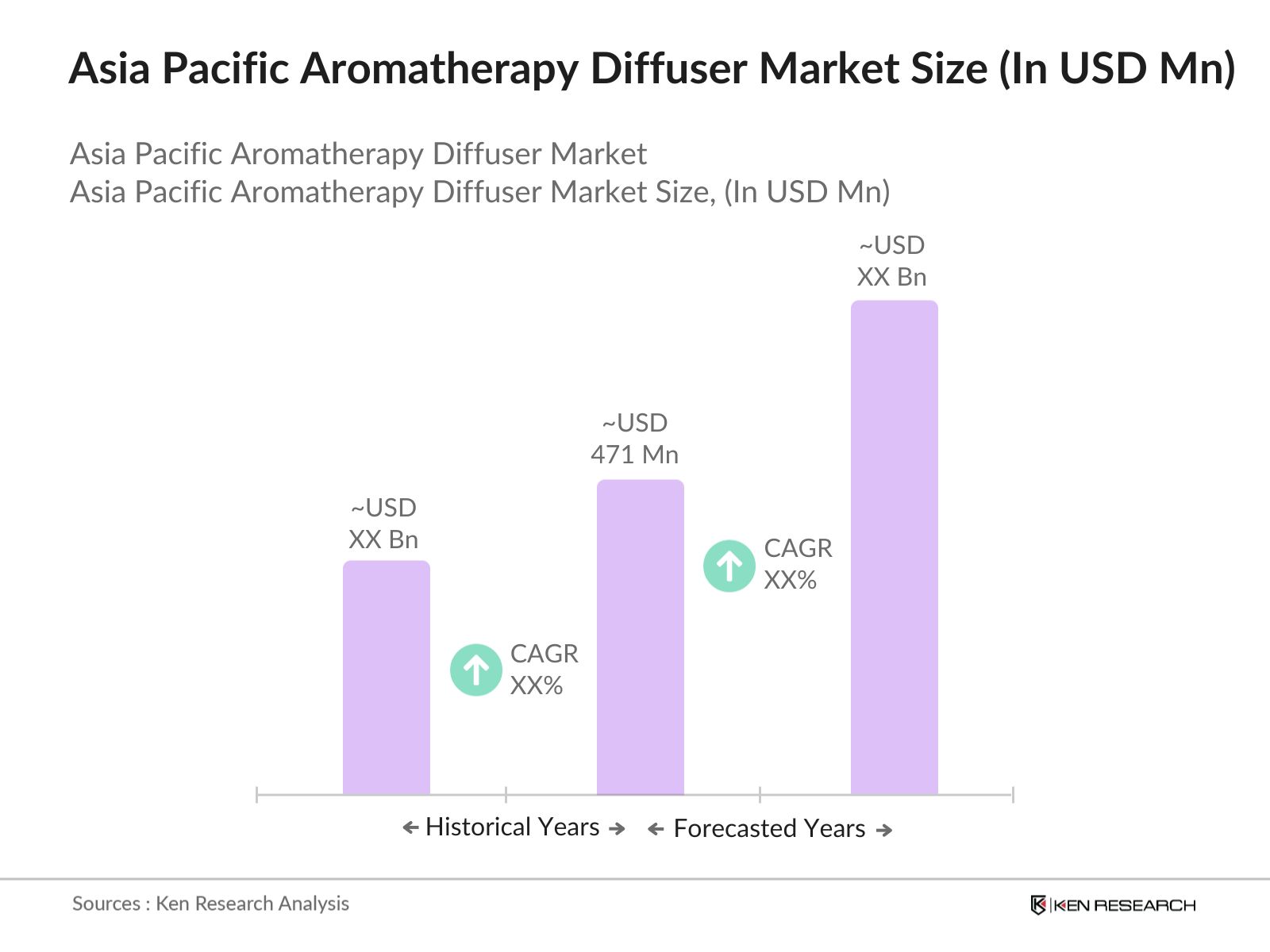
- The Asia-Pacific Aromatherapy Diffuser Market is valued at USD 471 million, driven by the rising popularity of wellness products and increasing consumer awareness regarding the benefits of aromatherapy. The demand for essential oil-based diffusers is growing, primarily fueled by the rising disposable income, increasing focus on mental health, and the expansion of the wellness industry.
- Countries like China, Japan, and South Korea dominate the market due to their large urban populations, rising health consciousness, and the significant presence of a wellness-driven culture. These countries are home to established retail and e-commerce channels, which further drive consumer access to premium diffusers. Japan, in particular, leads with its integration of diffusers in wellness centers and healthcare facilities, while China's large population base provides a substantial consumer market for aromatherapy products.
- Sustainability continues to be a top priority for consumers in the Asia-Pacific region. Products that are made from eco-friendly materials and promote responsible consumption are gaining traction. According to the World Banks 2023 Environmental Sustainability Report, 40% of consumers in the region stated they are willing to pay a premium for sustainable products. Aromatherapy diffuser manufacturers are responding by offering eco-friendly products made from bamboo, recycled plastics, and other sustainable materials.
Asia Pacific Aromatherapy Diffuser Market Segmentation
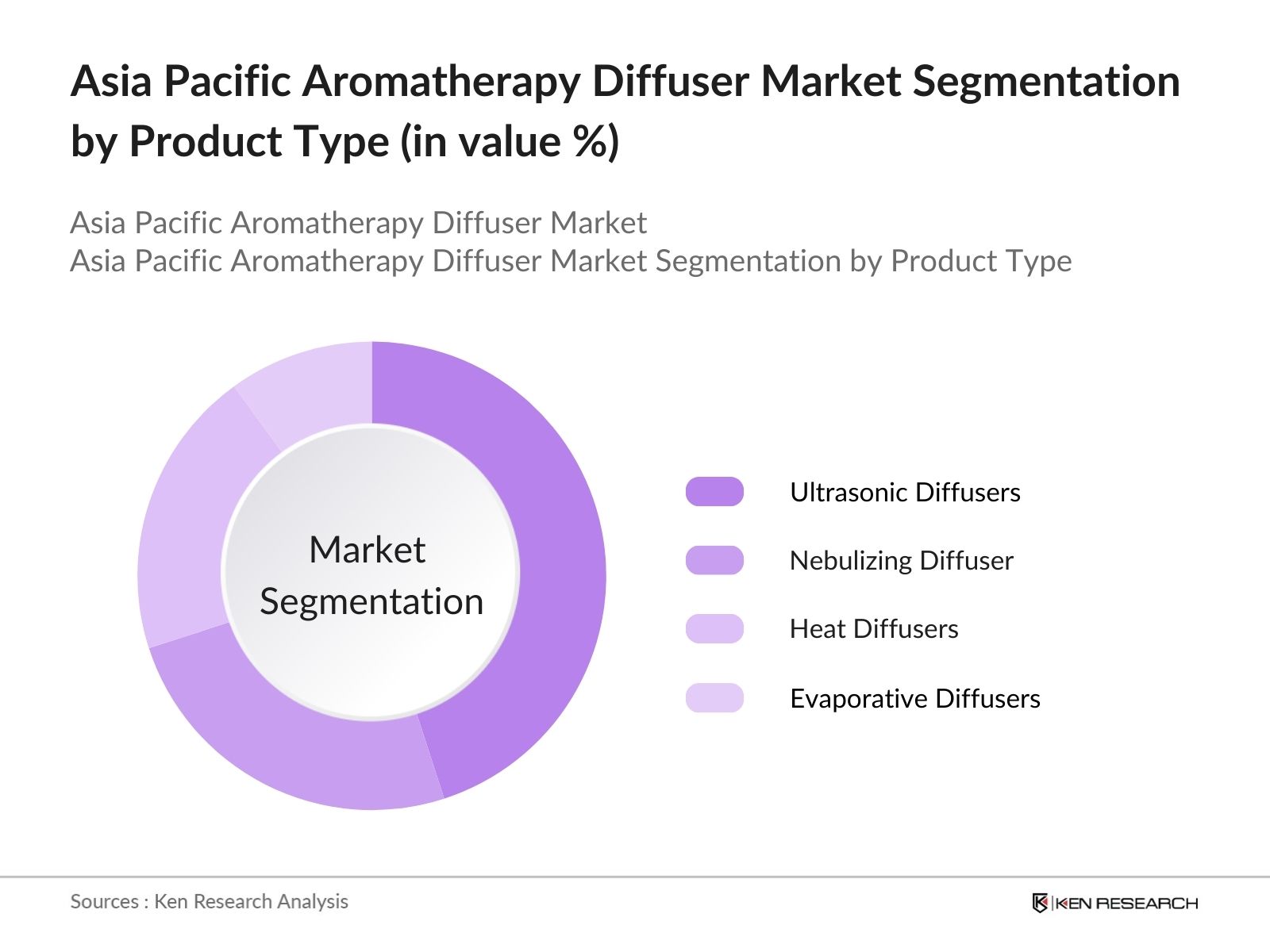
By Product Type: The Asia-Pacific Aromatherapy Diffuser Market is segmented by product type into ultrasonic diffusers, nebulizing diffusers, heat diffusers, and evaporative diffusers. Ultrasonic diffusers hold the dominant market share in 2023 due to their energy efficiency, ease of use, and ability to preserve the natural properties of essential oils without heating. They are the most popular among consumers who are health-conscious and seek products that offer therapeutic benefits, making them a staple in both personal and commercial settings.
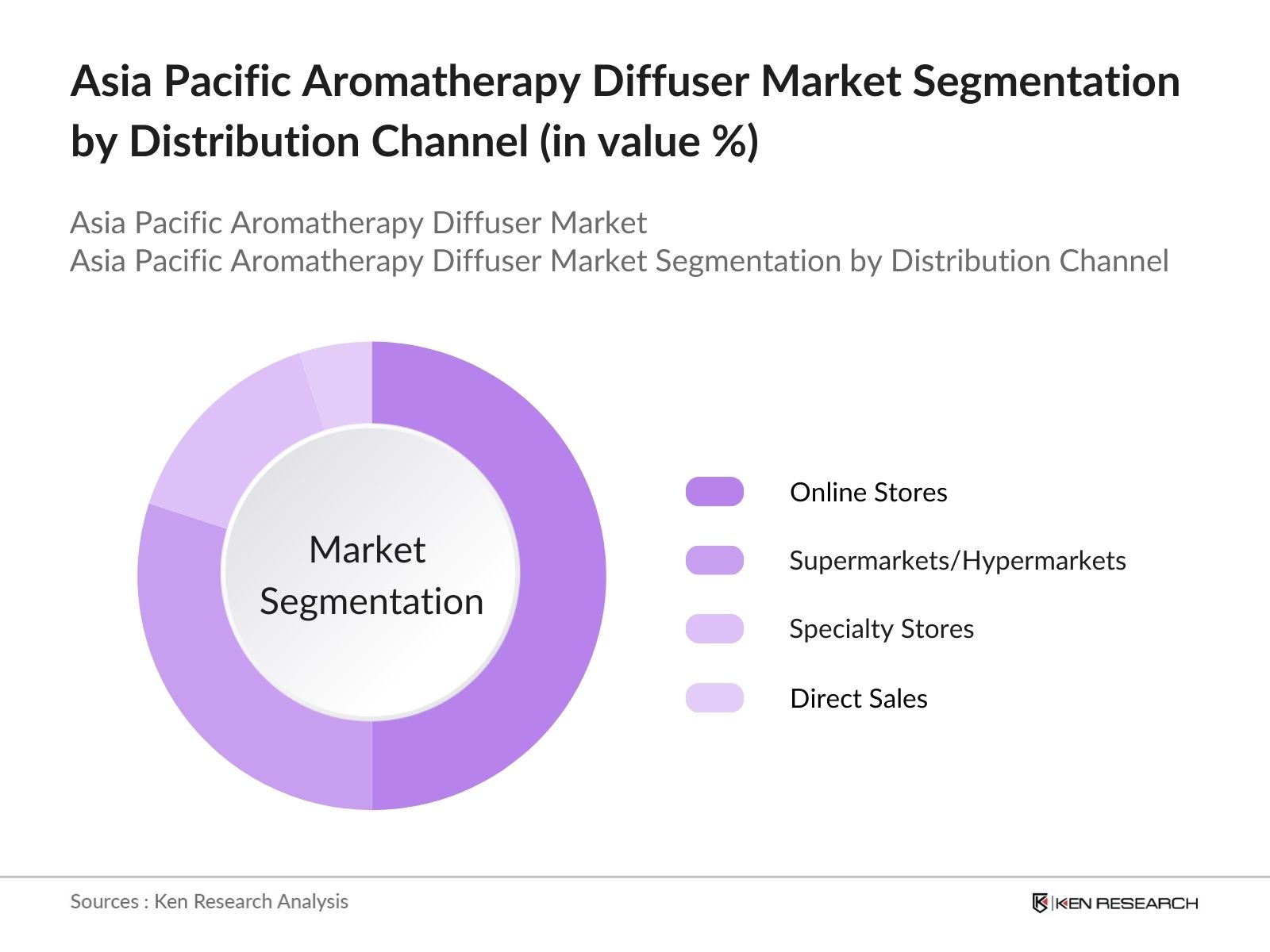
By Distribution Channel: The market is segmented by distribution channel into online stores, supermarkets/hypermarkets, specialty stores, and direct sales. Online stores dominate the market due to the growing preference for e-commerce shopping in the region, driven by convenience and the availability of a wider product selection. Consumers are increasingly opting for online channels to compare prices, read product reviews, and choose from a broader array of options.
Asia Pacific Aromatherapy Diffuser Market Competitive Landscape
The Asia-Pacific Aromatherapy Diffuser Market is competitive, with several key players dominating the space. These companies are focusing on innovation, expanding their distribution networks, and engaging in strategic partnerships to strengthen their market presence. The competitive landscape is characterized by a mix of global players and local brands, with companies differentiating through product innovation and sustainability initiatives.
|
Company Name |
Establishment Year |
Headquarters |
Product Innovation |
Sustainability Initiatives |
Distribution Networks |
Market Penetration |
Brand Awareness |
R&D Investment |
|
Young Living |
1993 |
Lehi, Utah, USA |
- |
- |
- |
- |
- |
- |
|
doTERRA International |
2008 |
Pleasant Grove, USA |
- |
- |
- |
- |
- |
- |
|
Vitruvi |
2014 |
Vancouver, Canada |
- |
- |
- |
- |
- |
- |
|
Organic Aromas |
2014 |
Idaho, USA |
- |
- |
- |
- |
- |
- |
|
Edens Garden |
2009 |
San Clemente, USA |
- |
- |
- |
- |
- |
- |
The market is dominated by global players such as Young Living and doTERRA, which have well-established distribution networks and brand loyalty. These companies have been pioneers in product innovation and have a strong emphasis on sustainability and natural products. Local brands like Vitruvi and Organic Aromas are also gaining market share by focusing on aesthetic product designs and expanding their presence in regional markets.
Asia Pacific Aromatherapy Diffuser Market Analysis
Growth Drivers
- Increasing Consumer Interest in Aromatherapy and Wellness: The global wellness economy was valued at$5.6 trillionin 2022, marking a significant recovery from the pandemic and surpassing its pre-pandemic levels by approximately 14%, according to the Global Wellness Institute. Consumers are increasingly integrating aromatherapy into their wellness routines, contributing to a surge in demand for aromatherapy diffusers.
- Growing Popularity of Essential Oils: The growing use of essential oils, such as lavender, eucalyptus, and tea tree, has created a robust segment within the aromatherapy market in Asia-Pacific. In 2022, India was the largest exporter of essential oils globally, with exports valued at$879 million. The increasing preference for natural remedies, driven by health-conscious consumers, is fueling the growth of the essential oil segment, which in turn is bolstering the demand for diffusers in homes, spas, and other wellness centers.
- Technological Advancements in Diffuser Products: Innovations in aromatherapy diffusers have enhanced their appeal, particularly with the integration of ultrasonic and smart home technologies. Smart diffusers are being increasingly adopted, with estimates suggesting that the global market for connected home products saw an increase of 160 million devices in 2023.
Challenges
- High Costs of Premium Aromatherapy Diffuser: The price sensitivity of consumers in emerging Asia-Pacific markets remains a key challenge. While premium diffusers are popular in developed markets such as Japan and Australia, their adoption is limited in price-sensitive economies like India and Vietnam. The average household income in developing Asia is still approximately $6,800 per year, making high-end diffusers less accessible.
- Lack of Standardization in Essential Oil Quality: The lack of clear regulatory standards for essential oils poses a significant hurdle for the aromatherapy diffuser market. Many countries in the region, such as India and Indonesia, do not have stringent quality control mechanisms for essential oil production and distribution, leading to inconsistent product quality. According to the Asia-Pacific Trade and Investment Report 2023 (UNESCAP), the lack of standardization in the trade of natural products, including essential oils, hinders consumer confidence and market expansion.
Asia Pacific Aromatherapy Market Future Outlook
Asia-Pacific Aromatherapy Diffuser Market is expected to witness significant growth driven by the increasing adoption of aromatherapy in wellness routines and healthcare settings. The growing awareness of mental and emotional well-being, coupled with technological advancements in diffuser products, is anticipated to accelerate market growth. Additionally, the rise of e-commerce and direct-to-consumer sales channels will further fuel market expansion, as consumers seek convenience and a broader product range.
Market Opportunities
- Rising Demand in Emerging Markets: Emerging markets such as India, Vietnam, and Thailand present significant opportunities for the aromatherapy diffuser market. According to the World Bank, the average annual GDP growth rate in these countries is projected at 5.8% in 2023, with a rising middle class increasingly interested in wellness products, facilitating higher consumer spending on wellness and lifestyle products, including aromatherapy diffusers.
- Growing E-commerce and Online Sales Channels: The rapid expansion of e-commerce platforms in Asia-Pacific has revolutionized how consumers purchase aromatherapy products. In 2023, over 60% of consumers in Asia-Pacific purchased household products online, according to data from the IMF eCommerce Expansion Report. The rise of e-commerce giants like Lazada and Shopee, coupled with improved digital payment systems, has made it easier for consumers to access a wide variety of aromatherapy diffusers and essential oils, driving market growth across the region.
Scope of the Report
|
Segment |
Sub-segment |
|
By Product Type |
Ultrasonic Diffusers |
|
Nebulizing Diffusers |
|
|
Heat Diffusers |
|
|
Evaporative Diffusers |
|
|
By Distribution Channel |
Online Stores |
|
Supermarkets/Hypermarkets |
|
|
Specialty Stores |
|
|
Direct Sales |
|
|
By Application |
Residential |
|
Commercial (Spas, Hotels, Offices) |
|
|
Healthcare Facilities |
|
|
Wellness Centers |
|
|
By Technology |
Electric Diffusers |
|
Battery-Operated Diffusers |
|
|
Smart/Connected Diffusers |
|
|
By Region |
China |
|
Japan |
|
|
India |
|
|
Australia |
|
|
Southeast Asia (Malaysia, Indonesia, etc.) |
Products
Key Target Audience
Aromatherapy Diffuser Manufacturers
Essential Oil Producers
Wellness Centers and Spas
Healthcare Facilities and Hospitals
Online Retailers and E-commerce Platforms
Investors and Venture Capitalist Firms
Government and Regulatory Bodies (e.g., Japans Ministry of Health, Chinas State Administration for Market Regulation)
Companies
Players Mentioned in the Report
Young Living
doTERRA International
Vitruvi
Organic Aromas
Greenair Inc.
Edens Garden
ZAQ
NOW Foods
Scent Australia
InnoGear
Table of Contents
1. Asia-Pacific Aromatherapy Diffuser Market Overview
1.1 Definition and Scope
1.2 Market Taxonomy
1.3 Market Growth Rate (In value %)
1.4 Market Segmentation Overview
2. Asia-Pacific Aromatherapy Diffuser Market Size (In USD Bn)
2.1 Historical Market Size
2.2 Year-On-Year Growth Analysis
2.3 Key Market Developments and Milestones
3. Asia-Pacific Aromatherapy Diffuser Market Analysis
3.1 Growth Drivers (Sustainability, Wellness Trends, Smart Home Adoption)
3.1.1 Increasing Consumer Interest in Aromatherapy and Wellness
3.1.2 Growing Popularity of Essential Oils (Segment)
3.1.3 Technological Advancements in Diffuser Products
3.1.4 Demand for Sustainable and Natural Products
3.2 Market Challenges (Price Sensitivity, Regulatory Standards)
3.2.1 High Costs of Premium Aromatherapy Diffusers
3.2.2 Lack of Standardization in Essential Oil Quality
3.2.3 Counterfeit Products in the Market
3.2.4 Environmental Concerns over Essential Oil Sourcing
3.3 Opportunities (Product Diversification, Customization, E-commerce Growth)
3.3.1 Rising Demand in Emerging Markets
3.3.2 Growing E-commerce and Online Sales Channels
3.3.3 Expanding Use of Aromatherapy in Healthcare and Hospitality
3.3.4 Partnerships with Wellness Brands and Spas
3.4 Trends (Portable Diffusers, Smart Diffusers, Health-Conscious Consumers)
3.4.1 Integration of Aromatherapy Diffusers with Smart Home Technology
3.4.2 Increasing Use of Portable and USB Diffusers
3.4.3 Eco-Friendly and Sustainable Product Development
3.4.4 Customizable Scents and Diffuser Features
3.5 Regulatory Landscape (Industry Regulations, Essential Oil Standards)
3.5.1 Compliance with Aromatherapy Product Safety Standards
3.5.2 Regulations for Essential Oil Sourcing and Distribution
3.5.3 Labeling and Health Claims Regulations
4. Asia-Pacific Aromatherapy Diffuser Market Segmentation
4.1 By Product Type (In Value %)
4.1.1 Ultrasonic Diffusers
4.1.2 Nebulizing Diffusers
4.1.3 Heat Diffusers
4.1.4 Evaporative Diffusers
4.2 By Distribution Channel (In Value %)
4.2.1 Online Stores
4.2.2 Supermarkets/Hypermarkets
4.2.3 Specialty Stores
4.2.4 Direct Sales
4.3 By Application (In Value %)
4.3.1 Residential
4.3.2 Commercial (Spas, Hotels, Offices)
4.3.3 Healthcare Facilities
4.3.4 Wellness Centers
4.4 By Technology (In Value %)
4.4.1 Electric Diffusers
4.4.2 Battery-Operated Diffusers
4.4.3 Smart/Connected Diffusers
4.5 By Region (In Value %)
4.5.1 China
4.5.2 Japan
4.5.3 India
4.5.4 Australia
4.5.5 Southeast Asia (Malaysia, Indonesia, Thailand, Vietnam)
5. Asia-Pacific Aromatherapy Diffuser Market Competitive Analysis
5.1 Detailed Profiles of Major Companies
5.1.1 Young Living
5.1.2 doTERRA International
5.1.3 Vitruvi
5.1.4 Organic Aromas
5.1.5 Greenair Inc.
5.1.6 Edens Garden
5.1.7 ZAQ
5.1.8 NOW Foods
5.1.9 Scent Australia
5.1.10 InnoGear
5.2 Cross Comparison Parameters (Product Portfolio, Product Pricing, Distribution Networks, Innovation in Technology, Sustainability Initiatives, Brand Awareness, Geographical Reach, Market Penetration)
5.3 Market Share Analysis
5.4 Strategic Initiatives (Partnerships, Product Launches, Branding)
5.5 Mergers and Acquisitions
5.6 Investment Analysis
5.7 Venture Capital Funding
5.8 Government Grants
5.9 Private Equity Investments
6. Asia-Pacific Aromatherapy Diffuser Market Regulatory Framework
6.1 Essential Oil Quality Standards and Certification
6.2 Import/Export Regulations for Diffusers and Oils
6.3 Environmental and Safety Standards
7. Asia-Pacific Aromatherapy Diffuser Future Market Size (In USD Bn)
7.1 Future Market Size Projections
7.2 Key Factors Driving Future Market Growth
8. Asia-Pacific Aromatherapy Diffuser Future Market Segmentation
8.1 By Product Type (In Value %)
8.2 By Distribution Channel (In Value %)
8.3 By Application (In Value %)
8.4 By Technology (In Value %)
8.5 By Region (In Value %)
9. Asia-Pacific Aromatherapy Diffuser Market Analysts' Recommendations
9.1 TAM/SAM/SOM Analysis
9.2 Customer Cohort Analysis
9.3 Marketing Initiatives
9.4 White Space Opportunity Analysis
Research Methodology
Step 1: Identification of Key Variables
The initial phase involves constructing an ecosystem map encompassing all major stakeholders within the Asia-Pacific Aromatherapy Diffuser Market. This step is underpinned by extensive desk research, utilizing a combination of secondary and proprietary databases to gather comprehensive industry-level information. The primary objective is to identify and define the critical variables that influence market dynamics.
Step 2: Market Analysis and Construction
In this phase, we will compile and analyze historical data pertaining to the Asia-Pacific Aromatherapy Diffuser Market. This includes assessing market penetration, the ratio of product categories to distribution channels, and the resultant revenue generation. An evaluation of sales and product performance statistics will ensure the accuracy of revenue estimates.
Step 3: Hypothesis Validation and Expert Consultation
Market hypotheses will be developed and validated through computer-assisted telephone interviews (CATIs) with industry experts representing a diverse array of companies. These consultations will provide valuable operational and financial insights, which will be instrumental in refining and corroborating the market data.
Step 4: Research Synthesis and Final Output
The final phase involves direct engagement with multiple diffuser manufacturers and distributors to acquire detailed insights into product segments, sales performance, and consumer preferences. This interaction will serve to verify and complement the statistics derived from the bottom-up approach, ensuring a comprehensive, accurate, and validated analysis of the market.
Frequently Asked Questions
01. How big is the Asia-Pacific Aromatherapy Diffuser Market?
The Asia-Pacific Aromatherapy Diffuser Market is valued at USD 471 million, driven by the rising popularity of essential oils and growing awareness of their therapeutic benefits. The market's growth is supported by the increasing use of diffusers in both homes and commercial spaces.
02. What are the challenges in the Asia-Pacific Aromatherapy Diffuser Market?
Challenges of Asia Pacific Aromatherapy Diffuser Market include high competition among global and regional players, price sensitivity, and counterfeit products that affect the authenticity of essential oils. Additionally, sourcing natural essential oils sustainably poses challenges for manufacturers.
03. Who are the major players in the Asia-Pacific Aromatherapy Diffuser Market?
Key players in Asia Pacific Aromatherapy Diffuser Market include Young Living, doTERRA International, Vitruvi, Organic Aromas, and Edens Garden. These companies dominate due to their extensive product portfolios, innovation, and strong distribution networks.
04. What are the growth drivers of the Asia-Pacific Aromatherapy Diffuser Market?
Asia Pacific Aromatherapy Diffuser Market is driven by factors such as increasing consumer interest in wellness products, the integration of diffusers in healthcare settings, and the rising demand for eco-friendly and energy-efficient products.
Why Buy From Us?

What makes us stand out is that our consultants follows Robust, Refine and Result (RRR) methodology. i.e. Robust for clear definitions, approaches and sanity checking, Refine for differentiating respondents facts and opinions and Result for presenting data with story

We have set a benchmark in the industry by offering our clients with syndicated and customized market research reports featuring coverage of entire market as well as meticulous research and analyst insights.

While we don't replace traditional research, we flip the method upside down. Our dual approach of Top Bottom & Bottom Top ensures quality deliverable by not just verifying company fundamentals but also looking at the sector and macroeconomic factors.

With one step in the future, our research team constantly tries to show you the bigger picture. We help with some of the tough questions you may encounter along the way: How is the industry positioned? Best marketing channel? KPI's of competitors? By aligning every element, we help maximize success.

Our report gives you instant access to the answers and sources that other companies might choose to hide. We elaborate each steps of research methodology we have used and showcase you the sample size to earn your trust.

If you need any support, we are here! We pride ourselves on universe strength, data quality, and quick, friendly, and professional service.