
Asia Pacific Aseptic Packaging Market Outlook to 2030
Region:India
Author(s):Yogita Sahu
Product Code:KROD3718
Region:India
Author(s):Yogita Sahu
Product Code:KROD3718
October 2024
85
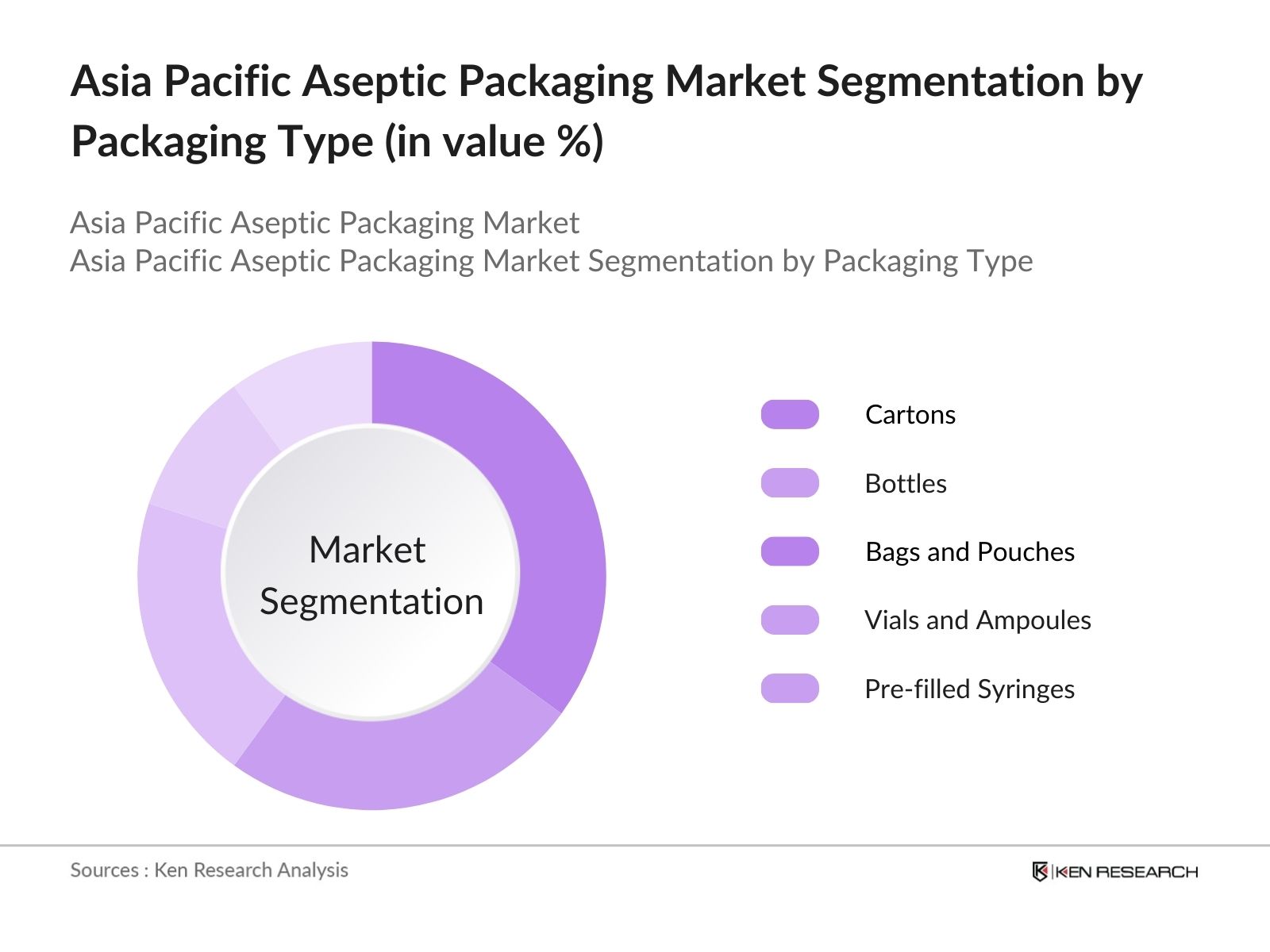
By Packaging Type: The market is segmented by packaging type into cartons, bottles, bags and pouches, vials and ampoules, and pre-filled syringes. Cartons hold a dominant market share due to their widespread use in the dairy and beverage industries. This dominance is fueled by the convenience and recyclability of carton packaging, which aligns with growing environmental concerns.
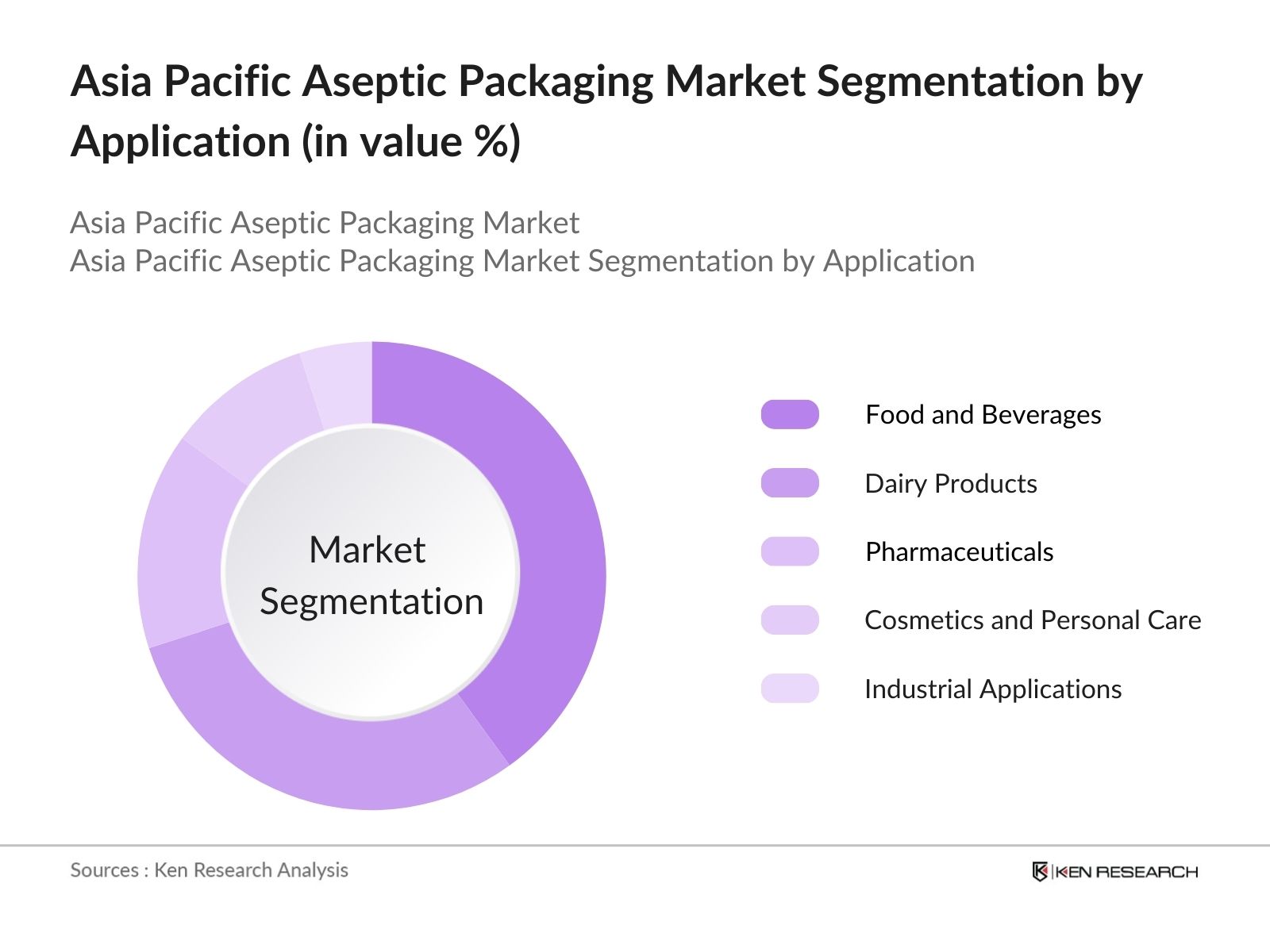
By Application: The market is segmented by application into food and beverages, dairy products, pharmaceuticals, cosmetics and personal care, and industrial applications. The food and beverages segment commands the largest market share, driven by increasing consumer demand for ready-to-consumer products.
The market is highly competitive, with several key players dominating the industry. The competitive landscape is characterized by strong brand presence, strategic investments in research and development, and the expansion of production capabilities across the region. Leading companies, such as Tetra Pak and SIG Combibloc, continue to innovate in sustainable and eco-friendly packaging solutions.
|
Company Name |
Establishment Year |
Headquarters |
Sustainability Initiatives |
Global Reach |
Product Portfolio |
Revenue Contribution |
R&D Spending |
|
Tetra Pak |
1951 |
Sweden |
|||||
|
SIG Combibloc |
1853 |
Switzerland |
|||||
|
Amcor Plc |
1860 |
Australia |
|||||
|
Schott AG |
1884 |
Germany |
|||||
|
Sealed Air Corporation |
1960 |
USA |
Over the next five years, the Asia Pacific aseptic packaging industry is expected to witness growth driven by rapid urbanization, increasing demand for convenient packaging solutions, and heightened awareness of sustainable packaging. As governments across the region introduce more stringent regulations on food safety and environmental impact, companies will need to innovate and adopt greener packaging technologies to maintain their competitive edge.
|
Packaging Type |
Cartons Bottles Bags and Pouches Vials and Ampoules Pre-filled Syringes |
|
Material |
Plastic Paperboard Glass Aluminum |
|
Application |
Food and Beverages Dairy Products Pharmaceuticals Cosmetics and Personal Care Industrial Applications |
|
Technology |
Thermal Sterilization Chemical Sterilization Radiation Sterilization |
|
Region |
North East West South |
1.1. Definition and Scope
1.2. Market Taxonomy
1.3. Market Growth Rate
1.4. Market Segmentation Overview
2.1. Historical Market Size
2.2. Year-On-Year Growth Analysis
2.3. Key Market Developments and Milestones
3.1. Growth Drivers
3.1.1. Rising Demand for Packaged Foods
3.1.2. Increasing Urbanization
3.1.3. Sustainability Trends
3.1.4. Government Regulations on Food Safety
3.2. Market Challenges
3.2.1. High Initial Investment in Aseptic Technologies
3.2.2. Competition from Alternative Packaging Methods
3.2.3. Regulatory Barriers Across Different Regions
3.3. Opportunities
3.3.1. Technological Innovations in Packaging Materials
3.3.2. Emerging Markets in Southeast Asia
3.3.3. Increasing E-commerce Penetration
3.4. Trends
3.4.1. Eco-Friendly and Recyclable Aseptic Packaging
3.4.2. Integration with Digital Printing
3.4.3. Expansion in Pharmaceutical Applications
3.5. Government Regulations
3.5.1. Food Safety Standards (FDA, FSSAI, etc.)
3.5.2. Compliance with Aseptic Packaging Guidelines
3.5.3. Environmental Sustainability Policies
3.6. SWOT Analysis
3.7. Stake Ecosystem
3.8. Porters Five Forces
3.9. Competition Ecosystem
4.1. By Packaging Type (In Value %)
4.1.1. Cartons
4.1.2. Bottles
4.1.3. Bags and Pouches
4.1.4. Vials and Ampoules
4.1.5. Pre-filled Syringes
4.2. By Material (In Value %)
4.2.1. Plastic
4.2.2. Paperboard
4.2.3. Glass
4.2.4. Aluminum
4.3. By Application (In Value %)
4.3.1. Food and Beverages
4.3.2. Dairy Products
4.3.3. Pharmaceuticals
4.3.4. Cosmetics and Personal Care
4.3.5. Industrial Applications
4.4. By Technology (In Value %)
4.4.1. Thermal Sterilization
4.4.2. Chemical Sterilization
4.4.3. Radiation Sterilization
4.5. By Region (In Value %)
4.5.1. North
4.5.2. East
4.5.3. South
4.5.4. West
5.1. Detailed Profiles of Major Companies
5.1.1. Tetra Pak
5.1.2. SIG Combibloc
5.1.3. Amcor Plc
5.1.4. Sealed Air Corporation
5.1.5. Schott AG
5.1.6. Greatview Aseptic Packaging
5.1.7. DS Smith Plc
5.1.8. Mondi Group
5.1.9. Uflex Ltd.
5.1.10. International Paper
5.1.11. Elopak
5.1.12. IPI Srl
5.1.13. Sonoco Products Company
5.1.14. ProAmpac
5.1.15. Huhtamaki Oyj
5.2. Cross Comparison Parameters (Headquarters, Product Portfolio, Sustainability Initiatives, Global Reach, Market Strategy, R&D Spending, Revenue Contribution, Technological Capabilities)
5.3. Market Share Analysis
5.4. Strategic Initiatives
5.5. Mergers And Acquisitions
5.6. Investment Analysis
5.7. Venture Capital Funding
5.8. Government Grants
5.9. Private Equity Investments
6.1. Aseptic Packaging Standards
6.2. Environmental Compliance
6.3. Food Safety Certifications
6.4. Pharmaceutical and Healthcare Guidelines
7.1. Future Market Size Projections
7.2. Key Factors Driving Future Market Growth
8.1. By Packaging Type (In Value %)
8.2. By Material (In Value %)
8.3. By Application (In Value %)
8.4. By Technology (In Value %)
8.5. By Region (In Value %)
9.1. TAM/SAM/SOM Analysis
9.2. Customer Cohort Analysis
9.3. Marketing Initiatives
9.4. White Space Opportunity Analysis
The first step involved mapping out key stakeholders within the Asia Pacific aseptic packaging market. Through extensive desk research and the use of proprietary databases, critical variables influencing market dynamics were identified, such as material preferences, production processes, and regulatory constraints.
This phase involved compiling and analyzing historical data on the penetration of aseptic packaging across different sectors like food & beverages and pharmaceuticals. The goal was to evaluate trends and revenue generation capabilities based on segmental growth.
Market hypotheses were tested through interviews with experts from major packaging firms, which provided real-world insights on the market landscape. These consultations helped refine the collected data and ensure that the findings aligned with industry standards.
The final stage of research involved cross-verifying data with industry reports and direct engagements with manufacturers in the Asia Pacific region. The bottom-up approach was used to ensure the accuracy and comprehensiveness of market estimates and growth projections.
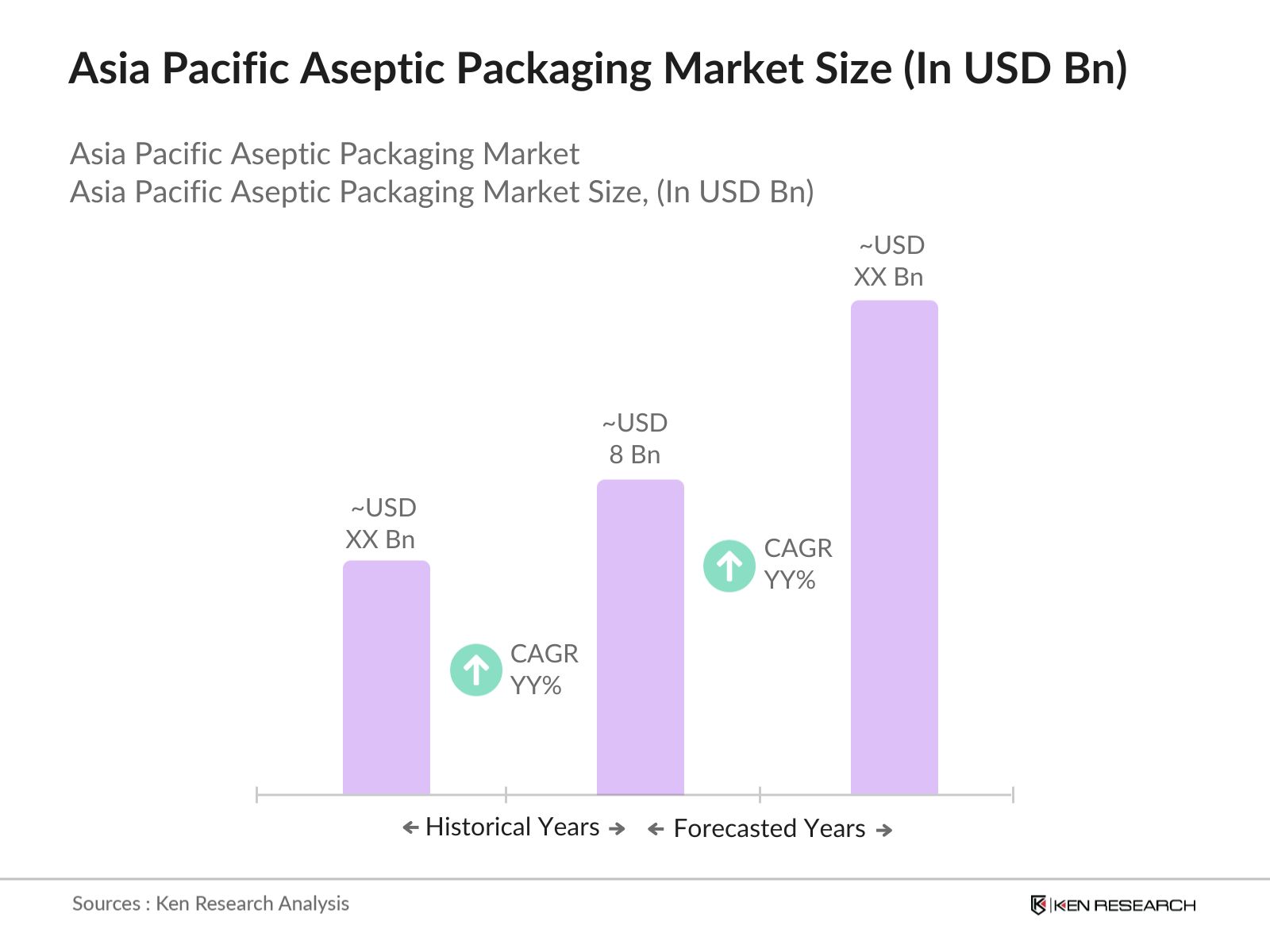
The Asia Pacific aseptic packaging market is valued at USD 8 billion, primarily driven by the increasing demand for food and pharmaceutical packaging solutions that ensure product sterility and shelf life.
Key challenges in the Asia Pacific aseptic packaging market include high initial investment costs for adopting aseptic packaging technologies, regulatory barriers across different regions, and competition from alternative packaging methods like traditional plastic and glass containers.
Major players in the Asia Pacific aseptic packaging market include Tetra Pak, SIG Combibloc, Amcor Plc, Schott AG, and Sealed Air Corporation. These companies lead due to their innovative product portfolios, strong global presence, and sustainability efforts.
Growth drivers in the Asia Pacific aseptic packaging market include the rising demand for extended shelf life of food products, increased consumption of packaged foods and beverages, and the expansion of the pharmaceutical sector, which requires sterile packaging solutions.
Trends in the Asia Pacific aseptic packaging market shaping the future include the shift towards eco-friendly and recyclable packaging materials, the integration of digital printing for better customization, and the expansion of aseptic packaging in non-food sectors like cosmetics and industrial applications.

What makes us stand out is that our consultants follows Robust, Refine and Result (RRR) methodology. i.e. Robust for clear definitions, approaches and sanity checking, Refine for differentiating respondents facts and opinions and Result for presenting data with story

We have set a benchmark in the industry by offering our clients with syndicated and customized market research reports featuring coverage of entire market as well as meticulous research and analyst insights.

While we don't replace traditional research, we flip the method upside down. Our dual approach of Top Bottom & Bottom Top ensures quality deliverable by not just verifying company fundamentals but also looking at the sector and macroeconomic factors.

With one step in the future, our research team constantly tries to show you the bigger picture. We help with some of the tough questions you may encounter along the way: How is the industry positioned? Best marketing channel? KPI's of competitors? By aligning every element, we help maximize success.

Our report gives you instant access to the answers and sources that other companies might choose to hide. We elaborate each steps of research methodology we have used and showcase you the sample size to earn your trust.

If you need any support, we are here! We pride ourselves on universe strength, data quality, and quick, friendly, and professional service.