















Asia-Pacific Automotive AI Market Outlook to 2030
Region:Asia
Author(s):Vijay Kumar
Product Code:KROD1332
December 2024
96
About the Report
Asia-Pacific Automotive AI Market Overview
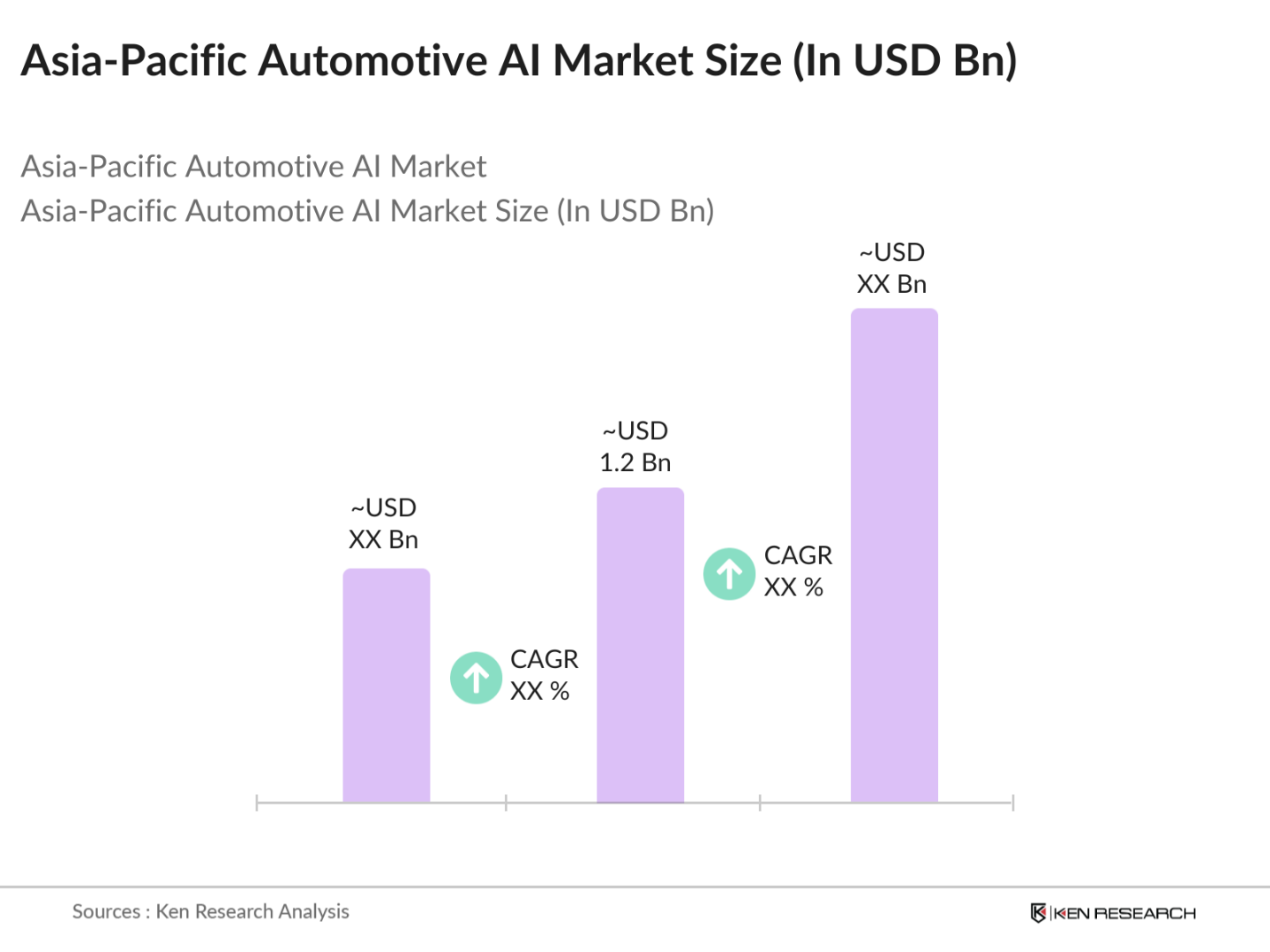
- The Asia-Pacific Automotive AI market was valued at USD 1.2 billion in 2023. This market's growth is propelled by the increasing adoption of AI-driven technologies in vehicle safety systems, autonomous driving, and connected vehicles. Countries like China, Japan, and South Korea are at the forefront, leveraging AI to enhance vehicle performance, safety, and consumer experience. The rising consumer demand for advanced driver-assistance systems (ADAS) and the rapid development of AI infrastructure in the region are significant growth drivers.
- Major players in the Asia-Pacific Automotive AI market include Toyota AI Ventures, Honda AI Lab, Baidu Inc., NVIDIA Corporation, and Hyundai Motor Group. These companies dominate the market due to their extensive R&D investments, innovative AI solutions for autonomous driving, and strategic partnerships with tech firms. Their leadership is further strengthened by continuous advancements in AI algorithms and real-time data processing capabilities, crucial for the development of AI-driven vehicles.
- In March 2024, Baidu Inc. launched its AI-powered autonomous vehicle platform, Apollo 8.0, designed for Level 5 autonomous driving. This platform integrates advanced machine learning algorithms and real-time 3D mapping to enable fully autonomous driving in urban environments. Apollo 8.0 has been deployed in over 10 cities across China, marking a significant step forward in the commercialization of autonomous driving technologies in the region.
- Beijing, Tokyo, and Seoul are the dominant cities in the Asia-Pacific Automotive AI market. Beijing leads with extensive autonomous driving trials and a strong AI research ecosystem. Tokyo excels in AI-driven electric vehicles, supported by Japan's advanced technological infrastructure. Seoul's dominance is attributed to its rapid adoption of 5G technology, which is crucial for the development of connected vehicles and smart transportation systems. These cities' strong government support and innovation hubs make them central to the market's growth.
Asia-Pacific Automotive AI Market Segmentation
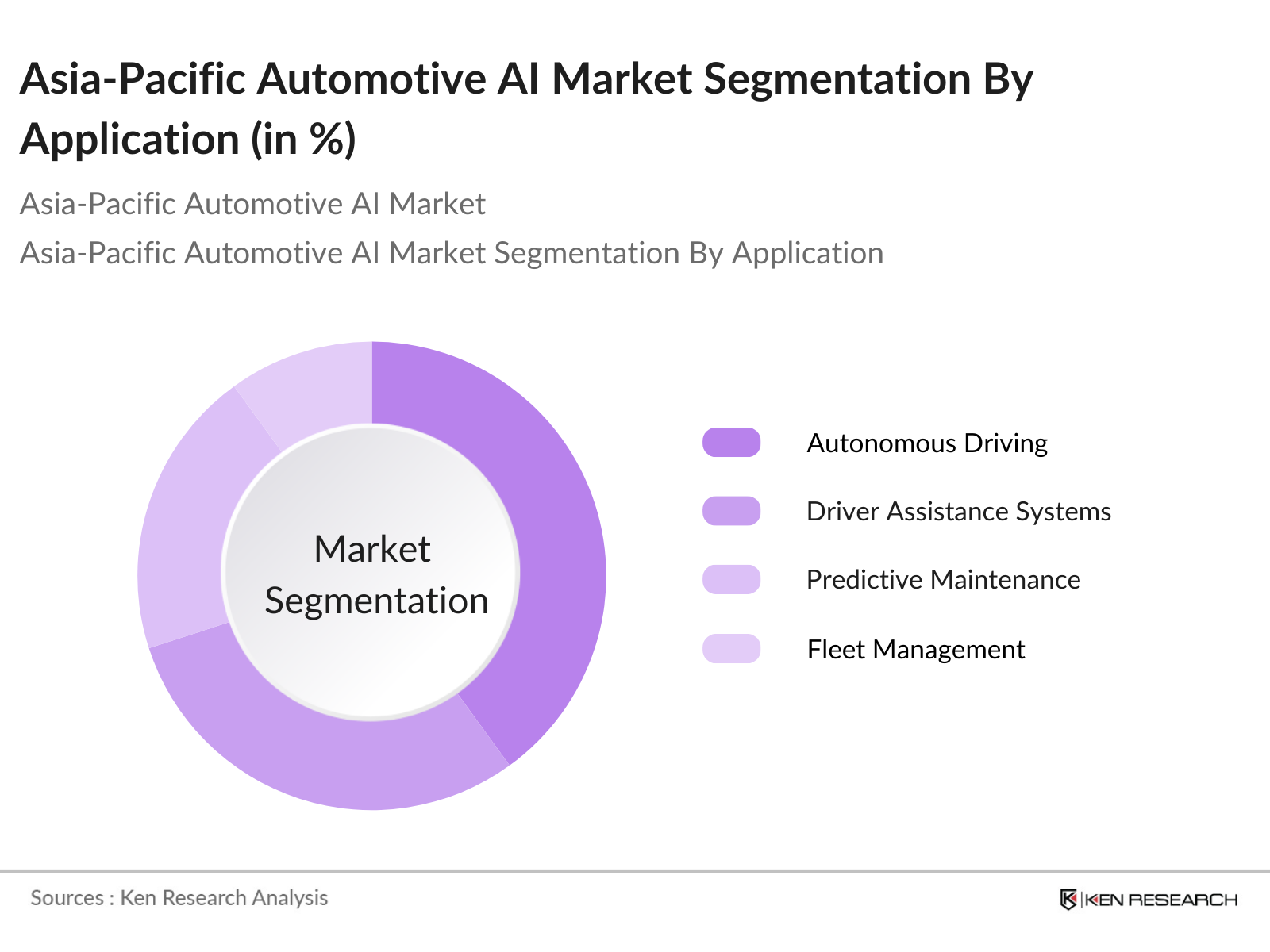
By Application: The Asia-Pacific Automotive AI market is segmented by application into Autonomous Driving, Driver Assistance Systems, Predictive Maintenance, and Fleet Management. In 2023, Autonomous Driving holds the dominant market share. This is driven by significant investments in autonomous vehicle development, particularly in China and Japan. Government support, consumer demand for self-driving cars, and advancements in AI algorithms for real-time decision-making are key contributors to the growth of this segment.
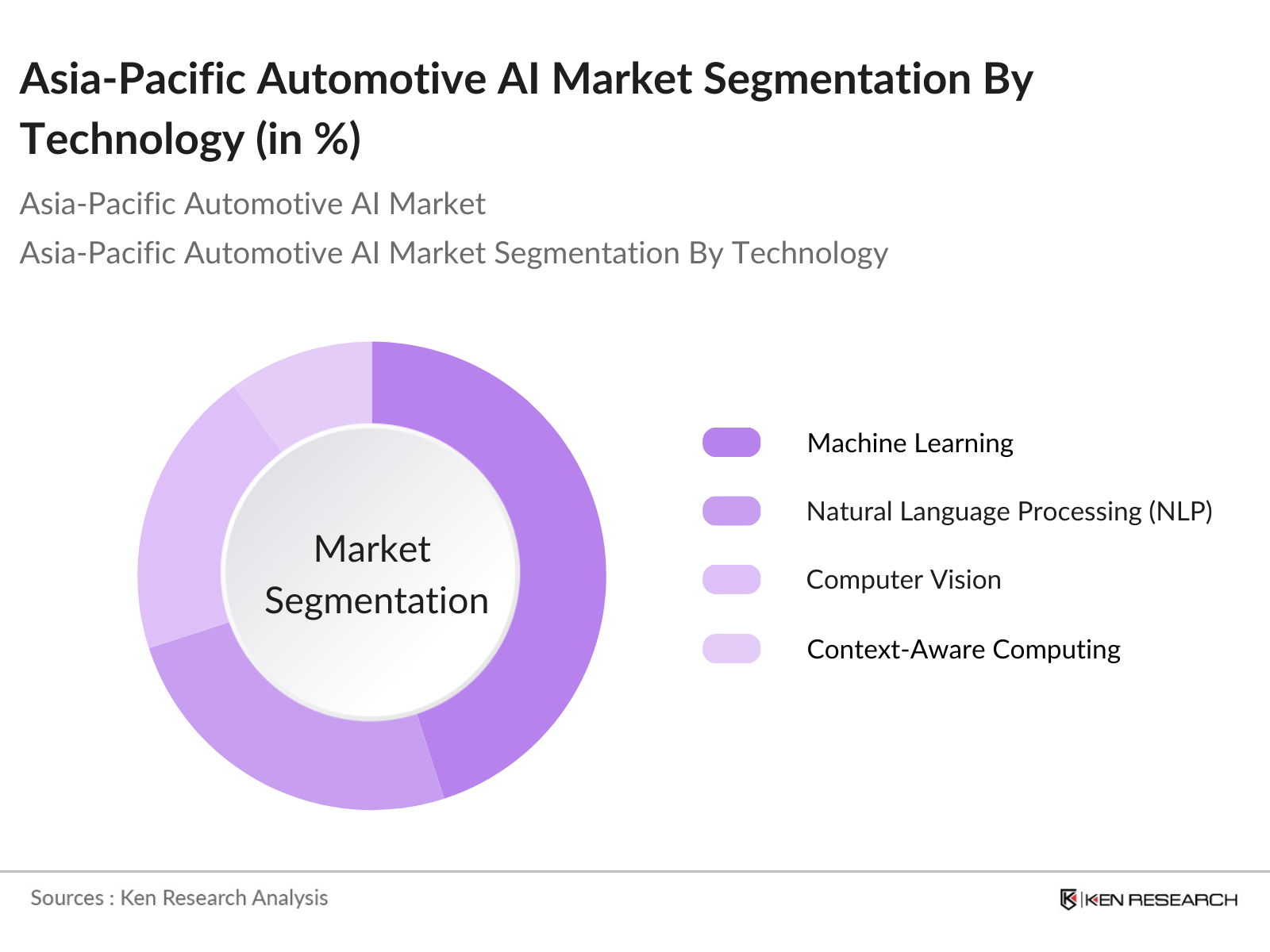
By Technology: The market is segmented by technology into Machine Learning, Natural Language Processing (NLP), Computer Vision, and Context-Aware Computing. In 2023, Machine Learning leads this segment with the highest market share. Machine Learning is essential for developing AI models for predictive analytics, pattern recognition, and decision-making in autonomous vehicles. Leading automotive companies are heavily investing in Machine Learning to enhance vehicle performance and safety features.
By Region: The Asia-Pacific Automotive AI market is segmented by region into China, Japan, India, South Korea, Indonesia, and the rest of APAC. East Asia, particularly China and Japan, holds the largest market share due to the presence of major automotive manufacturers, robust R&D infrastructure, and strong government support for AI development. The regions advanced technological capabilities and large consumer base further bolster its leading position.
Asia-Pacific Automotive AI Market Competitive Landscape
|
Company |
Establishment Year |
Headquarters |
|
Toyota AI Ventures |
2017 |
Tokyo, Japan |
|
Honda AI Lab |
2018 |
Tokyo, Japan |
|
Baidu Inc. |
2000 |
Beijing, China |
|
NVIDIA Corporation |
1993 |
Santa Clara, USA |
|
Hyundai Motor Group |
1967 |
Seoul, South Korea |
- Toyota AI Ventures: In April 2024, Toyota AI Ventures announced the launch of a USD 200 million fund dedicated to AI startups focusing on automotive technologies. This fund aims to accelerate the development of AI-driven solutions for autonomous driving and smart mobility. Toyota's continued investment in AI startups strengthens its position as a leader in automotive innovation, particularly in AI-powered electric and autonomous vehicles.
- Hyundai Motor Group: On August 3, 2023, Hyundai Motor Group announced a $50 million investment in Tenstorrent, with Hyundai Motor Company contributing $30 million and Kia Corporation $20 million. This investment positions Hyundai as the lead investor in Tenstorrent's latest funding round, which totals $100 million.
Asia-Pacific Automotive AI Market Analysis
Growth Drivers
- Increasing AI Integration in Vehicle Safety Systems: The rapid integration of AI in vehicle safety systems, such as ADAS, is a significant growth driver in the Asia-Pacific Automotive AI market. By 2024, over 30 million vehicles equipped with AI-driven safety features are expected to be on the roads across Asia-Pacific, particularly in China, Japan, and South Korea. These systems enhance real-time data processing for collision avoidance, lane-keeping, and traffic sign recognition, which are critical for reducing road accidents.
- Expansion of 5G Networks and V2X Communication: The expansion of 5G networks across the Asia-Pacific region is a major growth driver for the Automotive AI market. By 2024, over 650 million 5G subscriptions are expected in the region, with significant deployments in China, Japan, and South Korea. 5G technology provides the high-speed, low-latency connectivity required for vehicle-to-everything (V2X) communication, which is essential for autonomous driving and connected vehicles.
- Rising Consumer Demand for Autonomous Vehicles: Consumer demand for autonomous vehicles is on the rise, particularly in urban areas of China and Japan, where traffic congestion is a major concern. In 2024, sales of autonomous vehicles in China alone are projected to exceed 1 million units, driven by consumer preference for self-driving technology that offers convenience and efficiency. The increasing affordability of autonomous vehicle technology is also contributing to its widespread adoption.
Asia-Pacific Automotive AI Market Challenges
- High Costs of AI Implementation: The high costs associated with implementing AI technologies in vehicles remain a significant challenge for manufacturers in the Asia-Pacific region. Developing and integrating AI systems require substantial investments. In 2023, the cost of AI integration per vehicle could exceed USD 5,000, posing a considerable financial burden for manufacturers, particularly those producing mid-range and budget vehicles.
- Regulatory Hurdles and Compliance Issues: Regulatory hurdles and compliance issues present challenges in the Asia-Pacific Automotive AI market. The differences in regulations governing the use of AI in vehicles across countries create barriers to market entry and slow down the deployment of AI technologies. For instance, Japan's regulatory framework for autonomous vehicles is more advanced compared to other countries, requiring extensive testing and certification processes.
Asia-Pacific Automotive AI Market Government Initiatives
- China's "Made in China 2025" Initiative: The "Made in China 2025" initiative prioritizes the development of intelligent and connected vehicles, providing substantial funding and tax incentives for companies involved in AI research and development. This initiative is a cornerstone of Chinas strategy to become a global leader in high-tech industries, including automotive AI.
- South Korea's "AI National Strategy": South Korea's National Strategy for Artificial Intelligence, launched in 2019, aims to make the country a global AI leader, with investments in autonomous driving, V2X communication, and AI-based traffic management. The strategy emphasizes AI development across multiple sectors, with a focus on enhancing competitiveness and fostering innovation in various technological domains.
Asia-Pacific Automotive AI Future Market Outlook
Future Market Trends
- Growth in AI-Driven Smart Cities: By 2028, the integration of AI in smart city infrastructure is expected to drive significant growth in the Asia-Pacific Automotive AI market. Governments across the region are investing in AI-based urban planning and mobility solutions, with China alone allocating USD 15 billion towards smart city projects. The proliferation of AI-driven technologies in smart cities will enhance traffic management, parking solutions, and public transportation, leading to increased adoption of AI in vehicles.
- Expansion of Autonomous Vehicle Fleets: The deployment of autonomous vehicle fleets is expected to become widespread across major cities in Asia-Pacific by 2028. It is projected that over 5 million autonomous vehicles will be operating in China, Japan, and South Korea by 2028, supported by advancements in AI and 5G technology. These fleets will play a crucial role in public transportation, logistics, and ride-hailing services, reducing traffic congestion and emissions in urban areas.
Scope of the Report
|
By Application |
Autonomous Driving Driver Assistance Systems Predictive Maintenance Fleet Management |
|
By Technology |
Machine Learning Natural Language Processing (NLP) Computer Vision Context-Aware Computing |
|
By Region |
China Japan India South Korea Indonesia Rest of APAC |
Products
Key Target Audience
Automotive Manufacturers
AI Technology Providers
Automotive OEMs
Venture Capital and Investment Firms
Government and Regulatory Bodies
AI Research and Development Institutions
Automotive Component Suppliers
Autonomous Vehicle Startups
Time Period Captured in the Report
Historical Period: 2018-2023
Base Year: 2023
Forecast Period: 2023-2028
Companies
Players Mentioned in the Report
Toyota AI Ventures
Honda AI Lab
Baidu Inc.
NVIDIA Corporation
Hyundai Motor Group
Tesla Inc.
Waymo LLC
Intel Corporation
Bosch AI
Tencent AI Lab
Table of Contents
1. Asia-Pacific Automotive AI Market Overview
1.1. Definition and Scope
1.2. Market Taxonomy
1.3. Market Growth Rate
1.4. Market Segmentation Overview
2. Asia-Pacific Automotive AI Market Size (in USD Bn), 2018-2023
2.1. Historical Market Size
2.2. Year-on-Year Growth Analysis
2.3. Key Market Developments and Milestones
3. Asia-Pacific Automotive AI Market Analysis
3.1. Growth Drivers
3.1.1. Increasing AI Integration in Vehicle Safety Systems
3.1.2. Government Funding and Incentives for AI R&D
3.1.3. Rising Consumer Demand for Autonomous Vehicles
3.2. Restraints
3.2.1. High Costs of AI Implementation
3.2.2. Regulatory Hurdles and Compliance Issues
3.2.3. Data Privacy and Cybersecurity Concerns
3.3. Opportunities
3.3.1. Expansion of AI-Powered Mobility Services
3.3.2. Collaboration Between Automotive and Tech Companies
3.3.3. Adoption of AI in Predictive Maintenance
3.4. Trends
3.4.1. Growth in AI-Driven Smart Cities
3.4.2. Expansion of Autonomous Vehicle Fleets
3.4.3. AI-Driven Electric Vehicle Growth
3.5. Government Regulation
3.5.1. Automotive AI Regulatory Frameworks
3.5.2. Policies on Autonomous Vehicles and AI Adoption
3.5.3. Data Privacy and Cybersecurity Regulations
3.6. SWOT Analysis
3.7. Stake Ecosystem
3.8. Competition Ecosystem
4. Asia-Pacific Automotive AI Market Segmentation, 2023
4.1. By Application Type (in Value %)
4.1.1. Autonomous Driving
4.1.2. Driver Assistance Systems
4.1.3. Predictive Maintenance
4.1.4. Fleet Management
4.2. By Technology Type (in Value %)
4.2.1. Machine Learning
4.2.2. Natural Language Processing (NLP)
4.2.3. Computer Vision
4.2.4. Context-Aware Computing
4.3. By Region (in Value %)
4.3.1. China
4.3.2. Japan
4.3.3. India
4.3.4. South Korea
4.3.5. Indonesia
4.3.6. Rest of APAC
5. Asia-Pacific Automotive AI Market Cross Comparison
5.1. Detailed Profiles of Major Companies
5.1.1. Toyota AI Ventures
5.1.2. Honda AI Lab
5.1.3. Baidu Inc.
5.1.4. NVIDIA Corporation
5.1.5. Hyundai Motor Group
5.2. Cross Comparison Parameters (No. of Employees, Headquarters, Inception Year, Revenue)
6. Asia-Pacific Automotive AI Market Competitive Landscape
6.1. Market Share Analysis
6.2. Strategic Initiatives
6.3. Mergers and Acquisitions
6.4. Investment Analysis
6.4.1. Venture Capital Funding
6.4.2. Government Grants
6.4.3. Private Equity Investments
7. Asia-Pacific Automotive AI Market Regulatory Framework
7.1. Automotive AI Regulatory Policies
7.2. Licensing Requirements for AI Technologies
7.3. Data Privacy and Cybersecurity Regulations
8. Asia-Pacific Automotive AI Future Market Size (in USD Bn), 2023-2028
8.1. Future Market Size Projections
8.2. Key Factors Driving Future Market Growth
9. Asia-Pacific Automotive AI Future Market Segmentation, 2028
9.1. By Application Type (in Value %)
9.2. By Technology Type (in Value %)
9.3. By Region (in Value %)
10. Asia-Pacific Automotive AI Market Analysts Recommendations
10.1. TAM/SAM/SOM Analysis
10.2. Customer Cohort Analysis
10.3. Marketing Initiatives
10.4. White Space Opportunity Analysis
Disclaimer
Contact Us
Research Methodology
Step 1: Identifying Key Variables
Ecosystem creation for all the major entities and referring to multiple secondary and proprietary databases to perform desk research around the market to collate industry-level information on the Automotive AI market.
Step 2: Market Building
Collating statistics on the Asia-Pacific Automotive AI market over the years, penetration of AI-driven technologies, and service provider ratios to compute revenue generated for the market. We will also review service quality statistics to understand revenue generated, ensuring accuracy behind the data points shared.
Step 3: Validating and Finalizing
Building market hypotheses and conducting Computer-Assisted Telephone Interviews (CATIs) with industry experts from different companies to validate statistics and seek operational and financial information from company representatives.
Step 4: Research Output
Our team will approach multiple essential automotive AI companies and understand the nature of product segments and sales, consumer preferences, and other parameters, which will support us in validating statistics derived through a bottom-up approach from automotive AI companies.
Frequently Asked Questions
01 How big is the Asia-Pacific Automotive AI Market?
The Asia-Pacific Automotive AI market was valued at USD 1.2 billion in 2023. This market is primarily driven by the integration of AI technologies in vehicle safety systems, the rise in demand for autonomous vehicles, and substantial investments in AI research and development across major countries like China, Japan, and South Korea.
02 What are the challenges in the Asia-Pacific Automotive AI Market?
Challenges include the Asia-Pacific Automotive AI market's high costs of AI implementation in vehicles, regulatory hurdles across different countries, and significant concerns regarding data privacy and cybersecurity. These factors present barriers to the widespread adoption of AI technologies in the automotive industry.
03 Who are the major players in the Asia-Pacific Automotive AI Market?
Key players in the Asia-Pacific Automotive AI market include Toyota AI Ventures, Honda AI Lab, Baidu Inc., NVIDIA Corporation, and Hyundai Motor Group. These companies lead the market through extensive R&D investments, strategic partnerships, and advancements in AI-powered automotive technologies.
04 What are the growth drivers of the Asia-Pacific Automotive AI Market?
The Asia-Pacific Automotive AI market is driven by the rapid integration of AI in vehicle safety systems, substantial government funding and incentives for AI R&D, and rising consumer demand for autonomous vehicles, especially in urban areas of China and Japan.
Why Buy From Us?

What makes us stand out is that our consultants follows Robust, Refine and Result (RRR) methodology. i.e. Robust for clear definitions, approaches and sanity checking, Refine for differentiating respondents facts and opinions and Result for presenting data with story

We have set a benchmark in the industry by offering our clients with syndicated and customized market research reports featuring coverage of entire market as well as meticulous research and analyst insights.

While we don't replace traditional research, we flip the method upside down. Our dual approach of Top Bottom & Bottom Top ensures quality deliverable by not just verifying company fundamentals but also looking at the sector and macroeconomic factors.

With one step in the future, our research team constantly tries to show you the bigger picture. We help with some of the tough questions you may encounter along the way: How is the industry positioned? Best marketing channel? KPI's of competitors? By aligning every element, we help maximize success.

Our report gives you instant access to the answers and sources that other companies might choose to hide. We elaborate each steps of research methodology we have used and showcase you the sample size to earn your trust.

If you need any support, we are here! We pride ourselves on universe strength, data quality, and quick, friendly, and professional service.