
Asia Pacific Autonomous Mobile Robot (AMR) Market Outlook to 2030
Region:Afganistan
Author(s):Shreya Garg
Product Code:KROD4144
Region:Afganistan
Author(s):Shreya Garg
Product Code:KROD4144
November 2024
96
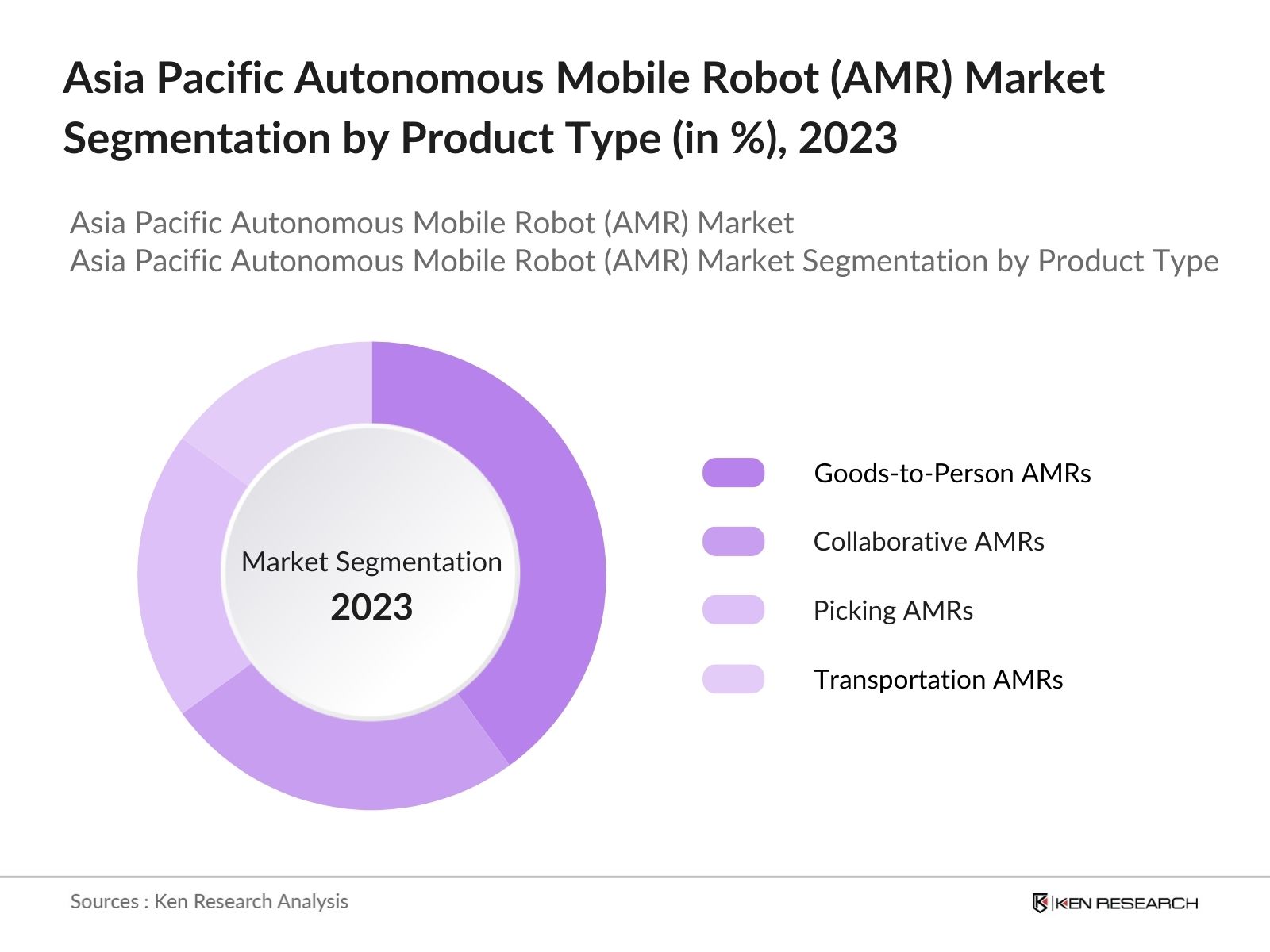
By Product Type: The market is segmented by product type into Goods-to-Person AMRs, Collaborative AMRs, Picking AMRs, and Transportation AMRs. Among these, Goods-to-Person AMRs currently dominate the market. This dominance is attributed to the rapid expansion of e-commerce, where these robots are used to optimize warehouse picking processes. The efficiency of Goods-to-Person AMRs in reducing human intervention and accelerating order fulfillment has made them a preferred choice for large-scale fulfillment centers and logistics operators.
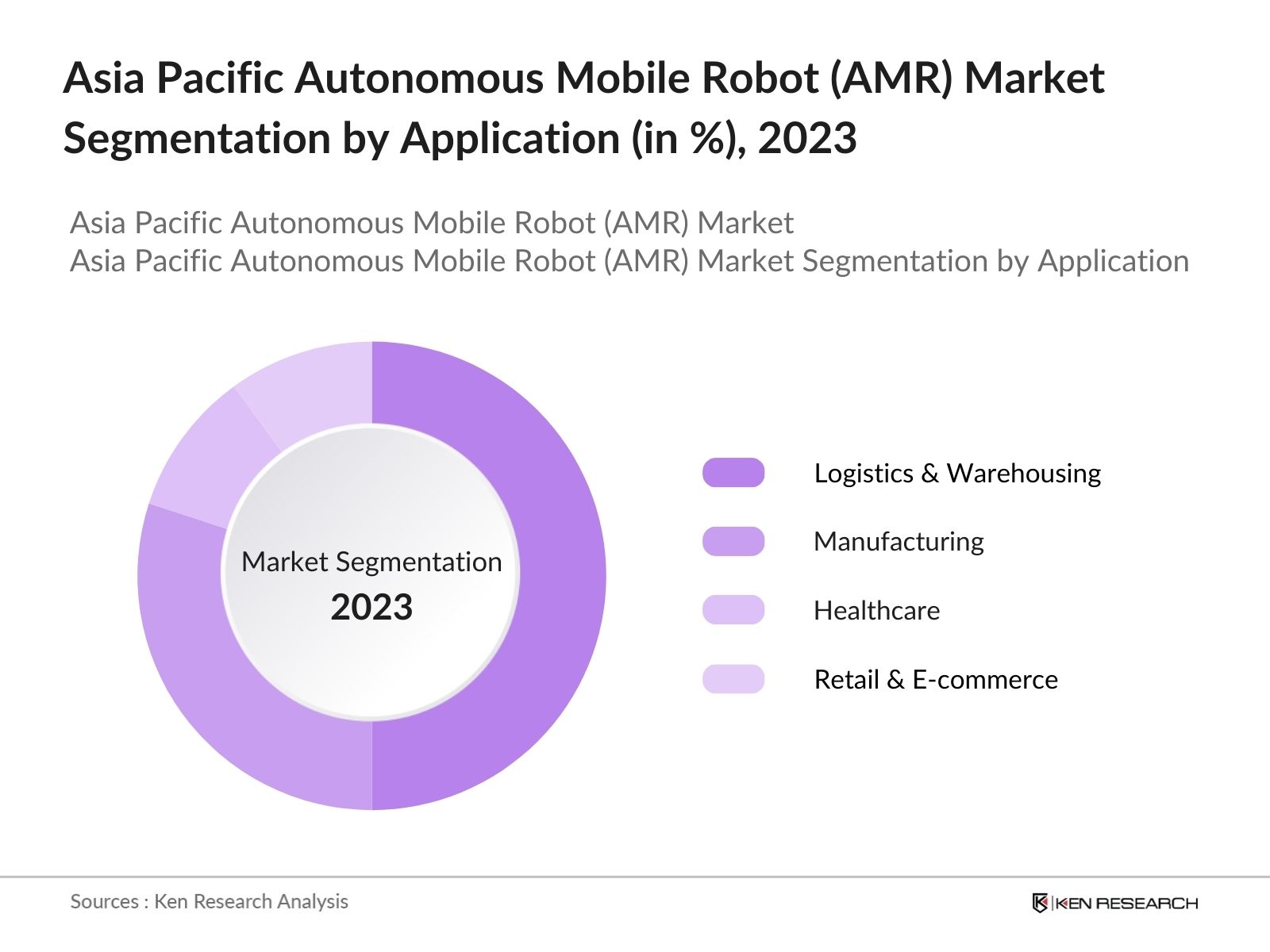
By Application: The market is segmented by application into Logistics & Warehousing, Manufacturing, Healthcare, and Retail & E-commerce. Logistics & Warehousing holds the largest market share, driven by the rapid growth of the e-commerce industry in Asia Pacific. The increasing demand for faster delivery times and efficient warehouse operations has pushed logistics providers to adopt AMRs to streamline material handling and inventory management. Companies in this sector are leveraging AMRs to reduce labor costs, improve warehouse space utilization, and enhance scalability during peak seasons.
The Asia Pacific AMR market is dominated by several key players who are driving innovation and shaping the market's competitive environment. These companies are focusing on advanced technologies such as AI, machine learning, and IoT integration to enhance the capabilities of AMRs. The competitive landscape is characterized by continuous investment in R&D, strategic partnerships, and mergers and acquisitions.
|
Company |
Established |
Headquarters |
No. of Employees |
Revenue (USD Mn) |
Key Technologies |
Product Portfolio |
Global Presence |
Strategic Partnerships |
|
Geek+ |
2015 |
China |
||||||
|
Fetch Robotics |
2014 |
USA |
||||||
|
Mobile Industrial Robots |
2013 |
Denmark |
||||||
|
GreyOrange |
2011 |
India |
||||||
|
Locus Robotics |
2014 |
USA |
Over the next five years, the Asia Pacific AMR market is poised to experience robust growth. This will be driven by the rising adoption of automation technologies across various industries such as logistics, manufacturing, and healthcare. The increasing demand for efficient and scalable material handling solutions in large fulfillment centers and the integration of AI and IoT technologies in AMRs will propel market growth. Moreover, government support for smart manufacturing and Industry 4.0 initiatives in countries like China and Japan will further accelerate the adoption of AMRs across the region.
|
Product Type |
Goods-to-Person AMRs Collaborative AMRs Picking AMRs Transportation AMRs |
|
Application |
Logistics & Warehousing Manufacturing Healthcare Retail & E-commerce |
|
Navigation Technology |
LIDAR-Based AMRs Vision-Based AMRs SLAM AMRs |
|
End-User Industry |
Automotive Food & Beverage Pharmaceuticals Electronics & Electrical |
|
Region |
China Japan India South Korea Southeast Asia |
1.1. Definition and Scope
1.2. Market Taxonomy
1.3. Market Growth Rate
1.4. Market Segmentation Overview
2.1. Historical Market Size
2.2. Year-On-Year Growth Analysis
2.3. Key Market Developments and Milestones
3.1. Growth Drivers
3.1.1. Demand for Automation in Warehousing (Logistics & Supply Chain Automation)
3.1.2. Rising E-commerce and Online Retail (Retail & E-commerce Integration)
3.1.3. Labor Shortages (Warehouse Labor & Workforce Optimization)
3.1.4. Technological Advancements in Robotics (AI & Machine Learning in AMR)
3.2. Market Challenges
3.2.1. High Initial Deployment Costs (Capital Investment Requirements)
3.2.2. Technical Integration with Legacy Systems (Warehouse Management Systems)
3.2.3. Regulatory Framework for Autonomous Operations (Compliance with Safety & Operation Standards)
3.3. Opportunities
3.3.1. Integration with IoT and 5G (Real-Time Communication & Connectivity)
3.3.2. Expansion into New Industrial Sectors (Manufacturing, Healthcare)
3.3.3. Increasing Demand for AMRs in APACs Emerging Markets (China, India, Southeast Asia)
3.4. Trends
3.4.1. Adoption of Hybrid AMR Fleets (Combining Automated Guided Vehicles & AMRs)
3.4.2. Enhanced Battery Life and Charging Solutions (Lithium-ion Batteries & Fast Charging)
3.4.3. Collaboration between AMRs and Human Operators (Human-Robot Collaboration in Warehouses)
3.5. Government Regulations
3.5.1. Compliance with Robotics Safety Standards (ISO 3691-4 & Other APAC-Specific Regulations)
3.5.2. Data Security and Privacy Laws (APAC Data Protection Policies)
3.5.3. Government Initiatives for Industry 4.0 (Smart Manufacturing Policies in APAC)
3.6. SWOT Analysis
3.7. Stake Ecosystem (OEMs, Software Providers, System Integrators, End-Users)
3.8. Porters Five Forces
3.9. Competition Ecosystem
4.1. By Product Type (In Value %)
4.1.1. Goods-to-Person AMRs
4.1.2. Collaborative AMRs
4.1.3. Picking AMRs
4.1.4. Transportation AMRs
4.2. By Application (In Value %)
4.2.1. Logistics & Warehousing
4.2.2. Manufacturing
4.2.3. Healthcare
4.2.4. Retail & E-commerce
4.3. By Navigation Technology (In Value %)
4.3.1. LIDAR-Based AMRs
4.3.2. Vision-Based AMRs
4.3.3. SLAM (Simultaneous Localization and Mapping) AMRs
4.4. By End-User Industry (In Value %)
4.4.1. Automotive
4.4.2. Food & Beverage
4.4.3. Pharmaceuticals
4.4.4. Electronics & Electrical
4.5. By Region (In Value %)
4.5.1. China
4.5.2. Japan
4.5.3. India
4.5.4. South Korea
4.5.5. Southeast Asia (Malaysia, Thailand, Vietnam, Indonesia)
5.1. Detailed Profiles of Major Companies
5.1.1. Geek+
5.1.2. Fetch Robotics
5.1.3. Mobile Industrial Robots (MiR)
5.1.4. GreyOrange
5.1.5. KION Group AG
5.1.6. Clearpath Robotics
5.1.7. IAM Robotics
5.1.8. Seegrid
5.1.9. Locus Robotics
5.1.10. Swisslog
5.1.11. OMRON Corporation
5.1.12. JBT Corporation
5.1.13. SICK AG
5.1.14. Vecna Robotics
5.1.15. Aethon Inc.
5.2. Cross Comparison Parameters (No. of Employees, Headquarters, Inception Year, Revenue, Key Technologies, Product Offerings, Market Share, Strategic Initiatives)
5.3. Market Share Analysis
5.4. Strategic Initiatives
5.5. Mergers and Acquisitions
5.6. Investment Analysis
5.7. Venture Capital Funding
5.8. Government Grants
5.9. Private Equity Investments
6.1. Safety and Operational Guidelines
6.2. Data Protection & Privacy Regulations
6.3. Robotics Certification & Standardization (ISO, APAC-specific) Compliance
7.1. Future Market Size Projections
7.2. Key Factors Driving Future Market Growth
8.1. By Product Type (In Value %)
8.2. By Application (In Value %)
8.3. By Navigation Technology (In Value %)
8.4. By End-User Industry (In Value %)
8.5. By Region (In Value %)
9.1. TAM/SAM/SOM Analysis
9.2. Customer Cohort Analysis
9.3. Market Penetration Strategies
9.4. White Space Opportunity Analysis
The research process begins by identifying the key factors influencing the Asia Pacific AMR market, including product type, application, and technology. Extensive desk research was conducted to collect industry-level information and map the market ecosystem.
Historical data from reputable sources were analyzed to determine market trends, product penetration, and revenue generation in the Asia Pacific region. The competitive landscape and technological advancements were also evaluated.
Key market hypotheses were validated through expert interviews with industry professionals, which provided insights into market growth drivers, challenges, and outlook.
The data was synthesized to develop a comprehensive market report, ensuring accuracy and relevance. The final output was validated through direct engagement with AMR manufacturers and logistics providers.
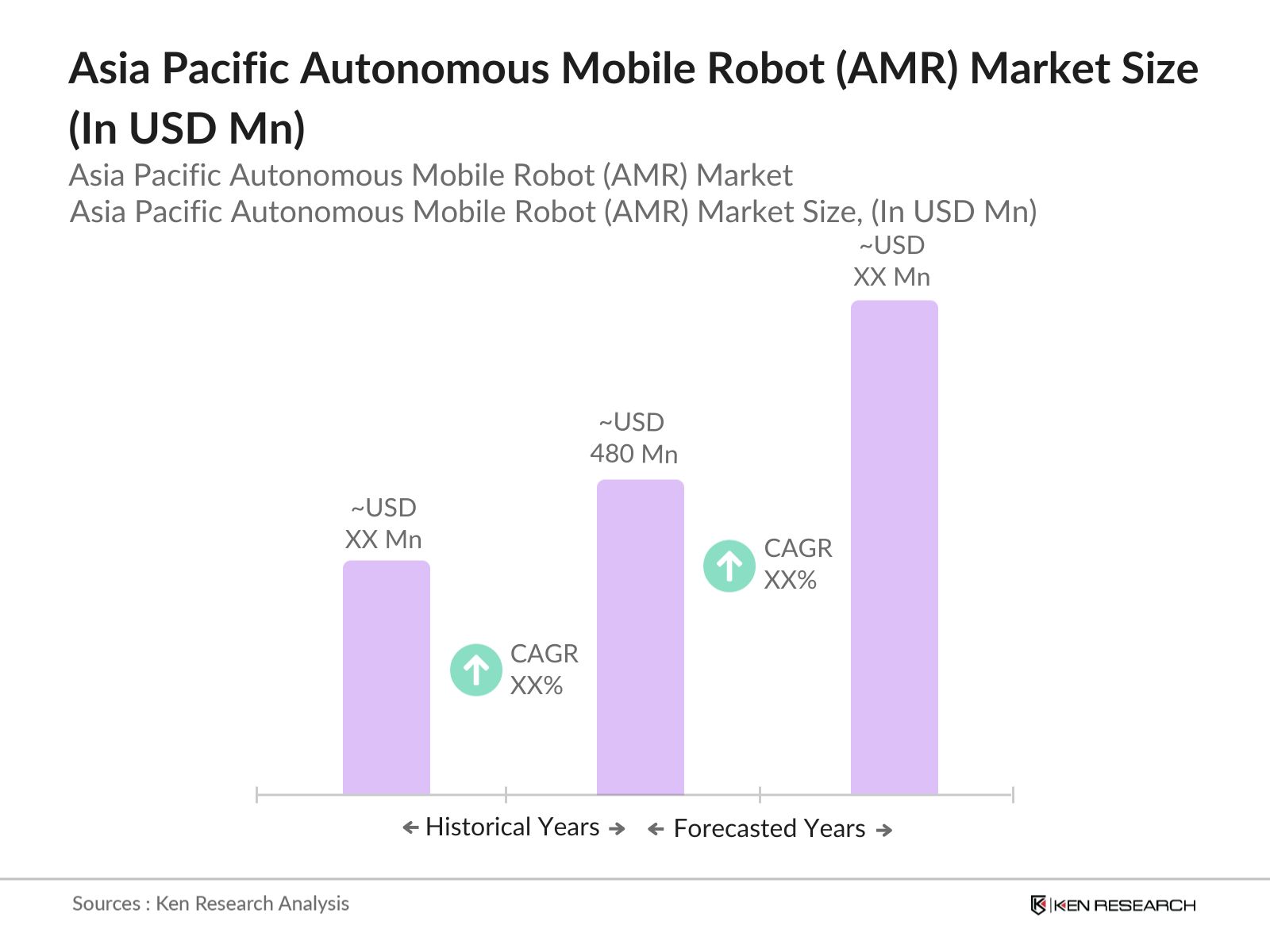
The Asia Pacific AMR market is valued at USD 480 million, driven by the increasing demand for automation in logistics, warehousing, and manufacturing sectors.
Key challenges in the Asia Pacific AMR market include high initial deployment costs, technical integration with legacy systems, and compliance with stringent safety and operational regulations across the region.
Major players in the Asia Pacific AMR market include Geek+, Fetch Robotics, Mobile Industrial Robots (MiR), GreyOrange, and Locus Robotics. These companies are driving innovation and expanding their presence across Asia Pacific.
The Asia Pacific AMR market is driven by increasing e-commerce activities, labor shortages in the logistics industry, advancements in robotics technology, and government initiatives supporting smart manufacturing and automation.
Goods-to-Person AMRs currently dominate the market, particularly in large e-commerce fulfillment centers where efficient order picking is critical in the Asia Pacific AMR market.

What makes us stand out is that our consultants follows Robust, Refine and Result (RRR) methodology. i.e. Robust for clear definitions, approaches and sanity checking, Refine for differentiating respondents facts and opinions and Result for presenting data with story

We have set a benchmark in the industry by offering our clients with syndicated and customized market research reports featuring coverage of entire market as well as meticulous research and analyst insights.

While we don't replace traditional research, we flip the method upside down. Our dual approach of Top Bottom & Bottom Top ensures quality deliverable by not just verifying company fundamentals but also looking at the sector and macroeconomic factors.

With one step in the future, our research team constantly tries to show you the bigger picture. We help with some of the tough questions you may encounter along the way: How is the industry positioned? Best marketing channel? KPI's of competitors? By aligning every element, we help maximize success.

Our report gives you instant access to the answers and sources that other companies might choose to hide. We elaborate each steps of research methodology we have used and showcase you the sample size to earn your trust.

If you need any support, we are here! We pride ourselves on universe strength, data quality, and quick, friendly, and professional service.