
Asia Pacific Baby Apparel Market Outlook to 2030
Region:Asia
Author(s):Meenakshi Bisht
Product Code:KROD9612
Region:Asia
Author(s):Meenakshi Bisht
Product Code:KROD9612
December 2024
96
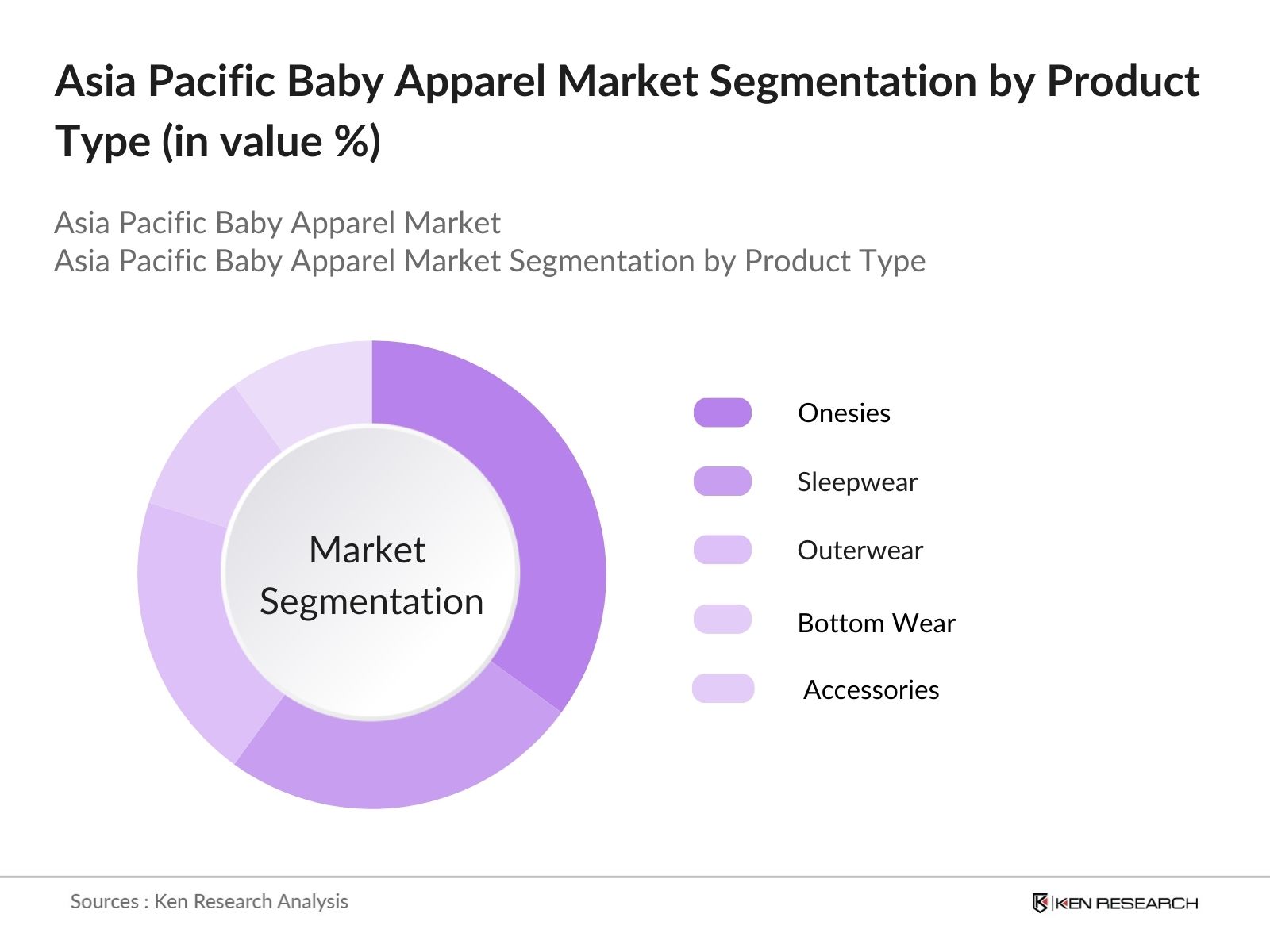
By Product Type: The market is segmented by product type into onesies, sleepwear, outerwear, bottom wear, and accessories. Recently, onesies have emerged as a dominant market segment due to their convenience and multi-purpose usage, making them a staple in baby wardrobes. The high demand for onesies is further supported by their growing availability in organic and eco-friendly fabrics, which appeals to environmentally conscious parents. Onesies also offer flexibility in design, often incorporating popular characters and themes, enhancing their appeal to both parents and children.
By Fabric Type: By fabric type, the market is segmented into organic cotton, polyester, wool, bamboo fiber, and blended fabrics. Among these, organic cotton dominates the market due to the increasing awareness among parents about the health benefits of using natural and non-toxic materials. Organic cotton apparel is hypoallergenic and soft, making it suitable for babies with sensitive skin. Additionally, the sustainability aspect of organic cotton has aligned well with the growing environmental consciousness among consumers, leading to its widespread adoption.

The Asia Pacific Baby Apparel Market is characterized by the presence of both global and regional players. The competition is intense, with companies focusing on product innovation, sustainable practices, and e-commerce expansion to maintain their market positions. Companies like H&M and Zara have a strong presence in the region, with their eco-friendly lines of baby apparel driving sales. In contrast, local players like FirstCry in India have carved a niche by providing affordable baby apparel with high local demand.

The Asia Pacific Baby Apparel Market is projected to continue its upward trajectory in the near future, driven by several factors. Rising disposable income levels, the growing trend of nuclear families, and an increased focus on child safety and comfort will fuel the demand for high-quality baby apparel. Furthermore, sustainability is expected to play a crucial role, with organic and eco-friendly fabrics gaining significant traction. As more parents turn toward online shopping platforms, the digital transformation in retail will be a key driver for future growth.
|
Product Type |
Onesies Sleepwear Outerwear Bottom Wear Accessories (Bibs, Mittens) |
|
Fabric Type |
Organic Cotton Polyester Wool Bamboo Fiber Blended Fabrics |
|
Distribution Channel |
Online (E-commerce, Brand Websites) Offline (Department Stores, Specialty Stores, Hypermarkets) |
|
Size |
Newborn 0-6 Months 6-12 Months 12-24 Months 2-3 Years |
|
Region |
China India Japan Australia & New Zealand Southeast Asia (Indonesia, Malaysia, Thailand) |
1.1. Definition and Scope
1.2. Market Taxonomy
1.3. Market Growth Rate
1.4. Market Segmentation Overview (By Product Type, Fabric Type, Distribution Channel, Size, and Region)
2.1. Historical Market Size
2.2. Year-On-Year Growth Analysis
2.3. Key Market Developments and Milestones
3.1. Growth Drivers
3.1.1. Rising Birth Rates in Key Regions (e.g., Southeast Asia, South Asia)
3.1.2. Increasing Disposable Income of Middle-Class Families
3.1.3. Evolving Fashion Trends in Baby Clothing
3.1.4. Expanding E-commerce Platforms
3.1.5. Growth in Organic and Sustainable Apparel Demand
3.2. Market Challenges
3.2.1. Rising Raw Material Costs (e.g., Organic Cotton)
3.2.2. Stringent Safety and Quality Regulations
3.2.3. Fluctuating Currency Exchange Rates
3.2.4. Supply Chain Disruptions (Post-Pandemic and Global Logistics)
3.3. Opportunities
3.3.1. Increasing Demand for Gender-Neutral Baby Clothing
3.3.2. Innovation in Smart Apparel for Babies
3.3.3. Growth in Baby Clothing Rental Services
3.3.4. Expansion in Emerging Markets (e.g., Vietnam, Philippines)
3.4. Trends
3.4.1. Rise in Customization and Personalization in Baby Apparel
3.4.2. Growing Popularity of Eco-Friendly and Vegan Fabric Use
3.4.3. Increasing Direct-to-Consumer Models
3.4.4. Influence of Social Media on Baby Fashion Choices
3.5. Government Regulation
3.5.1. Safety Standards for Infant Clothing (e.g., Flammability, Non-toxic Fabrics)
3.5.2. Import and Export Tariff Policies
3.5.3. Child Labor Laws and Ethical Sourcing Regulations
3.6. SWOT Analysis
3.7. Stakeholder Ecosystem
3.8. Porters Five Forces Analysis
3.9. Competitive Ecosystem
4.1. By Product Type (In Value %)
4.1.1. Onesies
4.1.2. Sleepwear
4.1.3. Outerwear
4.1.4. Bottom Wear
4.1.5. Others (Accessories, Bibs, Mittens)
4.2. By Fabric Type (In Value %)
4.2.1. Organic Cotton
4.2.2. Polyester
4.2.3. Wool
4.2.4. Bamboo Fiber
4.2.5. Blended Fabrics
4.3. By Distribution Channel (In Value %)
4.3.1. Online (E-commerce, Brand Websites)
4.3.2. Offline (Department Stores, Specialty Stores, Hypermarkets)
4.4. By Size (In Value %)
4.4.1. Newborn
4.4.2. 0-6 Months
4.4.3. 6-12 Months
4.4.4. 12-24 Months
4.4.5. 2-3 Years
4.5. By Region (In Value %)
4.5.1. China
4.5.2. India
4.5.3. Japan
4.5.4. Australia & New Zealand
4.5.5. Southeast Asia (Indonesia, Malaysia, Thailand)
5.1. Detailed Profiles of Major Competitors
5.1.1. Carters, Inc.
5.1.2. H&M
5.1.3. Uniqlo
5.1.4. Mothercare
5.1.5. The Children's Place
5.1.6. Patagonia
5.1.7. Baby Gap
5.1.8. Zara Kids
5.1.9. Adidas Kids
5.1.10. Pigeon Corporation
5.1.11. Purebaby
5.1.12. Naartjie
5.1.13. Kiskissing
5.1.14. FirstCry
5.1.15. NEXT Plc
5.2. Cross Comparison Parameters (Number of Employees, Global Presence, Manufacturing Capacity, Revenue, Sustainable Practices, Product Range, Customer Ratings, Supply Chain Management)
5.3. Market Share Analysis
5.4. Strategic Initiatives
5.5. Mergers and Acquisitions
5.6. Investment Analysis
5.7. Private Equity Investments
6.1. Safety and Quality Standards
6.2. Import/Export Duties
6.3. Textile Certification (e.g., OEKO-TEX, GOTS)
6.4. Child Labor and Ethical Sourcing Regulations
7.1. Future Market Size Projections
7.2. Key Factors Driving Future Market Growth
8.1. By Product Type (In Value %)
8.2. By Fabric Type (In Value %)
8.3. By Distribution Channel (In Value %)
8.4. By Size (In Value %)
8.5. By Region (In Value %)
9.1. TAM/SAM/SOM Analysis
9.2. Marketing Initiatives
9.3. White Space Opportunity Analysis
9.4. Customer Cohort Analysis
Disclaimer Contact UsIn the initial phase, our research team constructed an ecosystem map, identifying all stakeholders within the Asia Pacific Baby Apparel Market. Key variables such as birth rates, economic trends, and fabric preferences were identified through a mix of primary and secondary research.
We compiled and analyzed historical data on market penetration and revenue generation. Additionally, an in-depth assessment of the supply chain and market performance was carried out, ensuring comprehensive analysis.
Market hypotheses were validated through expert consultations, including interviews with industry practitioners and stakeholders. Their insights were critical in refining and corroborating our market data.
Finally, insights from multiple apparel manufacturers were combined to deliver a holistic view of product segments, consumer preferences, and growth opportunities in the Asia Pacific Baby Apparel Market.
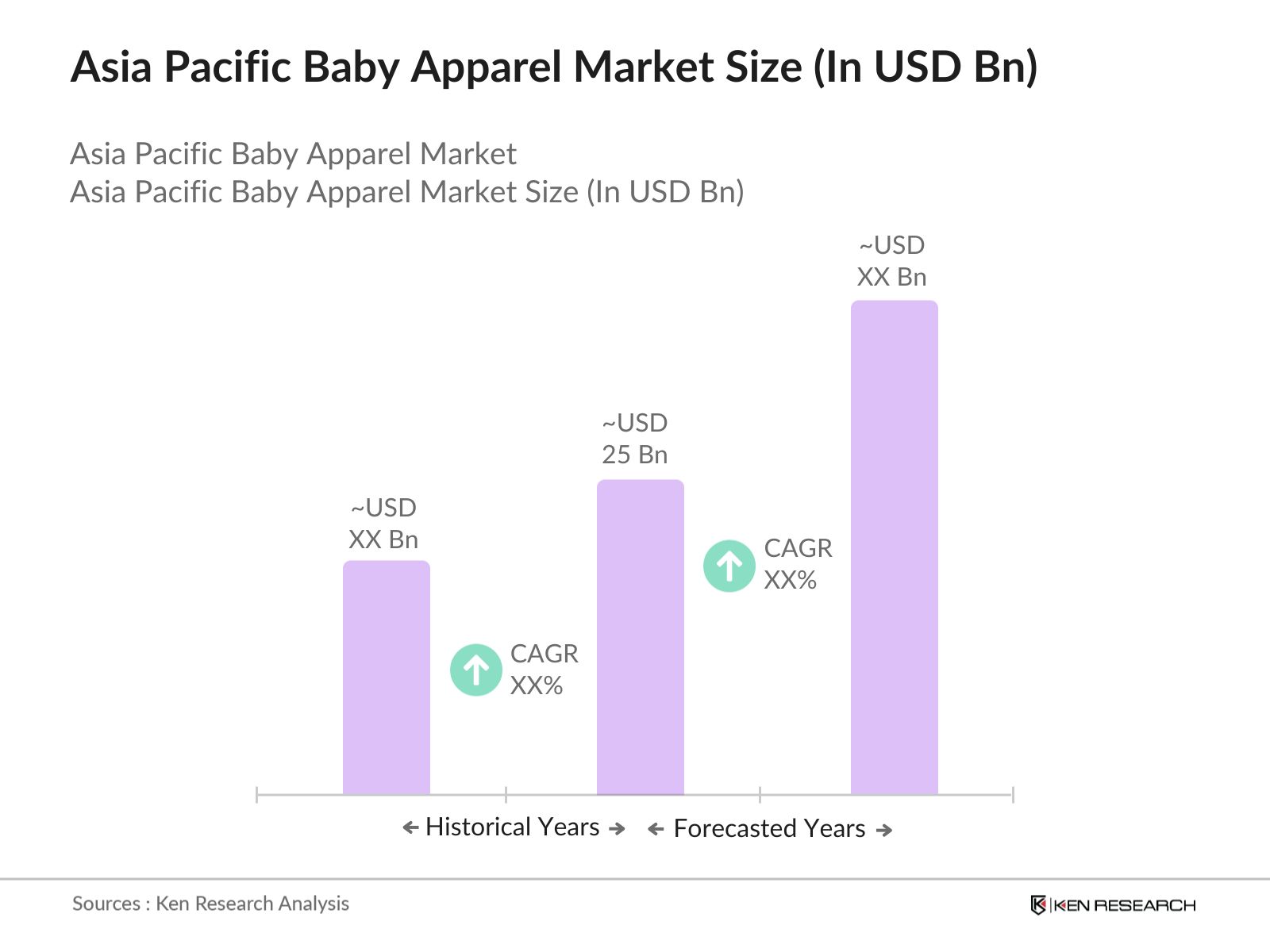
The Asia Pacific Baby Apparel Market is valued at USD 25 billion, with growth driven by rising disposable incomes and a shift toward premium and organic baby clothing options.
Challenges in Asia Pacific Baby Apparel Market include fluctuating raw material costs, especially for organic fabrics, and navigating the complex regulatory environment surrounding child safety standards in apparel.
Major players in Asia Pacific Baby Apparel Market include Carters, Inc., H&M, Uniqlo, FirstCry, and Purebaby, with strong brand presence and expansive distribution networks.
Key growth drivers in Asia Pacific Baby Apparel Market include increasing disposable income, rising birth rates, and growing awareness about sustainable and organic clothing options for babies.

What makes us stand out is that our consultants follows Robust, Refine and Result (RRR) methodology. i.e. Robust for clear definitions, approaches and sanity checking, Refine for differentiating respondents facts and opinions and Result for presenting data with story

We have set a benchmark in the industry by offering our clients with syndicated and customized market research reports featuring coverage of entire market as well as meticulous research and analyst insights.

While we don't replace traditional research, we flip the method upside down. Our dual approach of Top Bottom & Bottom Top ensures quality deliverable by not just verifying company fundamentals but also looking at the sector and macroeconomic factors.

With one step in the future, our research team constantly tries to show you the bigger picture. We help with some of the tough questions you may encounter along the way: How is the industry positioned? Best marketing channel? KPI's of competitors? By aligning every element, we help maximize success.

Our report gives you instant access to the answers and sources that other companies might choose to hide. We elaborate each steps of research methodology we have used and showcase you the sample size to earn your trust.

If you need any support, we are here! We pride ourselves on universe strength, data quality, and quick, friendly, and professional service.