
Asia Pacific Biofuel Market Outlook to 2030
Region:Asia
Author(s):Naman Rohilla
Product Code:KROD4994
December 2024
92
About the Report
Asia-Pacific Biofuel Market Overview
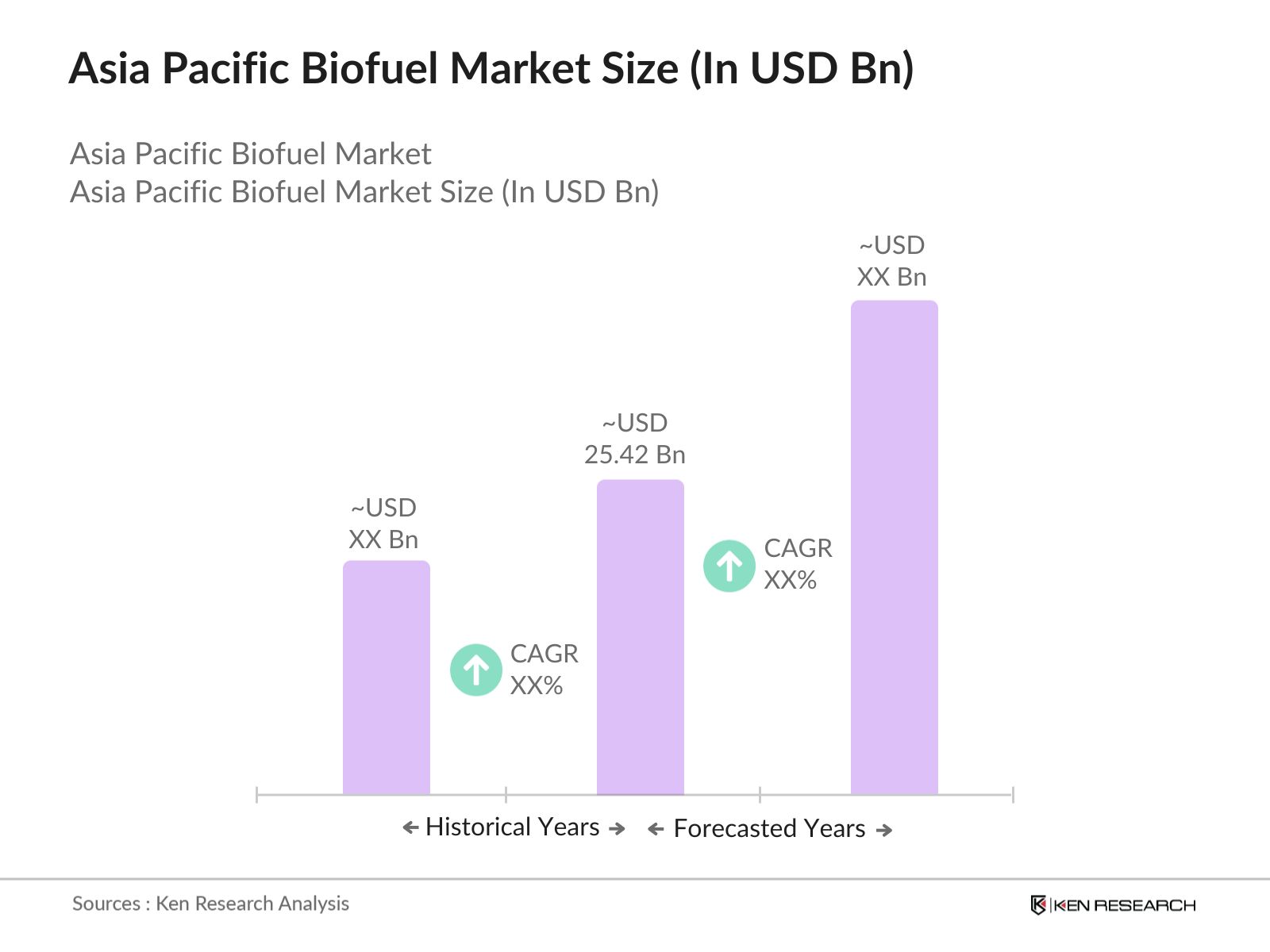
- The Asia-Pacific biofuel market is currently valued at USD 25.42 billion, with its growth primarily driven by several key factors. The increasing focus on reducing carbon emissions and the need for energy security has led to an accelerated demand for biofuels in the region. Government policies supporting renewable energy initiatives and biofuel blending mandates in countries like India, China, and Thailand are contributing to the markets expansion. The availability of diverse feedstock, such as sugarcane, palm oil, and jatropha, further strengthens the market base, providing an abundant supply for biofuel production.
- Countries such as China, India, and Thailand dominate the Asia-Pacific biofuel market due to their large-scale agricultural production and government initiatives supporting biofuel adoption. Chinas extensive infrastructure development and its push for renewable energy have positioned it as a key player in the market. India benefits from favorable government policies such as the Ethanol Blending Program (EBP), while Thailand has well-established policies for biodiesel and ethanol production. These countries have a competitive advantage in biofuel production due to their robust agricultural output and policy support aimed at enhancing energy security.
- Several Asia-Pacific countries have implemented national biofuel policies aimed at increasing blend ratios and setting emission reduction targets. For example, Indonesia has mandated a B30 biodiesel blend (30% biofuel in diesel), which became compulsory in 2023. This regulation aims to reduce the countrys reliance on fossil fuels while leveraging its vast palm oil resources. Similarly, Indias National Biofuels Policy mandates a 20% ethanol blend in gasoline by 2025. These government mandates are part of broader strategies to reduce greenhouse gas emissions and increase the use of renewable energy in transportation.
Asia-Pacific Biofuel Market Segmentation
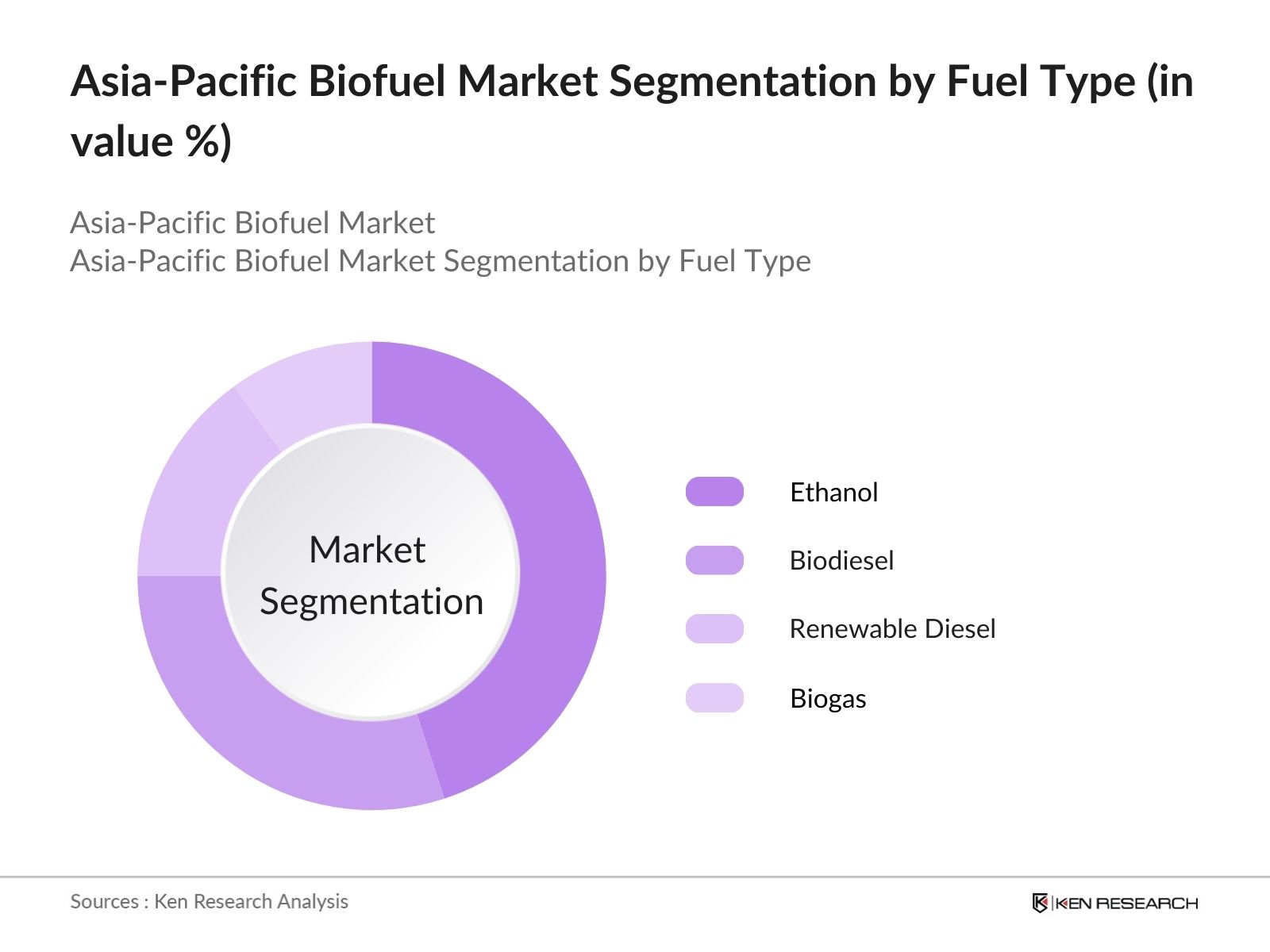
- By Fuel Type: The Asia-Pacific biofuel market is segmented by fuel type into ethanol, biodiesel, renewable diesel, and biogas. Ethanol is currently the most dominant segment, mainly due to its wide application in transportation fuels and government policies favoring ethanol blending in gasoline. Ethanol is derived primarily from sugarcane and corn in the region, with Brazil's sugarcane ethanol industry setting a global benchmark. This dominance is reinforced by the favorable policies in countries like India, which have implemented ethanol blending mandates to reduce reliance on imported oil.
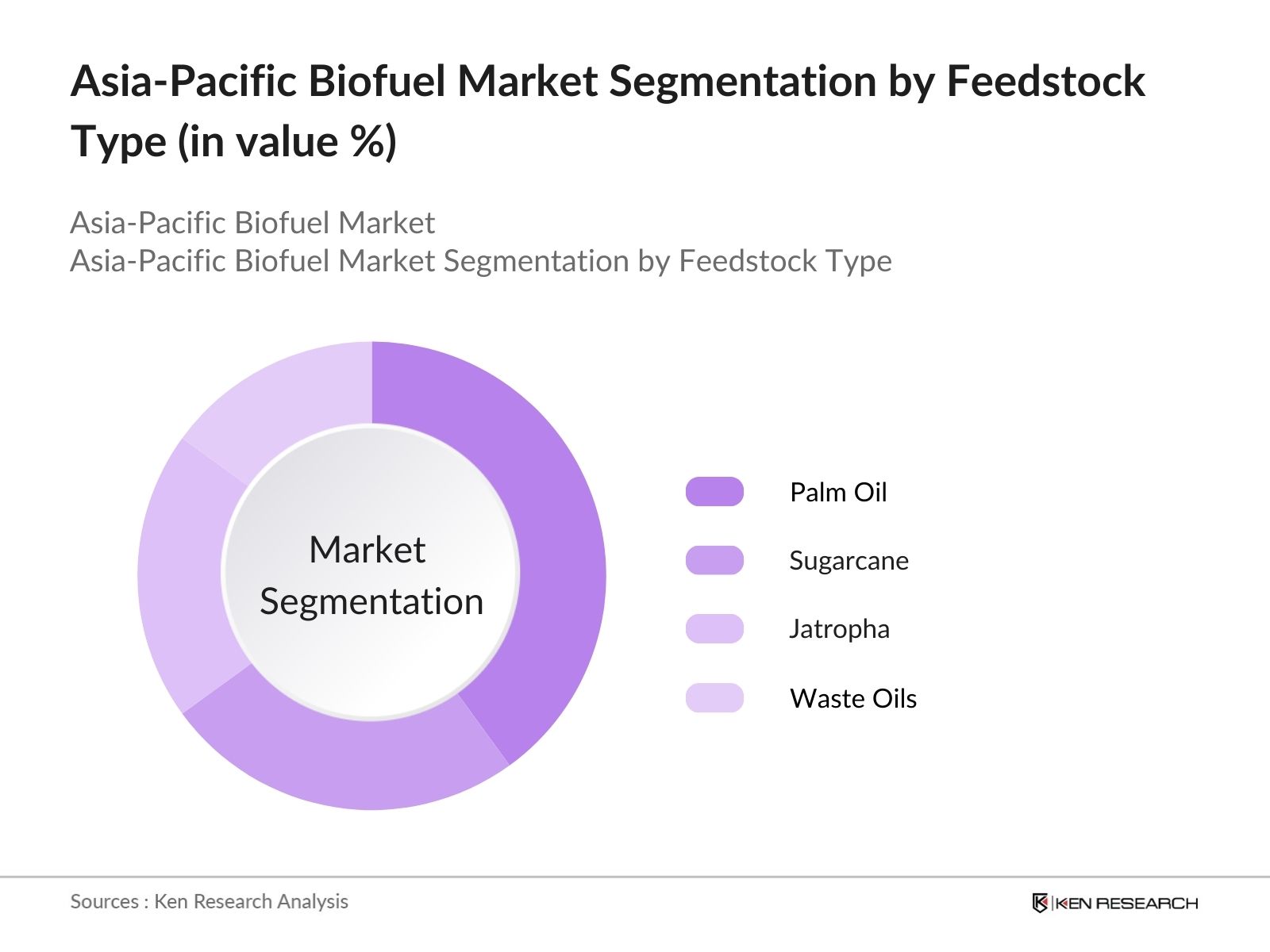
- By Feedstock: The biofuel market is also segmented by feedstock into sugarcane, palm oil, jatropha, and waste oils. Palm oil has a dominant market share, largely because of the extensive palm oil plantations in Southeast Asia, particularly in Indonesia and Malaysia. These countries are the worlds largest producers of palm oil, which is widely used as a feedstock for biodiesel production. Despite controversies surrounding deforestation and environmental impact, palm oil remains cost-effective and abundant, contributing to biodiesel production.
Asia-Pacific Biofuel Market Competitive Landscape
The Asia-Pacific biofuel market is dominated by a mix of local and international companies that have established production capacities. Local players benefit from government incentives and abundant feedstock, while international players bring advanced technology and expertise to the market.
|
Company |
Established Year |
Headquarters |
Feedstock Utilization |
Production Capacity |
Technology Adoption |
Geographic Footprint |
Strategic Alliances |
Sustainability Initiatives |
|
Neste Corporation |
1948 |
Finland |
- |
- |
- |
- |
- |
- |
|
Wilmar International Limited |
1991 |
Singapore |
- |
- |
- |
- |
- |
- |
|
Archer Daniels Midland Company (ADM) |
1902 |
USA |
- |
- |
- |
- |
- |
- |
|
Renewable Energy Group, Inc. |
2006 |
USA |
- |
- |
- |
- |
- |
- |
|
Bharat Petroleum Corporation Limited |
1952 |
India |
- |
- |
- |
- |
- |
- |
Asia-Pacific Biofuel Market Analysis
Asia-Pacific Biofuel Market Growth Drivers
- Increasing Energy Independence Goals: Countries in Asia-Pacific are striving for energy independence by reducing their reliance on oil imports, which account for a portion of their energy consumption. For instance, India imported around 85% of its crude oil in 2022, worth nearly $120 billion, making energy independence crucial for economic stability. Biofuels provide a viable alternative, with the government promoting domestic ethanol production. Similarly, Indonesia, the worlds largest palm oil producer, is using its domestic resources to bolster its biodiesel output, aiming to replace 30% of its diesel consumption with bio-based alternatives.
- Rising Demand for Sustainable Energy Solutions: The Asia-Pacific region is increasingly adopting biofuels to meet its decarbonization targets, driven by the need to reduce emissions from the transportation sector. The International Energy Agency (IEA) reported that in 2023, the transport sector accounted for over 24% of global energy-related CO2 emissions. In response, countries like Japan have pledged to achieve net-zero emissions by 2050, emphasizing the role of sustainable energy, including biofuels. Thailand and South Korea have also announced decarbonization roadmaps that prioritize biofuels as part of their energy transition strategies.
- Agricultural Feedstock Availability: The availability of feedstocks like sugarcane, palm oil, and Jatropha is driving the growth of biofuels in the Asia-Pacific region. India, the worlds second-largest sugarcane producer, harvested over 350 million tons in 2022, primarily for ethanol production. In Southeast Asia, Indonesia and Malaysia lead in palm oil production, collectively producing 58 million tons in 2022, with substantial portions allocated for biodiesel. Moreover, countries like Myanmar and the Philippines are exploring the use of Jatropha for biodiesel production due to its adaptability to local climates and lower cultivation costs.
Asia-Pacific Biofuel Market Challenges
- Feedstock Price Volatility: Feedstock price volatility is a major challenge in the Asia-Pacific biofuel market. The global sugar market saw price fluctuations from $0.20 per pound in early 2022 to over $0.24 per pound by mid-2023, driven by varying crop yields and climate conditions. Similarly, palm oil prices increased by 15% in 2023 due to supply chain disruptions and lower output from Malaysia, a key producer. These fluctuations directly impact biofuel production costs, affecting the profitability of producers in the region.
- Lack of Advanced Refining Technologies: The biofuel industry in Asia-Pacific faces a lack of advanced refining technologies, limiting its capacity to process second-generation biofuels. In countries like India, the current refining infrastructure is focused on first-generation biofuels (e.g., ethanol from sugarcane), with limited investment in cellulosic ethanol or algae-based fuels. According to the International Renewable Energy Agency (IRENA), only 3 out of 50 biofuel plants in the region are equipped to handle advanced biofuel production as of 2023. This lack of infrastructure limits biofuel production volumes and technological growth.
Asia-Pacific Biofuel Market Future Outlook
Over the next five years, the Asia-Pacific biofuel market is expected to experience growth, driven by increasing government mandates for biofuel blending, advancements in biofuel technology, and the growing emphasis on reducing carbon emissions. As countries in the region push for energy independence and sustainable energy solutions, biofuels are poised to play a critical role in meeting the renewable energy targets. Additionally, the rise of second-generation biofuels, derived from non-food crops and waste, will likely support further market expansion. Key players are investing heavily in R&D to develop more efficient and sustainable biofuel technologies, positioning the Asia-Pacific market for rapid growth.
Asia-Pacific Biofuel Market Opportunities
- Technological Advancements in Biofuel Conversion: Technological advancements, particularly in second-generation biofuel production, present substantial growth opportunities. As of 2023, Japan, China, and Australia have invested in research and development of cellulosic ethanol, with over $1 billion in combined R&D funding. These second-generation biofuels, derived from non-food sources like agricultural waste, offer a solution to feedstock availability challenges and provide higher energy yields. Japans Ministry of Economy, Trade, and Industry (METI) launched a pilot program in 2023 to test the scalability of these technologies, which is expected to increase production efficiency in the coming years.
- International Trade Opportunities: The Asia-Pacific region holds strong export potential for biofuels, particularly to high-demand countries in Europe and North America. In 2023, Indonesia exported over 1 million tons of biodiesel to the European Union, driven by increased demand for sustainable energy solutions. Additionally, Malaysia has signed trade agreements with Japan to export palm-oil-based biofuels. These international trade agreements offer an opportunity for the region to capitalize on growing global biofuel demand, particularly in countries aiming to meet stringent carbon reduction targets.
Scope of the Report
|
Fuel Type |
Ethanol Biodiesel Renewable Diesel Biogas |
|
Feedstock |
Sugarcane Palm Oil Jatropha Waste Oils |
|
Application |
Road Transportation Aviation Marine |
|
Technology |
First Generation Second Generation Third Generation |
|
Region |
China India Japan Australia Southeast Asia |
Products
Key Target Audience
Biofuel Production Companies
Agriculture and Feedstock Suppliers
Transportation and Logistics Firms
Banks and Financial Institutions
Energy and Utility Providers
Government and Regulatory Bodies (Ministry of New and Renewable Energy, India; National Development and Reform Commission, China)
Investors and Venture Capitalist Firms
Technology Providers for Biofuel Production
Environmental and Sustainability Agencies
Companies
Asia-Pacific Biofuel Market Major Players
Neste Corporation
Wilmar International Limited
Archer Daniels Midland Company (ADM)
Renewable Energy Group, Inc.
Bharat Petroleum Corporation Limited (BPCL)
Cosan Limited
Green Plains Inc.
POET, LLC
Aemetis, Inc.
Abengoa Bioenergy
Bangchak Corporation Public Company Limited
Pacific Ethanol, Inc.
Verbio Vereinigte BioEnergie AG
PetroChina Company Limited
Bunge Limited
Table of Contents
1. Asia-Pacific Biofuel Market Overview
1.1 Definition and Scope
1.2 Market Taxonomy
1.3 Market Growth Rate
1.4 Market Segmentation Overview
2. Asia-Pacific Biofuel Market Size (In USD Bn)
2.1 Historical Market Size
2.2 Year-on-Year Growth Analysis
2.3 Key Market Developments and Milestones
3. Asia-Pacific Biofuel Market Analysis
3.1 Growth Drivers
3.1.1 Government Biofuel Policies (Blend mandates, Subsidies)
3.1.2 Increasing Energy Independence Goals (Regional energy security)
3.1.3 Rising Demand for Sustainable Energy Solutions (Decarbonization targets)
3.1.4 Agricultural Feedstock Availability (Sugarcane, Palm Oil, and Jatropha)
3.2 Market Challenges
3.2.1 Feedstock Price Volatility (Impact on production cost)
3.2.2 Lack of Advanced Refining Technologies (Limited infrastructure)
3.2.3 Regulatory and Compliance Hurdles (Environmental compliance)
3.2.4 Competition from Fossil Fuels (Cost competitiveness)
3.3 Opportunities
3.3.1 Technological Advancements in Biofuel Conversion (Second-generation biofuels)
3.3.2 International Trade Opportunities (Exports to high-demand countries)
3.3.3 Carbon Credit Mechanisms (Global carbon trading markets)
3.4 Trends
3.4.1 Integration of Biofuels in Aviation and Marine Transport
3.4.2 Rise of Renewable Diesel (Bio-based alternatives to petroleum diesel)
3.4.3 Development of Advanced Biofuels (Cellulosic ethanol, Algae-based fuels)
3.5 Government Regulations
3.5.1 National Biofuel Policies (Blend ratios, Emission targets)
3.5.2 Incentives for Biofuel Producers (Grants, Tax benefits)
3.5.3 Renewable Energy Targets (Mandates for transportation sector)
3.6 SWOT Analysis
3.7 Stakeholder Ecosystem
3.8 Porters Five Forces
3.9 Competition Ecosystem
4. Asia-Pacific Biofuel Market Segmentation
4.1 By Fuel Type (In Value %)
4.1.1 Ethanol
4.1.2 Biodiesel
4.1.3 Renewable Diesel
4.1.4 Biogas
4.2 By Feedstock (In Value %)
4.2.1 Sugarcane
4.2.2 Palm Oil
4.2.3 Jatropha
4.2.4 Waste Oils
4.3 By Application (In Value %)
4.3.1 Road Transportation
4.3.2 Aviation
4.3.3 Marine
4.4 By Technology (In Value %)
4.4.1 First Generation Biofuels
4.4.2 Second Generation Biofuels
4.4.3 Third Generation Biofuels
4.5 By Region (In Value %)
4.5.1 China
4.5.2 India
4.5.3 Japan
4.5.4 Australia
4.5.5 Southeast Asia
5. Asia-Pacific Biofuel Market Competitive Analysis
5.1 Detailed Profiles of Major Companies
5.1.1 Neste Corporation
5.1.2 Wilmar International Limited
5.1.3 Archer Daniels Midland Company (ADM)
5.1.4 Renewable Energy Group, Inc.
5.1.5 POET, LLC
5.1.6 Green Plains Inc.
5.1.7 Aemetis, Inc.
5.1.8 Abengoa Bioenergy
5.1.9 Cosan Limited
5.1.10 Bunge Limited
5.1.11 Bharat Petroleum Corporation Limited (BPCL)
5.1.12 Bangchak Corporation Public Company Limited
5.1.13 Pacific Ethanol, Inc.
5.1.14 Verbio Vereinigte BioEnergie AG
5.1.15 PetroChina Company Limited
5.2 Cross Comparison Parameters (Market Presence, Feedstock Utilization, Production Capacity, Geographic Footprint, Strategic Alliances, Technology Adoption, R&D Investments, Sustainability Initiatives)
5.3 Market Share Analysis
5.4 Strategic Initiatives
5.5 Mergers and Acquisitions
5.6 Investment Analysis
5.7 Joint Ventures
5.8 Government Support Programs
6. Asia-Pacific Biofuel Market Regulatory Framework
6.1 Biofuel Standards and Certification Processes
6.2 Compliance with Emission Reduction Targets
6.3 Taxation and Subsidies for Biofuel Industry
7. Asia-Pacific Biofuel Future Market Size (In USD Bn)
7.1 Future Market Size Projections
7.2 Key Factors Driving Future Market Growth
8. Asia-Pacific Biofuel Future Market Segmentation
8.1 By Fuel Type (In Value %)
8.2 By Feedstock (In Value %)
8.3 By Application (In Value %)
8.4 By Technology (In Value %)
8.5 By Region (In Value %)
9. Asia-Pacific Biofuel Market Analyst's Recommendations
9.1 TAM/SAM/SOM Analysis
9.2 Customer Cohort Analysis
9.3 Marketing Initiatives
9.4 White Space Opportunity Analysis
Disclaimer Contact UsResearch Methodology
Step 1: Identification of Key Variables
The research process starts by mapping all major stakeholders in the Asia-Pacific biofuel market. This involves desk research from proprietary and secondary databases to understand the critical factors influencing the market, including government policies, production trends, and technology adoption.
Step 2: Market Analysis and Construction
Historical data is analyzed to determine the current state of the market, including fuel types, feedstock availability, and regional contributions. This includes evaluating production capacities, export trends, and policy impacts on the market landscape.
Step 3: Hypothesis Validation and Expert Consultation
The research hypotheses are validated through consultations with industry experts, including biofuel producers and government officials. These insights help refine market estimates and provide a grounded understanding of operational realities.
Step 4: Research Synthesis and Final Output
The final step involves synthesizing all data and insights from market participants, ensuring an accurate and detailed market report. This is followed by a bottom-up approach to estimate the market size and validate growth projections.
Frequently Asked Questions
01. How big is the Asia-Pacific Biofuel Market?
The Asia-Pacific biofuel market is currently valued at USD 25.42 billion, supported by robust demand for sustainable energy solutions and government initiatives across the region.
02. What are the challenges in the Asia-Pacific Biofuel Market?
Challenges include feedstock price volatility, competition from fossil fuels, and regulatory compliance issues, which impact the profitability and scalability of biofuel production.
03. Who are the major players in the Asia-Pacific Biofuel Market?
Major players include Neste Corporation, Wilmar International, Archer Daniels Midland Company, and Bharat Petroleum Corporation Limited, who lead due to their production capacities and technological innovations.
04. What are the growth drivers of the Asia-Pacific Biofuel Market?
Growth is driven by government mandates for biofuel blending, advancements in biofuel technology, and increasing concerns over carbon emissions and energy security.
Why Buy From Us?

What makes us stand out is that our consultants follows Robust, Refine and Result (RRR) methodology. i.e. Robust for clear definitions, approaches and sanity checking, Refine for differentiating respondents facts and opinions and Result for presenting data with story

We have set a benchmark in the industry by offering our clients with syndicated and customized market research reports featuring coverage of entire market as well as meticulous research and analyst insights.

While we don't replace traditional research, we flip the method upside down. Our dual approach of Top Bottom & Bottom Top ensures quality deliverable by not just verifying company fundamentals but also looking at the sector and macroeconomic factors.

With one step in the future, our research team constantly tries to show you the bigger picture. We help with some of the tough questions you may encounter along the way: How is the industry positioned? Best marketing channel? KPI's of competitors? By aligning every element, we help maximize success.

Our report gives you instant access to the answers and sources that other companies might choose to hide. We elaborate each steps of research methodology we have used and showcase you the sample size to earn your trust.

If you need any support, we are here! We pride ourselves on universe strength, data quality, and quick, friendly, and professional service.