
Asia Pacific Biofuels Market Outlook to 2030
Region:Asia
Author(s):Abhinav kumar
Product Code:KROD6052
November 2024
84
About the Report
Asia Pacific Biofuels Market Overview
- The Asia Pacific biofuels market is valued at USD 19.7 billion, based on a five-year historical analysis. The market has been driven by a combination of rising energy demands, government mandates, and increasing awareness about environmental sustainability. Biofuels, such as biodiesel and ethanol, are being integrated into the transportation, power generation, and industrial heating sectors, owing to their lower carbon emissions compared to fossil fuels. The availability of diverse feedstocks in the region, particularly from agricultural by-products, has further propelled the market.
- Countries such as China, India, and Indonesia are dominant players in the biofuels market. Their dominance is attributed to their vast agricultural landscapes, government policies promoting renewable energy, and the increasing demand for energy security. China, with its massive energy consumption needs, has been significantly ramping up biofuel production, while Indias bioethanol production is driven by sugarcane, and Indonesia leads in biodiesel production due to its extensive palm oil industry.
- The integration of biofuels in the transportation sector is a notable trend in the Asia Pacific market. As of 2023, countries like Thailand and Malaysia have implemented policies to promote the use of biofuels in public transportation, leading to an increase in biofuel consumption by 20% from the previous year. For instance, Thailand's B20 biodiesel mandate requires diesel fuel to contain 20% biodiesel, significantly boosting local production. This trend highlights the shift towards sustainable transportation options and is expected to foster further growth in the biofuels market.
Asia Pacific Biofuels Market Segmentation
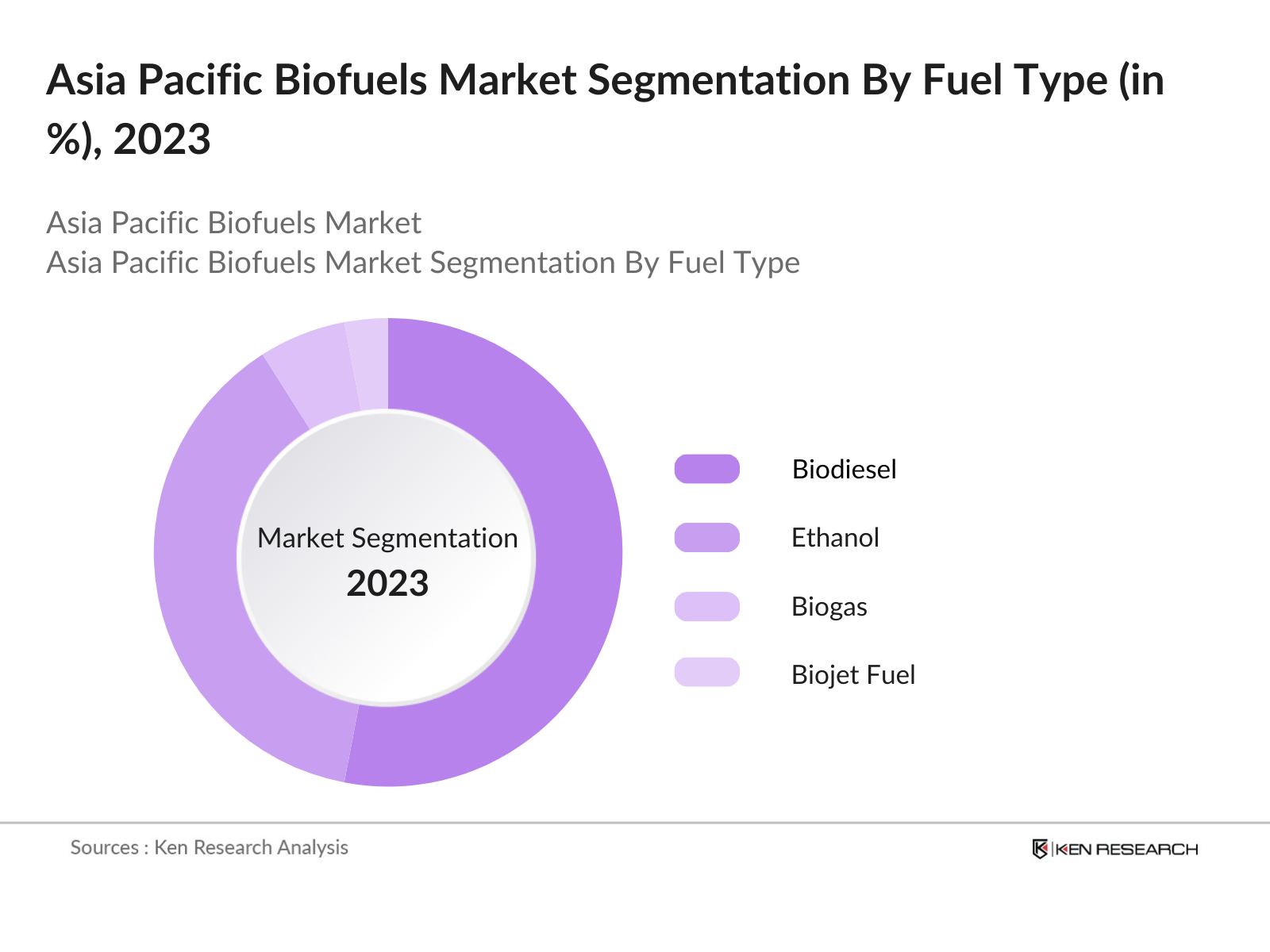
- By Feedstock Type: The Asia Pacific biofuels market is segmented by feedstock type into first-generation, second-generation, third-generation, and fourth-generation biofuels. First-generation biofuels hold a dominant share due to their established supply chains and production processes. These biofuels, derived from crops such as sugarcane and corn, are widely used in countries like India and Indonesia, where sugarcane-based ethanol and palm oil-based biodiesel are prominent. The readily available infrastructure for first-generation biofuels and government incentives, such as Indias National Policy on Biofuels, make this segment a leader in the region.
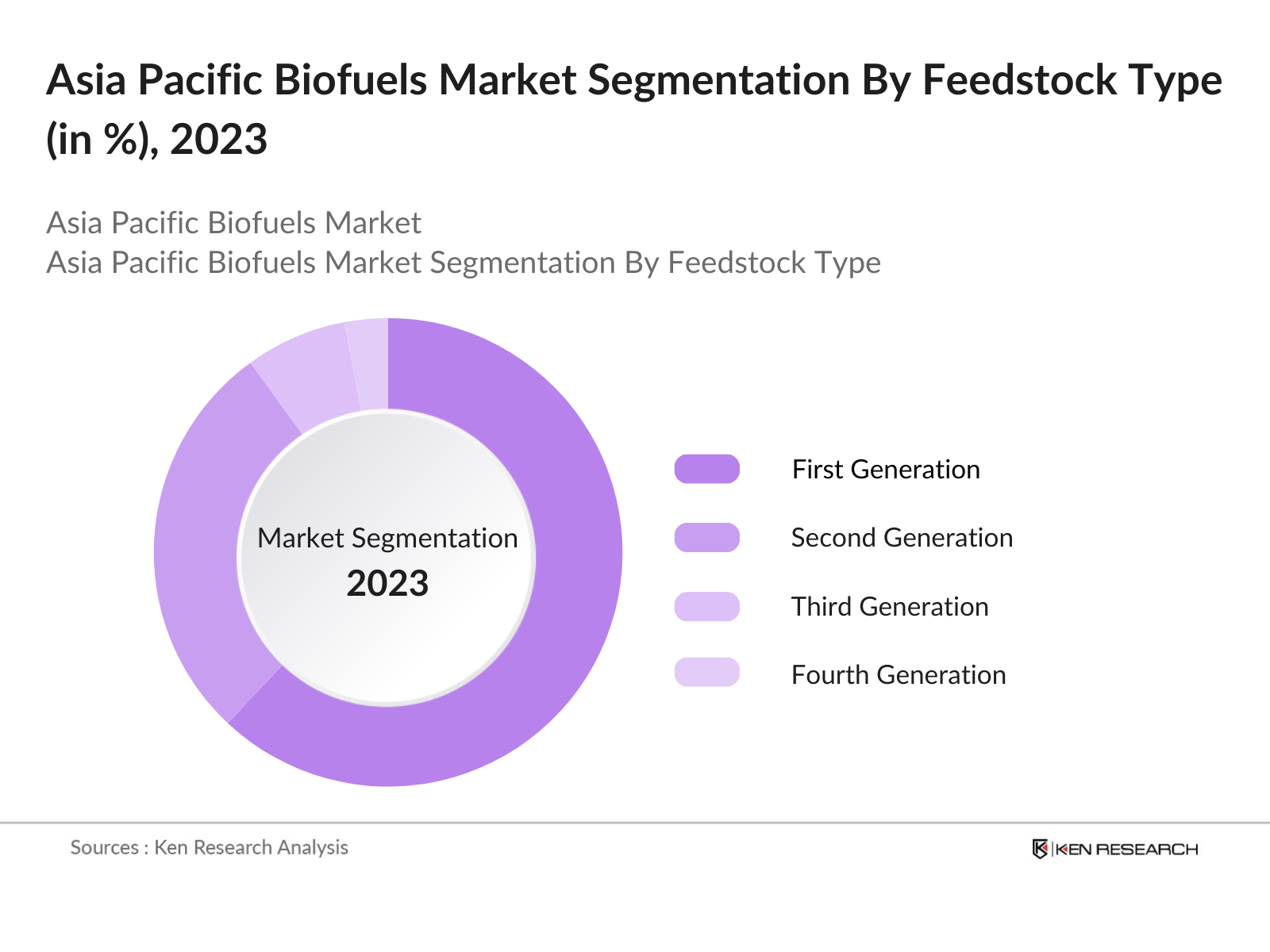
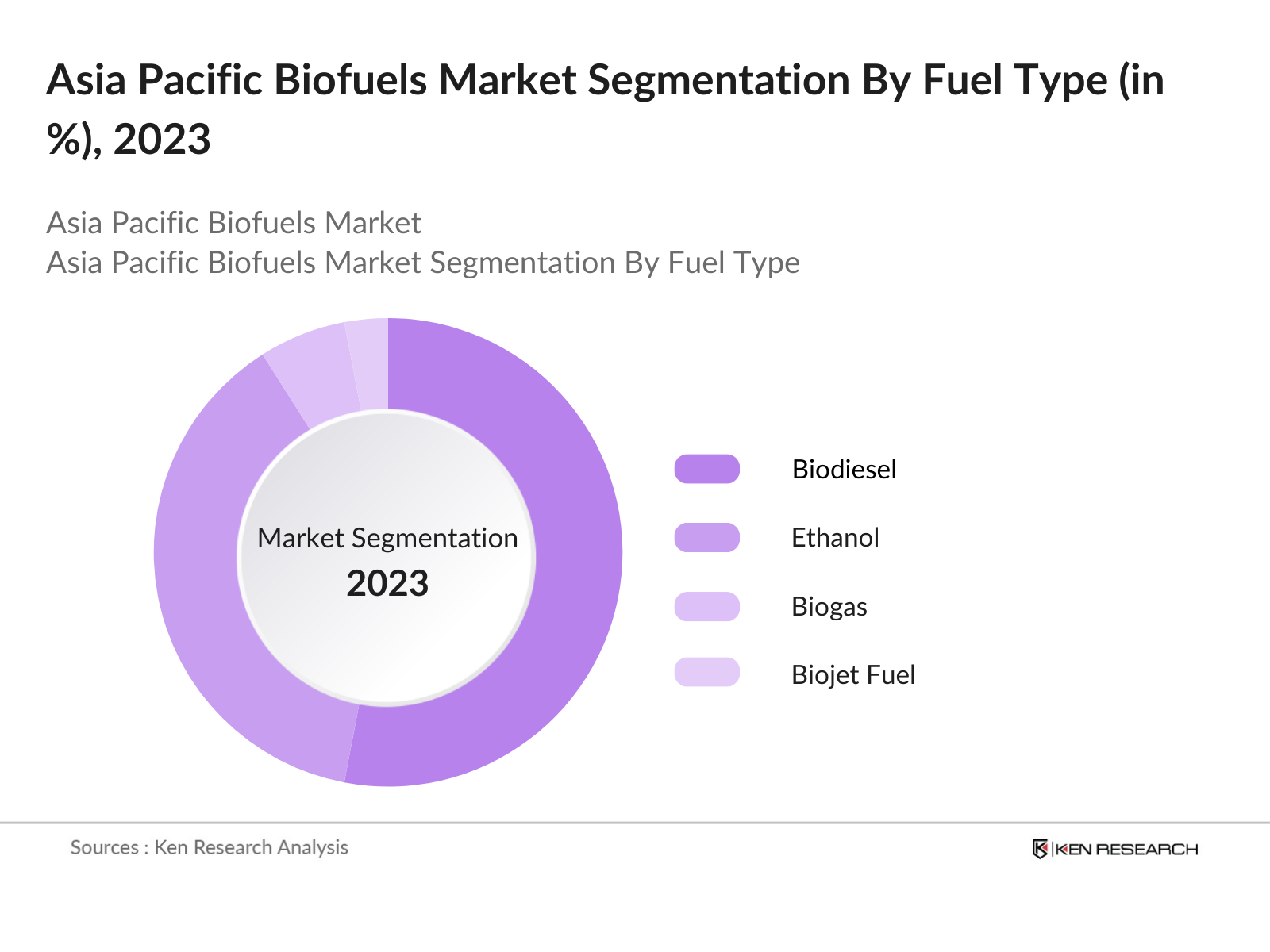
- By Fuel Type: The Asia Pacific biofuels market is segmented by fuel type into biodiesel, ethanol, biogas, and biojet fuel. Biodiesel is the dominant segment in the Asia Pacific biofuels market, largely due to its use in the transportation sector. Indonesia, the world's largest producer of palm oil, plays a crucial role in this segment. The governments B30 mandate, which requires biodiesel to contain 30% biofuel, has significantly increased production and consumption of biodiesel. The widespread availability of palm oil and supportive government policies make biodiesel the leading fuel type in the region.
Asia Pacific Biofuels Market Competitive Landscape
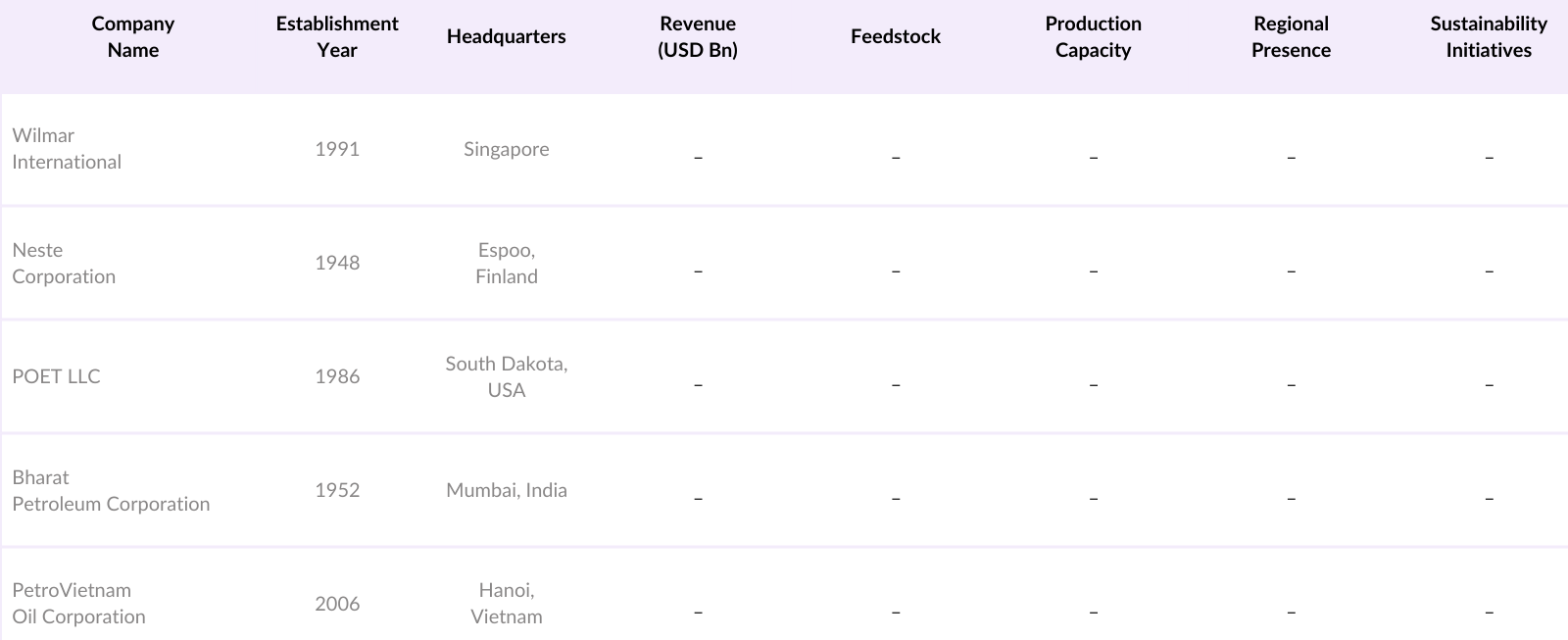
The Asia Pacific biofuels market is dominated by a mix of global and regional players, with significant consolidation among top companies. Companies such as Wilmar International and Neste Corporation are global leaders, while local companies like Bharat Petroleum in India and PetroVietnam Oil Corporation in Vietnam play critical roles. The competition is characterized by increasing investments in biofuel infrastructure, technological advancements in production, and collaborations to expand market reach. These key players are leveraging government policies and incentives to strengthen their positions in the market.
Asia Pacific Biofuels Industry Analysis
Growth Drivers
- Government Mandates on Renewable Energy: Government mandates play a crucial role in the biofuels market, as many countries in the Asia Pacific region have set ambitious renewable energy targets. For instance, India aims to achieve 175 GW of renewable energy capacity by 2022 and 450 GW by 2030, with biofuels being a significant component of this target. In 2022, the Australian government launched its Renewable Energy Target (RET), which aims for 33,000 GWh of renewable energy by 2020, thereby supporting biofuel production. Such policies not only promote biofuel adoption but also create a favorable regulatory environment.
- Technological Advancements in Biofuel Production: Technological advancements have significantly improved biofuel production efficiency, reducing costs and increasing yields. For instance, the introduction of enzymatic processes and advanced fermentation techniques has enhanced the production of bioethanol, with yields increasing from 350 liters per ton of sugarcane in 2020 to over 400 liters per ton by 2023. Additionally, innovations in feedstock processing have expanded the range of viable materials for biofuel production, including agricultural residues and waste oils. As a result, these technologies are expected to support the growth of the biofuels market in the Asia Pacific
- Decreasing Fossil Fuel Reserves: The Asia Pacific region faces increasing pressure due to the depletion of fossil fuel reserves, which underscores the importance of alternative energy sources like biofuels. According to the U.S. Energy Information Administration (EIA), Asia's oil production is projected to decline by about 3 million barrels per day by 2025. This trend emphasizes the need for sustainable energy sources, prompting countries to invest more in biofuel technologies. In response, nations like Indonesia and Malaysia are focusing on biofuel initiatives to counterbalance fossil fuel shortages, thus fostering market growth.
Market Challenges
- High Production Costs: High production costs remain a significant challenge for the biofuels market in the Asia Pacific region. As of 2023, the production cost of biodiesel from palm oil in Indonesia was approximately $1,100 per ton, which is substantially higher than the $850 per ton for conventional diesel. These costs are driven by factors such as feedstock prices, processing technologies, and operational inefficiencies. Furthermore, fluctuations in raw material prices, particularly for agricultural products, pose a risk to biofuel producers, potentially hindering market growth.
- Feedstock Availability Issues: The availability of feedstock is a critical challenge in the biofuels market. In 2022, the Asia Pacific region faced significant competition for agricultural resources, as food production and biofuel feedstock often vie for the same crops. For example, in 2023, Indonesia reported a 10% reduction in palm oil production due to unfavorable weather conditions and pest infestations, leading to higher prices and supply constraints. Additionally, the rising global demand for food is putting pressure on the availability of feedstock for biofuel production, which may lead to conflicts in resource allocation.
Asia Pacific Biofuels Market Future Outlook
Over the next five years, the Asia Pacific biofuels market is expected to show significant growth driven by continuous government support, advancements in biofuel technology, and increasing consumer demand for cleaner energy sources. Policies such as Indonesias B30 biodiesel mandate and Indias ethanol blending target (E20) are expected to further boost the market. Additionally, the expansion of biofuels into aviation and maritime sectors is set to create new opportunities for market growth.
Opportunities
- Growing Adoption of Second-Generation Biofuels: The shift towards second-generation biofuels represents a significant growth opportunity for the Asia Pacific market. These biofuels are produced from non-food feedstocks, such as agricultural residues and waste materials, which alleviate food supply concerns. As of 2023, the global production of second-generation biofuels reached 3.5 billion liters, with Asia Pacific countries like China and India actively investing in research and development to enhance production capabilities. This focus on sustainable feedstock is expected to drive market expansion, as countries seek to reduce reliance on traditional food-based biofuels.
- Biofuels as a Key Component of the Energy Mix: Biofuels are increasingly recognized as a vital part of the energy mix in the Asia Pacific region. In 2022, the region accounted for 35% of global biofuel consumption, with countries like Indonesia and Malaysia leading in biodiesel production. The diversification of energy sources is critical for energy security and reducing greenhouse gas emissions. For instance, the Philippines is projected to reach 10% biofuel blending in gasoline by 2025, highlighting the role of biofuels in national energy strategies. This trend is expected to accelerate growth as more countries integrate biofuels into their energy portfolios.
Scope of the Report
|
By Feedstock Type |
First Generation Second Generation Third Generation Fourth Generation |
|
By Fuel Type |
Biodiesel Ethanol Biogas Biojet Fuel |
|
By Application |
Transportation Power Generation Industrial Heating Aviation |
|
By Production Technology |
Fermentation Transesterification Gasification Pyrolysis |
|
By Country |
China India Indonesia Australia Japan South Ko |
Products
Key Target Audience Organizations and Entities Who Can Benefit by Subscribing This Report:
Biofuel Manufacturing Industries
Government and Regulatory Bodies (e.g., Ministry of Energy, National Development and Reform Commission)
Transportation and Logistics Companies
Energy and Power Generation Companies
Investor and Venture Capitalist Firms
Agriculture and Feedstock Inustries
Fuel Comapnies
Maritime and Aviation Industries
Companies
Players Mentioned in the Report
Wilmar International
POET LLC
Neste Corporation
Renewable Energy Group Inc.
Bunge Limited
Cargill Inc.
ADM Company
Bangchak Corporation Public Co. Ltd.
PetroVietnam Oil Corporation
Bharat Petroleum Corporation Ltd.
Table of Contents
1. Asia Pacific Biofuels Market Overview
1.1. Definition and Scope
1.2. Market Taxonomy
1.3. Market Growth Rate
1.4. Market Segmentation Overview
2. Asia Pacific Biofuels Market Size (In USD Mn)
2.1. Historical Market Size
2.2. Year-On-Year Growth Analysis
2.3. Key Market Developments and Milestones
3. Asia Pacific Biofuels Market Analysis
3.1. Growth Drivers
3.1.1. Government Mandates on Renewable Energy
3.1.2. Technological Advancements in Biofuel Production
3.1.3. Decreasing Fossil Fuel Reserves
3.1.4. Environmental Concerns and Emission Regulations
3.2. Market Challenges
3.2.1. High Production Costs
3.2.2. Feedstock Availability Issues
3.2.3. Competition from Alternative Energy Sources
3.3. Opportunities
3.3.1. Growing Adoption of Second-Generation Biofuels
3.3.2. Biofuels as a Key Component of the Energy Mix
3.3.3. Increased Investment in Biofuel Infrastructure
3.4. Trends
3.4.1. Integration of Biofuels in Transportation Sectors
3.4.2. Expansion into Aviation and Maritime Biofuels
3.4.3. Government Incentives for Biofuel Production
3.5. Government Regulation
3.5.1. Biofuel Blending Mandates (e.g., B30, E10 Regulations)
3.5.2. Subsidies and Tax Incentives
3.5.3. Carbon Trading Systems and Biofuel Credits
3.6. SWOT Analysis
3.7. Stakeholder Ecosystem
3.8. Porters Five Forces
3.9. Competition Ecosystem
4. Asia Pacific Biofuels Market Segmentation
4.1. By Feedstock Type (In Value %)
4.1.1. First Generation (Edible Oil, Corn, Sugarcane)
4.1.2. Second Generation (Non-edible Oils, Algae, Biomass)
4.1.3. Third Generation (Algae, Microorganisms)
4.1.4. Fourth Generation (Synthetic Biology-based Biofuels)
4.2. By Fuel Type (In Value %)
4.2.1. Biodiesel
4.2.2. Ethanol
4.2.3. Biogas
4.2.4. Biojet Fuel
4.3. By Application (In Value %)
4.3.1. Transportation
4.3.2. Power Generation
4.3.3. Industrial Heating
4.3.4. Aviation
4.4. By Production Technology (In Value %)
4.4.1. Fermentation
4.4.2. Transesterification
4.4.3. Gasification
4.4.4. Pyrolysis
4.5. By Country (In Value %)
4.5.1. China
4.5.2. India
4.5.3. Indonesia
4.5.4. Australia
4.5.5. Japan
4.5.6. South Korea
4.5.7. Thailand
5. Asia Pacific Biofuels Market Competitive Analysis
5.1. Detailed Profiles of Major Companies
5.1.1. Wilmar International
5.1.2. POET LLC
5.1.3. Neste Corporation
5.1.4. Renewable Energy Group Inc.
5.1.5. Bunge Limited
5.1.6. Cargill Inc.
5.1.7. ADM Company
5.1.8. Bangchak Corporation Public Co. Ltd.
5.1.9. PetroVietnam Oil Corporation
5.1.10. Bharat Petroleum Corporation Ltd. (BPCL)
5.1.11. Australian Renewable Fuels Ltd.
5.1.12. BioD Energy Pvt. Ltd.
5.1.13. PT Energi Agro Nusantara
5.1.14. Verbio Vereinigte Bioenergie AG
5.1.15. Algenol Biotech LLC
5.2. Cross Comparison Parameters (Revenue, Headquarters, Feedstock Type, Production Capacity, Regional Presence, Market Share, R&D Investments, Sustainability Initiatives)
5.3. Market Share Analysis
5.4. Strategic Initiatives
5.5. Mergers and Acquisitions
5.6. Investment Analysis
5.7. Venture Capital Funding
5.8. Government Grants
5.9. Private Equity Investments
6. Asia Pacific Biofuels Market Regulatory Framework
6.1. Biofuel Mandates and Compliance Requirements
6.2. Subsidies and Incentives
6.3. Environmental Certifications
6.4. Trade Barriers and Tariff Policies
7. Asia Pacific Biofuels Future Market Size (In USD Mn)
7.1. Future Market Size Projections
7.2. Key Factors Driving Future Market Growth
8. Asia Pacific Biofuels Future Market Segmentation
8.1. By Feedstock Type (In Value %)
8.2. By Fuel Type (In Value %)
8.3. By Application (In Value %)
8.4. By Production Technology (In Value %)
8.5. By Country (In Value %)
9. Asia Pacific Biofuels Market Analysts Recommendations
9.1. TAM/SAM/SOM Analysis
9.2. Customer Cohort Analysis
9.3. Marketing Initiatives
9.4. White Space Opportunity Analysis
Disclaimer Contact UsResearch Methodology
Step 1: Identification of Key Variables
The initial phase involves constructing an ecosystem map encompassing all major stakeholders within the Asia Pacific Biofuels Market. This step is underpinned by extensive desk research, utilizing a combination of secondary and proprietary databases to gather comprehensive industry-level information. The primary objective is to identify and define the critical variables that influence market dynamics.
Step 2: Market Analysis and Construction
In this phase, we will compile and analyze historical data pertaining to the Asia Pacific Biofuels Market. This includes assessing market penetration, the ratio of biofuel plants to fuel consumers, and the resultant revenue generation. Furthermore, an evaluation of technological advancements will be conducted to ensure the reliability and accuracy of the revenue estimates.
Step 3: Hypothesis Validation and Expert Consultation
Market hypotheses will be developed and subsequently validated through consultations with industry experts representing a diverse array of companies. These consultations will provide valuable operational and financial insights directly from industry practitioners, which will be instrumental in refining and corroborating the market data.
Step 4: Research Synthesis and Final Output
The final phase involves direct engagement with multiple biofuel manufacturers to acquire detailed insights into product segments, production volumes, and other pertinent factors. This interaction will serve to verify and complement the statistics derived from the bottom-up approach, thereby ensuring a comprehensive, accurate, and validated analysis of the Asia Pacific Biofuels Market.
Frequently Asked Questions
01. How big is the Asia Pacific Biofuels Market?
The Asia Pacific biofuels market is valued at USD 19.7 billion, driven by government mandates for renewable energy and the growing need for sustainable fuel alternatives.
02. What are the challenges in the Asia Pacific Biofuels Market?
Challenges include high production costs, feedstock availability, and competition from other renewable energy sources. The reliance on specific feedstocks like palm oil also poses sustainability concerns.
03. Who are the major players in the Asia Pacific Biofuels Market?
Key players in the market include Wilmar International, POET LLC, Neste Corporation, Bharat Petroleum, and PetroVietnam Oil Corporation. These companies dominate due to their production capacity and extensive feedstock supply chains.
04. What are the growth drivers of the Asia Pacific Biofuels Market?
The market is propelled by factors such as government mandates, environmental regulations, and advancements in biofuel production technology. The aviation and maritime sectors are emerging as new growth drivers.
Why Buy From Us?

What makes us stand out is that our consultants follows Robust, Refine and Result (RRR) methodology. i.e. Robust for clear definitions, approaches and sanity checking, Refine for differentiating respondents facts and opinions and Result for presenting data with story

We have set a benchmark in the industry by offering our clients with syndicated and customized market research reports featuring coverage of entire market as well as meticulous research and analyst insights.

While we don't replace traditional research, we flip the method upside down. Our dual approach of Top Bottom & Bottom Top ensures quality deliverable by not just verifying company fundamentals but also looking at the sector and macroeconomic factors.

With one step in the future, our research team constantly tries to show you the bigger picture. We help with some of the tough questions you may encounter along the way: How is the industry positioned? Best marketing channel? KPI's of competitors? By aligning every element, we help maximize success.

Our report gives you instant access to the answers and sources that other companies might choose to hide. We elaborate each steps of research methodology we have used and showcase you the sample size to earn your trust.

If you need any support, we are here! We pride ourselves on universe strength, data quality, and quick, friendly, and professional service.