















Asia Pacific Calcium Carbide Market Outlook to 2030
Region:Asia
Author(s):Shreya Garg
Product Code:KROD4620
November 2024
87
About the Report
Asia Pacific Calcium Carbide Market Overview
- The Asia Pacific Calcium Carbide Market is valued at USD 14.5 billion based on a five-year historical analysis. This growth is primarily driven by the rising demand in the steel industry, where calcium carbide is used for desulfurization, and the growing use of acetylene, a key derivative of calcium carbide, in the chemical and petrochemical industries. Increased infrastructure development and steel production, especially in China and India, are boosting the market. Additionally, technological advancements in carbide production have improved yield and efficiency, further contributing to market expansion.
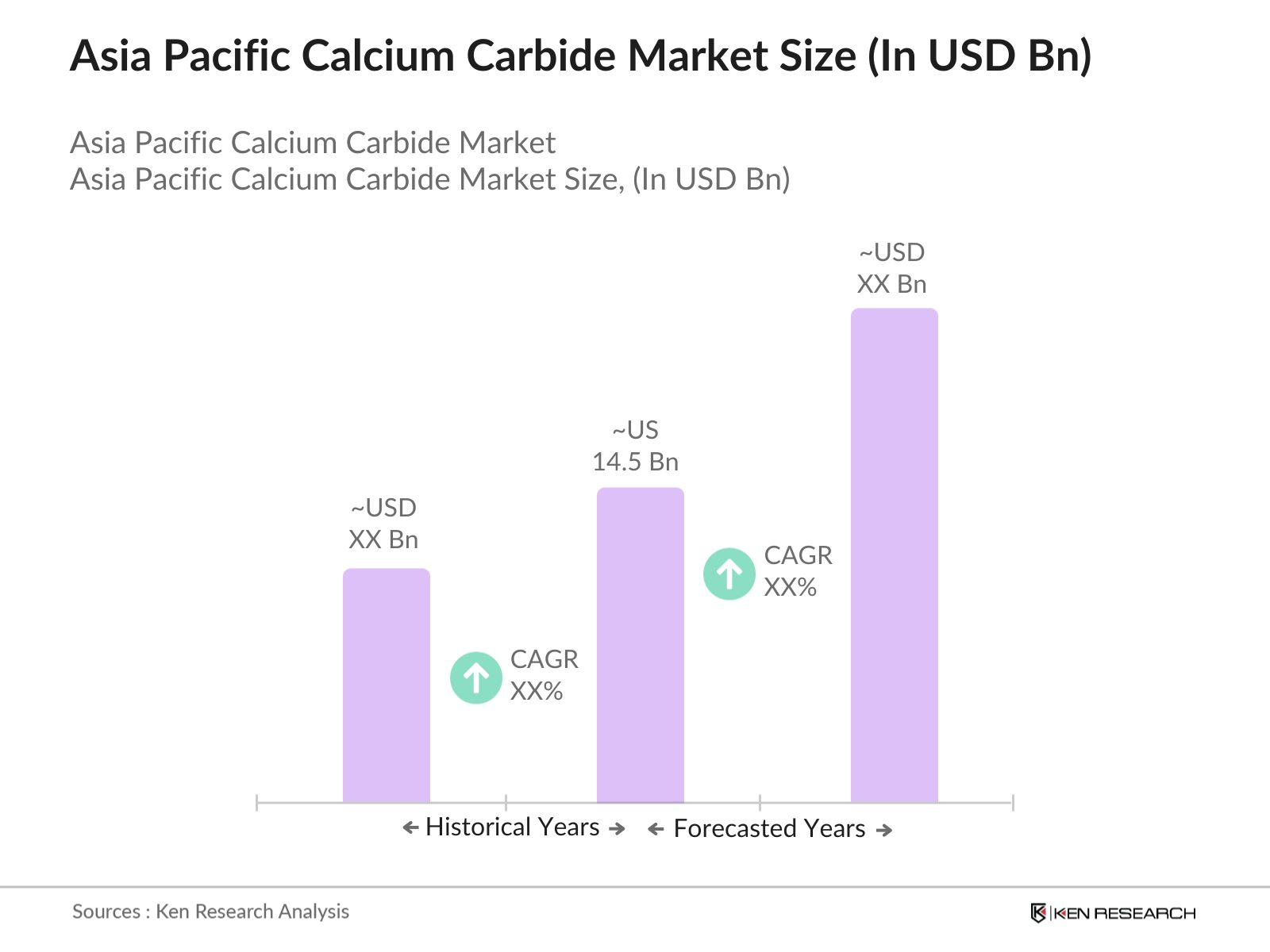
- China and India dominate the Asia Pacific calcium carbide market due to their massive steel manufacturing capacity and industrial infrastructure. China, being the worlds largest steel producer, consumes a volume of calcium carbide for desulfurization in steel production. Meanwhile, Indias rapidly growing infrastructure projects and increasing demand for acetylene in welding and metal cutting industries enhance its market position. The availability of raw materials like limestone and coke in these countries further reinforces their dominance in the calcium carbide market.
- In 2023, several APAC countries, including China and India, reinforced emission control standards targeting the industrial sector. These countries have set strict guidelines to limit CO2 emissions from calcium carbide production, with penalties for non-compliance. China, for example, introduced a national emissions trading scheme covering the industrial sector, which is expected to curb emissions by over 10 million metric tons by 2025. These regulations are pushing manufacturers to adopt cleaner technologies.
Asia Pacific Calcium Carbide Market Segmentation
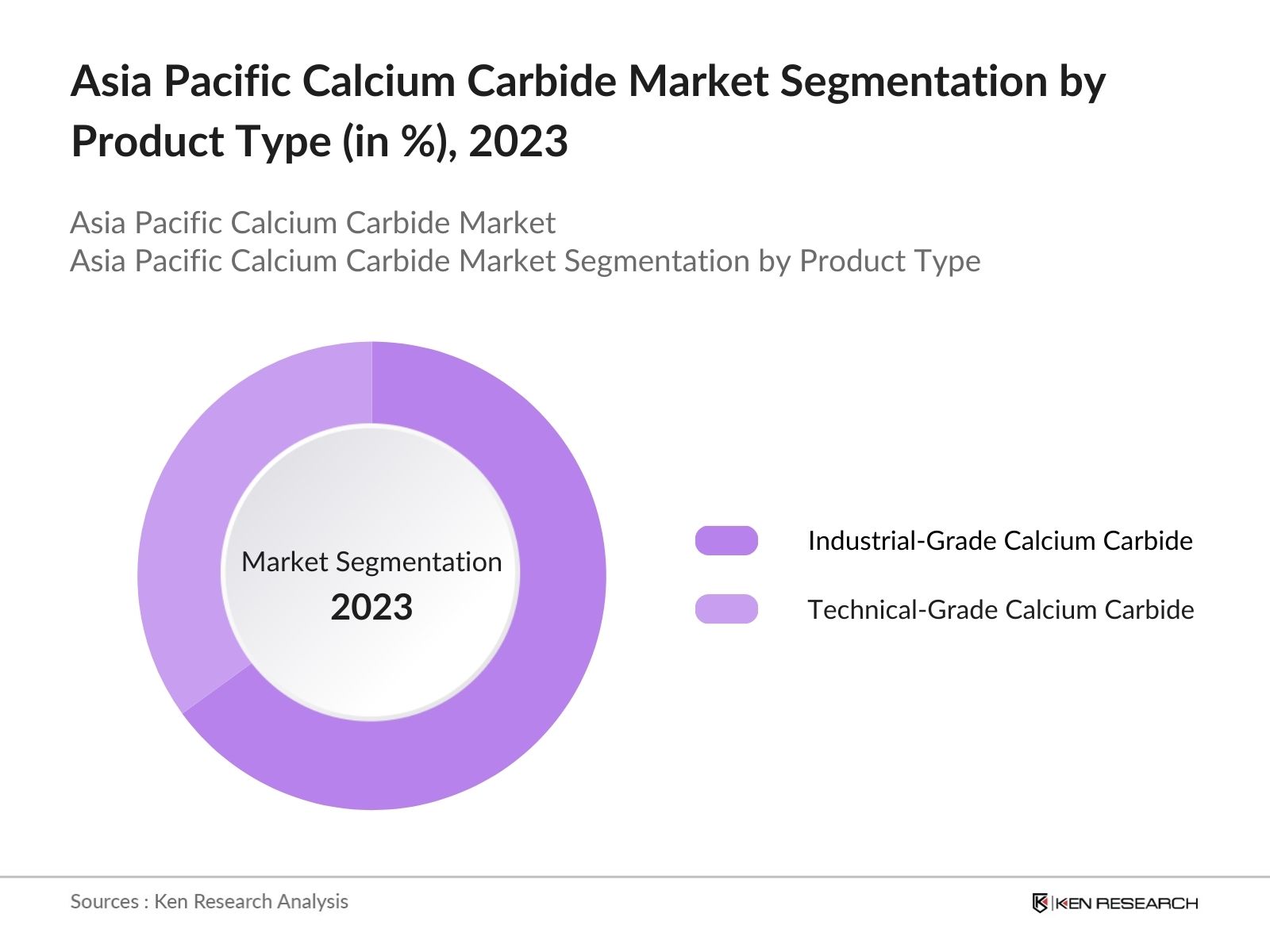
By Product Type: The market is segmented by product type into industrial-grade calcium carbide and technical-grade calcium carbide. Industrial-grade calcium carbide holds a dominant market share in the region due to its extensive use in the steel manufacturing and acetylene production industries. The demand for high-quality calcium carbide for desulfurization in electric arc furnace (EAF) steel production is driving the growth of this segment. Moreover, the rapid growth of infrastructure in developing countries has led to increased consumption of industrial-grade calcium carbide.
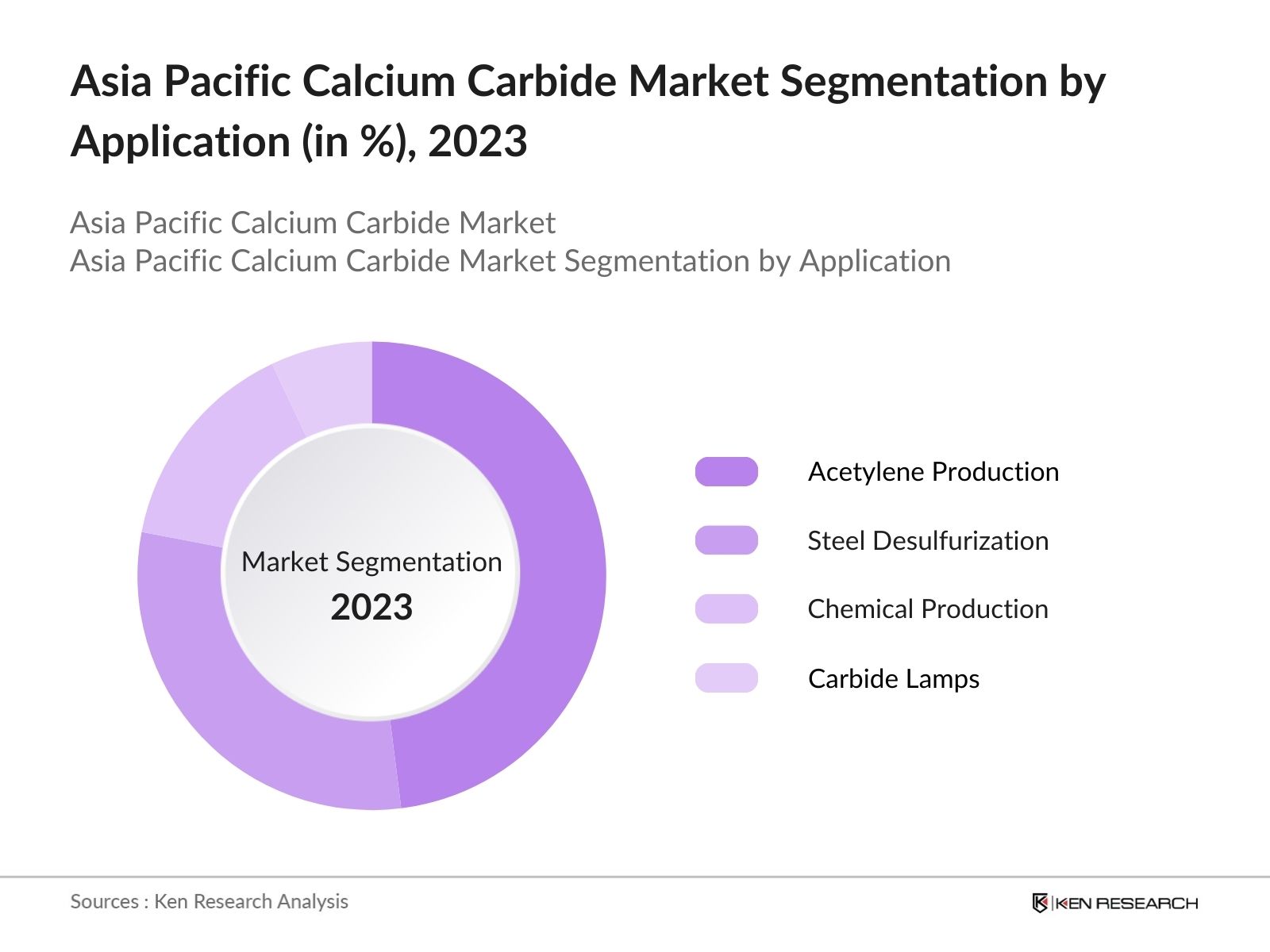
 By Application: The market is segmented by application into acetylene production, steel desulfurization, chemical production, and carbide lamps. Acetylene production is the leading sub-segment in the Asia Pacific market, driven by its widespread use in welding, cutting, and chemical synthesis. The rising industrialization in countries like China and India, coupled with expanding manufacturing sectors, has increased the demand for acetylene, further boosting the calcium carbide market. The ease of handling and energy efficiency of acetylene makes it the preferred choice for various applications.
 Asia Pacific Calcium Carbide Market Competitive Landscape
The Asia Pacific calcium carbide market is consolidated, with a few key players such as Denka Company Limited, AlzChem Group AG, and Xinjiang Zhongtai Chemical Co., Ltd. dominating the landscape. These companies leverage their extensive distribution networks, advanced production technology, and favorable access to raw materials, which allows them to maintain strong market positions. The market's reliance on technological advancements in production efficiency and cost optimization is pivotal for maintaining competitiveness. New entrants find it challenging to penetrate due to high capital costs and strict environmental regulations.
|
Company Name |
Establishment Year |
Headquarters |
Production Capacity |
Revenue |
Global Presence |
Raw Material Access |
Sustainability Initiatives |
R&D Investments |
|
Denka Company Limited |
1915 |
Tokyo, Japan |
||||||
|
AlzChem Group AG |
1908 |
Trostberg, Germany |
||||||
|
Xinjiang Zhongtai Chemical Co., Ltd. |
2001 |
Urumqi, China |
||||||
|
DCM Shriram Ltd. |
1969 |
New Delhi, India |
||||||
|
Merck KGaA |
1668 |
Darmstadt, Germany |
Asia Pacific Calcium Carbide Industry Analysis
Growth Drivers
- Expansion of Steel Manufacturing: The Asia-Pacific region has seen a substantial increase in steel production, largely driven by China, India, and Japan. In 2023, Asia accounted for over 1.38 billion metric tons of crude steel production, with China contributing approximately 1.02 billion metric tons. Calcium carbide is heavily used in steel desulfurization processes, essential for improving steel quality by removing sulfur impurities. Given the demand for high-grade steel in construction and infrastructure, the need for calcium carbide in desulfurization will remain critical. Moreover, countries like India plan to expand their steel output by 60 million metric tons by 2025.
- Use in Acetylene Production: Acetylene production using calcium carbide remains prominent in the chemical industry across the Asia-Pacific region. In 2023, China produced around 14 million metric tons of acetylene, primarily for applications in chemical synthesis and the production of polyvinyl chloride (PVC). With increasing demand for acetylene derivatives in sectors like pharmaceuticals and plastics, calcium carbide consumption is expected to remain robust. China and India, the largest producers of acetylene, account for over 75% of global calcium carbide consumption.
- Technological Advancements in Calcium Carbide Production: Recent technological advancements have improved the efficiency and yield of calcium carbide production in the APAC region. Innovations such as the use of electric arc furnaces for calcium carbide production have reduced energy consumption by up to 15% compared to traditional methods. In 2023, China implemented state-of-the-art technologies in over 70% of its calcium carbide plants, contributing to a rise in production efficiency. These advancements are further supported by government initiatives to modernize the industrial sector.
Market Challenges
- Environmental Concerns and Regulatory Compliance: The production of calcium carbide generates CO2 emissions, a critical environmental concern in APAC. In 2023, China alone emitted over 100 million metric tons of CO2 from calcium carbide production. Strict regulatory frameworks have been implemented across the region to mitigate these emissions, especially in countries like China and India, where the government has set stringent CO2 reduction targets for industrial sectors. Compliance with these regulations poses operational challenges for manufacturers.
- Volatility in Raw Material Prices: Calcium carbide production is heavily dependent on raw materials such as limestone and coke, both of which have experienced price volatility in recent years. In 2023, global prices for coke increased by 20% due to supply chain disruptions, while limestone prices rose by 8% in major APAC countries like India and China. These fluctuations increase the production costs for calcium carbide manufacturers, reducing profit margins and causing pricing instability for buyers.
Asia Pacific Calcium Carbide Market Future Outlook
Over the next five years, the Asia Pacific Calcium Carbide market is expected to exhibit steady growth, driven by increasing industrialization in the region and the continuous expansion of the steel and chemical industries. The market is likely to witness further consolidation as key players focus on capacity expansion and sustainability initiatives. Additionally, the adoption of green production technologies is anticipated to shape the future of the industry, particularly as governments impose stricter environmental regulations.
Future Market Opportunities
- Growth of the Petrochemical Industry in APAC: The petrochemical industry in APAC is experiencing substantial growth, with the region accounting for over 40% of the global petrochemical output in 2023. The demand for acetylene derivatives, such as vinyl chloride and acetylene black, has increased in this sector. With China and India ramping up petrochemical production, the demand for calcium carbide, a key component in acetylene production, is expected to remain strong. In 2023, China alone produced over 5 million metric tons of acetylene derivatives.
- Rising Investments in Electric Arc Furnace Technology: The use of Electric Arc Furnace (EAF) technology in steel production is increasing in APAC, with countries like India, China, and Japan investing heavily in this sustainable steel manufacturing process. In 2023, over 30% of steel production in India was conducted using EAF, reducing reliance on traditional blast furnaces. Calcium carbide plays a crucial role in the desulfurization process in EAF technology, which is less carbon-intensive compared to conventional methods. This trend is likely to boost the demand for calcium carbide.
Scope of the Report
|
By Product Type |
Industrial-Grade Calcium Carbide Technical-Grade Calcium Carbide |
|
By Application |
Acetylene Production Steel Desulfurization Chemical Production Carbide Lamps |
|
By End-Use Industry |
Steel Industry Chemical Industry Automotive Renewable Energy |
|
By Distribution Channel |
Direct Sales Distributor Networks |
|
By Region |
China India Japan Australia Rest of Asia Pacific |
Products
Key Target Audience
Steel Manufacturing Companies
Chemical Manufacturers
Petrochemical Companies
Welding and Metal Cutting Equipment Manufacturers
Renewable Energy Solution Providers
Banks and Financial Institutes
Government and Regulatory Bodies (Environmental Protection Agencies in China, India, Australia)
Investor and Venture Capitalist Firms
Acetylene Gas Production Companies
Companies
Major Players
Denka Company Limited
AlzChem Group AG
Xinjiang Zhongtai Chemical Co., Ltd.
DCM Shriram Ltd.
Merck KGaA
Lonza Group AG
Carbide Industries LLC
Rexarc International Inc.
Mil-Spec Industries Corporation
SA Calcium Carbide
Inner Mongolia Baiyanhu Chemical Co., Ltd.
MCB Industries Sdn Bhd
Tianjin Chengyuan Chemical Co., Ltd.
Rubamin Limited
NSL Chemicals Ltd.
Table of Contents
Asia Pacific Calcium Carbide Market Overview
1.1. Definition and Scope
1.2. Market Taxonomy
1.3. Market Growth Rate
1.4. Market Segmentation Overview
Asia Pacific Calcium Carbide Market Size (In USD Bn)
2.1. Historical Market Size
2.2. Year-On-Year Growth Analysis
2.3. Key Market Developments and Milestones
Asia Pacific Calcium Carbide Market Analysis
3.1. Growth Drivers
3.1.1. Expansion of Steel Manufacturing (Market-Specific: Application in Steel Desulfurization)
3.1.2. Increasing Use in Acetylene Production (Market-Specific: Chemical Industry Usage)
3.1.3. Technological Advancements in Calcium Carbide Production (Market-Specific: Efficiency and Yield Improvements)
3.2. Market Challenges
3.2.1. Environmental Concerns and Regulatory Compliance (Market-Specific: Impact of CO2 Emissions)
3.2.2. Volatility in Raw Material Prices (Market-Specific: Limestone and Coke Price Fluctuations)
3.2.3. Health and Safety Issues in Manufacturing
3.3. Opportunities
3.3.1. Growth of the Petrochemical Industry in APAC (Market-Specific: Acetylene Derivatives Market)
3.3.2. Rising Investments in Electric Arc Furnace Technology (Market-Specific: EAF Steel Production)
3.4. Trends
3.4.1. Adoption of Green Production Techniques (Market-Specific: CO2 Reduction Methods in Production)
3.4.2. Use of Calcium Carbide in Renewable Energy Applications (Market-Specific: Hydrogen Fuel Cell Industry)
3.5. Government Regulation
3.5.1. Emission Control Standards (Market-Specific: National Emission Regulations for Industrial Processes)
3.5.2. Tariffs and Import/Export Regulations (Market-Specific: Trade Policies Impacting Raw Material Flow)
3.6. SWOT Analysis
3.7. Stake Ecosystem
3.8. Porters Five Forces
3.9. Competition Ecosystem
Asia Pacific Calcium Carbide Market Segmentation
4.1. By Product Type (In Value %)
4.1.1. Industrial-Grade Calcium Carbide
4.1.2. Technical-Grade Calcium Carbide
4.2. By Application (In Value %)
4.2.1. Acetylene Production
4.2.2. Steel Desulfurization
4.2.3. Chemical Production
4.2.4. Carbide Lamps
4.3. By End-Use Industry (In Value %)
4.3.1. Steel Industry
4.3.2. Chemical Industry
4.3.3. Automotive
4.3.4. Renewable Energy
4.4. By Distribution Channel (In Value %)
4.4.1. Direct Sales
4.4.2. Distributor Networks
4.5. By Region (In Value %)
4.5.1. China
4.5.2. India
4.5.3. Japan
4.5.4. Australia
4.5.5. Rest of Asia Pacific
Asia Pacific Calcium Carbide Market Competitive Analysis
5.1. Detailed Profiles of Major Companies
5.1.1. Denka Company Limited
5.1.2. Lonza Group AG
5.1.3. Carbide Industries LLC
5.1.4. AlzChem Group AG
5.1.5. Rexarc International Inc.
5.1.6. Mil-Spec Industries Corporation
5.1.7. SA Calcium Carbide
5.1.8. Inner Mongolia Baiyanhu Chemical Co., Ltd.
5.1.9. MCB Industries Sdn Bhd
5.1.10. Xinjiang Zhongtai Chemical Co., Ltd.
5.1.11. DCM Shriram Ltd.
5.1.12. Merck KGaA
5.1.13. Tianjin Chengyuan Chemical Co., Ltd.
5.1.14. Rubamin Limited
5.1.15. NSL Chemicals Ltd.
5.2. Cross Comparison Parameters (No. of Employees, Headquarters, Inception Year, Production Capacity, Revenue, Market Share, Product Portfolio, Sustainability Initiatives)
5.3. Market Share Analysis
5.4. Strategic Initiatives
5.5. Mergers And Acquisitions
5.6. Investment Analysis
5.7. Joint Ventures and Collaborations
5.8. Government Grants
5.9. Private Equity Investments
Asia Pacific Calcium Carbide Market Regulatory Framework
6.1. Environmental Standards (Market-Specific: Regulations on Emissions and Waste Disposal)
6.2. Safety Standards (Market-Specific: Occupational Safety Regulations in Calcium Carbide Plants)
6.3. Certification Processes (Market-Specific: ISO and Other Relevant Certifications for Quality and Safety)
Asia Pacific Calcium Carbide Future Market Size (In USD Bn)
7.1. Future Market Size Projections
7.2. Key Factors Driving Future Market Growth
Asia Pacific Calcium Carbide Future Market Segmentation
8.1. By Product Type (In Value %)
8.2. By Application (In Value %)
8.3. By End-Use Industry (In Value %)
8.4. By Distribution Channel (In Value %)
8.5. By Region (In Value %)
Asia Pacific Calcium Carbide Market Analysts Recommendations
9.1. TAM/SAM/SOM Analysis
9.2. Customer Cohort Analysis
9.3. Marketing Initiatives
9.4. White Space Opportunity Analysis
Research Methodology
Step 1: Identification of Key Variables
The initial step involved mapping the calcium carbide ecosystem, including key stakeholders such as manufacturers, distributors, and end-users. This process required extensive secondary research to identify the core variables influencing market demand, such as raw material availability, environmental regulations, and technological advancements in calcium carbide production.
Step 2: Market Analysis and Construction
Historical data regarding the production and consumption of calcium carbide was compiled from industry reports, government databases, and proprietary sources. The data was then analyzed to determine trends in market penetration and revenue generation across different segments.
Step 3: Hypothesis Validation and Expert Consultation
Market hypotheses, such as the impact of regulatory changes on production costs, were validated through consultations with industry experts. Interviews were conducted with executives from leading calcium carbide manufacturers, providing firsthand insights into operational and financial metrics.
Step 4: Research Synthesis and Final Output
The final stage of research synthesis involved cross-verifying data obtained from various sources, ensuring that all metrics related to the calcium carbide market were accurate and reliable. The validated findings were used to develop a comprehensive report with actionable insights.
Frequently Asked Questions
01. How big is the Asia Pacific Calcium Carbide Market?
The Asia Pacific calcium carbide market is valued at USD 14.5 billion, driven by growing demand in the steel industry and chemical sectors. Infrastructure projects in major economies like China and India further bolster market growth.
02. What are the challenges in the Asia Pacific Calcium Carbide Market?
Key challenges in the Asia Pacific calcium carbide market include environmental regulations regarding CO2 emissions, fluctuations in raw material prices, and health and safety concerns in manufacturing facilities.
03. Who are the major players in the Asia Pacific Calcium Carbide Market?
The Asia Pacific calcium carbide market is dominated by companies like Denka Company Limited, AlzChem Group AG, Xinjiang Zhongtai Chemical Co., Ltd., DCM Shriram Ltd., and Merck KGaA, which have production capacities and extensive distribution networks.
04. What are the growth drivers of the Asia Pacific Calcium Carbide Market?
The growth of the Asia Pacific calcium carbide market is driven by the rising demand for acetylene in welding and cutting applications, increased steel production, and advancements in calcium carbide manufacturing technologies.
05. What trends are shaping the future of the Asia Pacific Calcium Carbide Market?
Key trends in the Asia Pacific calcium carbide market include the adoption of green production techniques, the expansion of the acetylene derivatives market, and the increasing use of calcium carbide in renewable energy applications such as hydrogen fuel cells.
Why Buy From Us?

What makes us stand out is that our consultants follows Robust, Refine and Result (RRR) methodology. i.e. Robust for clear definitions, approaches and sanity checking, Refine for differentiating respondents facts and opinions and Result for presenting data with story

We have set a benchmark in the industry by offering our clients with syndicated and customized market research reports featuring coverage of entire market as well as meticulous research and analyst insights.

While we don't replace traditional research, we flip the method upside down. Our dual approach of Top Bottom & Bottom Top ensures quality deliverable by not just verifying company fundamentals but also looking at the sector and macroeconomic factors.

With one step in the future, our research team constantly tries to show you the bigger picture. We help with some of the tough questions you may encounter along the way: How is the industry positioned? Best marketing channel? KPI's of competitors? By aligning every element, we help maximize success.

Our report gives you instant access to the answers and sources that other companies might choose to hide. We elaborate each steps of research methodology we have used and showcase you the sample size to earn your trust.

If you need any support, we are here! We pride ourselves on universe strength, data quality, and quick, friendly, and professional service.