
Asia-Pacific Capsule Hotel Market Outlook to 2030
Region:Afganistan
Author(s):Naman Rohilla
Product Code:KROD4151
Region:Afganistan
Author(s):Naman Rohilla
Product Code:KROD4151
October 2024
93

The Asia-Pacific Capsule Hotel market is highly competitive, with several players leading the market across different regions. This consolidation highlights the influence of both domestic and international brands. Major companies continue to expand their operations by investing in smart technologies and customizable experiences, contributing to their market dominance. Below is a competitive analysis of five major players:
| Company | Year of Establishment | Headquarters | No. of Capsules | Revenue (USD Bn) | Global Presence | Technological Innovation | Sustainability Initiatives | Customer Reviews | Expansion Plans |
|---|---|---|---|---|---|---|---|---|---|
| Nine Hours | 2009 | Japan | |||||||
| First Cabin | 2006 | Japan | |||||||
| Urbanpod | 2016 | India | |||||||
| Pangea Pod Hotel | 2018 | Canada | |||||||
| The Millennials Shibuya | 2016 | Japan |
Over the next five years, the Asia-Pacific Capsule Hotel market is expected to witness significant growth driven by rising tourism, increased adoption of smart technologies, and the growing demand for affordable, efficient lodging. Expanding into secondary cities, tapping into the business traveller market, and enhancing capsule designs with sustainability features are key growth strategies for industry players. Market players are also focusing on strengthening their digital presence and partnering with online travel agencies to attract a broader customer base.
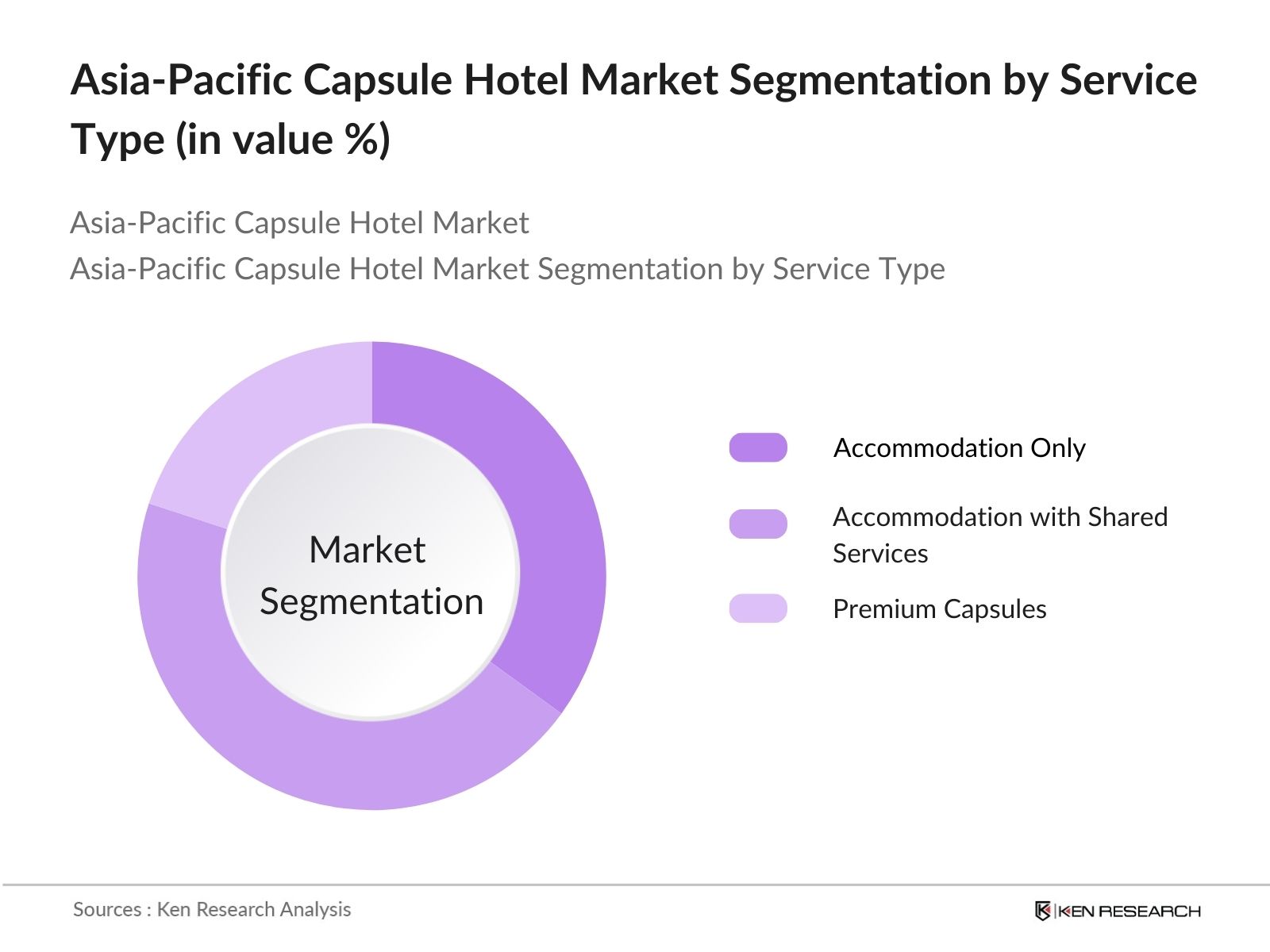
| By Service Type |
Accommodation Only Accommodation with Shared Services Premium Capsules |
| By Ownership |
Standalone Capsule Hotels Capsule Hotel Chains Franchise Models |
| By End User |
Solo Travelers Business Travelers Tourist Groups |
| By Region |
East Asia Southeast Asia Oceania |
| By Capsule Type |
Standard Capsules Luxury Capsules |
1.1. Definition and Scope
1.2. Market Taxonomy
1.3. Market Growth Rate
1.4. Market Segmentation Overview
2.1. Historical Market Size
2.2. Year-On-Year Growth Analysis
2.3. Key Market Developments and Milestones
3.1. Growth Drivers
3.1.1. Increasing Tourism
3.1.2. Affordable Accommodation Demand
3.1.3. Rise in Solo Travel
3.1.4. Technological Integration
3.2. Market Challenges
3.2.1. Limited Space and Comfort
3.2.2. Regulatory Compliance
3.2.3. Competition from Budget Hotels
3.3. Opportunities
3.3.1. Expansion in Tier 2 Cities
3.3.2. Partnerships with Travel Agencies
3.3.3. Customizable Capsule Spaces
3.4. Trends
3.4.1. Smart Capsule Features (AI Integration, Automation)
3.4.2. Sustainability Initiatives (Energy-Efficient Design)
3.4.3. Co-Working and Capsule Spaces
3.5. Government Regulation
3.5.1. Local Zoning and Safety Standards
3.5.2. Tourism Promotion Policies
3.5.3. Capsule Hotel Certifications
3.6. SWOT Analysis
3.7. Stakeholder Ecosystem
3.8. Porter’s Five Forces Analysis
3.9. Competitive Ecosystem
4.1. By Service Type
4.1.1. Accommodation Only
4.1.2. Accommodation with Shared Services
4.1.3. Premium Capsules
4.2. By Ownership
4.2.1. Standalone Capsule Hotels
4.2.2. Capsule Hotel Chains
4.2.3. Franchise Models
4.3. By End User
4.3.1. Solo Travelers
4.3.2. Business Travelers
4.3.3. Tourist Groups
4.4. By Region
4.4.1. East Asia
4.4.2. Southeast Asia
4.4.3. Oceania
4.5. By Capsule Type
4.5.1. Standard Capsules
4.5.2. Luxury Capsules
5.1. Detailed Profiles of Major Companies
5.1.1. Nine Hours
5.1.2. Capsule Inn Osaka
5.1.3. Pod Hotel
5.1.4. Yotel
5.1.5. Book and Bed Tokyo
5.1.6. First Cabin
5.1.7. The Millennials Shibuya
5.1.8. Urbanpod
5.1.9. Pangea Pod Hotel
5.1.10. InBox Capsule Hotel
5.1.11. The Capsule Hotel Sydney
5.1.12. Zzz Hostel Bangkok
5.1.13. Sleepbox Hotel Moscow
5.1.14. Hostelworld
5.1.15. Urbany Hostels
5.2. Cross Comparison Parameters (No. of Employees, Inception Year, Revenue, Global Presence, Customer Reviews, Sustainability Initiatives, Innovation Index, Market Penetration)
5.3. Market Share Analysis
5.4. Strategic Initiatives
5.5. Mergers and Acquisitions
5.6. Investment Analysis
5.7. Venture Capital Funding
5.8. Private Equity Investments
6.1. Accommodation Standards
6.2. Capsule Safety Certifications
6.3. Tourism Licensing Requirements
7.1. Future Market Size Projections
7.2. Key Factors Driving Future Market Growth
8.1. By Service Type
8.2. By Ownership
8.3. By End User
8.4. By Region
8.5. By Capsule Type
9.1. TAM/SAM/SOM Analysis
9.2. Customer Persona Analysis
9.3. White Space Opportunity Analysis
9.4. Marketing Initiatives
Disclaimer Contact UsThe first phase involved identifying the key variables influencing the Asia-Pacific Capsule Hotel market, such as urbanization rates, tourism flows, and technological innovations. This step was supported by comprehensive desk research, leveraging secondary databases, industry reports, and proprietary data.
The second phase included historical data compilation and market construction for the Asia-Pacific Capsule Hotel market. We analyzed key market trends, competitive landscape data, and industry growth patterns to develop a complete view of the market dynamics and size.
Through consultations with industry experts, market hypotheses were tested and validated. Key insights from operators, hotel owners, and technology providers helped to confirm market trends and forecast projections.
Finally, direct interviews with capsule hotel operators and industry stakeholders helped to refine and validate market assumptions. These interactions ensured that the report provides accurate, data-driven insights into the Asia-Pacific Capsule Hotel market.
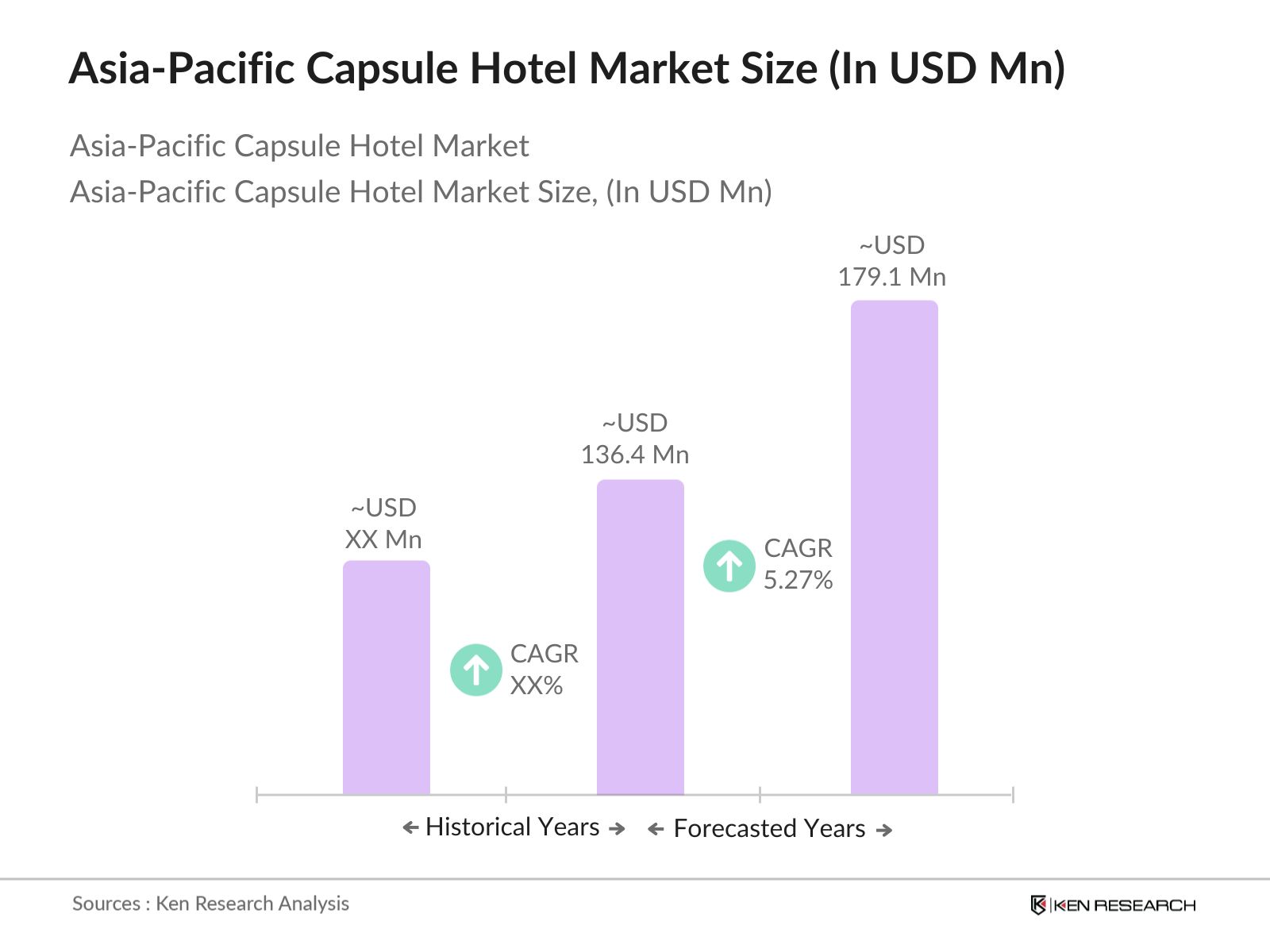
The Asia-Pacific Capsule Hotel market is valued at USD 136.4 million, driven by increasing demand for affordable, space-efficient accommodations in urban areas across the region.
The Asia-Pacific Capsule Hotel market is driven by factors such as rising tourism, the increasing popularity of solo travel, and innovations in capsule designs that offer smart features and improved guest experiences.
Key players in the Asia-Pacific Capsule Hotel market include Nine Hours, First Cabin, Urbanpod, Pangea Pod Hotel, and The Millennials Shibuya, all of which dominate due to their innovative offerings and regional presence.
Challenges in the Asia-Pacific Capsule Hotel market include regulatory compliance in different countries, competition from budget hotels and hostels, and maintaining customer satisfaction in small, shared spaces.

What makes us stand out is that our consultants follows Robust, Refine and Result (RRR) methodology. i.e. Robust for clear definitions, approaches and sanity checking, Refine for differentiating respondents facts and opinions and Result for presenting data with story

We have set a benchmark in the industry by offering our clients with syndicated and customized market research reports featuring coverage of entire market as well as meticulous research and analyst insights.

While we don't replace traditional research, we flip the method upside down. Our dual approach of Top Bottom & Bottom Top ensures quality deliverable by not just verifying company fundamentals but also looking at the sector and macroeconomic factors.

With one step in the future, our research team constantly tries to show you the bigger picture. We help with some of the tough questions you may encounter along the way: How is the industry positioned? Best marketing channel? KPI's of competitors? By aligning every element, we help maximize success.

Our report gives you instant access to the answers and sources that other companies might choose to hide. We elaborate each steps of research methodology we have used and showcase you the sample size to earn your trust.

If you need any support, we are here! We pride ourselves on universe strength, data quality, and quick, friendly, and professional service.