
Asia Pacific Cardiac Monitoring Market Outlook to 2030
Region:Asia
Author(s):Abhinav kumar
Product Code:KROD7325
December 2024
94
About the Report
Asia Pacific Cardiac Monitoring Market Overview
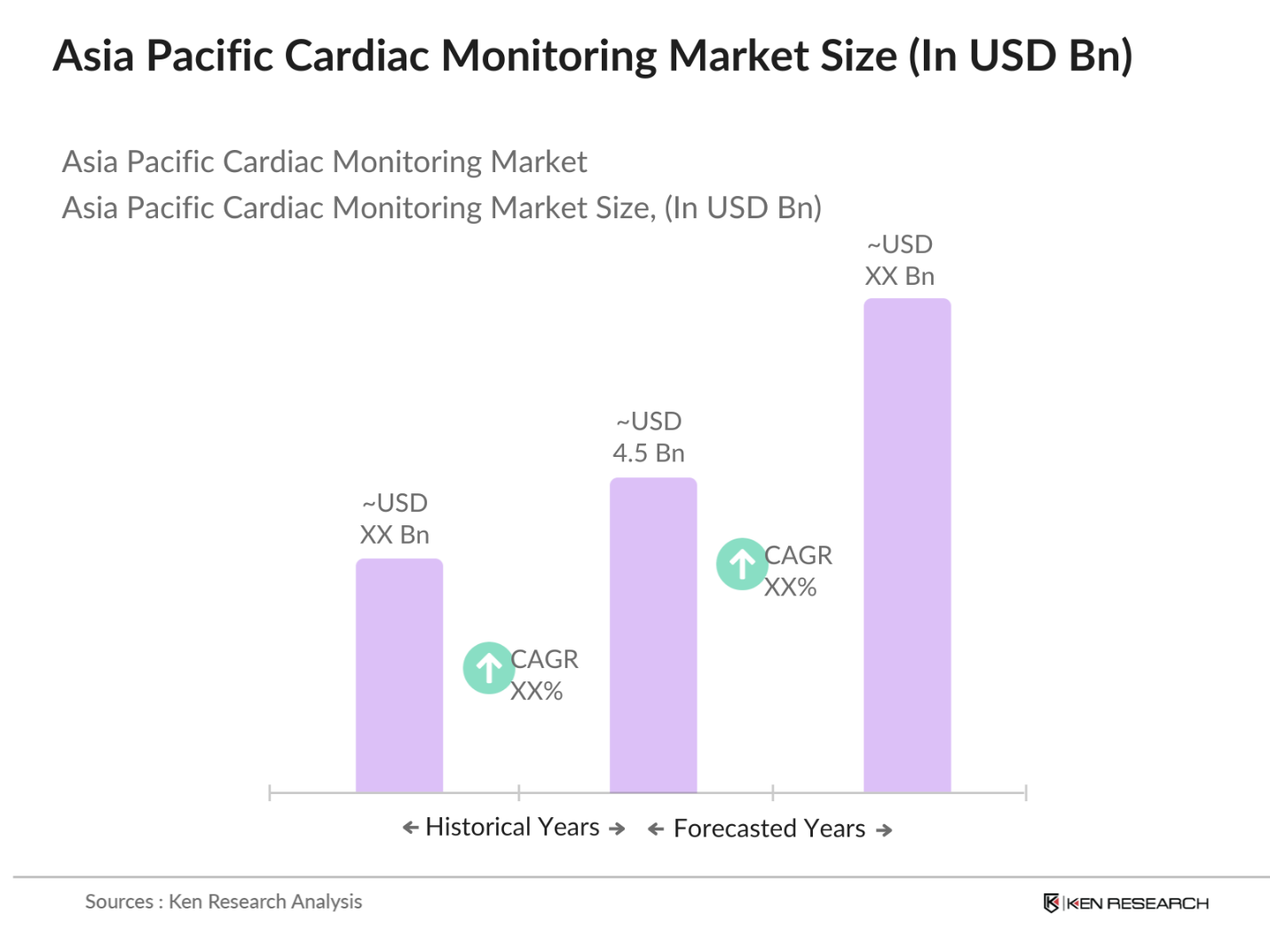
- The Asia Pacific cardiac monitoring market is valued at USD 4.5 billion, driven by the increasing prevalence of cardiovascular diseases (CVD), growing aging population, and advancements in remote patient monitoring technologies. Rapid urbanization and lifestyle changes in emerging economies have led to a rise in CVD cases, prompting higher demand for cardiac monitoring devices such as electrocardiogram (ECG) machines, Holter monitors, and implantable loop recorders.
- Countries such as China, Japan, and India dominate the market due to their large population bases, increasing healthcare expenditures, and significant advancements in medical infrastructure. China, for instance, has a growing number of cardiac patients, while Japan is recognized for its advanced healthcare system and high adoption of medical technologies. These factors position these countries as the leaders in the Asia Pacific cardiac monitoring market.
- Governments in the Asia Pacific region are implementing stringent safety standards for medical devices, including cardiac monitoring systems. In 2024, the Japanese Ministry of Health, Labour and Welfare introduced new regulatory frameworks requiring all cardiac monitoring devices to undergo rigorous safety and efficacy testing before market entry. Similar regulations are being enforced in other countries like China and India to ensure patient safety and device reliability. These regulations are expected to boost consumer confidence in advanced cardiac monitoring technologies and drive market growth.
Asia Pacific Cardiac Monitoring Market Segmentation
By Product Type: The Asia Pacific cardiac monitoring market is segmented by product type into electrocardiogram (ECG) devices, implantable loop recorders, Holter monitors, event monitors, and cardiac output monitoring devices. Recently, ECG devices have held a dominant market share, owing to their widespread usage in both hospitals and home care settings. The ability of ECGs to detect a wide range of cardiac abnormalities makes them indispensable in modern healthcare. Technological advancements such as wireless ECG systems have further boosted their demand in the region.

By End-User: The market is further segmented by end-users into hospitals, ambulatory surgical centers, home care settings, cardiac centers, and diagnostic centers. Among these, hospitals dominate the market due to the large influx of cardiac patients, the availability of advanced infrastructure, and the presence of skilled professionals. Hospitals are often the first point of care for cardiac patients, offering a comprehensive range of monitoring solutions, which contributes to their leading position in this segment.

Asia Pacific Cardiac Monitoring Market Competitive Landscape
The Asia Pacific cardiac monitoring market is dominated by a mix of global and regional players. These companies are continually engaged in product innovation, strategic mergers, and expanding their distribution networks to gain a competitive edge. The Asia Pacific Cardiac Monitoring Market is dominated by leading companies such as Medtronic Plc, GE Healthcare, and Philips Healthcare. These companies hold significant market shares due to their established presence, strong distribution channels, and a focus on innovation in cardiac monitoring technologies. Additionally, local players like Nihon Kohden Corporation have strengthened their position through targeted product offerings and regional expertise.
|
Company Name |
Establishment Year |
Headquarters |
Revenue (2023) |
Product Range |
Key Innovation |
Distribution Network |
Market Share (%) |
Technology Adoption |
Strategic Initiatives |
|
Medtronic Plc |
1949 |
Dublin, Ireland |
_ |
_ |
_ |
_ |
_ |
_ |
_ |
|
GE Healthcare |
1892 |
Chicago, USA |
_ |
_ |
_ |
_ |
_ |
_ |
_ |
|
Philips Healthcare |
1891 |
Amsterdam, Netherlands |
_ |
_ |
_ |
_ |
_ |
_ |
_ |
|
Nihon Kohden Corporation |
1951 |
Tokyo, Japan |
_ |
_ |
_ |
_ |
_ |
_ |
_ |
|
Boston Scientific Corporation |
1979 |
Marlborough, USA |
_ |
_ |
_ |
_ |
_ |
_ |
_ |
Asia Pacific Cardiac Monitoring Industry Analysis
Growth Drivers
- Aging Population & Rising Prevalence of Cardiovascular Diseases: The Asia Pacific region is witnessing a rapid increase in the aging population, particularly in countries such as Japan and China. In 2024, the United Nations reports that over 15% of the regions population is aged 60 and above, a number that is projected to increase further. This demographic shift is directly linked to a higher prevalence of cardiovascular diseases (CVD), with CVD currently accounting for more than 17 million deaths globally each year. As the population ages, the demand for cardiac monitoring devices and services in the Asia Pacific is expected to surge due to the increased risk of heart-related ailments.
- Increasing Adoption of Remote Patient Monitoring: Remote patient monitoring (RPM) is becoming a crucial part of healthcare in the Asia Pacific region. In 2024, nearly 50 million patients in the region are utilizing RPM technologies, particularly for chronic conditions like cardiovascular diseases. This adoption is driven by the growing number of internet users, which the International Telecommunication Union estimates to be over 2 billion in the Asia Pacific, and the increasing availability of broadband in rural areas. RPM allows continuous monitoring of patients' cardiac health, reducing the burden on hospitals and making healthcare more accessible and efficient.
- Favorable Government Initiatives: Governments in the Asia Pacific region are prioritizing healthcare infrastructure development, which supports the growth of the cardiac monitoring market. For instance, Indias National Health Mission in 2024 saw a budget allocation of INR 37,000 crore (approx. USD 4.5 billion) to improve primary and secondary healthcare services, including the introduction of more advanced diagnostic and monitoring tools. Additionally, China continues to invest heavily in its healthcare system, with over USD 1 trillion planned for healthcare infrastructure development over the next decade, including the expansion of telemedicine and remote cardiac monitoring capabilities.
Market Challenges
- High Costs of Advanced Cardiac Monitoring Devices: The high cost of advanced cardiac monitoring devices remains a significant barrier in the Asia Pacific market. For instance, sophisticated implantable loop recorders can cost upwards of USD 6,000, limiting their accessibility in low-income regions. According to the Asian Development Bank, nearly 25% of the population in Southeast Asia lives on less than USD 3.20 a day, making advanced cardiac technologies inaccessible to a substantial portion of the population. The challenge is particularly pronounced in countries like India and Indonesia, where healthcare spending per capita remains relatively low.
- Limited Healthcare Access in Rural Areas: Despite improvements in healthcare infrastructure, access to healthcare in rural areas of the Asia Pacific remains limited. According to the World Health Organization, over 1 billion people in the region live in rural or remote areas with limited access to specialized healthcare services. In countries like Indonesia, over 40% of the population resides in rural areas, where access to advanced cardiac monitoring tools is scarce. This geographical disparity continues to hinder market growth as rural populations often lack access to necessary diagnostic and monitoring technologies.
Asia Pacific Cardiac Monitoring Market Future Outlook
The Asia Pacific cardiac monitoring market is expected to grow steadily over the next five years, driven by the increasing incidence of cardiovascular diseases, technological advancements, and the growing adoption of telemedicine. As governments across the region invest in strengthening healthcare infrastructure and improving access to care, the demand for cardiac monitoring solutions is set to rise. Additionally, emerging technologies such as AI and big data analytics in cardiac care will further revolutionize this market, providing more accurate and personalized monitoring solutions. In addition, the rising popularity of wearable cardiac monitors and the push for continuous, real-time health monitoring will open new opportunities for growth in the Asia Pacific cardiac monitoring market. Regulatory frameworks are also expected to become more supportive of innovative devices, enhancing the markets growth potential.
Opportunities
- Technological Innovations in Cardiac Monitoring Devices: Technological advancements in cardiac monitoring devices present a significant growth opportunity in the Asia Pacific market. Innovations such as wireless heart monitors and smartphone-enabled ECG devices are becoming increasingly prevalent. In 2024, an estimated 60% of healthcare facilities in urban centers in China and Japan have adopted AI-enabled cardiac devices for early diagnosis and monitoring. These innovations not only enhance diagnostic accuracy but also enable real-time patient monitoring, reducing the incidence of critical cardiovascular events.
- Increased Focus on Telemedicine Integration: Telemedicine is playing an increasingly pivotal role in healthcare delivery across the Asia Pacific region, creating opportunities for the integration of cardiac monitoring systems. In 2024, the Asia Pacific Telemedicine market is valued at over USD 30 billion, with cardiac care being a primary focus. Governments in countries like Australia and Singapore are actively promoting the use of telemedicine for chronic disease management, including CVDs. This shift toward telemedicine facilitates continuous cardiac monitoring for patients in remote areas, offering significant potential for market growth.
Scope of the Report
|
By Product Type |
Electrocardiogram (ECG) Devices Implantable Loop Recorders Holter Monitors Event Monitors Cardiac Output Monitoring Devices |
|
By End-User |
Hospitals Ambulatory Surgical Centers Home Care Settings Cardiac Centers Diagnostic Centers |
|
By Application |
Heart Failure Atrial Fibrillation Coronary Artery Disease Bradycardia & Tachycardia Cardiac Arrhythmias |
|
By Technology |
Wireless Communication Technology Bluetooth-Enabled Cardiac Devices Wearable Technology |
|
By Region |
China Japan India Australia South Korea |
Products
Key Target Audience Organizations and Entities Who Can Benefit by Subscribing This Report:
Hospitals and Healthcare Industries
Cardiac Care Centers
Medical Device Companies
Government Agencies (Ministry of Health, Food and Drug Administration)
Ambulatory Surgical Industries
Home Care Companies
Investors and Venture Capitalist Firms
Government and Regulatory Bodies (Asian Medical Device Regulations Committee)
Companies
Players Mentioned in the Report
Medtronic Plc
GE Healthcare
Philips Healthcare
Nihon Kohden Corporation
Boston Scientific Corporation
Abbott Laboratories
Biotronik SE & Co. KG
Asahi Kasei Corporation
Hill-Rom Holdings, Inc.
MicroPort Scientific Corporation
Table of Contents
1. Asia Pacific Cardiac Monitoring Market Overview
1.1. Definition and Scope
1.2. Market Taxonomy
1.3. Market Growth Rate (CAGR, historical growth, projections)
1.4. Market Segmentation Overview
2. Asia Pacific Cardiac Monitoring Market Size (In USD Mn)
2.1. Historical Market Size
2.2. Year-On-Year Growth Analysis
2.3. Key Market Developments and Milestones
3. Asia Pacific Cardiac Monitoring Market Analysis
3.1. Growth Drivers
3.1.1. Increasing Prevalence of Cardiovascular Diseases
3.1.2. Technological Advancements in Cardiac Monitoring Devices
3.1.3. Growing Geriatric Population
3.1.4. Rising Adoption of Wearable Devices
3.1.5. Government Initiatives and Health Policies
3.2. Market Challenges
3.2.1. High Cost of Advanced Monitoring Systems
3.2.2. Data Privacy and Security Concerns
3.2.3. Limited Access to Healthcare in Rural Areas
3.3. Opportunities
3.3.1. Expansion in Emerging Markets
3.3.2. Integration with Telemedicine and Remote Monitoring
3.3.3. Product Innovations and Launches
3.3.4. Strategic Partnerships with Healthcare Providers
3.4. Trends
3.4.1. Increasing Shift towards Non-Invasive Monitoring Technologies
3.4.2. Integration with Mobile Health Apps
3.4.3. Use of Artificial Intelligence and Machine Learning in Diagnosis
3.5. Regulatory Landscape
3.5.1. Regulatory Approvals and Certifications for Devices
3.5.2. Standardization of Cardiac Monitoring Technologies
3.6. SWOT Analysis
3.7. Stakeholder Ecosystem
3.8. Porter’s Five Forces Analysis
3.9. Competition Ecosystem
4. Asia Pacific Cardiac Monitoring Market Segmentation
4.1. By Product Type (In Value %)
4.1.1. ECG Monitors
4.1.2. Implantable Cardiac Monitors
4.1.3. Holter Monitors
4.1.4. Wearable Cardiac Monitors
4.1.5. Smartwatches with Cardiac Monitoring Functions
4.2. By Technology (In Value %)
4.2.1. Wired Cardiac Monitors
4.2.2. Wireless Cardiac Monitors
4.2.3. Bluetooth-enabled Devices
4.3. By End-User (In Value %)
4.3.1. Hospitals
4.3.2. Clinics and Diagnostic Centers
4.3.3. Home Care Settings
4.4. By Application (In Value %)
4.4.1. Arrhythmia Detection
4.4.2. Heart Rate Monitoring
4.4.3. Blood Pressure Monitoring
4.5. By Region (In Value %)
4.5.1. East Asia (China, Japan, South Korea)
4.5.2. Southeast Asia (India, Thailand, Indonesia)
4.5.3. Australia & New Zealand
4.5.4. Rest of Asia Pacific
5. Asia Pacific Cardiac Monitoring Market Competitive Analysis
5.1. Detailed Profiles of Major Companies
5.1.1. Abbott Laboratories
5.1.2. Philips Healthcare
5.1.3. Medtronic
5.1.4. GE Healthcare
5.1.5. Boston Scientific
5.1.6. Johnson & Johnson
5.1.7. Biotronik
5.1.8. Fitbit (Owned by Google)
5.1.9. AliveCor
5.1.10. iRhythm Technologies
5.1.11. CardioComm Solutions
5.1.12. Wearable Health Solutions
5.1.13. OMRON Healthcare
5.1.14. Nihon Kohden Corporation
5.1.15. Cardiologs
5.2. Cross Comparison Parameters (Revenue, Market Share, Product Portfolio, R&D Investments, Strategic Initiatives)
5.3. Market Share Analysis
5.4. Strategic Initiatives
5.4.1. Product Innovations and Launches
5.4.2. Strategic Partnerships and Collaborations
5.4.3. Mergers and Acquisitions
5.5. Mergers and Acquisitions
5.6. Investment Analysis
5.7. Government Grants and Funding
5.8. Venture Capital Funding
5.9. Private Equity Investments
6. Asia Pacific Cardiac Monitoring Market Regulatory Framework
6.1. Regulatory Requirements for Medical Devices
6.2. Compliance Standards (ISO, CE, FDA)
6.3. Certification Processes for Cardiac Monitoring Systems
7. Asia Pacific Cardiac Monitoring Market Future Market Size (In USD Mn)
7.1. Future Market Size Projections
7.2. Key Factors Driving Future Market Growth
8. Asia Pacific Cardiac Monitoring Market Future Market Segmentation
8.1. By Product Type (In Value %)
8.2. By Technology (In Value %)
8.3. By End-User (In Value %)
8.4. By Application (In Value %)
8.5. By Region (In Value %)
9. Asia Pacific Cardiac Monitoring Market Analysts’ Recommendations
9.1. TAM/SAM/SOM Analysis
9.2. Customer Cohort Analysis
9.3. Marketing and Sales Strategies
9.4. White Space Opportunity Analysis
Disclaimer Contact UsResearch Methodology
Step 1: Identification of Key Variables
The initial step involves constructing a detailed map of the cardiac monitoring ecosystem in the Asia Pacific region. Desk research was conducted using proprietary databases and publicly available secondary sources to gather information on key market stakeholders, product categories, and patient demographics.
Step 2: Market Analysis and Construction
In this phase, we compiled historical data on market size, revenue generation by product segments, and adoption of cardiac monitoring technologies across different end-users. Statistical methods were used to analyze growth patterns and predict future market trends.
Step 3: Hypothesis Validation and Expert Consultation
Market assumptions were validated through direct consultations with industry experts from leading cardiac monitoring companies. These consultations provided critical insights into product innovation, regulatory hurdles, and operational efficiencies.
Step 4: Research Synthesis and Final Output
Data from both bottom-up and top-down research approaches were synthesized to form the final analysis. Inputs from key manufacturers and healthcare providers were used to ensure the datas accuracy and relevance to the current market scenario.
Frequently Asked Questions
01. How big is the Asia Pacific Cardiac Monitoring Market?
The Asia Pacific cardiac monitoring market is valued at USD 4.5 billion, primarily driven by an aging population, increased prevalence of cardiovascular diseases, and advancements in remote monitoring technologies.
02. What are the challenges in the Asia Pacific Cardiac Monitoring Market?
Challenges include the high cost of advanced cardiac monitoring devices, limited healthcare access in rural areas, and data security and privacy concerns associated with digital health solutions.
03. Who are the major players in the Asia Pacific Cardiac Monitoring Market?
Key players include Medtronic Plc, GE Healthcare, Philips Healthcare, Nihon Kohden Corporation, and Boston Scientific Corporation, which dominate due to their extensive product portfolios, R&D investments, and strong regional presence.
04. What are the growth drivers of the Asia Pacific Cardiac Monitoring Market?
The market is driven by the growing aging population, increasing prevalence of cardiovascular diseases, advancements in monitoring technologies, and the rising adoption of wearable health devices.
Why Buy From Us?

What makes us stand out is that our consultants follows Robust, Refine and Result (RRR) methodology. i.e. Robust for clear definitions, approaches and sanity checking, Refine for differentiating respondents facts and opinions and Result for presenting data with story

We have set a benchmark in the industry by offering our clients with syndicated and customized market research reports featuring coverage of entire market as well as meticulous research and analyst insights.

While we don't replace traditional research, we flip the method upside down. Our dual approach of Top Bottom & Bottom Top ensures quality deliverable by not just verifying company fundamentals but also looking at the sector and macroeconomic factors.

With one step in the future, our research team constantly tries to show you the bigger picture. We help with some of the tough questions you may encounter along the way: How is the industry positioned? Best marketing channel? KPI's of competitors? By aligning every element, we help maximize success.

Our report gives you instant access to the answers and sources that other companies might choose to hide. We elaborate each steps of research methodology we have used and showcase you the sample size to earn your trust.

If you need any support, we are here! We pride ourselves on universe strength, data quality, and quick, friendly, and professional service.